I Waited For The Storm To Pass… Then This Happened
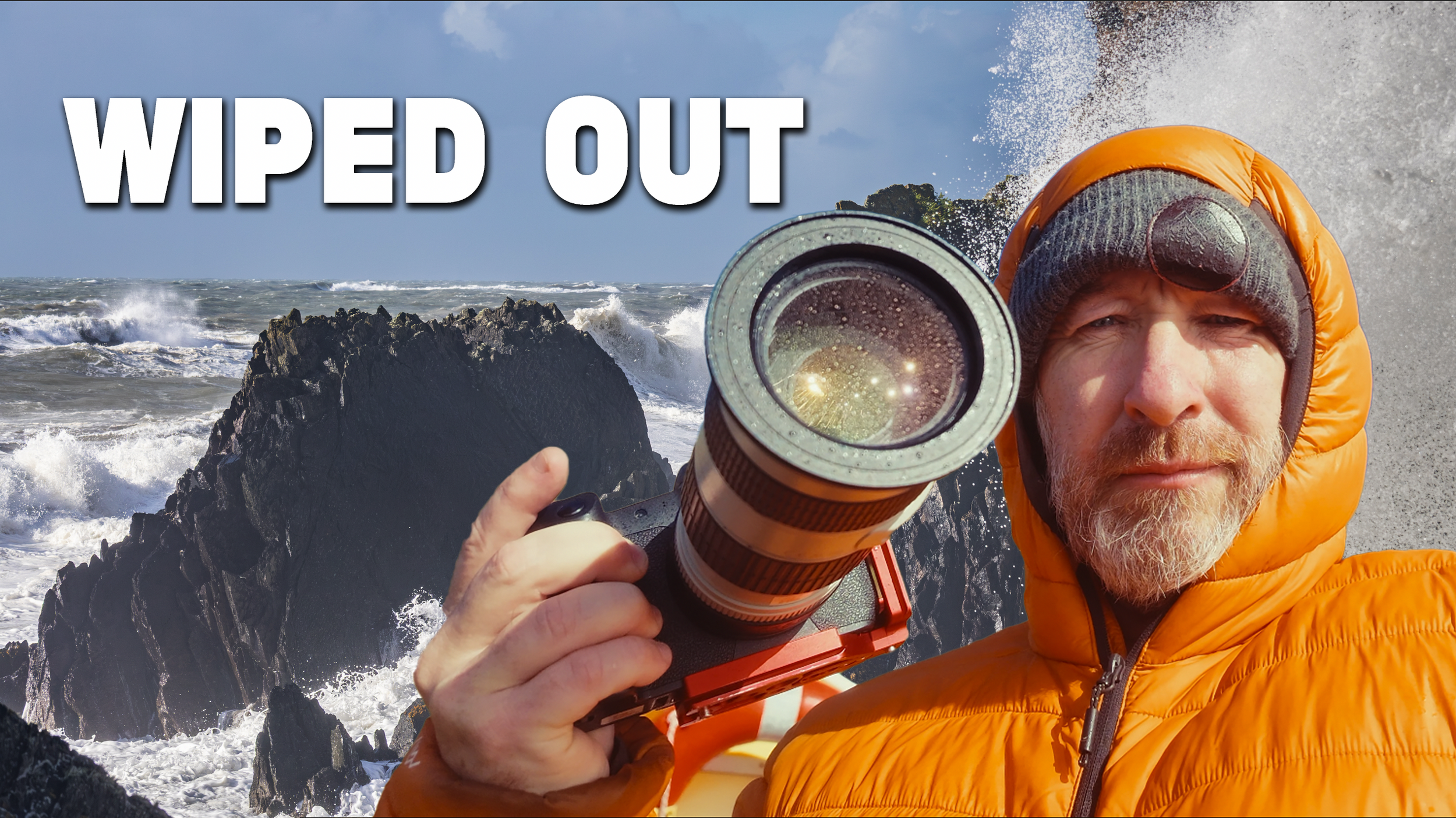
It had been a while since I had been back to the coast with a camera, and considering how much of my photography has always been based around seascapes, that surprised me. I had spent the intervening time photographing other subjects and trying different approaches, but the desire to get back out to the coast had been building for some time. On this particular morning, I finally decided it was time.
One of the things I am constantly doing as a landscape photographer is checking the weather. It is not simply about looking at the forecast and deciding whether it is going to rain. I am looking at what the weather has been doing, what it is going to do next, the wind direction, cloud, visibility, tide and, when I am photographing the coast, the swell.
Ireland had been dealing with a period of unsettled weather, including a yellow wind and rain warning. You might think that this would be exactly the sort of weather I would want to photograph, but I had no intention of standing on the coast during the worst of it. Sideways rain and strong winds might look good in a forecast, but they are not necessarily conditions I want to work in.
Instead, I was interested in what would happen afterwards.
This is something worth considering if you are planning your own coastal photography. You do not necessarily need to be standing beside the sea while a storm is passing through. A storm can leave behind conditions that are just as interesting, and sometimes much easier to work with. The rain can clear, the clouds can break and the swell can remain for several hours afterwards.
That was exactly what I was watching for.
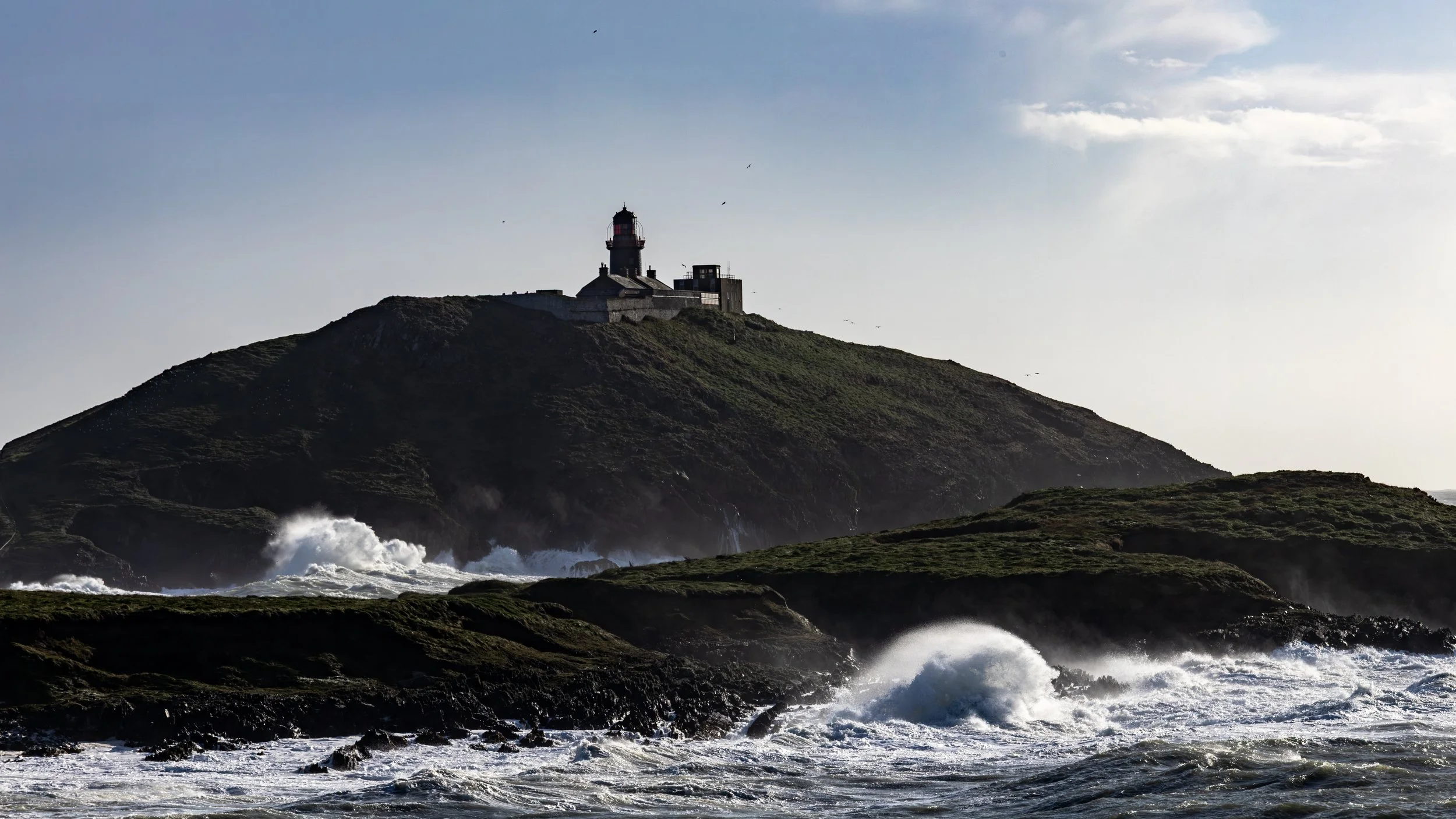
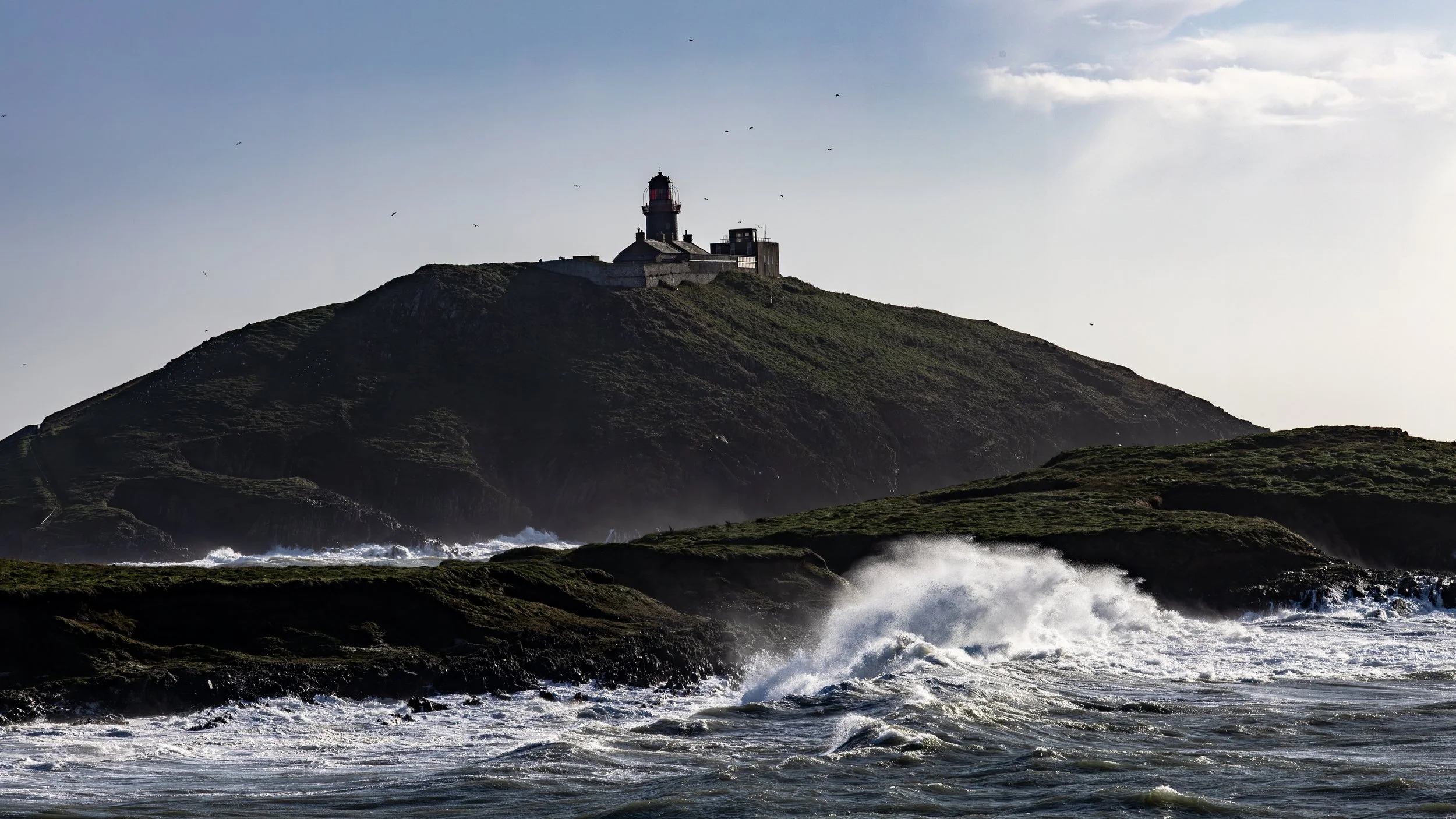
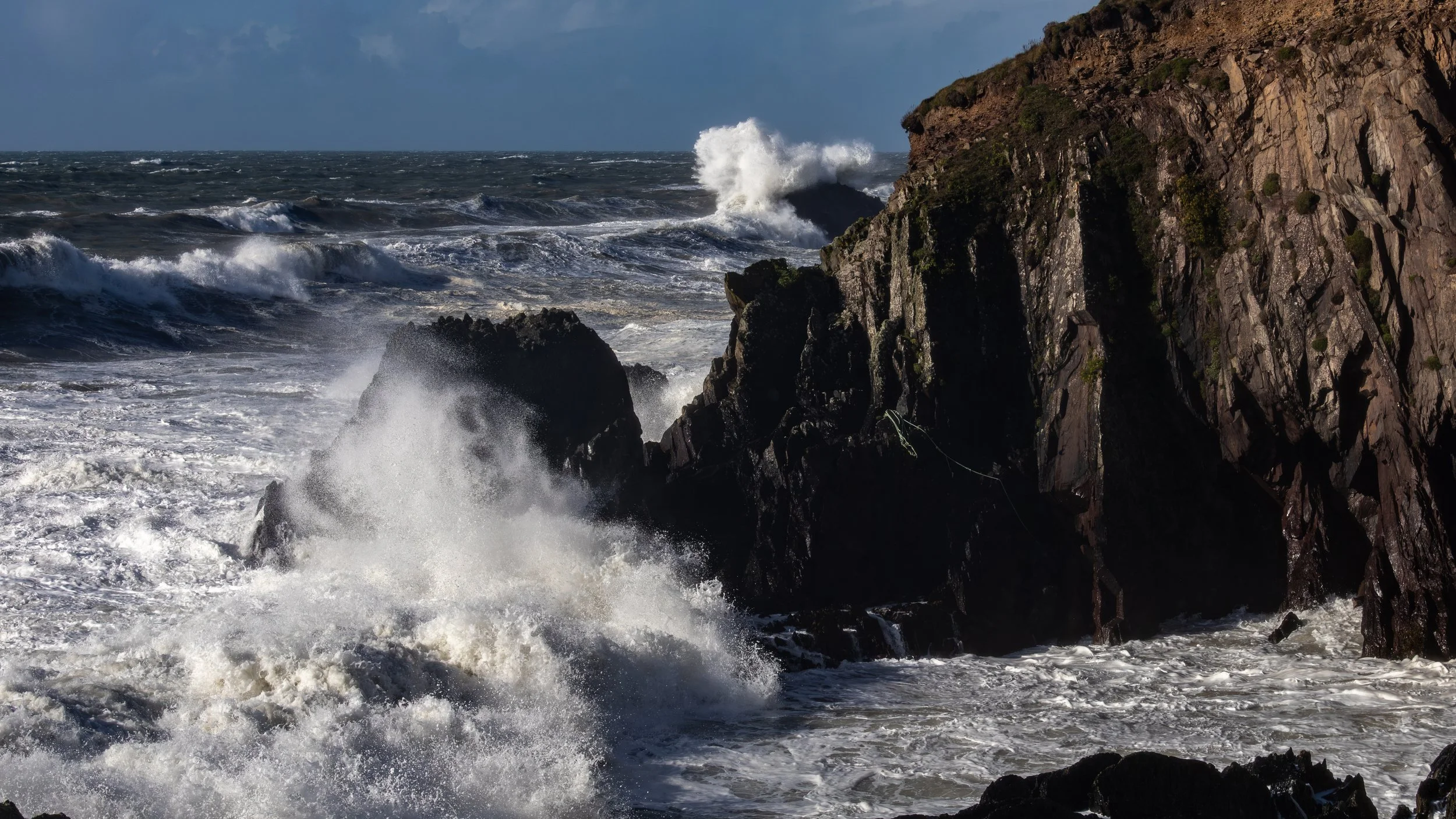
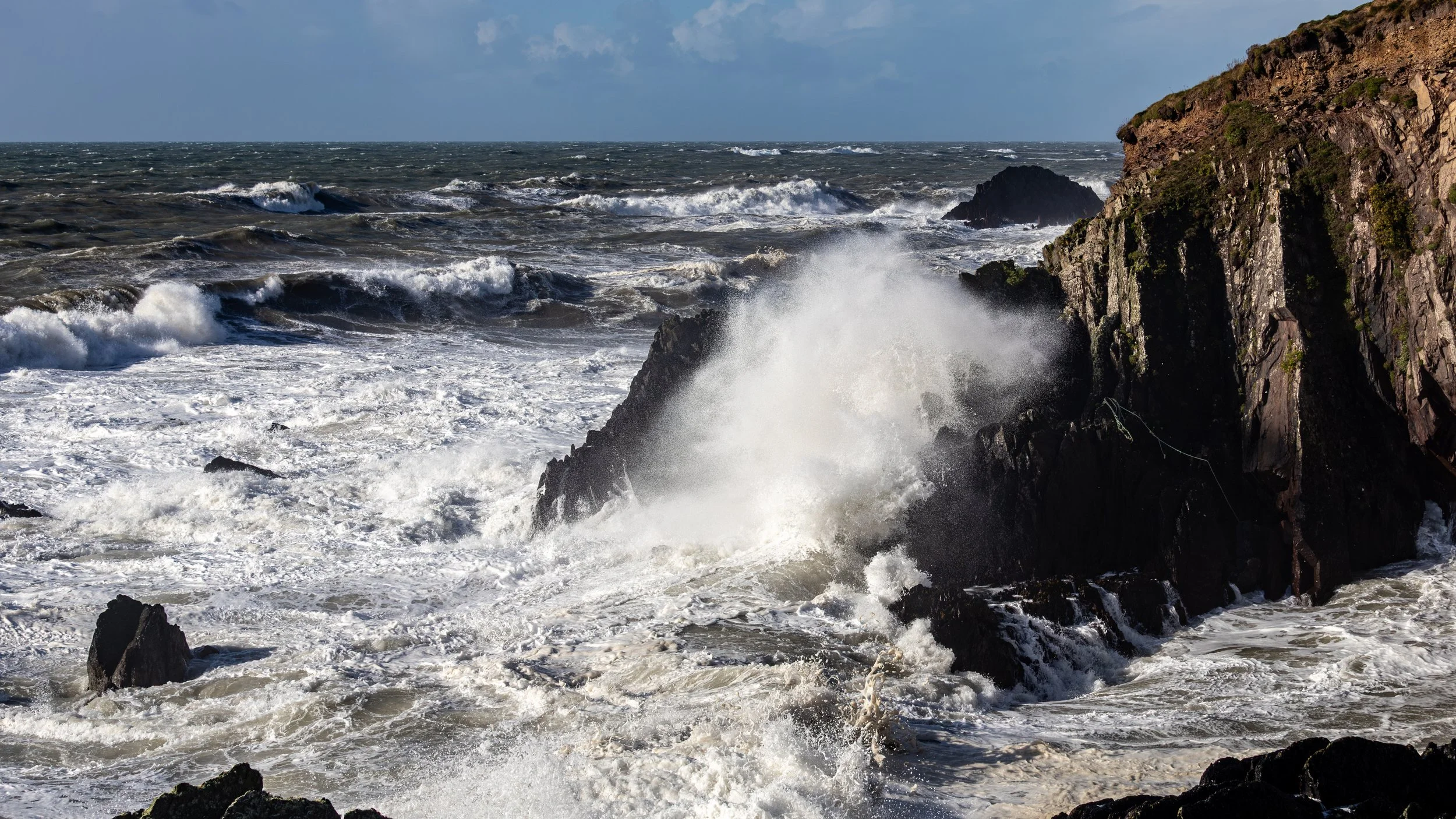
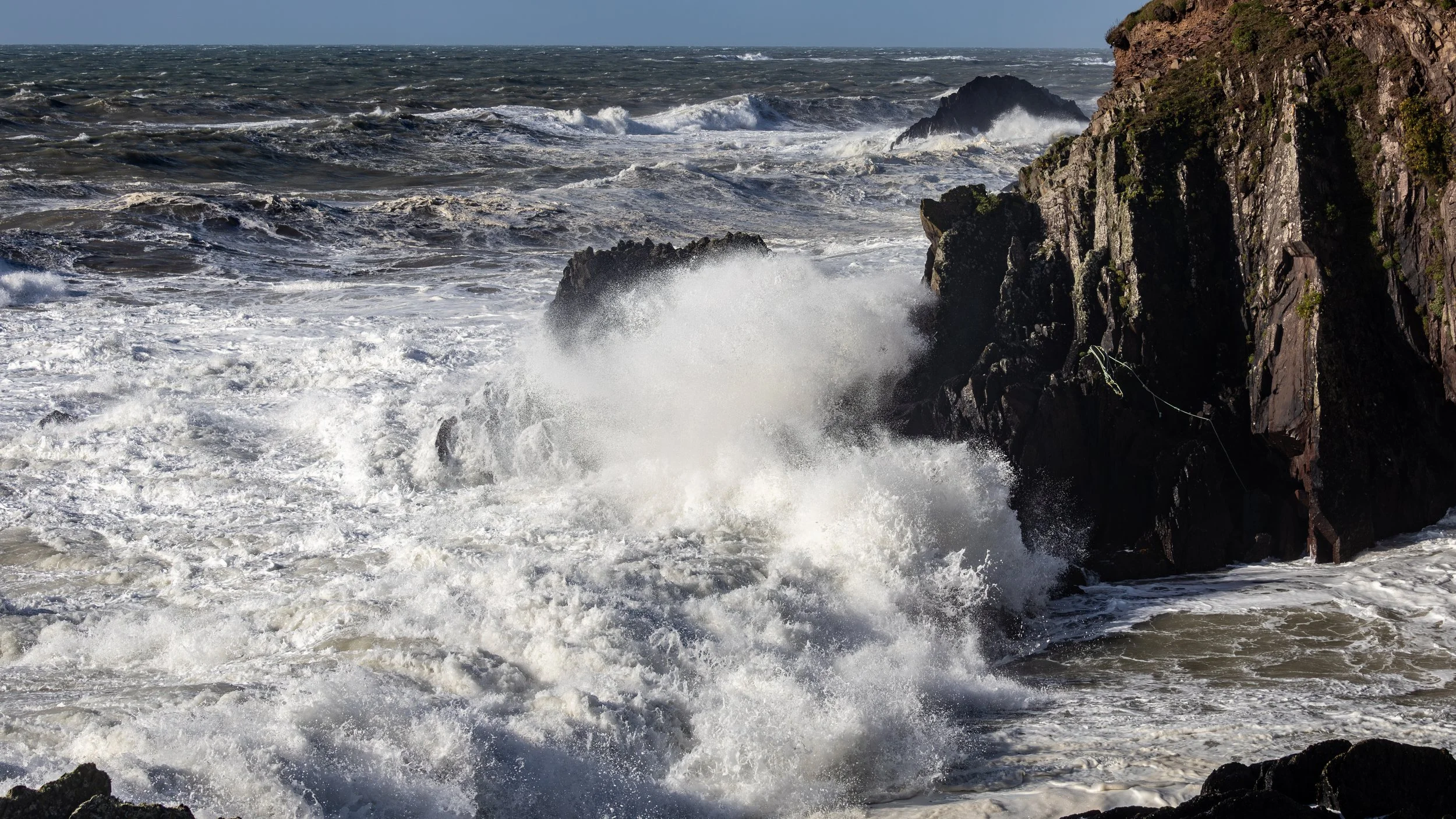
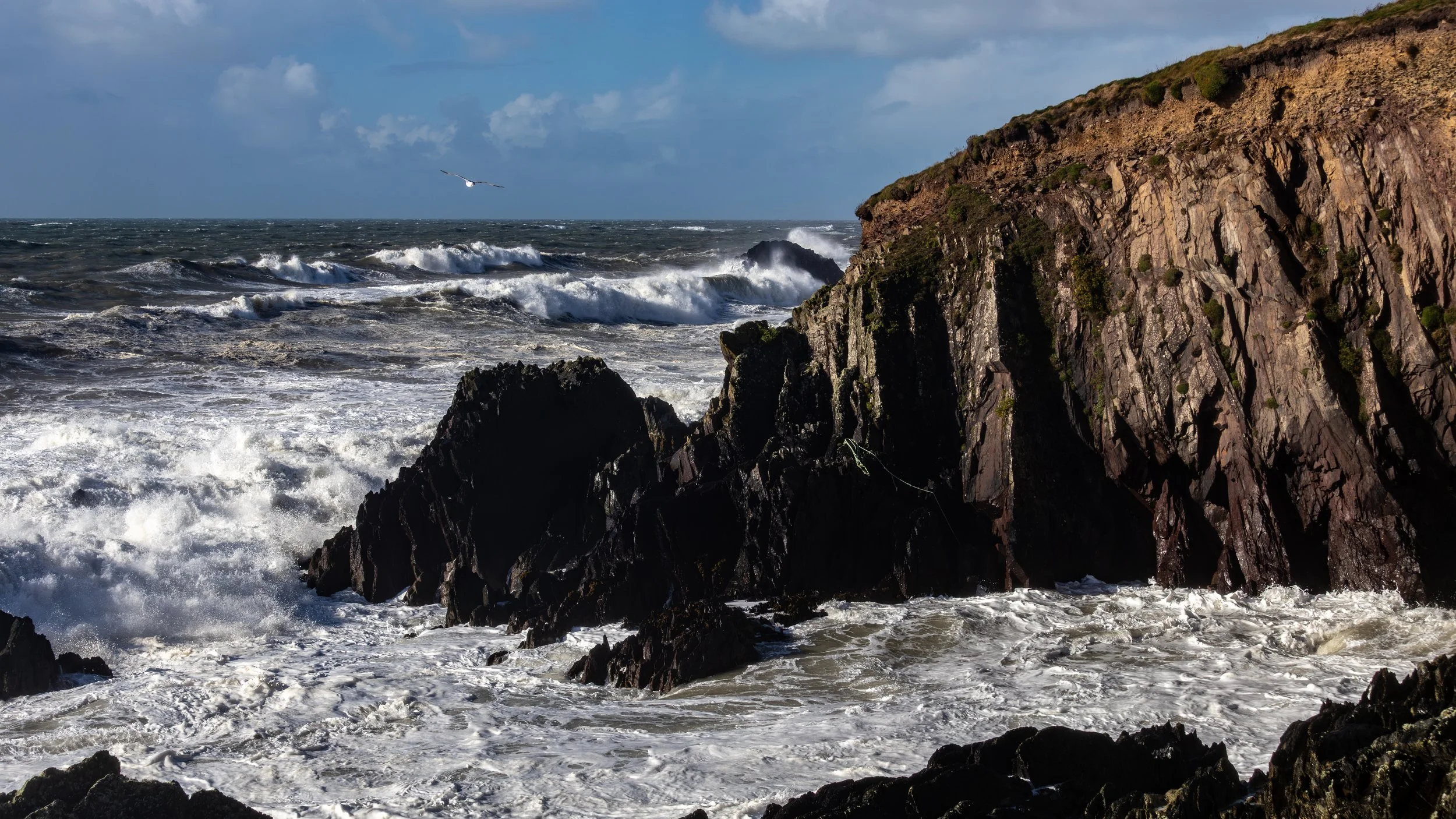
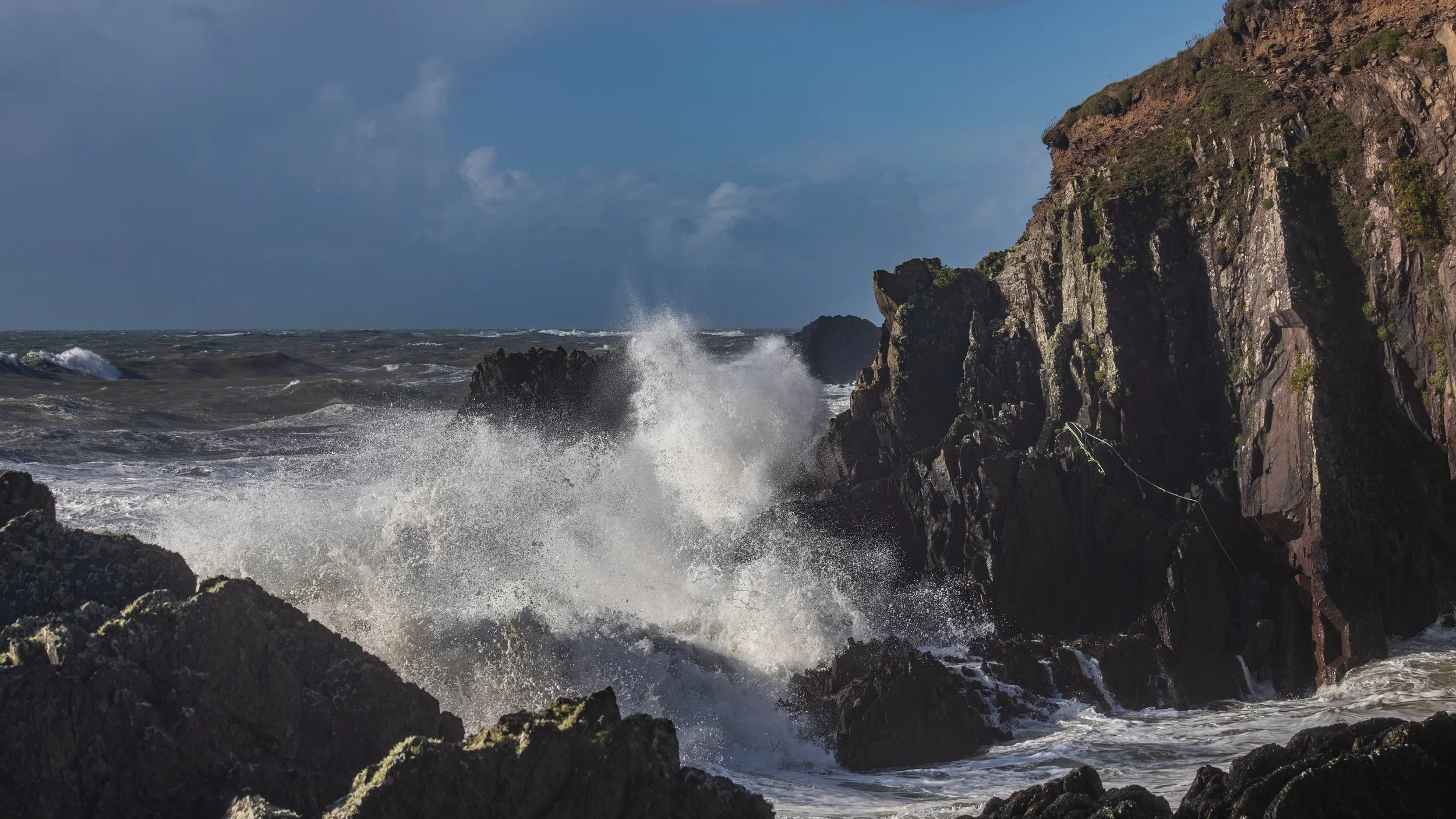
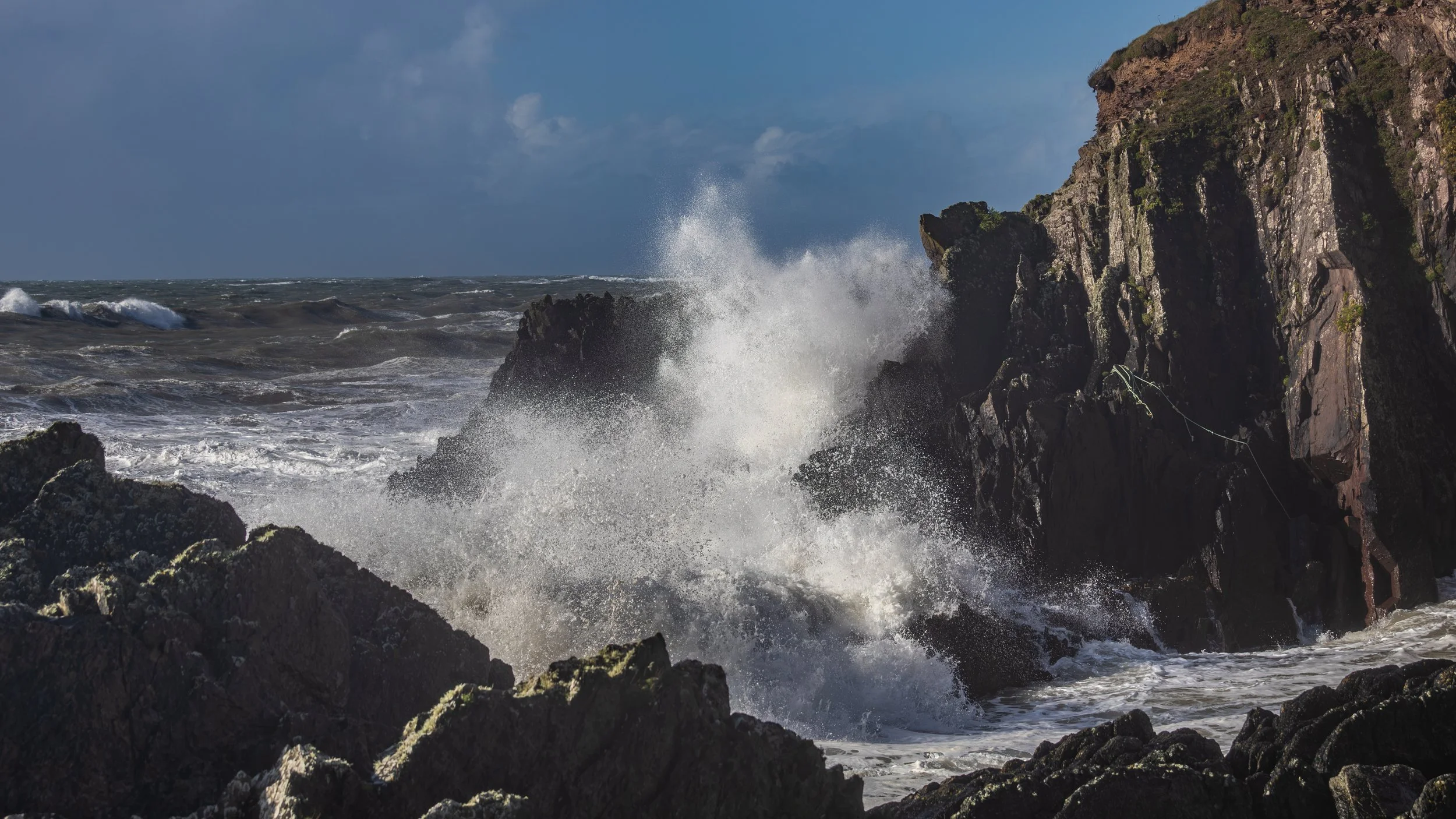
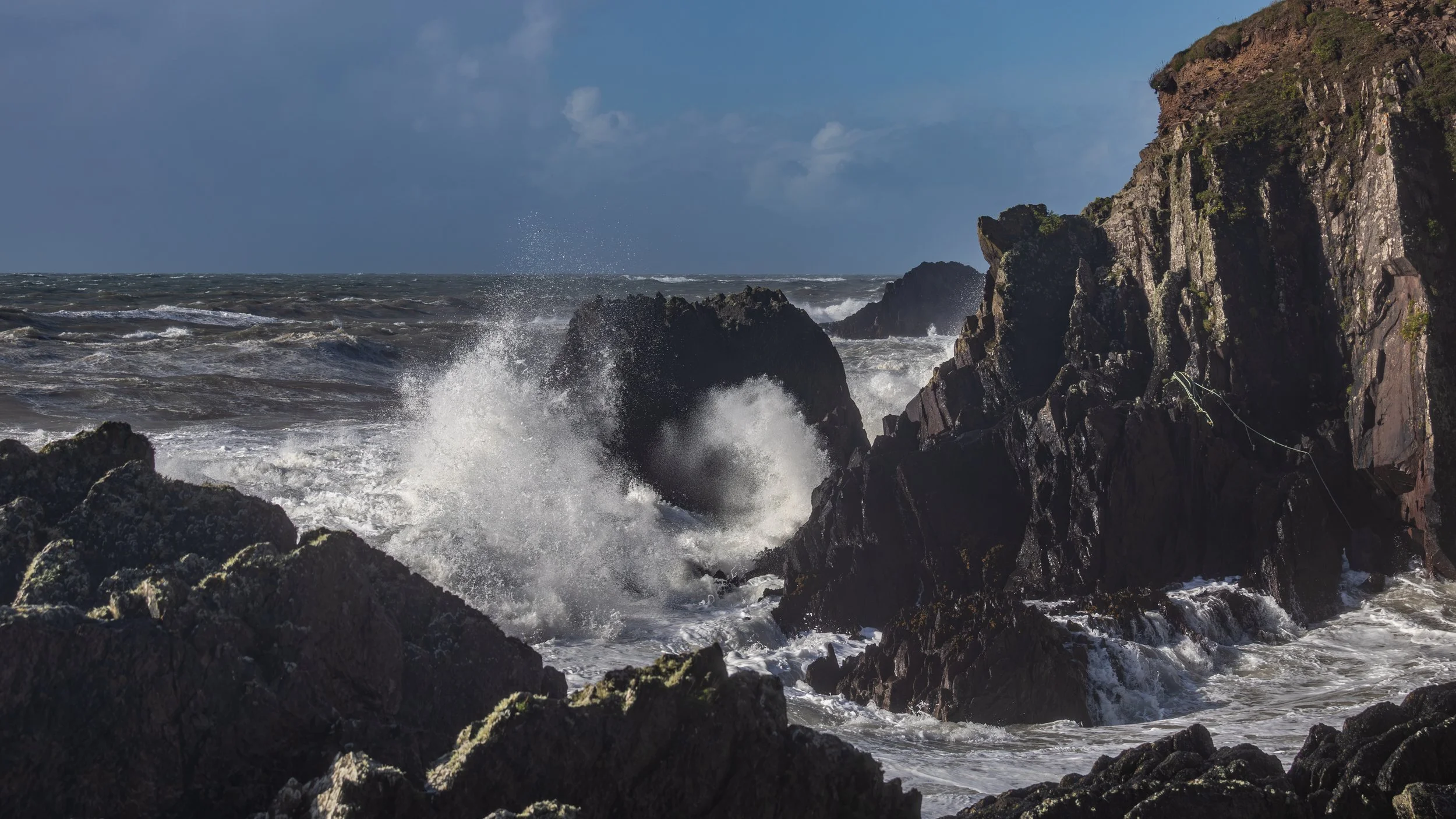
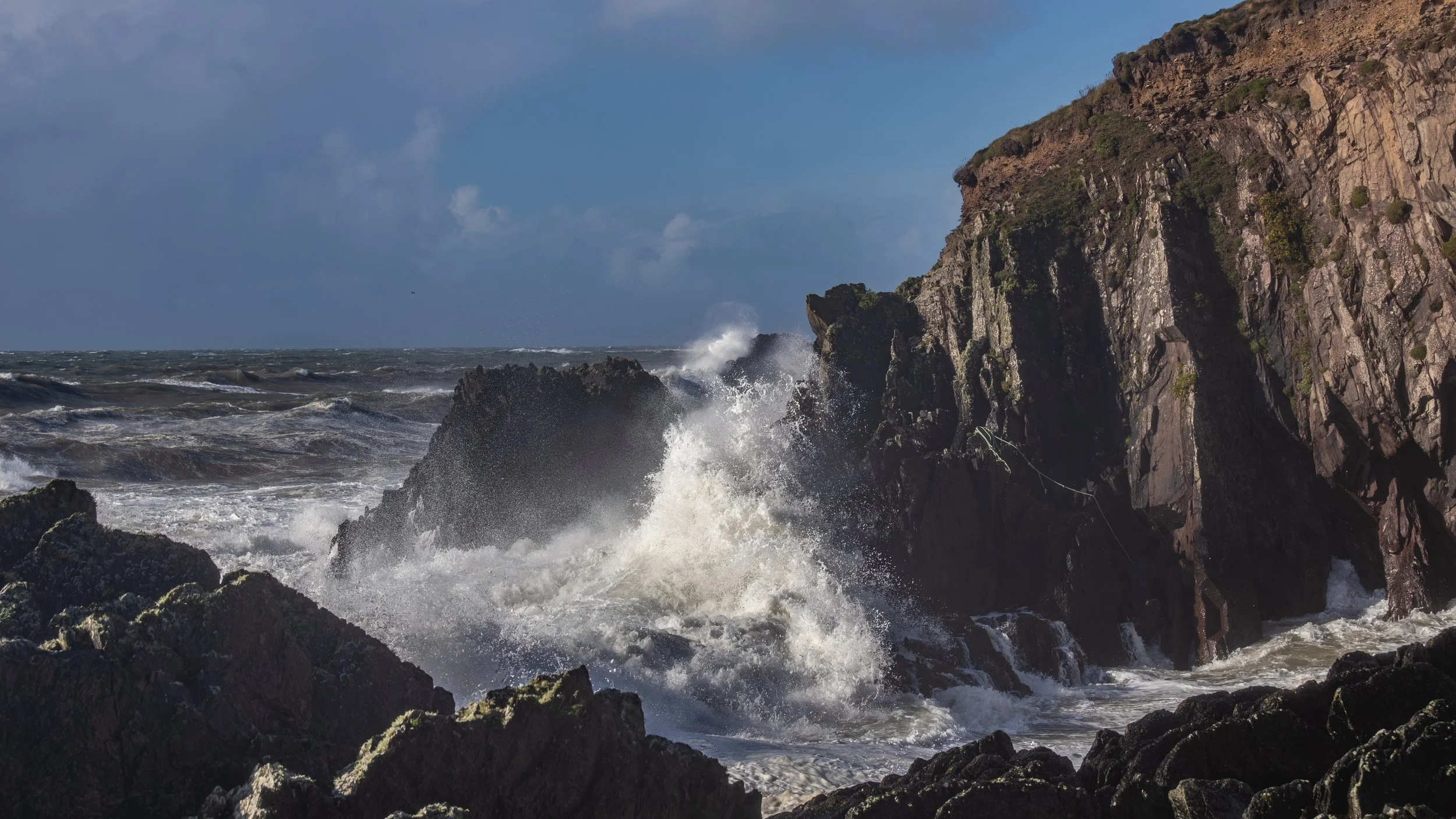
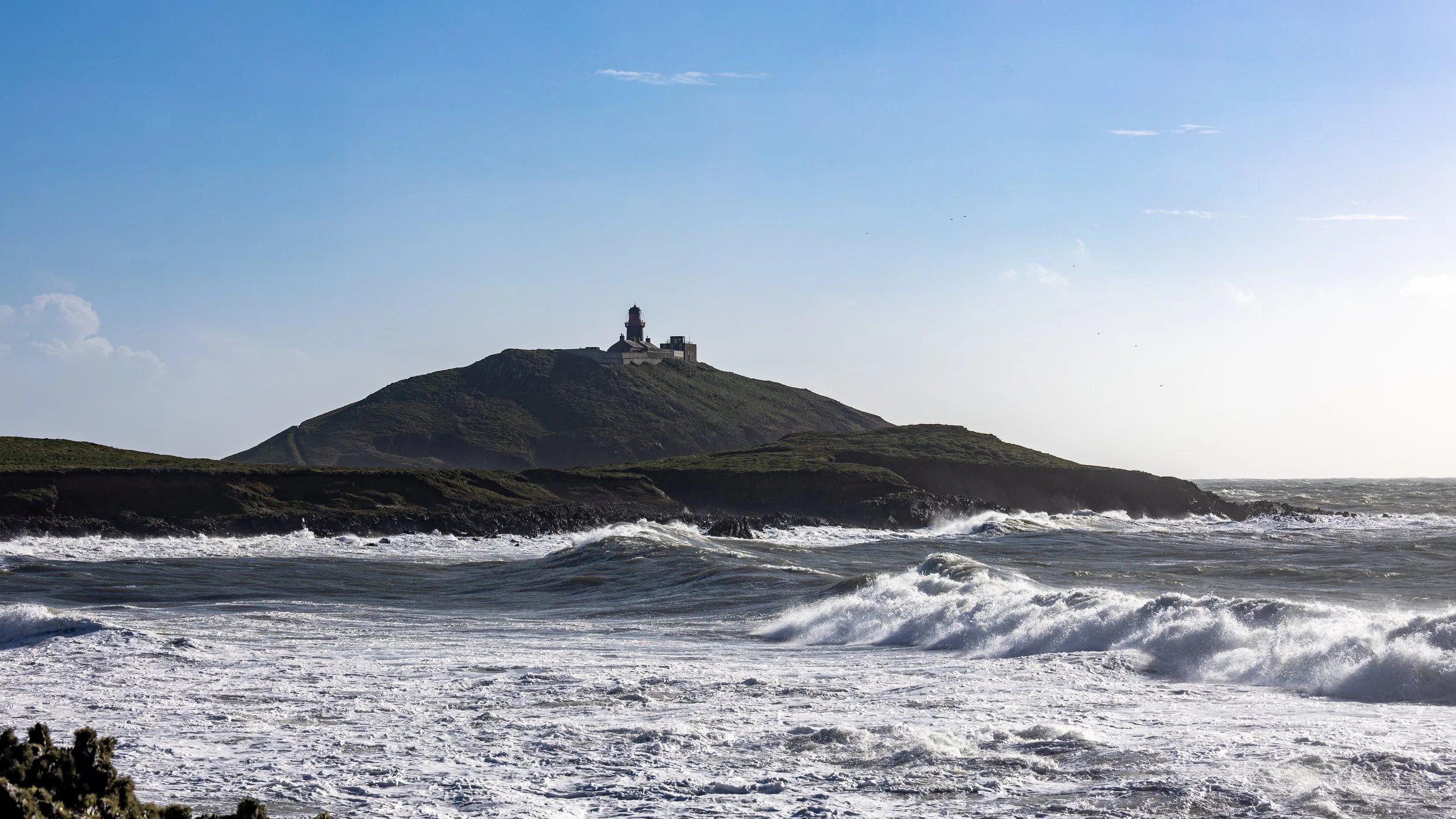
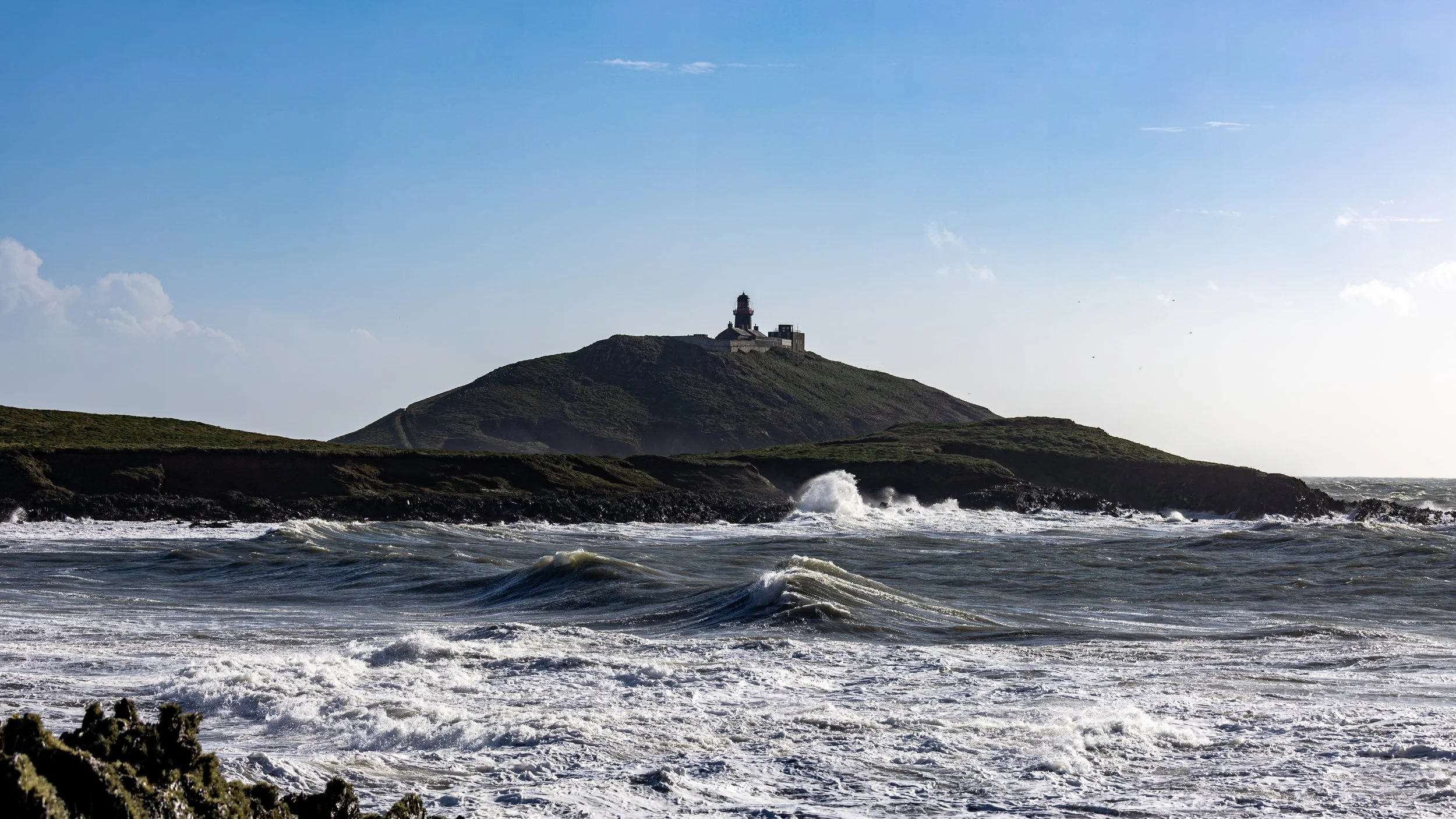
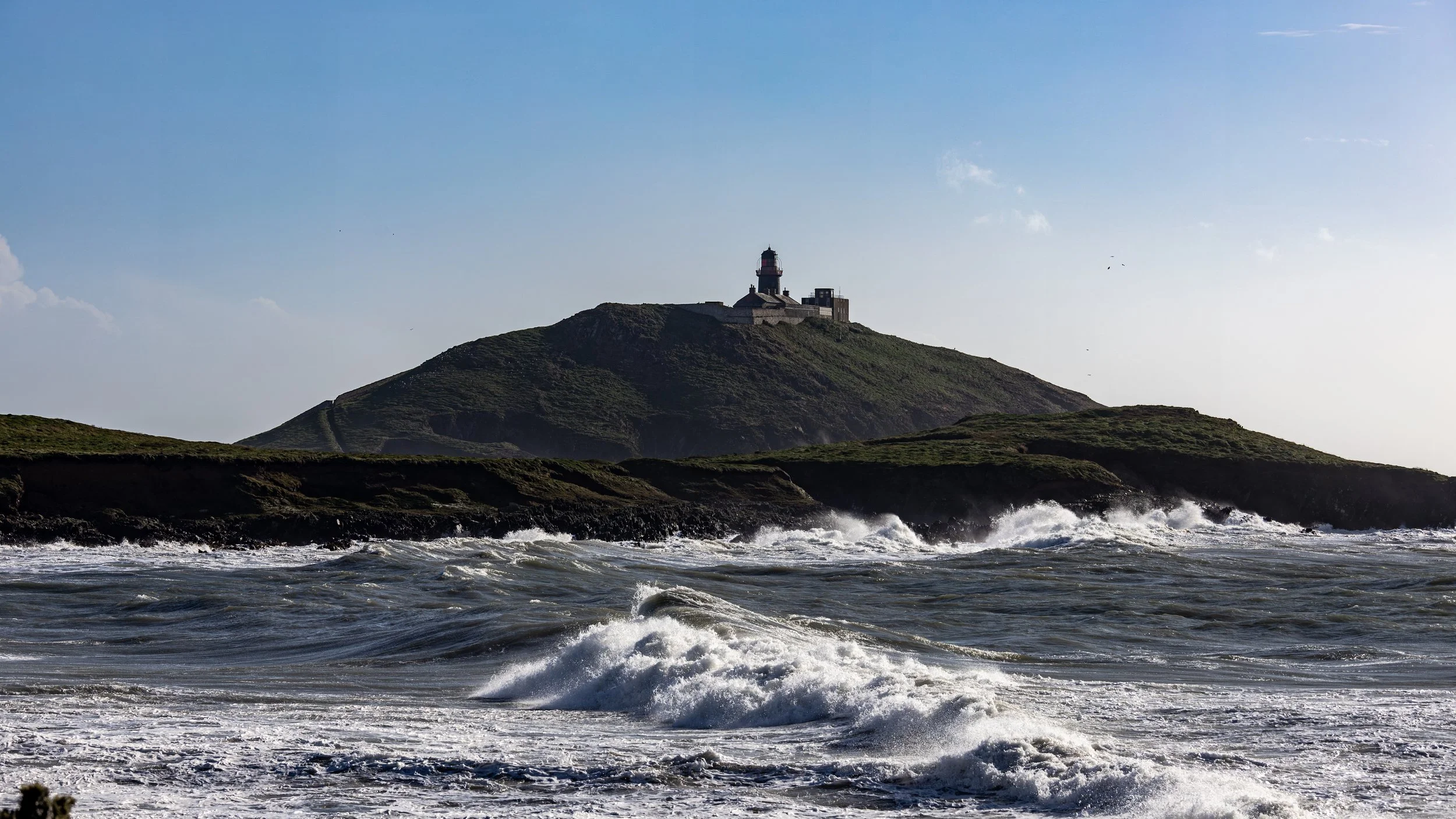
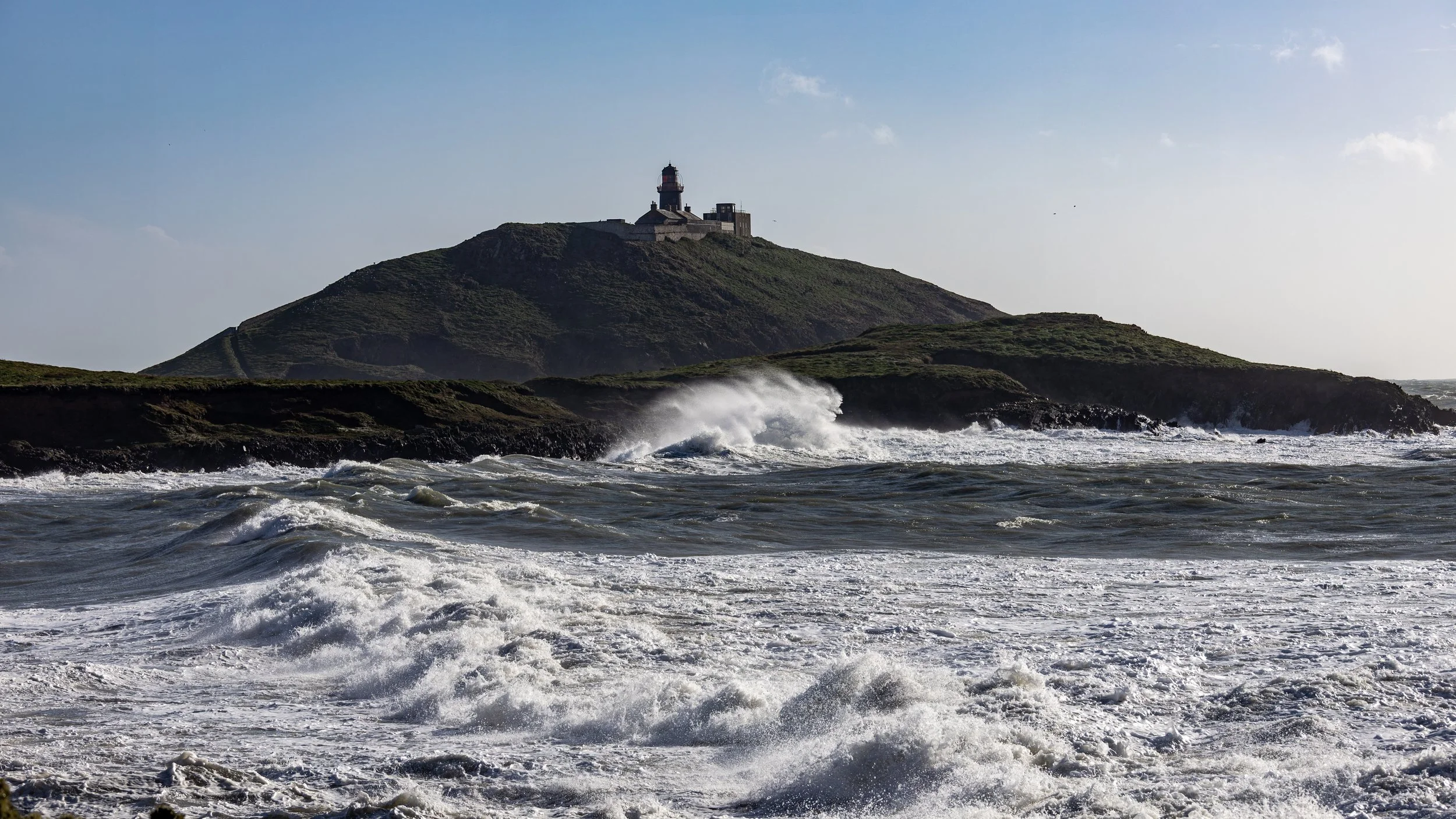
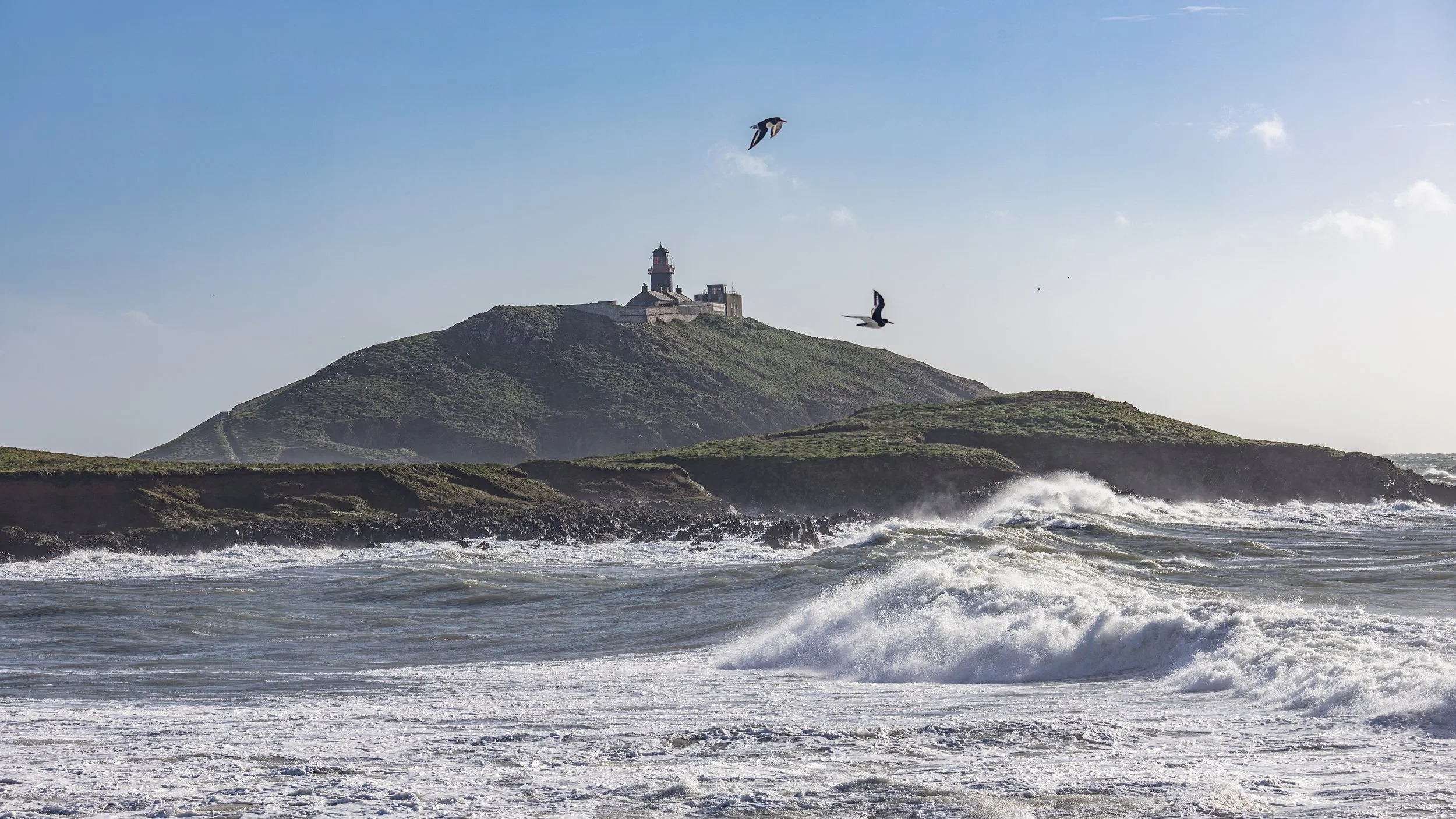
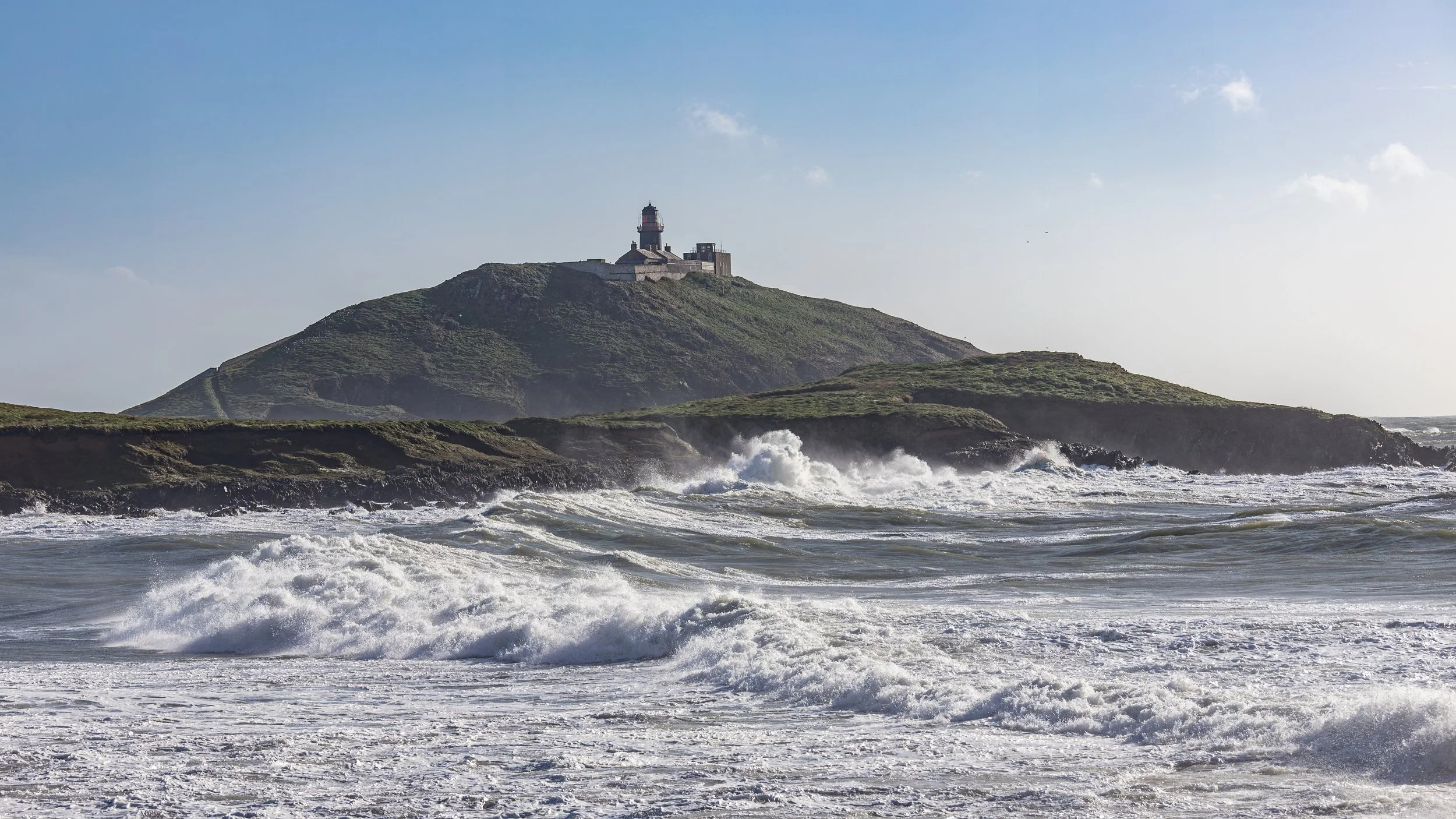
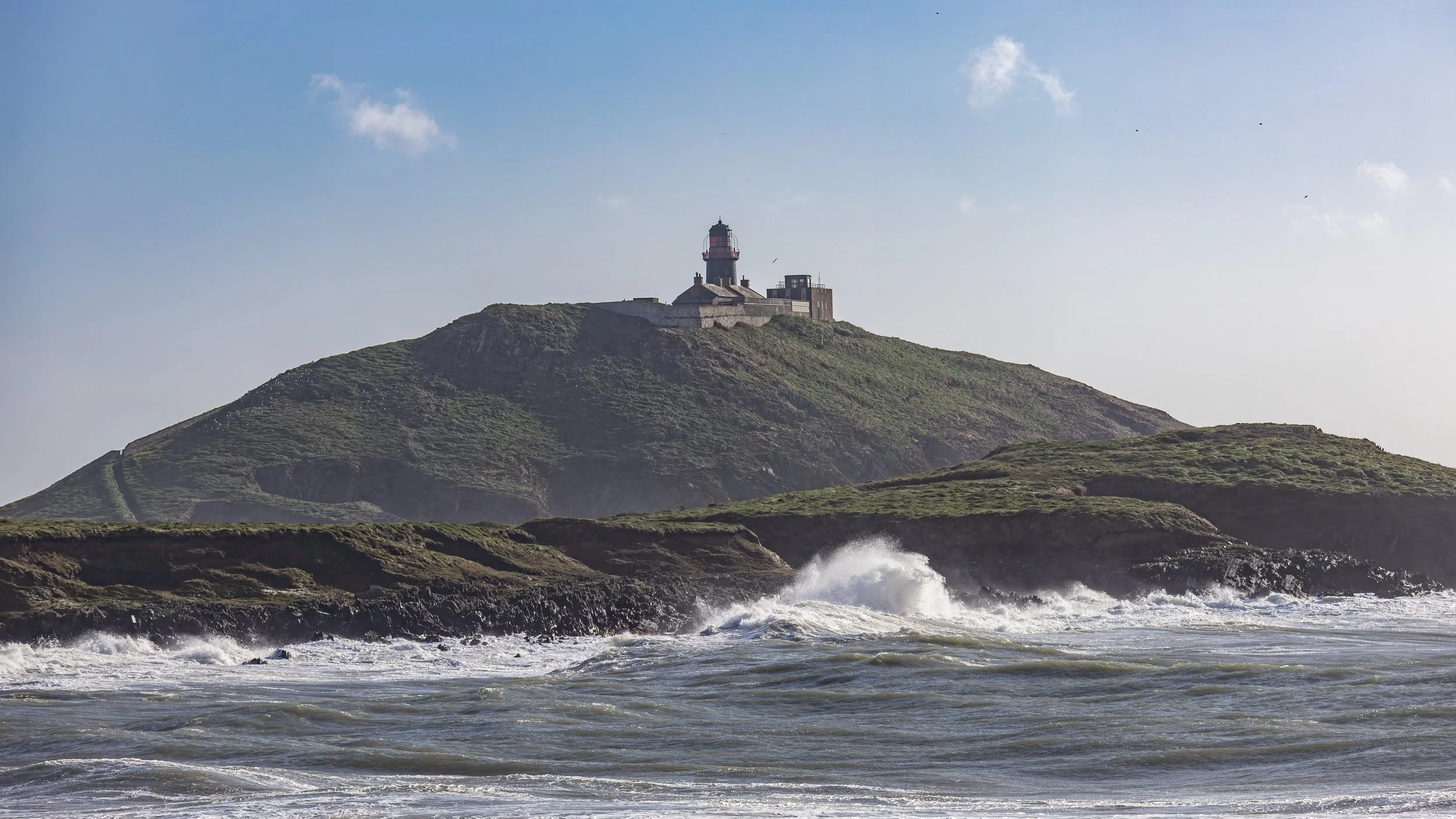
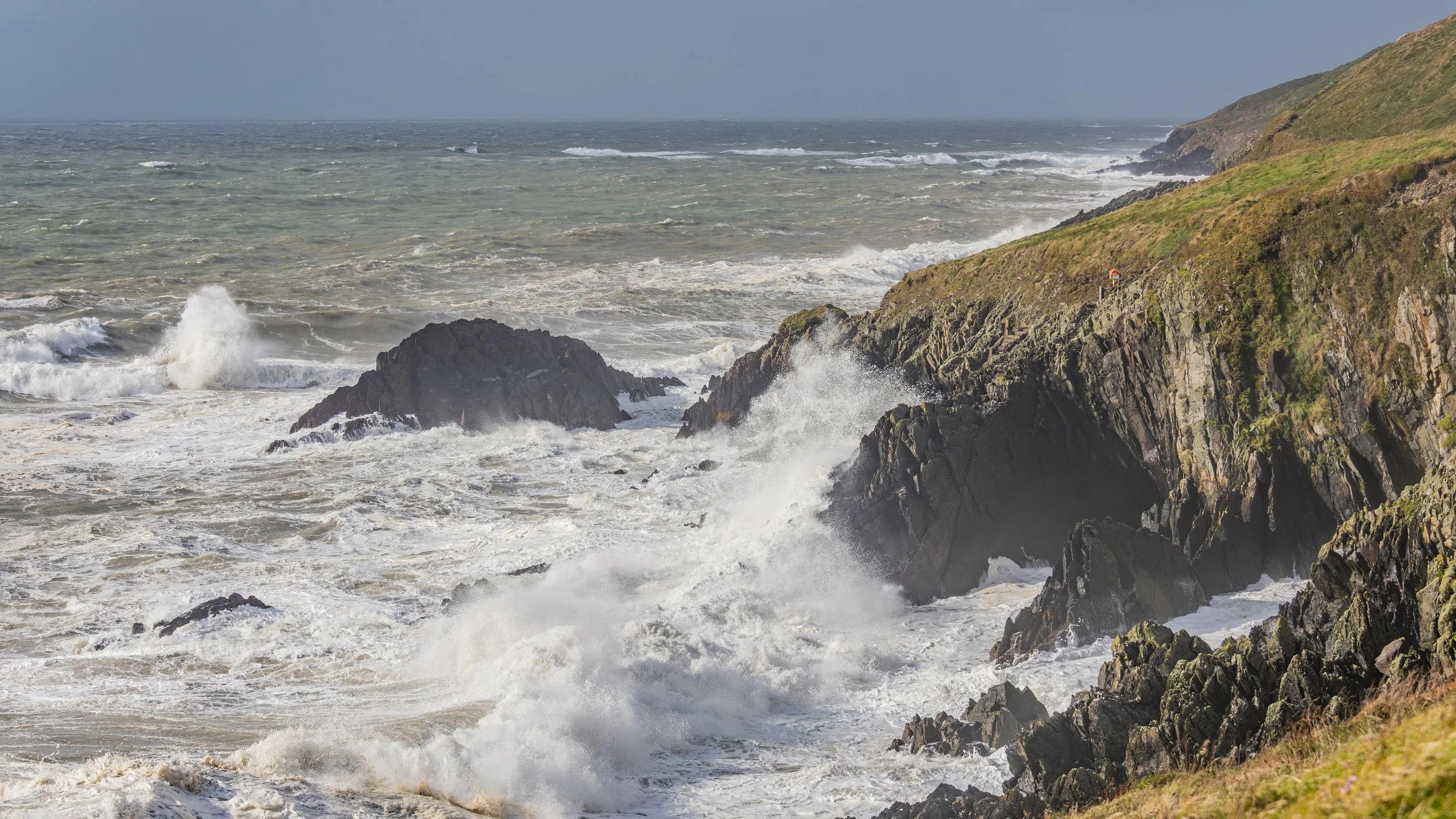
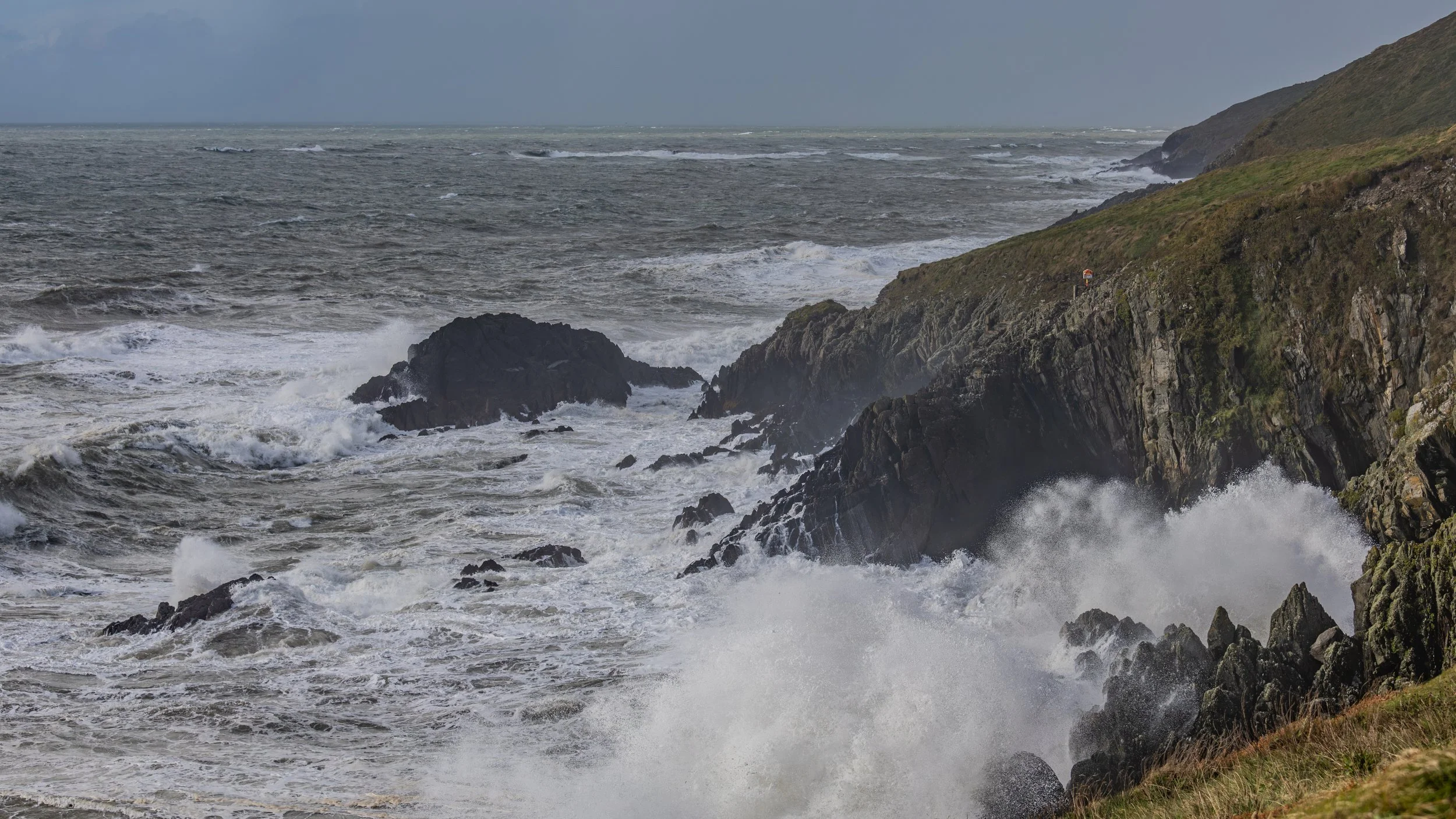
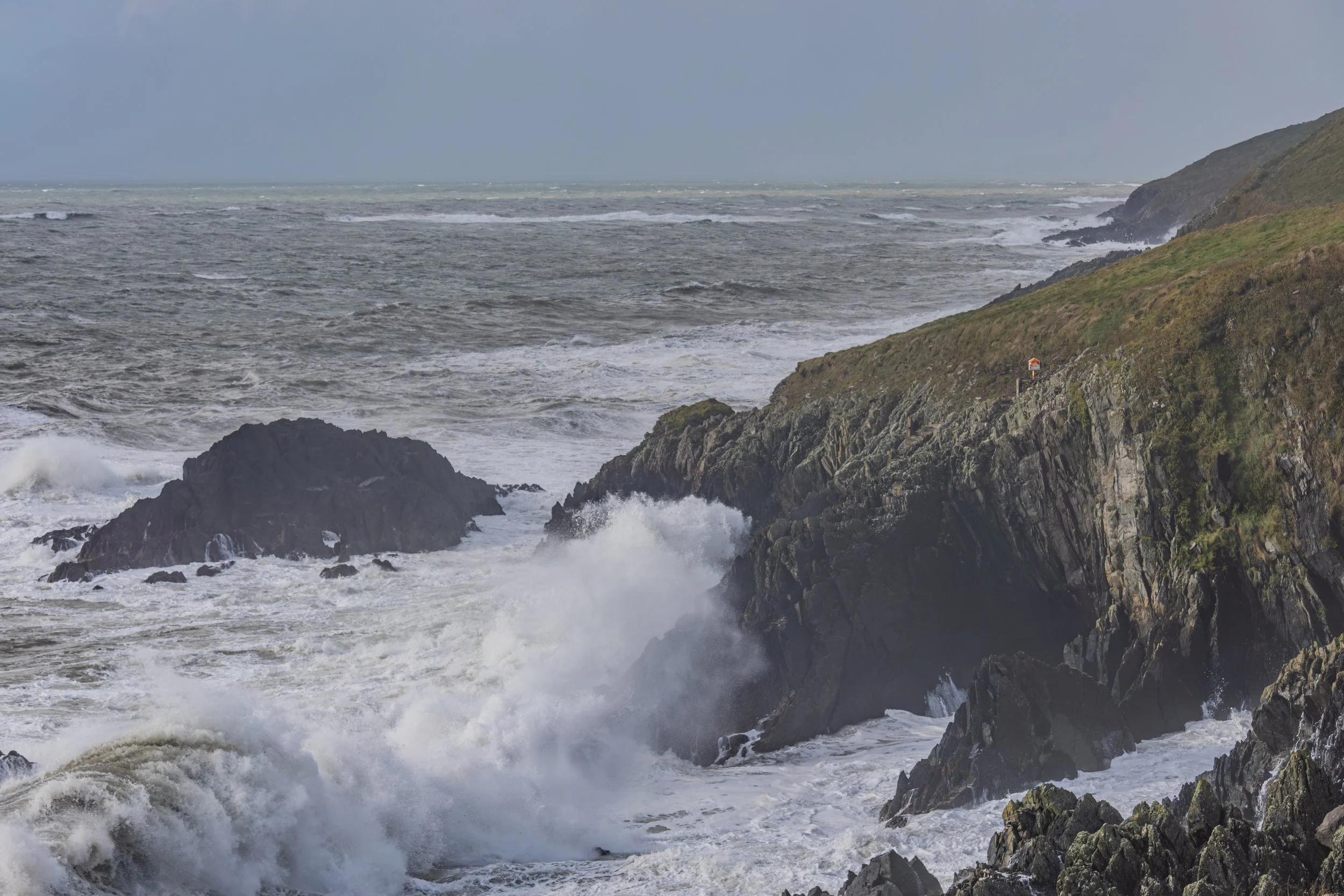
The storm had passed, but the swell remained, and on this morning it was around 3.7 metres. That immediately got my attention. I decided to head for one of my favourite locations, Ballycotton in County Cork, because it is a location I know well and one that has consistently given me opportunities to make photographs.
As I drove towards the coast, I could already see waves breaking in the distance. When you can see the sea clearly from the road and the waves are already visible from that far away, you know there is probably something worth investigating.
When I arrived, I did not need much convincing.
The waves were larger than I had expected and, just as importantly, the light was good. I parked up, took the short walk towards the shooting location and started thinking about how I wanted to approach the morning.
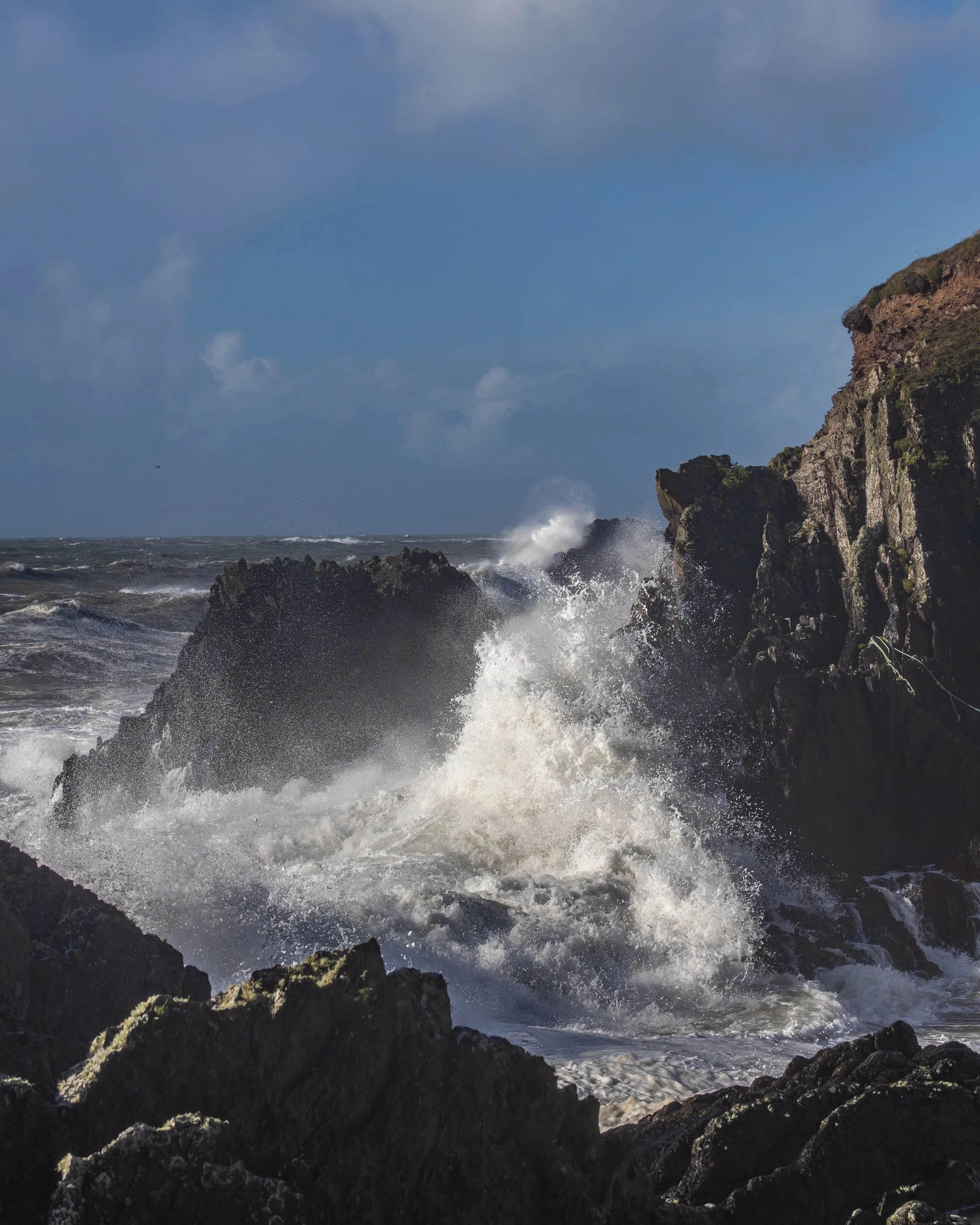
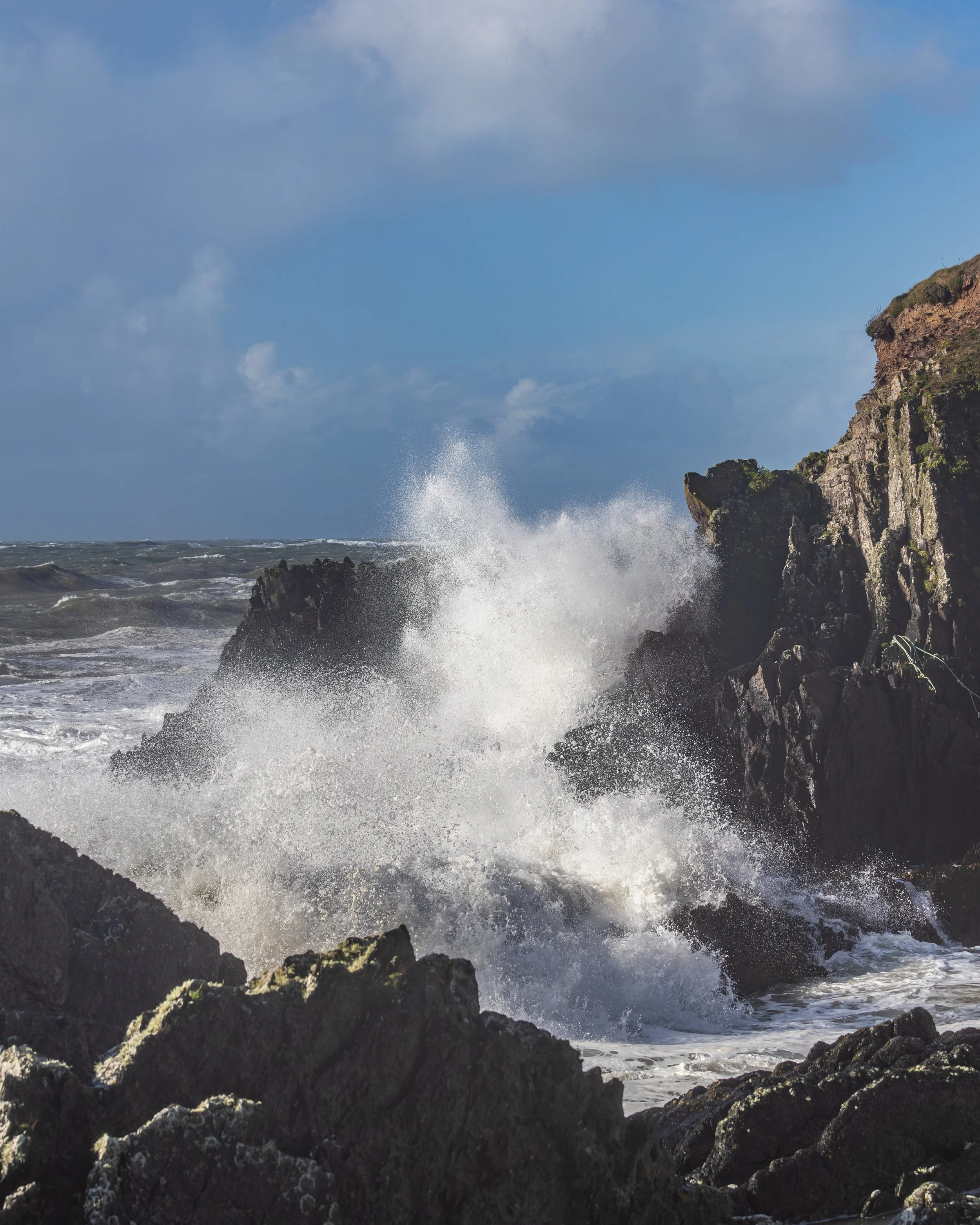
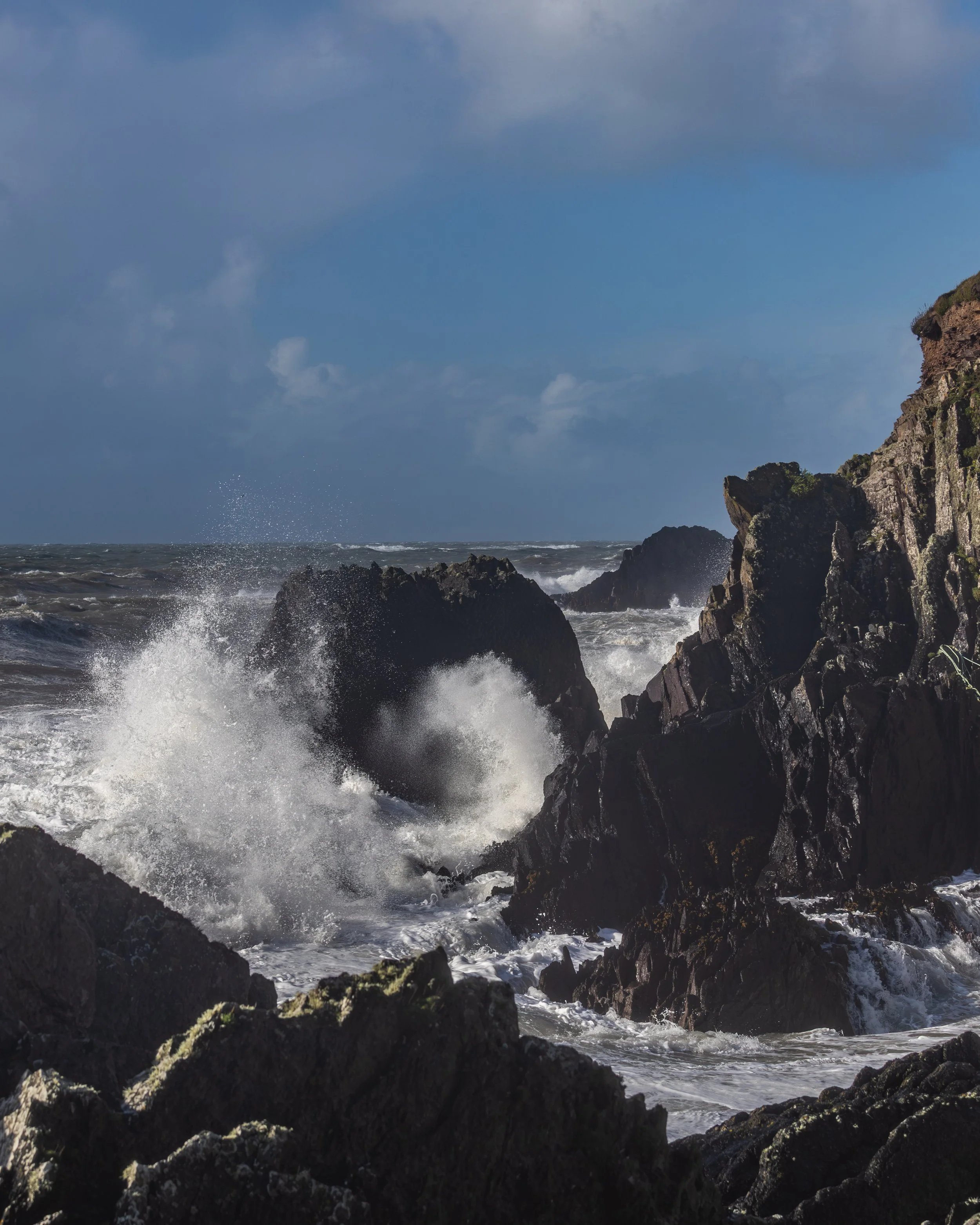
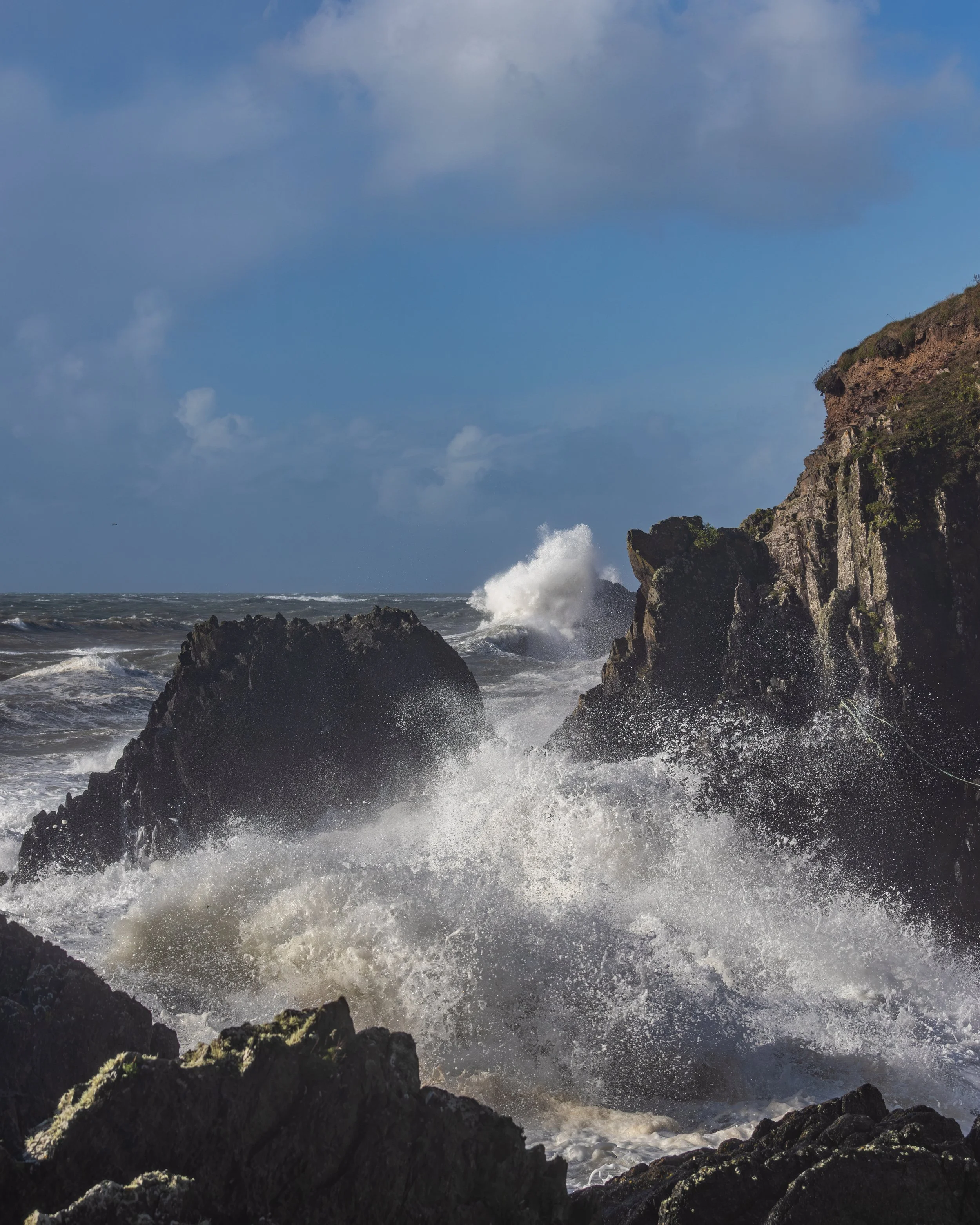
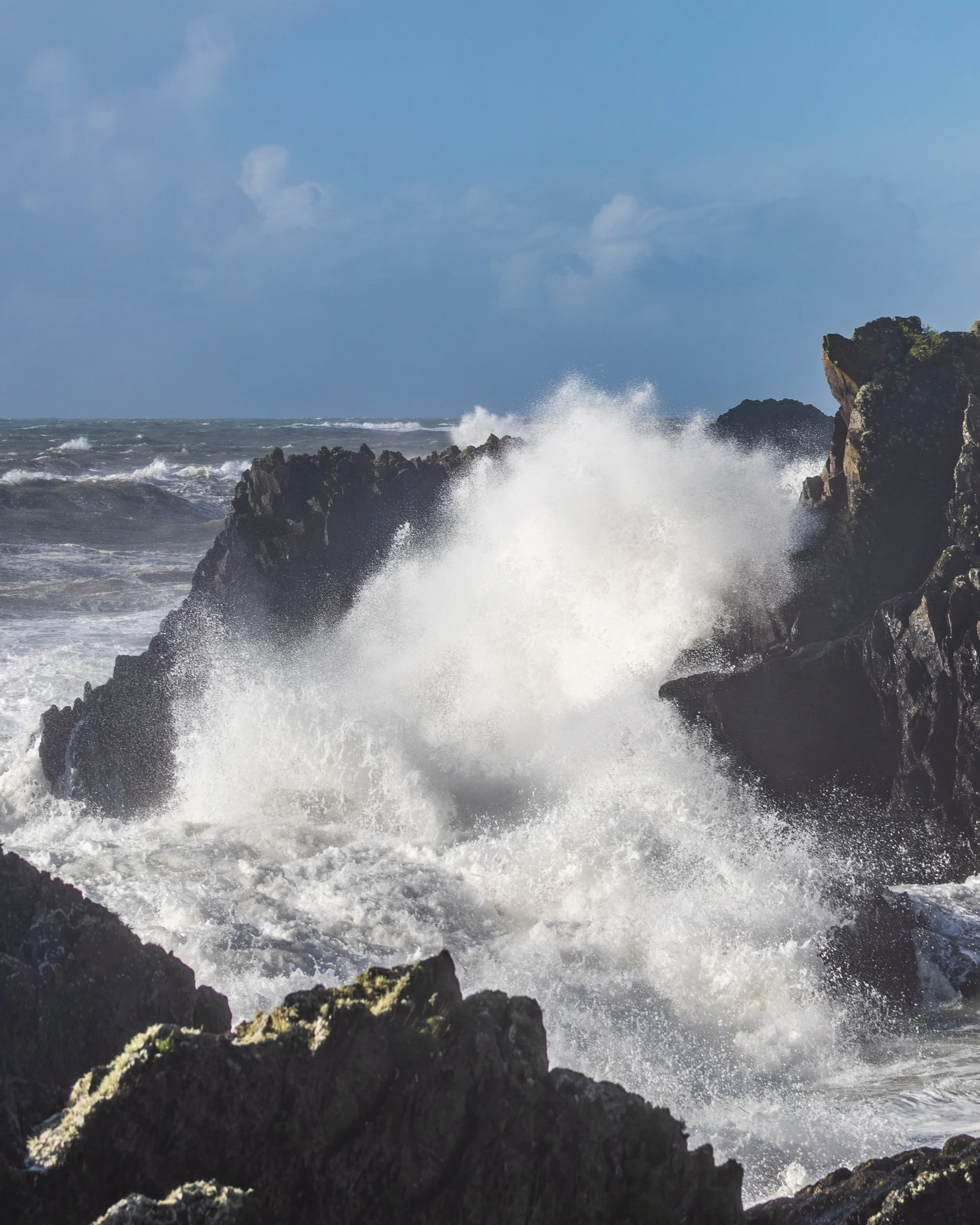
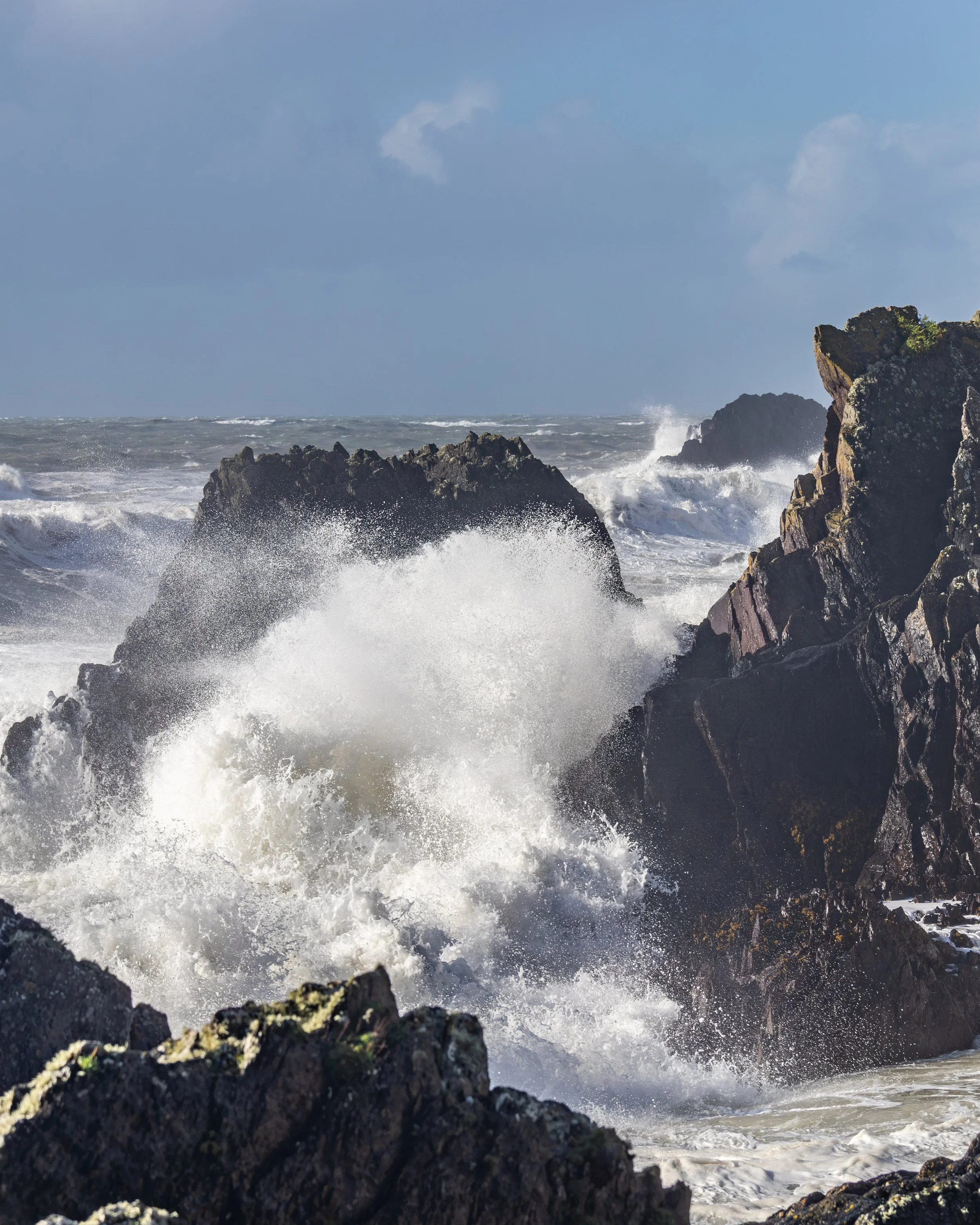
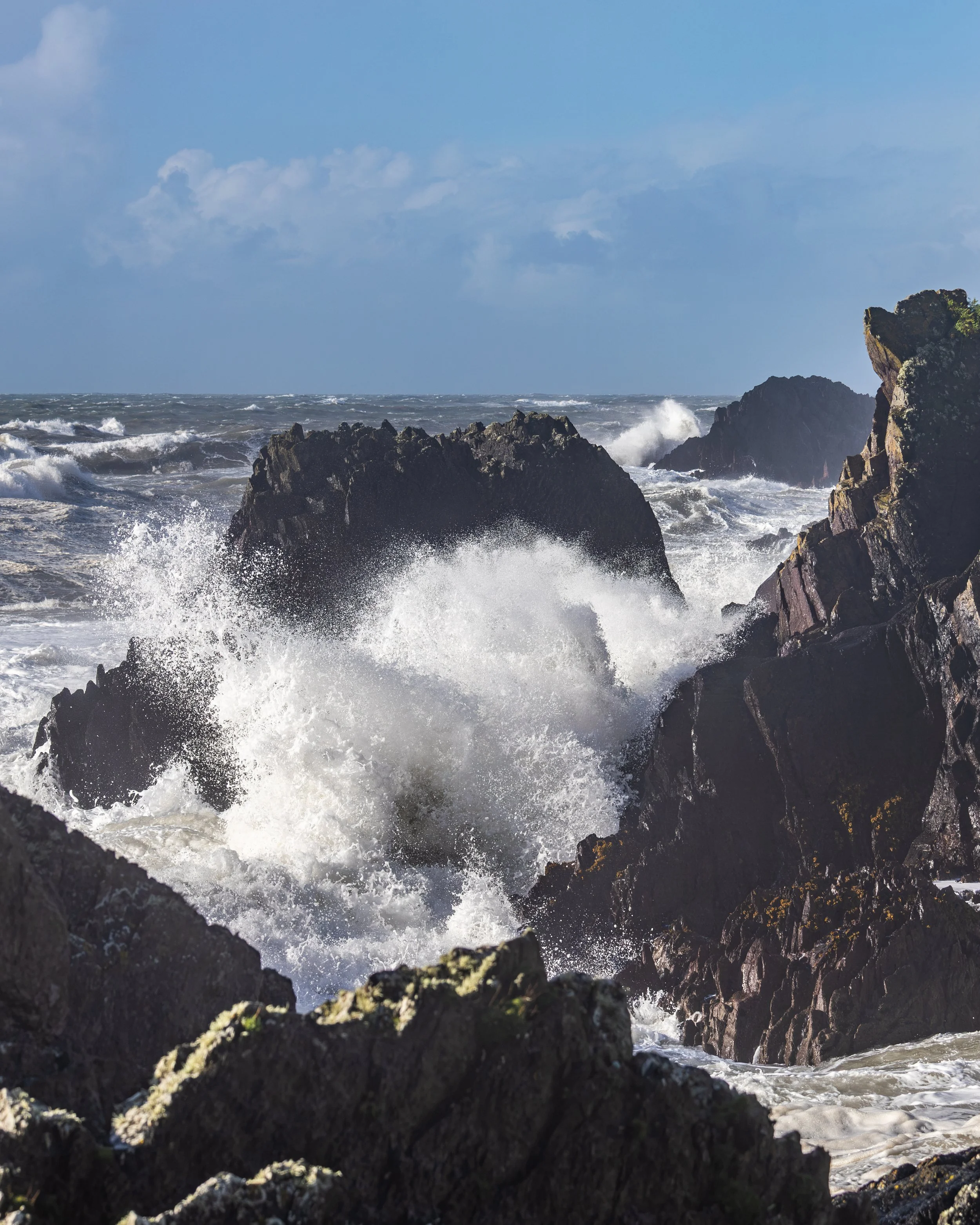
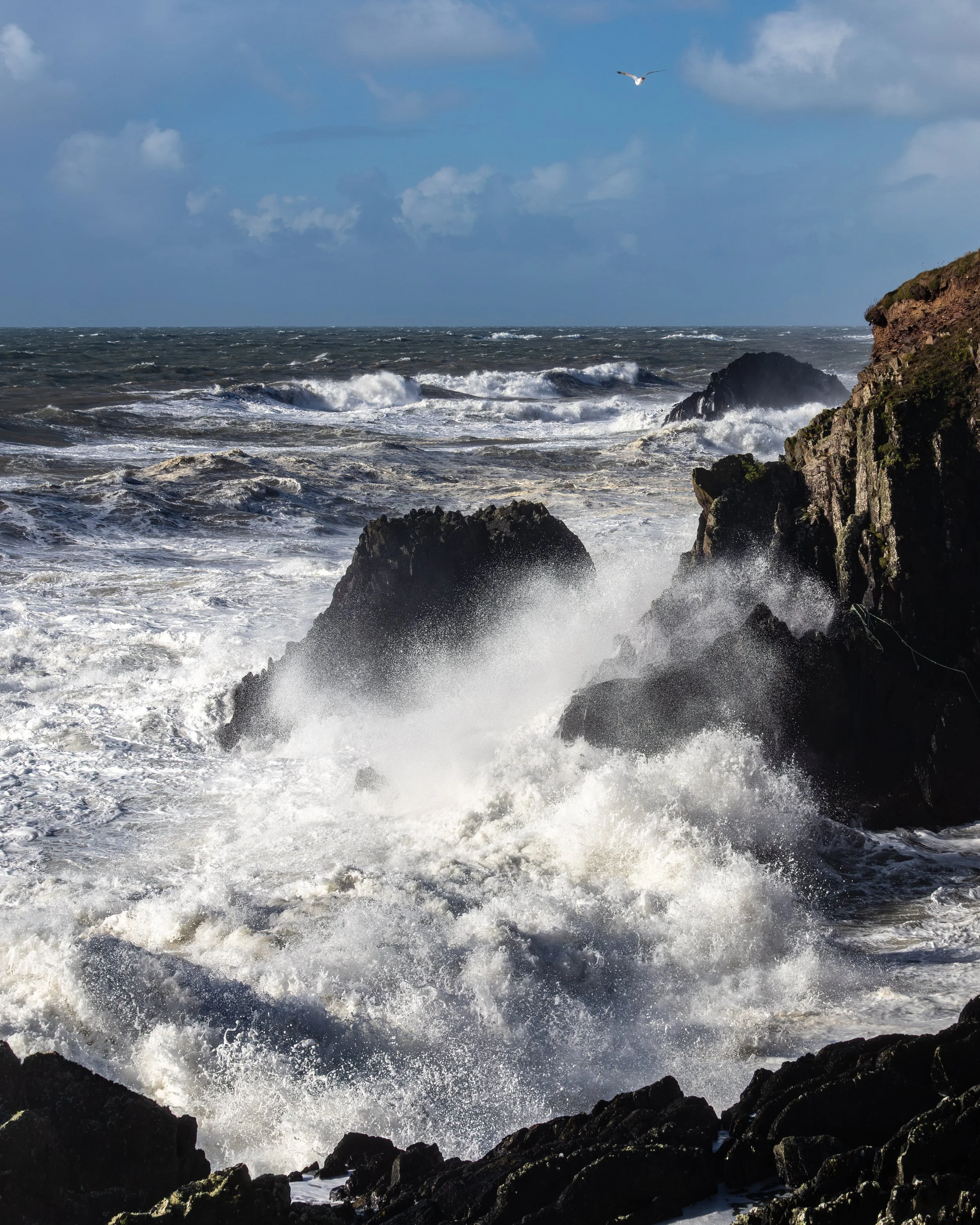
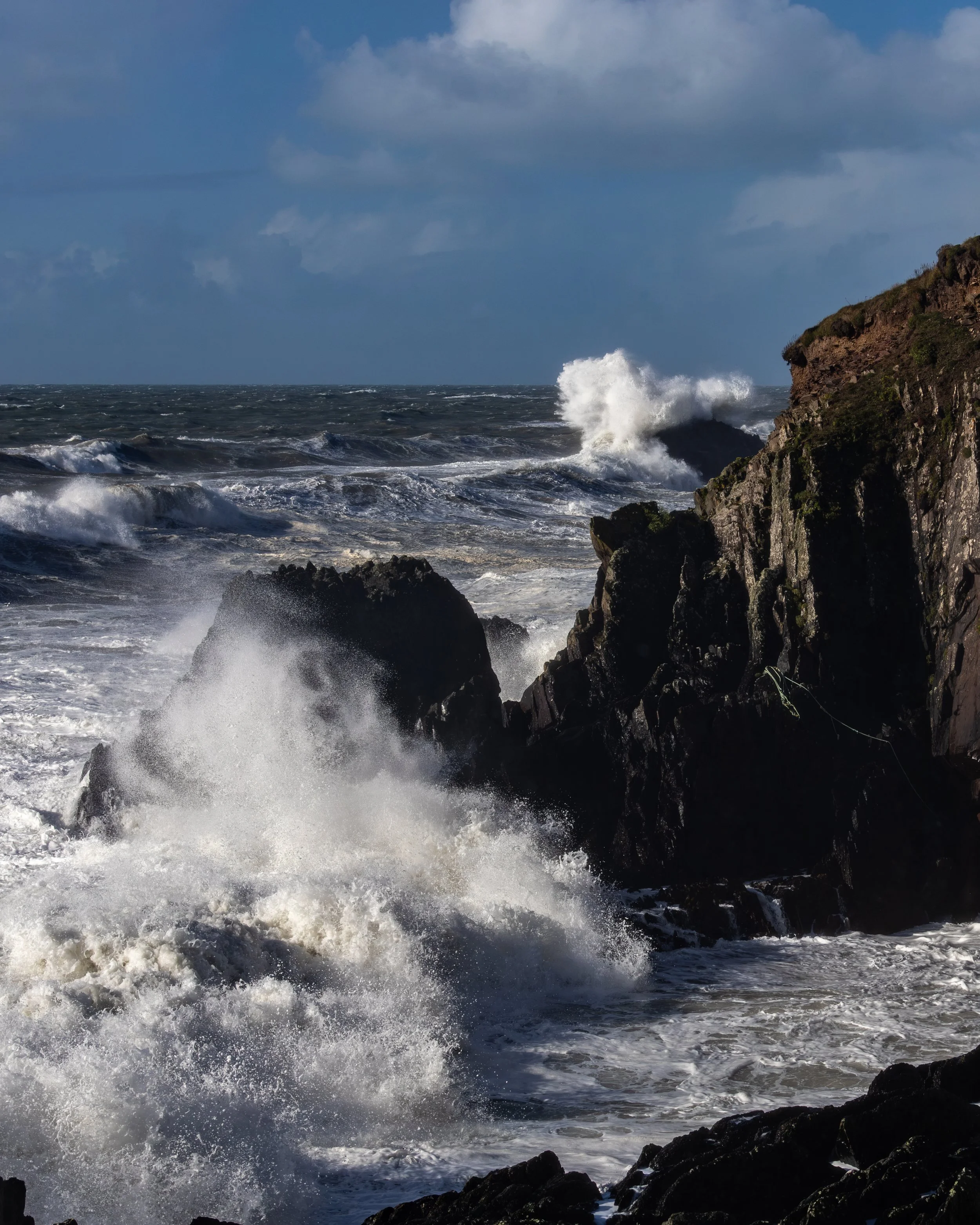
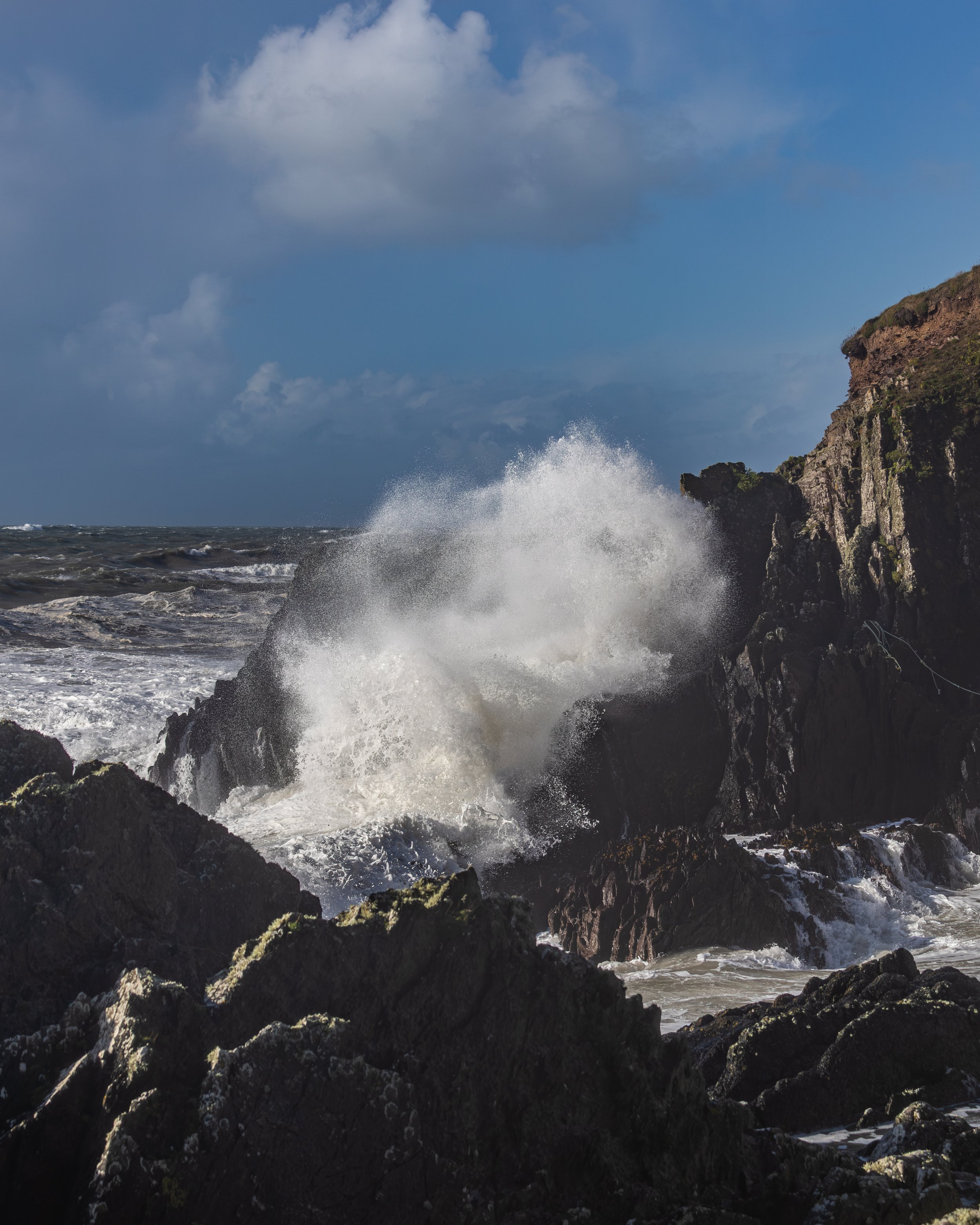
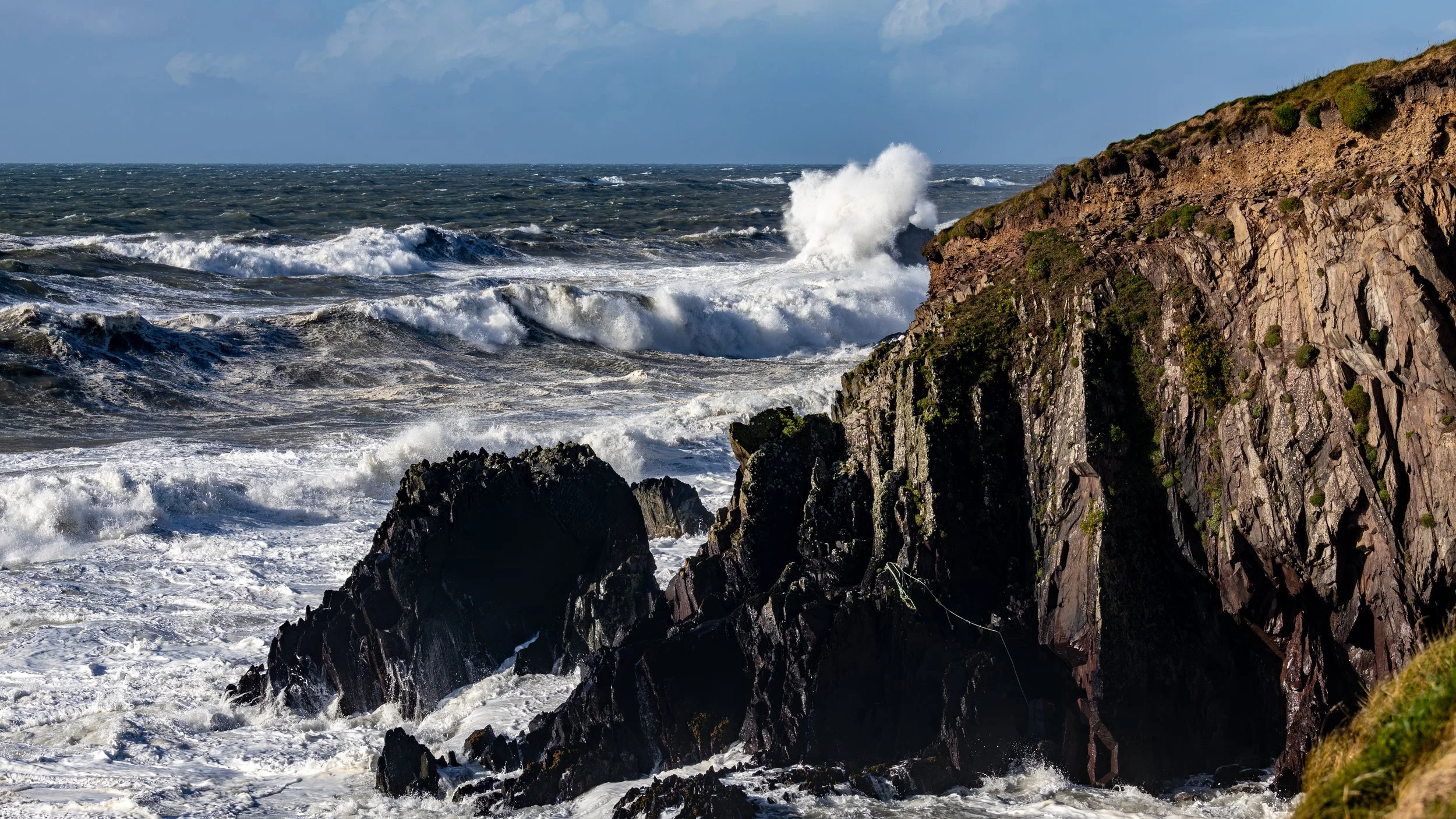
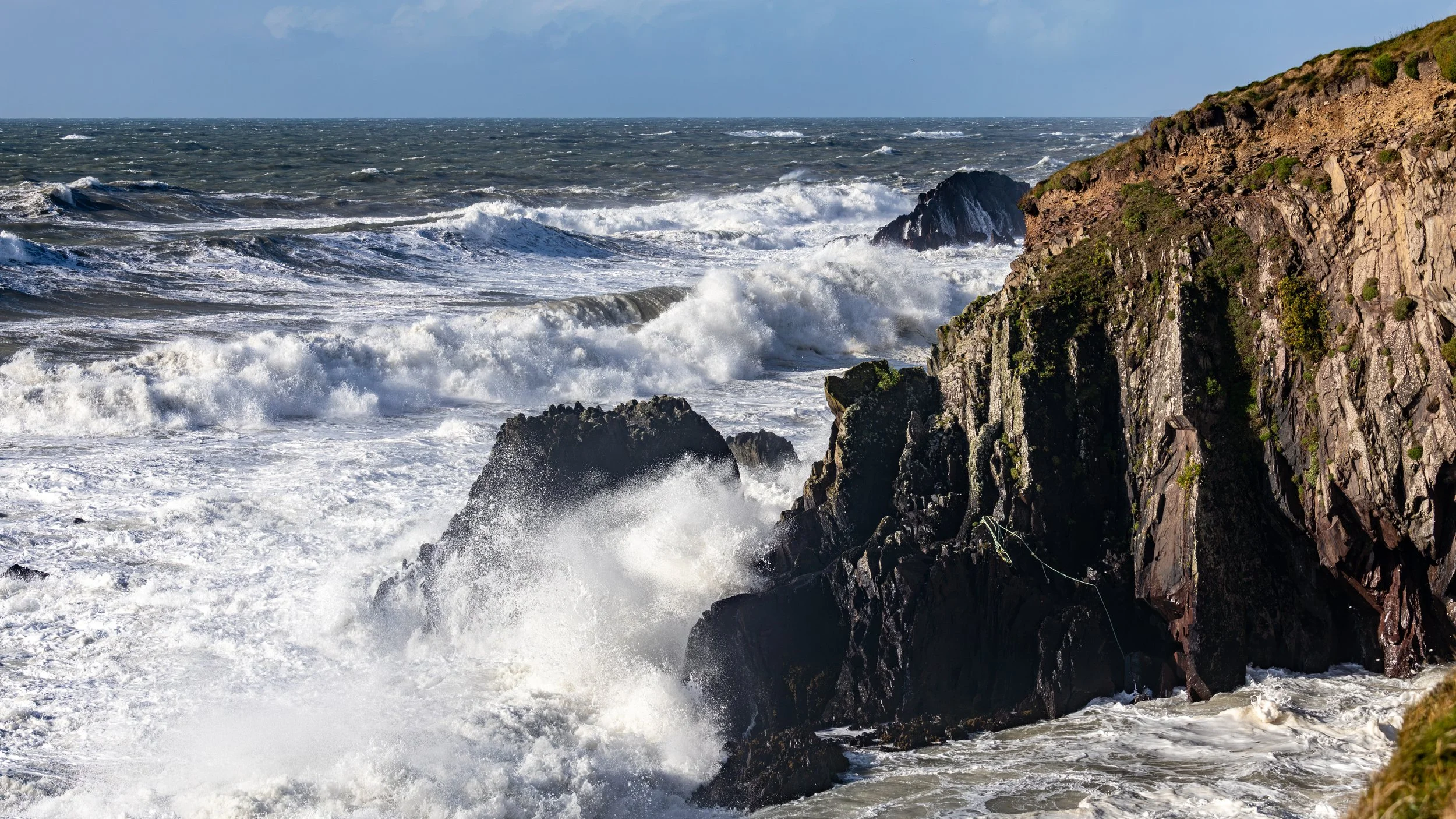
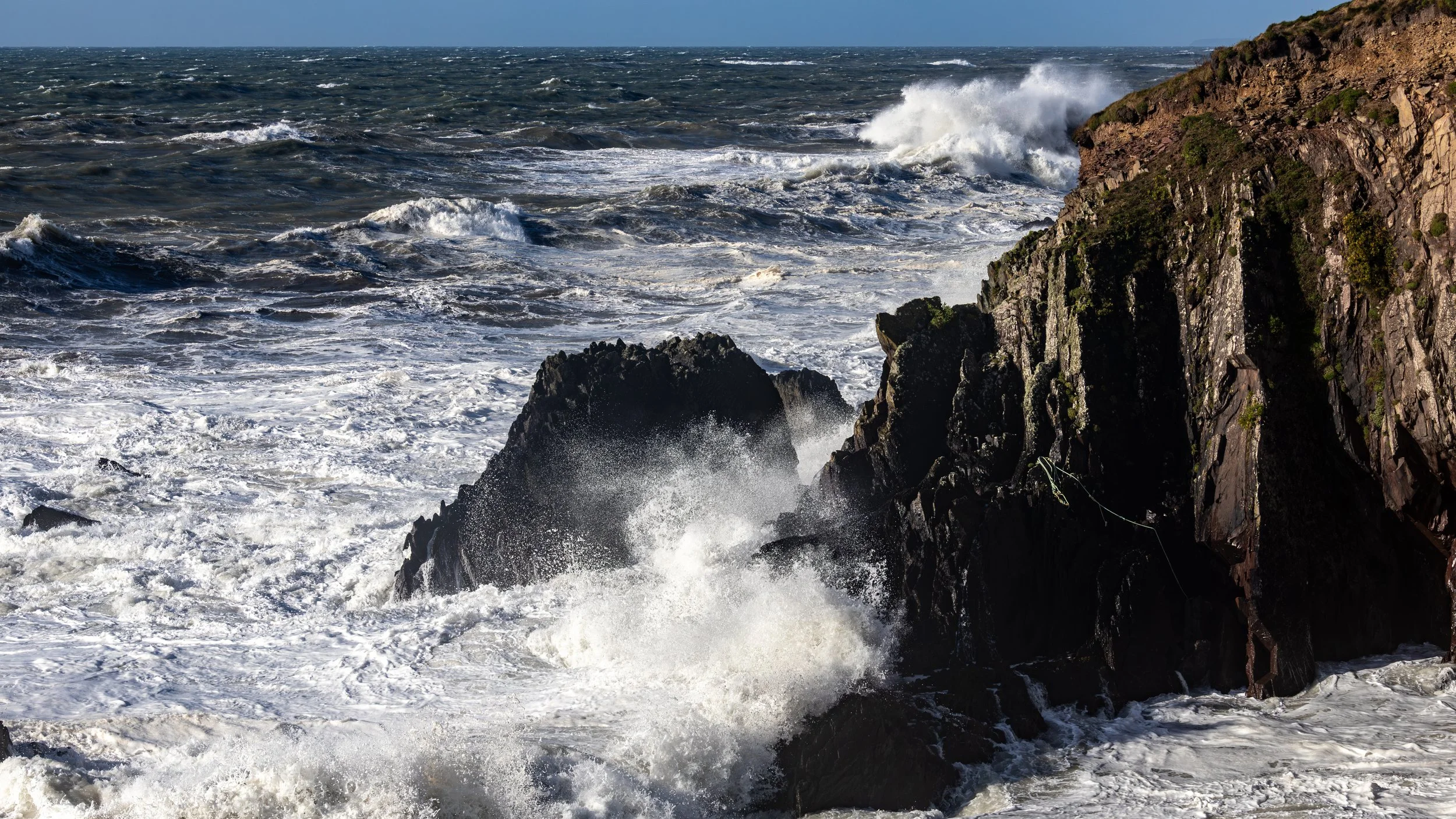
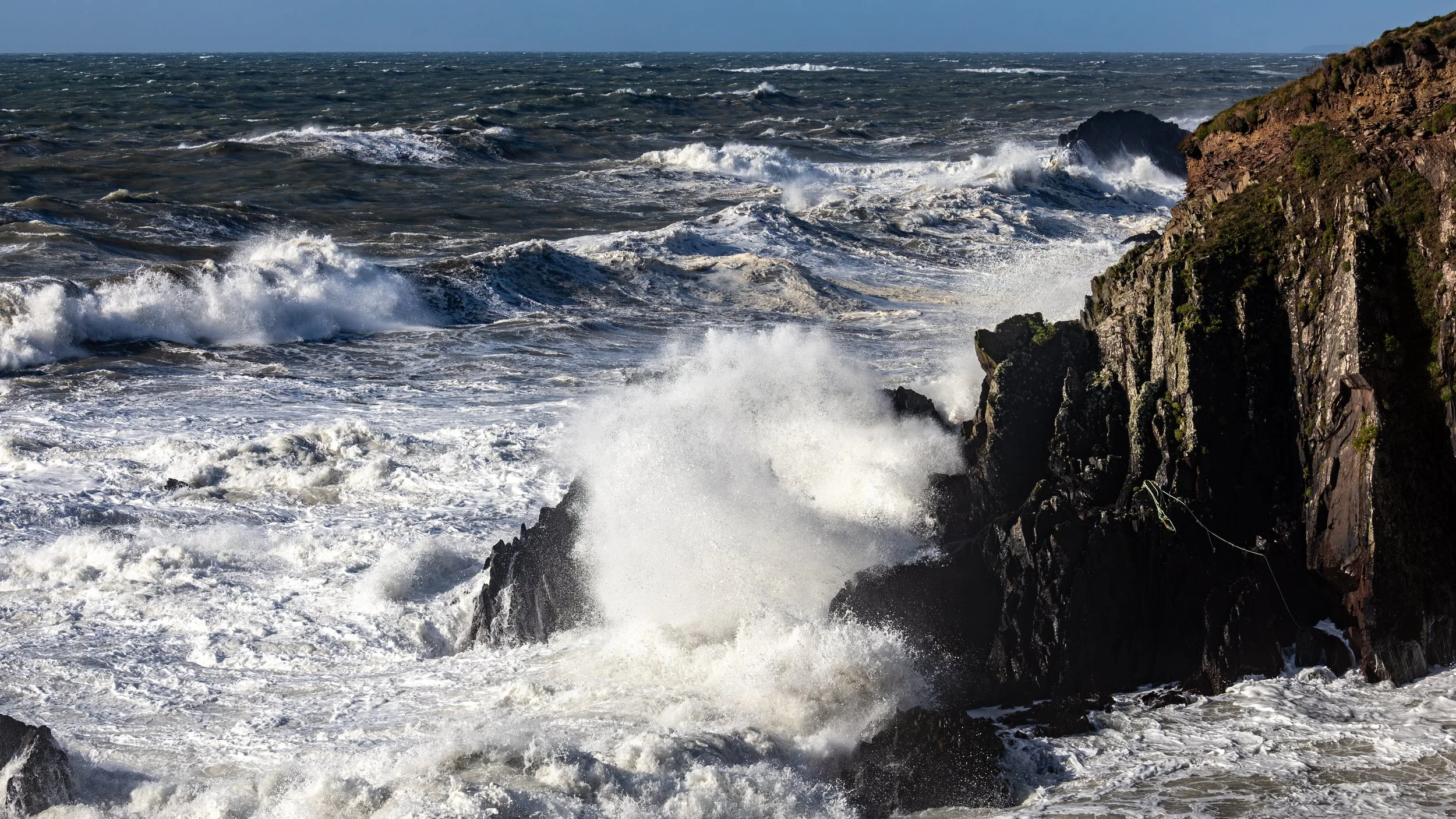
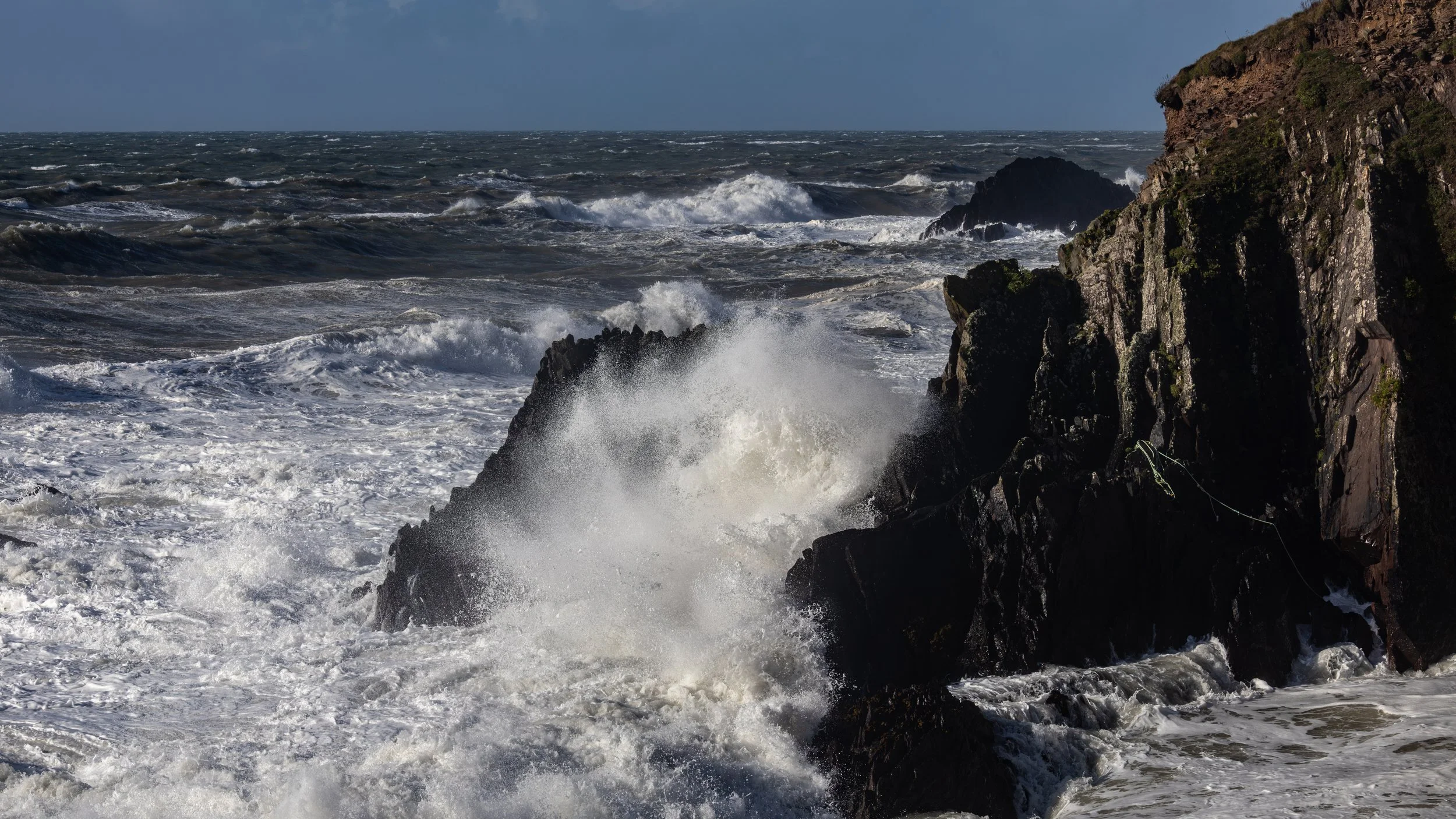
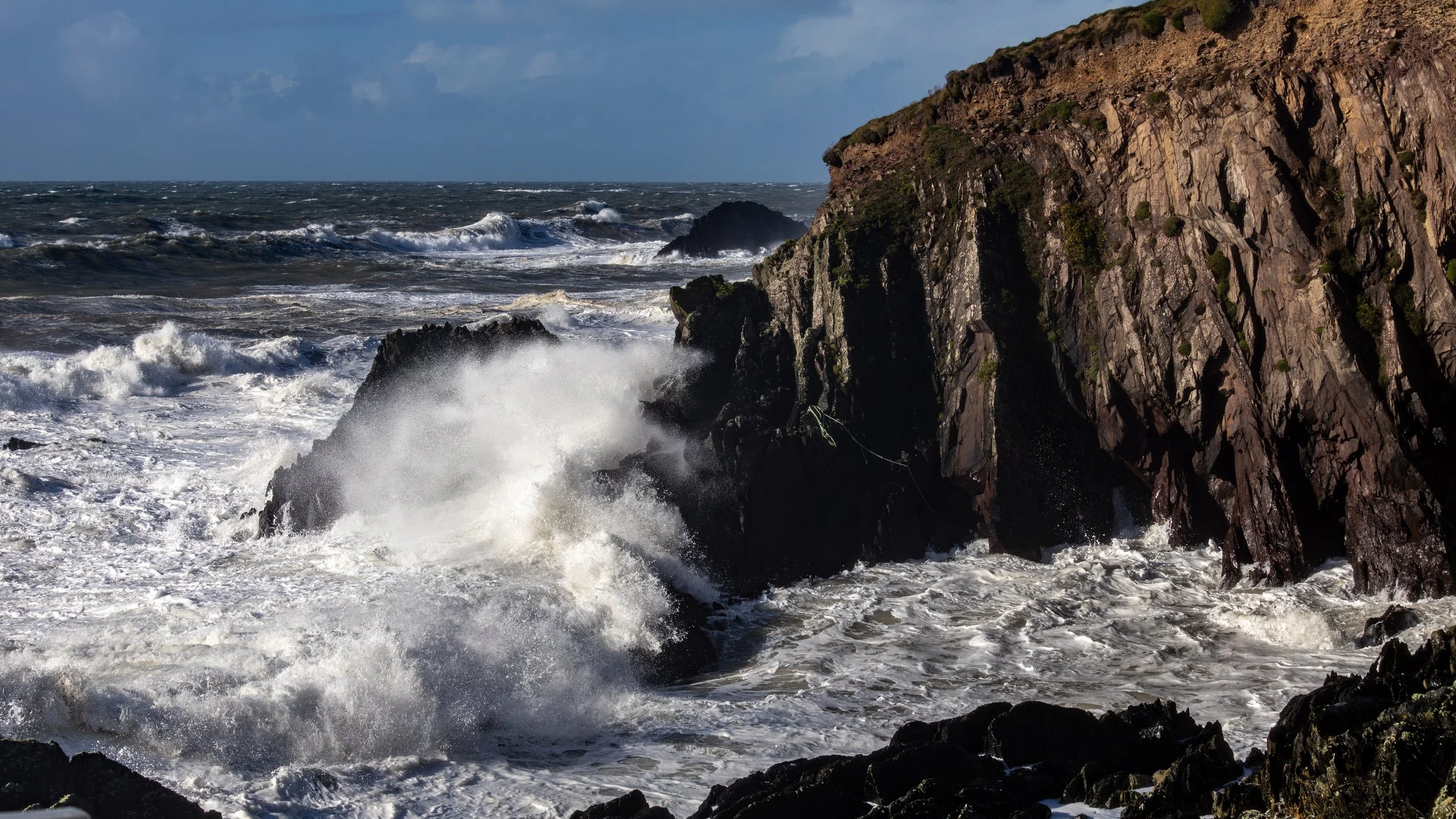
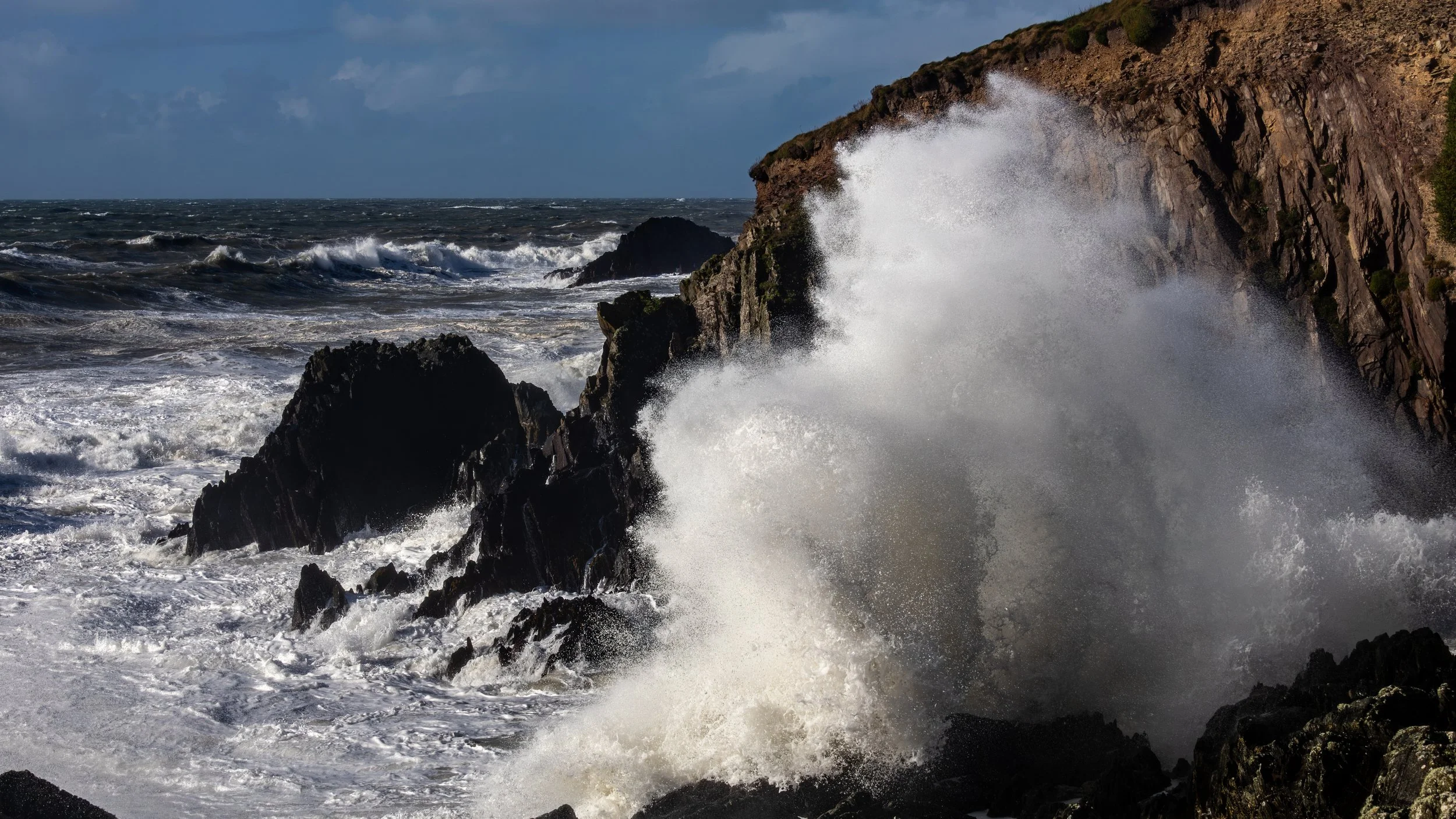
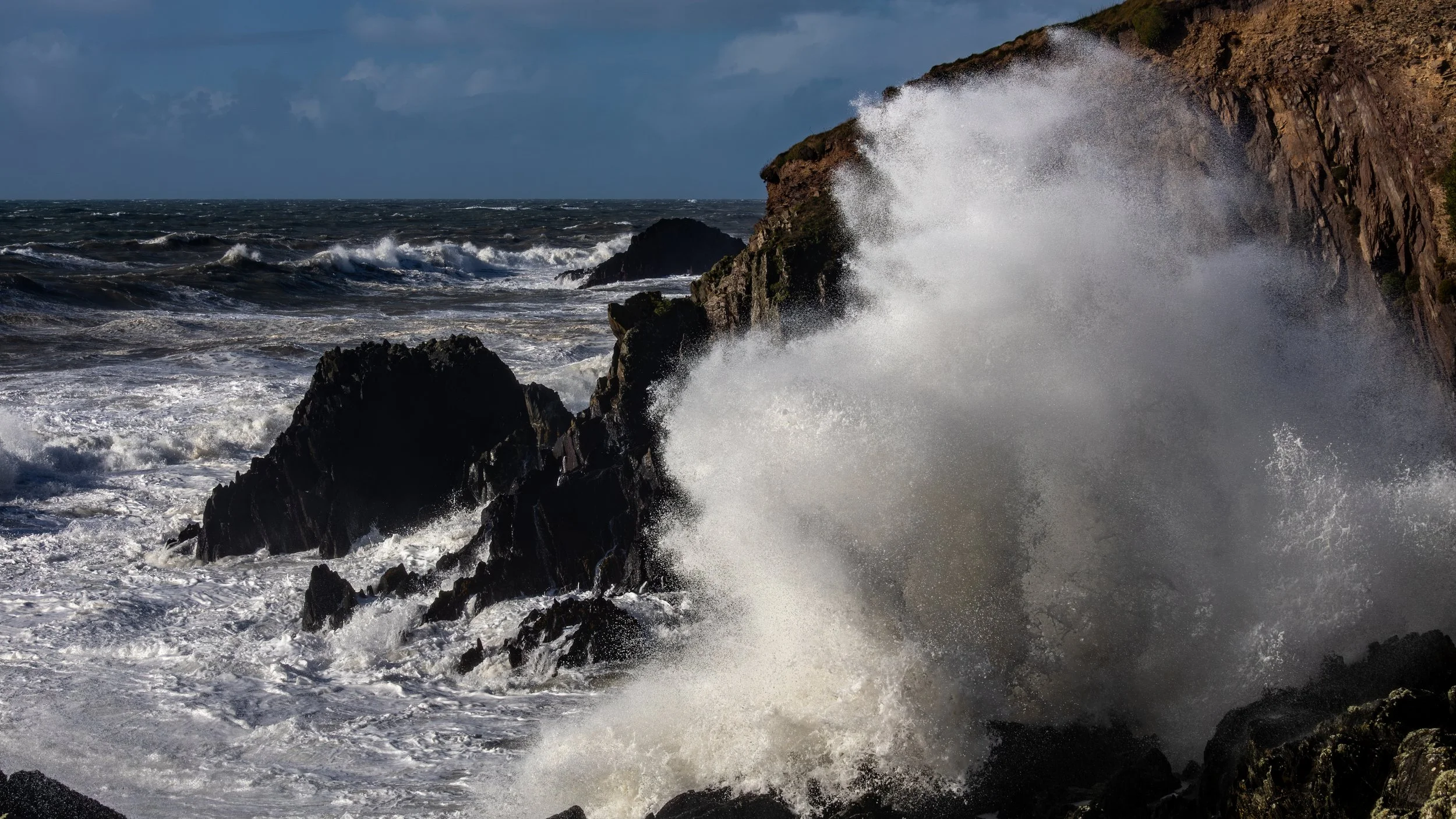
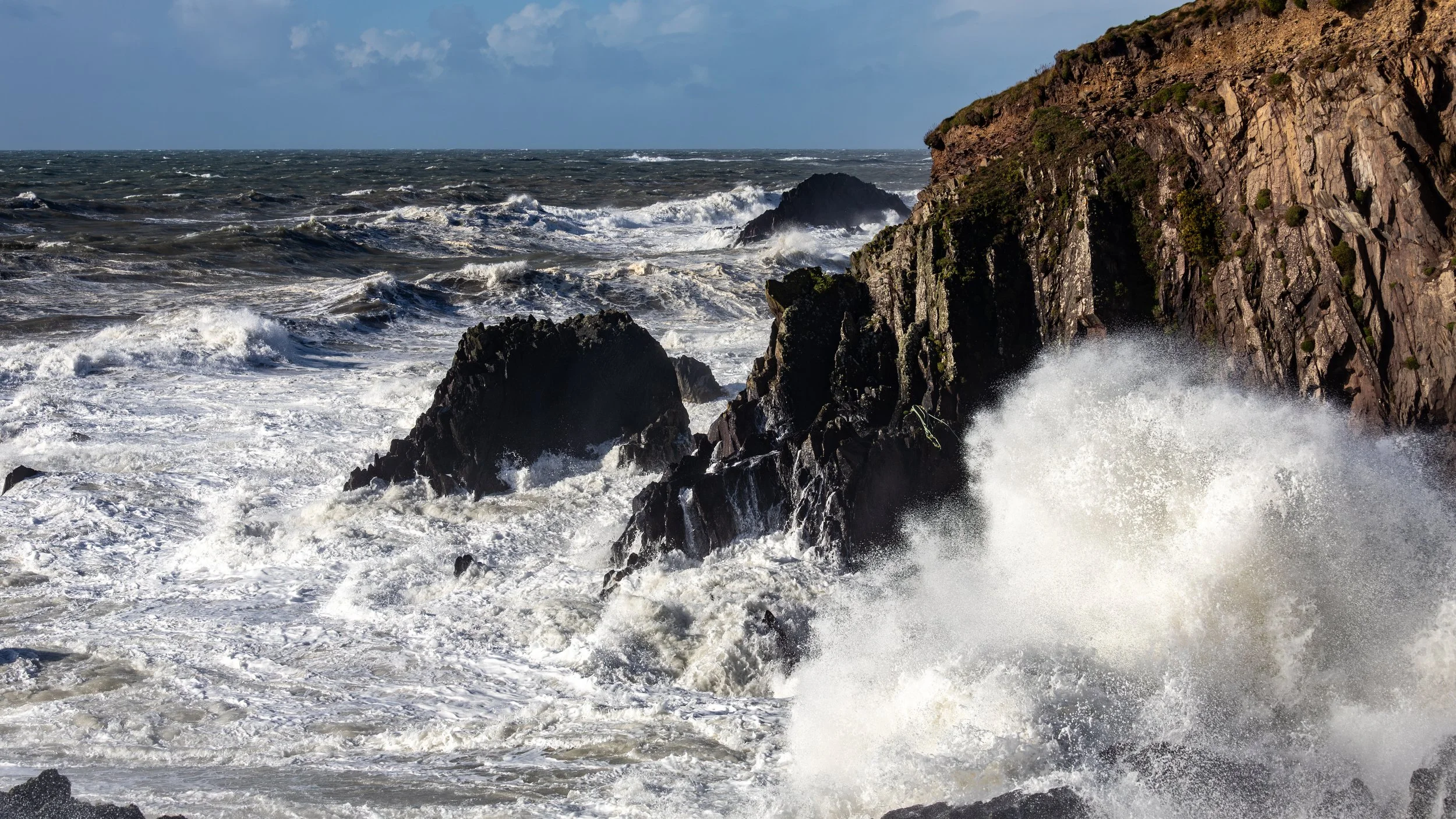
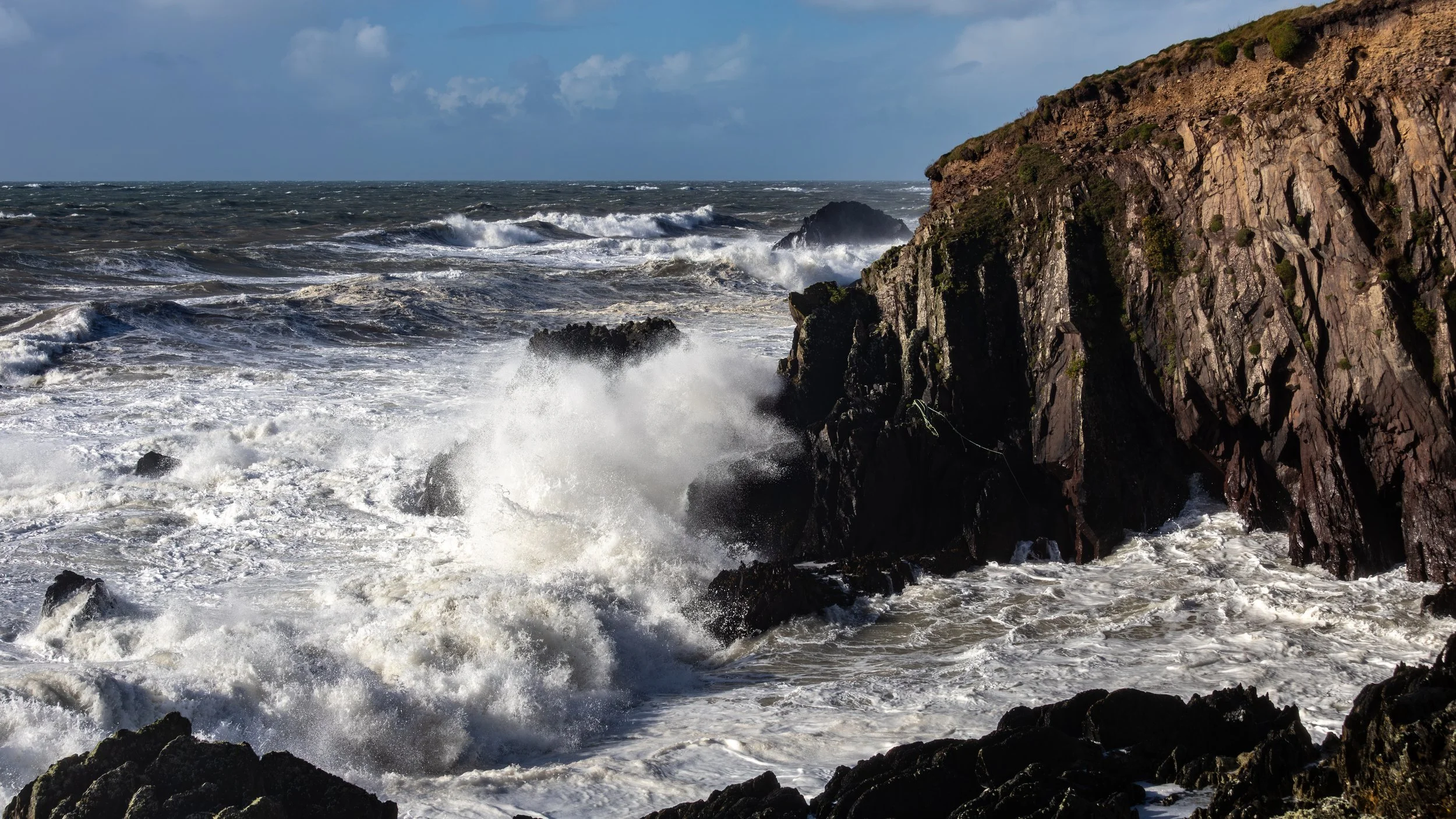
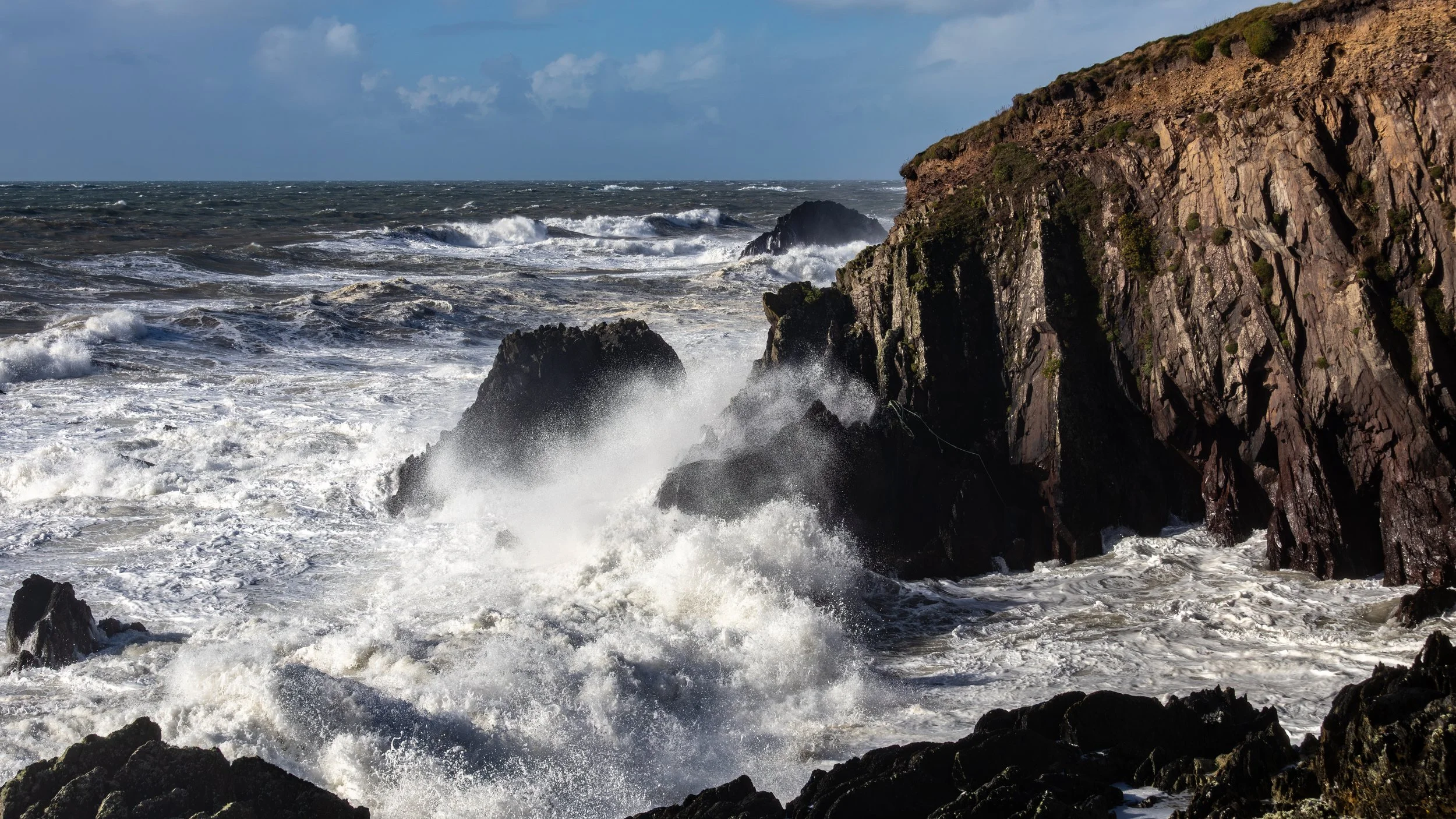
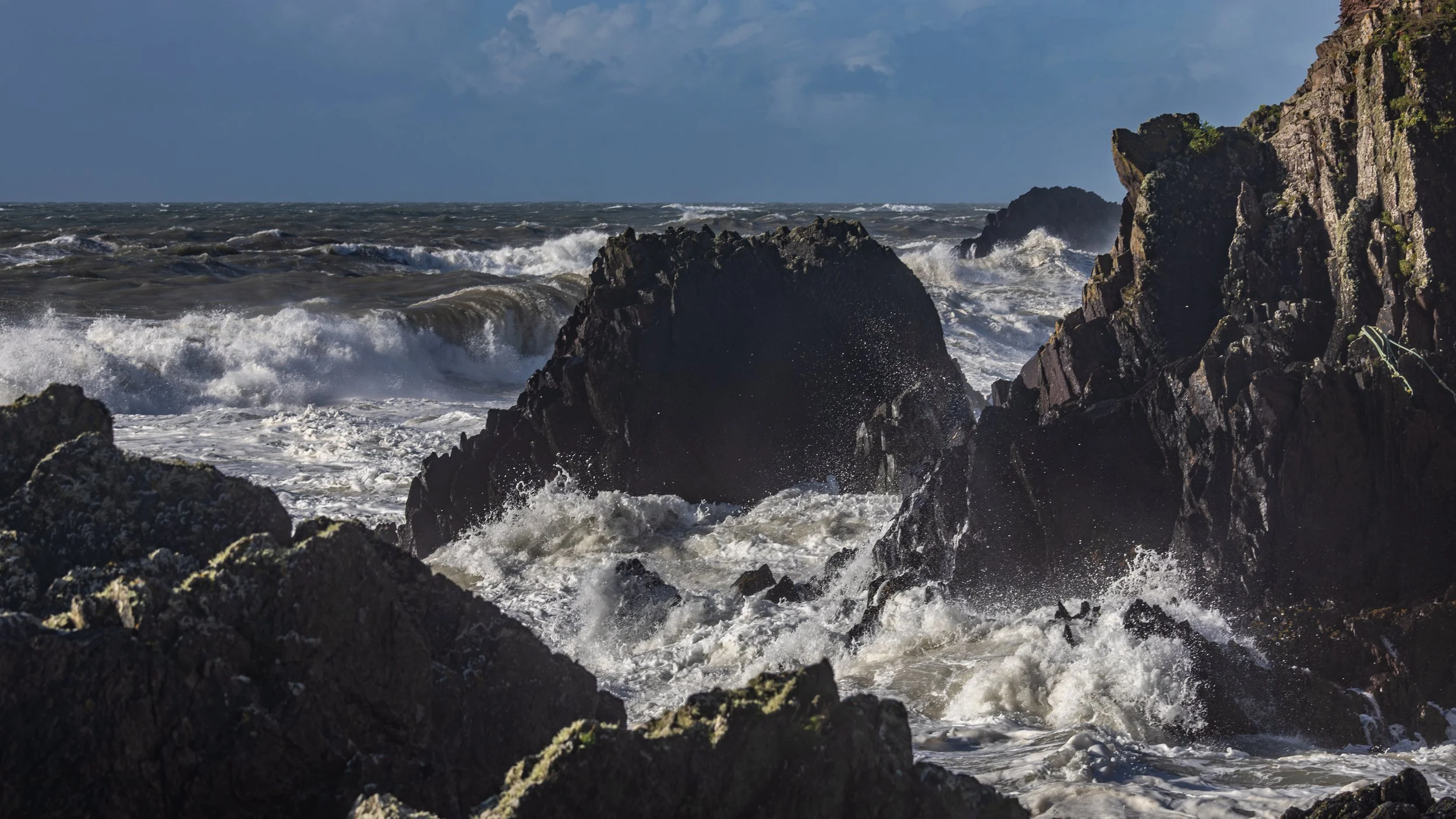
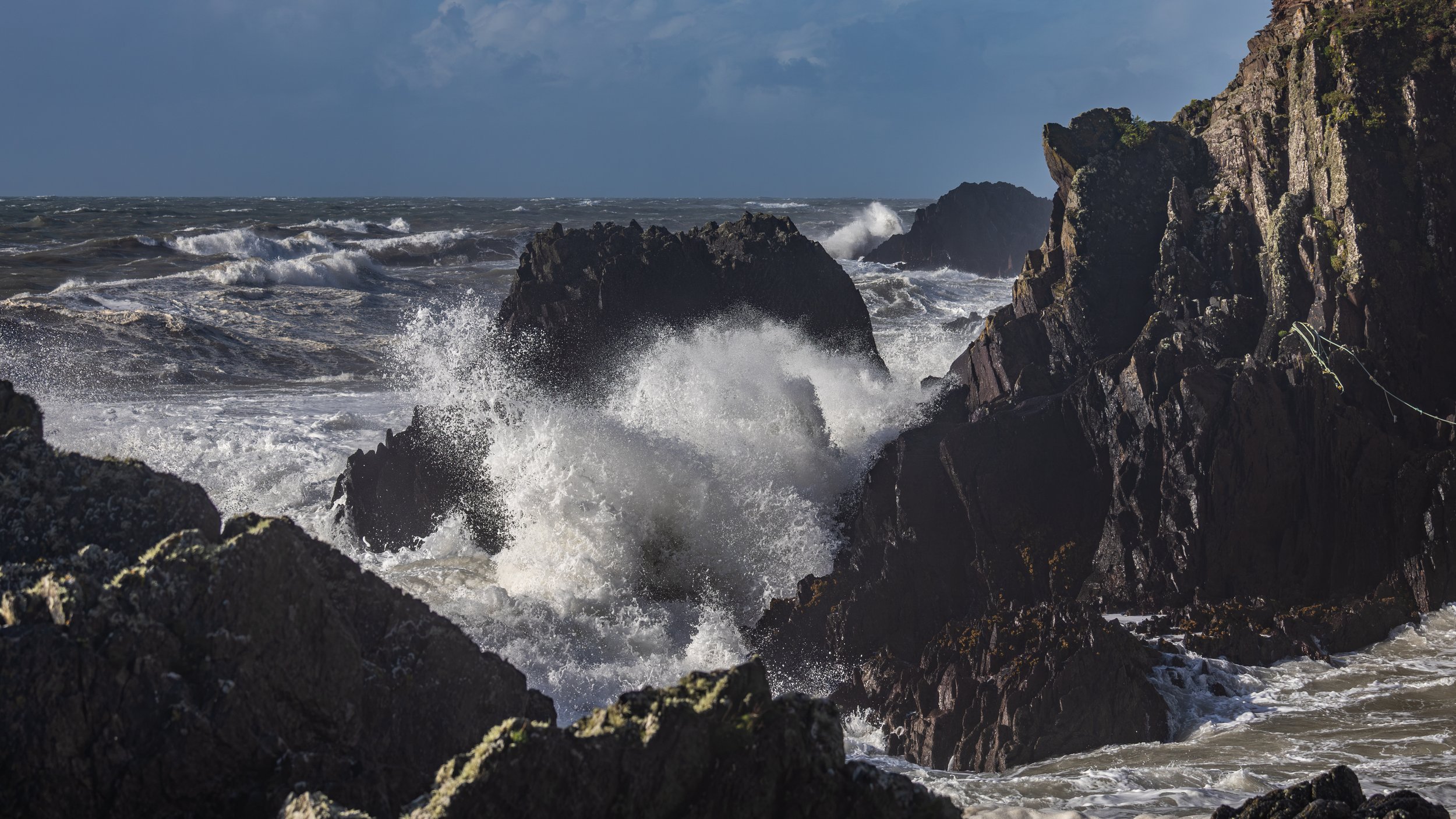
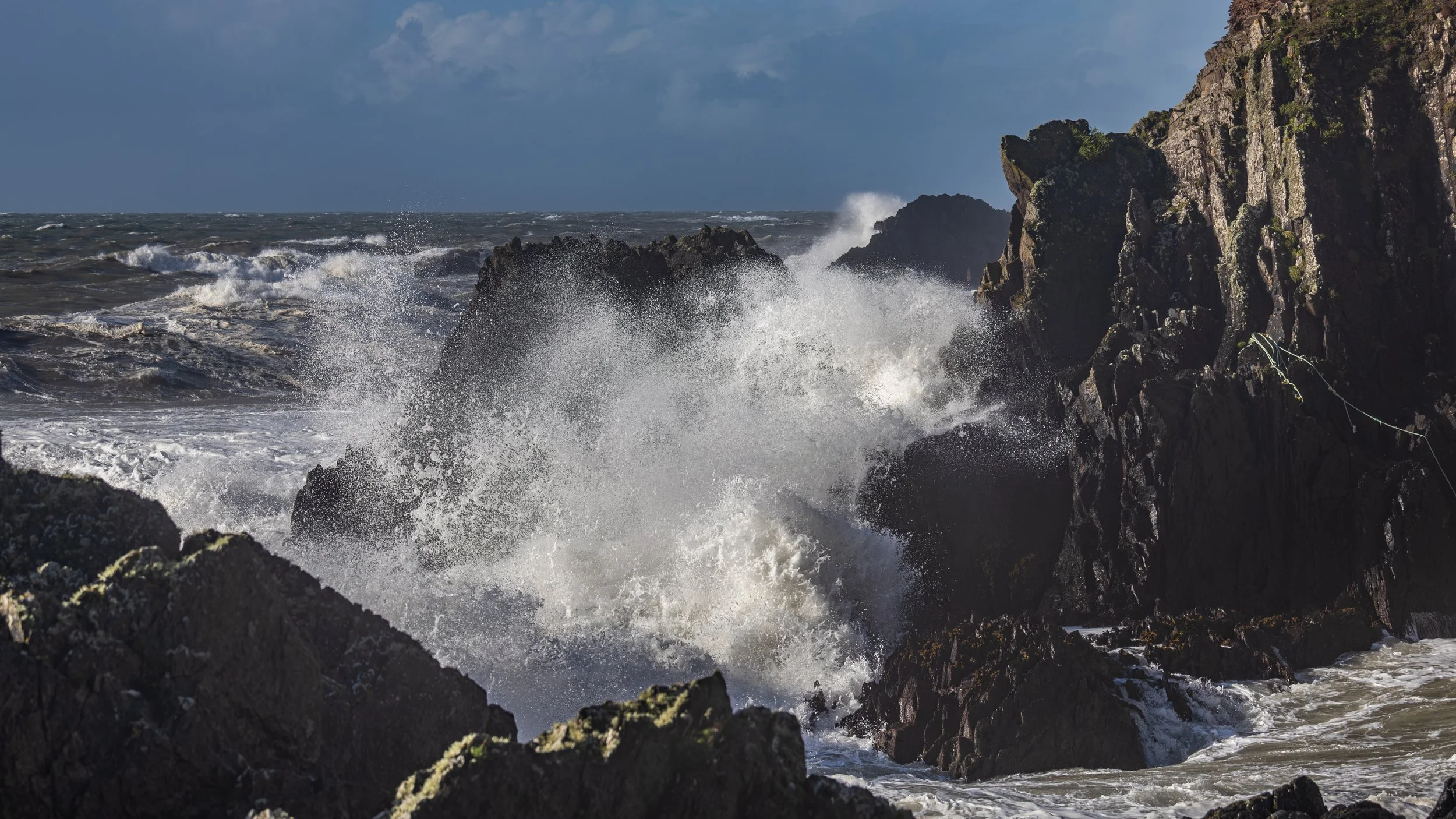
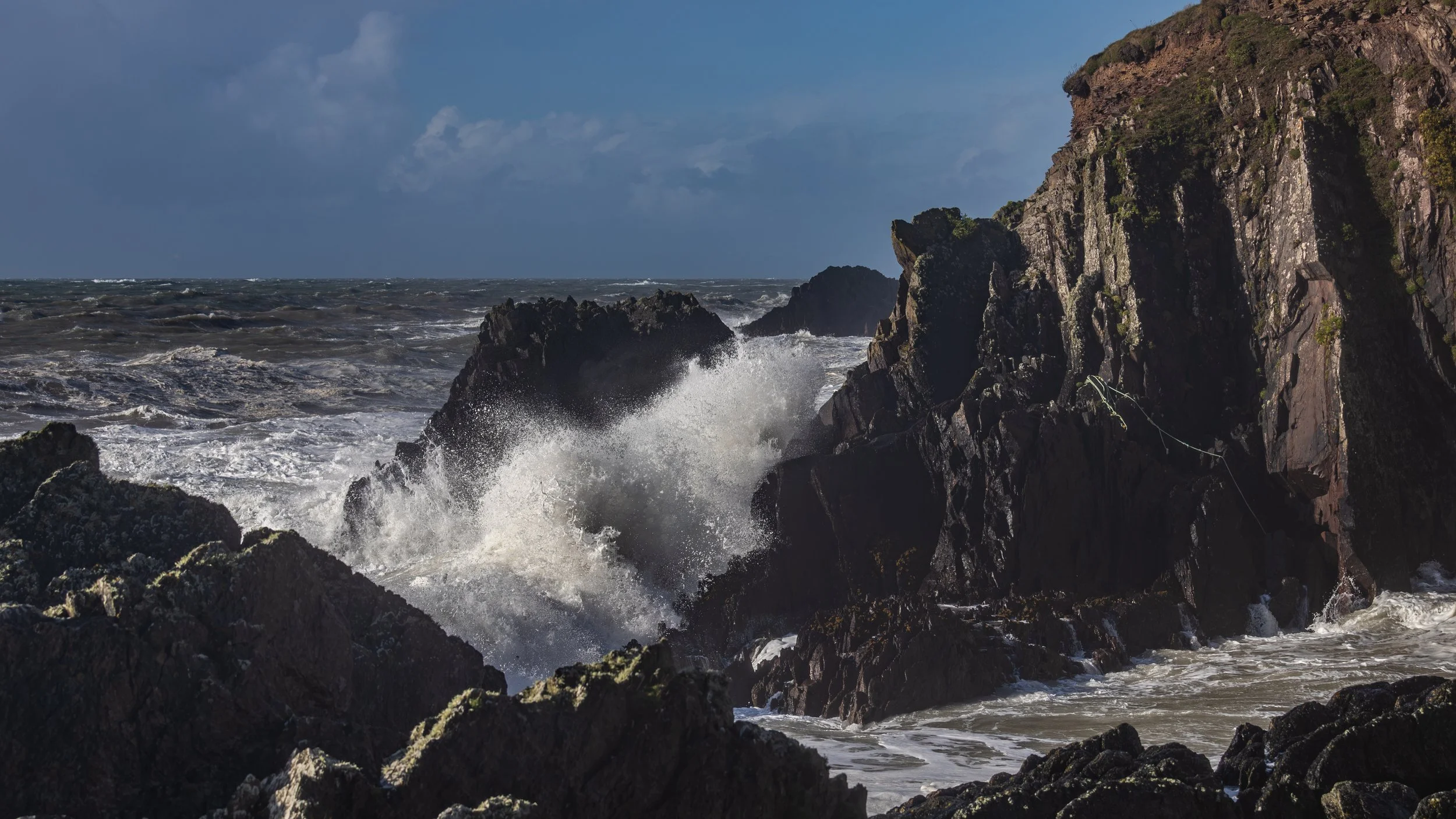
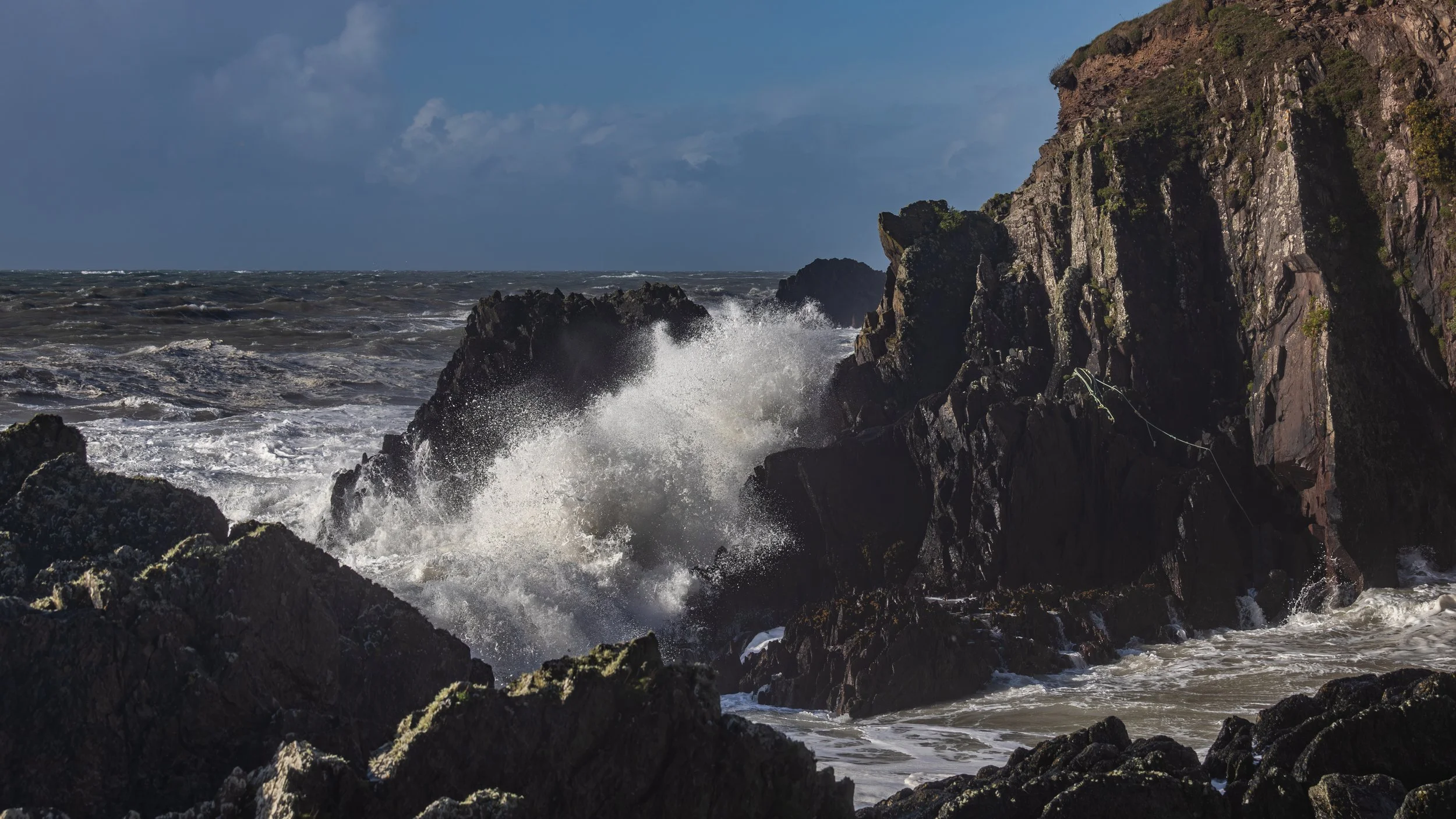
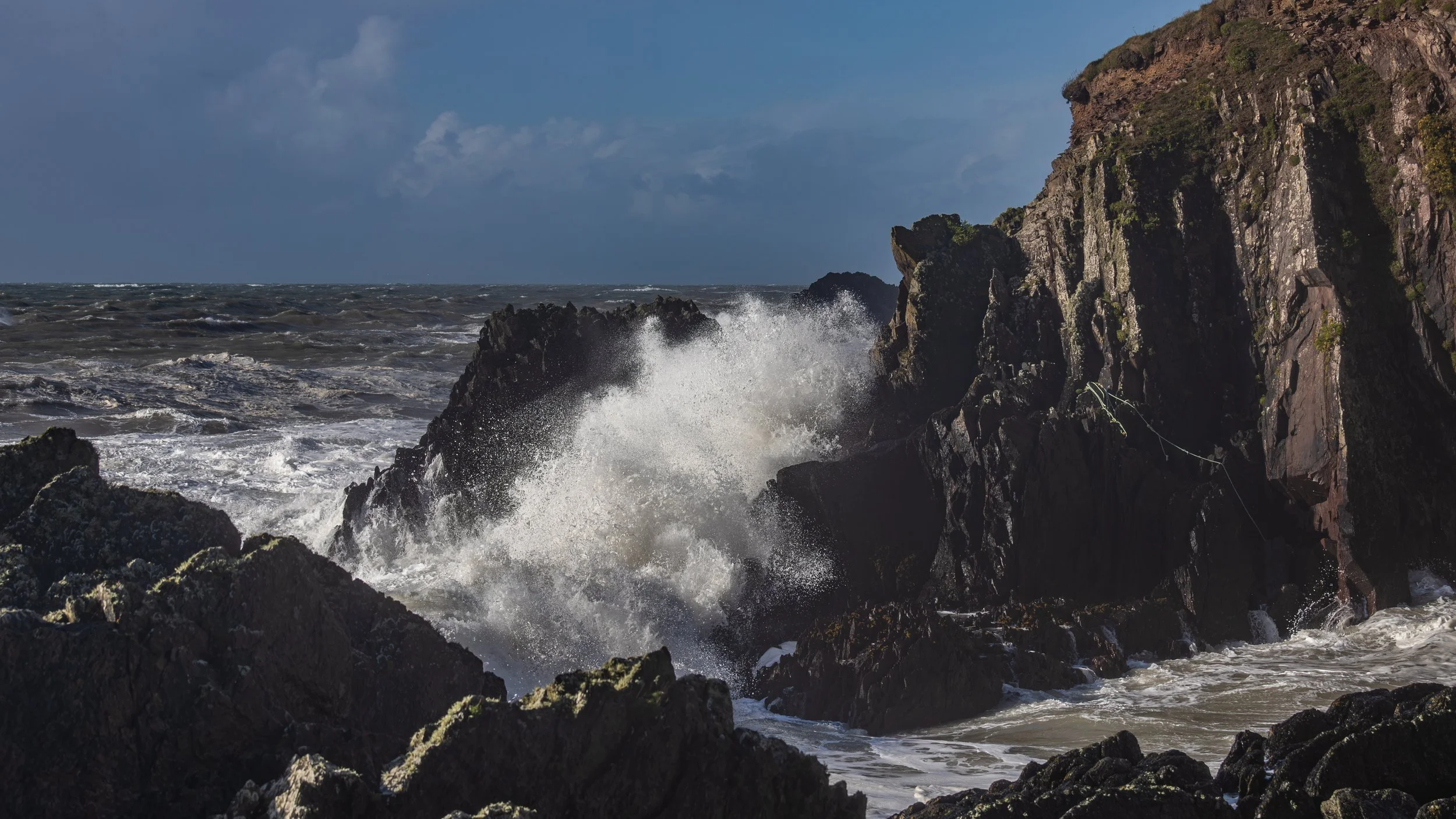
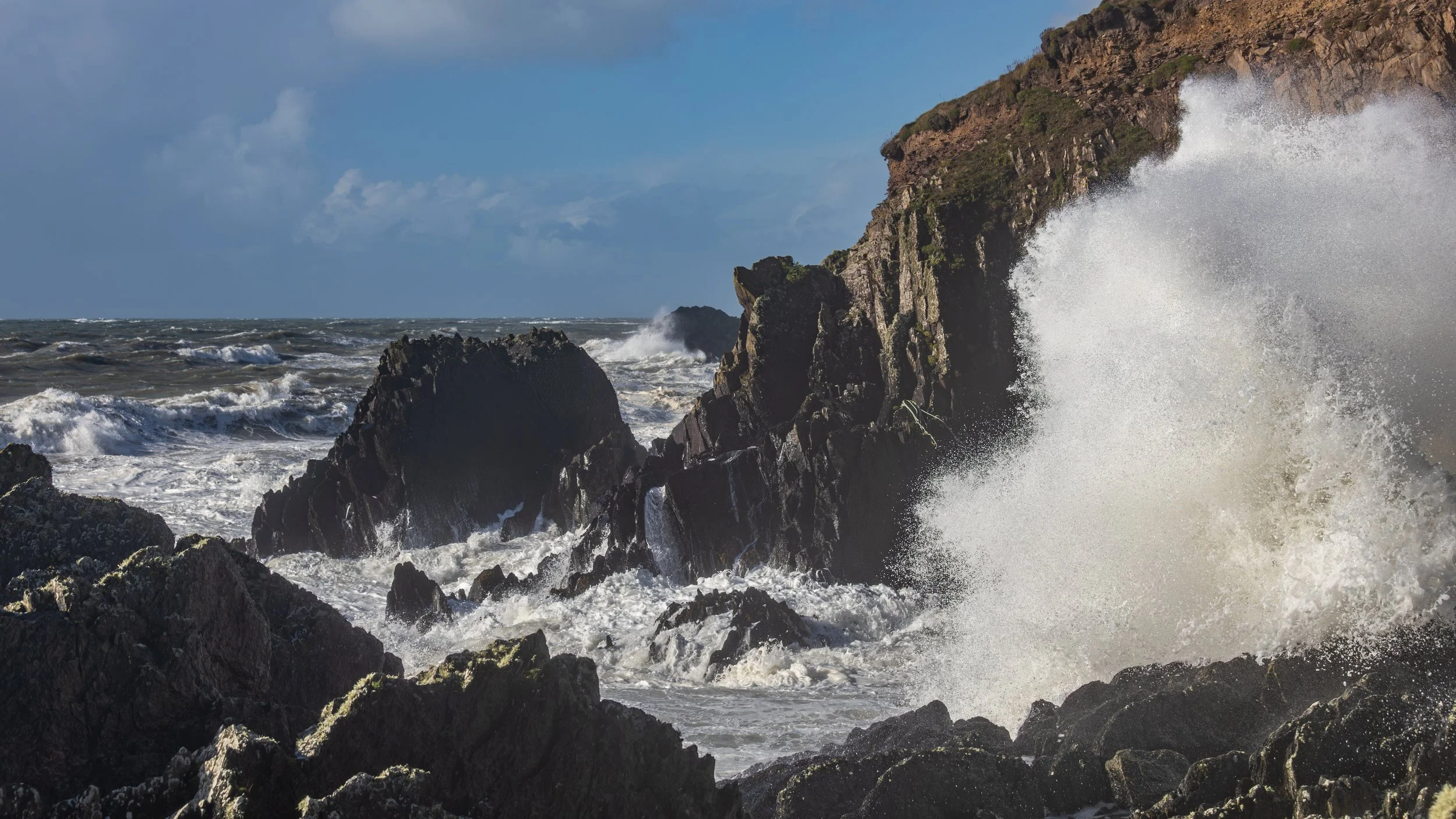
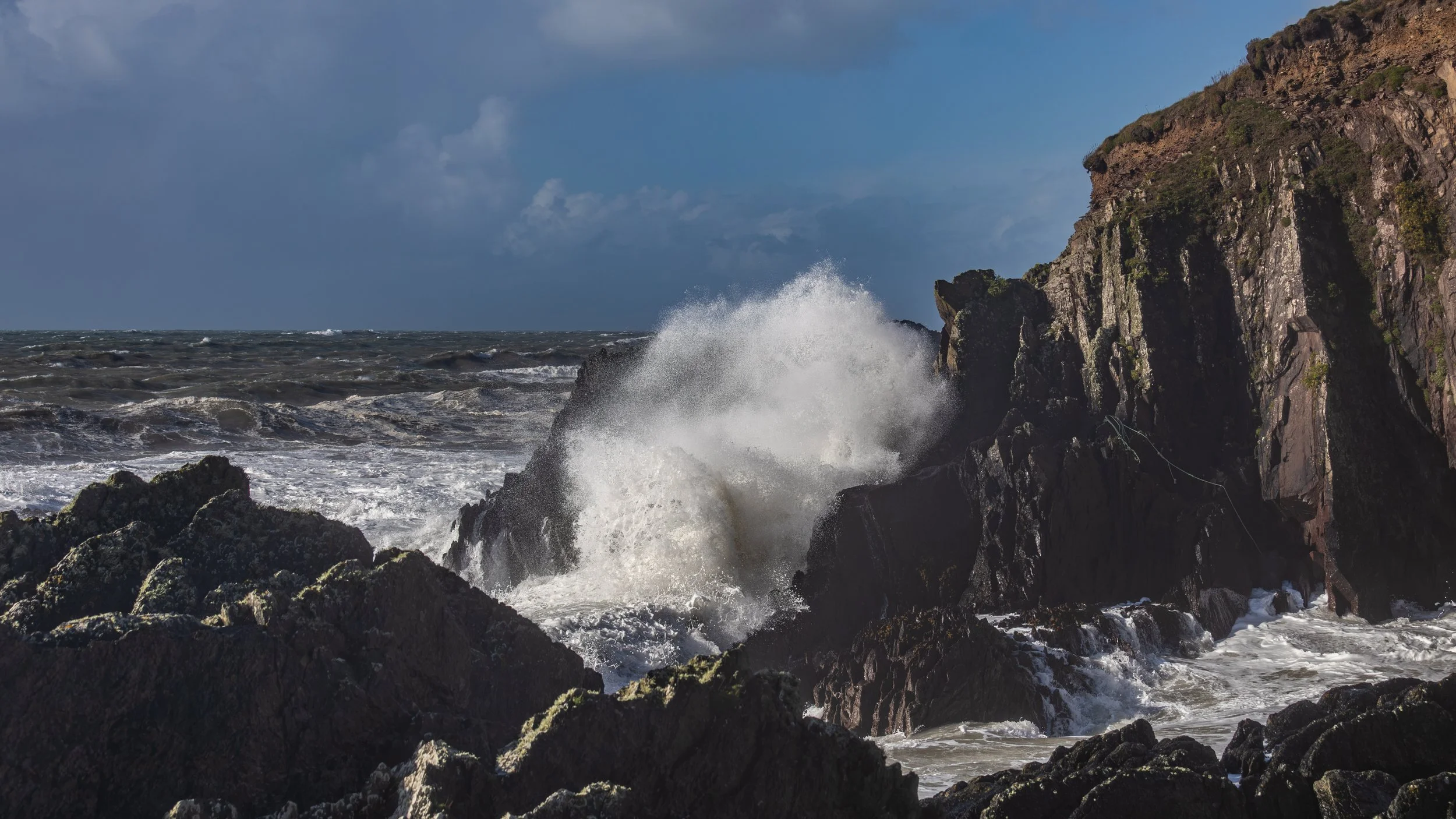
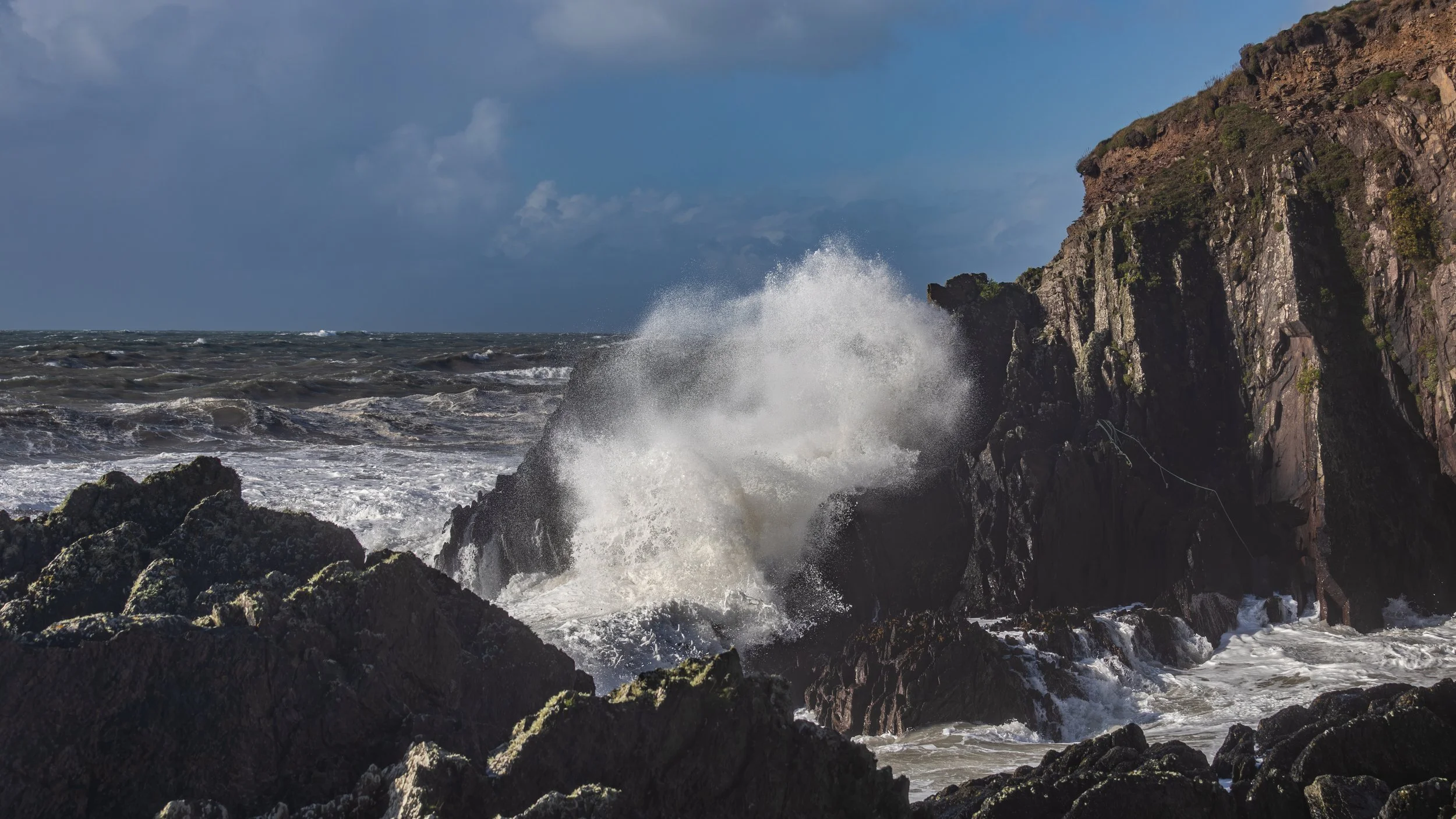
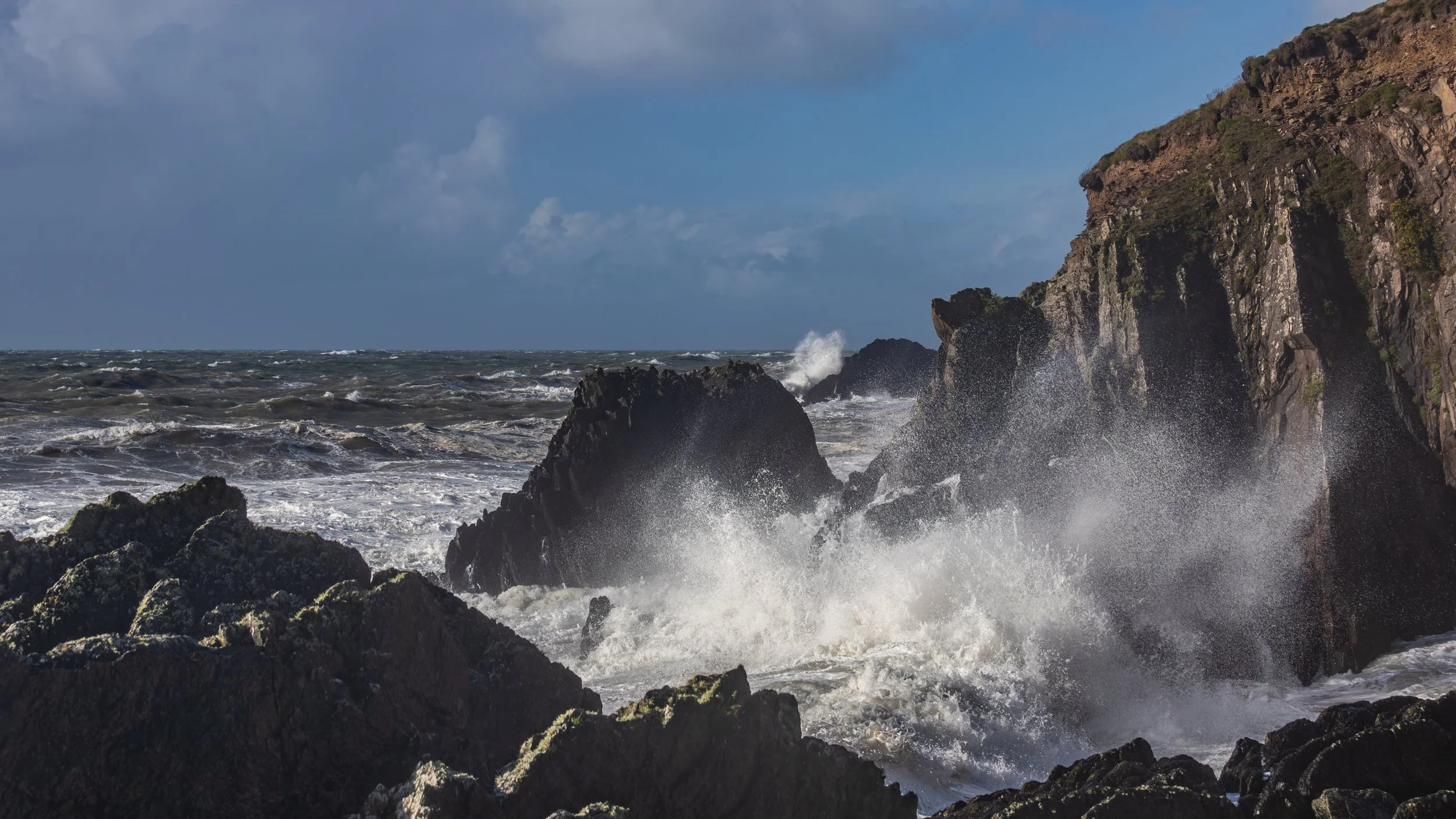
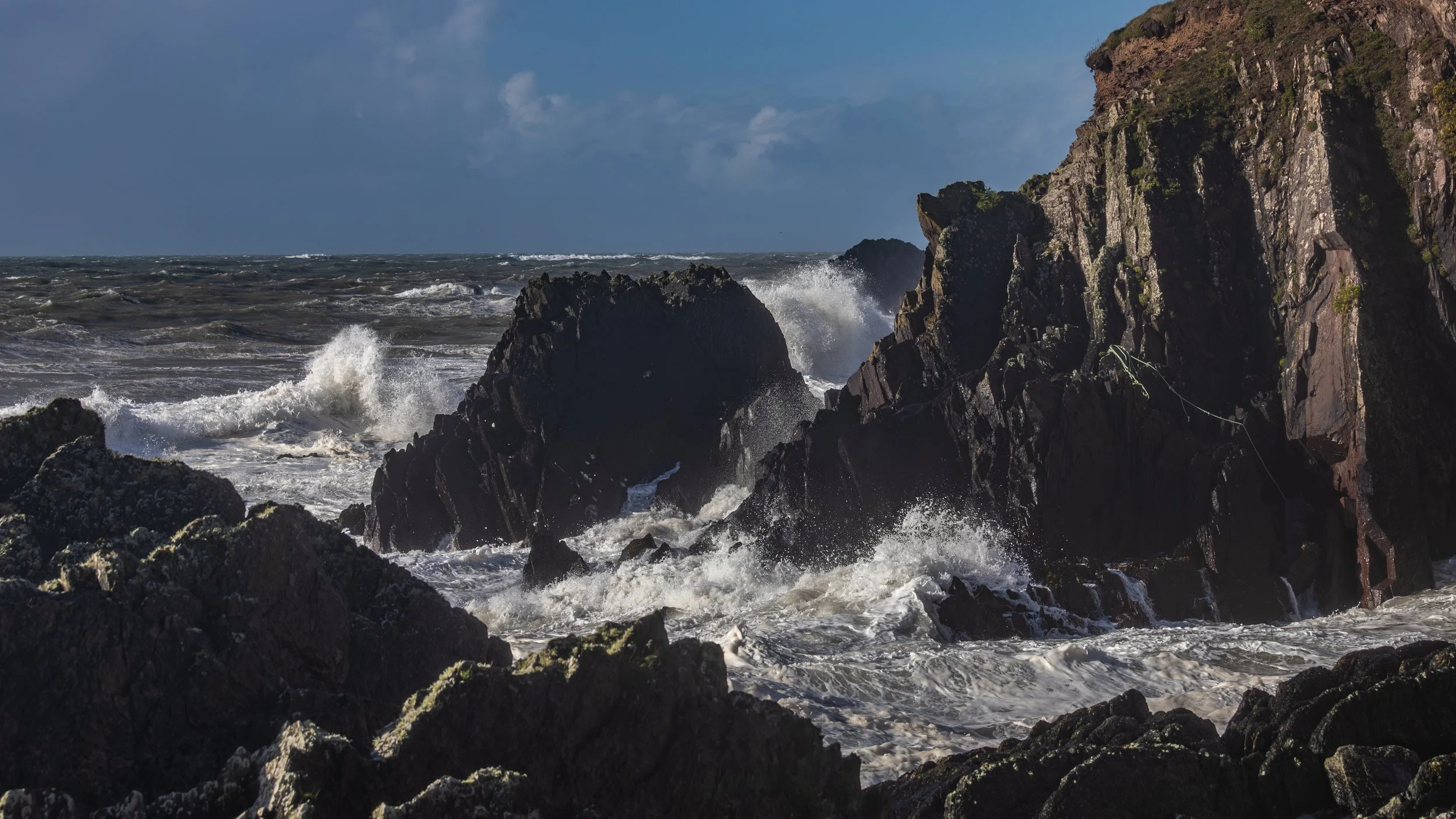
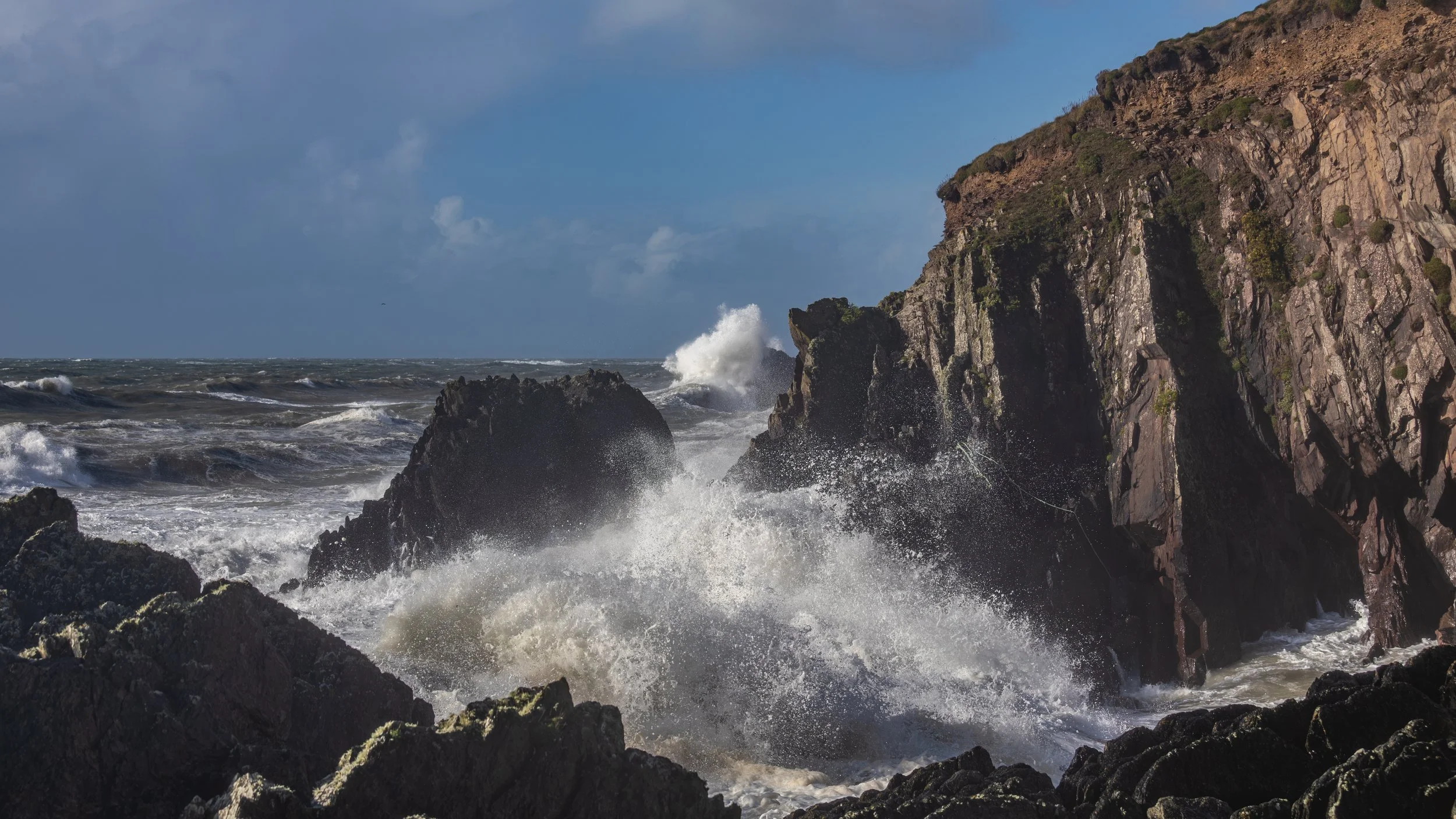
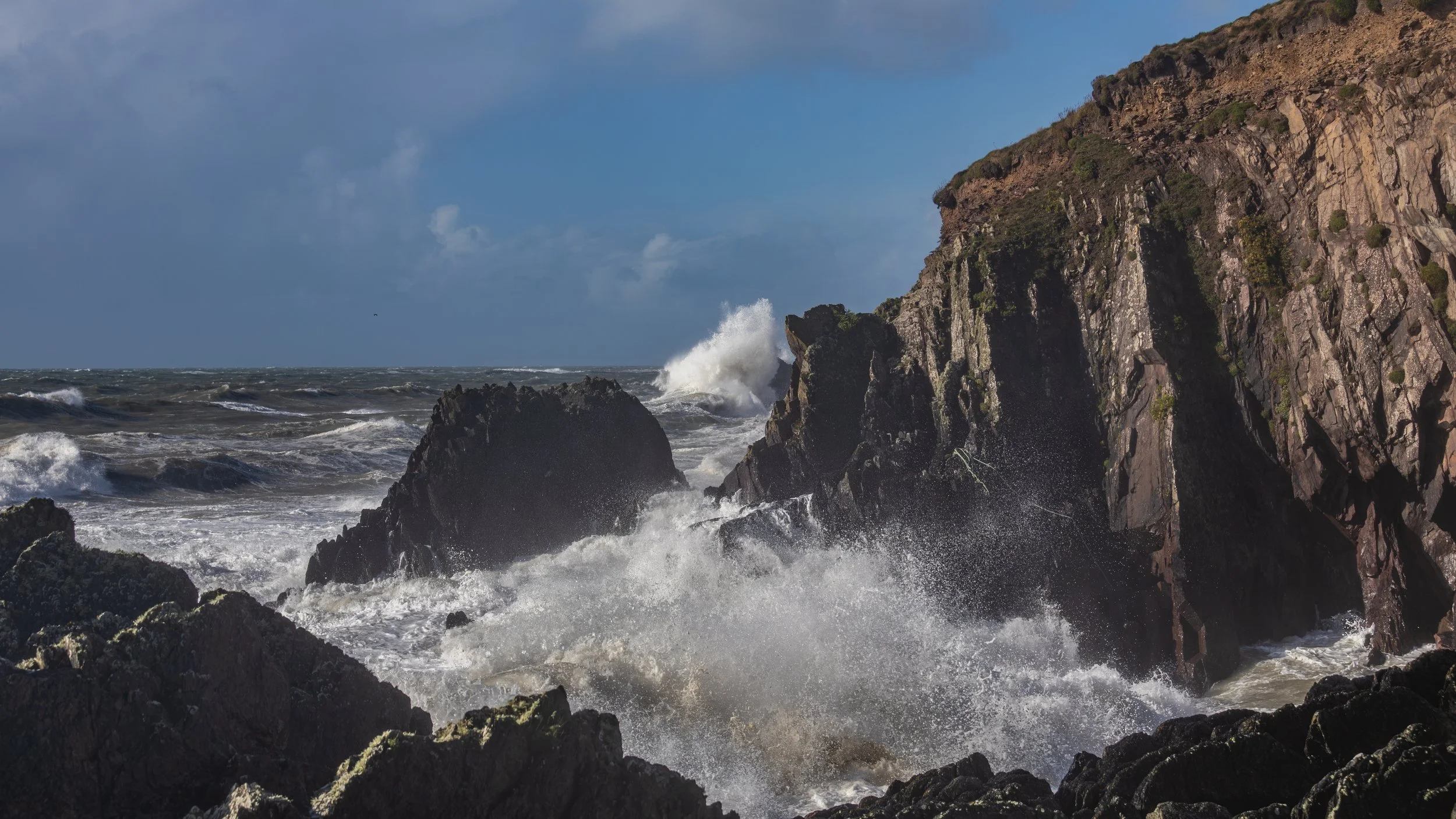
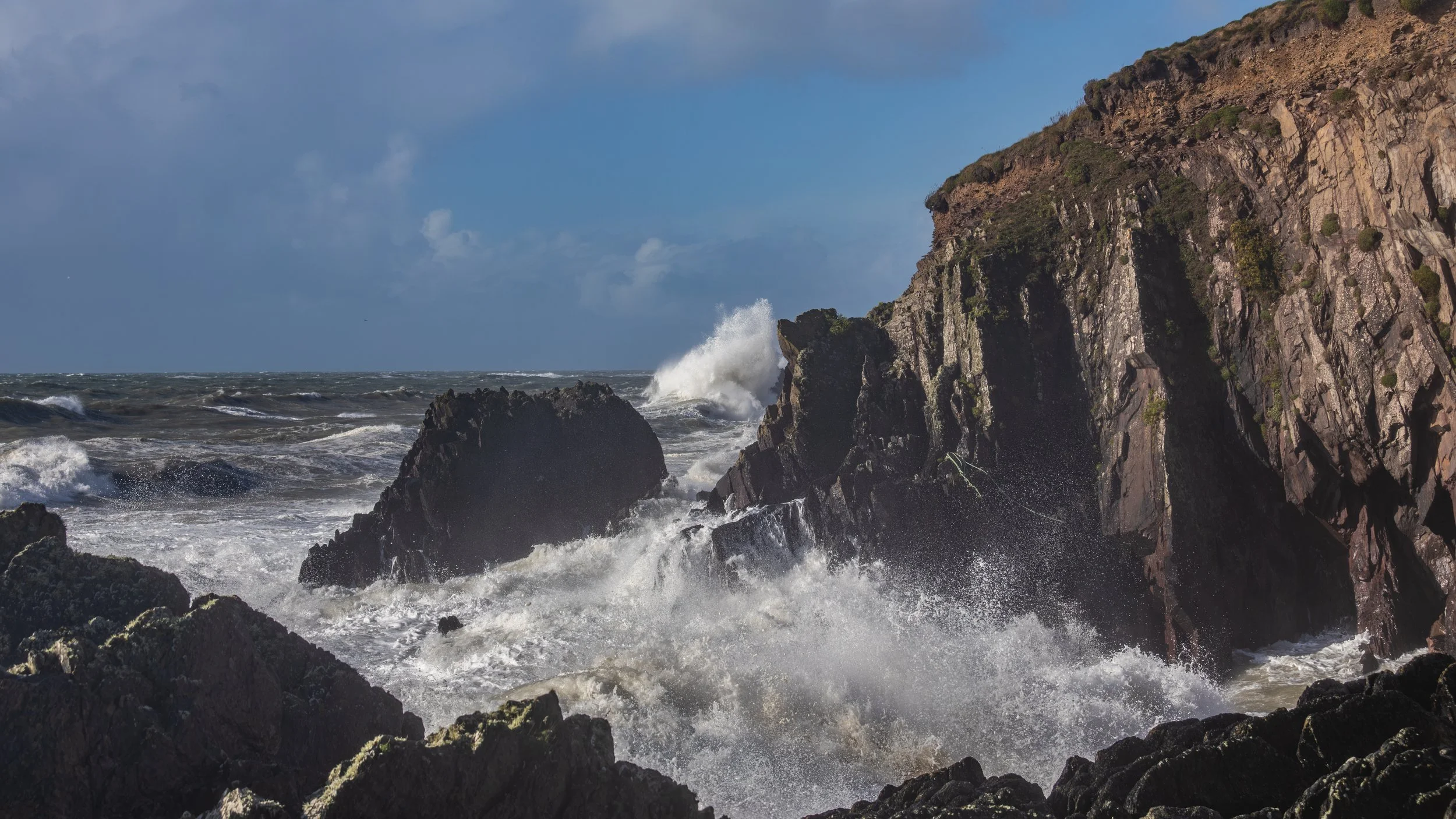
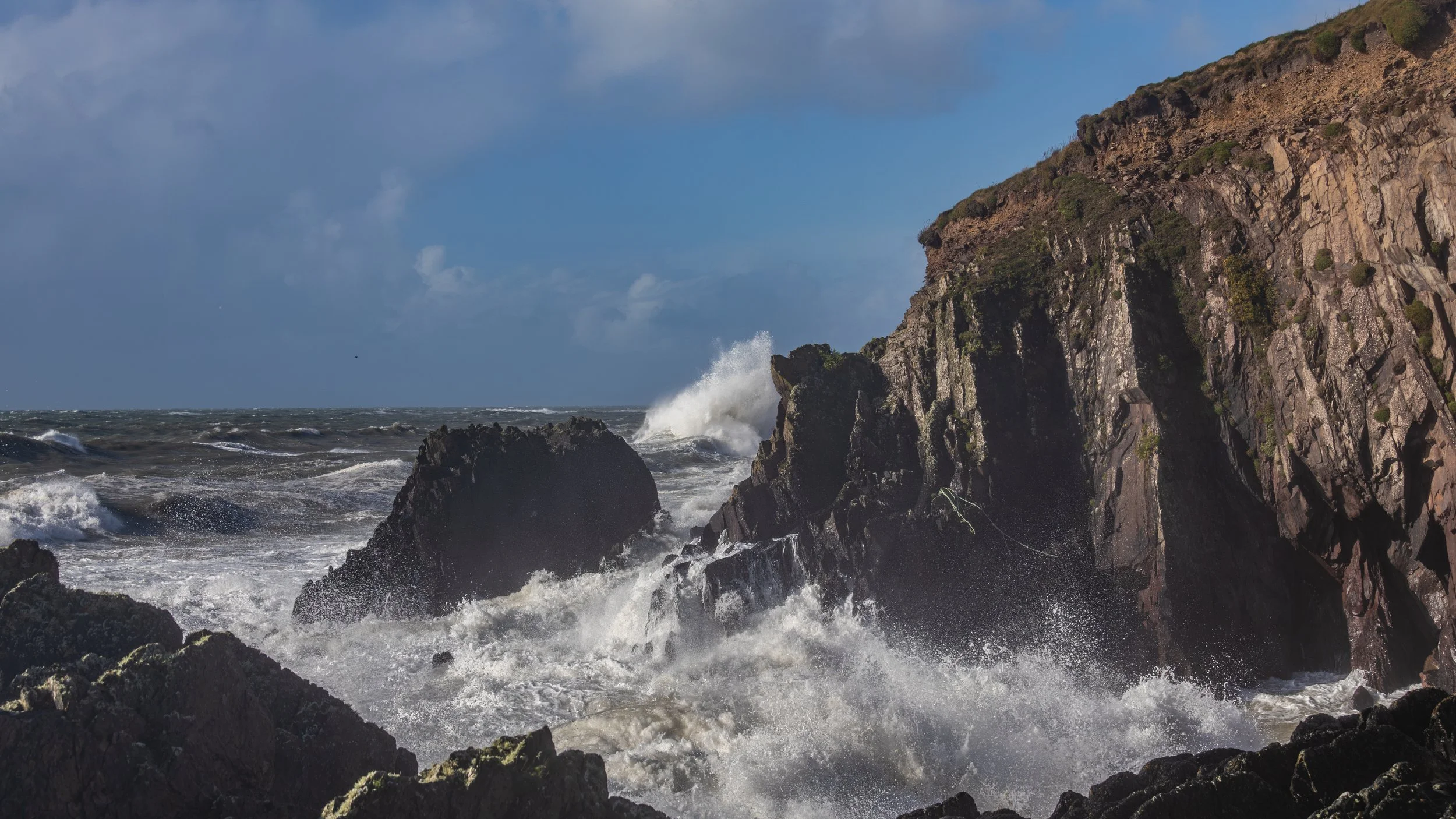
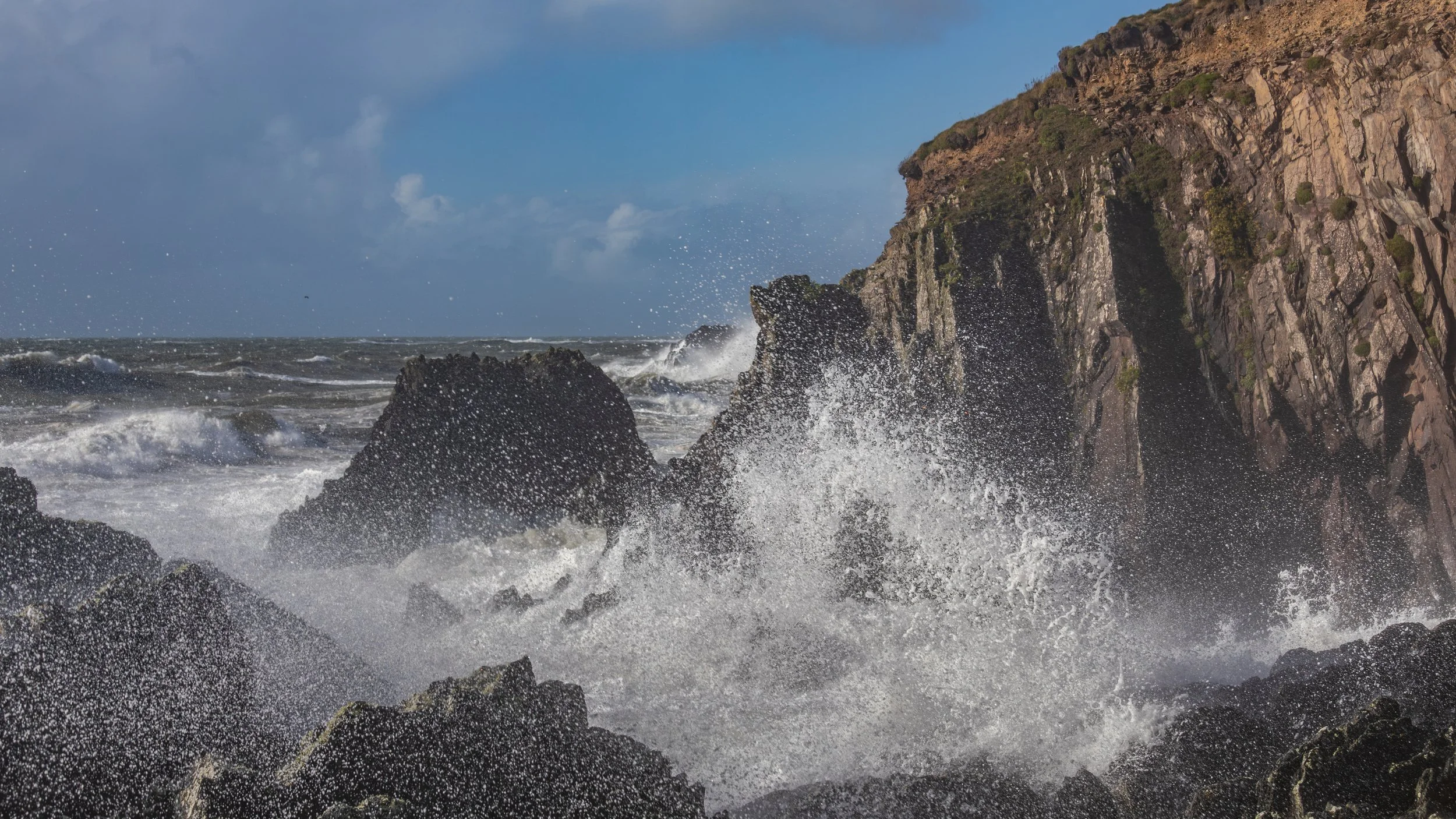
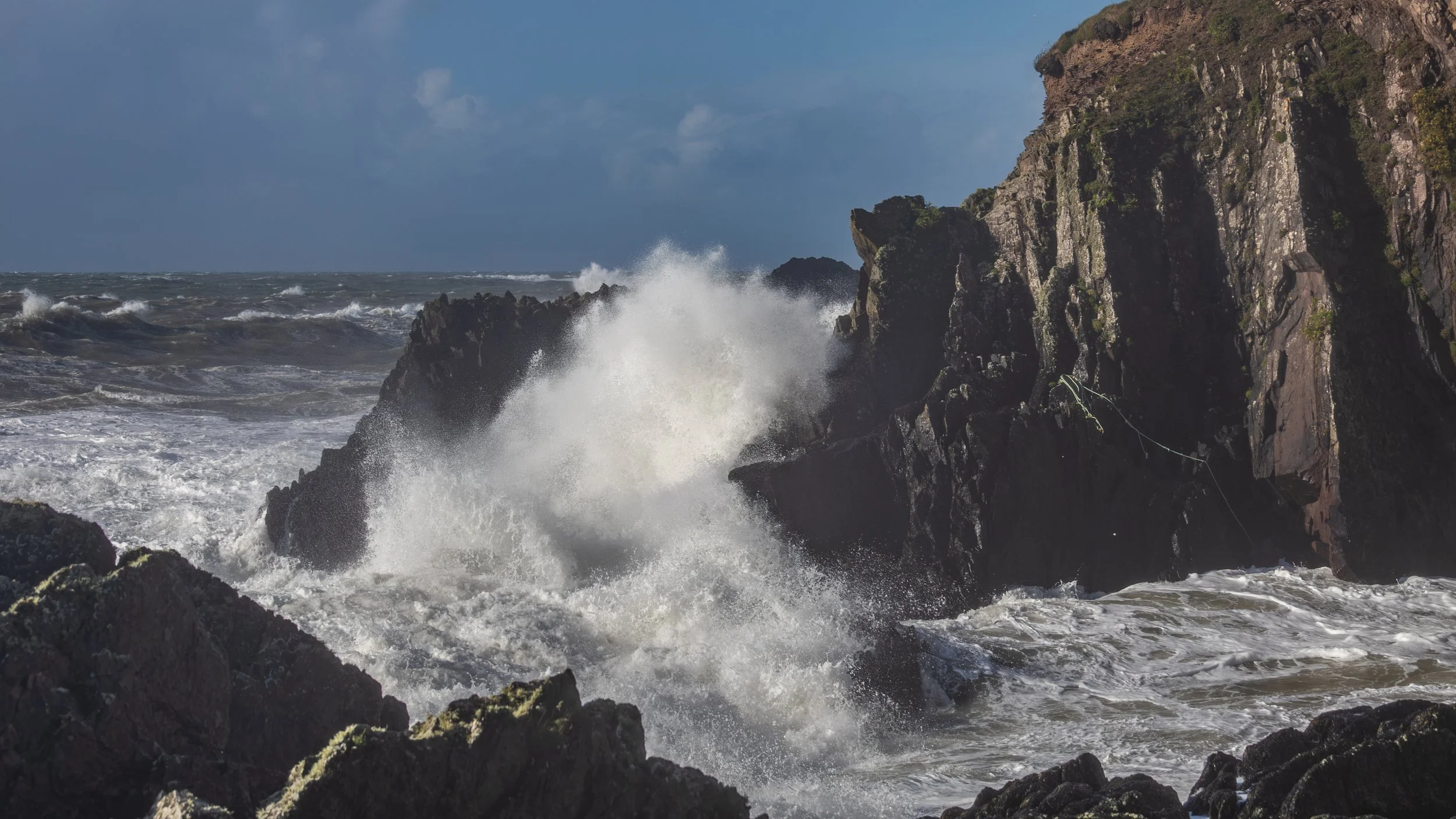
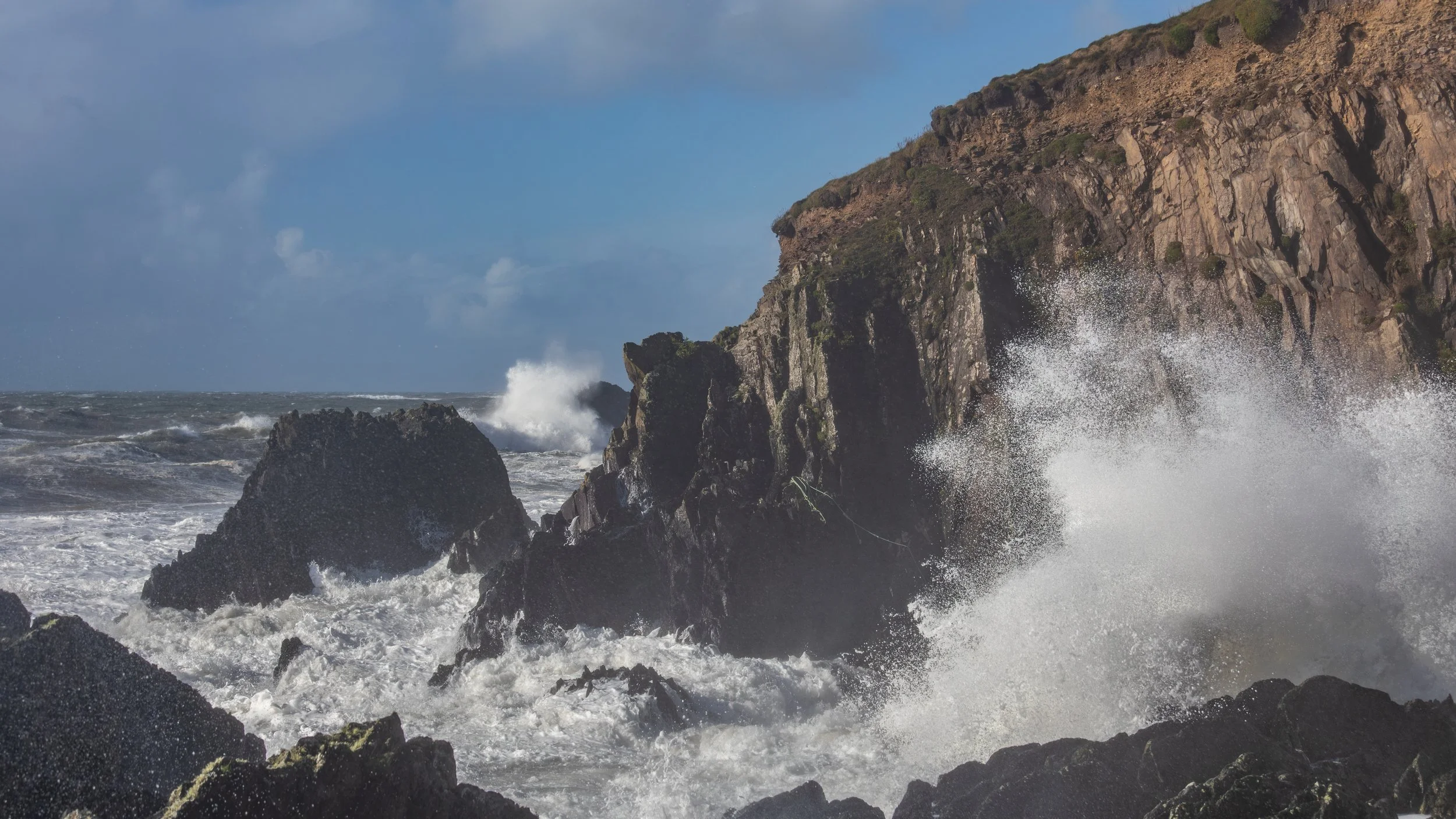
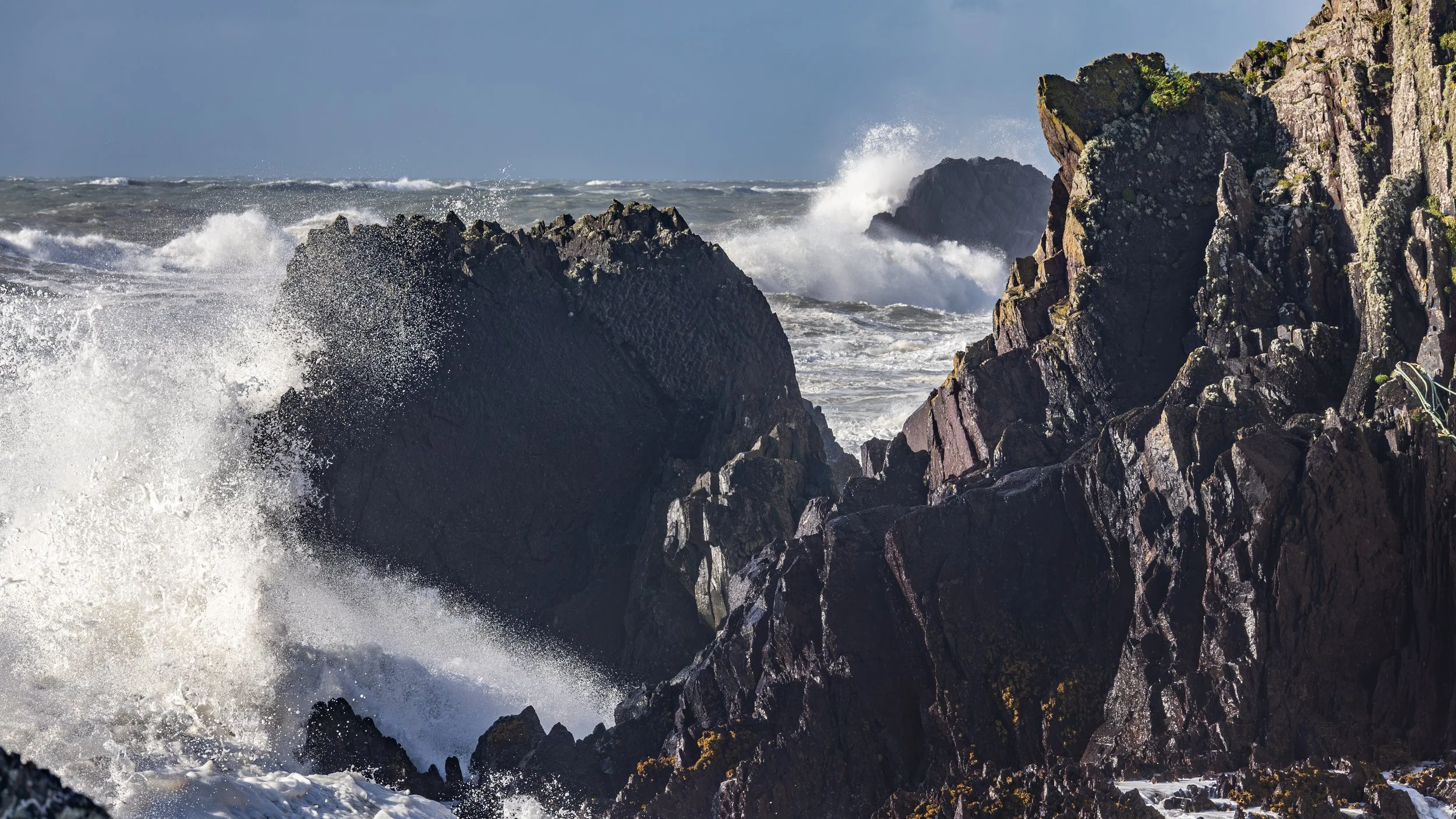
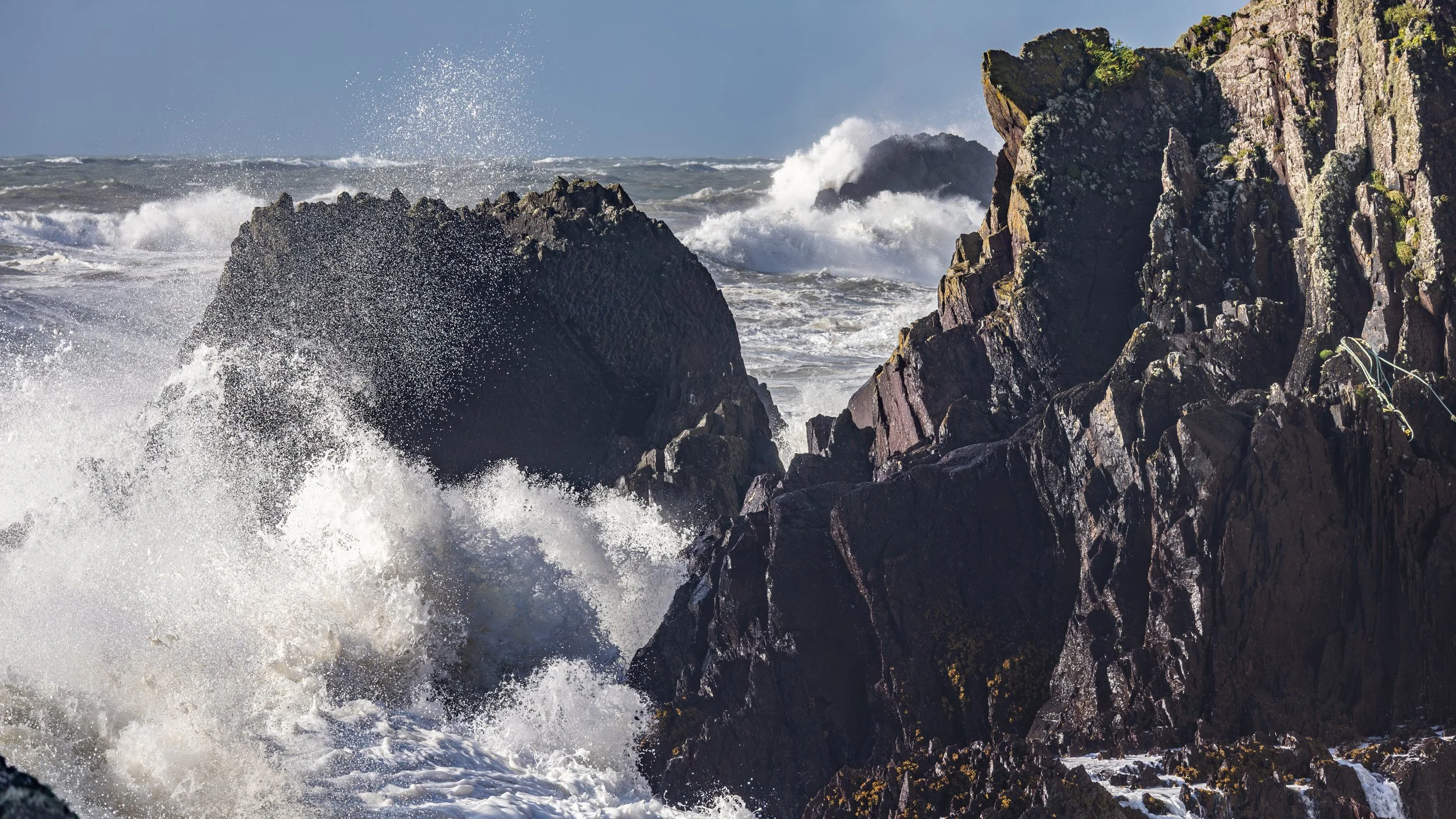
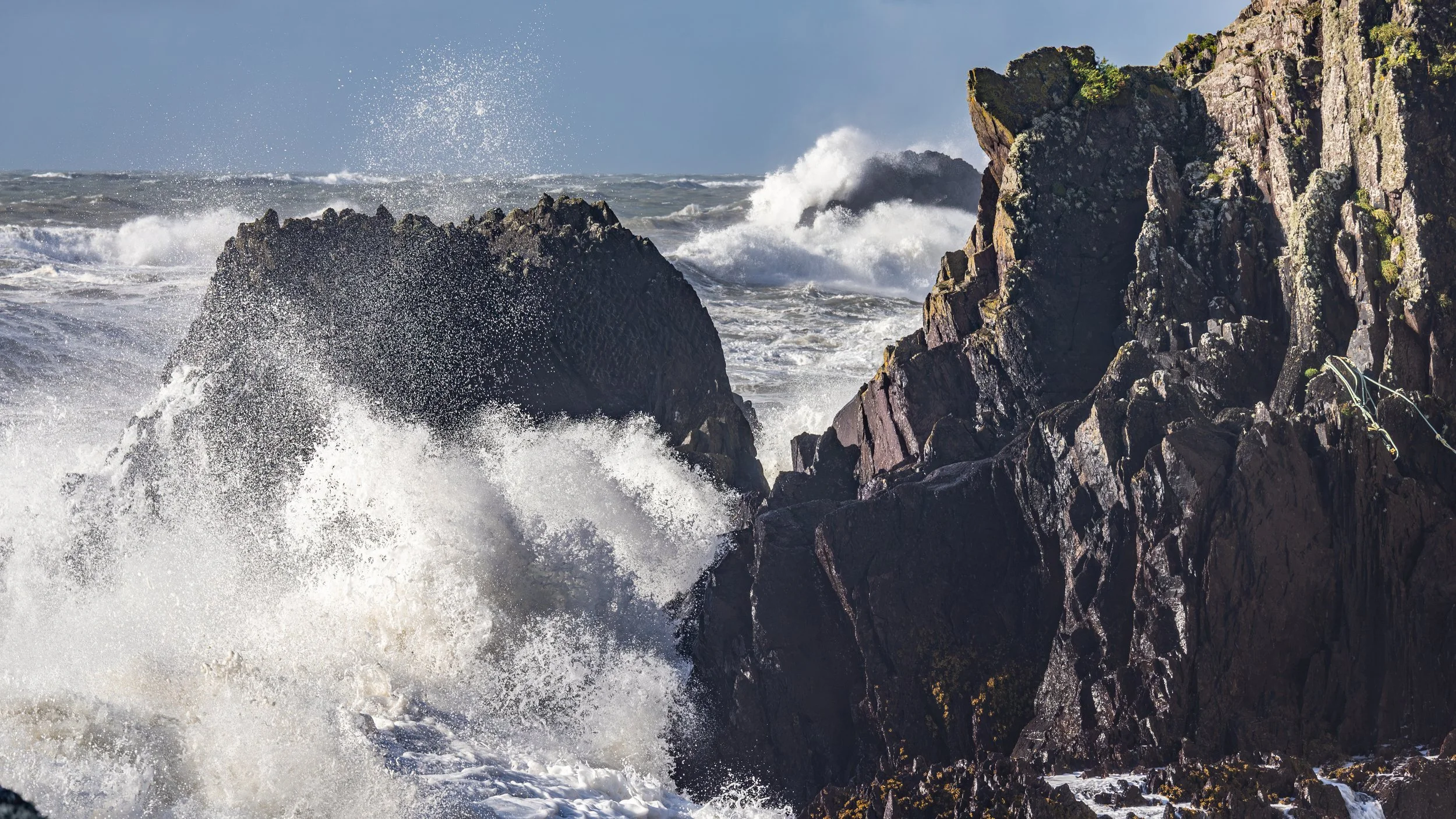
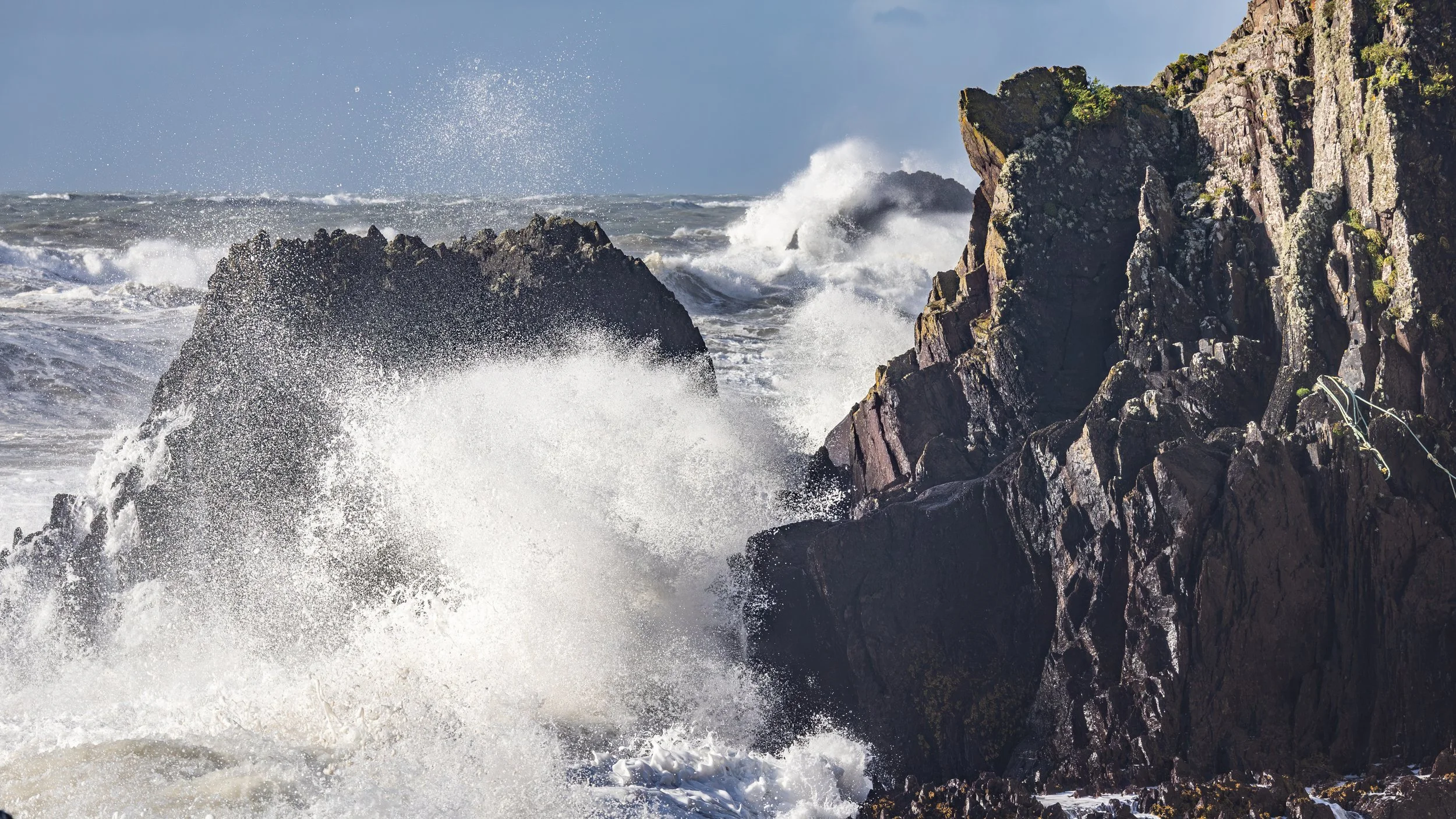
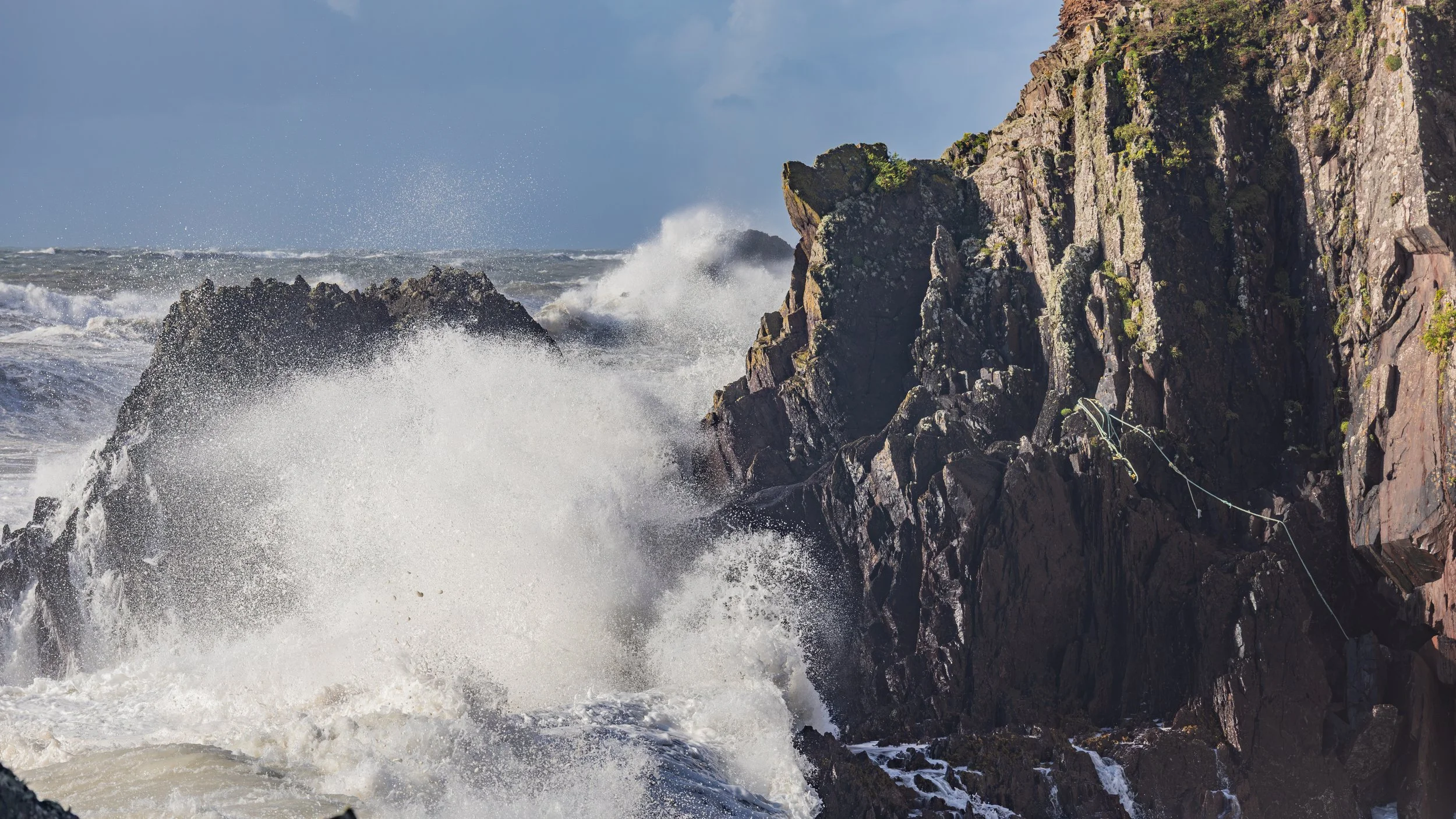
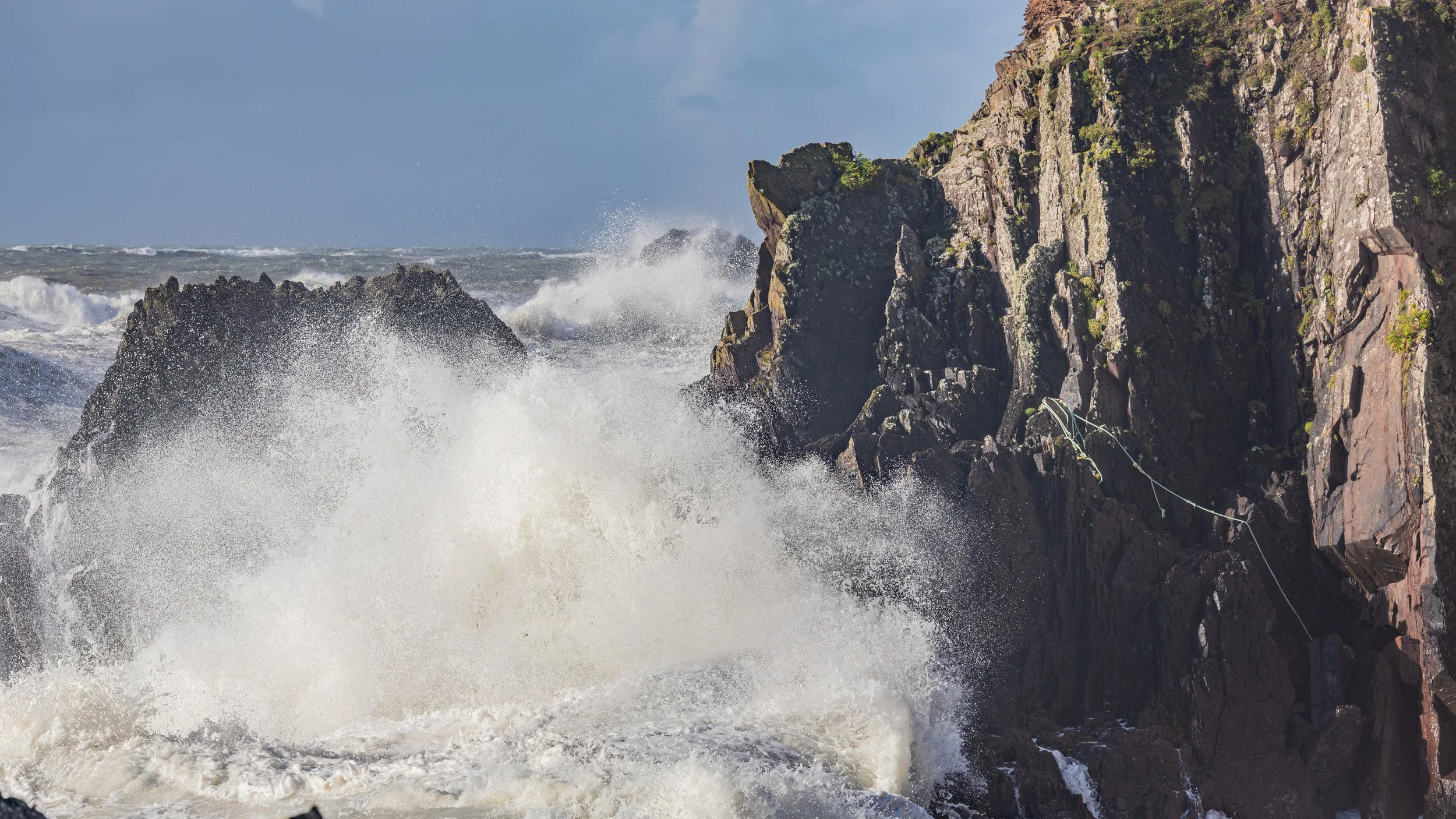
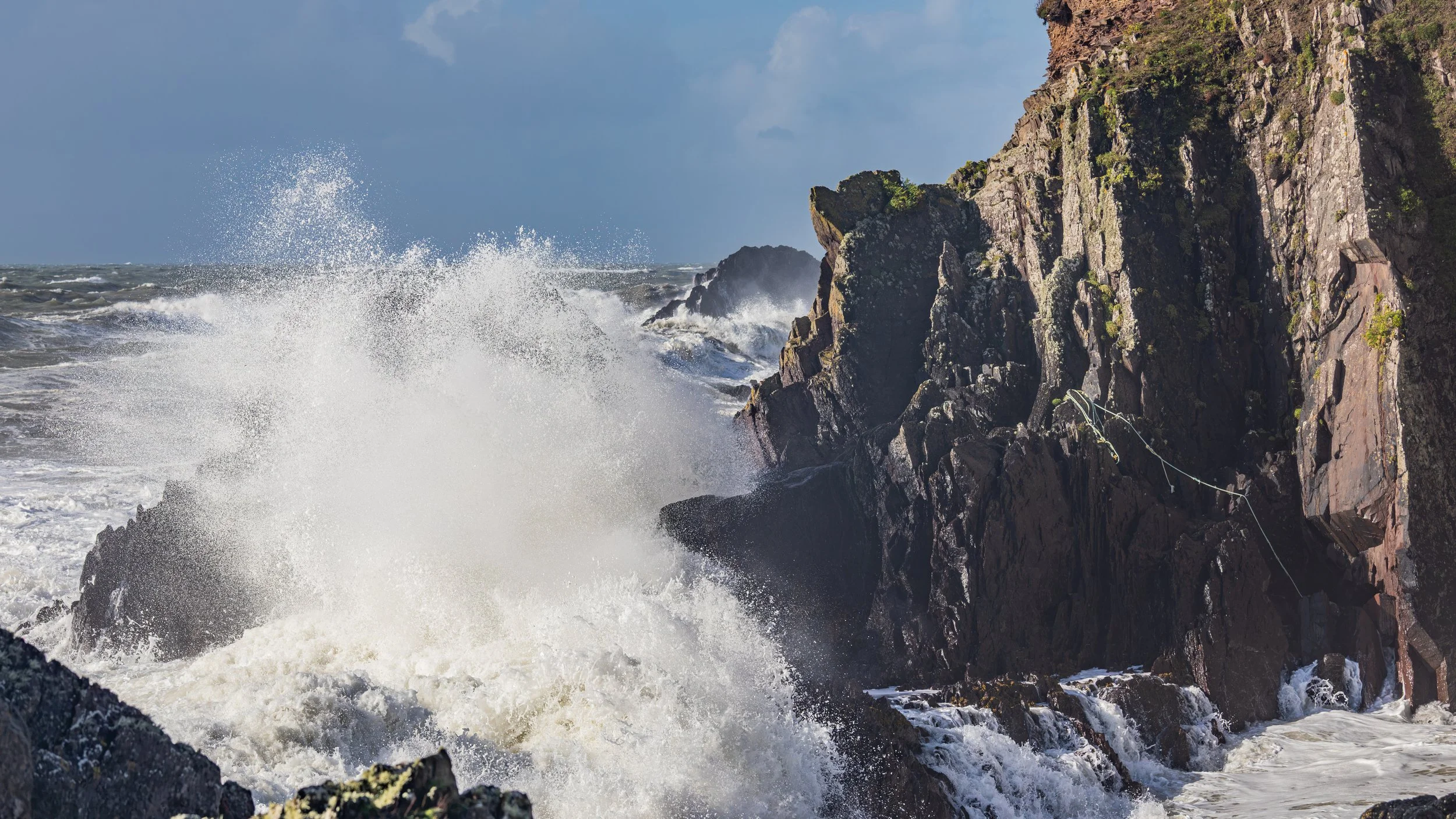
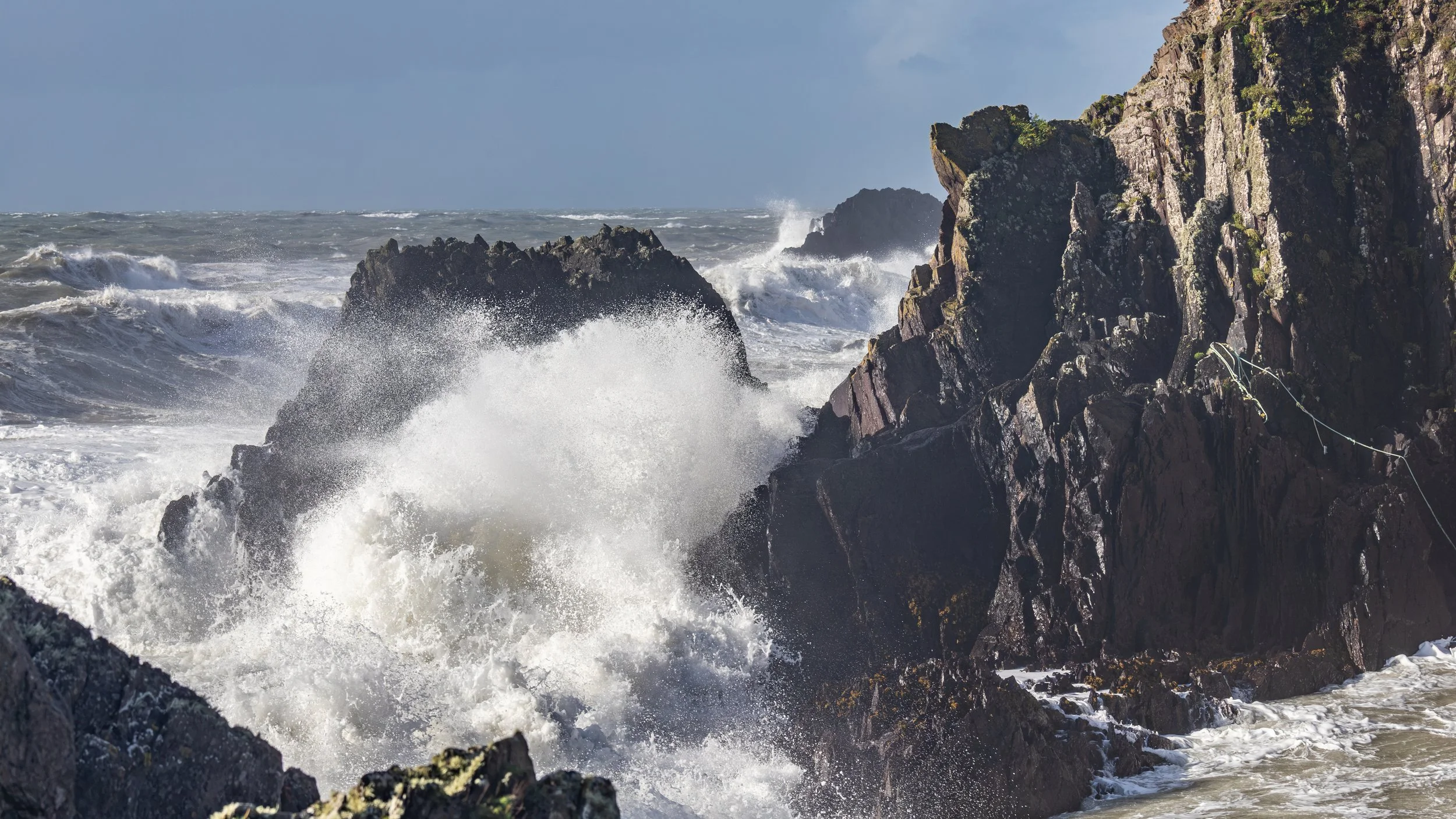
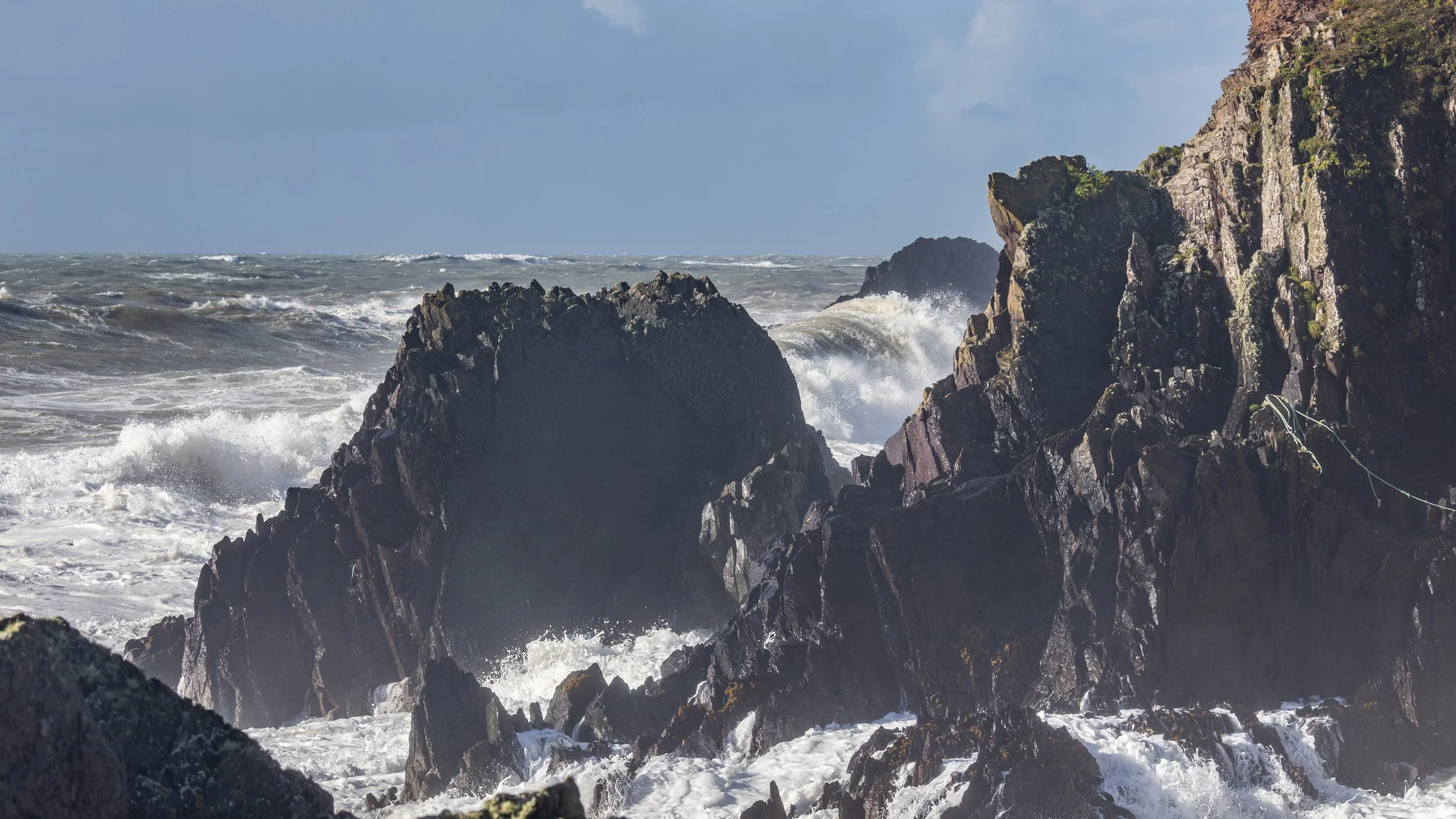
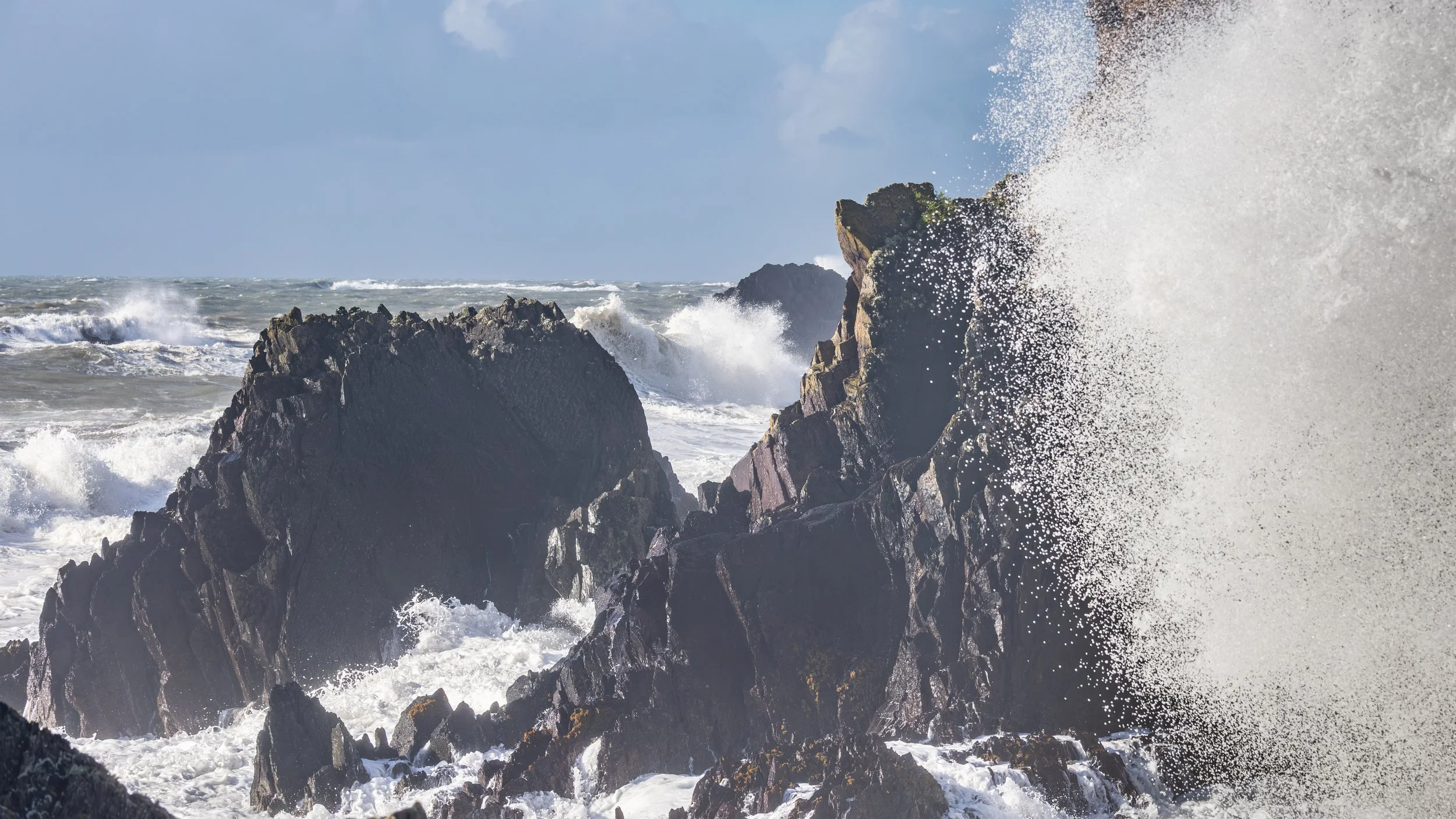
I had deliberately travelled light. All I had with me for the photography was my camera and a 70-200mm lens. I did not want to carry a full camera bag because I knew exactly what I wanted to photograph. This was not going to be about creating a wide landscape showing the whole coastline. I wanted to isolate sections of the waves as they hit the cliffs.
That decision also influenced the way I approached the shoot.
A telephoto lens is particularly useful in conditions like these because it allows you to simplify the scene. Rather than trying to include everything, you can look for individual waves, patterns, spray and sections of coastline. The 70-200mm also gave me enough flexibility to change my composition quickly as the waves moved.
I also decided not to use a tripod for the photographs.
The wind was strong, and although I had brought a tripod to support my video camera, I wanted to photograph handheld. I had enough light to use fast shutter speeds, and being handheld meant I could move quickly and change position without having to constantly reposition a tripod.
That flexibility became important very quickly.
There was another consideration, however. If I wanted the waves to look larger within the frame, I needed to get lower.
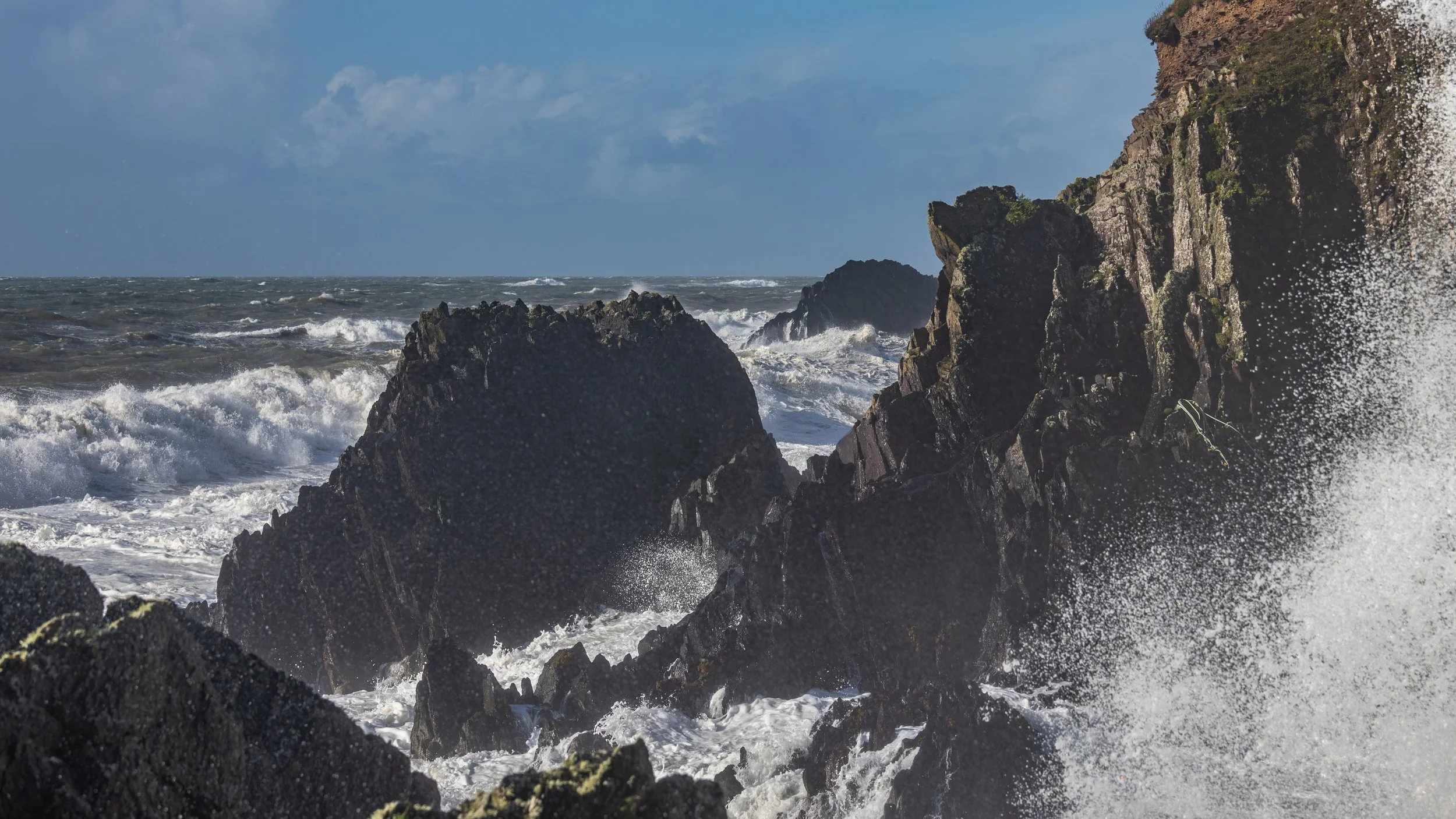
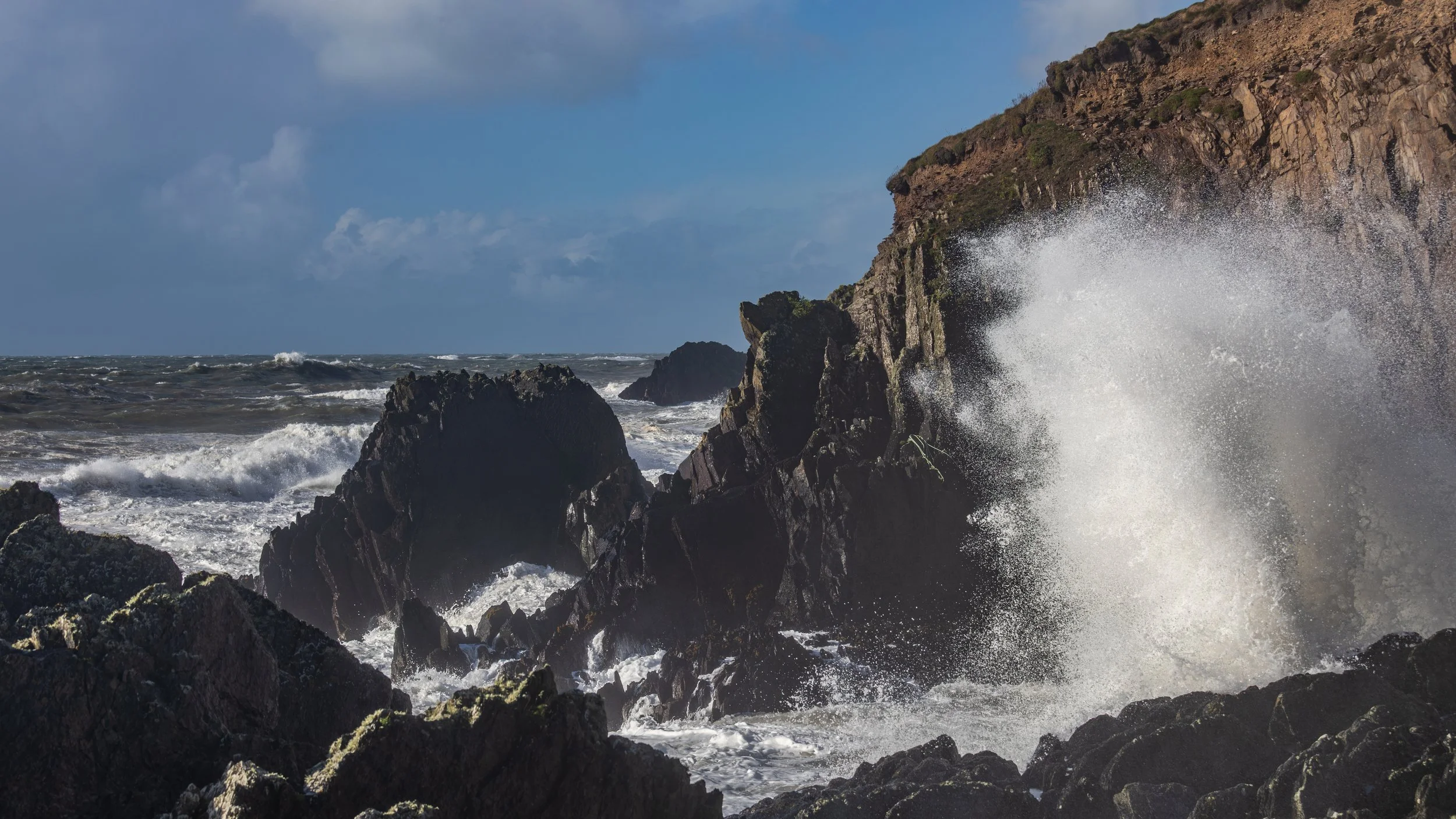
This is one of the simplest ways to change the appearance of waves in a seascape. The lower you get towards the water, the more space the waves occupy within the frame. The perspective changes, and a wave that might appear relatively small from higher up can become much more significant when photographed from a lower position.
There was one obvious problem.
Getting lower meant getting closer to the spray.
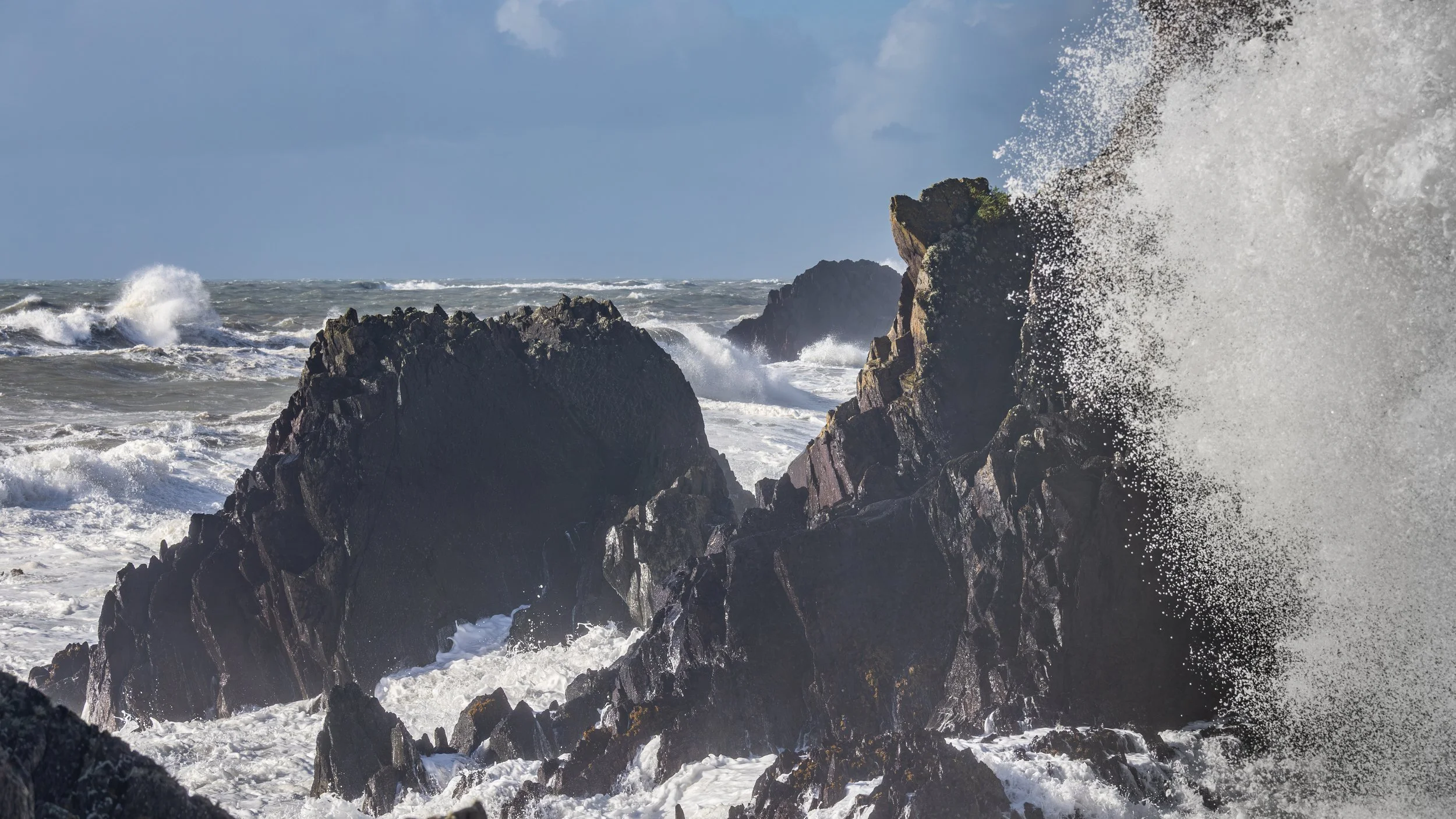
The waves were hitting the rocks in front of me with enough force to send seawater into the air, and the strong wind was carrying that spray directly towards where I was standing. I was already getting hit by spray from the higher position, so I knew that moving down would mean getting wet.
I did it anyway.
I have always said that if you photograph seascapes, you should expect to get wet at some point. This was one of those occasions where I had the opportunity to put that theory into practice.
I positioned my video camera beside a life ring, where it was relatively protected, and then moved down towards the lower viewpoint. I knew there was a risk of getting soaked, so the important thing was not pretending there was no risk. It was understanding what was happening and deciding whether the photographic opportunity was worth it.
The first few waves went well.
I managed to time several exposures as the waves hit the rocks, and the combination of the swell, wind and light was producing the sort of conditions I had hoped to find. I was also reminded of one of the most important parts of coastal photography: timing.
You cannot control the sea.
You can control where you stand, your focal length, your shutter speed and when you press the shutter, but you cannot decide exactly where the next wave will break. That means you need to watch the water before you start firing the shutter.
Look for patterns.
If three or four waves have arrived close together, the next one may behave differently. If a particular section of rock is repeatedly producing a large splash, watch it for a while and learn its rhythm. You are not waiting for one perfect wave to appear by accident. You are observing the conditions and increasing your chances of being ready when something happens.
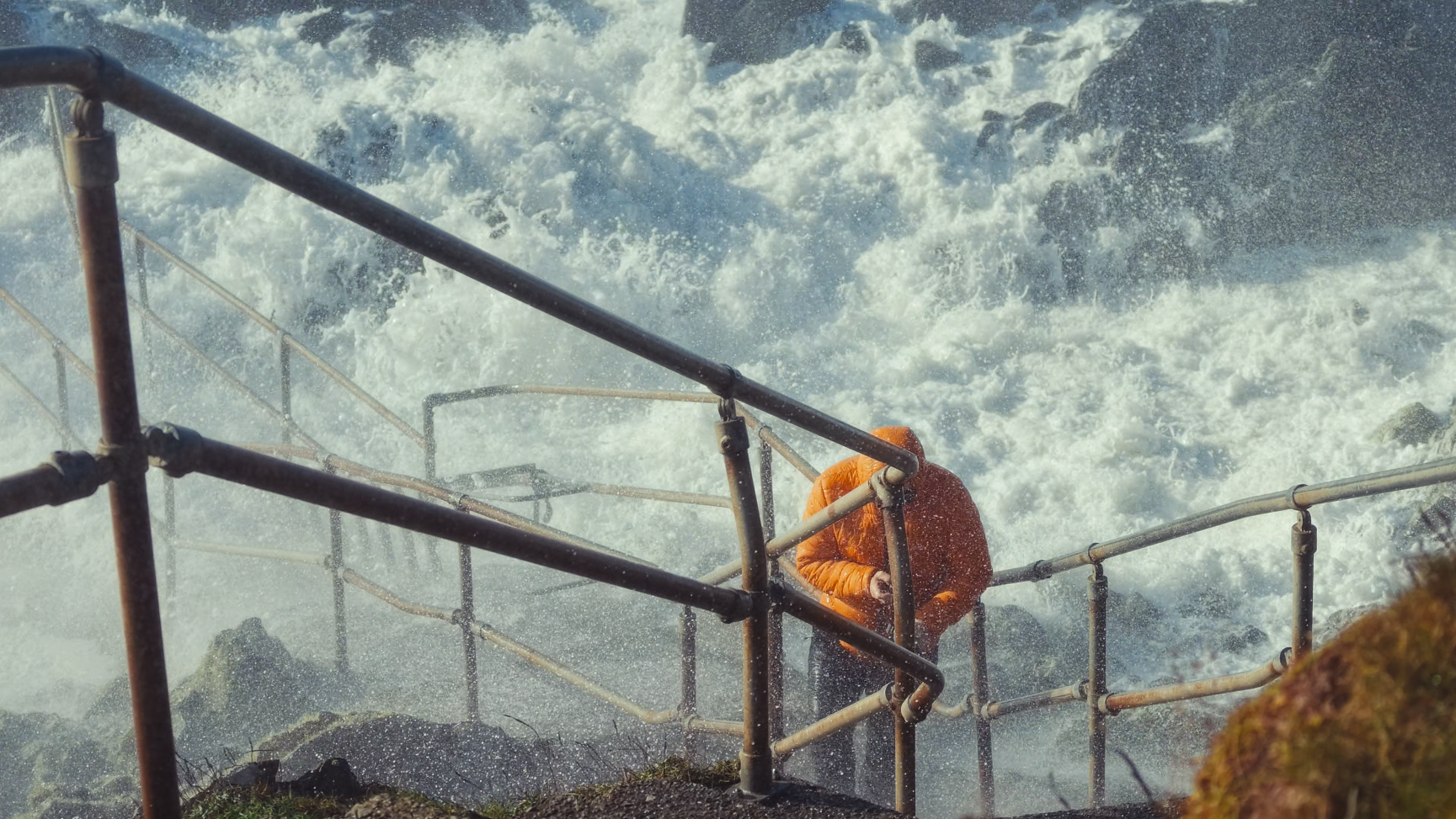
Of course, I eventually got caught.
Two waves arrived almost together and sent seawater directly over me. I managed to capture much of the moment on video, and you can see what happened in the supporting YouTube video.
At that point I was already wet, so there was little point in worrying about getting wetter.
I carried on photographing.
And this is probably the main lesson I took from the morning. The best coastal conditions do not always require you to photograph during the worst weather. Sometimes the better opportunity comes afterwards.
The storm had passed. The rain had eased. The swell remained. The wind was still strong enough to move the spray, and there was enough light to work handheld with a fast shutter speed.
The important part was putting all of those pieces together.
If you are planning your own coastal shoot, I would recommend looking beyond the basic weather forecast. Check what the wind is doing, check the tide, look at the predicted swell and consider how those conditions will interact with the location you are visiting. A large swell at the wrong tide or from the wrong direction might not produce the result you want, while the same swell at another point in the tidal cycle could completely change the scene.
Also think about your equipment before you leave.
You do not always need your entire camera bag. If you know that you want to isolate waves and details, a telephoto lens might be more useful than your widest lens. If there is enough light, handheld shooting can also give you greater freedom to move around and react to the conditions.
Most importantly, think about your position.
Getting lower can make waves appear larger, but it also puts you closer to the water. Never let the desire for a photograph override your understanding of the conditions. Watch the waves before moving closer, keep an escape route in mind and understand that the sea can behave differently from one moment to the next.
For me, this morning was exactly the return to seascape photography I had been waiting for.
The conditions were better than I had expected, the photographs worked, and I managed to get a little wetter than planned.
After being away from the coast for a while, it was a good reminder of why I keep coming back to it. You can plan the shoot, check the forecast, study the swell and choose your equipment, but once you arrive, the sea still has the final say.
And sometimes, the best thing you can do is wait for the storm to pass and then go looking for what it left behind.