I Started Seeing Woodland Photography Through Mali Davies’ Eyes
I am primarily a seascape photographer. I photograph other types of landscape, but the coast is where I am most comfortable. Woodland photography has always been more difficult for me because there are simply too many things in the frame.
A woodland is full of trees, branches, leaves, paths and layers. Unlike a coastal scene, where a rock, headland or wave can often provide an obvious subject, a woodland can present hundreds of possible subjects at once. The challenge is not finding something to photograph. It is finding something worth isolating.
That was the challenge I wanted to take on during this particular morning.
Ireland was once much more heavily wooded, but woodland clearance took place over thousands of years as agriculture expanded and people used timber for fuel, construction and industry. By the time of the Tudor period, much of the landscape had already been cleared, although the exact historical extent of woodland is debated. Government research notes that estimates for woodland cover around 1600 range from about 2% to 12.5%, depending on the evidence and methodology used. Today, native woodland remains a relatively small part of the Irish landscape. The National Parks and Wildlife Service estimates that land under native trees is about 133,000 hectares, although the area that would actually qualify as native woodland is probably below 100,000 hectares.
So while Ireland has plenty of trees, that does not necessarily mean there are large areas of native woodland available to explore. Much of the country's landscape has also been shaped by farming over hundreds of years.
One of the photographers who has influenced the way I think about woodland photography is Mali Davies, who has become a very good friend over the years. We first met online many years ago and eventually met in person in 2019, and we have stayed in regular contact since then. Mali has a very different approach to woodland photography from mine. He has a strong interest in trees and seems to look for individual characters within a woodland rather than trying to photograph the woodland as one large scene.
He also designed the thumbnail for this blog and video.

His approach has made me think differently about the subject. Instead of looking at the whole wood, he looks for the tree or small group of trees that can become the subject. His editing is also restrained, but I was more interested in borrowing the way I thought he approached the scene than copying his finished images.
I had walked through these woods with my family many times before, so the location was familiar. What I wanted to change was how I looked at it.
The forecast had given me clear skies, which was useful. Early sunlight would be able to reach into the woodland and create patches of light and shade. Mist or fog would have made separation easier, but I did not have those conditions. Instead, I decided to let the light do some of the separation for me.
When I arrived, that was immediately obvious.
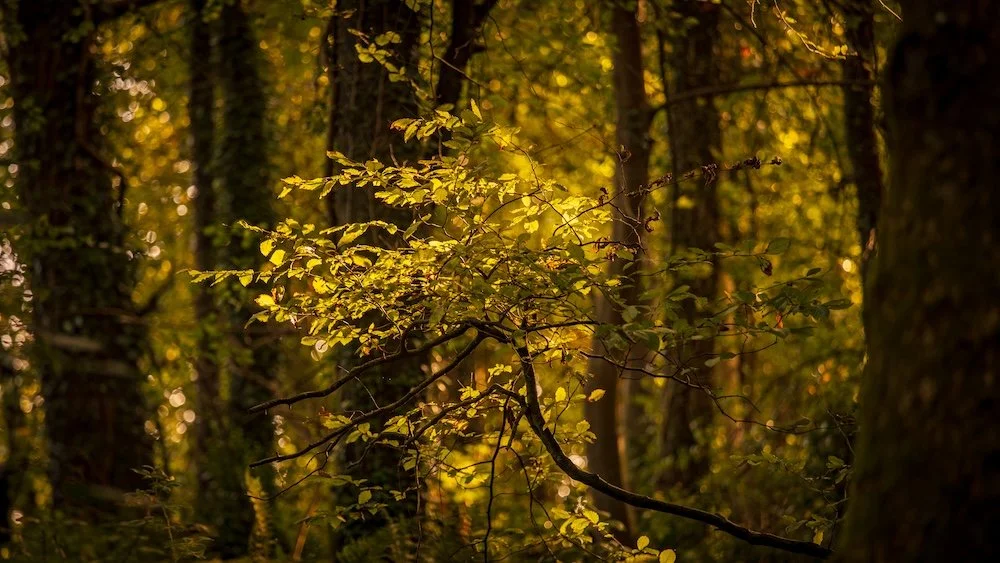
Light was moving across the woodland floor and catching individual trunks, branches and groups of leaves. Rather than looking for a wide composition, I started watching where the light was falling. This became the first lesson: when a woodland feels complicated, look for the part that nature has already simplified for you.
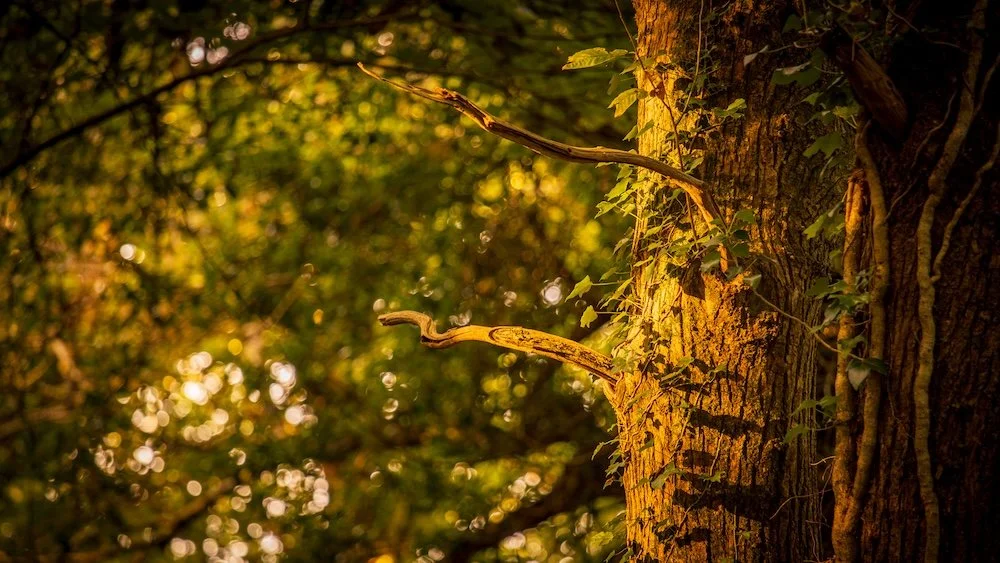
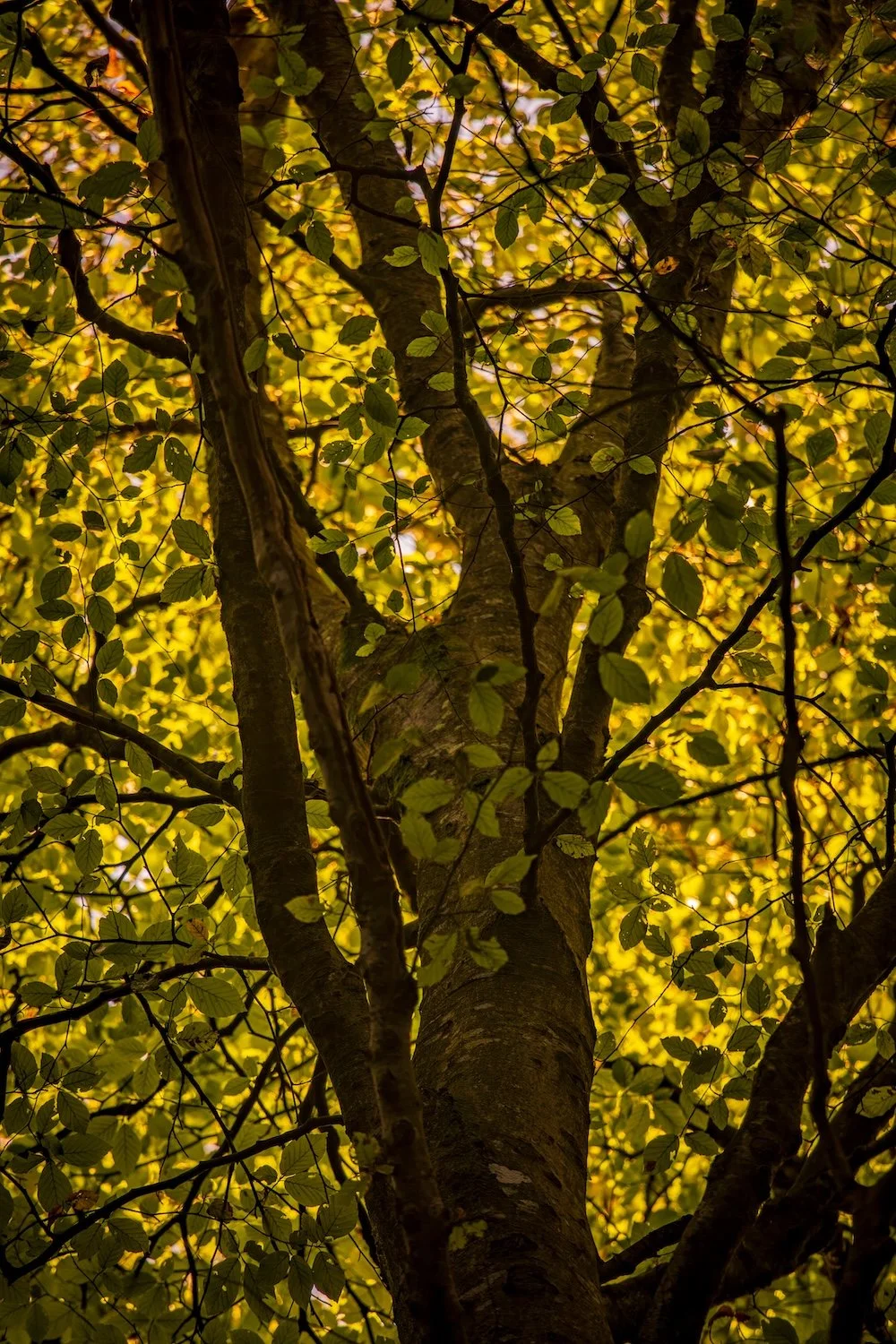
I began using my telephoto lens and started isolating individual trees and small sections of the woodland. Each frame was different because the light was changing. I also noticed something that I might previously have overlooked. I was returning to some of the same subjects several times, but the light had moved, changing the way the tree appeared.
That made the woodland feel less static.
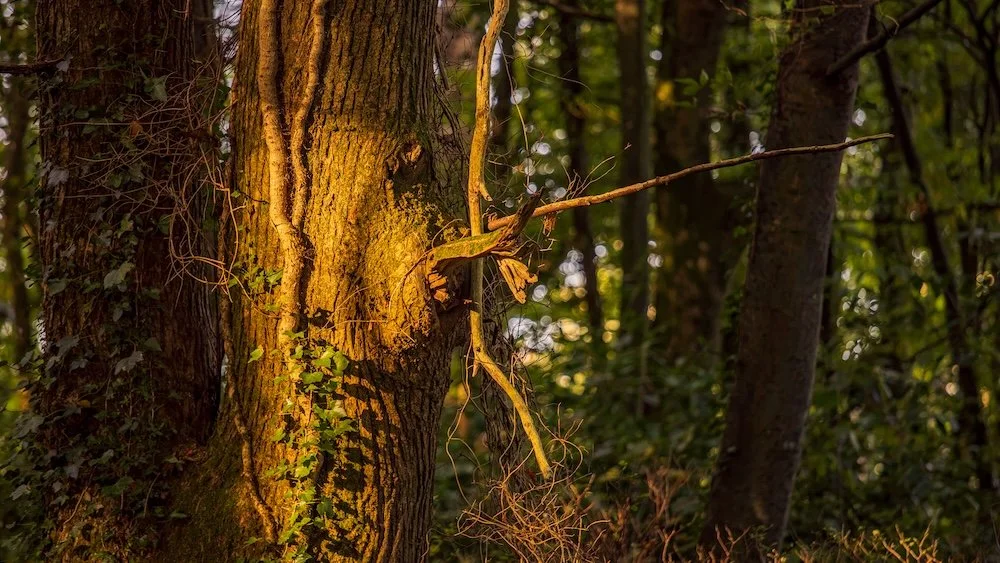
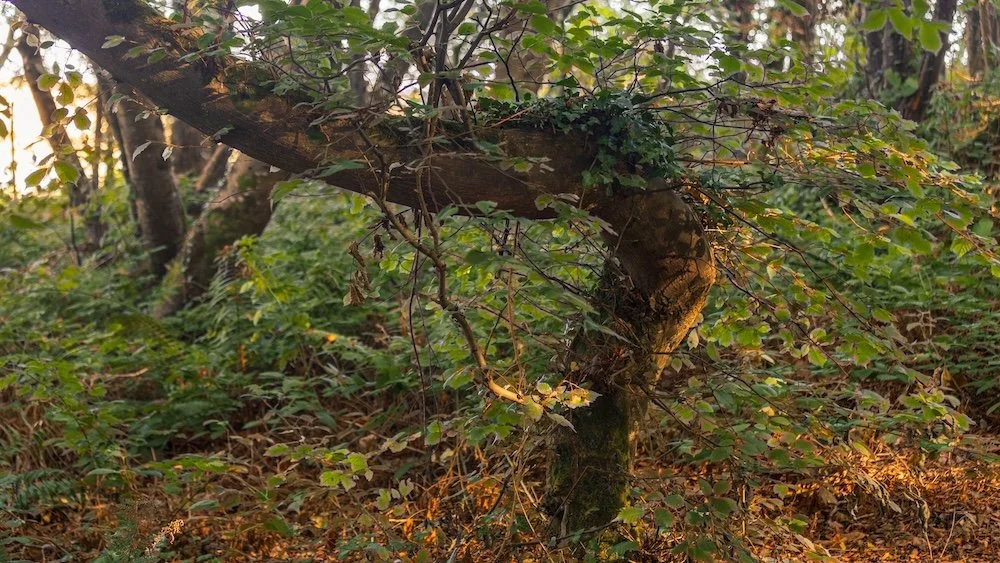
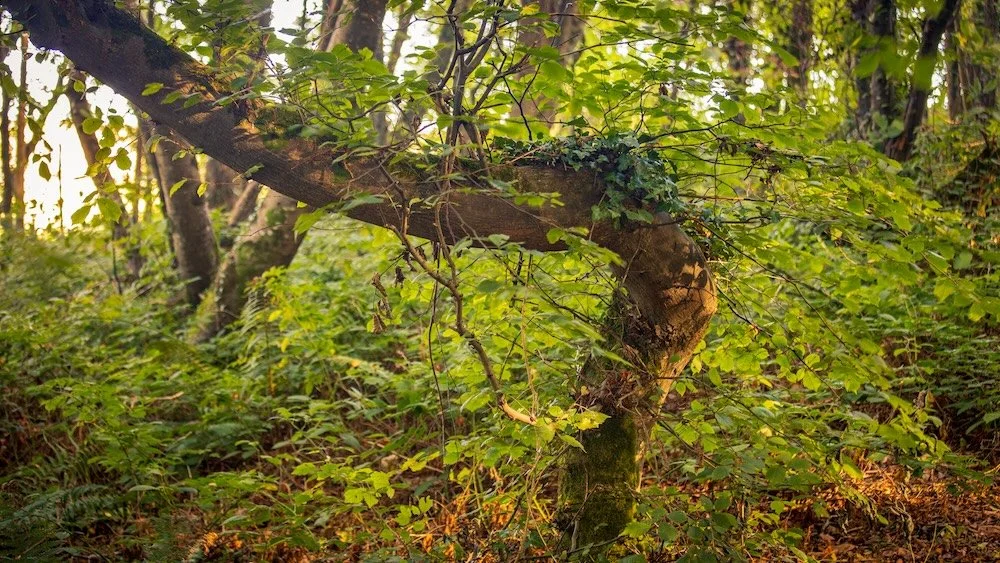
Then I found a crooked tree.
Among the vertical trunks, this one immediately looked different. It was not necessarily a spectacular tree, but its shape gave it something that the surrounding trees did not have. It had a character. That was the point I had been looking for.
I started to realise that the task was not about finding the best tree. It was about finding the tree that had something different to say within the surrounding pattern.
That is a useful way of approaching woodland photography. Look for contrast. It might be a crooked trunk among straight ones, a darker tree surrounded by lighter trunks, an isolated patch of leaves, or a shaft of light falling onto one small part of the scene. The subject does not have to be dramatic. It just needs to be distinct enough for the viewer to understand where to look.
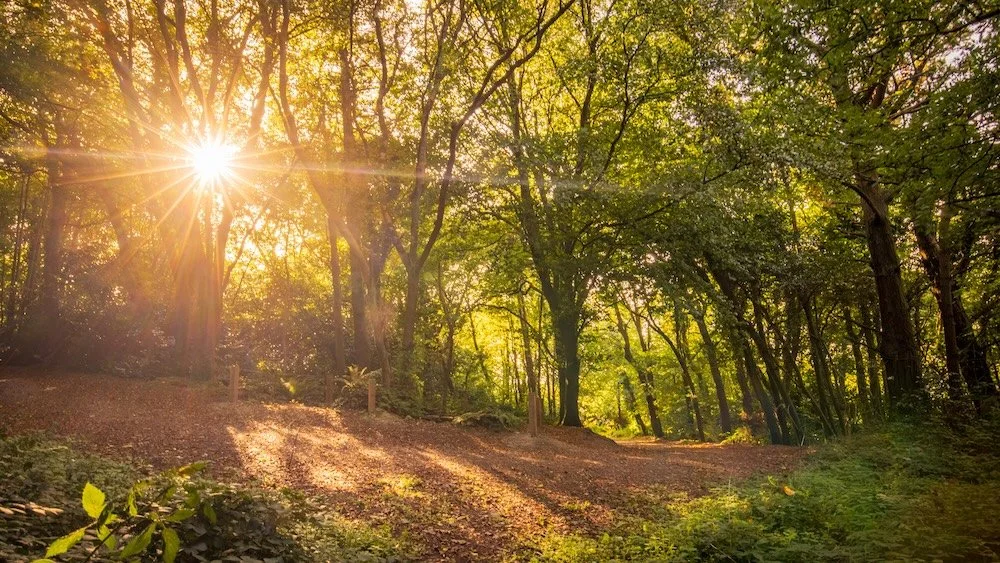
Eventually I moved towards a large path that runs through the woods. It is the route my family normally takes when we walk here, but I had deliberately avoided it earlier because I wanted to work deeper among the trees. Now the light was leading me towards it.
Up to this point I had stayed with the telephoto lens. For the final part of the morning, I switched to a wide-angle lens because I wanted to include more of the woodland and work towards a sunstar as the sunlight came through the branches.
The image was different, but the thought process was the same: find a subject and let the light direct your attention.
I came away happy, but I felt I had made progress with a type of photography I normally find difficult.
I had not suddenly become a woodland photographer. What had changed was my approach.
Instead of trying to photograph the woodland, I had started photographing individual characters within it.
That may be the most useful lesson I can take from the experience. If you find woodland photography difficult, do not start by asking where the best composition is. Start by asking what is different. Find the tree that does not look like the others. Watch where the light falls. Use a longer lens to isolate details before moving to a wider lens. Give the light time to change, and be prepared to return to the same subject more than once.
You do not need fog to make woodland photography work, although it can certainly help. You also do not need an ancient native forest. A familiar local woodland can give you plenty to work with if you slow down and change the way you look at it.
For me, the real challenge was not the woodland itself. It was learning to see it differently.
And for one morning, at least, I had a little help from my inner Mali.