Why Landscape Photography Doesn't Always Need To Be Dramatic
There is a side to landscape photography that is easy to overlook. We often talk about being in the right place at the right time, reacting quickly to changing light, waiting for the wave to hit the rocks or trying to capture a few seconds when the light breaks through the cloud. I spend a lot of time photographing the coast, so I know that feeling well. Sometimes you are working quickly, moving the tripod, changing the composition and trying to make decisions before the moment disappears.
But landscape photography does not always have to work that way.
There is also a much slower side to it. It is the type of photography where there is no pressure to capture a particular moment and where simply being outside becomes part of the reason for going. For me, that is one of the things that makes landscape photography different from many other types of photography. Whether someone photographs wildlife, portraits, weddings, sport, street photography, architecture, macro or commercial work, landscape photography can be different because the process of getting to the location can be as important as the photograph itself.
That was the case on this particular day.
I had recently passed this location while out with my family and thought it looked like somewhere I would enjoy walking. I had never visited it with my camera, so I decided to go back on my own and take a walk. The original plan was actually to enjoy the walk, even if I did not take photographs.
Of course, I brought the camera with me.
The location is on the mainland side of Great Island in Cork, around the sheltered waters associated with Cobh. This side of the island is much more protected than the exposed coastline that I regularly photograph. Instead of waves arriving directly from the open Atlantic, this is a sheltered inlet, and that changes the way you approach photography.
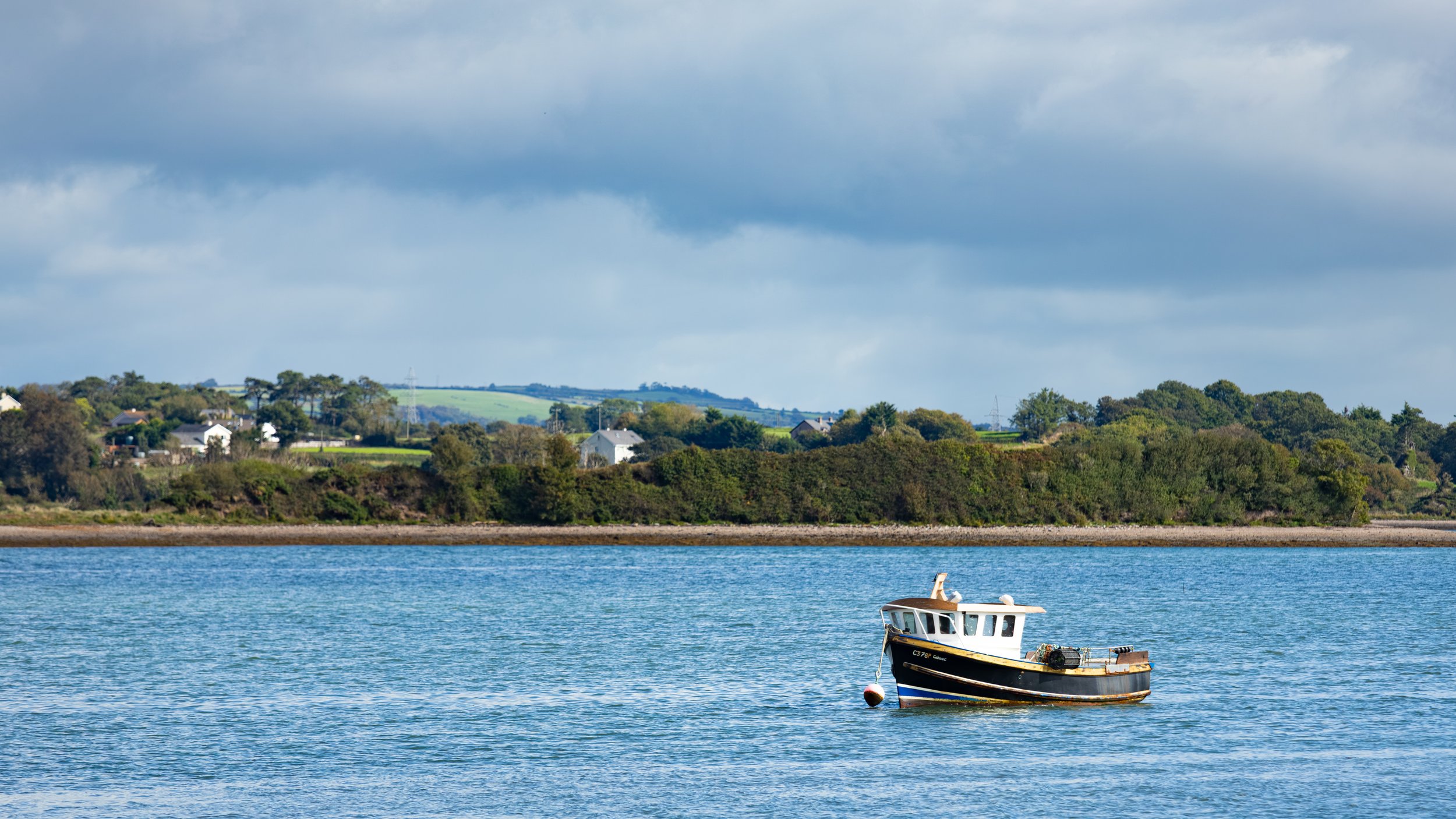
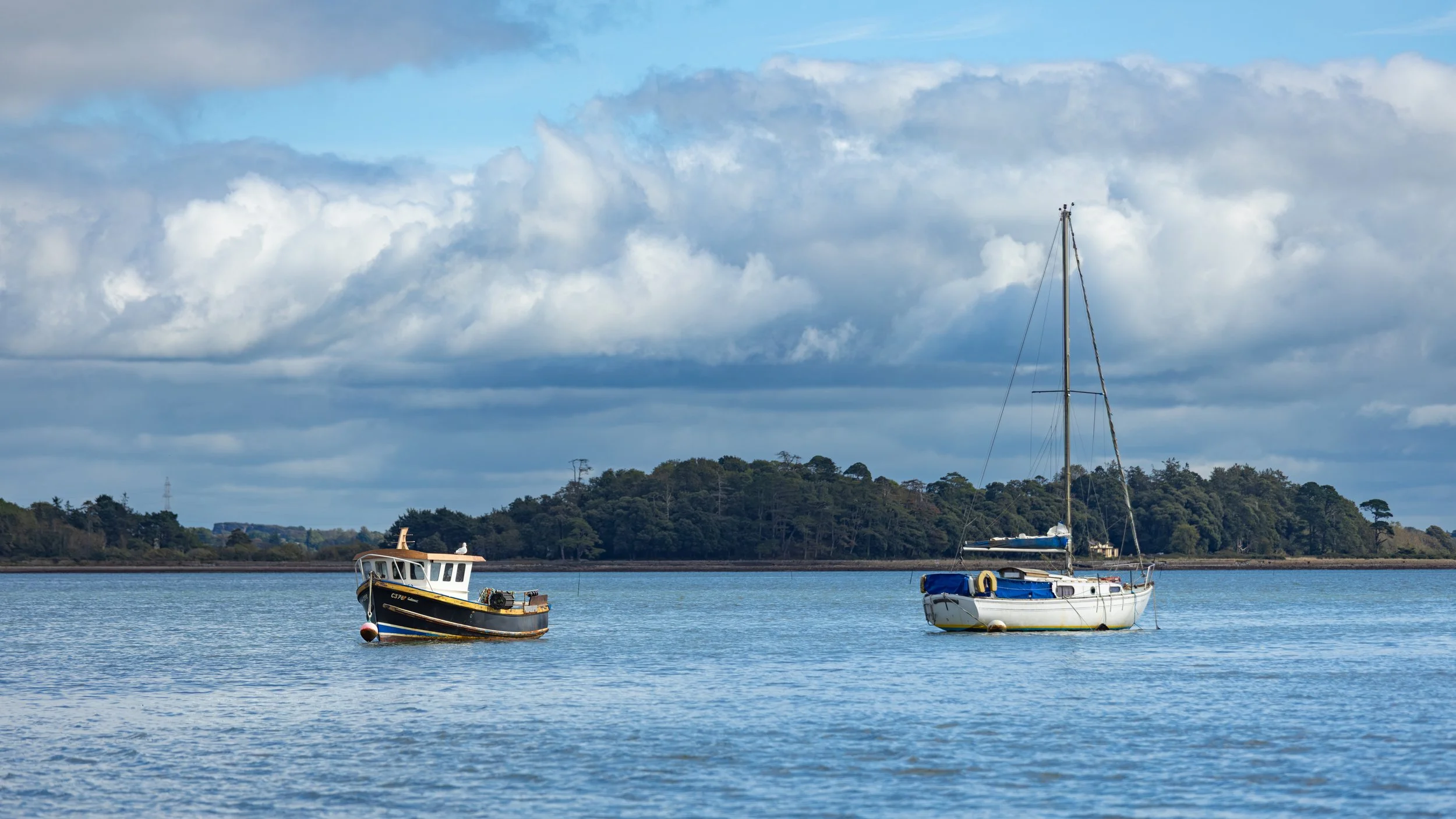
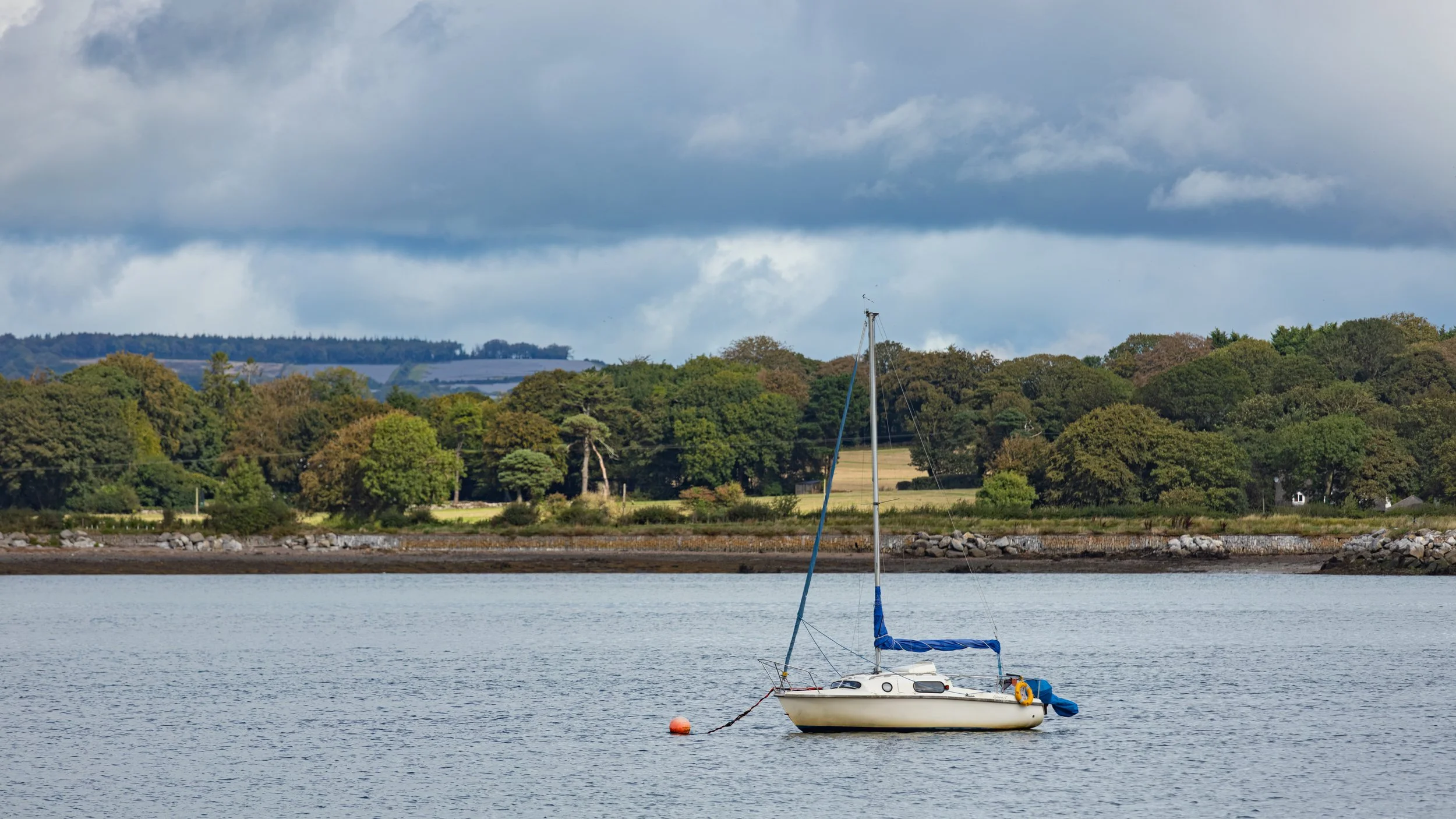
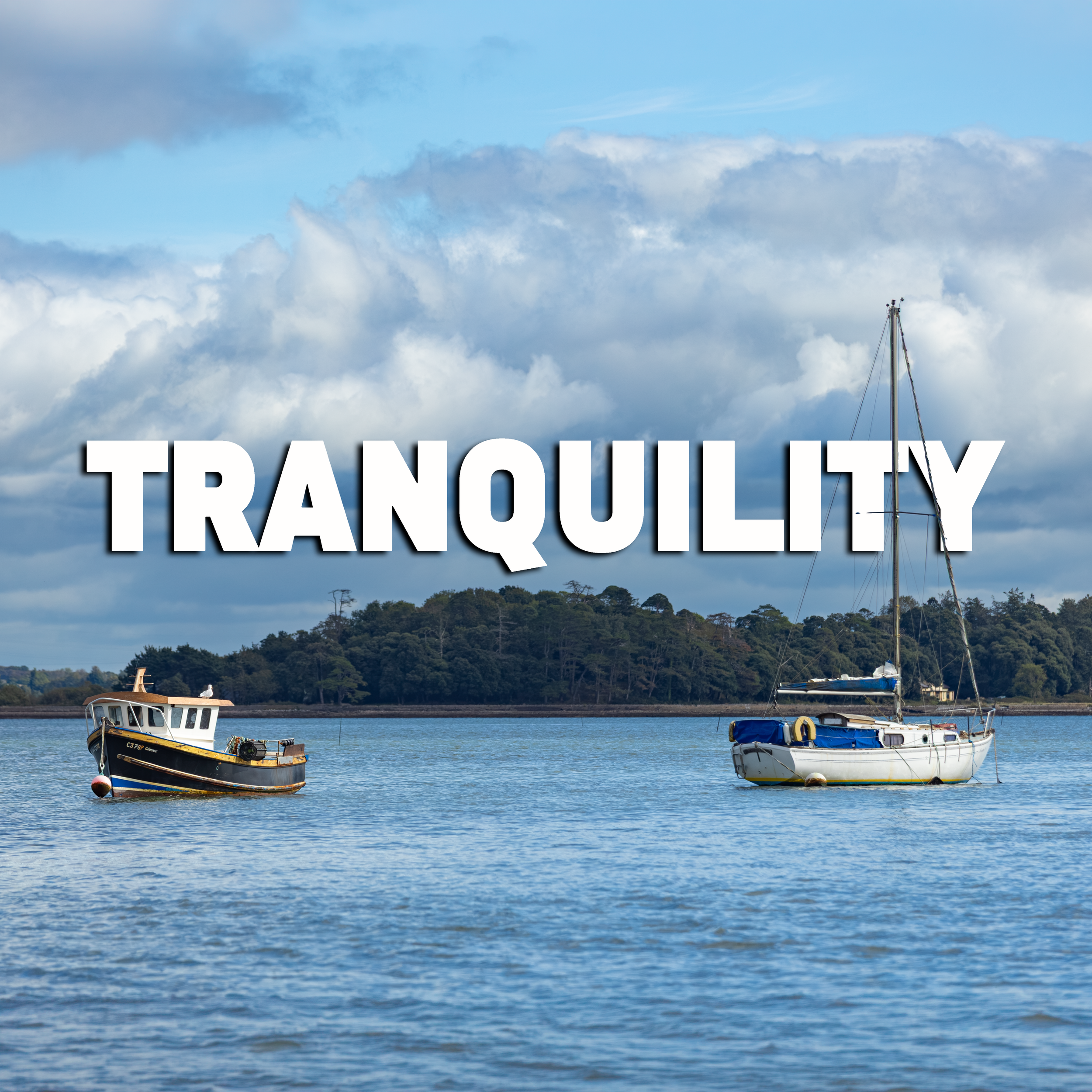
When I arrived, I was hoping for very calm water. There were boats moored close to the shore. My ideal conditions would have been flat water and clean reflections. That would have allowed the boats to become strong, simple subjects within a quiet composition.
I did not get those conditions.
The water was not completely still, and the reflections were not clean. There were also rain clouds moving across the area, with the light changing from one moment to the next. Instead, I decided to work with what was there.
This is an important lesson for landscape photographers. We can become too focused on the conditions we wanted rather than the conditions we actually have. There is nothing wrong with having a photograph in mind, but if the weather does not cooperate, the better option is often to reconsider the composition rather than simply deciding that the location has failed.
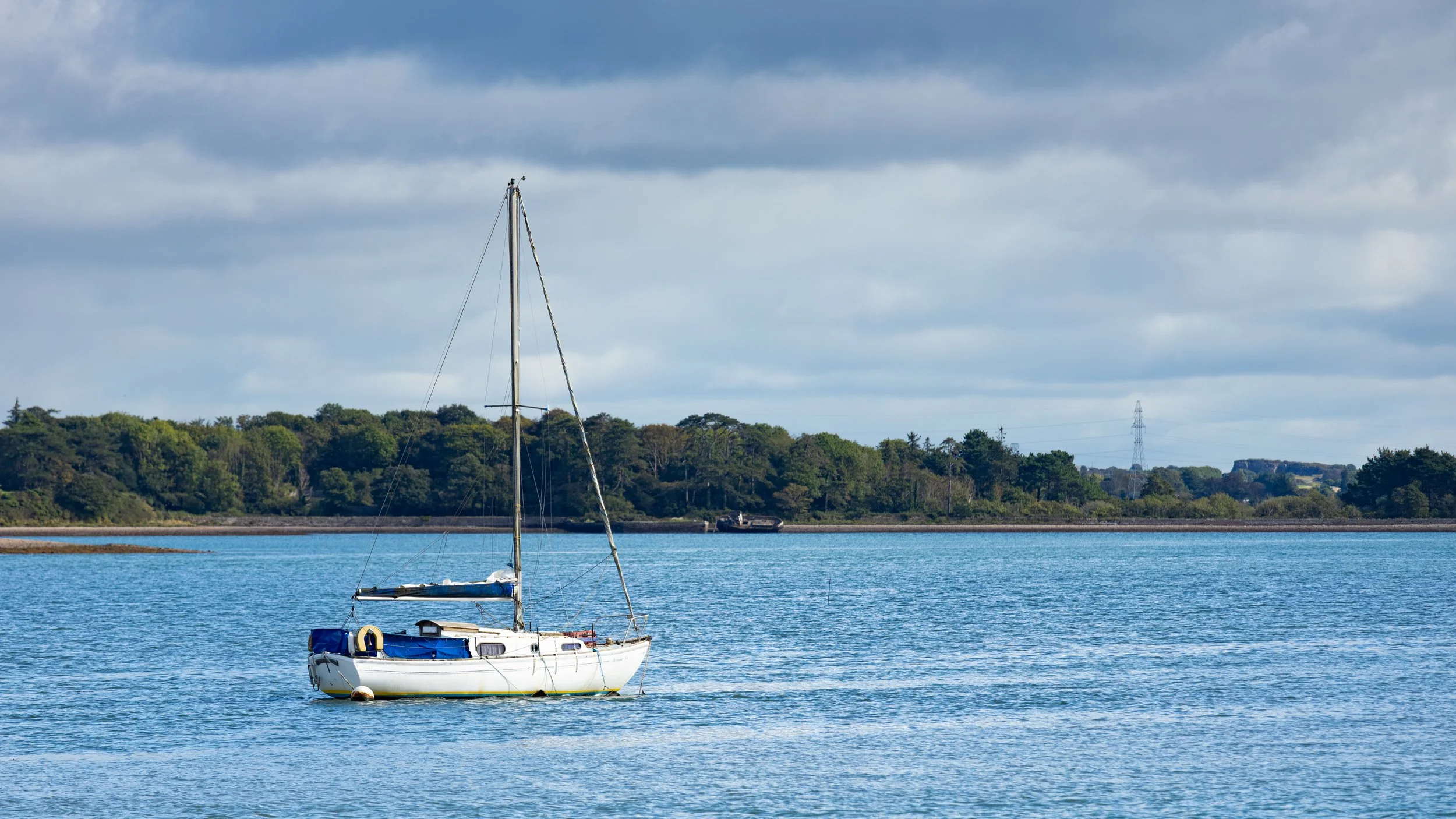
The boats became the main subjects, and I started thinking about their position within the frame.
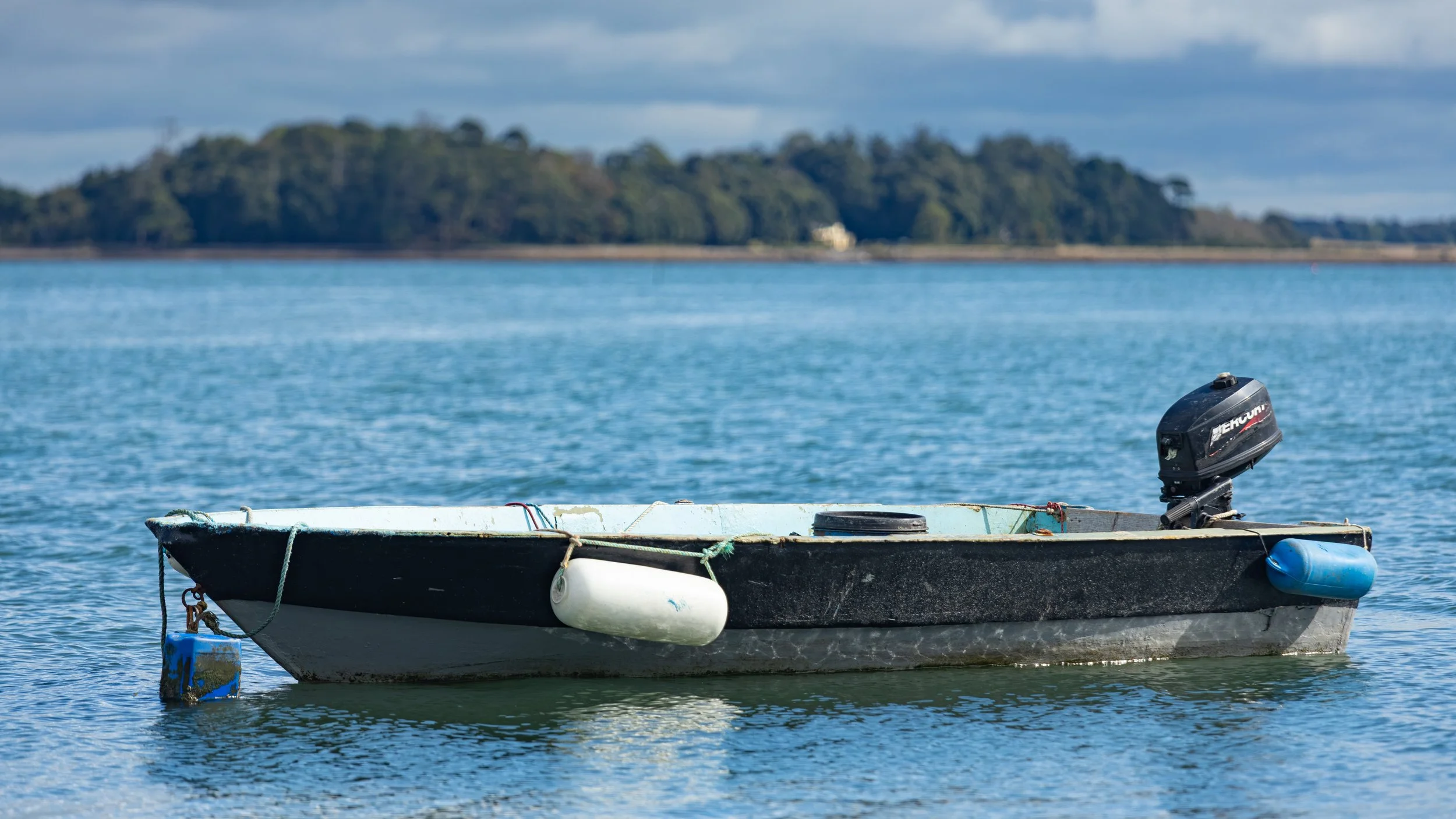
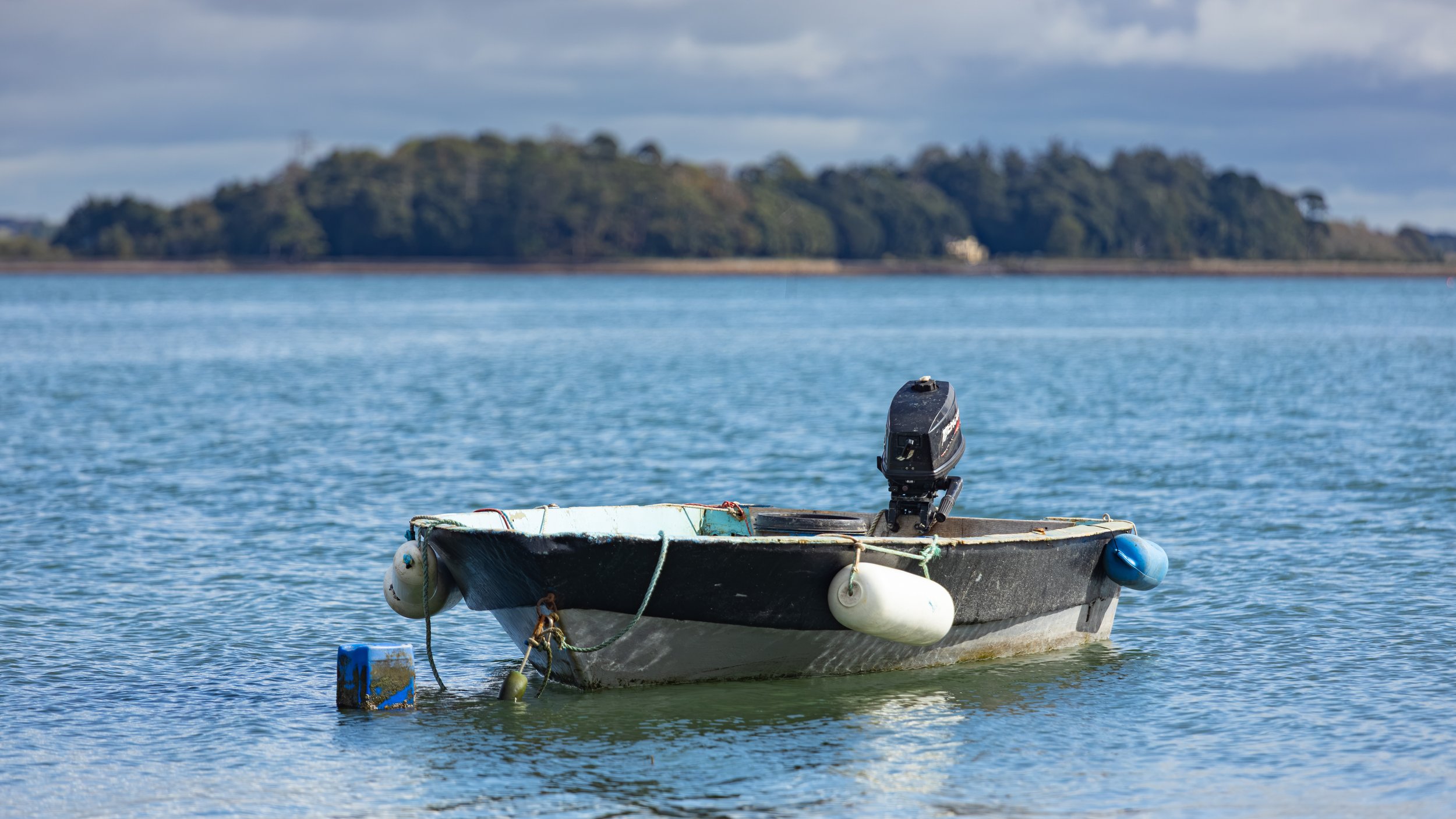
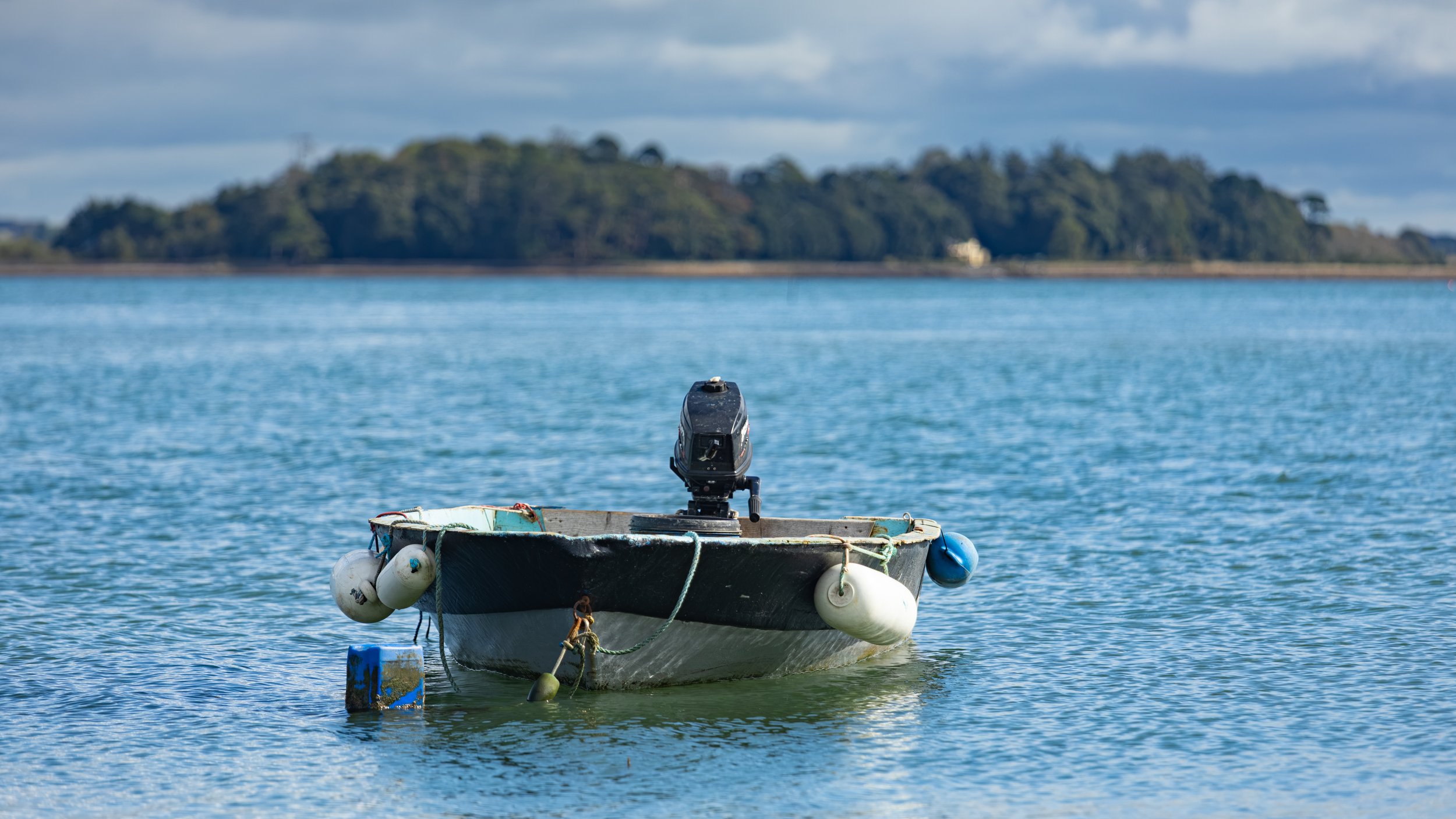
One of the things I discuss during the video is the direction that the front of a boat is facing. This might seem like a small detail, but it can make a noticeable difference to a composition. When you have a subject with an obvious direction, the viewer naturally follows that direction with their eyes. If the boat is facing towards open space within the frame, the composition can feel more natural. If it is facing directly into a tight edge of the photograph, the image can feel more restricted.
It is worth paying attention to.
There is another complication with photographing moored boats. Their position is not fixed. The tide, wind and movement of the water can rotate them, which means the composition you see when you arrive may not be the composition you have a few minutes later. Rather than treating the boat as a static object, I found it useful to watch how it was moving and consider when its position created the best relationship between the subject, the water and the surrounding space.
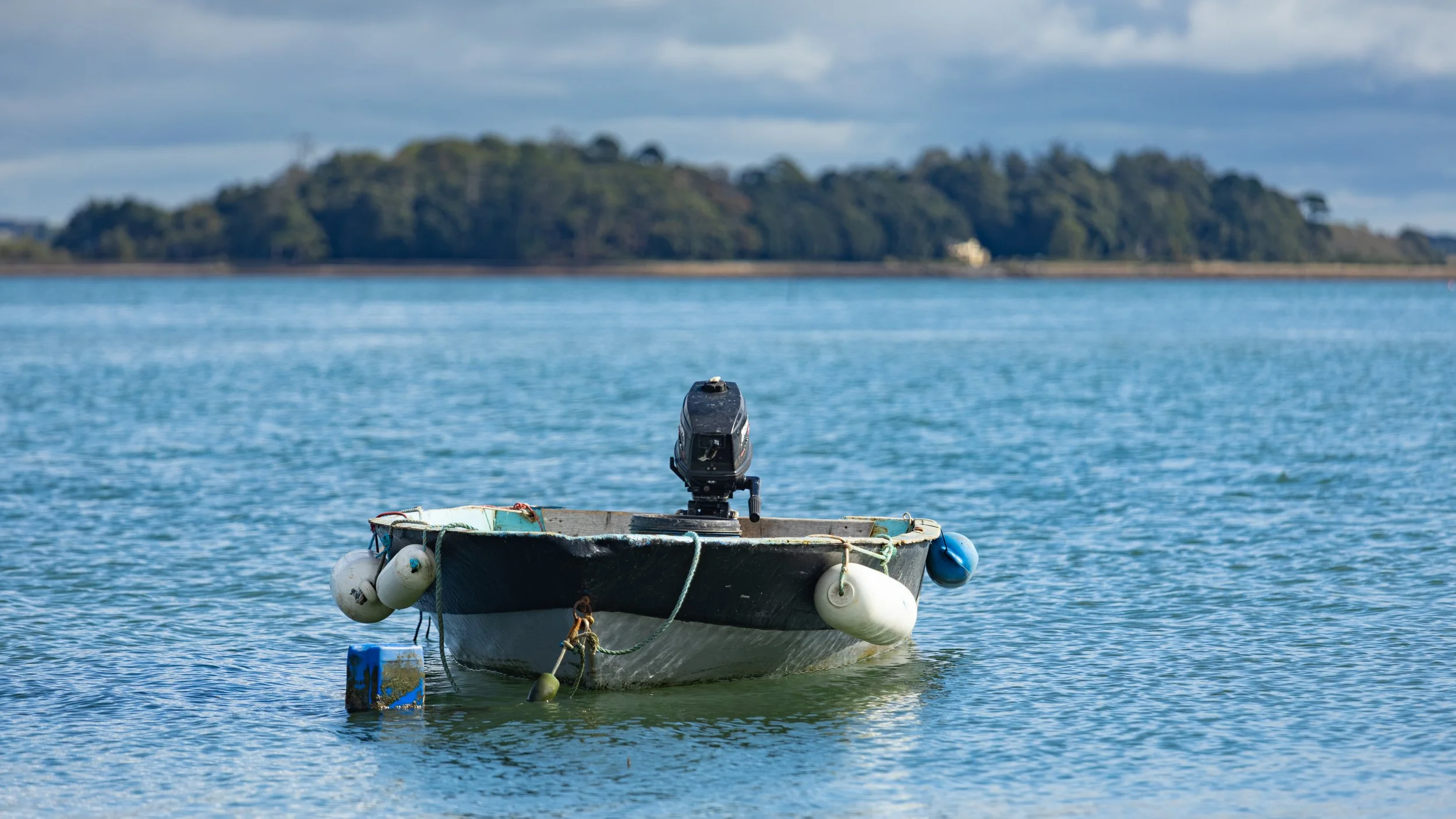
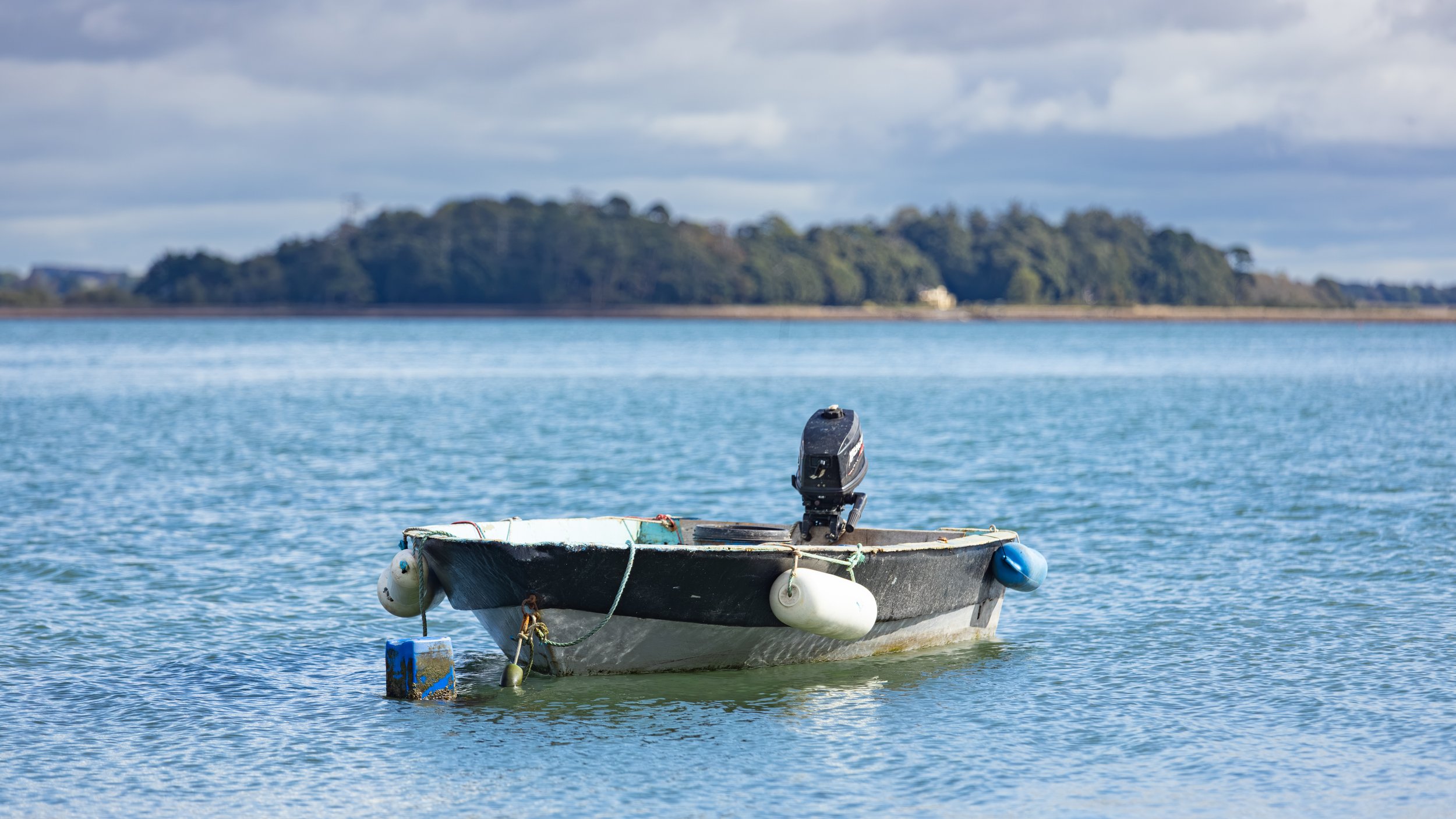
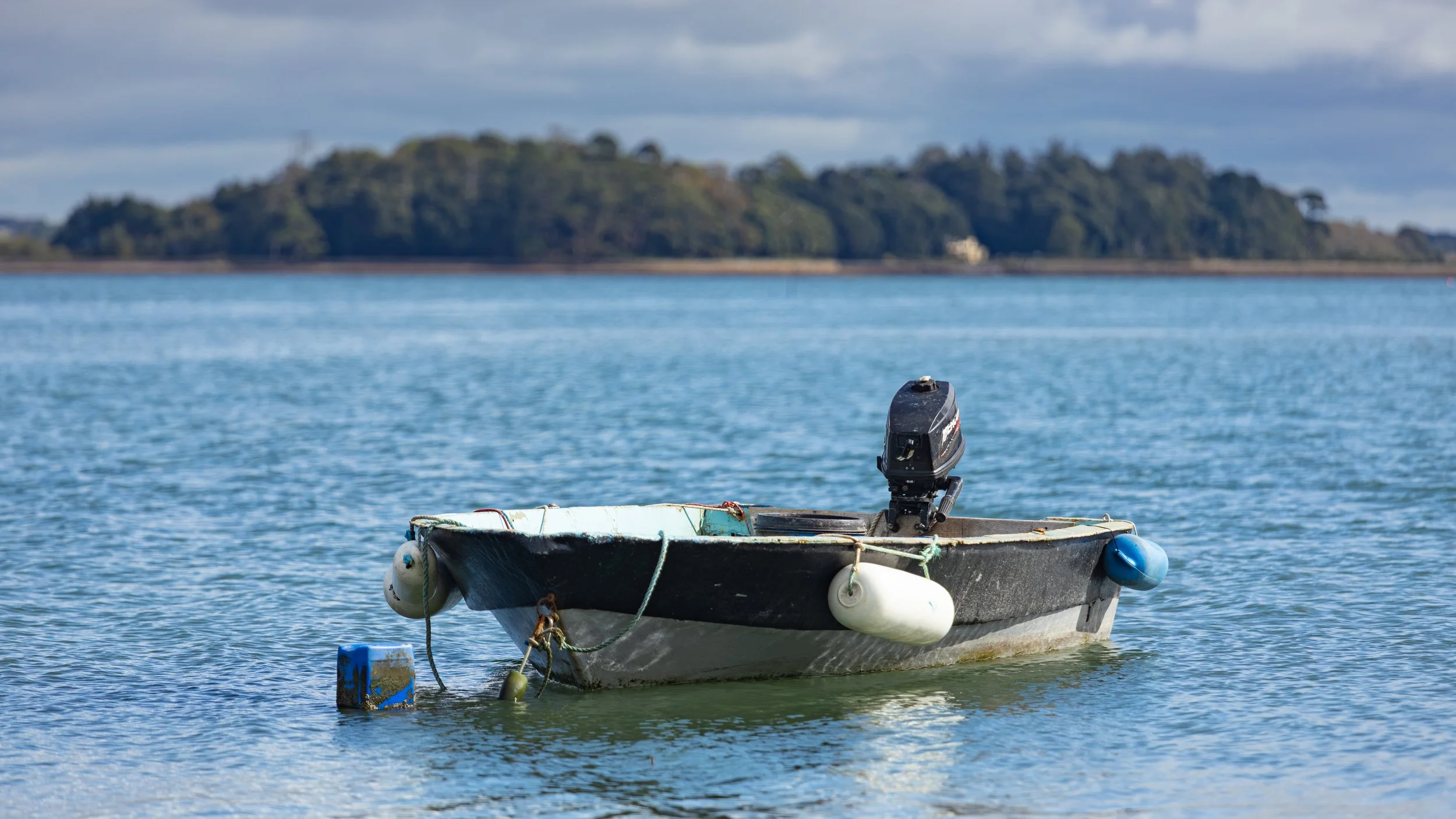
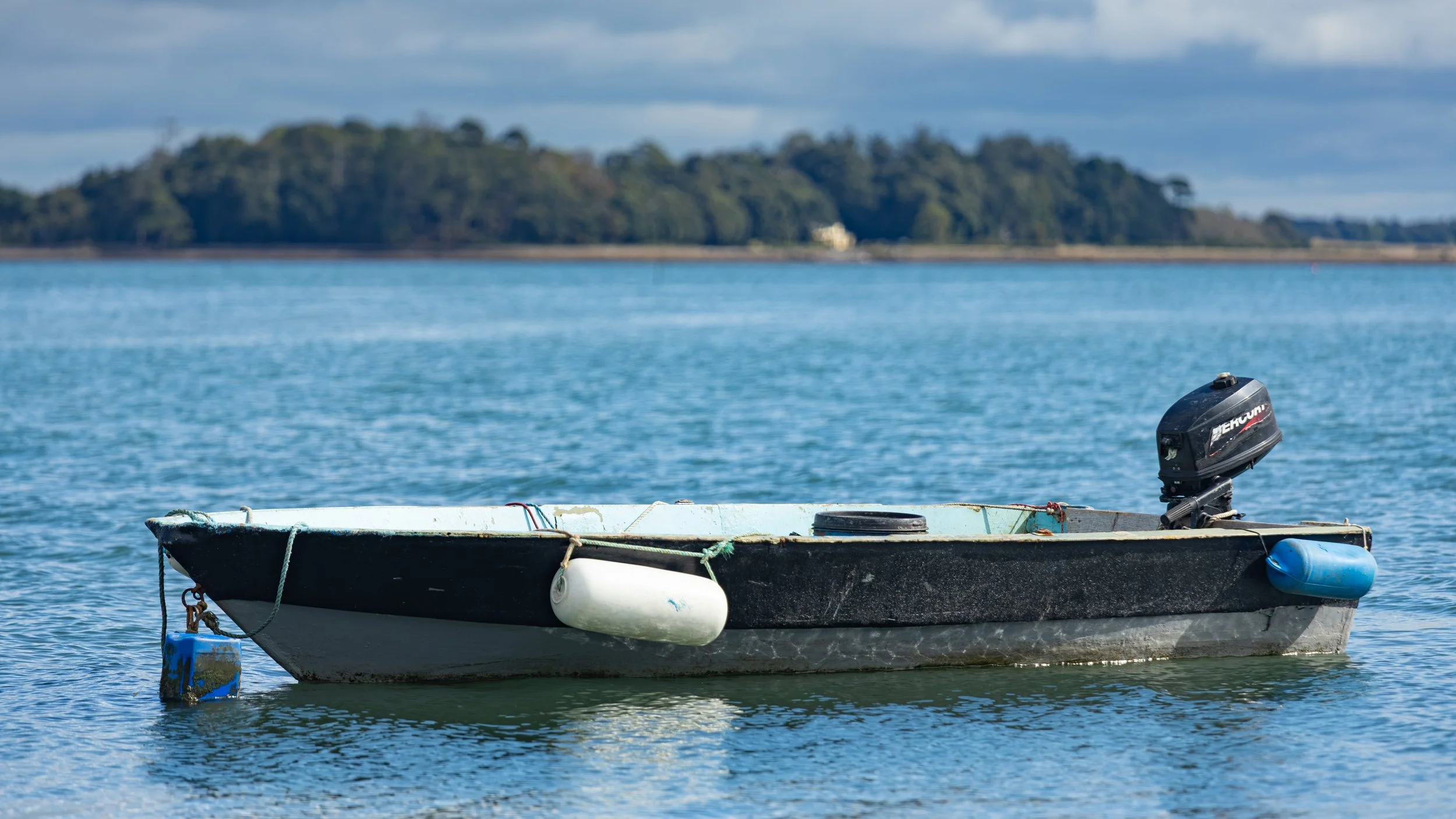
A smaller tender boat closer to the shore provided another subject. It was a much simpler composition, and that was part of the appeal. I did not need a complicated foreground or large coastal feature. The boat, water and changing light were enough.
That brings me back to the reason I had come here in the first place.
The most useful part of the visit was not necessarily the photographs I came home with. It was the fact that I had slowed down. There was no need to chase the light, no pressure to cover several locations and no requirement to produce a particular photograph. I could walk, stop, look, make a composition and move on when I was ready.
For landscape photographers, I think that is an advantage that can easily be overlooked. The hobby naturally gets us outside. We walk to locations, carry equipment, explore places that we might otherwise never visit and spend time away from our normal routines. You do not need to take a camera every time to get that benefit.
In fact, leaving the camera at home occasionally can be useful. It can remind you to look at a location without immediately thinking about the tripod or focal length. On this occasion I did take my camera, but the important thing was that I had already given myself permission not to produce anything.
That changed the way I approached the photography.
I was not trying to force a photograph. I was simply paying attention to what was happening. The rain clouds, the breaks in the light, the movement of the boats and the reflections all became things to watch rather than conditions I needed to control.
There is a place for the more intense side of landscape photography. I will continue to stand on the coast waiting for a wave, watch for changing light and react when an opportunity appears. Those moments matter too.
But they do not have to be every photographic outing.
Sometimes the better decision is to find somewhere sheltered, take a walk and slow everything down. You might still come home with photographs, but you may also have spent a couple of hours outside, getting exercise and giving yourself time to think.
For me, that was the real value of this visit. The photographs were important, but they were not the only reason for taking the camera.
Landscape photography can be about capturing a dramatic moment, but it can also be about simply being there. On this day, being there was enough.