
The Trilogy
Essential Landscape Photography Skills
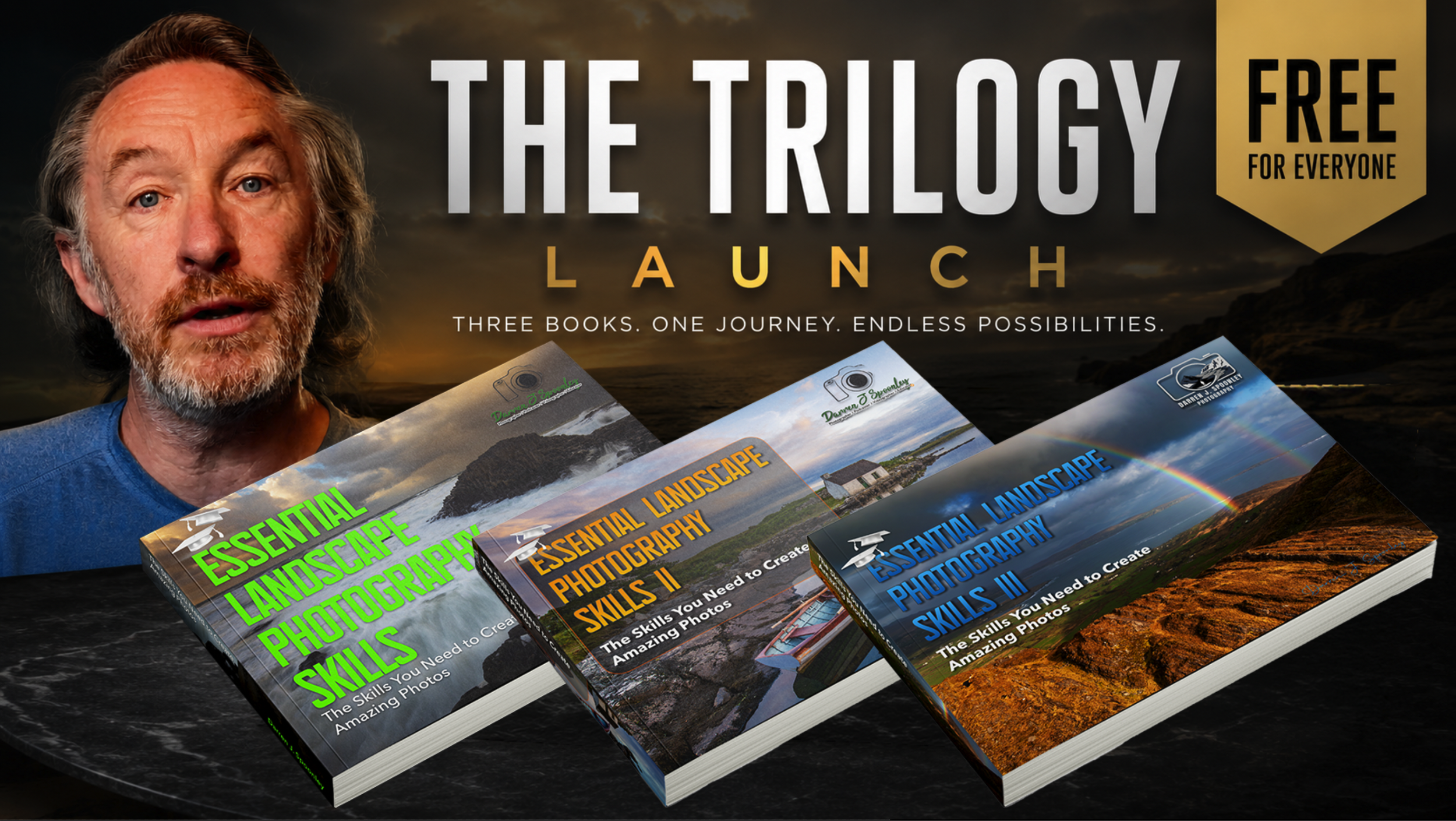
There is a strange feeling that comes with finishing a long project.
For months, and in this case years, an idea sits somewhere in the back of your mind. Every time you head out with the camera, every conversation you have with another photographer, every mistake you make and every lesson you learn seems to find its way back into that project. It becomes something you're constantly thinking about, constantly adding to, and constantly refining.
Then one day it's finished.
That is how I feel about the completion of the Essential Landscape Photography Skills Trilogy.
With the release of Volume III, the trilogy is finally complete. Three books, thirty chapters and around thirty accompanying videos are now out in the world. What started as a simple idea has grown into something much larger than I ever expected, and taking a moment to look back on that journey feels appropriate.
The funny thing is that none of this started with the intention of writing books. It started with an article.
A few years ago, I wrote a piece for Fstoppers called What I Wish I Knew Earlier. At the time, it was simply a reflection on some of the lessons landscape photography had taught me. The things that had taken years to understand. The mistakes that I seemed determined to repeat. The observations that only came after spending countless hours standing in front of landscapes, sometimes getting the photograph I hoped for and often not.
The response to that article was far greater than I anticipated. What stood out wasn't necessarily agreement with every point I made, but how many photographers recognised the same struggles. It seemed that regardless of experience level, many of us had travelled similar roads. We had all chased locations when we should have been chasing light. We had all spent time thinking equipment would solve problems that were actually caused by decision making. We had all stood in beautiful places and somehow still come home disappointed with the results.
Those conversations stayed with me.
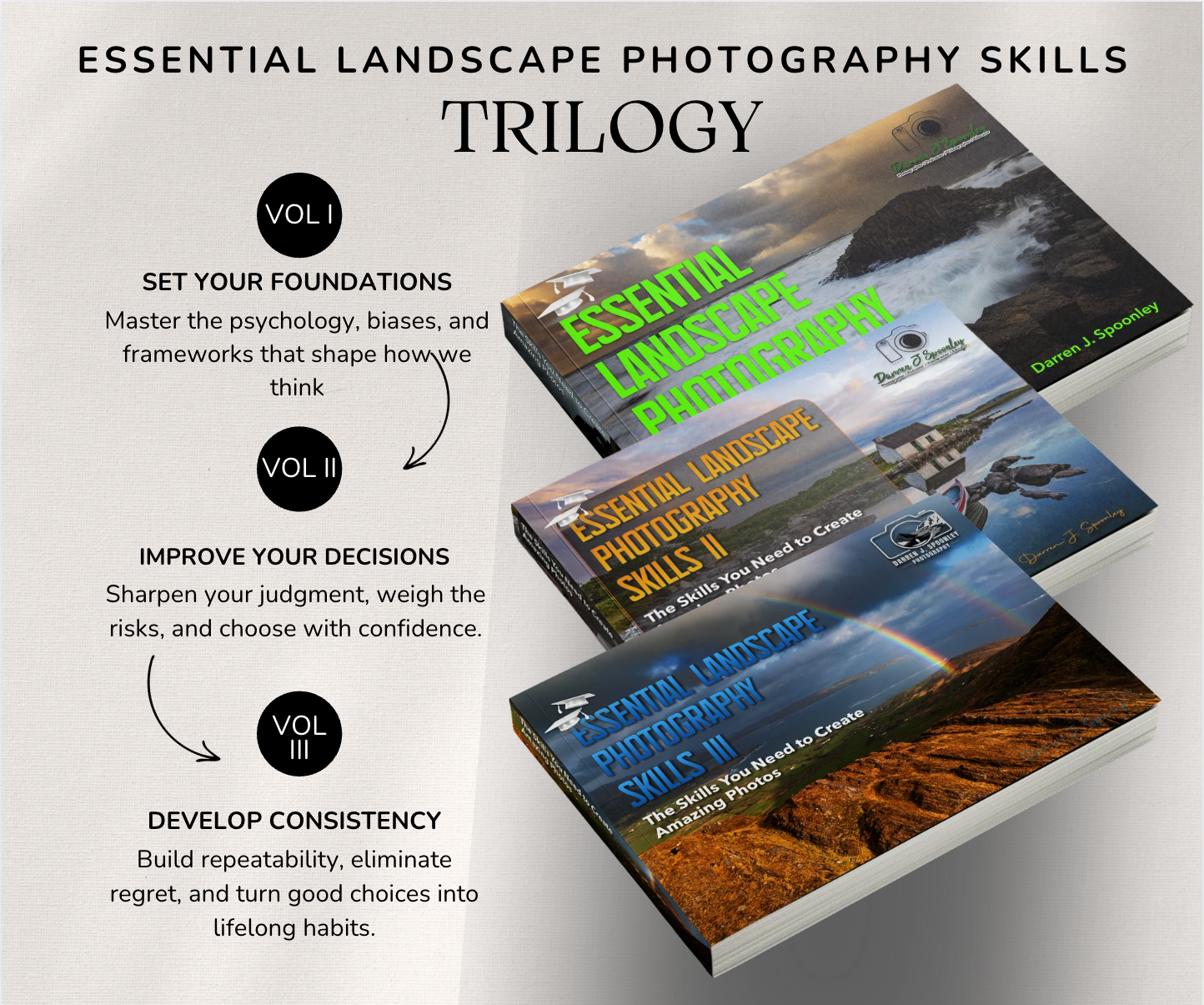
Over time, they became videos. The videos generated more discussions, more questions and more ideas. Before long, I realised there was an opportunity to create something more structured. Not another standalone tutorial or a collection of random tips, but a resource that followed the same progression many photographers experience themselves.
That eventually became Volume I.
The first book focused on the foundations because those are the lessons that changed my own photography the most. Understanding light, weather, composition and location scouting transformed how I approached landscapes. Looking back, many of the mistakes I made in my early years could be traced back to weaknesses in those areas. I wanted to create the book I wish someone had handed me when I first picked up a camera.
Once Volume I was finished, however, it quickly became clear that there was more to say.
The questions I received from readers often centred around what came next. They understood the foundations but wanted to refine their approach further. Topics such as filters, long exposures, editing and finding inspiration became recurring themes in conversations. That naturally evolved into Volume II, a book that focused less on learning photography and more on refining how photographers apply what they already know.
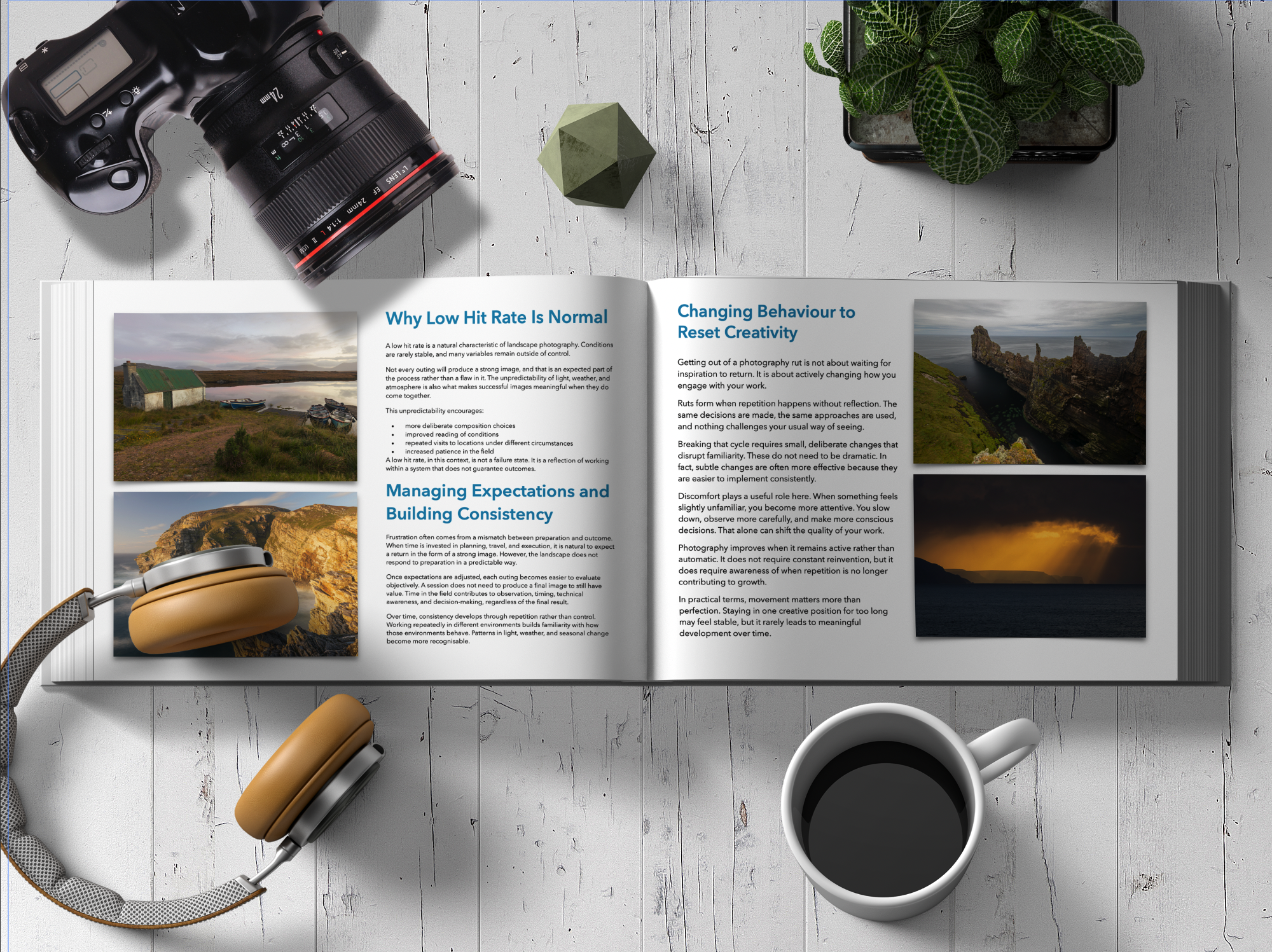
Then came Volume III.
In many ways, I think this was the most interesting volume to write because it tackles something that isn't discussed nearly enough: consistency.
Most photographers eventually reach a stage where they understand the fundamentals. They know how to operate their camera. They understand composition. They can recognise good light. Yet they still struggle to consistently create the photographs they are capable of producing.
I know I certainly have.
Volume III became an exploration of that gap between knowledge and execution. It looks at workflow, focus, sharpness, decision making and the reality of hit rates. It also explores the role of ego, competition and creative confidence in photography. These are subjects that don't always receive the same attention as camera settings or editing techniques, yet they often have a much greater impact on long-term progress.
Looking back now, I can see that the trilogy mirrors my own development as a photographer.
The first volume asks how we build a foundation.
The second asks how we refine those skills.
The third asks how we apply them consistently.
Together, they create a learning journey that feels complete.
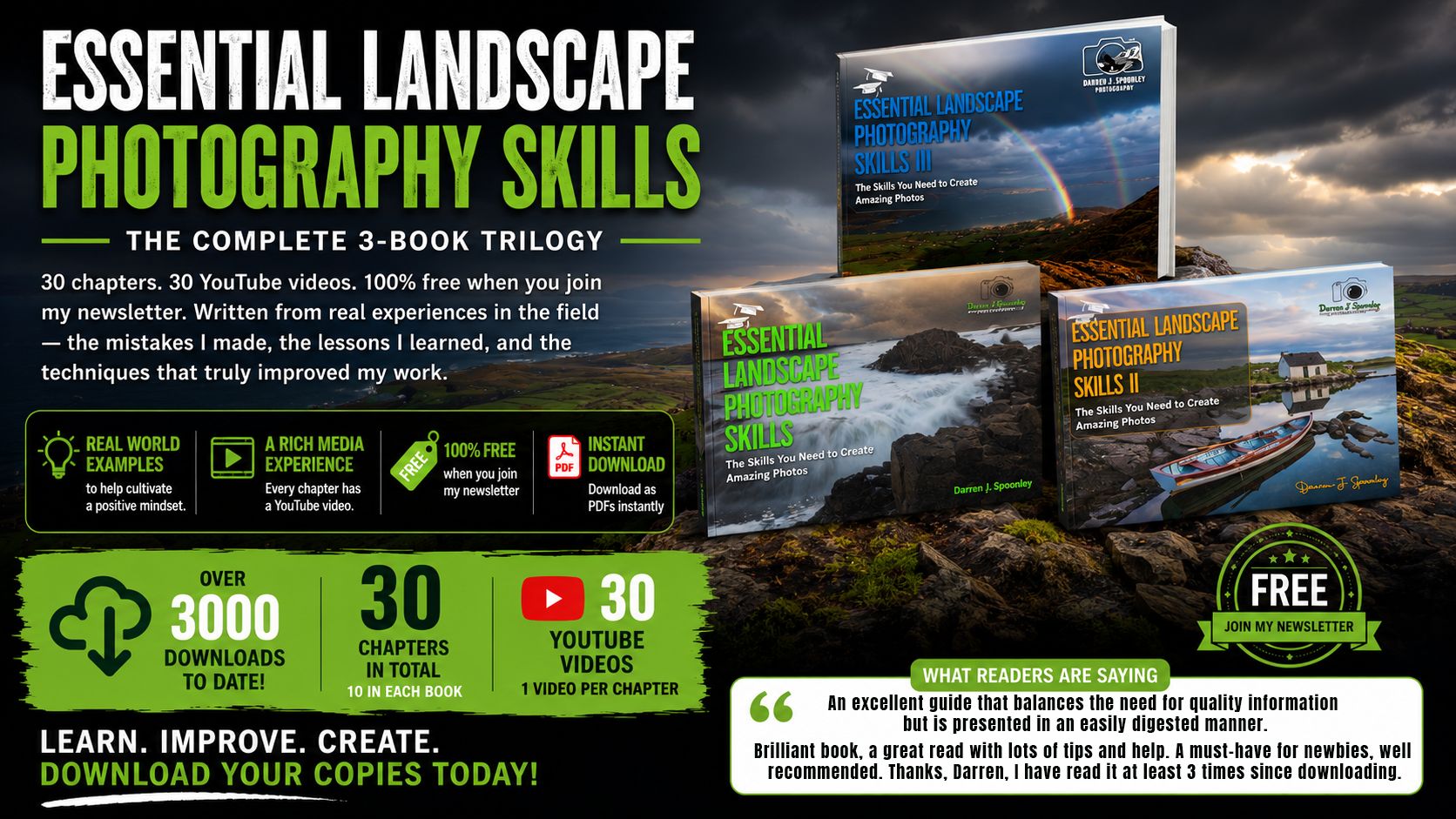
One aspect of the project that I am particularly proud of is the decision to accompany every chapter with a dedicated YouTube video. Some people prefer reading. Others learn more effectively through visual demonstrations. Rather than forcing photographers into one format, I wanted readers to have both options available. The books provide the structure, while the videos provide context and real-world examples. Combined, they create the kind of learning experience I wish had existed when I was starting out.
Of course, one question continues to appear more than any other.

Why give it away for free?
The answer is exactly the same today as it was when Volume I was released.
Because I remember what it was like to be starting out.
Photography can become expensive very quickly. Cameras, lenses, filters, travel costs, printing, workshops and courses all require investment. While there is certainly value in many of those things, I never wanted the cost of learning to become another obstacle for photographers who simply wanted to improve.
Photography has given me far more than photographs. It has taken me to places I would never otherwise have visited. It has introduced me to lifelong friends. It has provided opportunities that I could never have predicted when I bought my first camera.
Making these books available for free feels like a small way of giving something back.
That doesn't mean the work is without value. Quite the opposite. An enormous amount of time has gone into researching, writing, filming and producing the trilogy. For those who wish to support that work, the optional €4.99 "high five" price remains available and every contribution genuinely helps support future projects.
However, the most important thing for me is that the information remains accessible.
If someone downloads the trilogy for free and it helps them avoid a mistake that took me years to learn from, that's a success.
If it helps someone better understand light, improve a composition or feel more confident standing in front of a scene, that's a success too.
And if it simply encourages someone to get outside with their camera more often and enjoy the process, then it has achieved exactly what I hoped it would.
The trilogy is now complete.
It's no longer a collection of notes, ideas and unfinished drafts sitting on my computer. It's out there, being downloaded, read and hopefully used.
In many ways, it feels like the end of a project.
In another sense, it feels like the beginning of the next chapter.