The Final Boss
There are shoots that come together easily, and then there are shoots that test every part of your patience, judgement, and determination. Our final photography session on Inis Mór was definitely the second type. After several days of travelling across the island with Diarmuid and Patrick, dealing with changing forecasts, Atlantic wind, and constant rain showers, we were finally heading back out to photograph one of the most talked about locations on the island: the Wormhole.
Earlier that day, the weather had already beaten us back once. We had attempted to reach the location during heavier conditions, but the rain and large waves forced us to retreat before we even made it properly onto the rocky route leading there. Looking back now, that probably worked in our favour. Had we not been distracted and delayed during that first attempt, we could easily have found ourselves trapped closer to the coastline while massive waves hammered the cliffs around the Wormhole itself. It was a reminder that no image is worth ignoring the conditions around you.
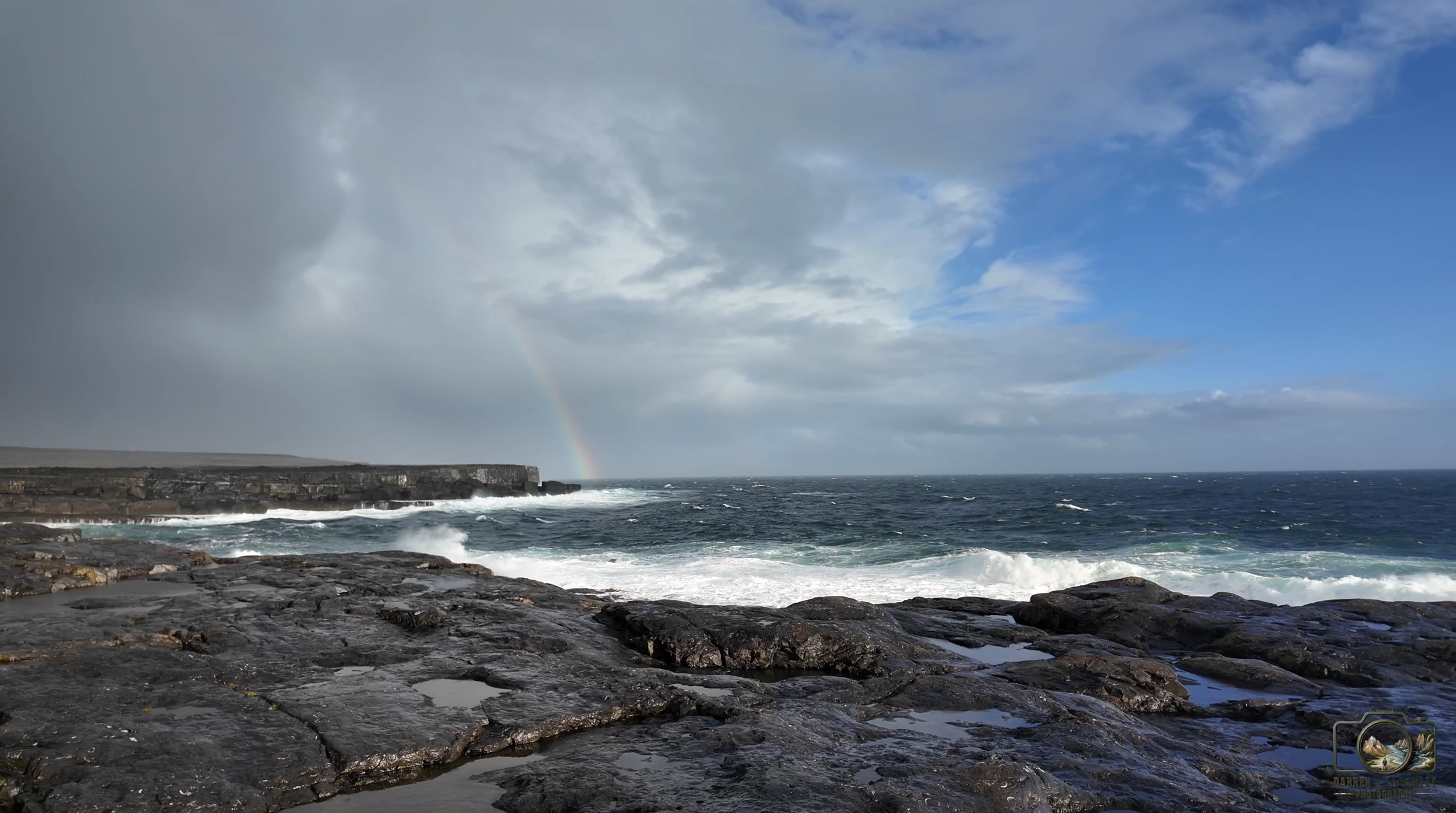
After returning to the hotel and changing into dry clothes, we decided to give it another go. The rain was still falling, although slightly lighter than before, and we knew daylight would eventually run out. The route to the Wormhole is not really a trail in the traditional sense. There are no clear footpaths or marked walkways. Instead, you move across uneven limestone rock while following occasional red arrows spray-painted onto stones to guide people in roughly the right direction.
Even in dry weather, the walk requires care. In the rain, it became slow and awkward. The rocks felt like ice underfoot, and every step had to be deliberate. Carrying camera gear across slippery limestone while Atlantic wind pushed rain sideways into us added another layer of difficulty. But locations like this are part of the reason many landscape photographers keep returning to the west coast of Ireland. The conditions rarely make things easy, but they often create atmosphere that calmer weather cannot.
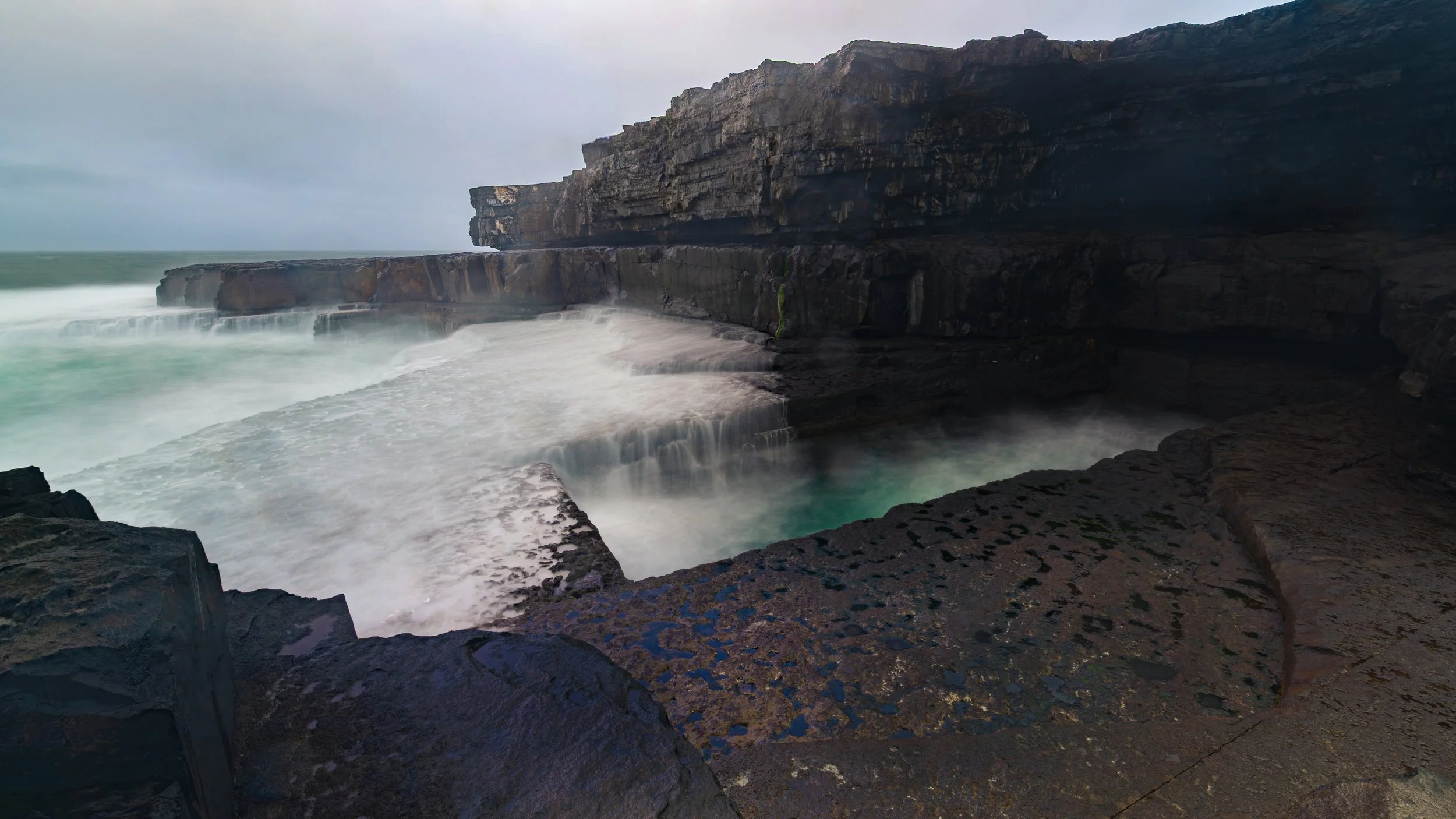
The Wormhole itself, officially known as Poll na bPéist, is one of the most unusual natural formations in Ireland. From above, it appears almost man-made due to its rectangular shape carved into the limestone coastline. It has become increasingly well known internationally after being used as a location for the Red Bull Cliff Diving World Series, where athletes dive directly into the narrow pool surrounded by jagged rock. Standing beside it in person gives you a much better appreciation of both the scale and danger of the location.
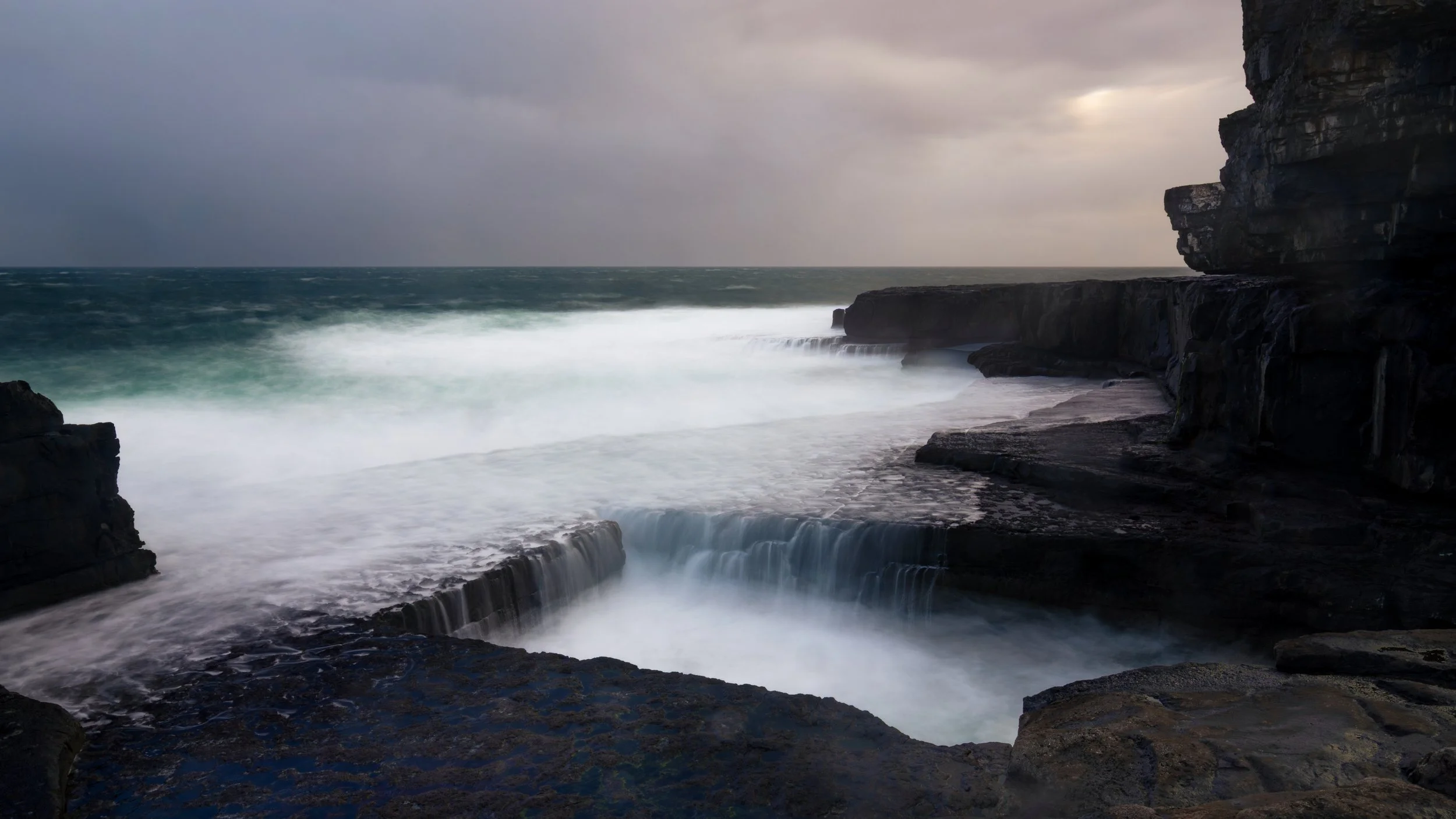
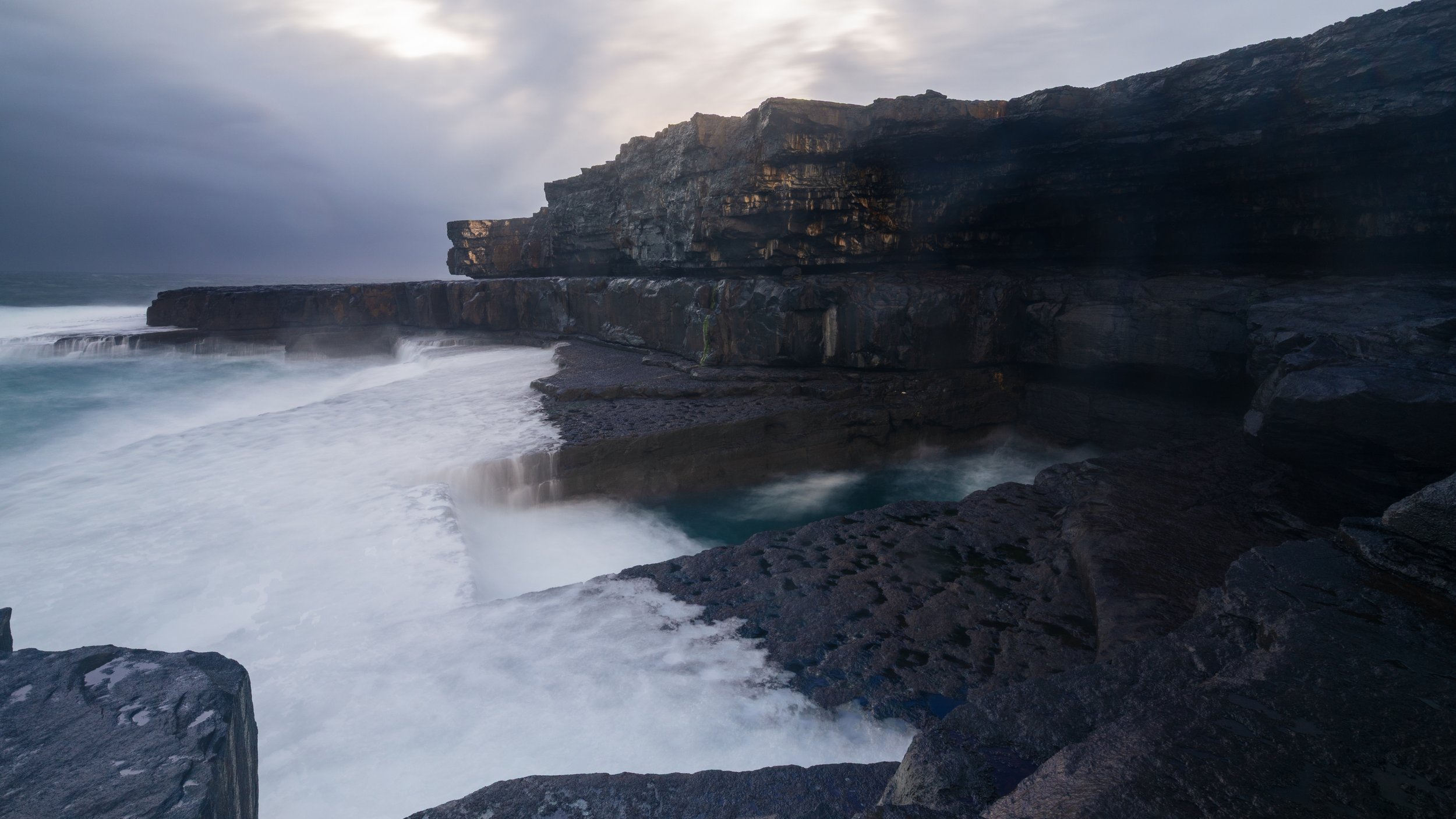
As we finally reached the Wormhole, the rain eased for a brief moment. A small break in the clouds allowed some light to push through, and I immediately moved toward the first composition that caught my attention. There was no time to overthink it. In conditions like this, you often have only seconds before the light disappears again.
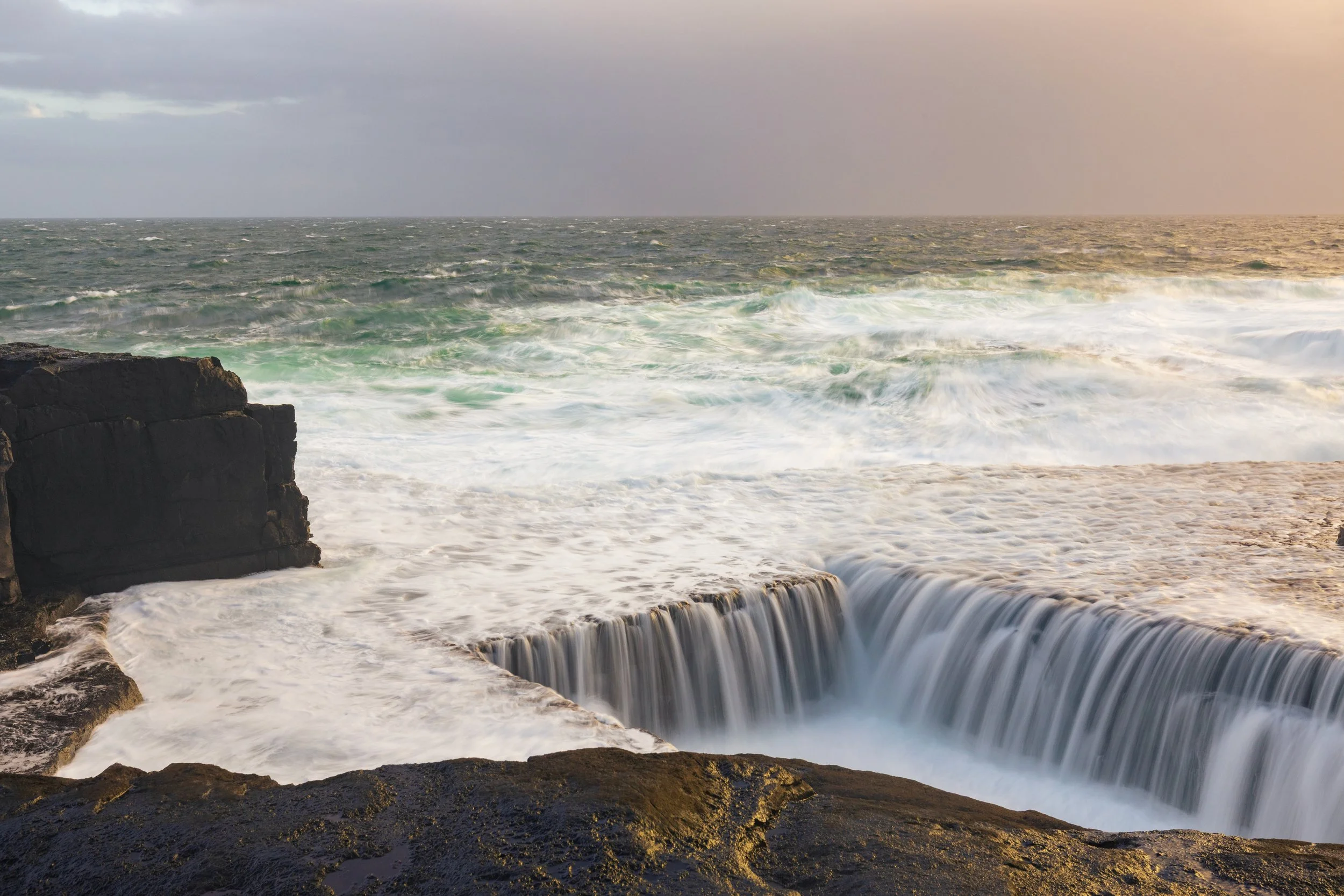
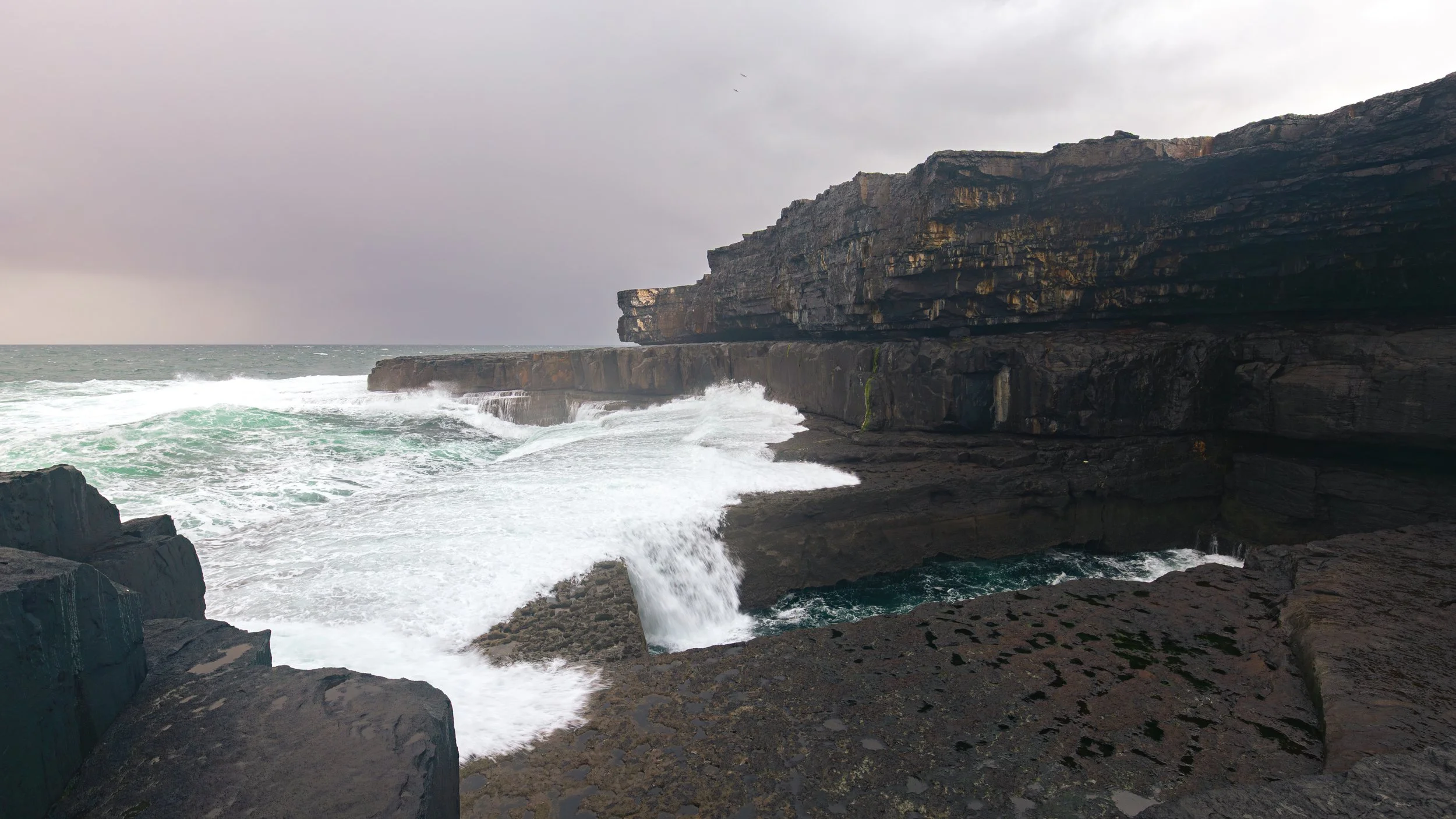
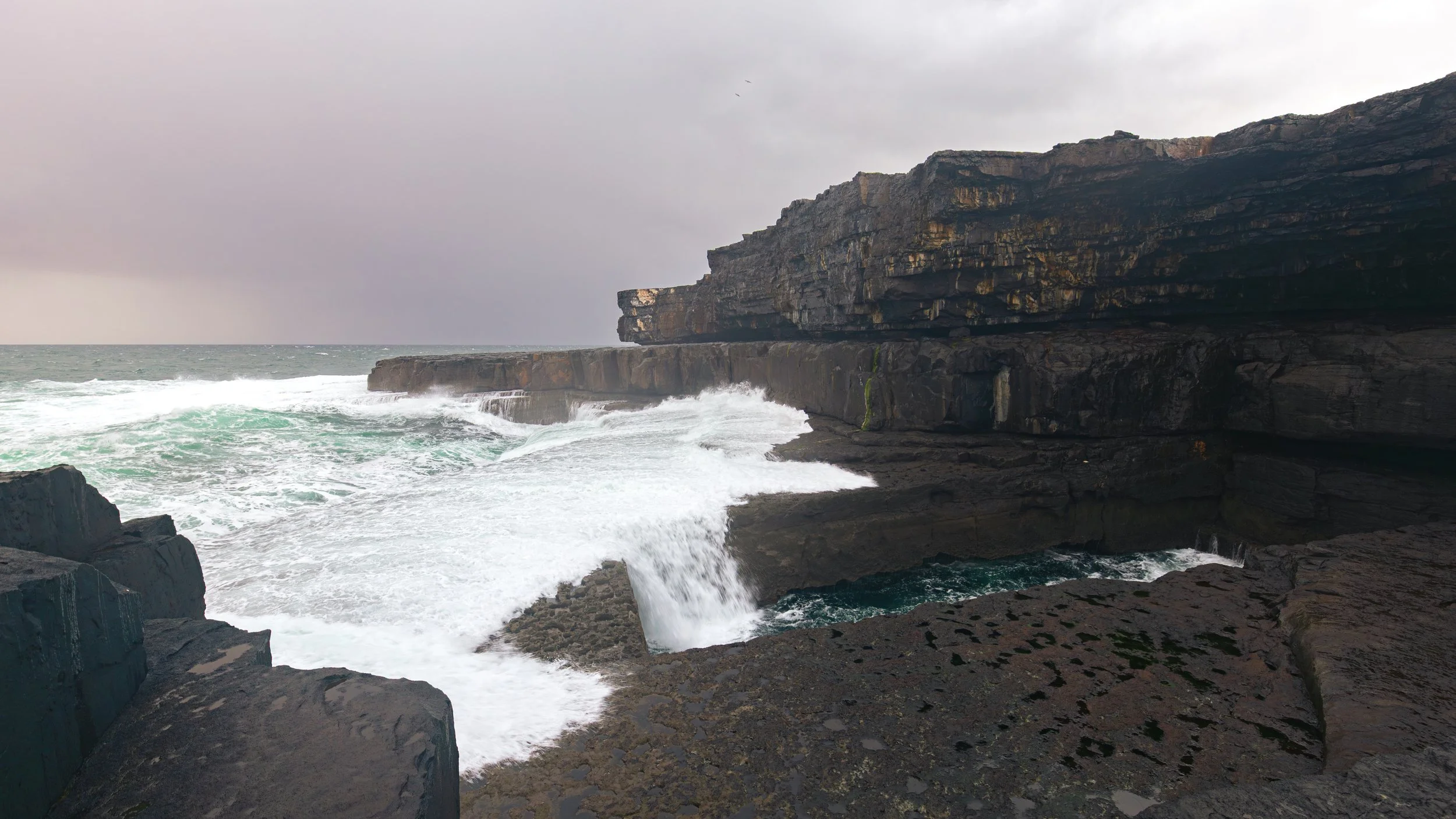
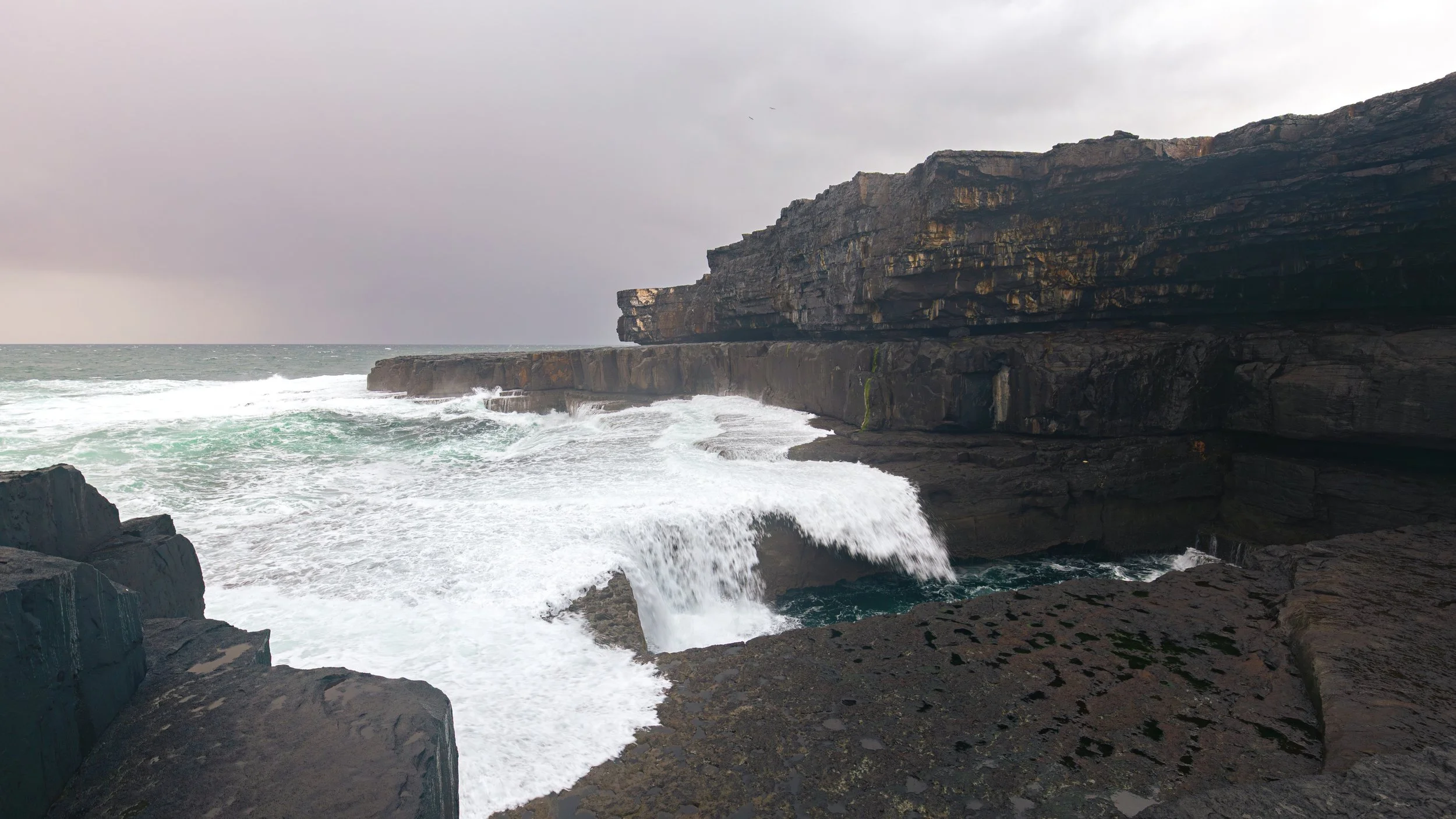
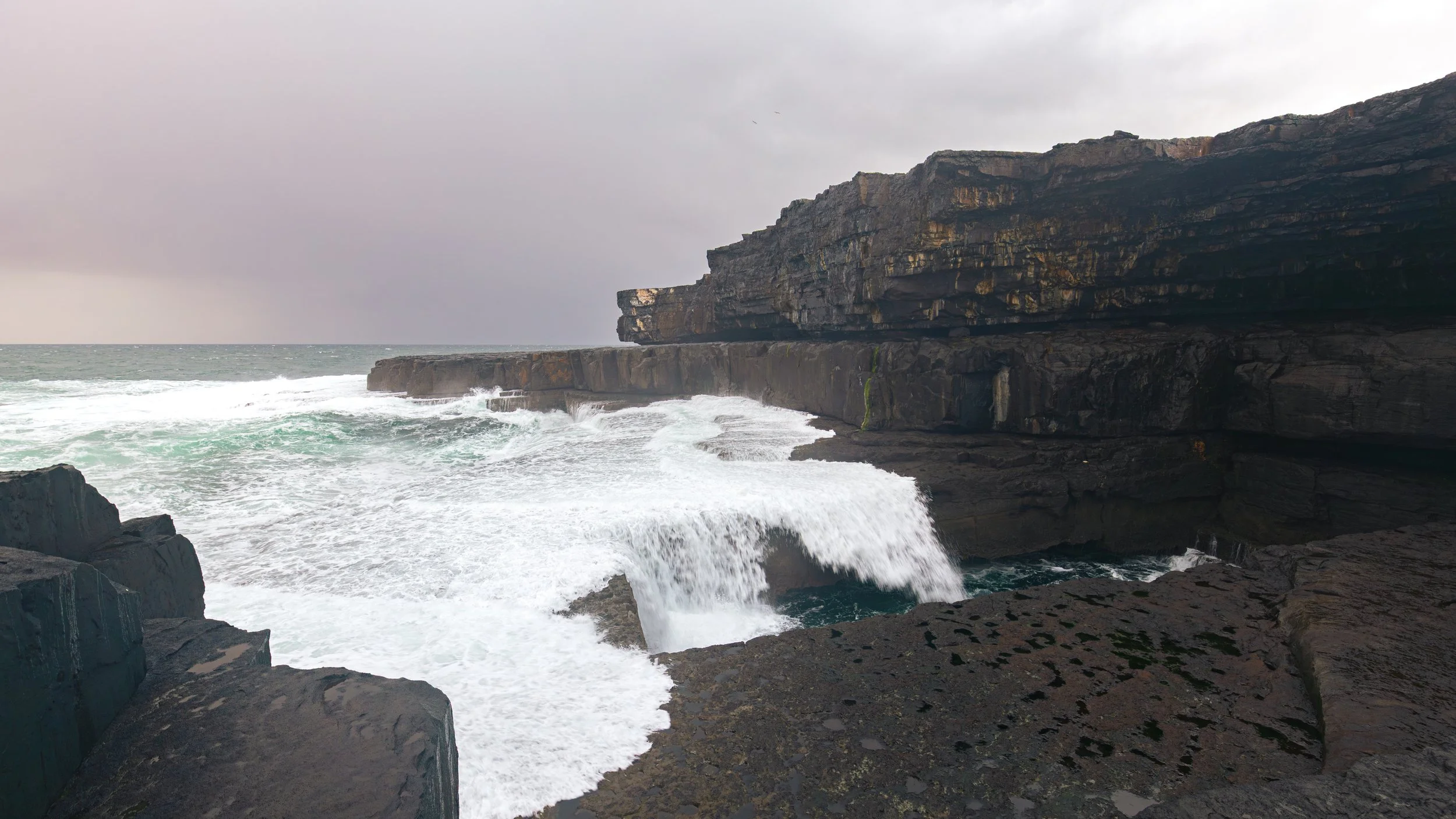
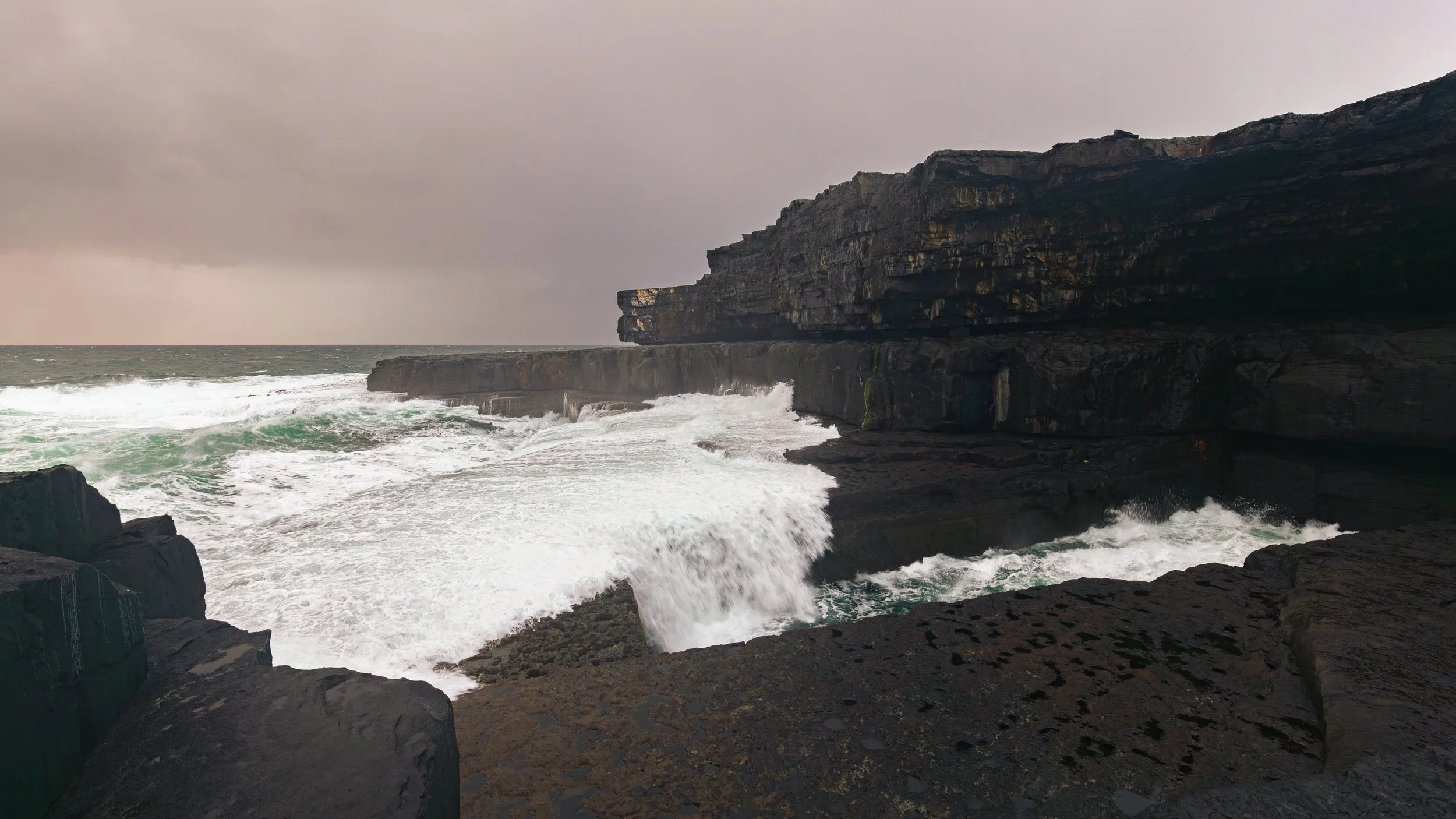
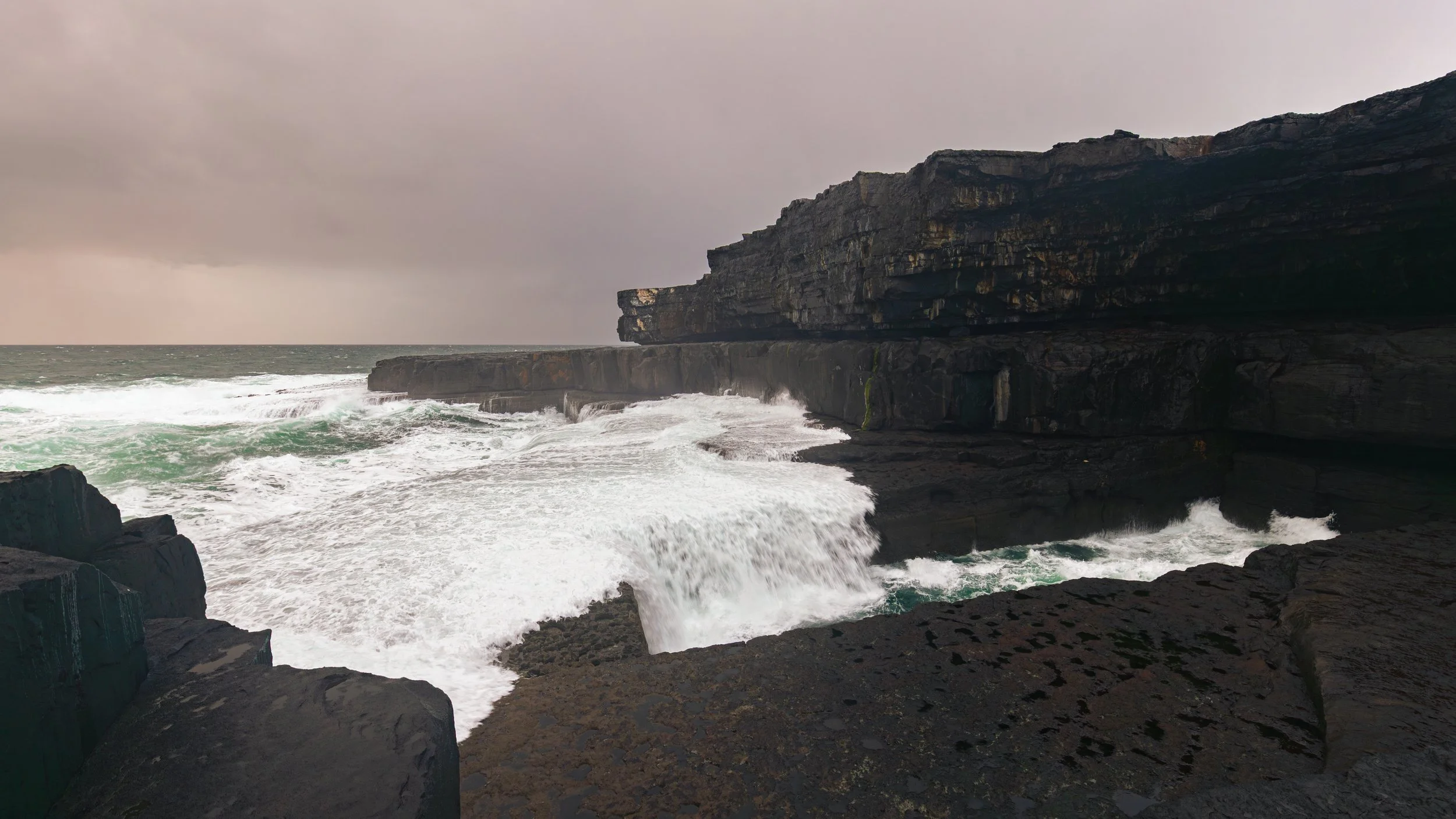
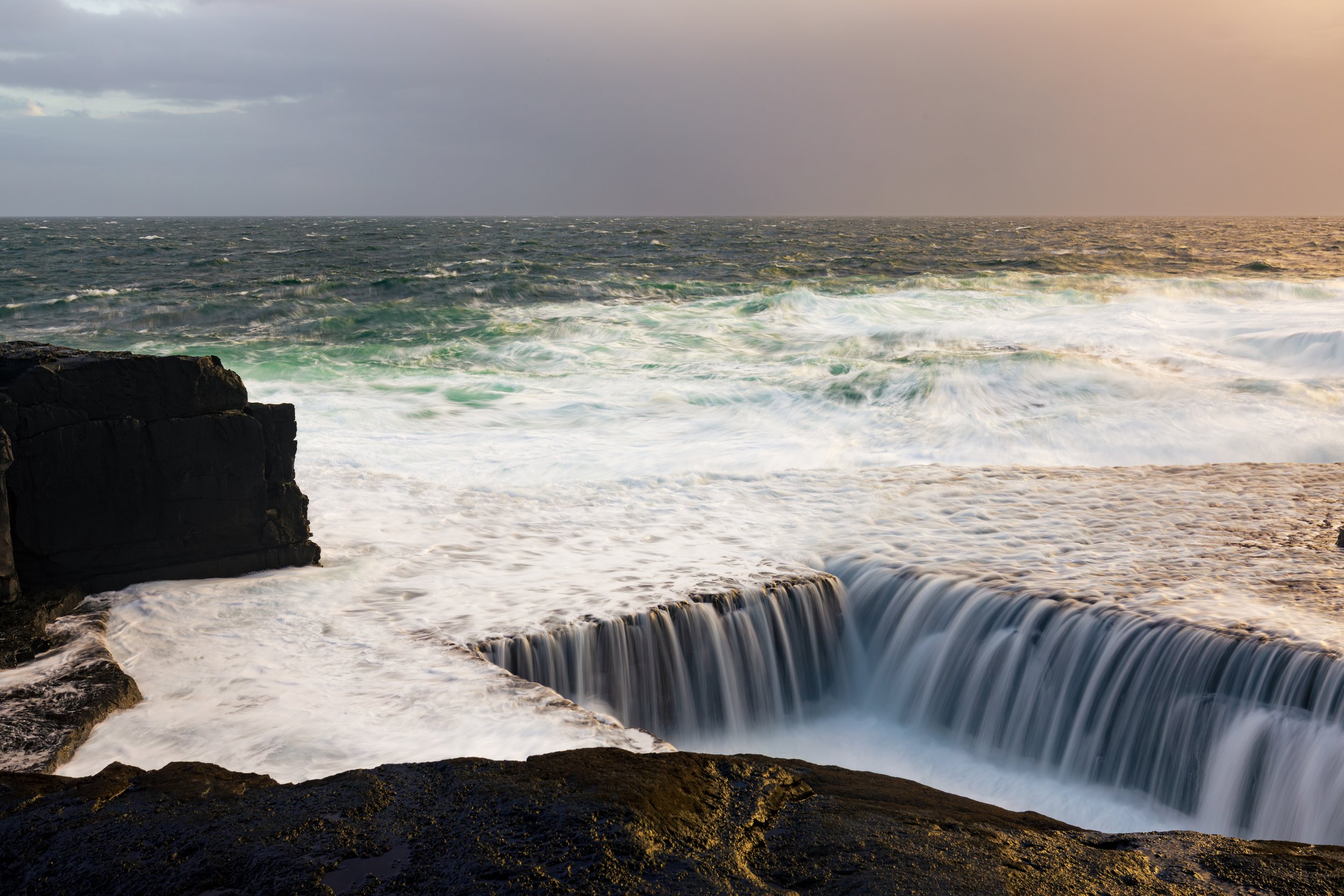
I quickly set up the tripod and framed the shot with the water flowing across the foreground rocks toward the opening of the Wormhole. Looking back at the image afterwards, I realised I should have pointed the camera slightly further to the right. Doing so would have included more of the rectangular shape in the composition. It would not have shown the entire formation completely, but even a small adjustment would have improved the balance of the frame.
That is one of the important lessons landscape photography constantly teaches. Even during difficult conditions, it is worth slowing yourself down enough to properly assess the edges of the frame. When you are cold, wet, and rushing to react to light, it becomes easy to focus only on the centre of the composition while missing improvements around the edges.
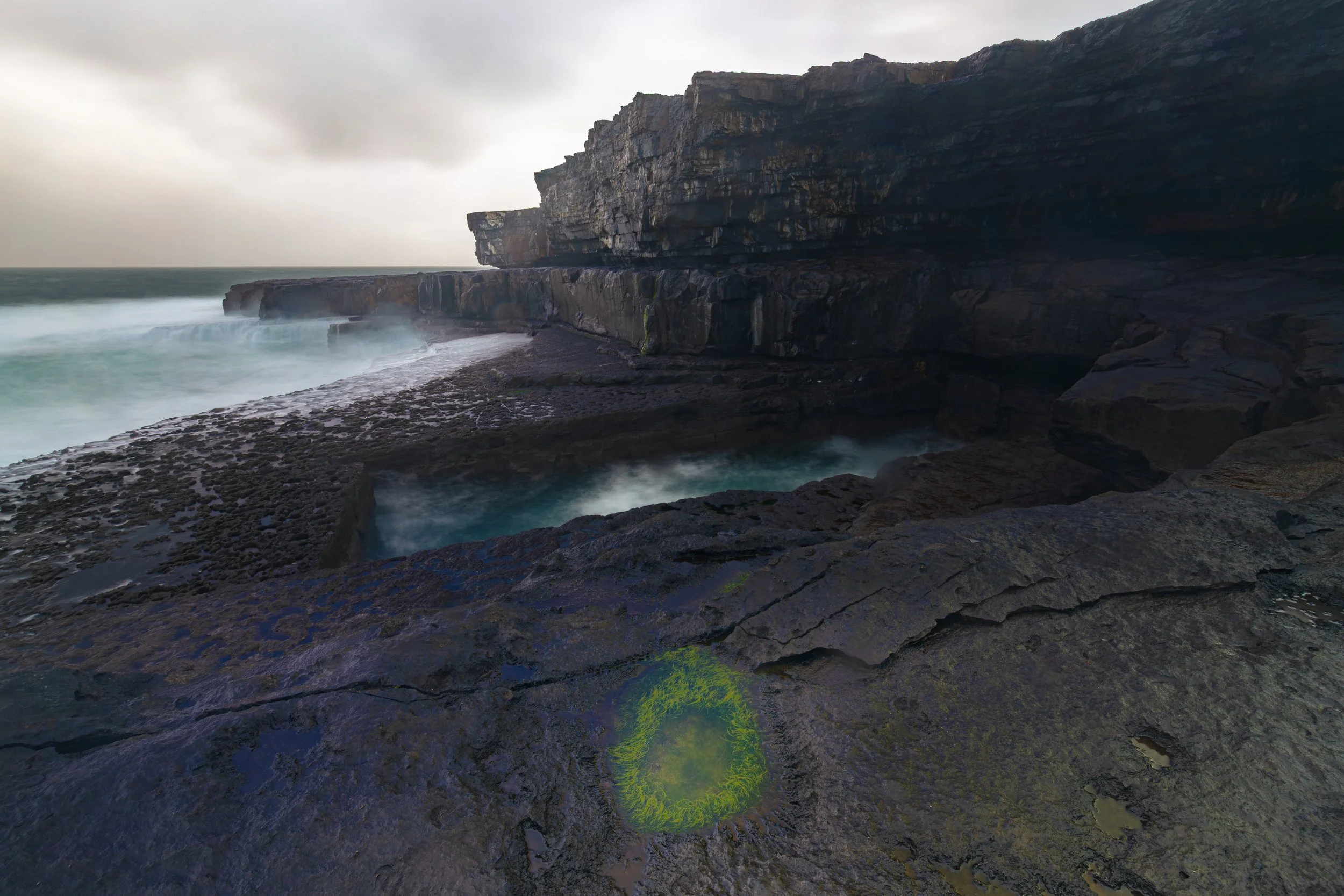
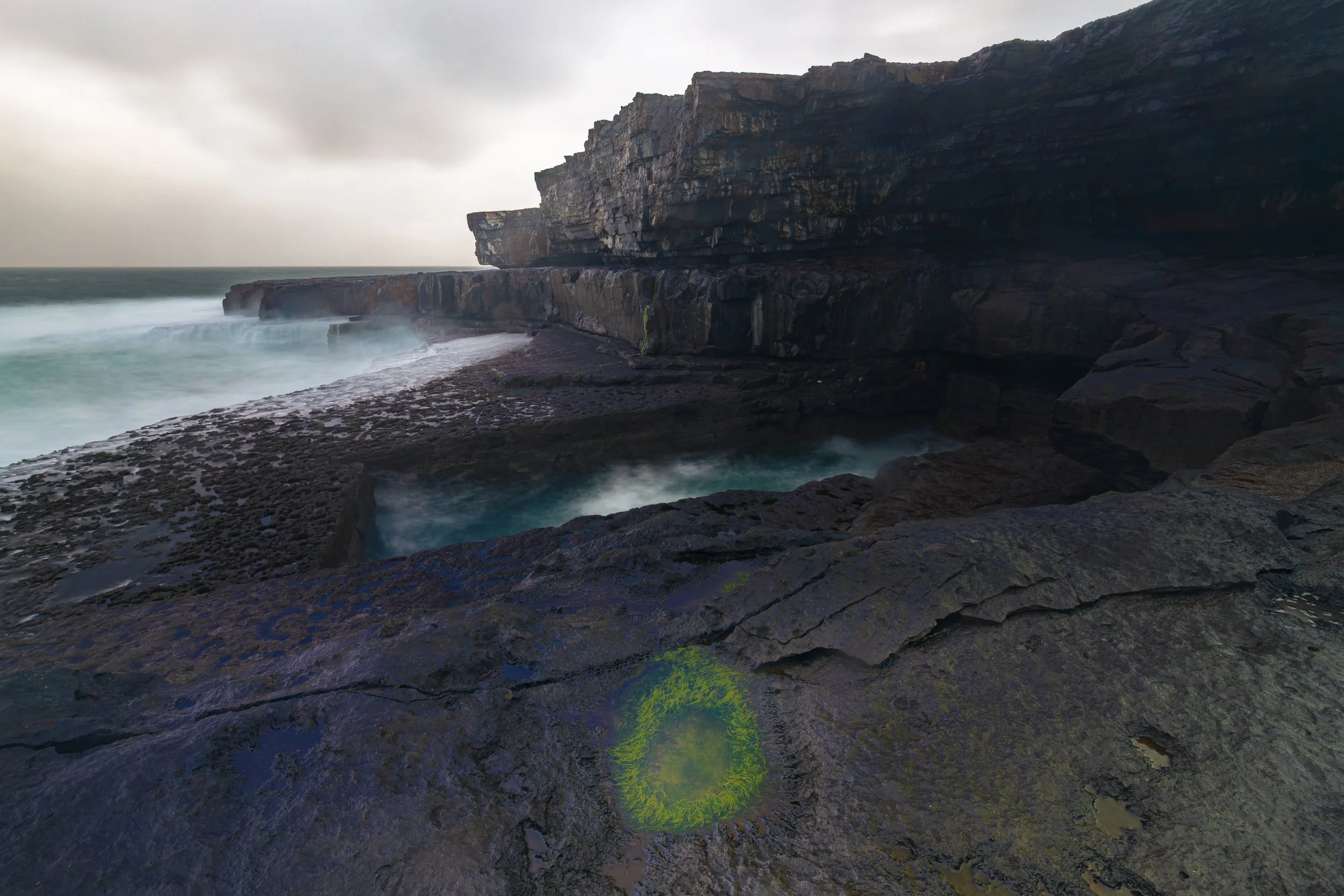
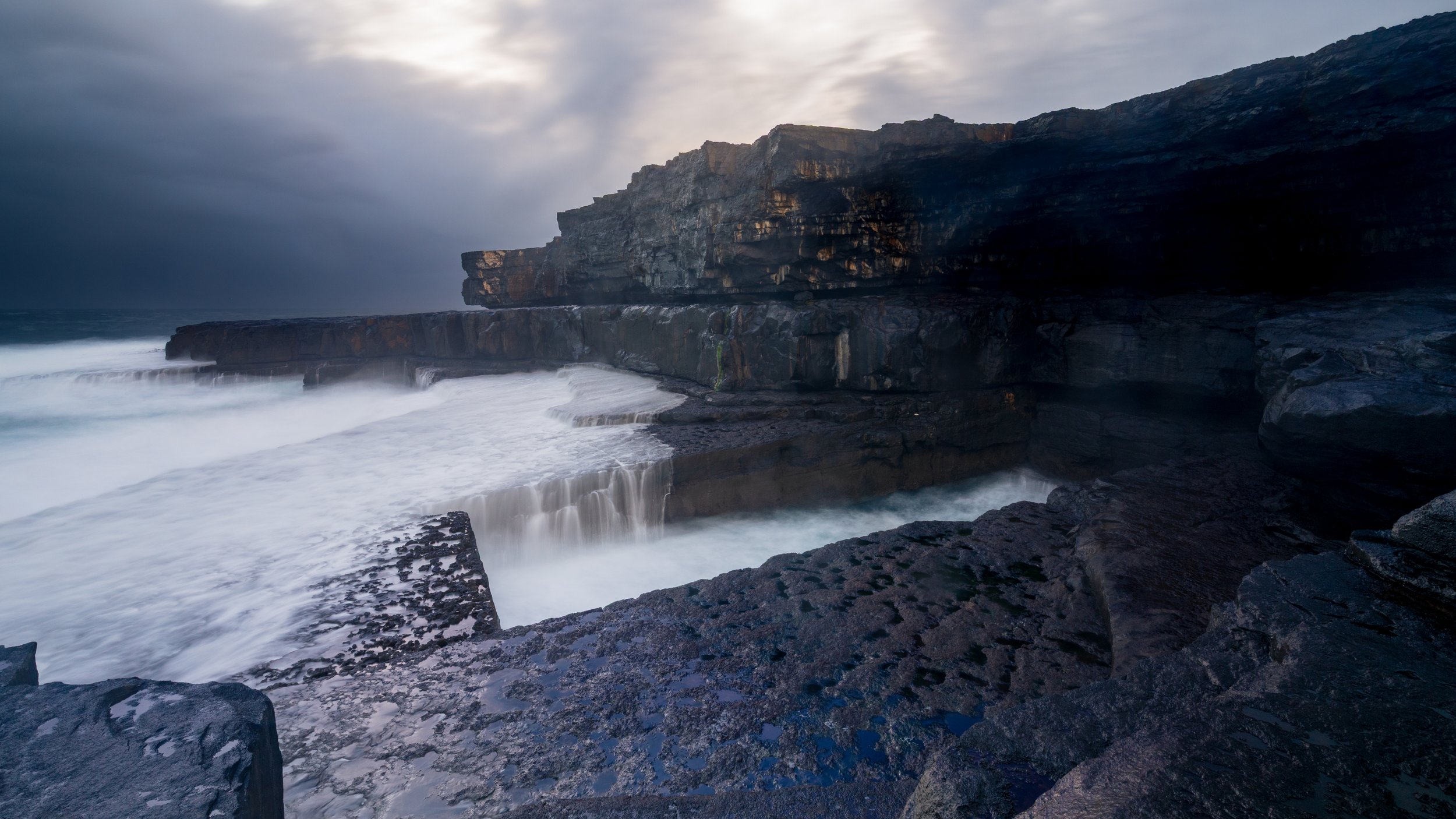
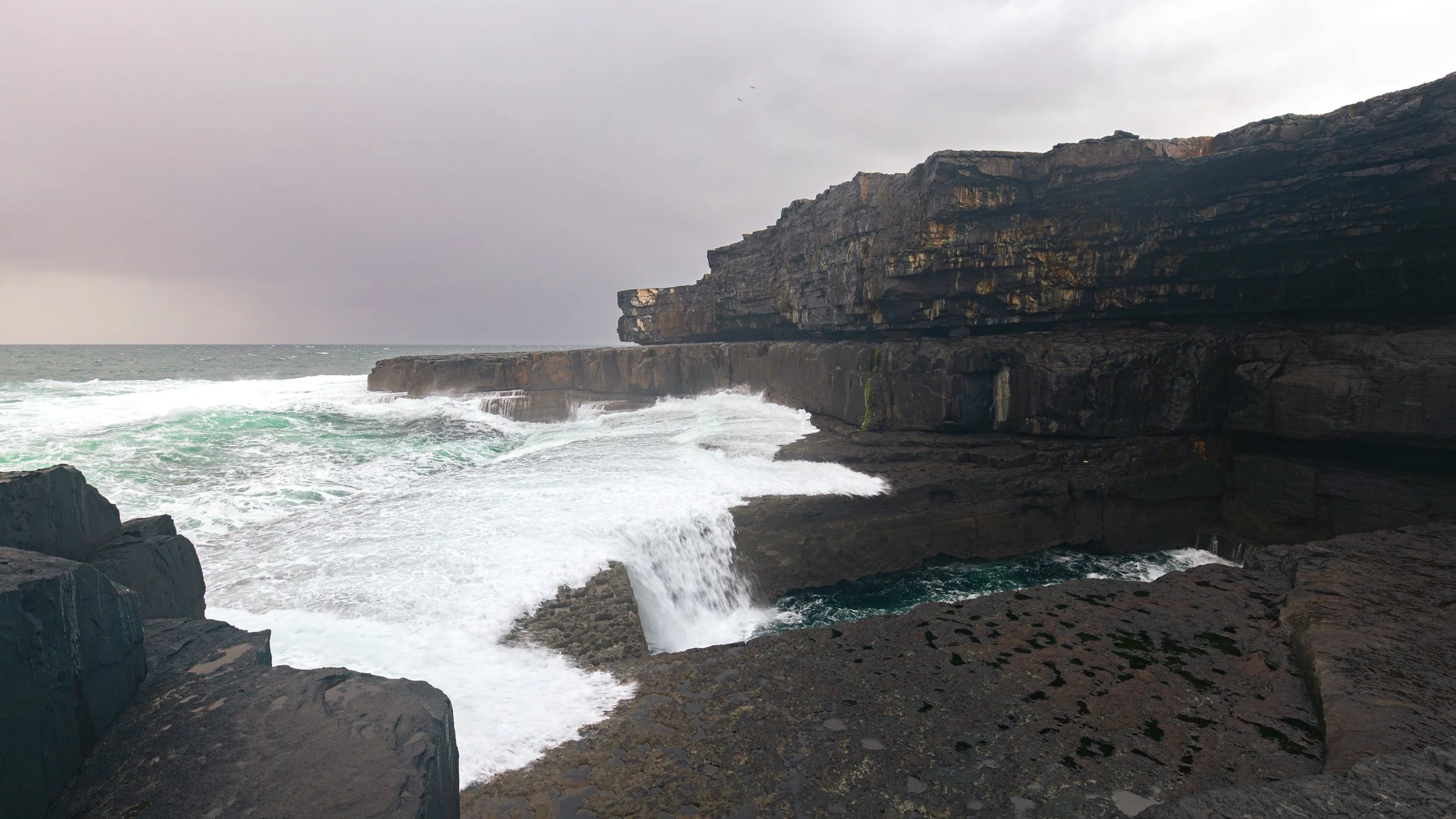
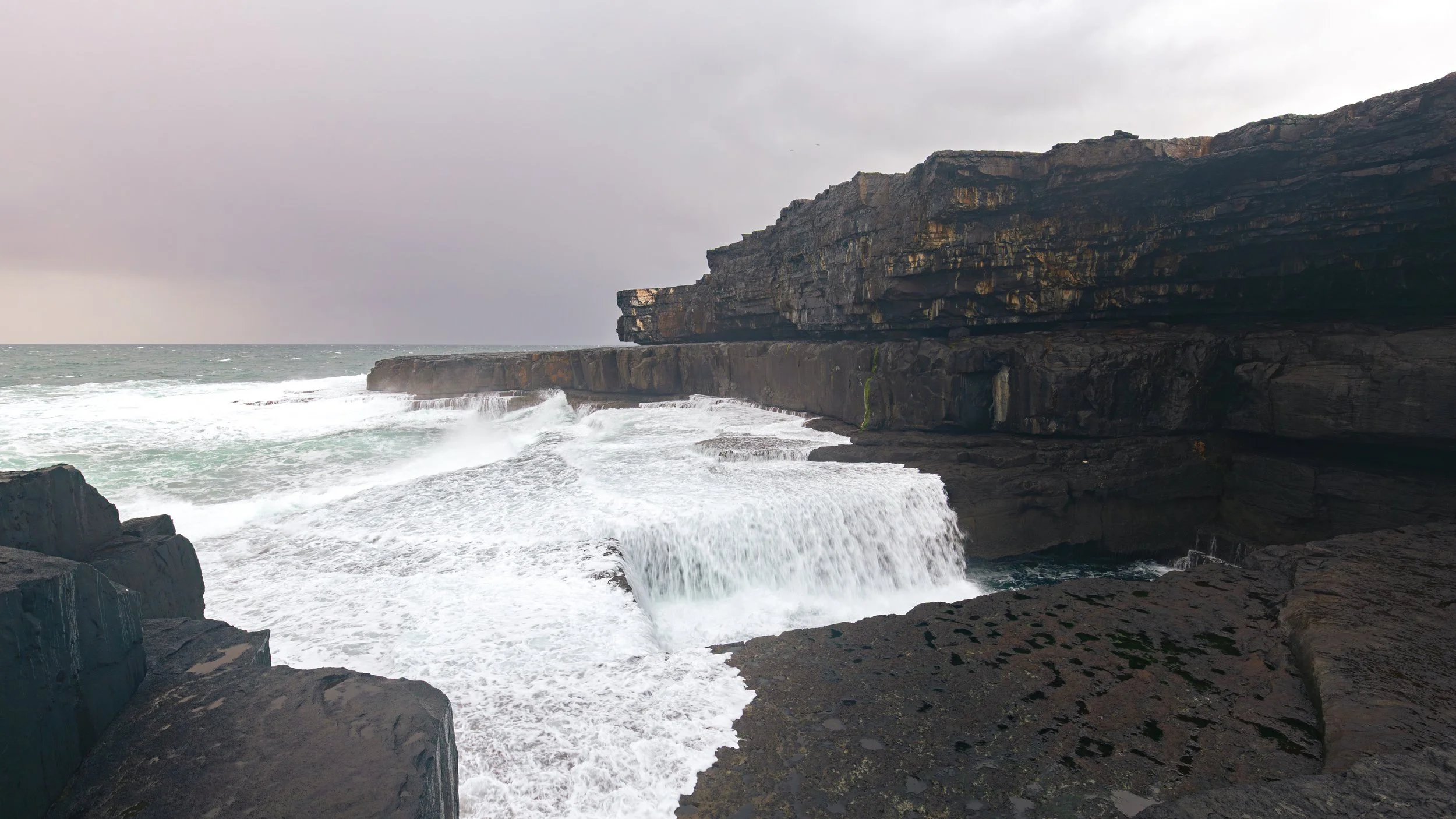
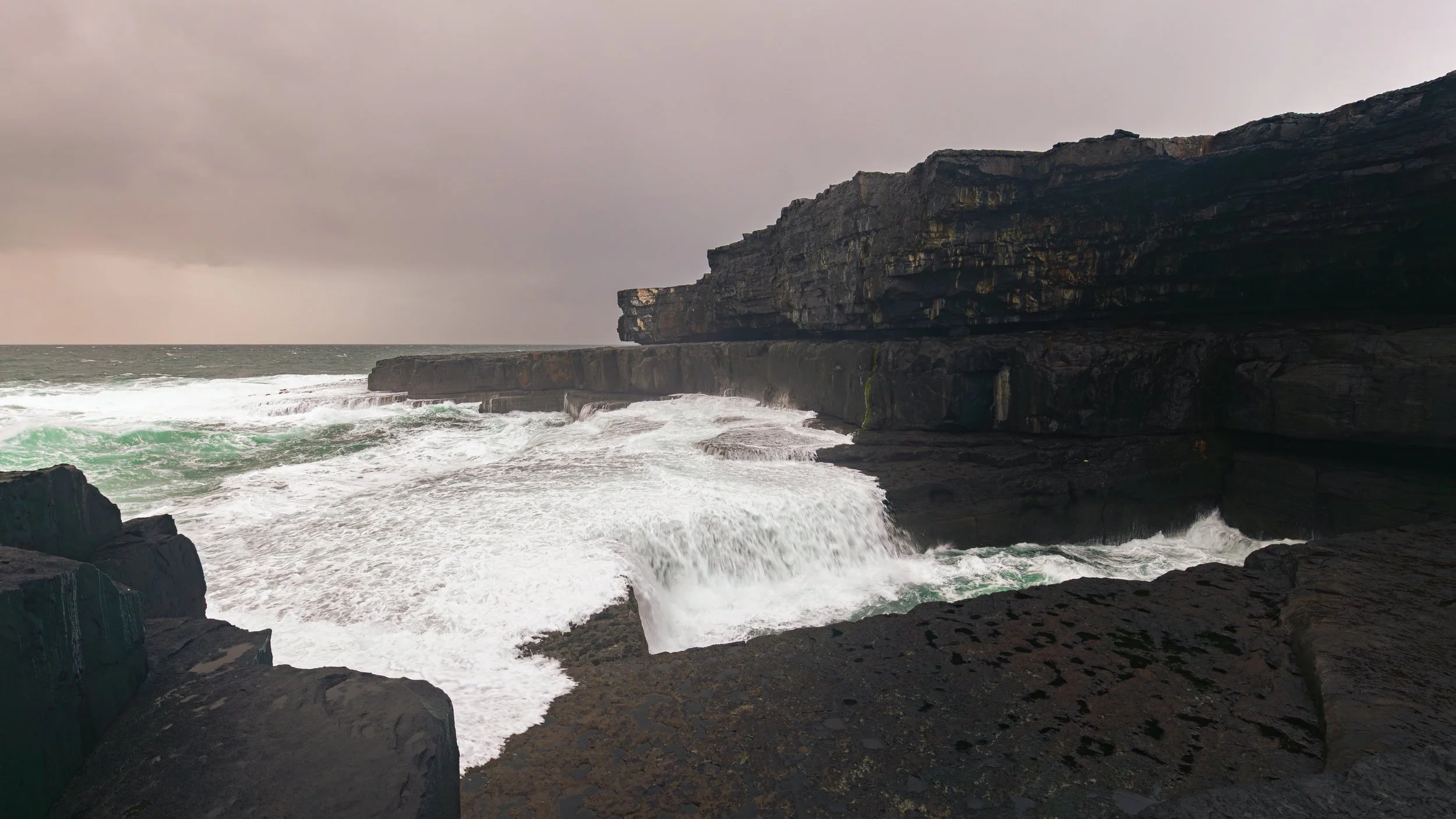
A few metres away, another composition presented itself. This second position allowed more of the Wormhole to become visible, but what interested me most was one of the many rock pools scattered across the limestone surface. Adding that foreground element gave the image more depth and created a stronger visual path leading the viewer toward the main subject.
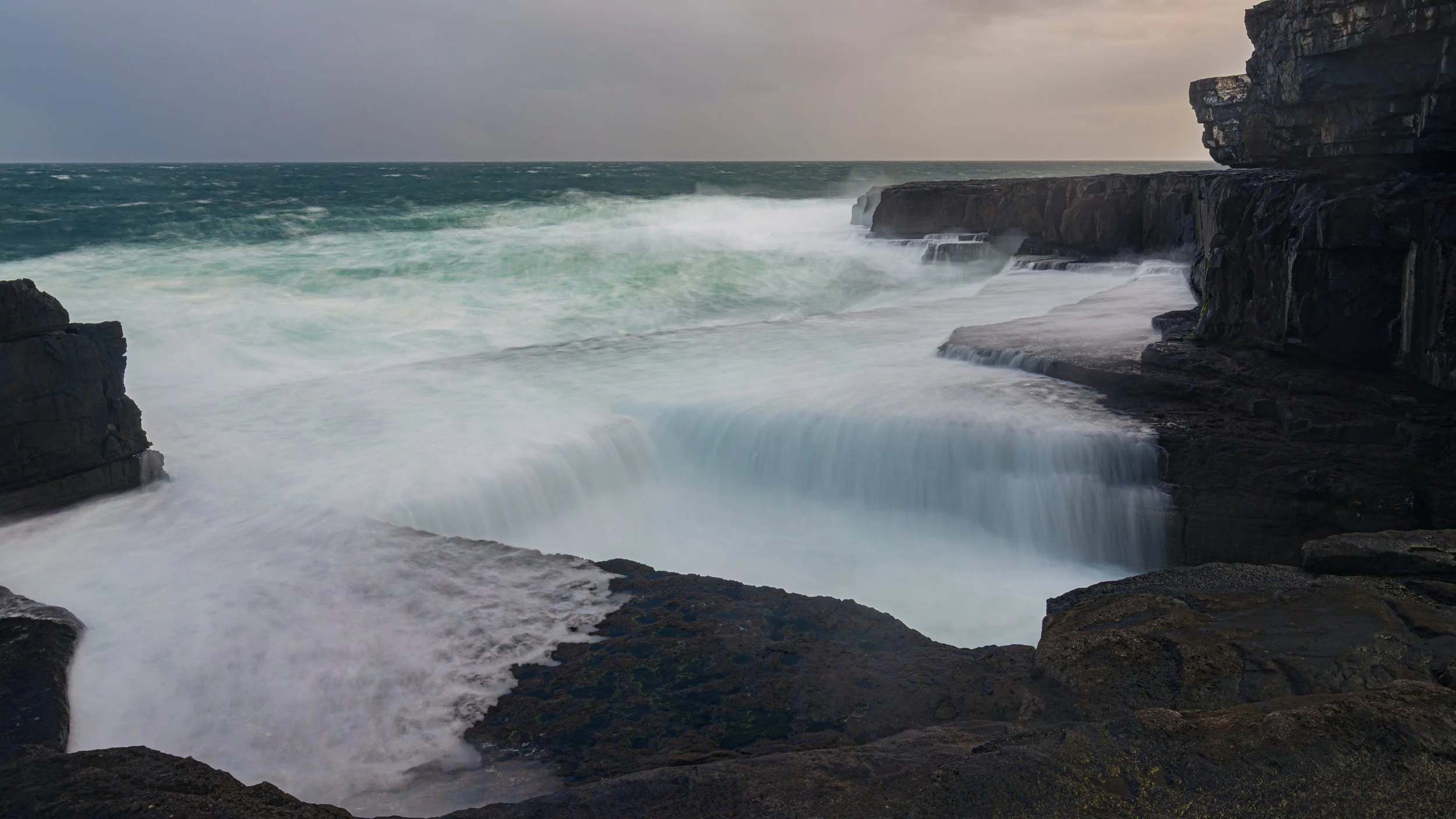
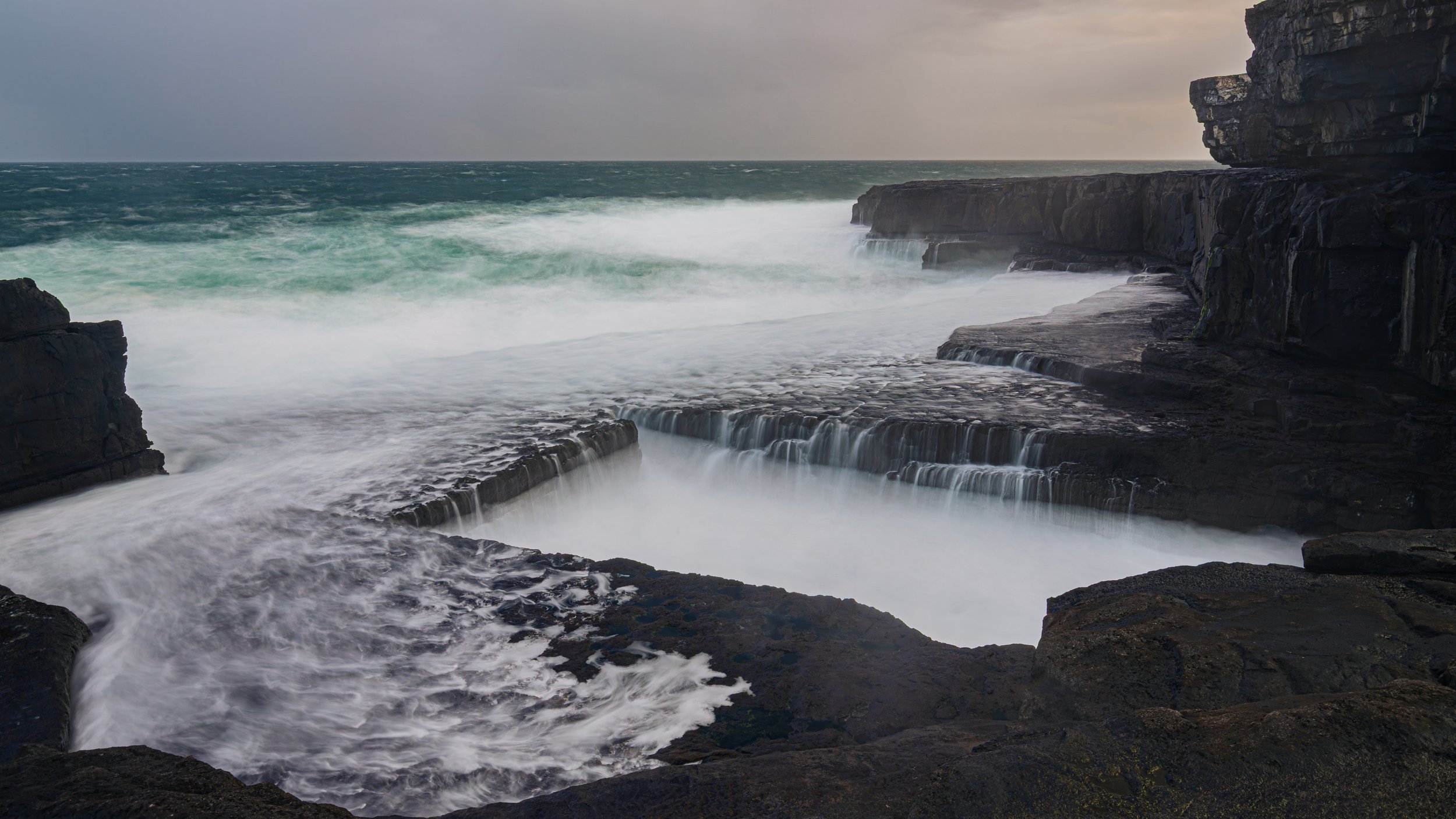
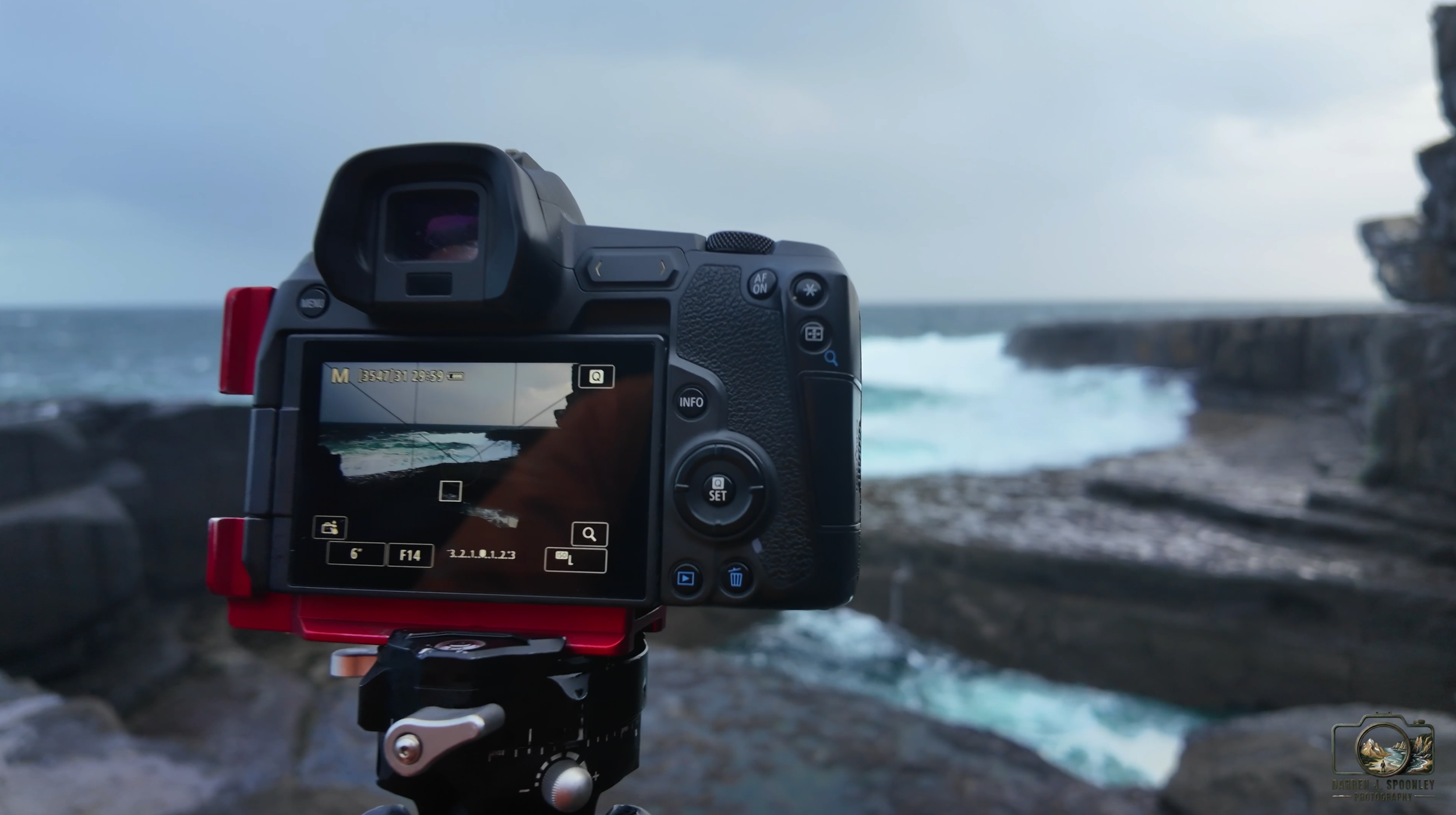
For these images, I used six-second exposures to capture the movement of water washing across the rocks before disappearing into the Wormhole itself. Longer shutter speeds can work well in harsh coastal conditions because they help simplify movement and create structure within chaotic scenes. The challenge, however, is balancing motion with enough texture so the image still feels powerful rather than overly soft.
Not long after, the rain returned again. This time it became heavy enough that protecting the lens became almost impossible. I used my body and jacket to shield the camera between exposures, but water droplets still reached the front element regularly. Coastal photography often becomes a constant battle against salt spray, rain, and condensation, especially when working close to powerful waves.
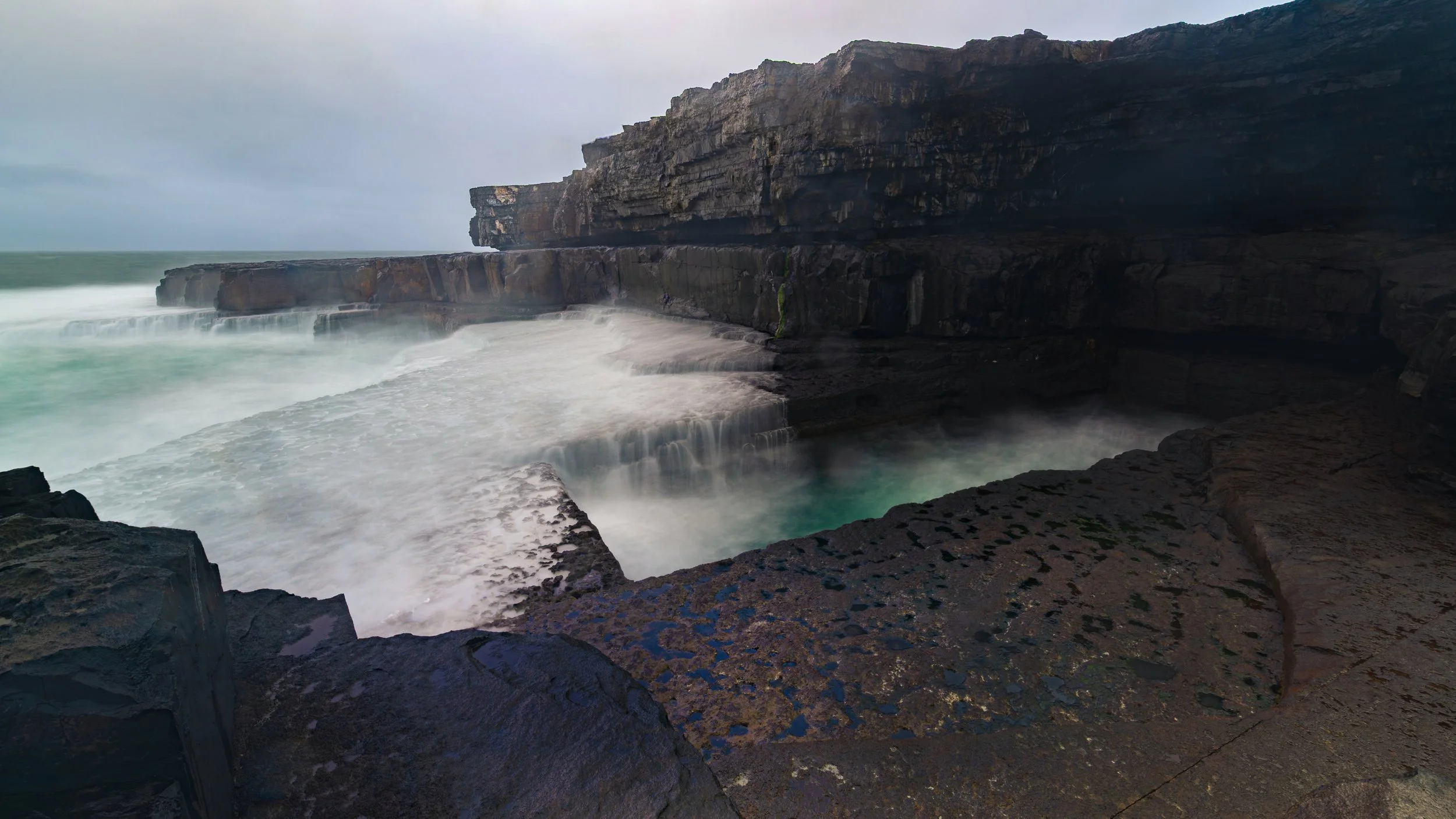
Eventually the three of us sheltered under a rock overhang for a short break from the weather. By that stage, Diarmuid looked ready to call it a day, which surprised me slightly considering he had been flying his drone only minutes earlier in conditions most people would never attempt. To be fair to him, he has plenty of experience flying in harsh weather and somehow always seems to return with both strong footage and an undamaged drone.
While we waited, I noticed a gap appearing within the cloud cover. The question was whether it would move toward the setting sun and create some final light across the coastline. There was only one way to find out, so we carefully made our way back across the slippery rocks into shooting position once again.
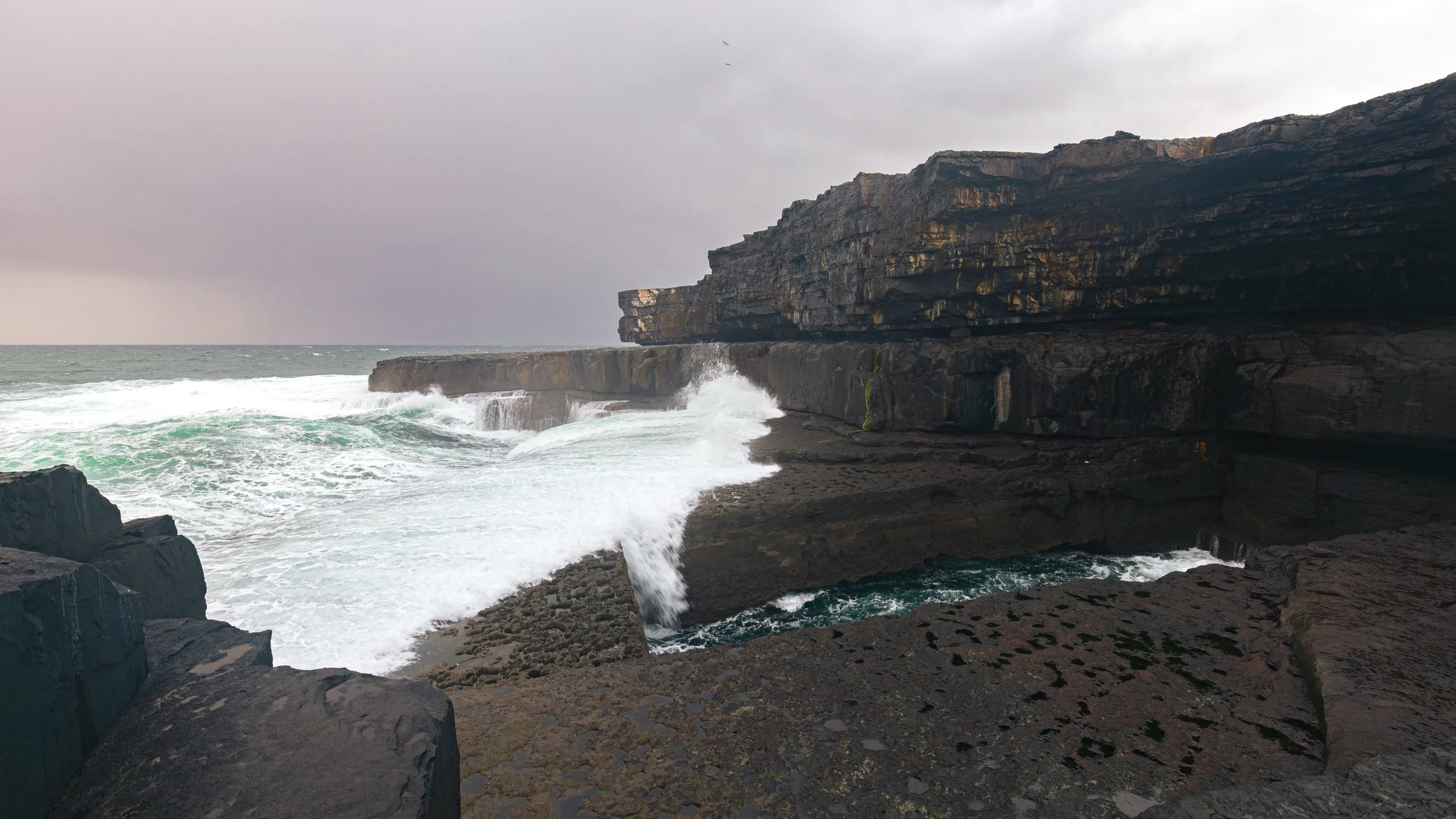
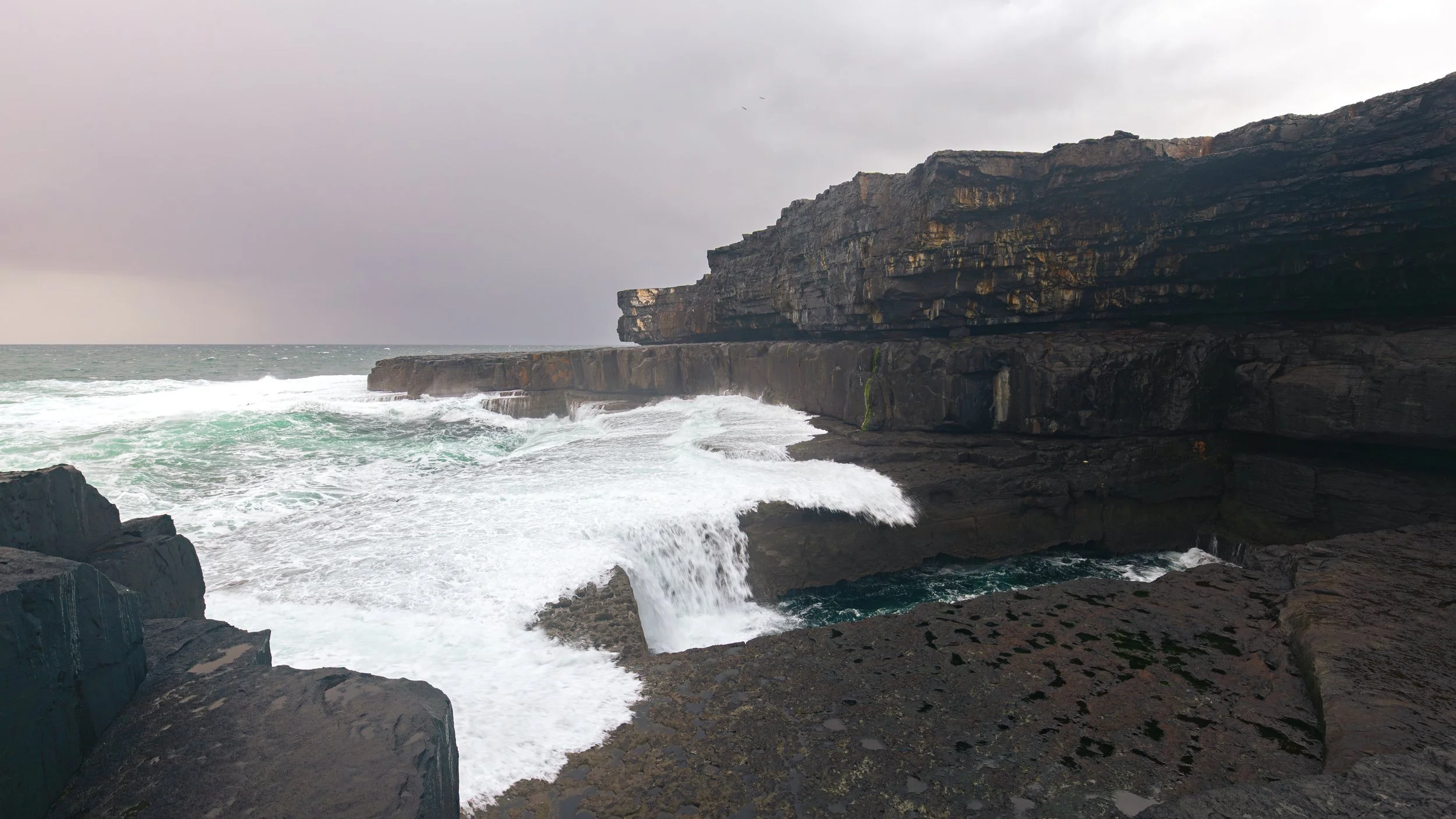
The light never fully broke through, but we photographed anyway. Sometimes conditions do not deliver the dramatic ending you hoped for, but that does not mean the shoot has failed. In many ways, the darker mood suited the location perfectly.
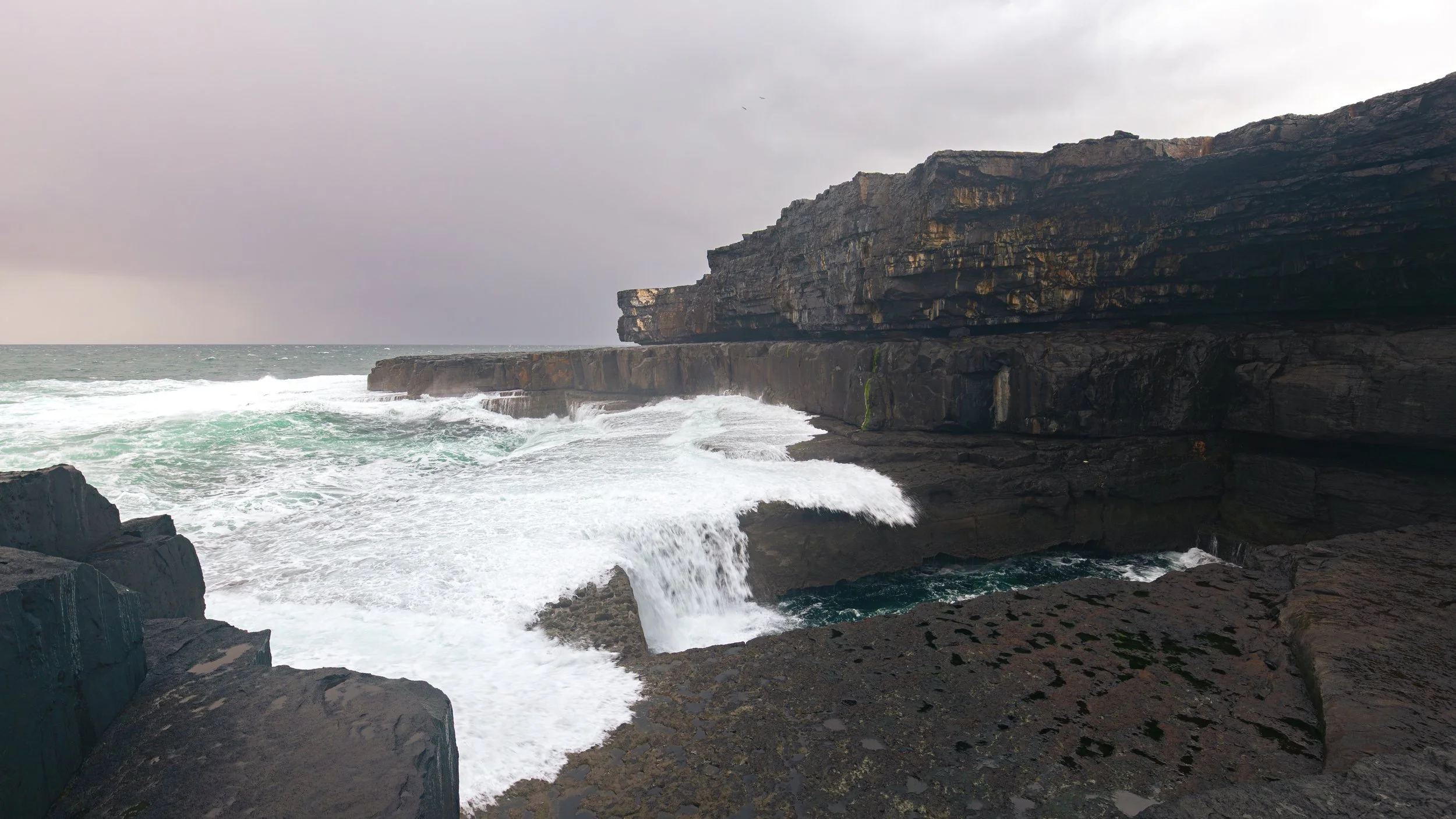
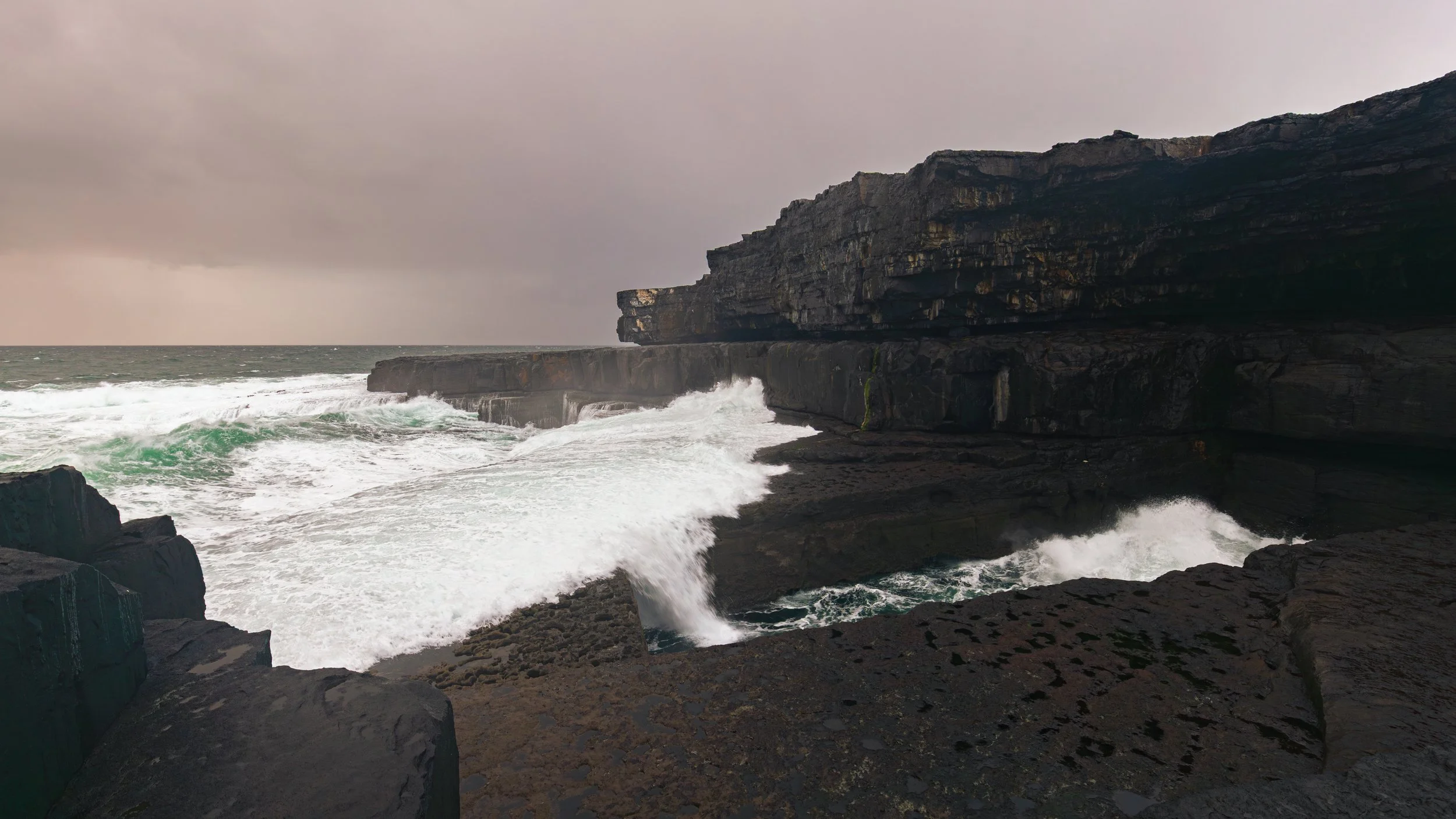
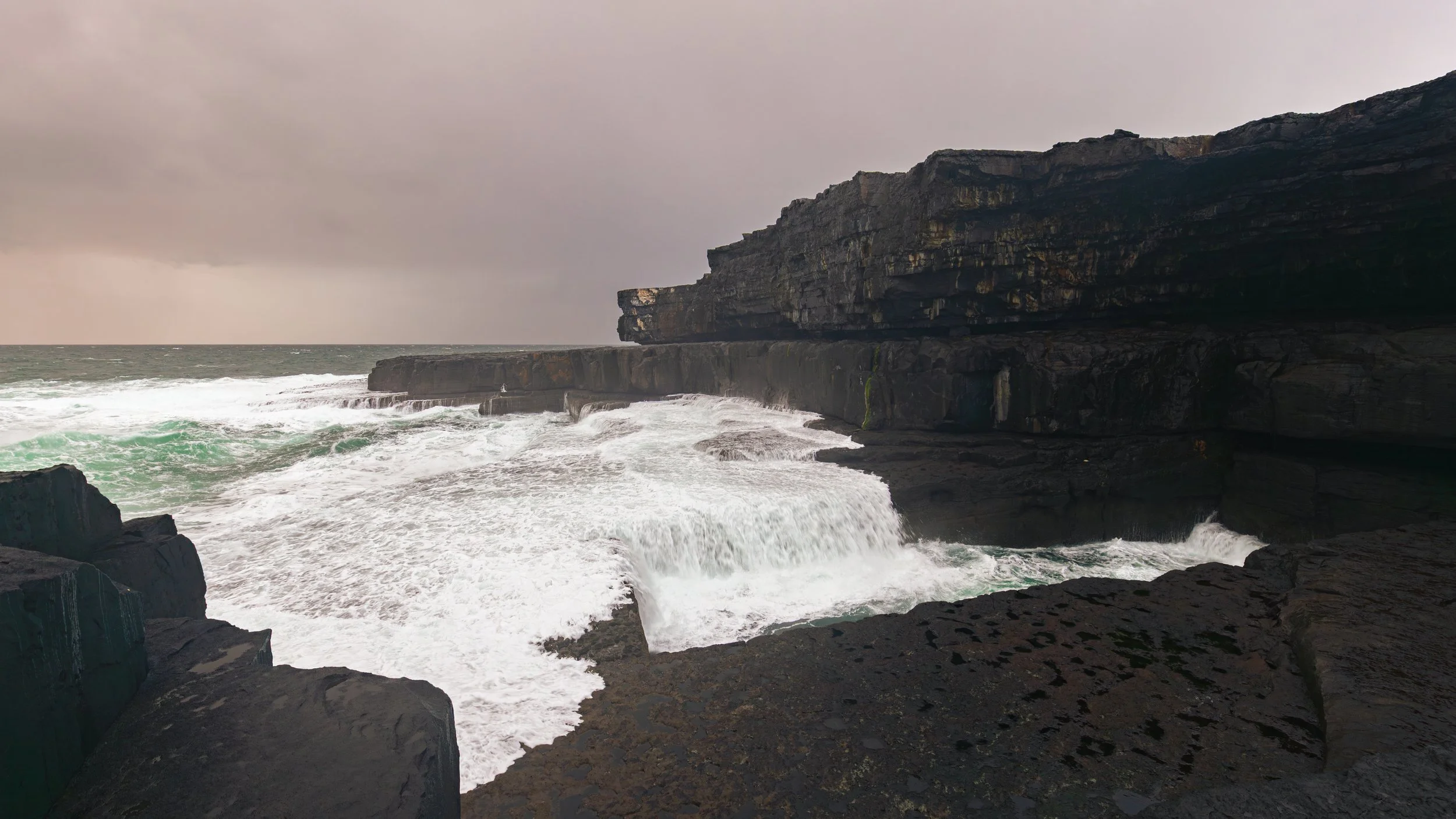
This time I switched to a faster shutter speed to freeze more movement in the water as waves pushed toward the Wormhole. The result felt more powerful than the earlier long exposures. The texture in the waves matched the heavy sky overhead, and together they created a frame that reflected exactly what the conditions felt like standing there in person.
Soon after, the rain returned harder than ever. With fading light and increasingly slippery rocks, we decided it was time to leave. The walk back across the limestone felt longer than the journey out, but there was also a sense of satisfaction knowing we had managed to photograph the location despite everything the weather had thrown at us. I would get some unwelcome surprises when I got to edit the images, as the amount of water splashes on the lens during shooting made for some tough editing of the shots. I cleaned them up as best I could, but they were still there nonetheless.
That final shoot at the Wormhole summed up the entire trip to Inis Mór perfectly. Difficult weather, changing conditions, moments of frustration, and small rewards that made the effort worthwhile. Trips like this rarely go exactly to plan, but that unpredictability is often what makes the experience memorable long after the photographs are edited and published.