The Conditions Kept Getting Worse
There are some locations that spend years on your photography list before you finally get the opportunity to visit them. The Wormhole on Inis Mór was one of those places for me. I had seen photographs of it countless times online, watched footage from the Red Bull Cliff Diving competition that took place there, and often wondered what it would be like to experience it in person. On this particular trip, I was finally about to find out.
What I did not expect was that we would spend most of the day being distracted by something else entirely.
The adventure started with a drive across a route that can barely be described as a road. It felt more like an old track that had existed on the island for generations. The surface was rough, uneven and full of bumps that made every minute of the journey memorable for all the wrong reasons.
Thankfully, we were travelling in a 4x4. Without it, the journey would have been considerably more difficult. Unfortunately for me, it was my turn in the back seat, which quickly became a decision I regretted. Every rut and bump seemed to find its way directly through the suspension and into my spine.
Despite the uncomfortable journey, there was plenty to enjoy along the way. The route took us through a landscape dominated by the stone walls that have become synonymous with the Aran Islands. Stretching across the island in every direction, these walls are a testament of the generations who shaped the land long before photographers arrived looking for dramatic seascapes.
Even before reaching the coastline, I was already reaching for the drone. Watching the vehicle navigate through the narrow tracks with the stone walls stretching into the distance provided a perfect introduction to the story of the day. It highlighted both the remoteness of the location and the effort required to reach it.
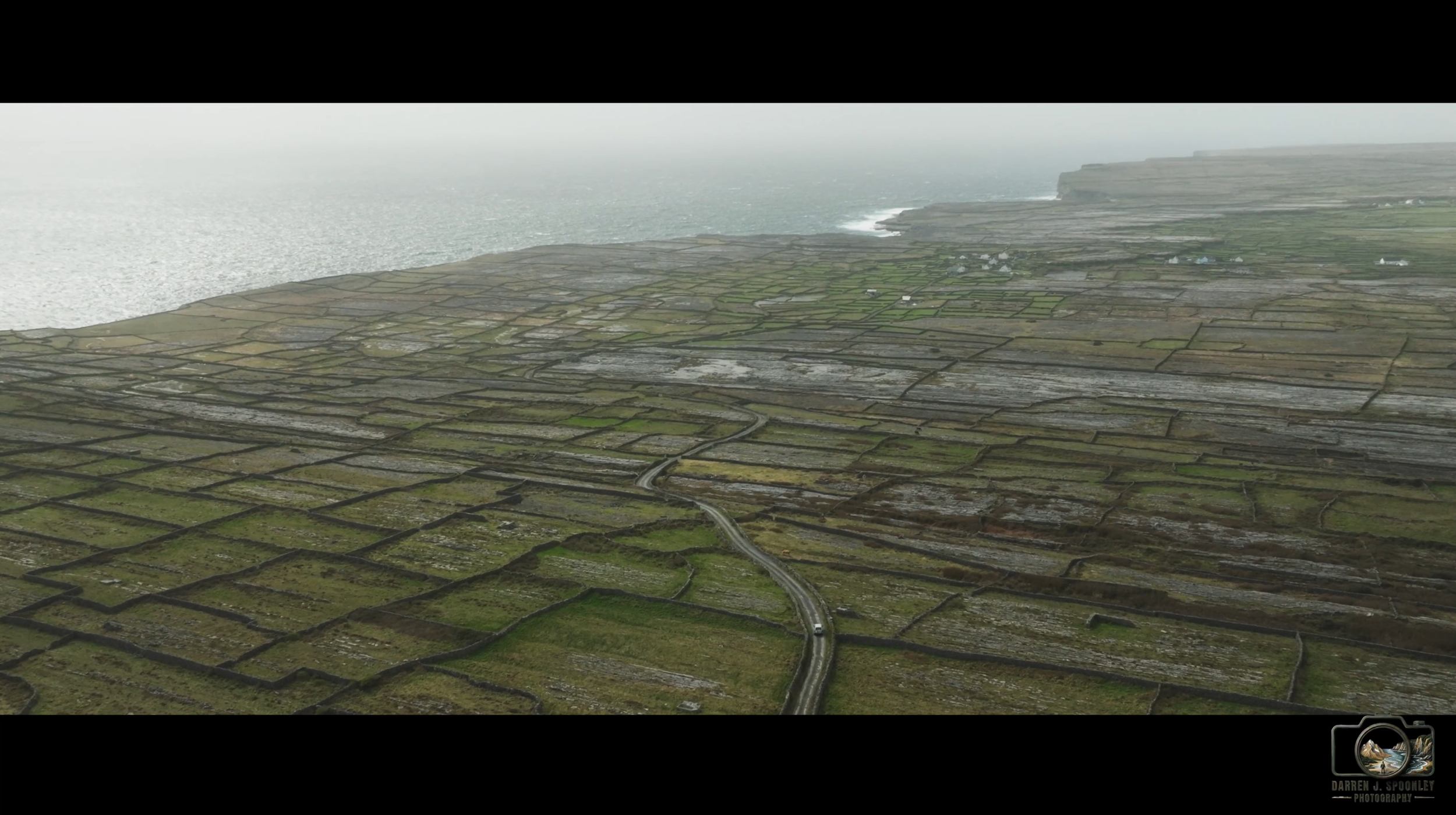
Our destination was the Wormhole, a naturally formed rectangular sea pool located along the Atlantic side of Inis Mór. The feature has become famous because of its unusual shape and because it served as a venue for international cliff-diving competitions. From above, it almost appears as though it has been carved by human hands rather than created by nature.
As excited as we were to finally visit it, the weather immediately presented us with a challenge and of course rewards.
The conditions were constantly changing. Rain showers moved through quickly, the wind was strong enough to make walking difficult in exposed areas, and large Atlantic swells were rolling towards the cliffs. While that might sound problematic, it was actually exactly what we had hoped for.
We had intentionally timed our visit around high tide because the waves were always going to be a major part of the story. The Wormhole itself is impressive, but Atlantic power is what truly defines this section of coastline.
As we approached the cliffs, it became clear that the ocean was going to put on a show.
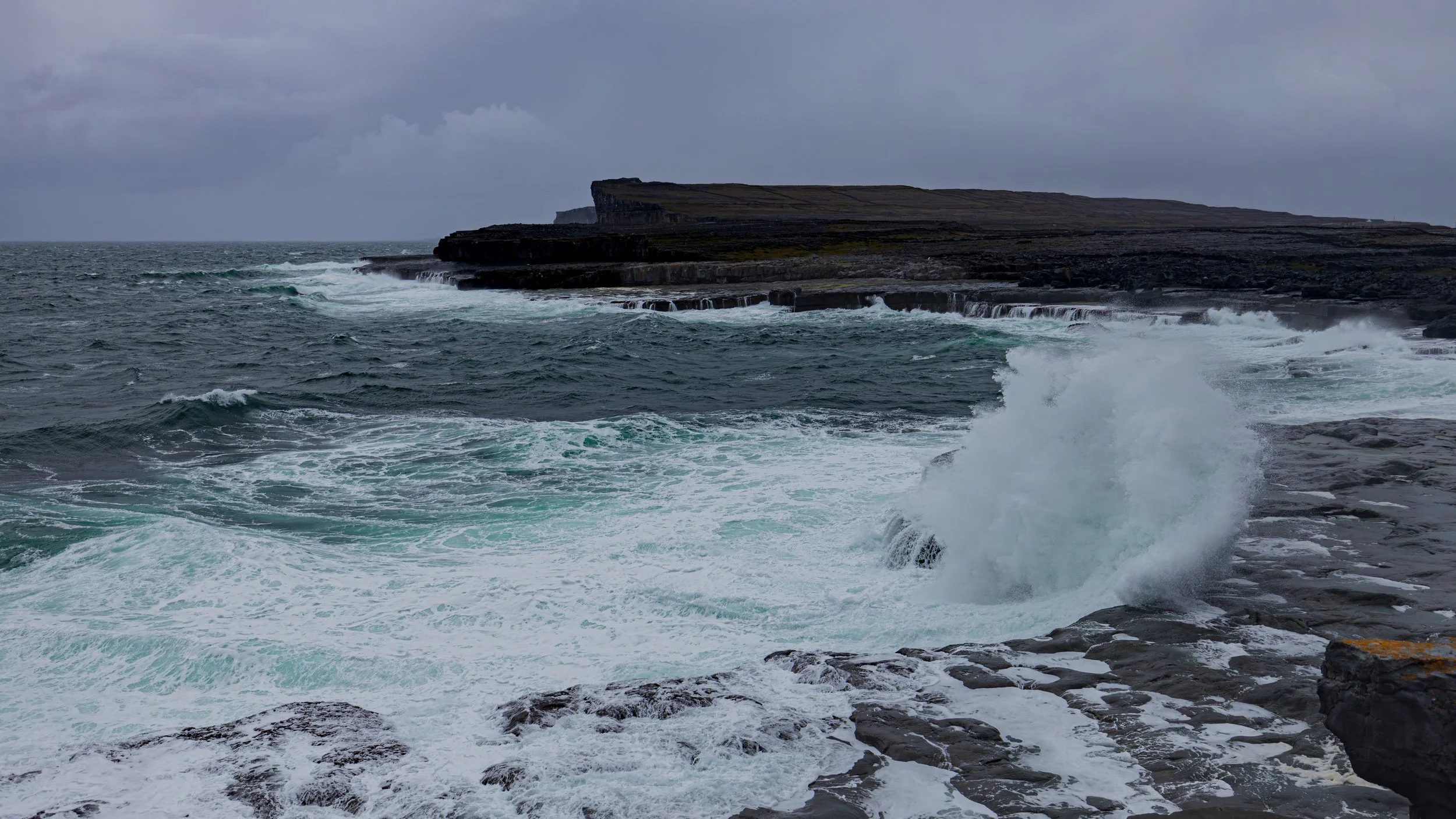
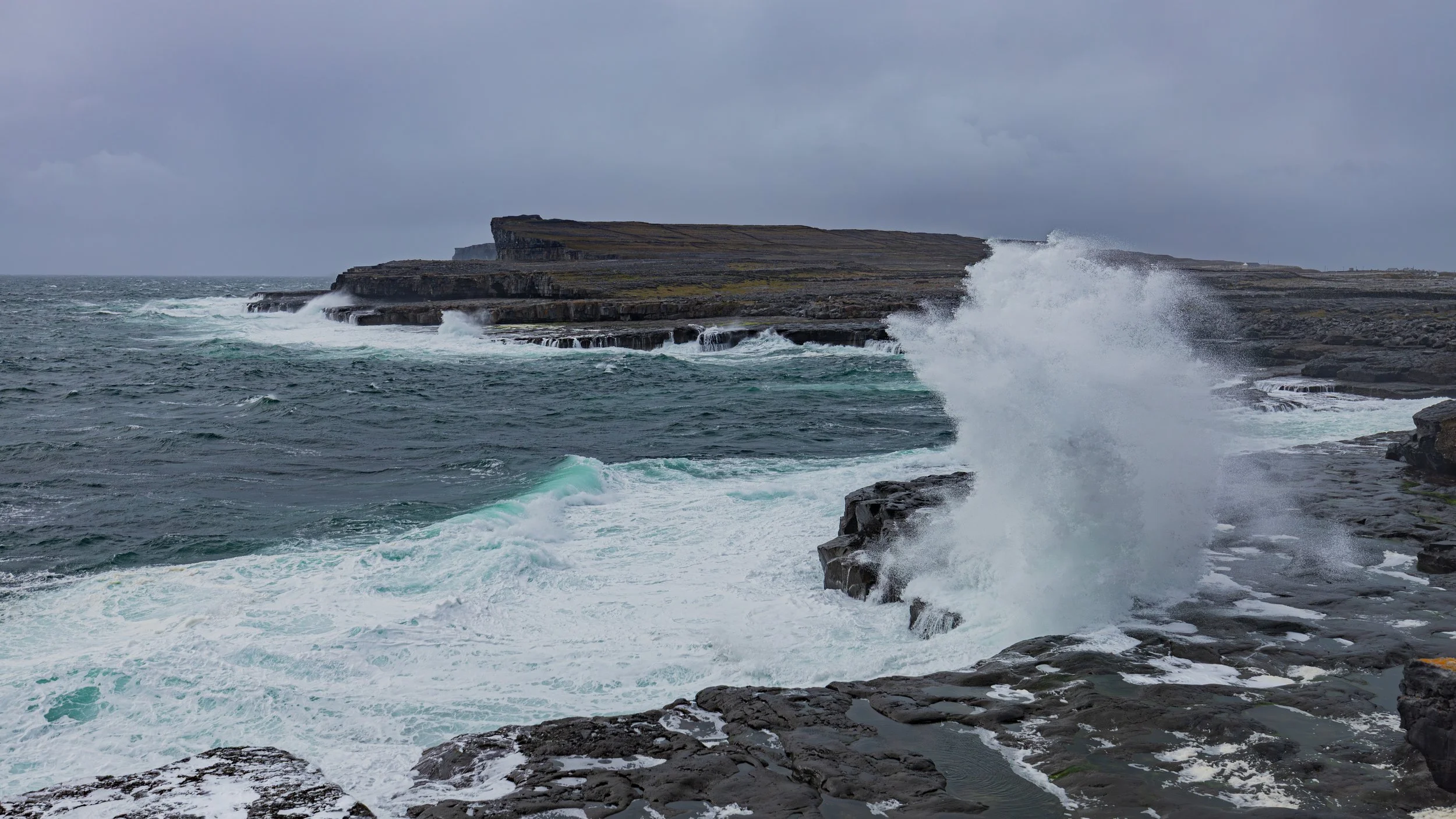
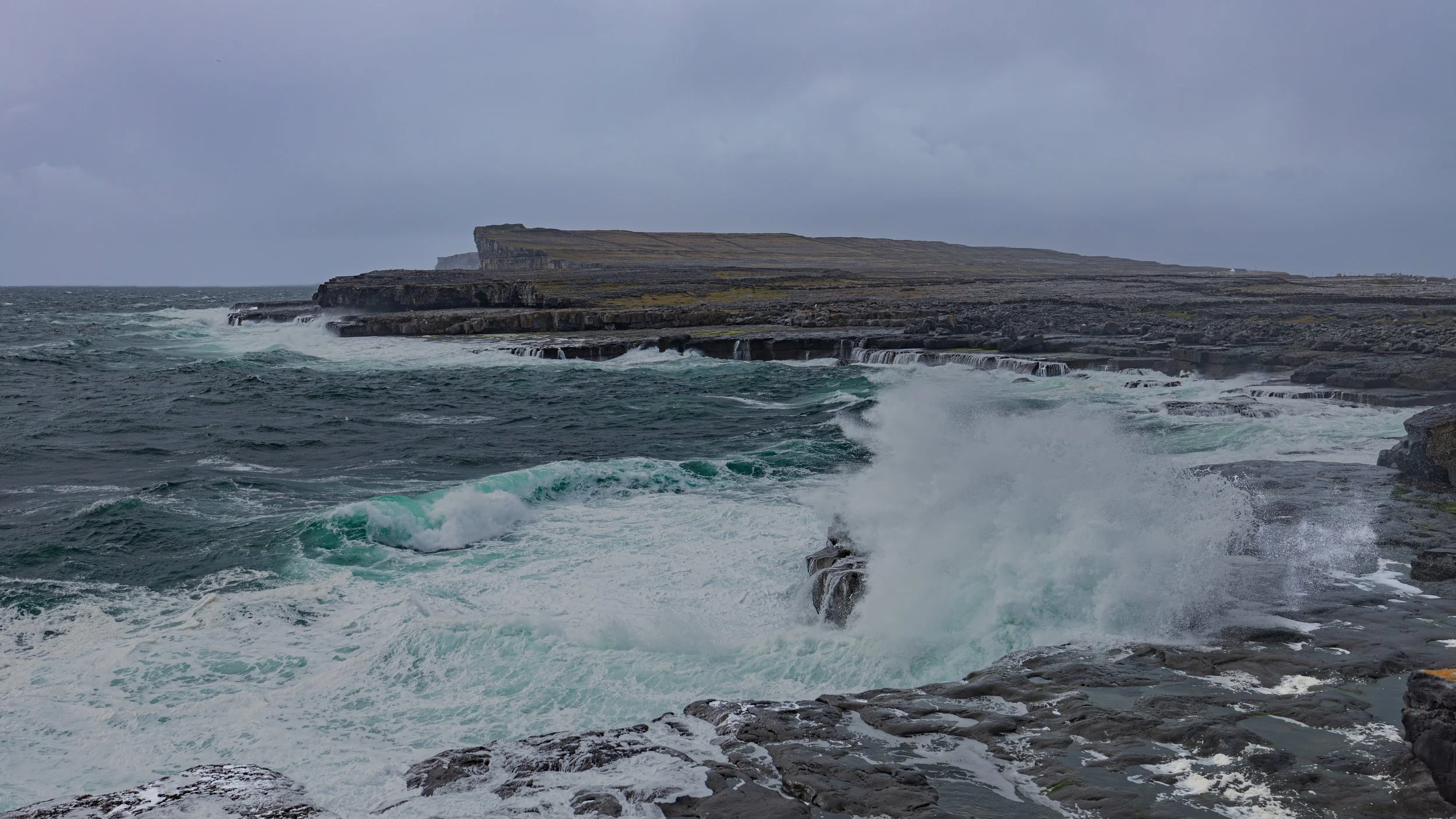
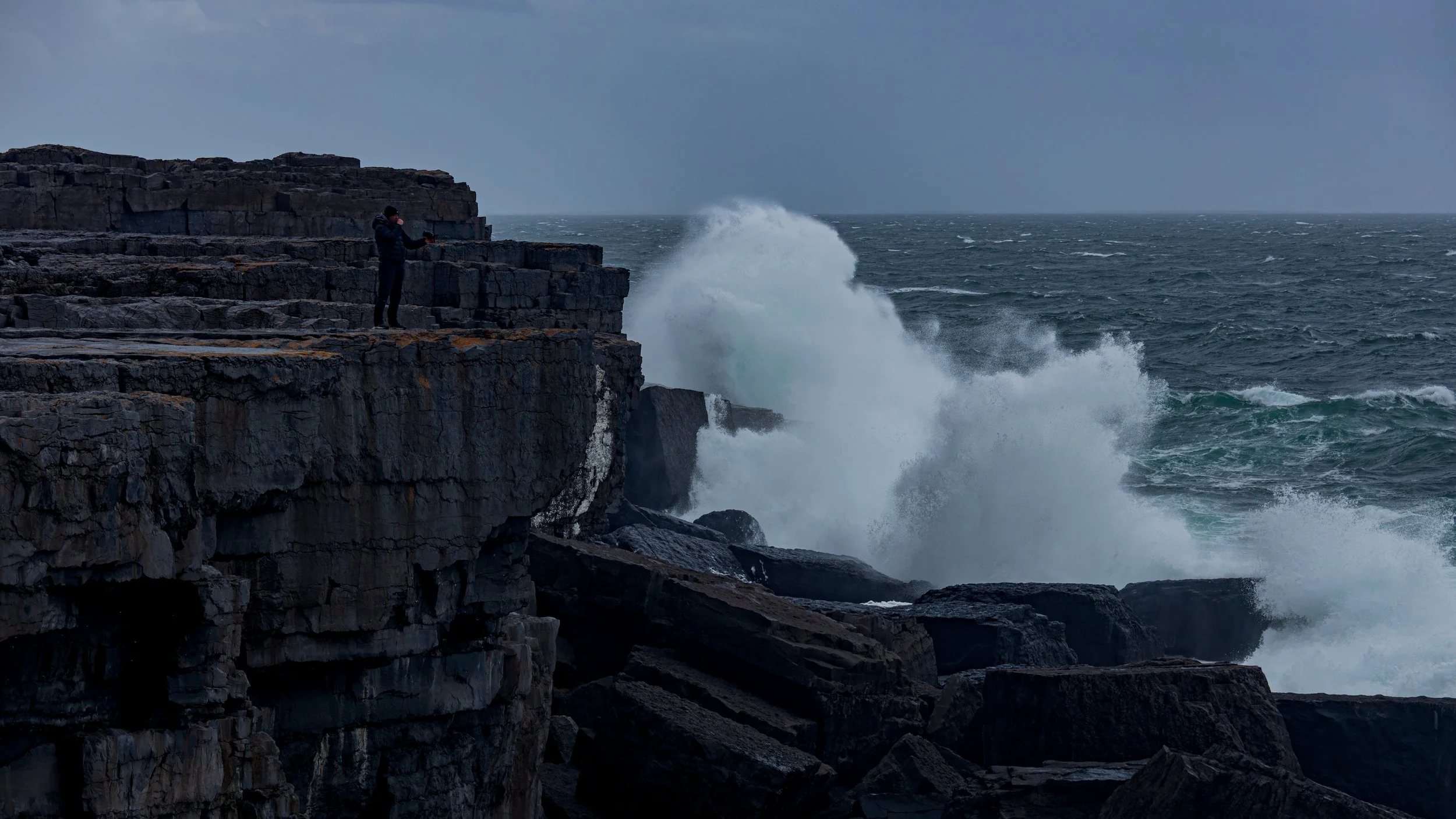
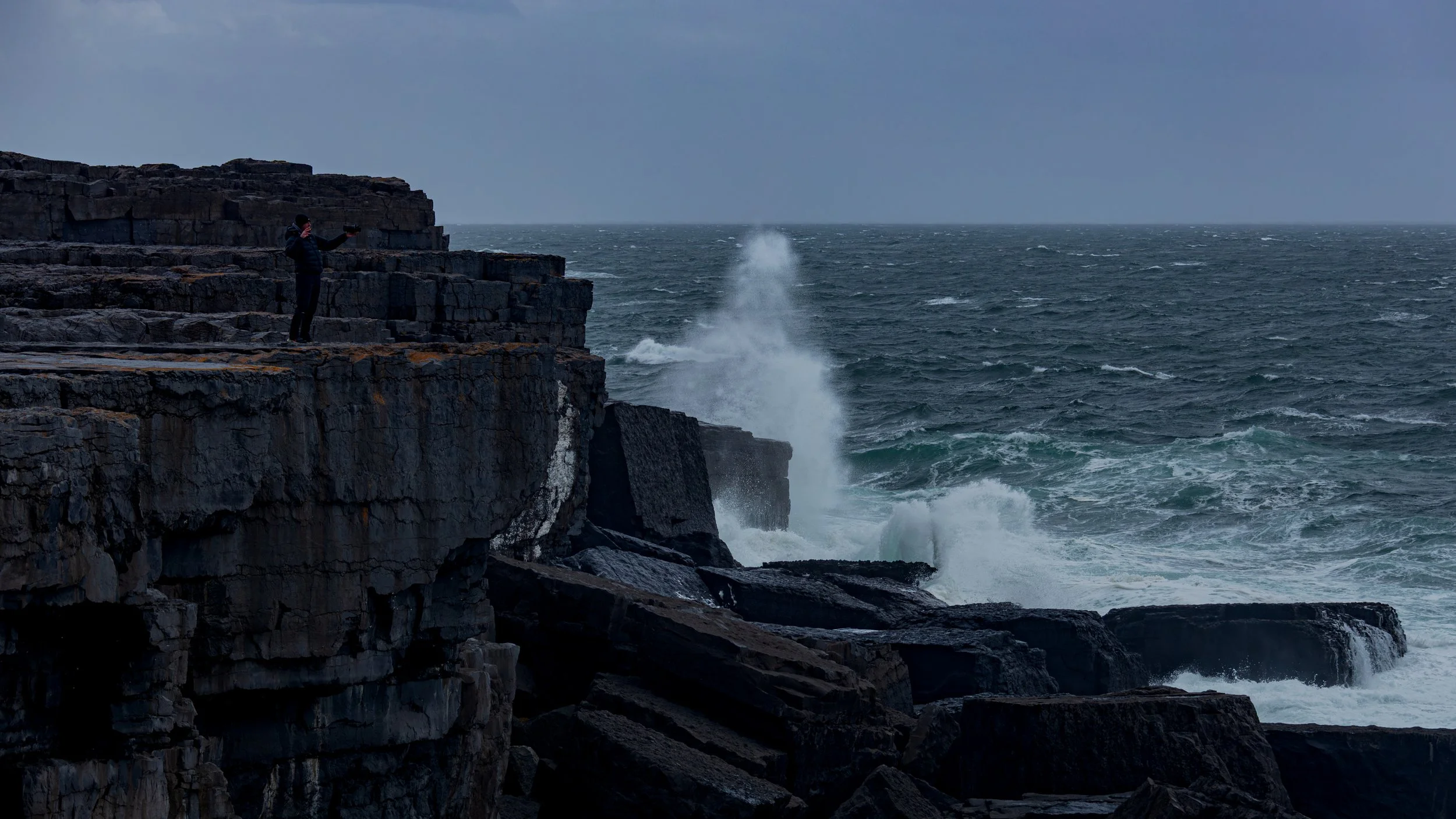
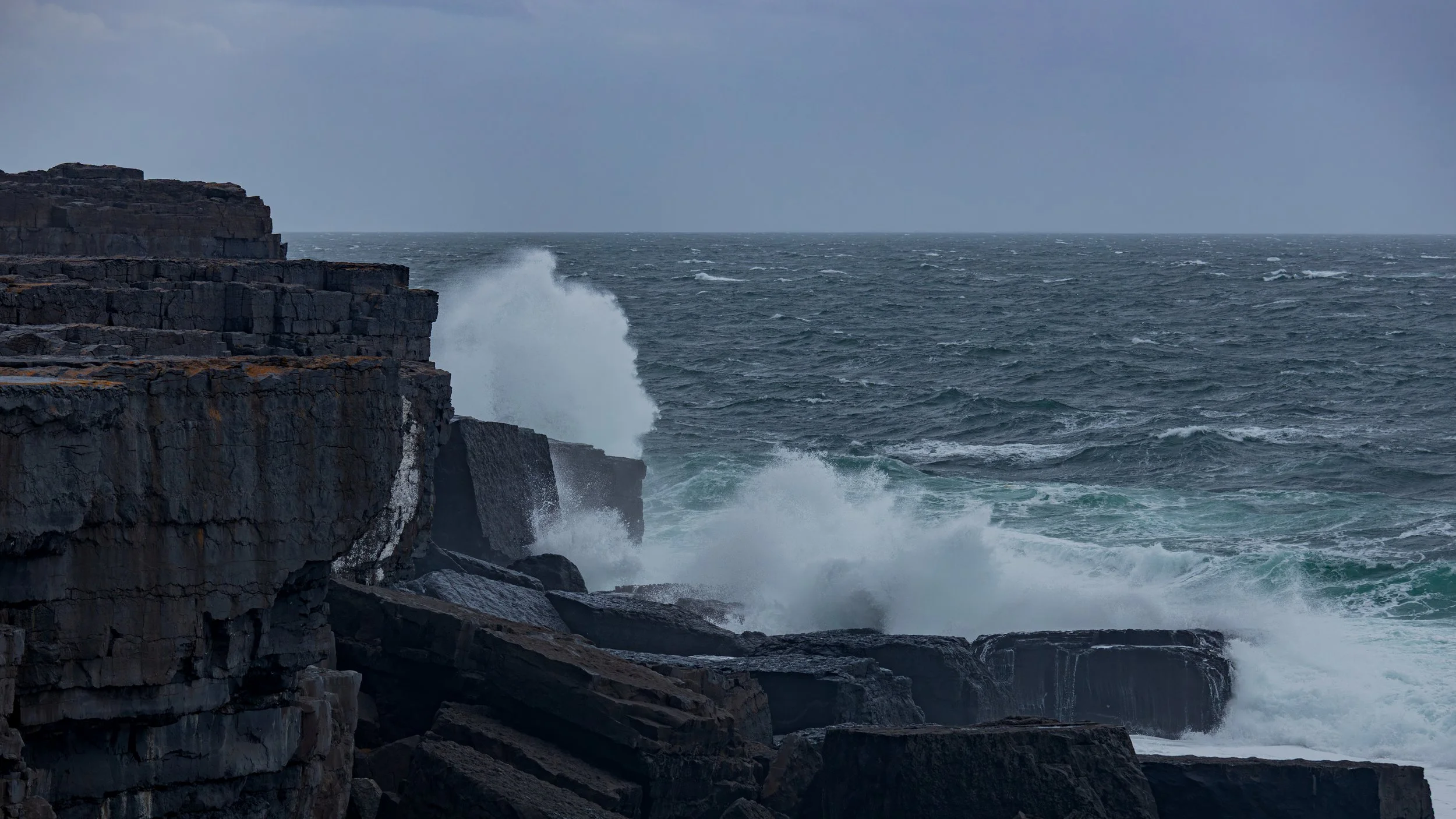
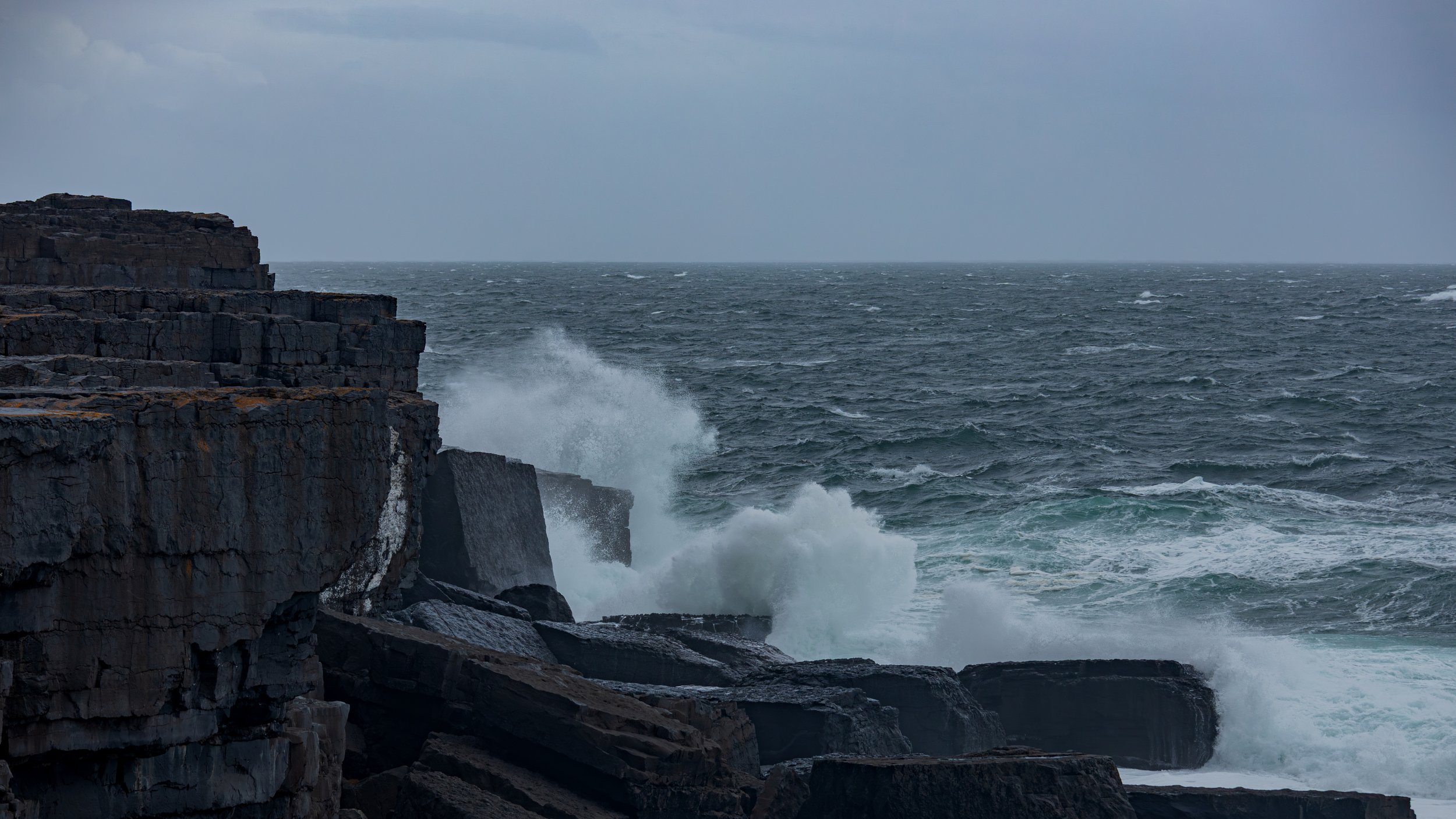
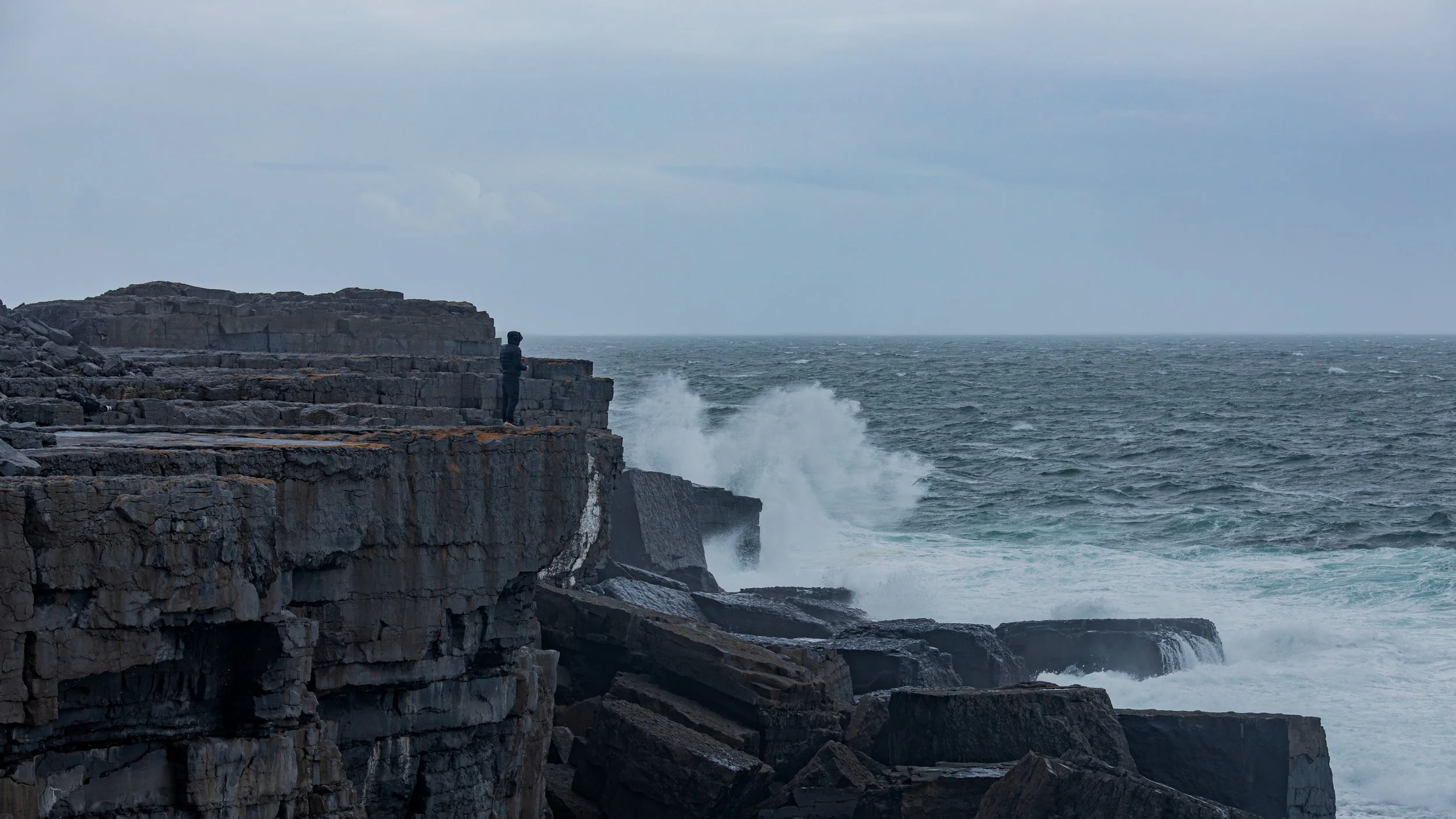
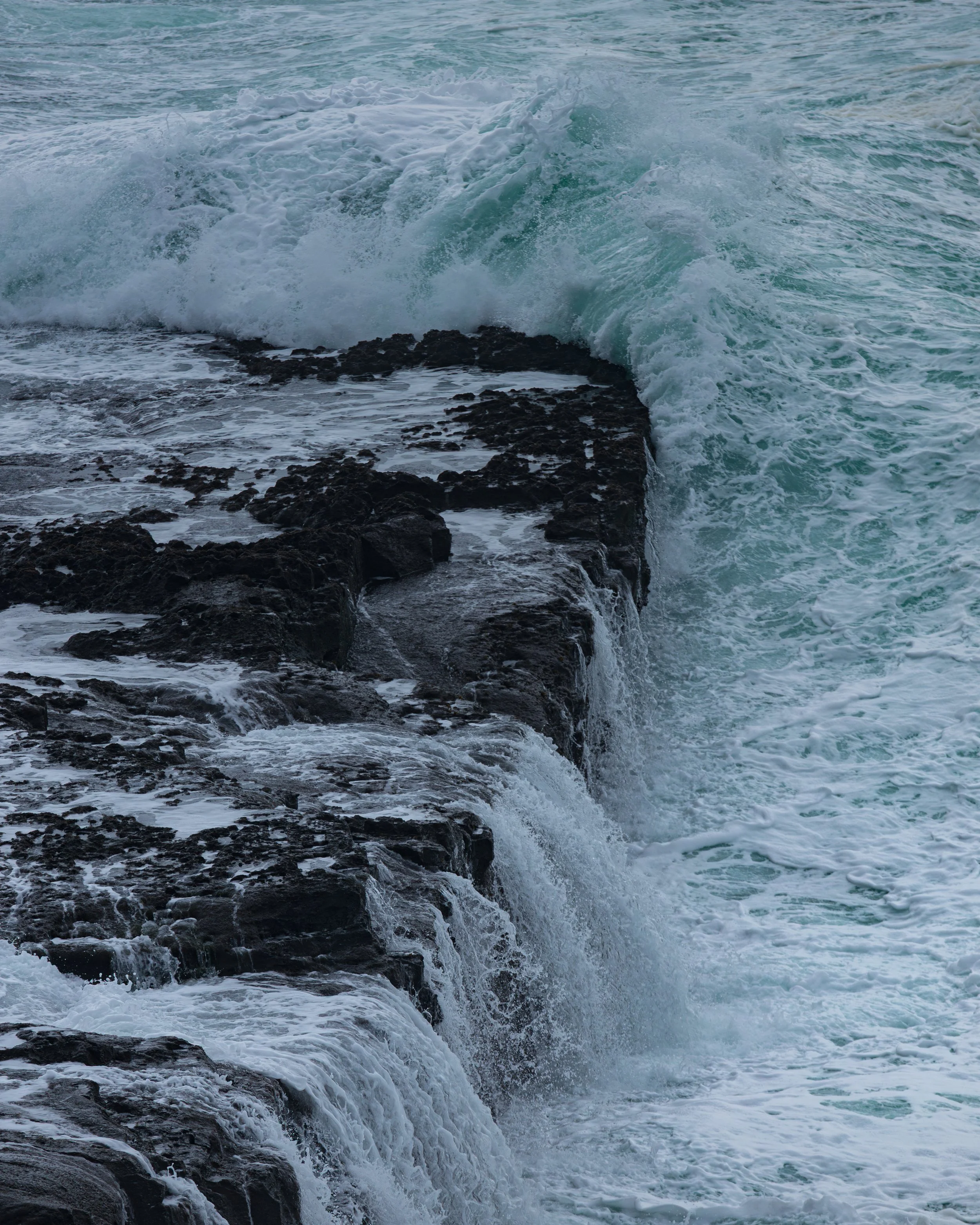
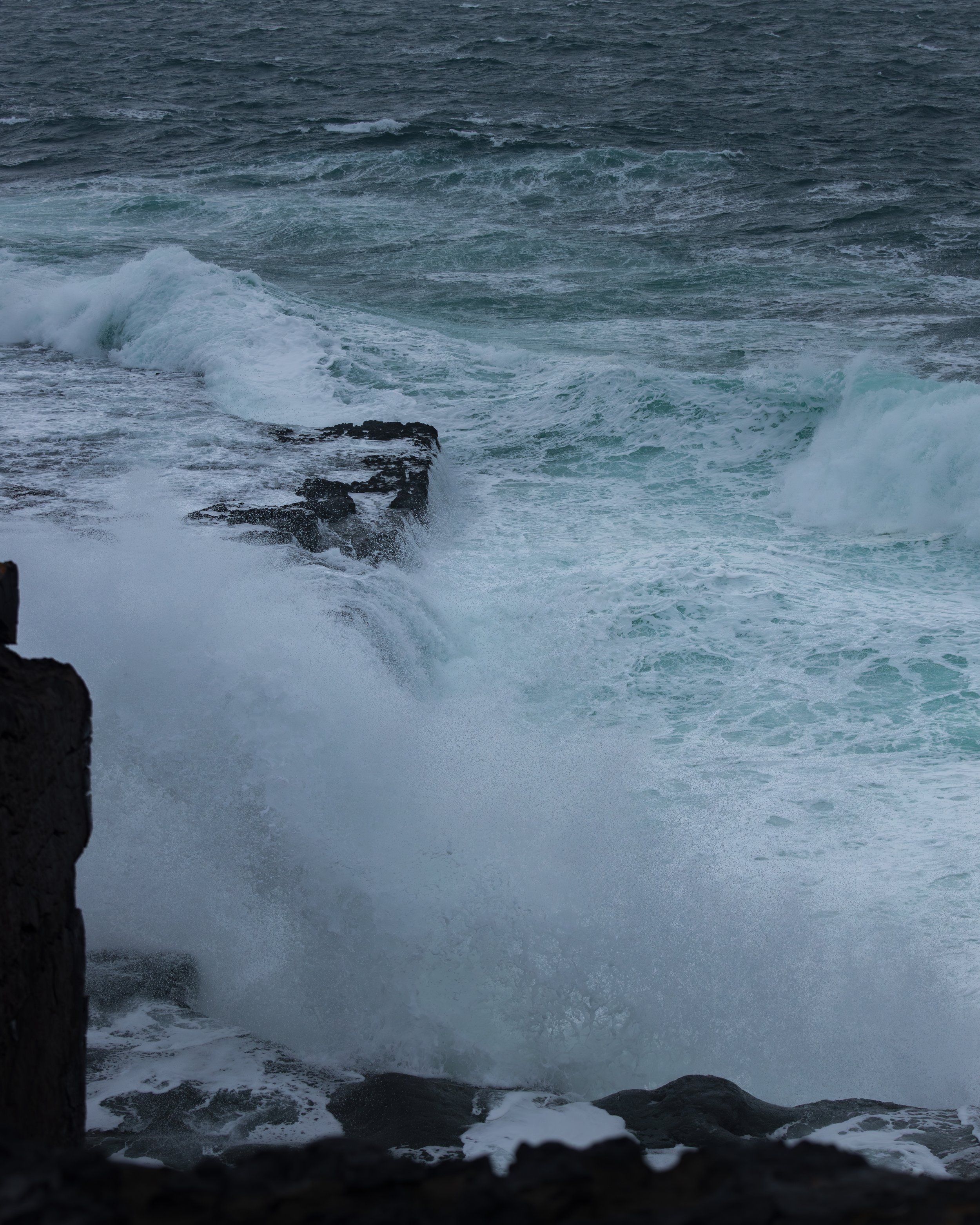
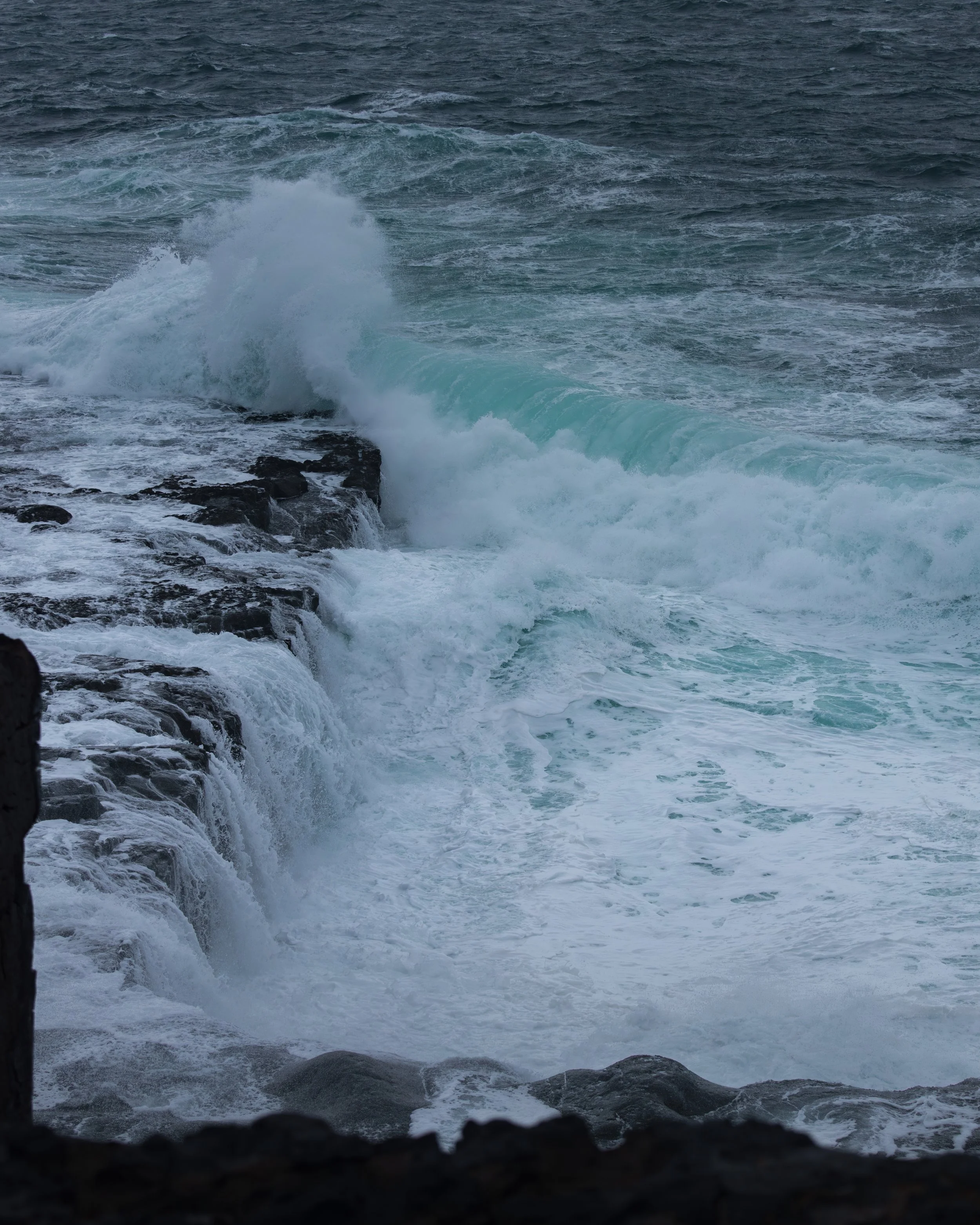
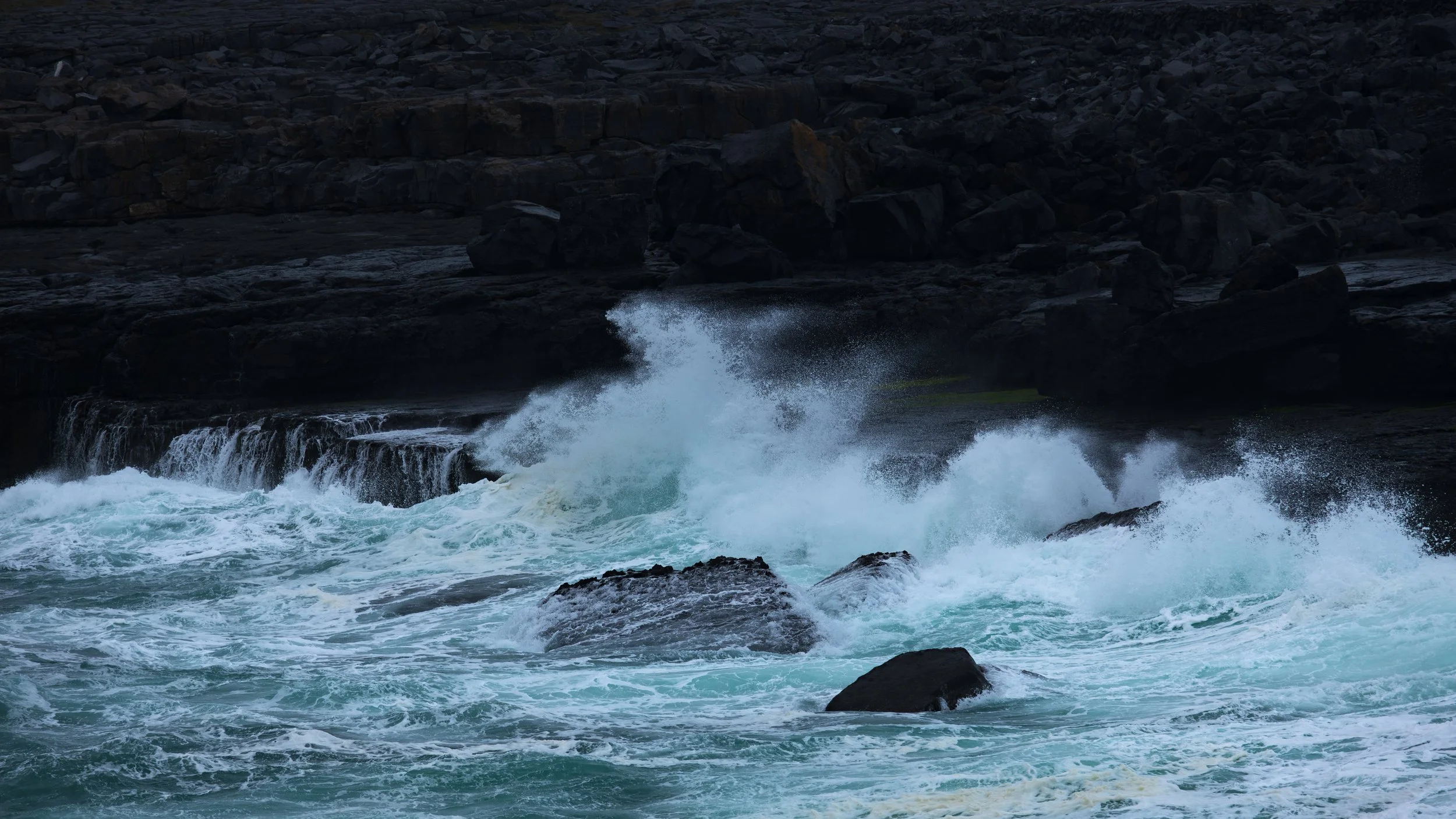
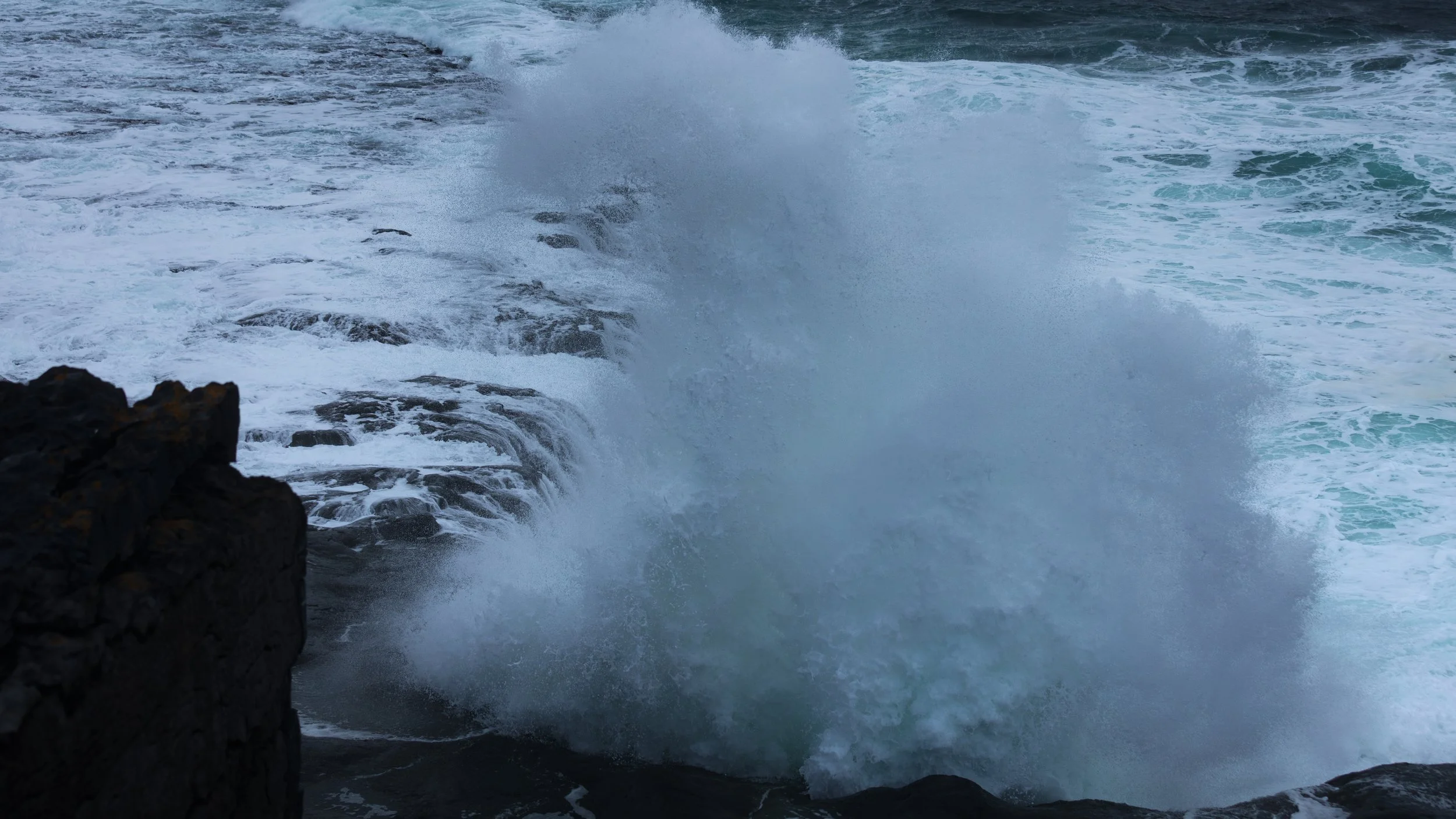
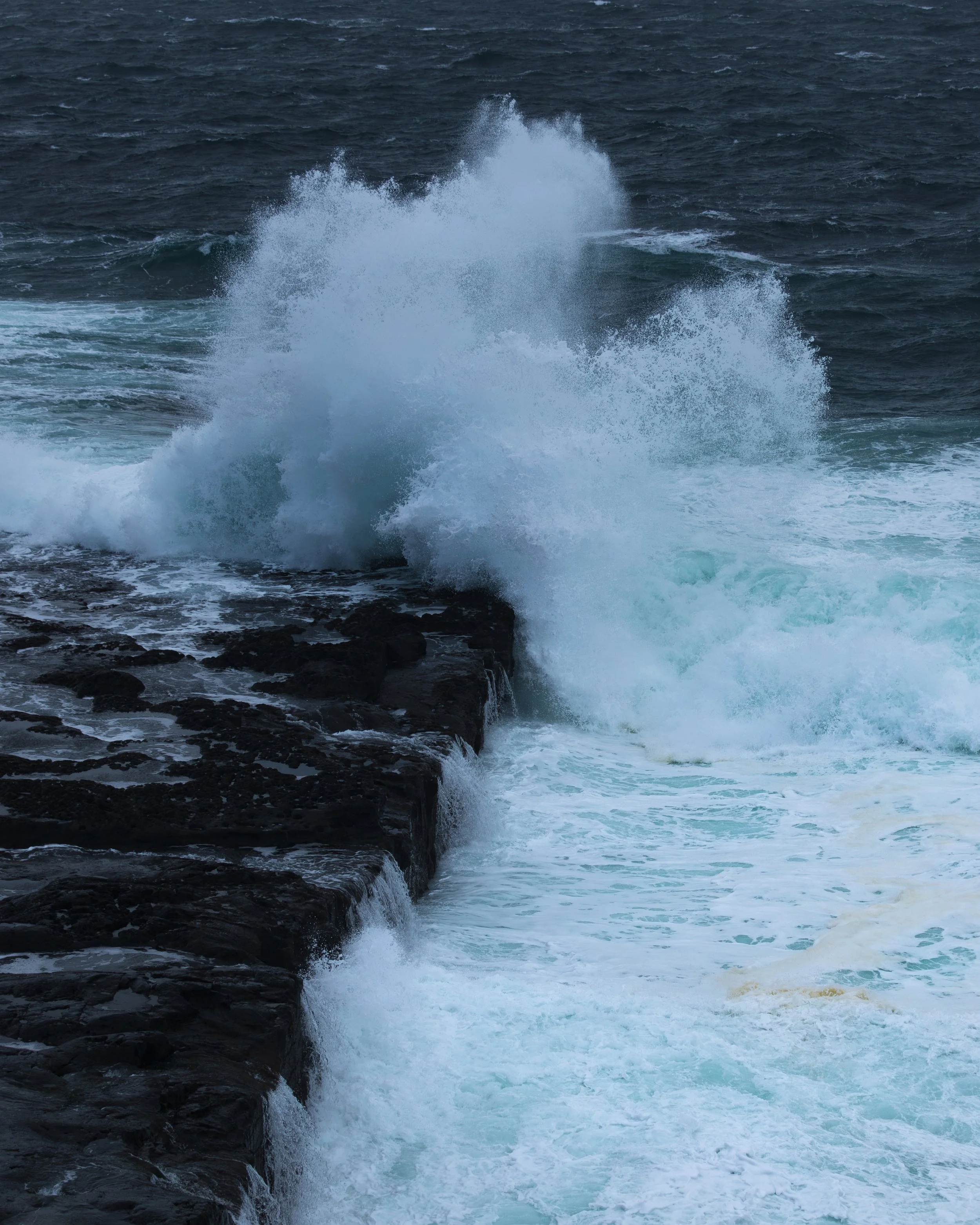
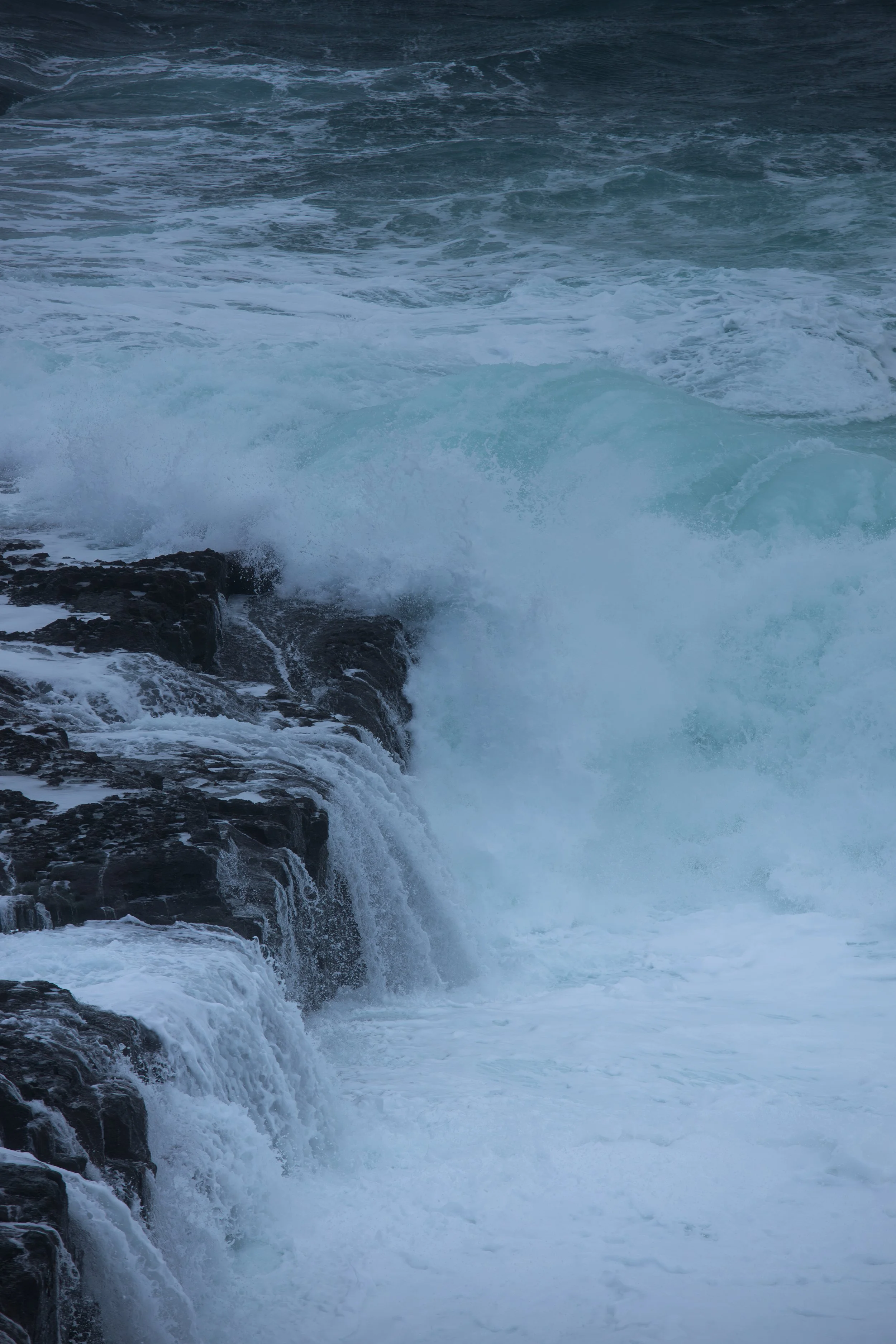
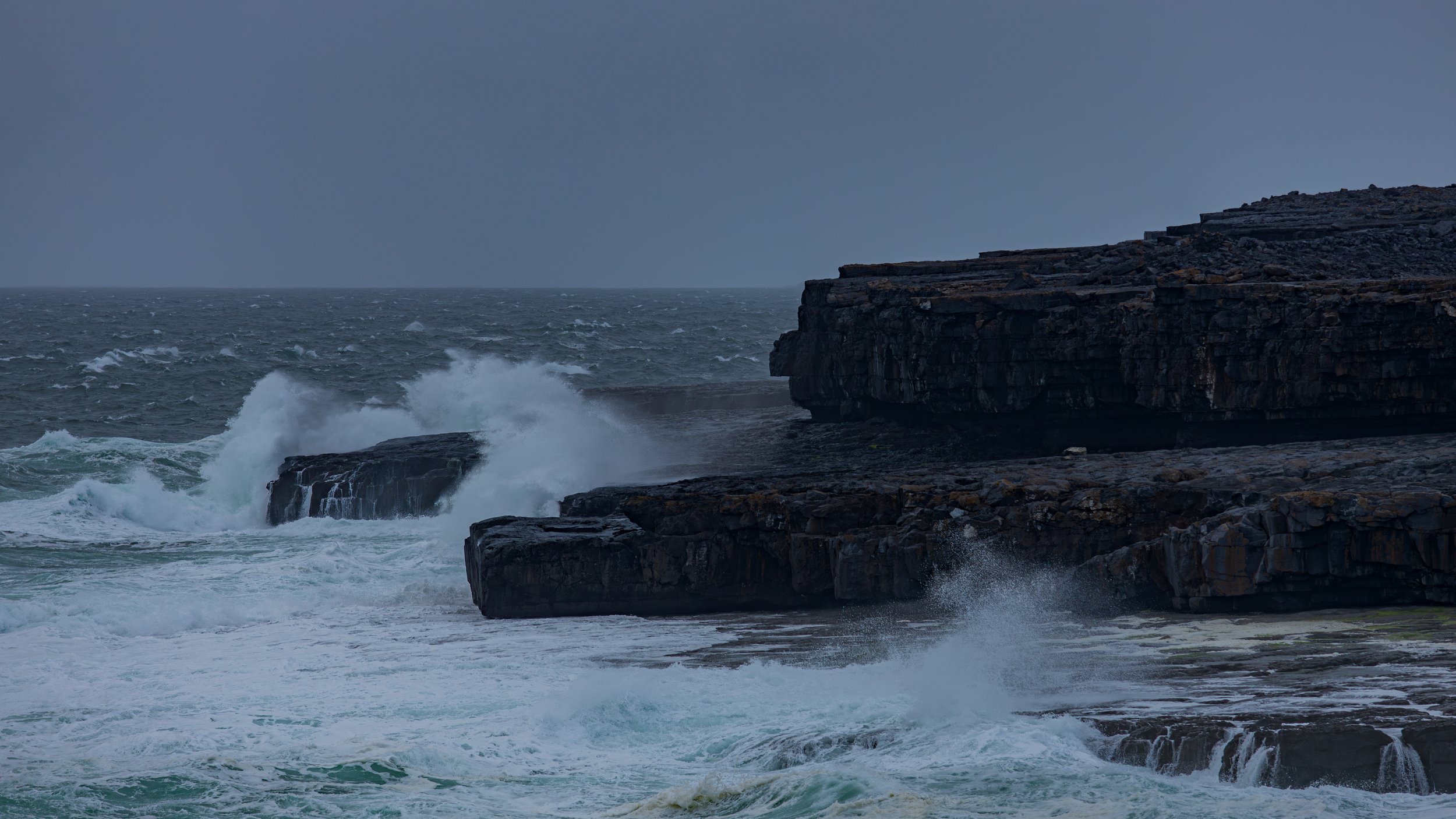
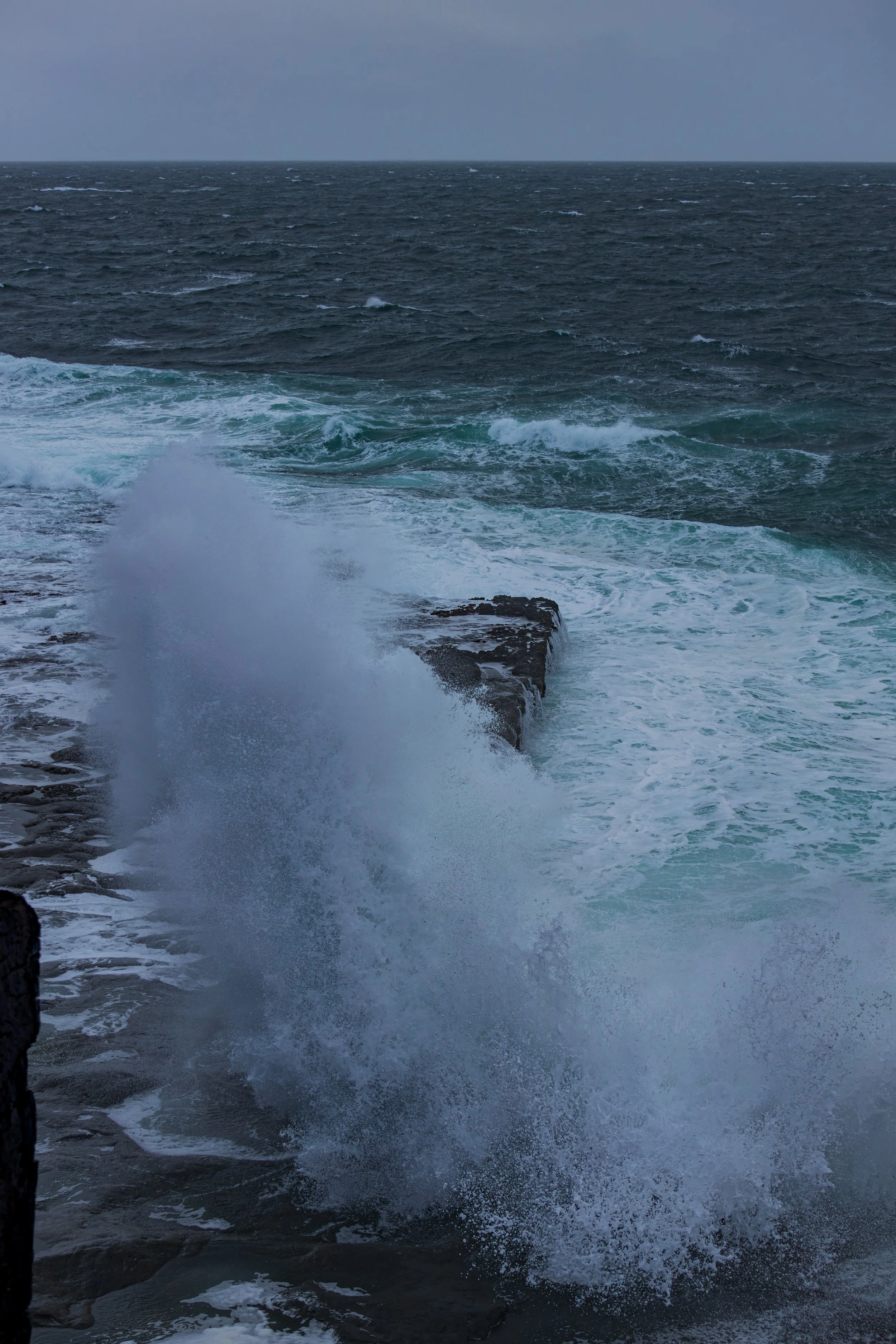
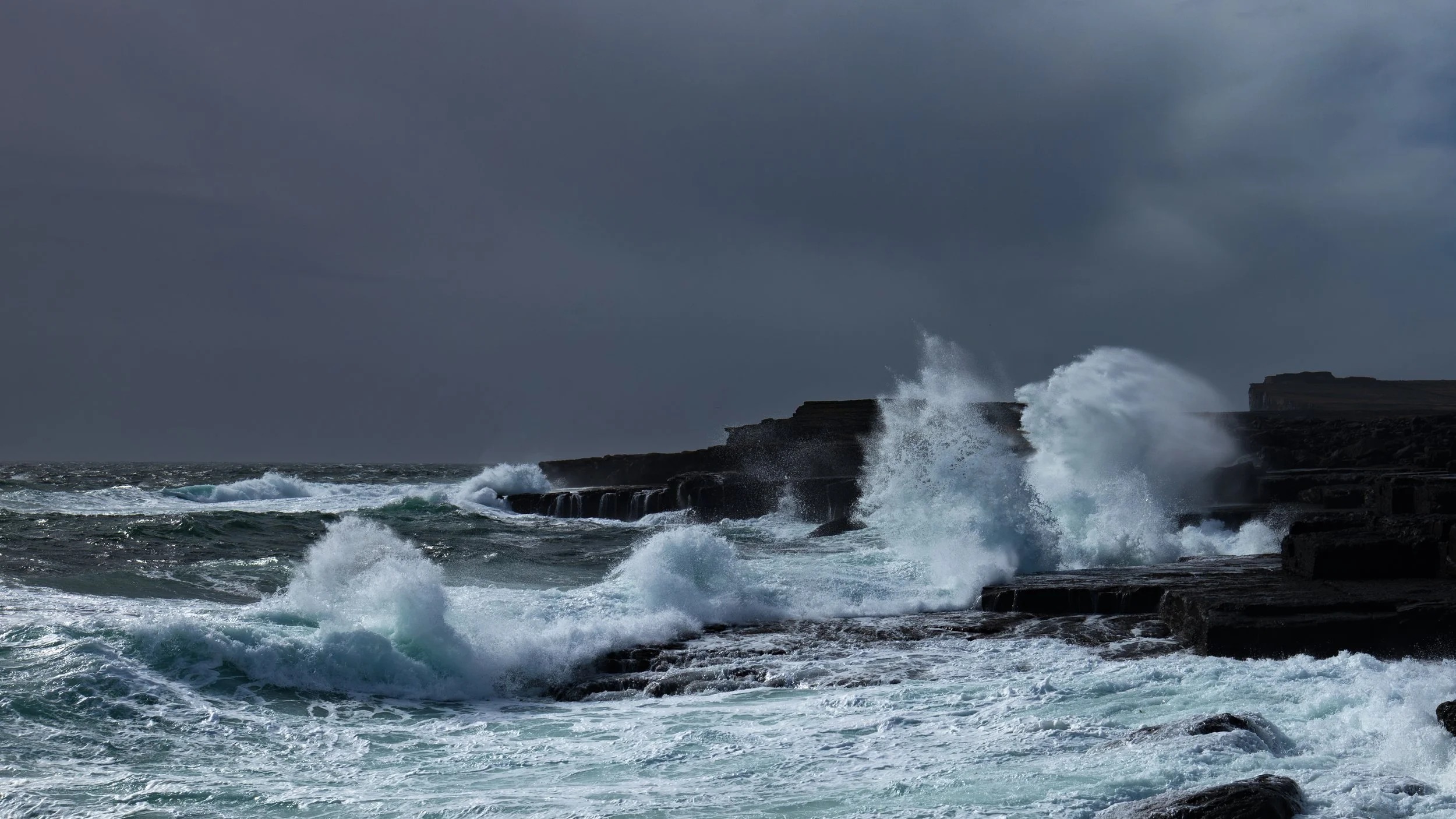
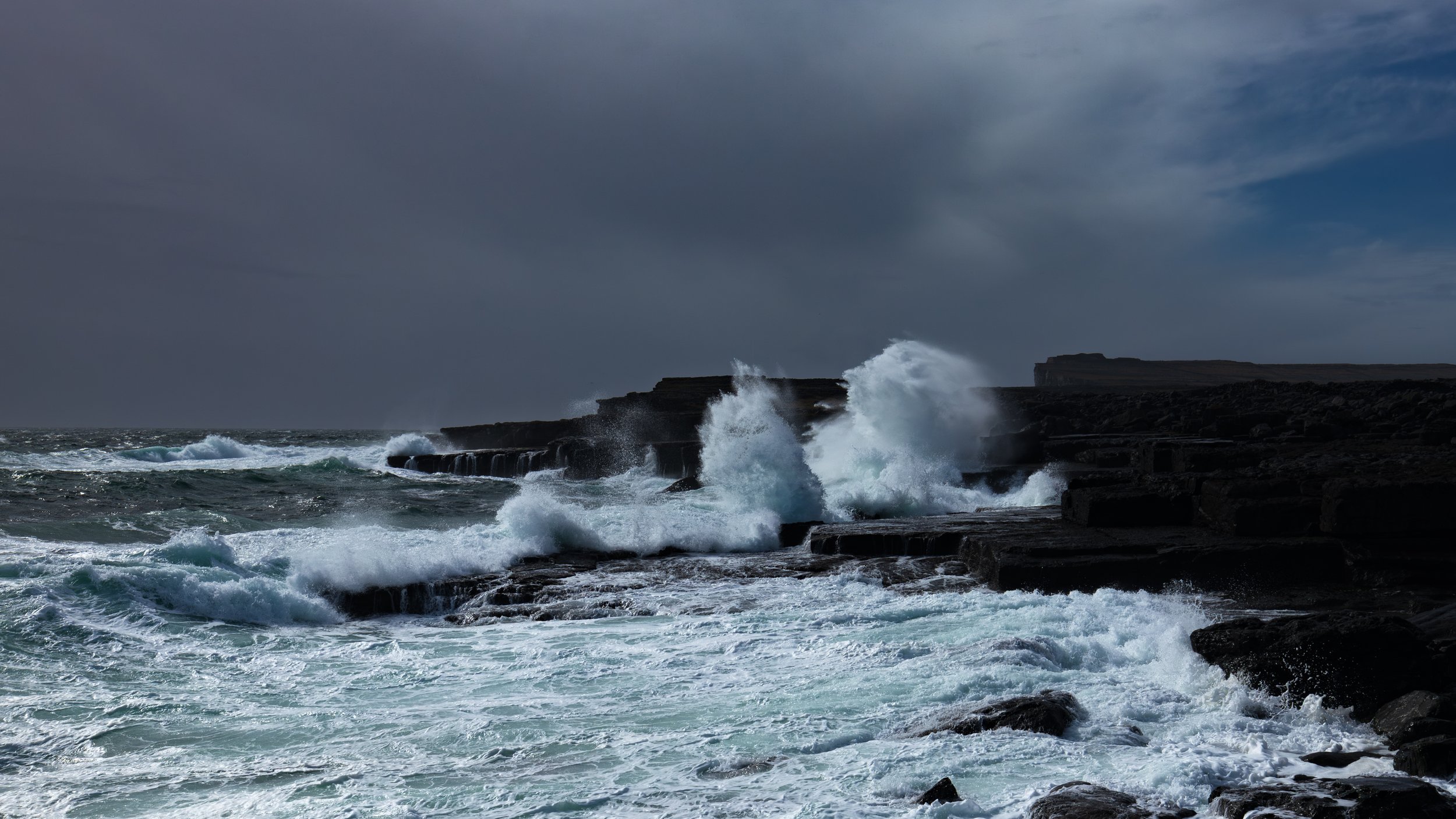
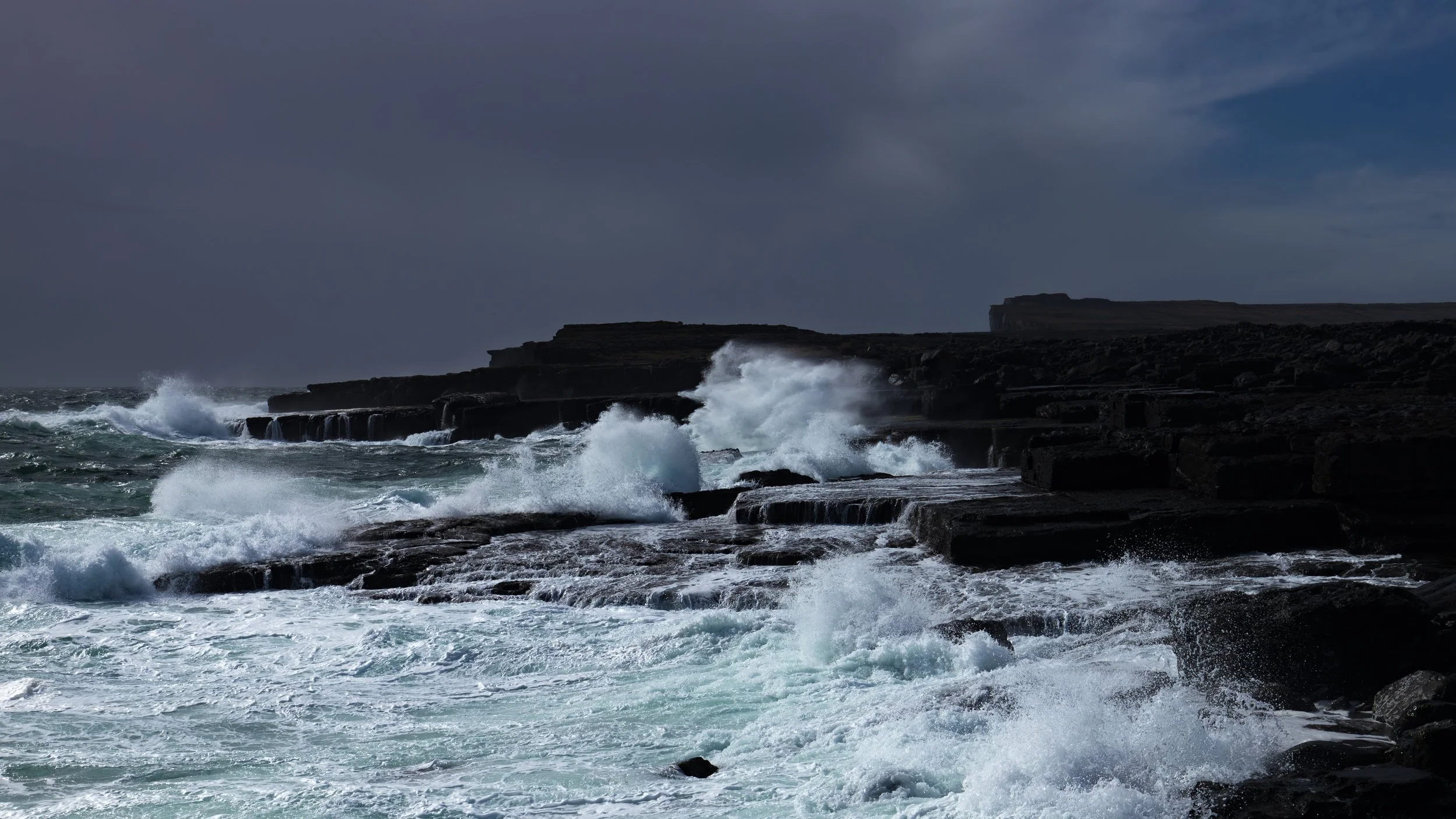
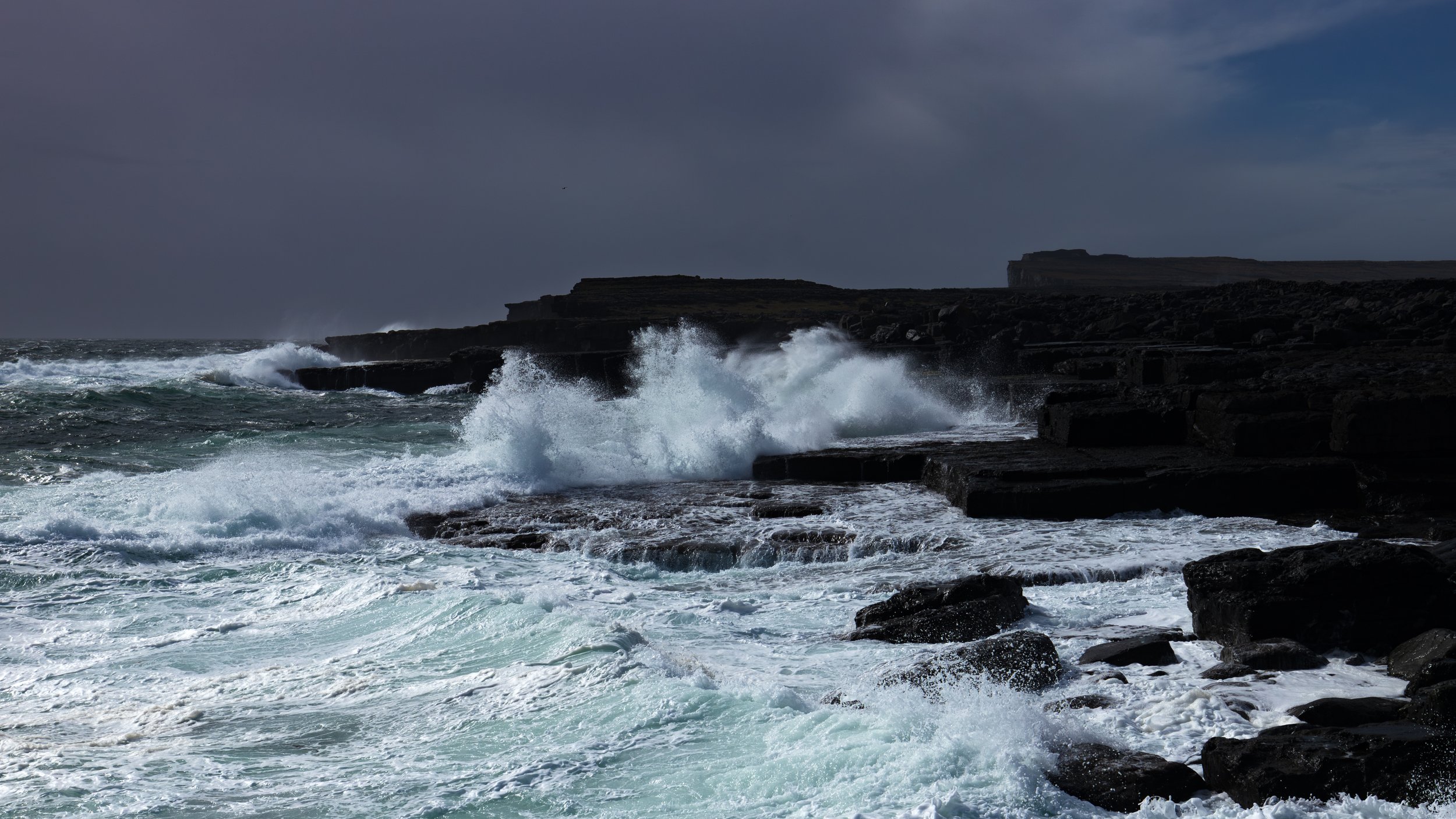
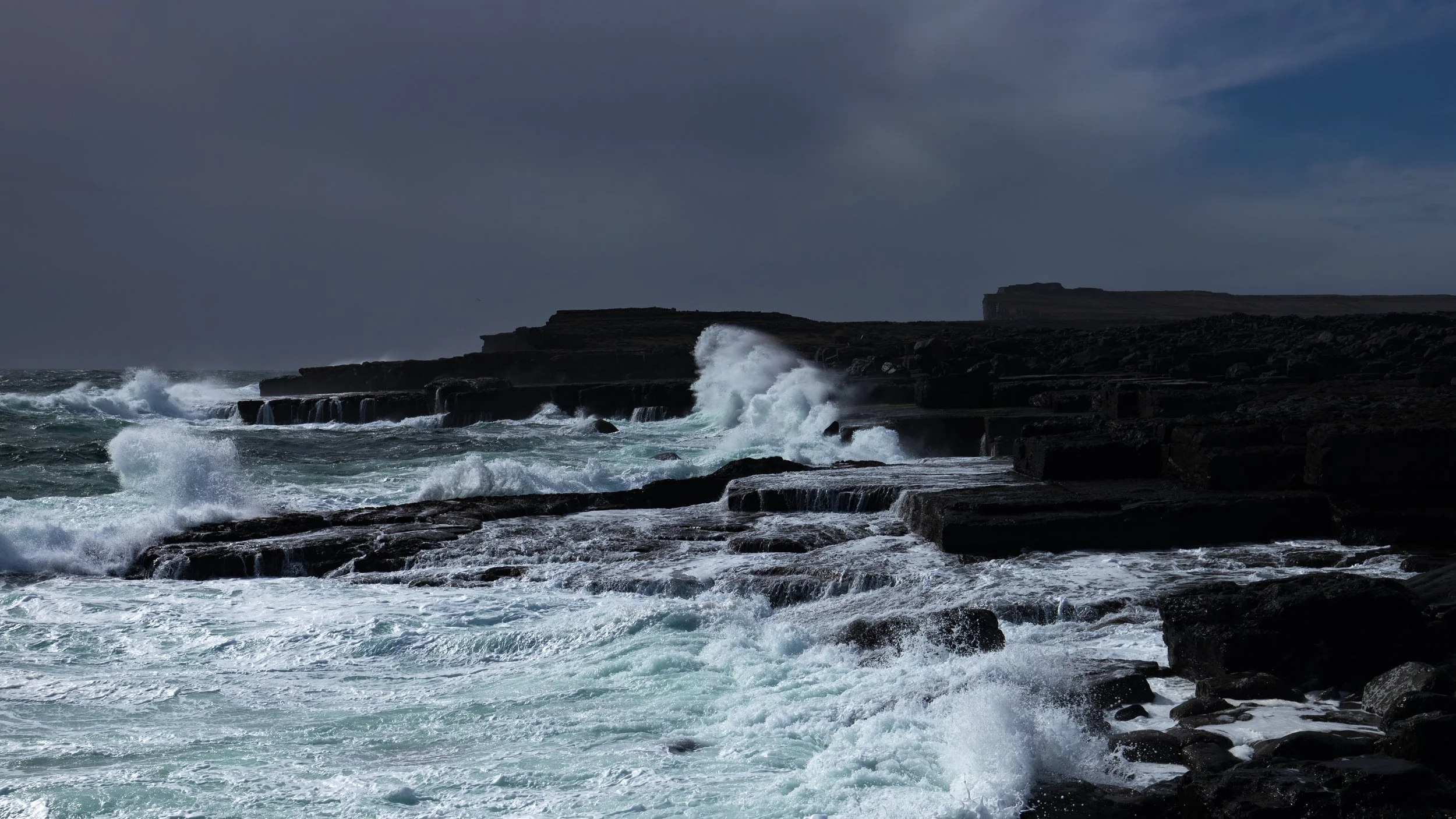
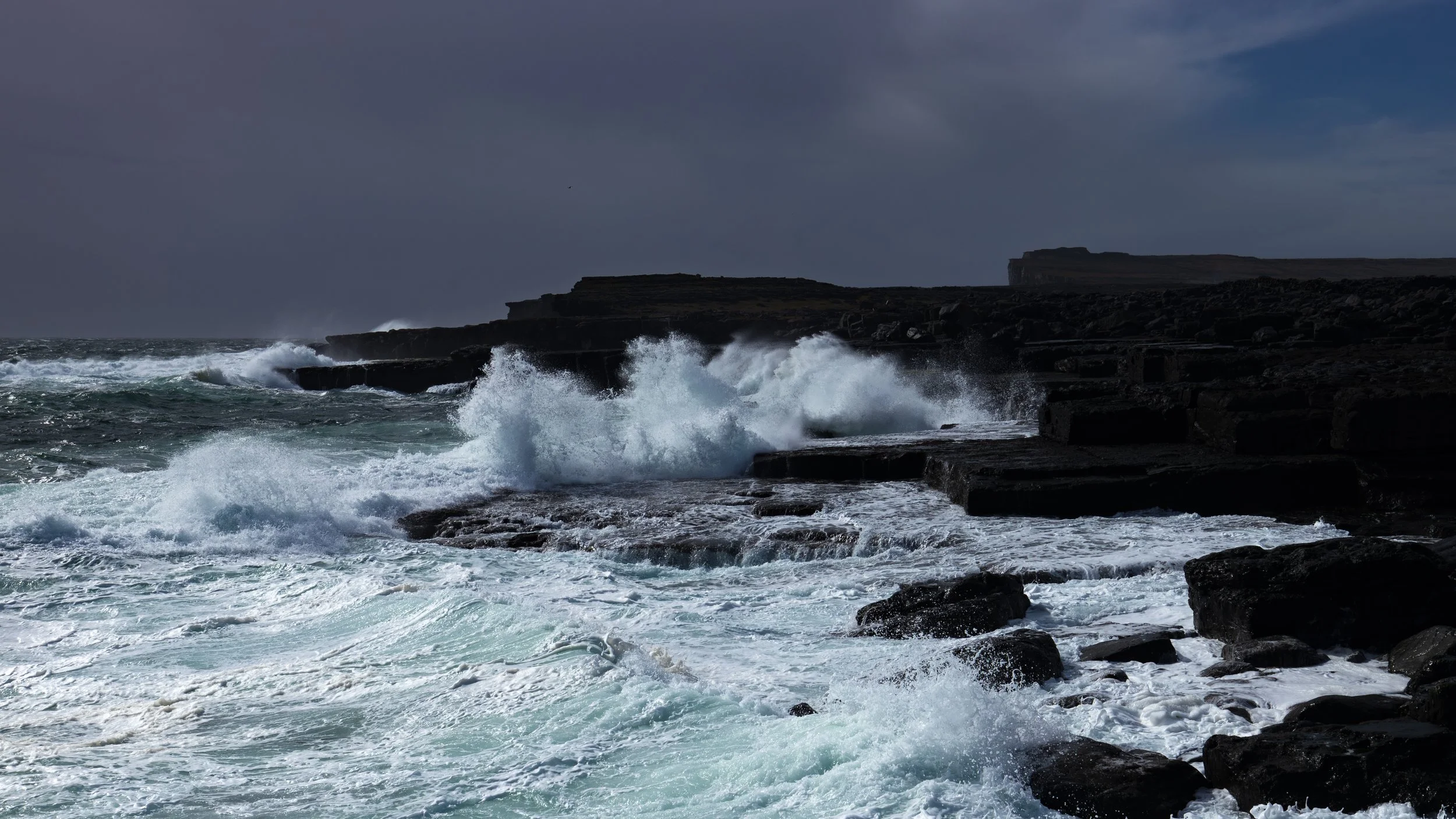
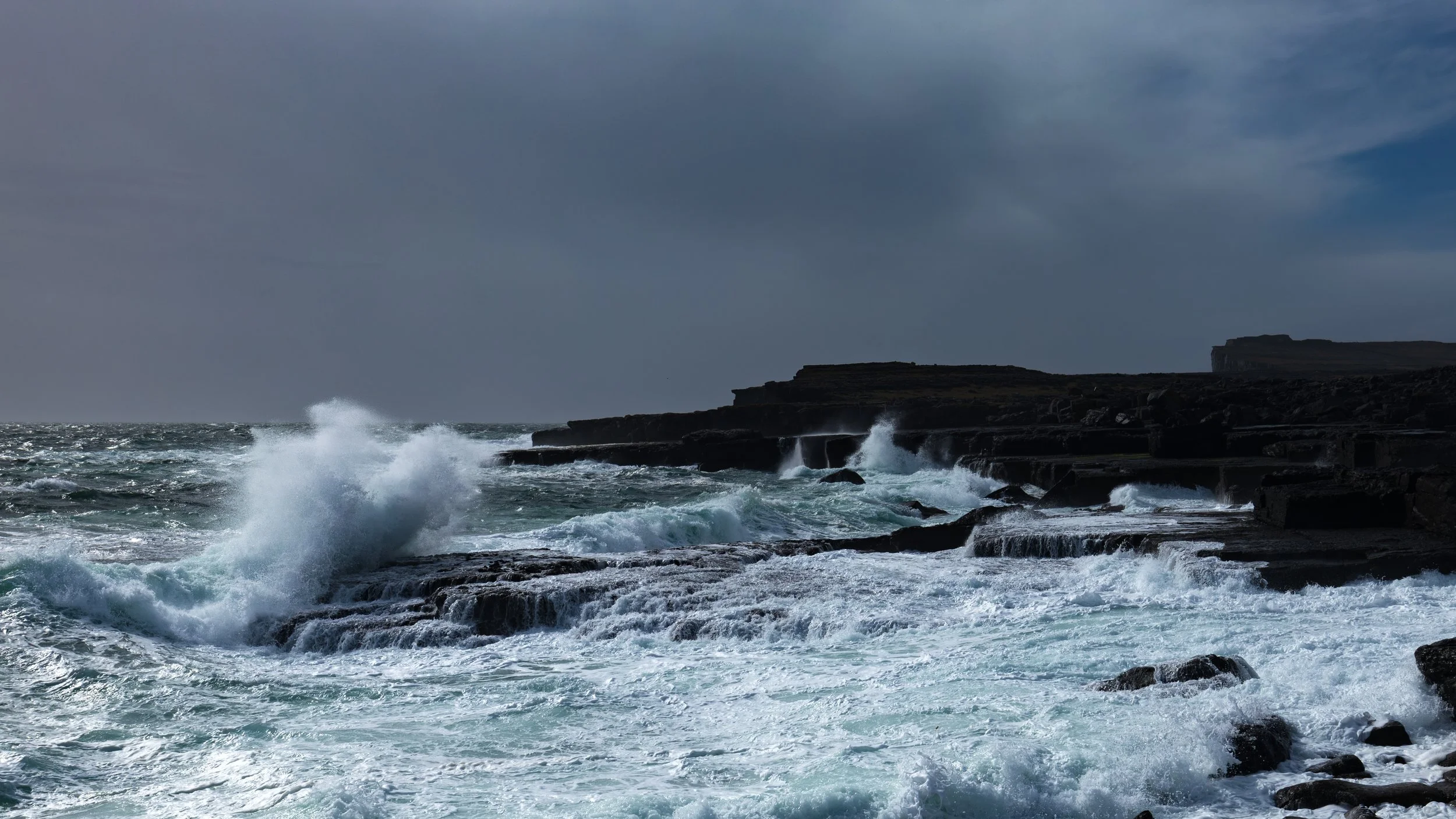
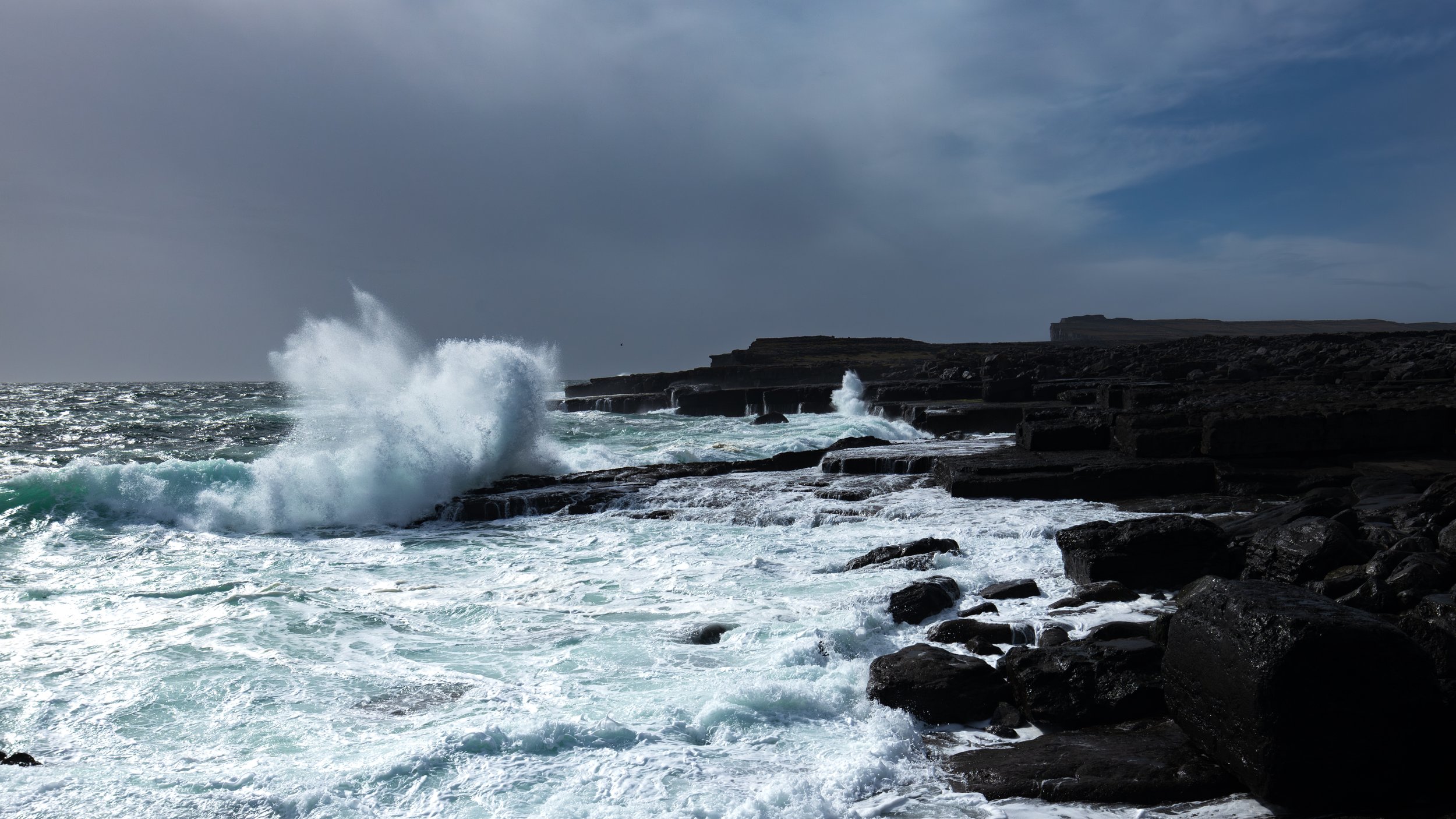
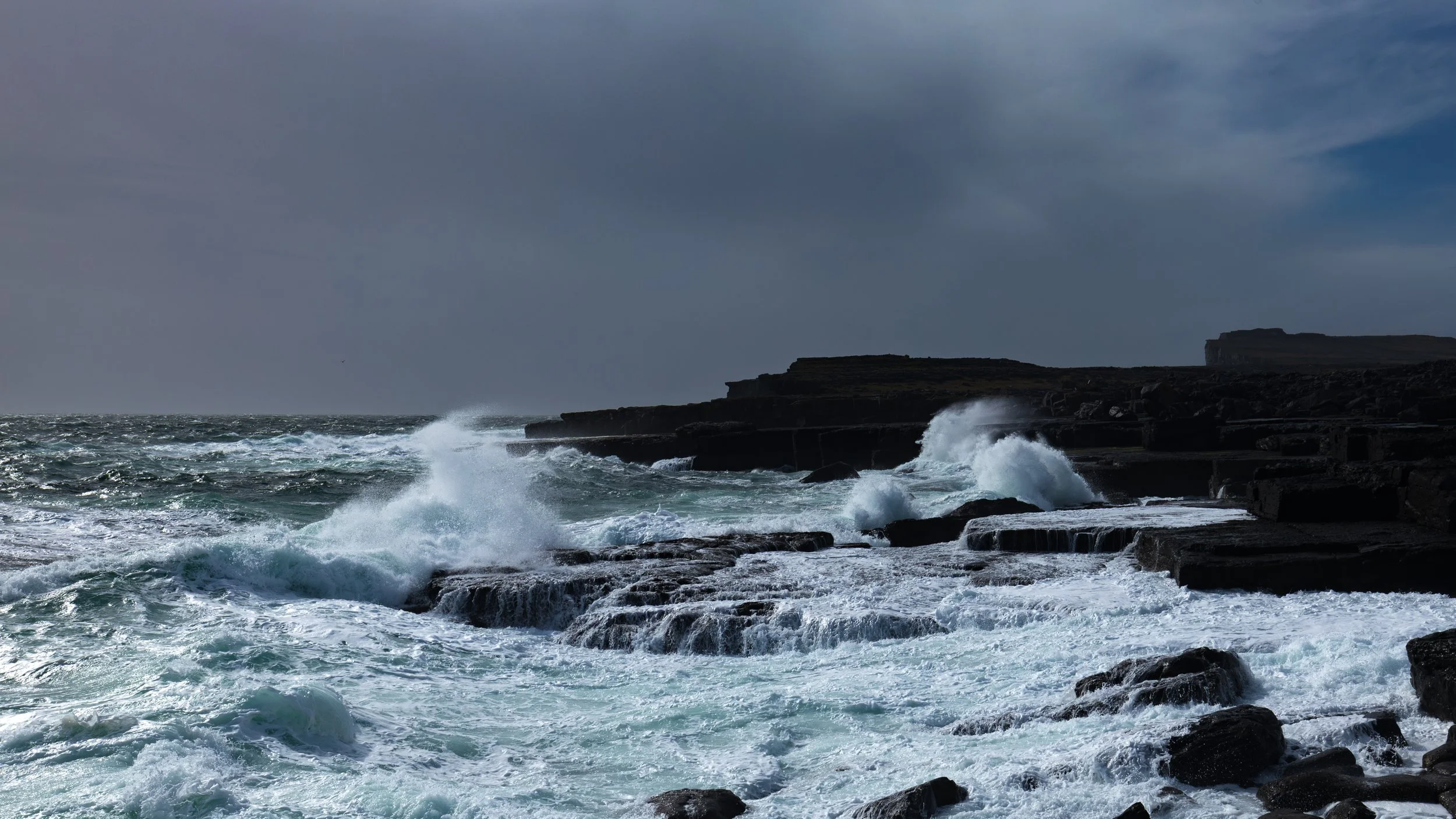
Wave after wave rolled towards the limestone edges before exploding upwards with incredible force. Every few seconds the coastline transformed. No two waves looked identical, and every impact created a new shape, a new pattern and a new photographic opportunity.
Originally, our plan had been simple. Head directly towards the Wormhole and begin photographing the location.
Instead, we immediately found ourselves heading in the opposite direction.
The waves were simply too good to ignore.
This was an important reinforcement of one of the most valuable lessons in landscape photography. Having a plan is important, but being willing to abandon that plan when conditions offer something better is equally important.
Too often we become fixated on capturing a specific image. The danger with that approach is that it can blind you to opportunities that are unfolding right in front of you.
The Atlantic was giving us those opportunities.
Diarmuid and Patrick moved ahead of me while I stayed back for a few minutes, photographing from a slightly different perspective. Before long, Patrick was soaked by sea spray and forced to retreat.
That alone told me everything I needed to know about the conditions.
Eventually I made my way closer to the edge, although I deliberately remained higher on the cliffs. Even there, I found myself getting wet. The wind was catching the spray from the waves below and carrying it far inland. Every impact sent water high into the air before the gusts pushed it directly across the landscape.
At that point I switched to my 70-200mm lens.
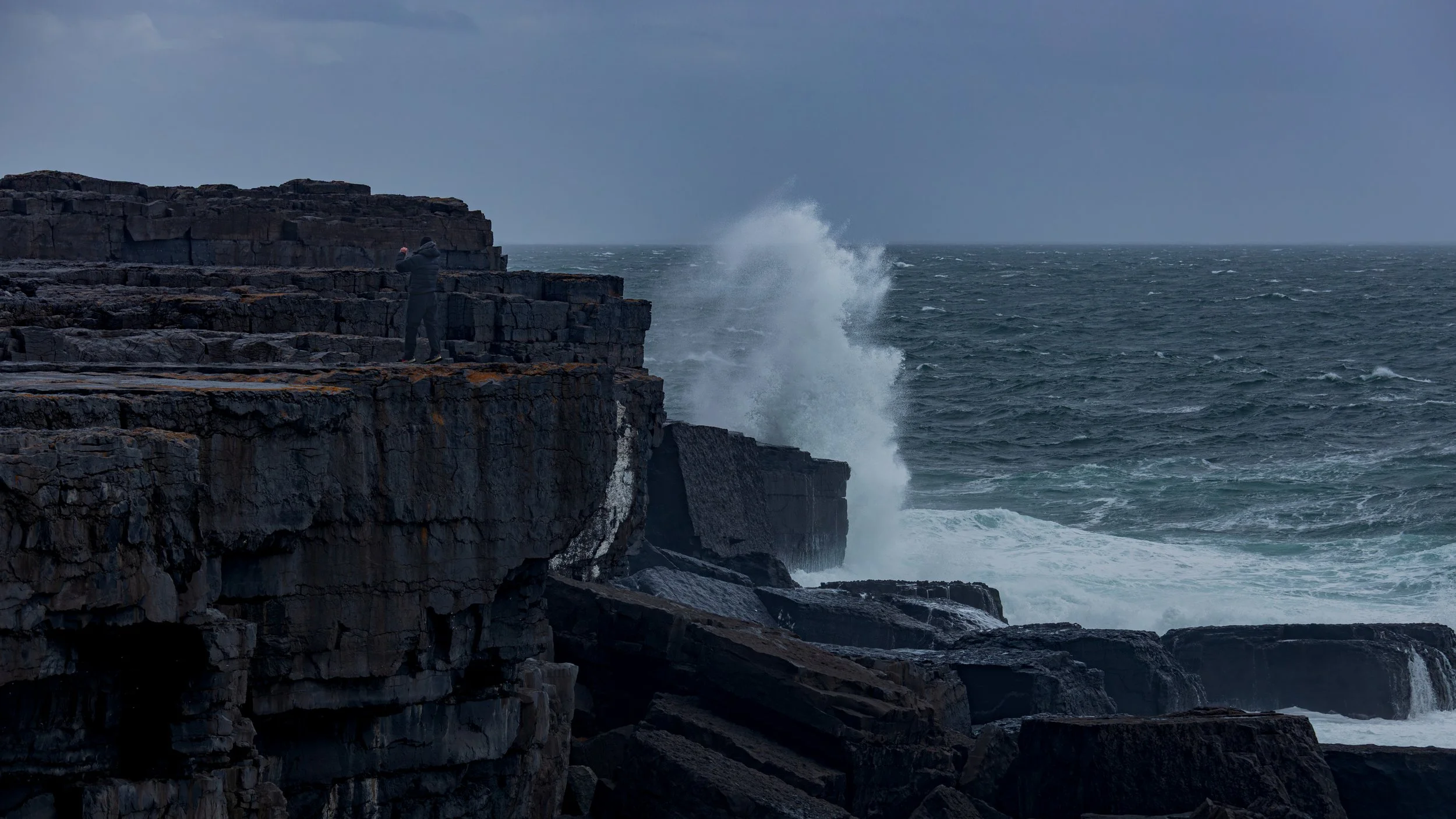
A telephoto lens can be extremely useful when photographing wave action. Rather than trying to include the entire scene, it allows you to isolate the moments of impact and emphasise the scale of the water as it collides with the cliffs.
The coastline around this part of Inis Mór is particularly interesting because of the limestone geology. From above, many of the formations appear almost artificial. Straight lines, sharp edges and geometric shapes create patterns that are unlike many other coastal locations in Ireland.
Over thousands of years, the Atlantic has exploited weaknesses in the rock, breaking away sections and leaving large blocks scattered below the cliffs. These fallen fragments serve as a visible legacy of the ocean's power.
They also influence how the waves behave.
As the swells moved towards the shore, the shape of the coastline funnelled them into specific angles. The result was a series of explosive impacts that launched spray high above the cliff tops.
Some of the larger waves were easily reaching ten metres or more above sea level before collapsing back towards the ocean.
From my position higher on the cliffs, I was able to photograph the final moments of those explosions, capturing shapes and textures that would have been impossible to see from ground level.
Further along the coastline, Diarmuid had positioned himself near the edge of the cliffs. His presence added scale to the scene and helped demonstrate the true size of the waves below.
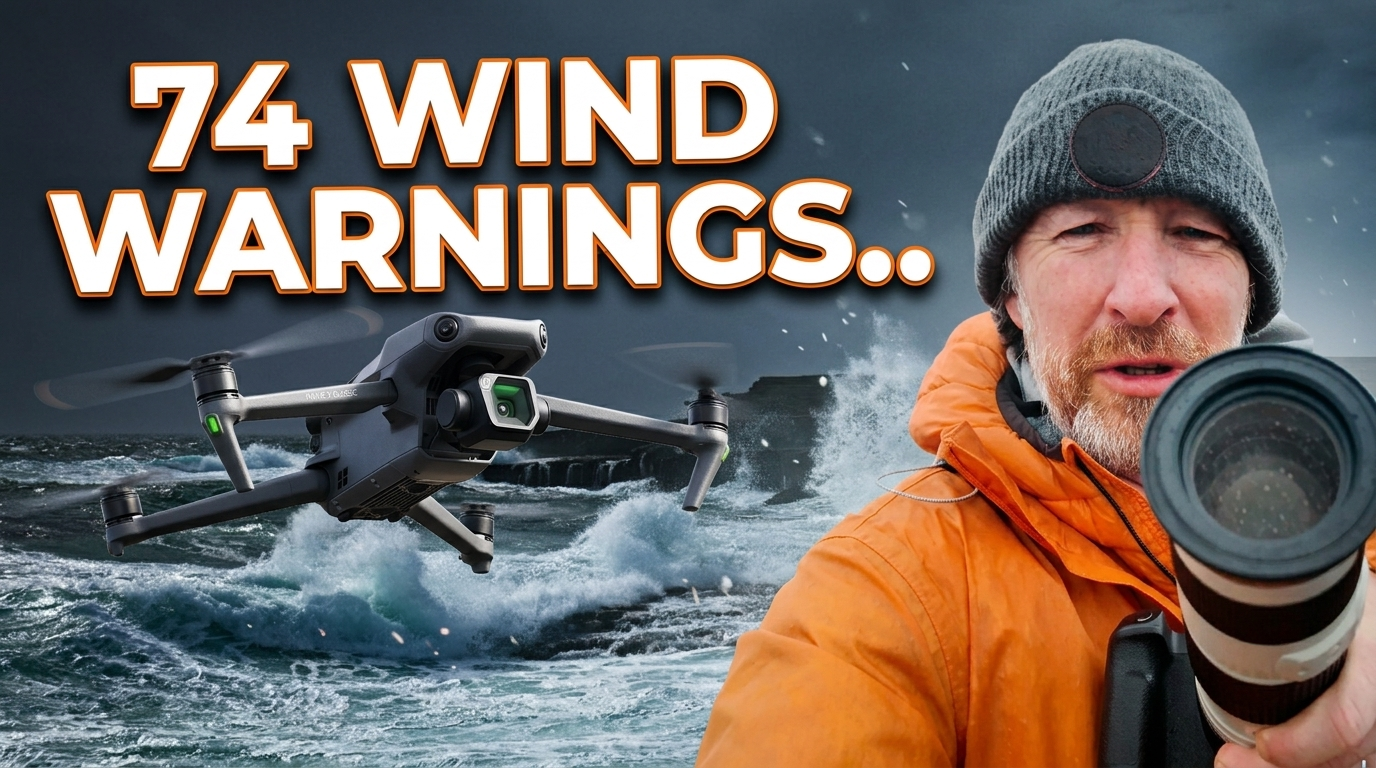
Then, despite receiving repeated warnings from his drone controller, he launched his drone into the air.
At one point the controller recorded 74 separate wind warnings.
Most people would probably have landed immediately.
Diarmuid carried on.
To be fair, the footage looked incredible. The aerial perspective highlighted the geometry of the coastline and showed the interaction between the waves and the cliffs in a way that simply cannot be appreciated from the ground.
However, while the photography was improving, the weather was getting worse.
The rain intensified.
Visibility started to drop.
The tide continued rising.
And suddenly the reality of the situation became impossible to ignore.
We realised that not only had we failed to reach our intended destination, but if we had committed to heading directly towards the Wormhole earlier in the day, there was a very good chance we would have become trapped by the incoming tide and wave activity.
That realisation changed everything.
For around twenty minutes we debated our options. Could we wait out the rain? Would conditions improve? Was there still enough time to continue?
Eventually common sense won.
We retreated.
Sometimes photography is about perseverance. Sometimes it is about patience.
And sometimes it is about recognising that nature has already made the decision for you.
The Atlantic had given us an incredible experience and some memorable images, but it was also making it clear that the day was no longer ours to control.
We dried off, regrouped and prepared to return later when conditions became more manageable.
Looking back, it was unquestionably the correct decision.
The most important lesson from the day was not about camera settings, lenses or composition. It was about adaptability.
The conditions kept getting worse, but by responding to what the landscape was offering rather than stubbornly forcing our original plan, we still came away with photographs that told a story.
Sometimes the image you planned is not the image you take home.
And sometimes that turns out to be the better result.