
The Truth About Hit Rates In Landscape Photography
There’s a part of landscape photography that doesn’t get spoken about enough, and that’s the reality of how often things actually go right. When you look at a finished image, whether it’s printed, shared online, or used in a portfolio, it’s easy to assume consistency—that strong images come from every outing, that conditions align regularly, and that experienced photographers simply “get it right” more often.
That isn’t how it works.
Hit rate in landscape photography is low. It always has been, and it likely always will be. And understanding that properly—accepting it rather than resisting it—is one of the most important shifts you can make if you want to stay consistent, improve your work, and avoid losing motivation.
There’s a well-known perspective from Ansel Adams, who suggested that if he produced around a dozen truly good images in a year, that would be considered a strong output. That’s not twelve outings. That’s twelve images. Across an entire year of work.
That figure is often repeated, and while it may not be an exact measurable statistic, it aligns with the broader reality of photography at a high level. The idea is simple: quality work is rare, even for those who are highly skilled and deeply experienced.

The Expectation vs The Reality
When you head out with the camera, especially if you’ve planned the shoot, checked the weather, scouted the location, and committed time to it, there’s an expectation attached to that effort. You want something to come from it. You want a result.
But landscape photography doesn’t operate on effort alone. It’s influenced by variables you don’t control—weather, light direction, cloud formation, atmospheric clarity, tide, seasonal changes, and even simple timing.
You can do everything right and still come away with nothing.
That’s where many photographers start to struggle. They measure success based on outcome rather than process. If the image isn’t there, the shoot is seen as a failure.
That thinking doesn’t hold up over time.
Redefining Success
If your definition of success is tied only to capturing a strong final image, your hit rate will always feel disappointing. It doesn’t matter how good you become.
Instead, the shift needs to happen in how you measure progress:
Did you understand the conditions better than last time?
Did you improve your composition, even if the light didn’t cooperate?
Did you learn something about the location that will help in future?
Did you show up when it would have been easier not to?
These are all part of the process. And more importantly, they are the foundation that increases your hit rate over time.
Because hit rate is not just about luck. It’s about repetition, familiarity, and decision-making.

The Journey Matters More Than the Outcome
There’s a tendency to focus only on the destination—the final image, the result, the moment when everything aligns. But the reality is that most of your time in landscape photography is spent in the build-up to that moment.
Driving long distances. Walking in the dark. Waiting in poor conditions. Standing in the rain. Getting it wrong.
Those parts aren’t separate from the result—they are the process that leads to it.
The journey is often rough. It can be uncomfortable, frustrating, and at times disappointing. You might visit the same location multiple times without capturing anything usable. You might miss the light by minutes. You might arrive to find conditions completely different to what was forecast.
But those experiences are not wasted.
They build familiarity. They sharpen your awareness. They make you more prepared for the moment when things do come together.
And when that moment arrives, the value of the image is directly tied to everything that came before it.
Why Low Hit Rate is a Good Thing
It might sound counterintuitive, but a low hit rate is not a problem to solve. It’s a characteristic of the craft.
If every outing resulted in a strong image, there would be no challenge. And without challenge, there’s no progression.
A low hit rate forces you to:
Be more selective with your compositions
Pay closer attention to conditions
Return to locations multiple times
Reflect on what worked and what didn’t
Stay patient
These are all traits that define strong photographers.
If your hit rate feels low, it doesn’t mean you’re doing something wrong. In many cases, it means you’re engaging with the process properly.

Managing Frustration
The difficulty isn’t the low hit rate itself—it’s how you respond to it.
Frustration usually comes from expectation. You expect results because of the time you’ve invested. And when those results don’t appear, it creates a sense of imbalance.
To manage that, you need to remove the assumption that effort guarantees outcome.
Instead, approach each shoot with a different mindset:
You’re there to observe.
You’re there to learn.
You’re there to be present in the conditions.
If a strong image comes from it, that’s the outcome. But it’s not the requirement.
This approach doesn’t lower your standards. It stabilises your expectations.
Building Consistency Over Time
Consistency in landscape photography doesn’t come from getting great results every time. It comes from showing up repeatedly, regardless of outcome.
The more you go out, the more patterns you start to recognise:
How light behaves in certain locations
How weather systems develop and change
How compositions shift with small movements
How timing affects everything
This is where your hit rate improves—not because conditions suddenly become better, but because your understanding of them deepens.
Over time, you begin to anticipate rather than react.
And that’s where the shift happens.
The Reward is in the Chase
When everything aligns—the light, the composition, the atmosphere—it stands out because of how rare it is.
That rarity is what gives the image value.
If those moments happened every time, they would lose their significance.
The challenge, the failed shoots, the missed opportunities—these are not obstacles. They are part of the structure that makes the successful images meaningful.
The reward isn’t just the final image. It’s the process of getting there.
Finally
If you’re measuring your photography based on how many successful images you come home with, you’re working against the nature of the craft.
Hit rate is low. It always has been.
What matters is whether you continue to show up, continue to learn, and continue to engage with the process.
Because over time, that’s what builds the work—not one shoot, but all of them combined.
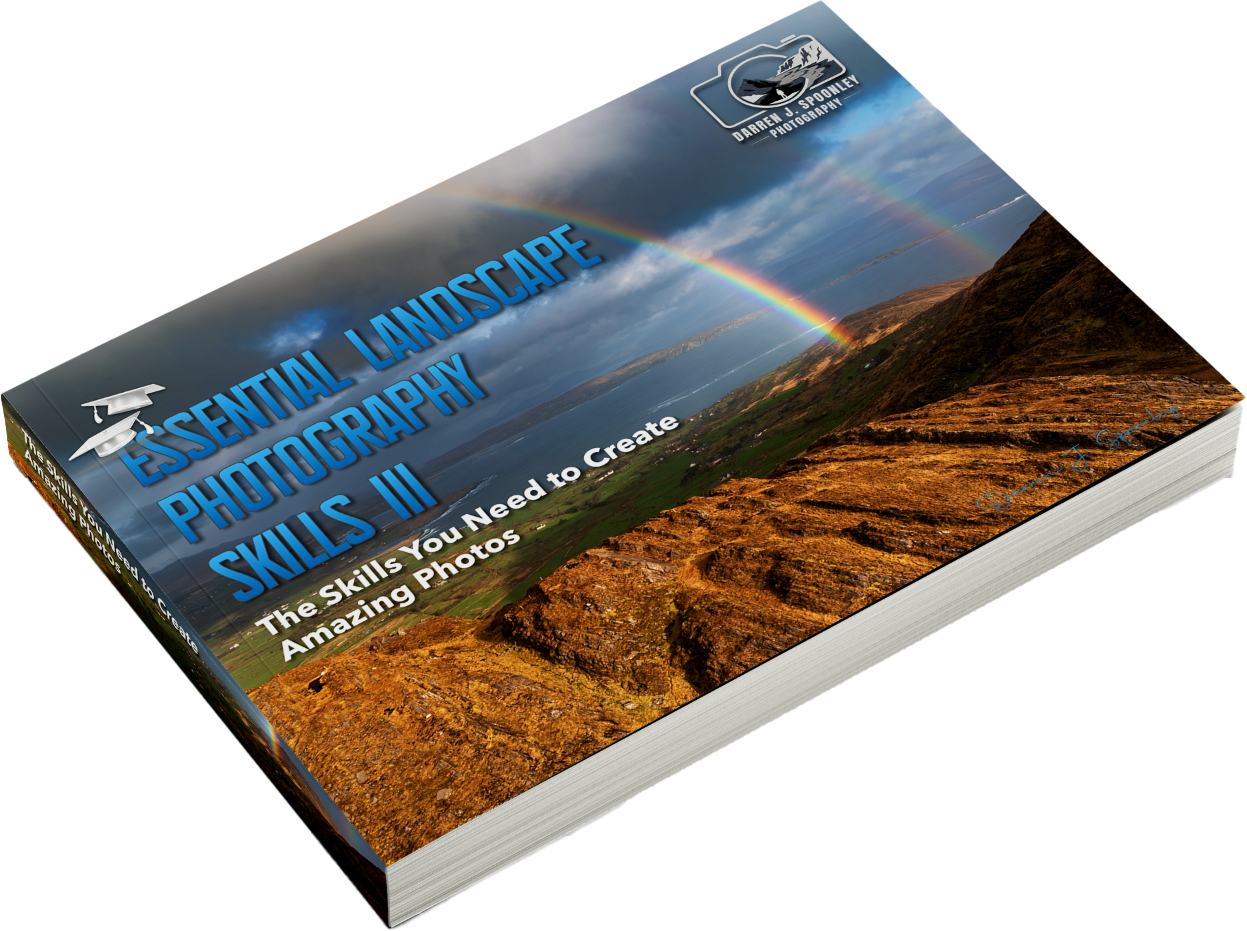
GET THIS BOOK FOR FREE !!
JOIN MY NEWSLETTER FOR YOUR EXCLUSIVE DISCOUNT CODE
Building on the foundational knowledge you gained in Essential Landscape Photography Skills, Volume 1, and the more advanced techniques and broader insights explored in Volume 2, I’m excited to bring you the final part of this photographic journey.
Having continued to explore countless dramatic coastlines, remote areas, and ever-changing landscapes, I’ve kept building on the same core idea that has run through all three volumes — that most landscape photography challenges don’t come from a lack of information, but from what happens in the field in the moments after you arrive at a location.
Before the tripod is set up.
Before the composition is fully formed.
Before the first frame is taken.
That is where consistency is built… or lost.
To get Essential Landscape Photography Skills, Volume 3 for free, simply join my newsletter, and you will receive your download code to bring the cost of the book down to zero.
If you find value in this work and would like to support it, you can also choose to purchase the book for €4.99 as a “high five” contribution. It is completely optional, but it really helps support the time and effort that goes into creating these books and videos.
Download your copy today and complete the full trilogy.
Three volumes. Thirty chapters. One complete learning path — from foundations, through technical understanding, and into consistency in the field.
Continue shooting with greater clarity, more deliberate decisions, and a more consistent approach to your photography.