55 Minutes of Unplanned Photography That Turned Into Something Amazing
When I set out along the cliffs of Inis Mór that morning, the Black Fort was the destination.
Like most photography trips, there was a plan. We knew where we wanted to end up, we knew roughly how we would get there, and we knew what we hoped to photograph when we arrived. What we didn't know was that the journey would become far more memorable than the destination itself.
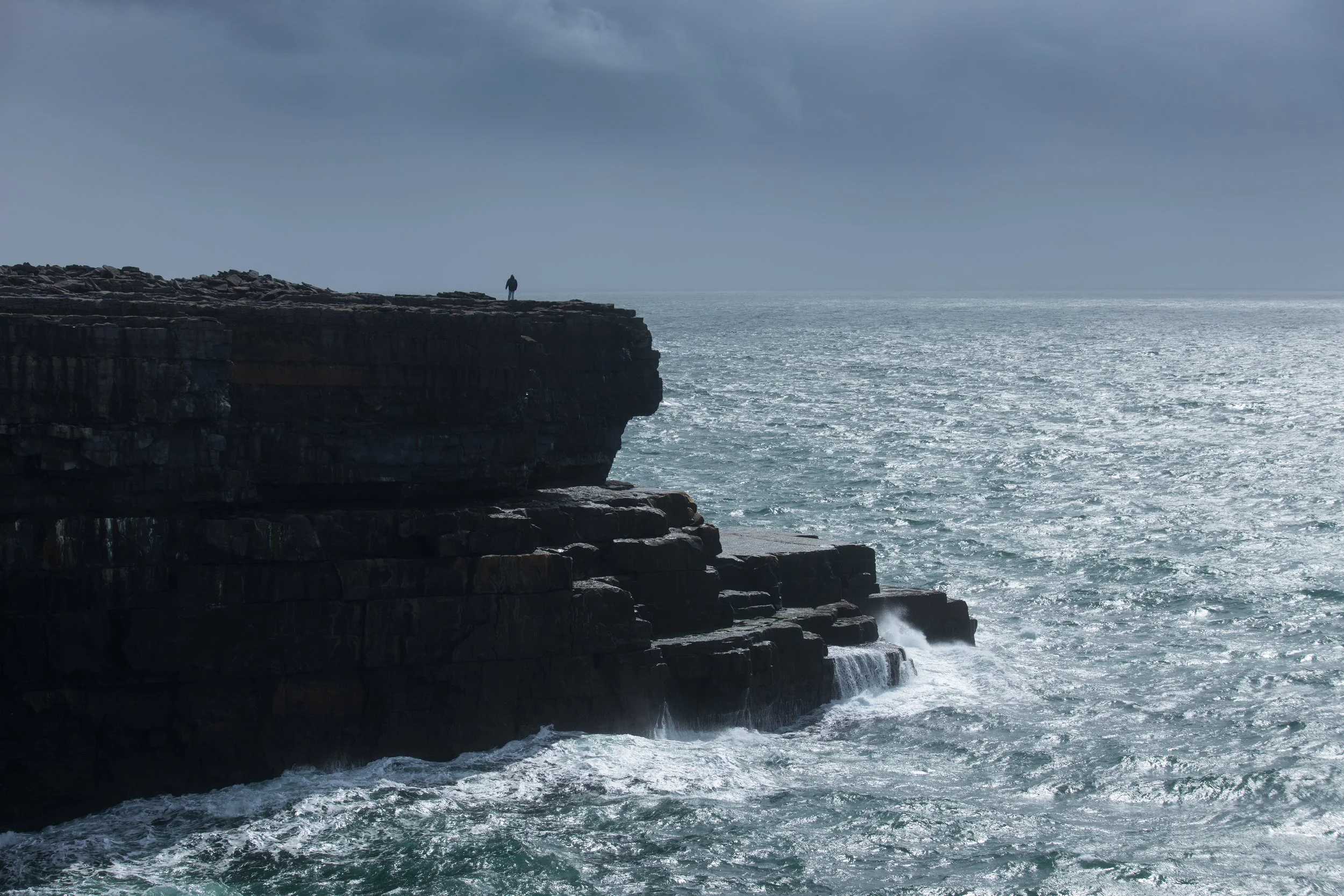
The weather had already been challenging. Rain had passed through the island during the previous day and again that morning, while strong Atlantic winds continued to sweep across the cliffs. Despite that, the conditions were creating opportunities rather than problems.
As we made our way along the coastline, the cliffs constantly changed character. Earlier in the day we had been photographing sections of limestone cliffs that followed relatively straight lines. They were impressive in their own right, with the layers of rock creating structure and leading lines throughout the landscape.
Then I rounded a corner.
What appeared in front of me immediately stopped me in my tracks.
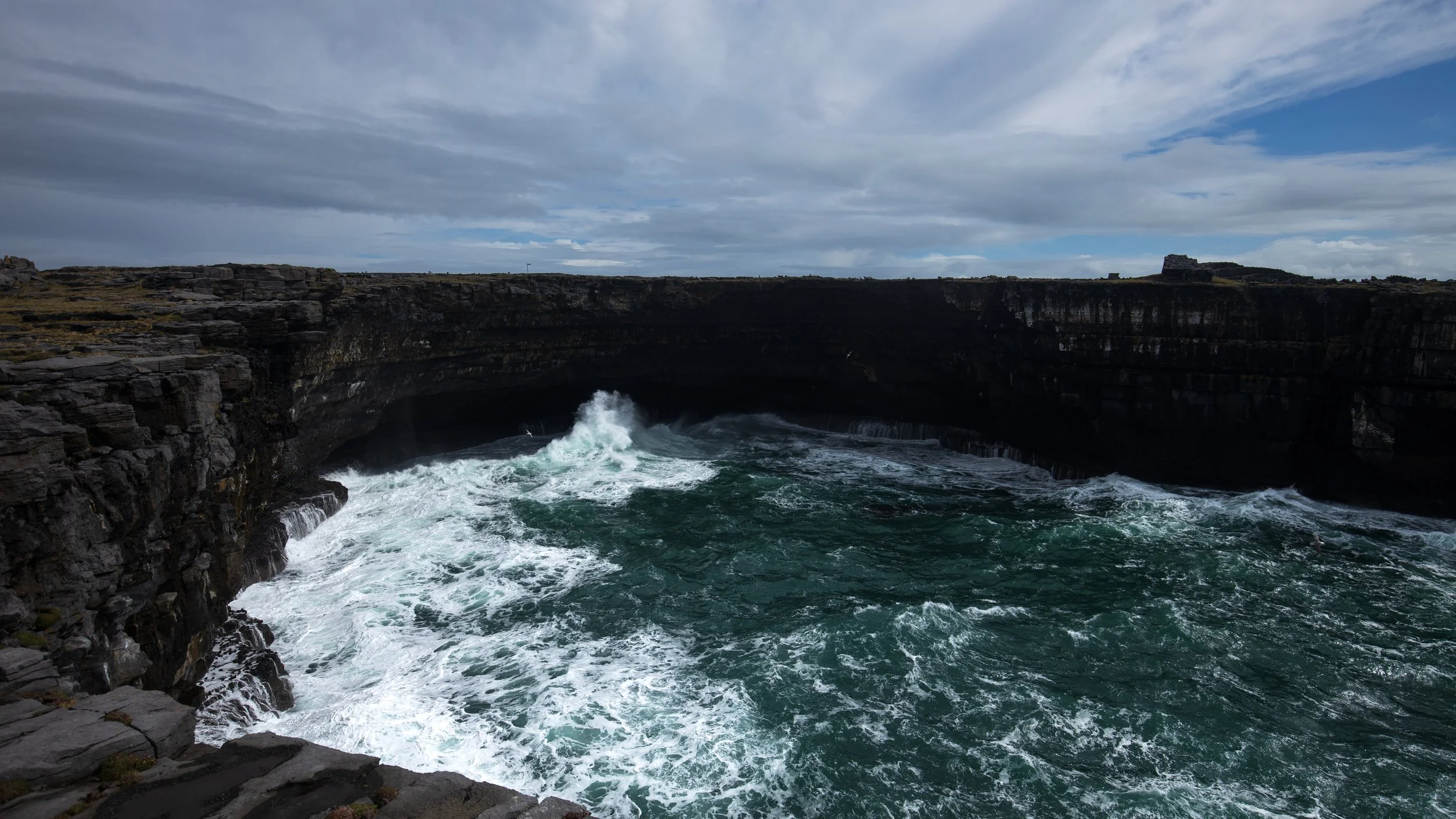
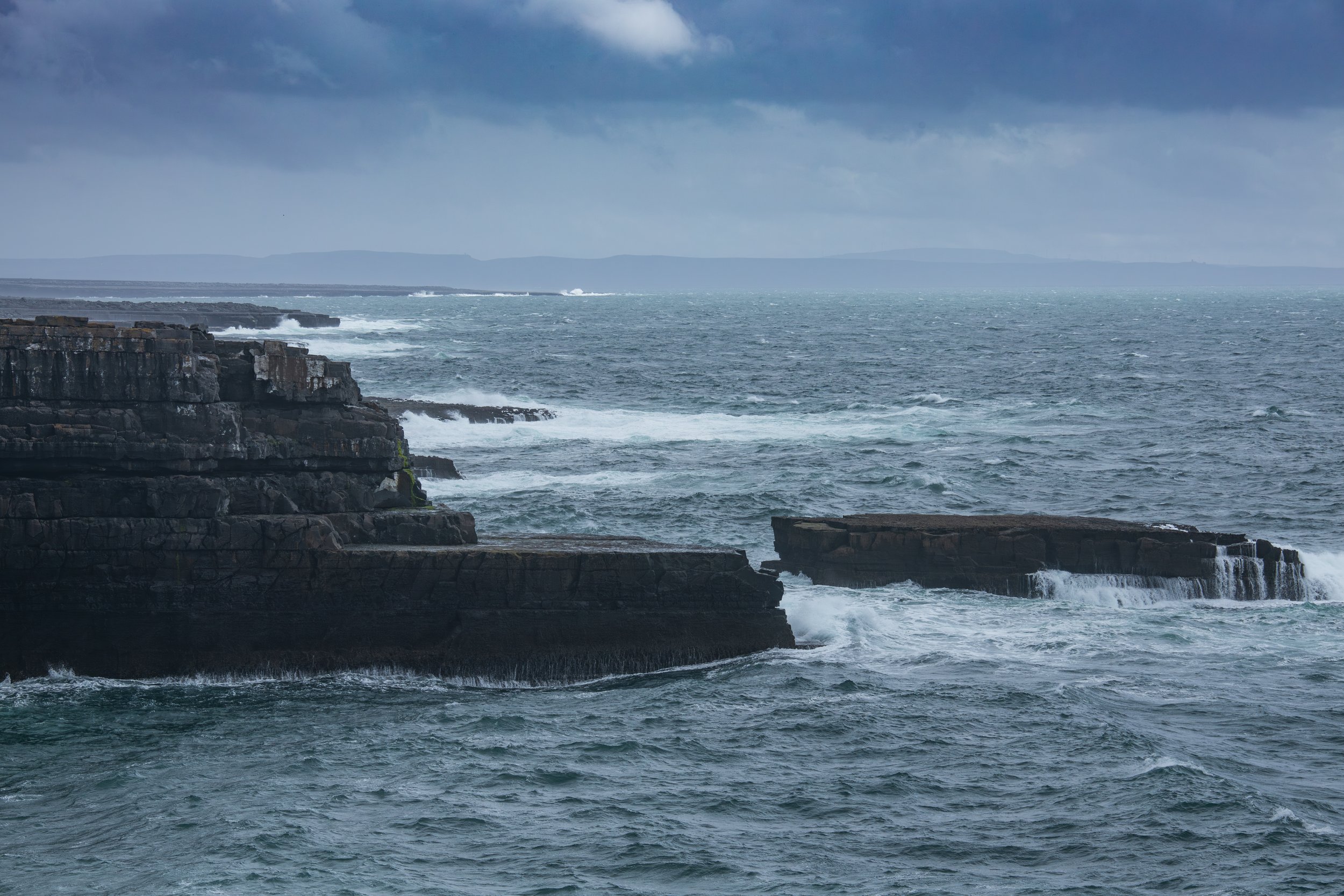
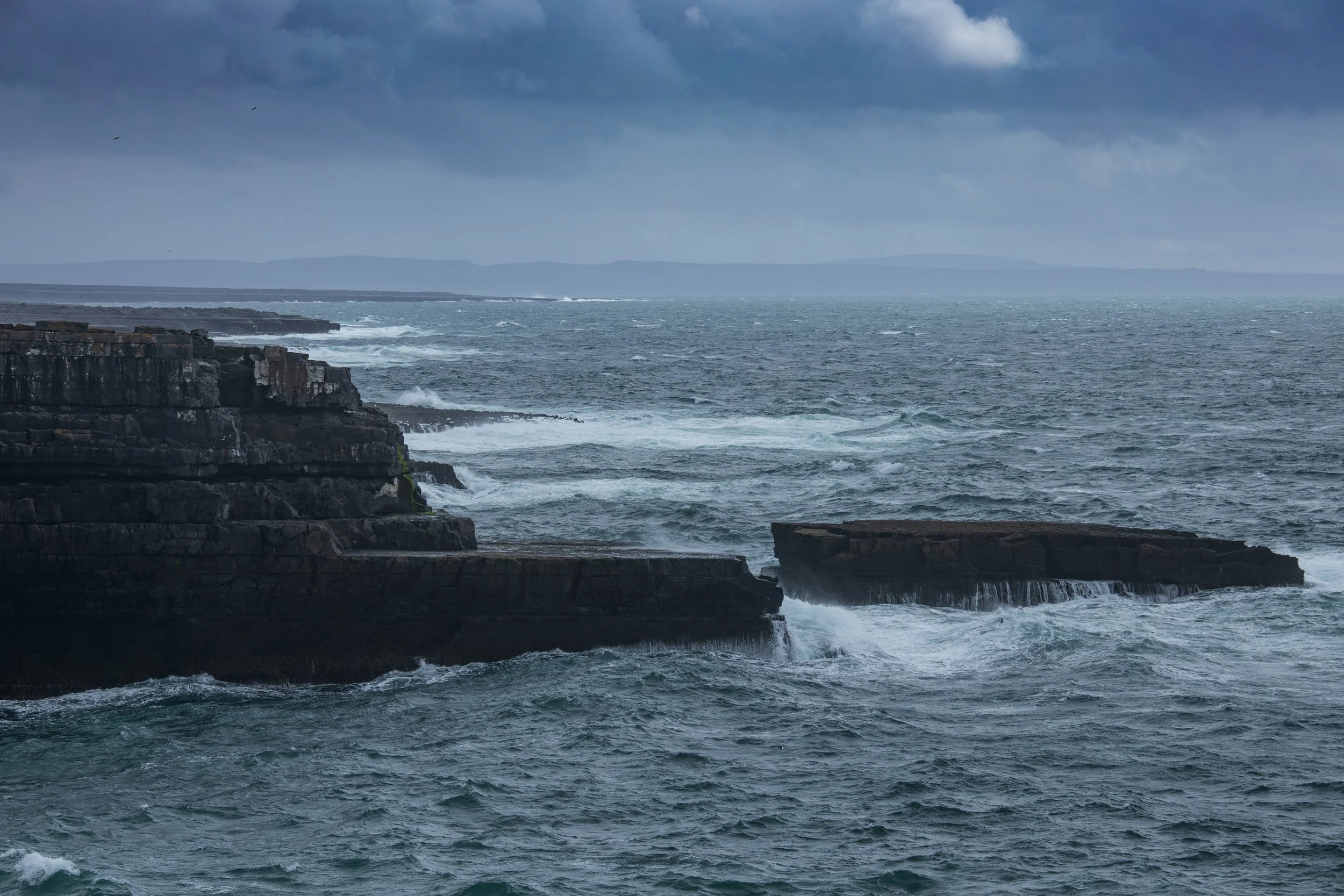
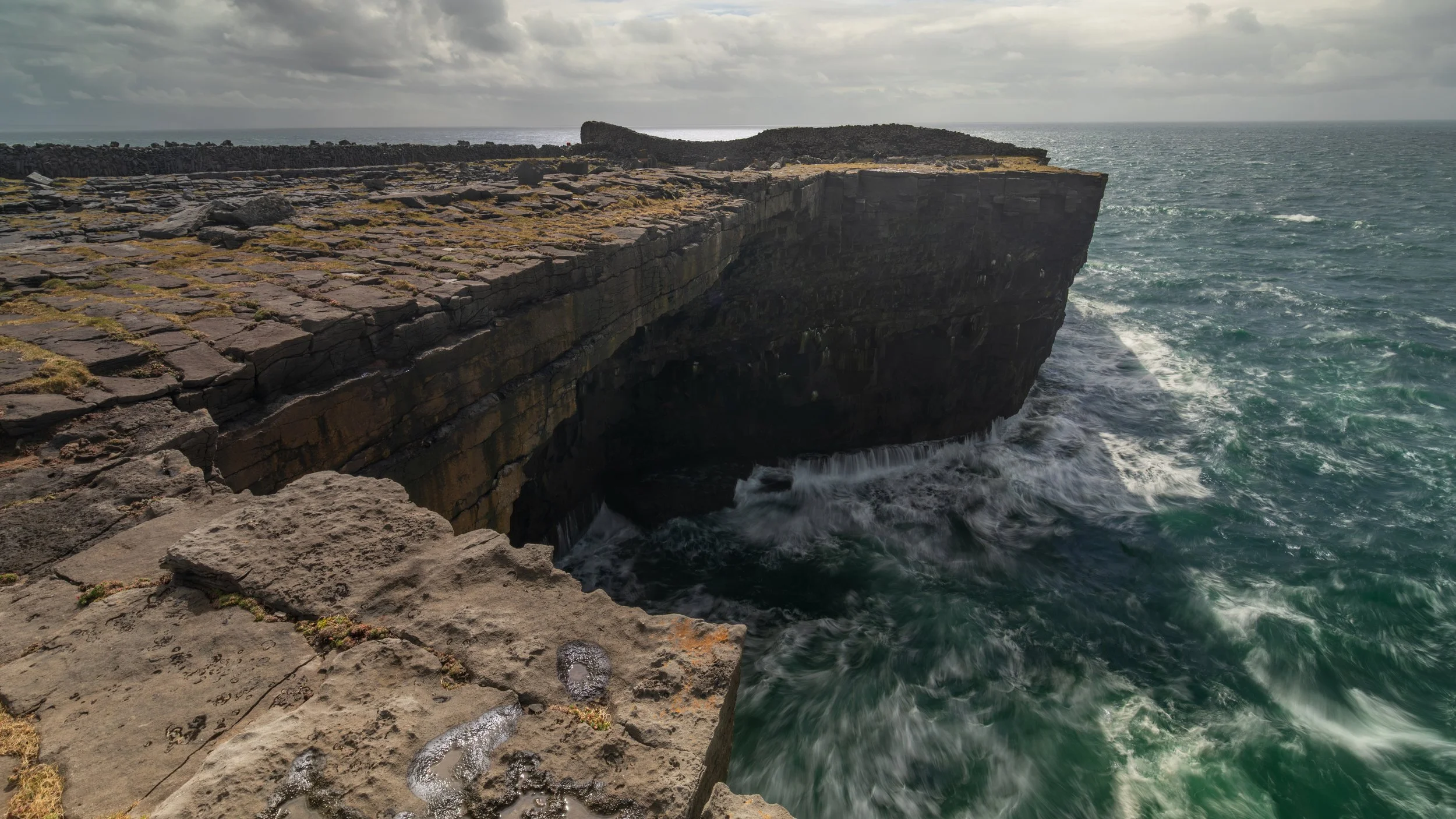
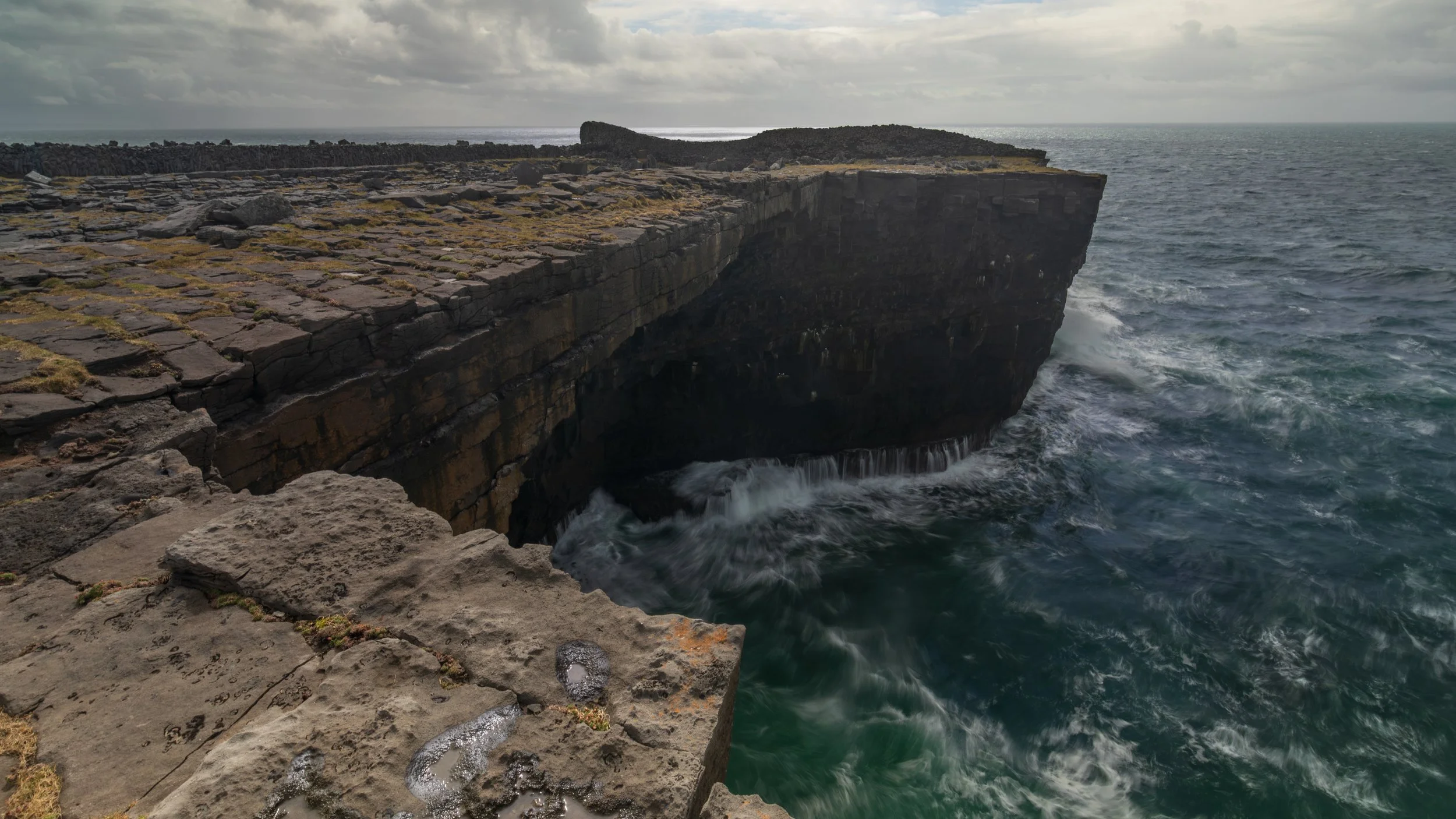
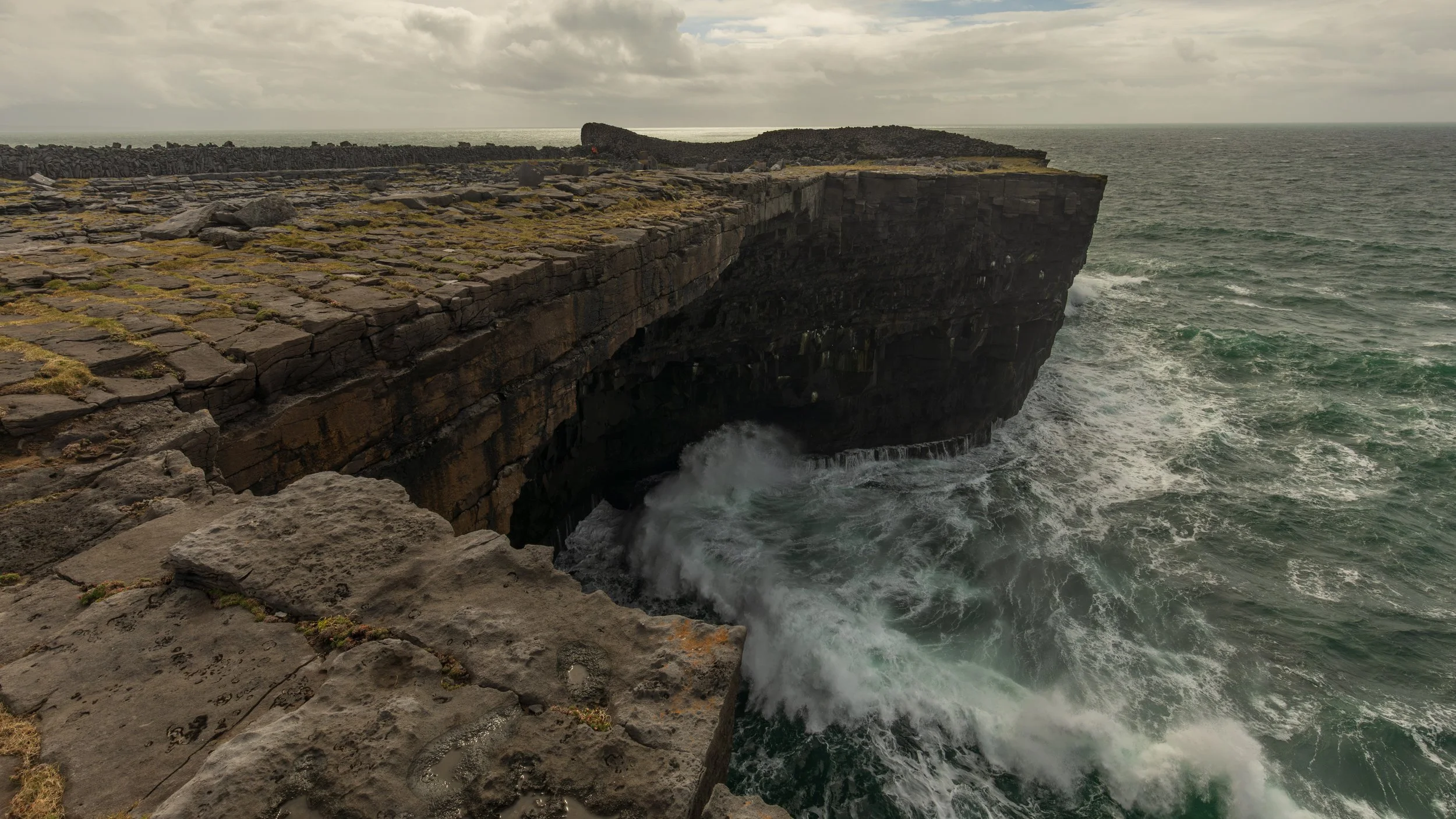
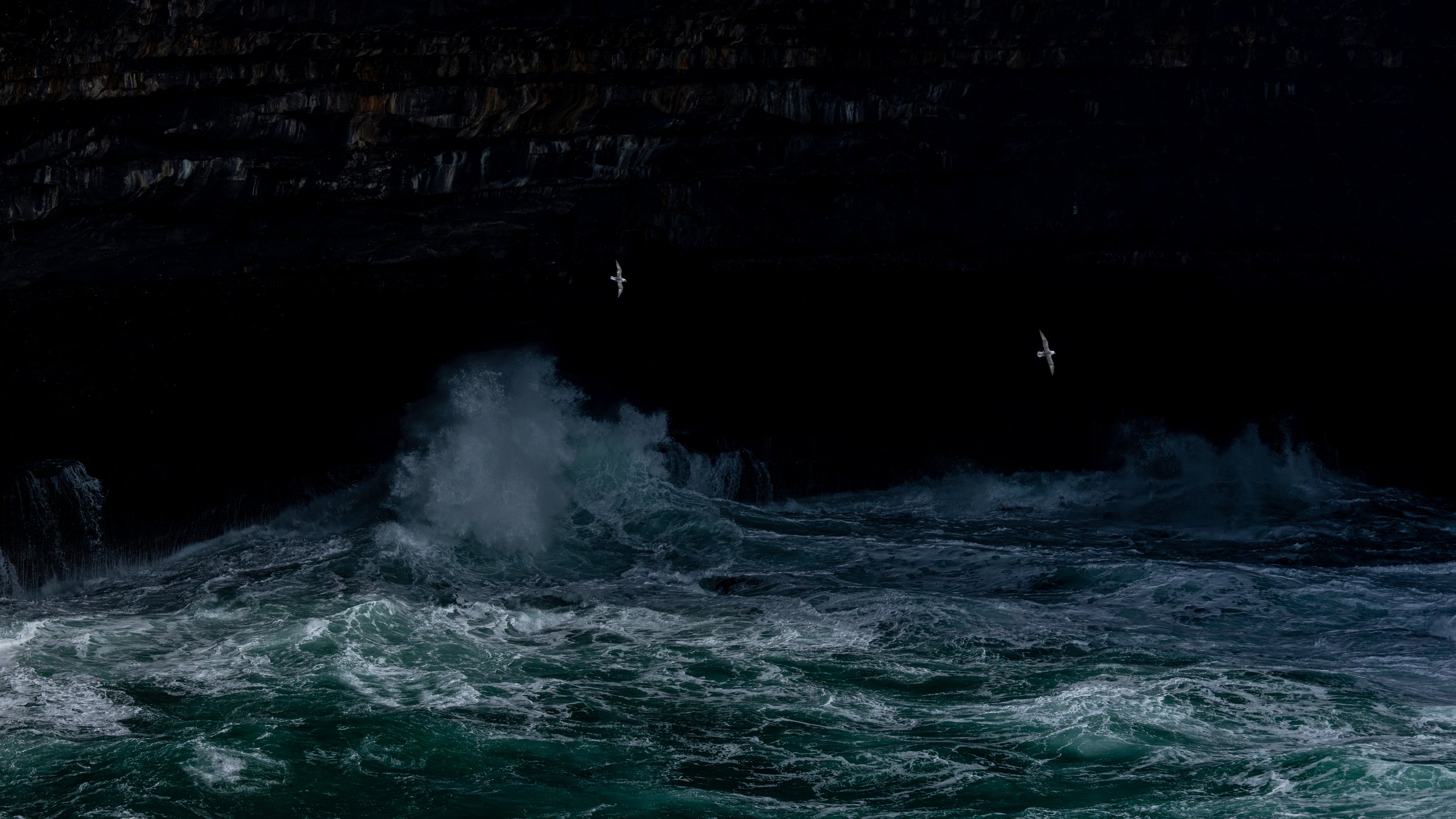
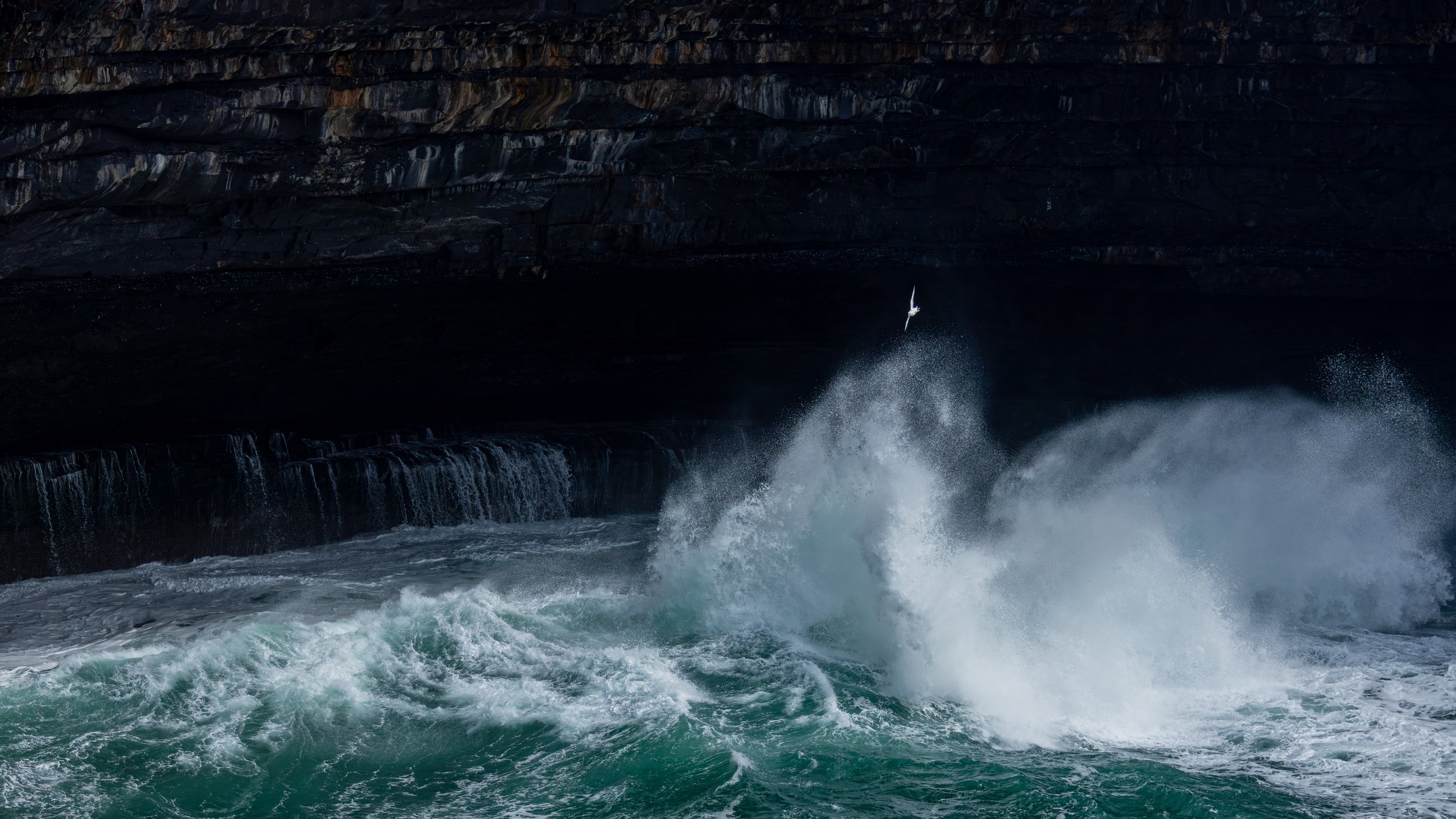
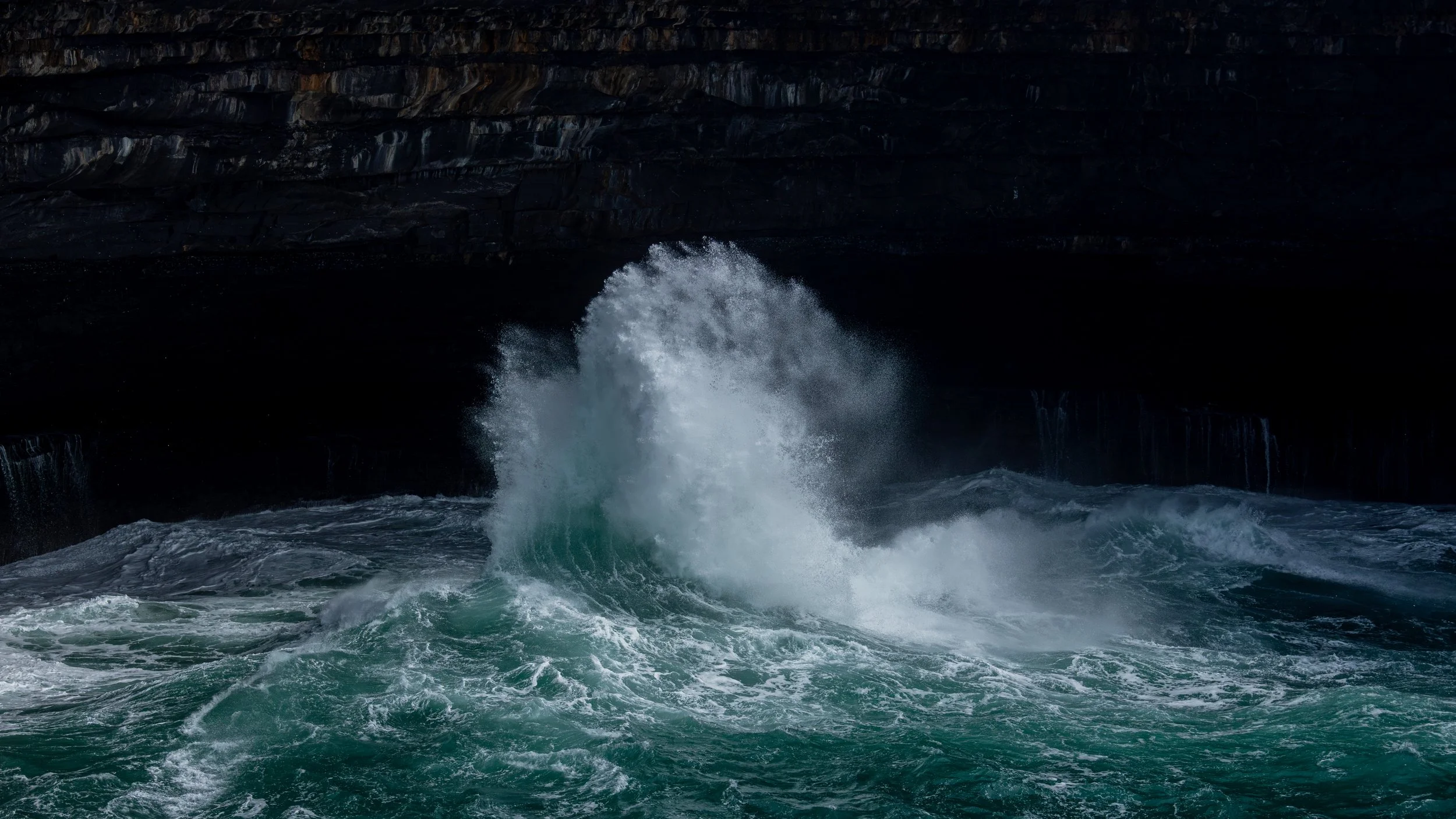
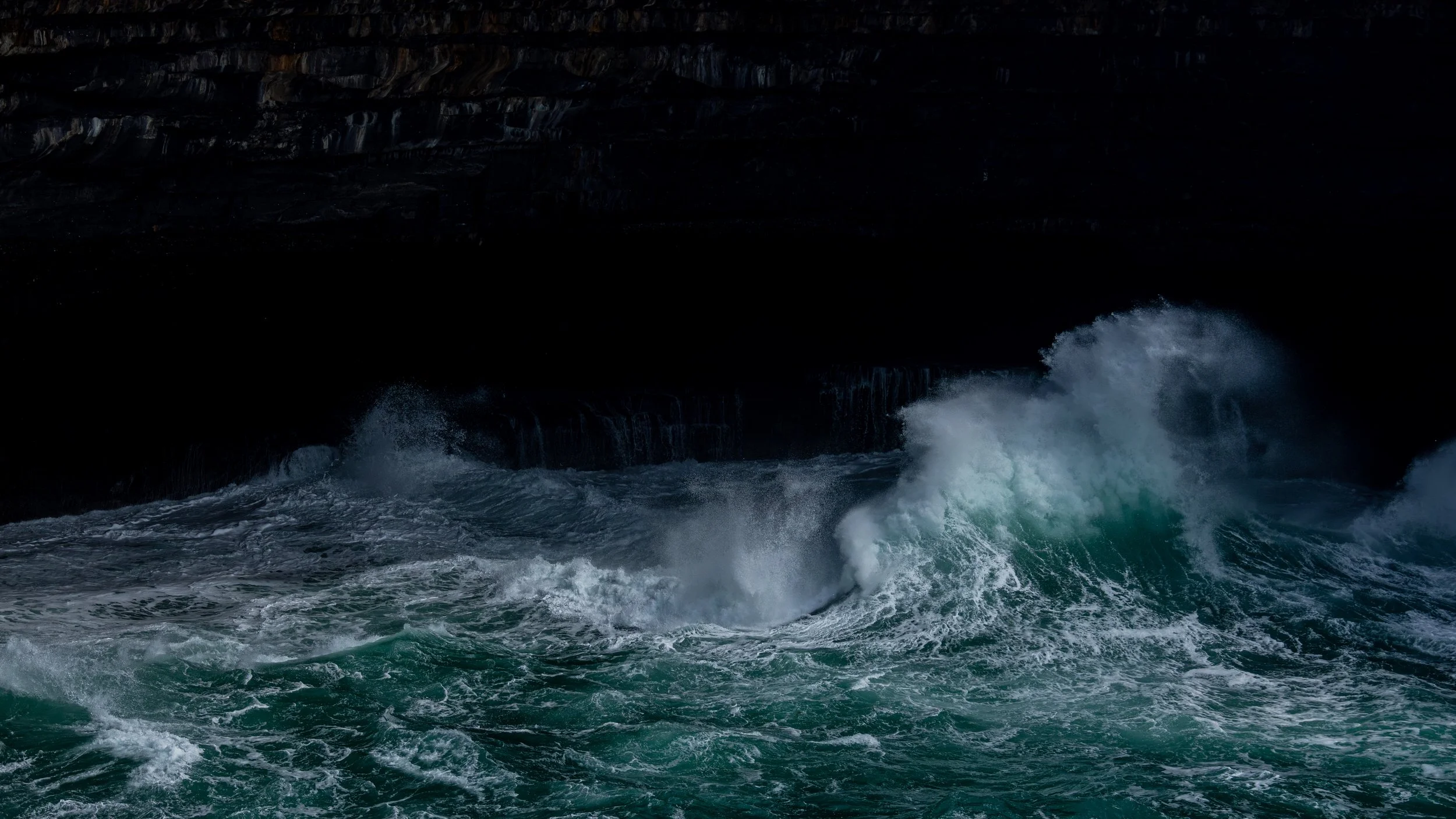
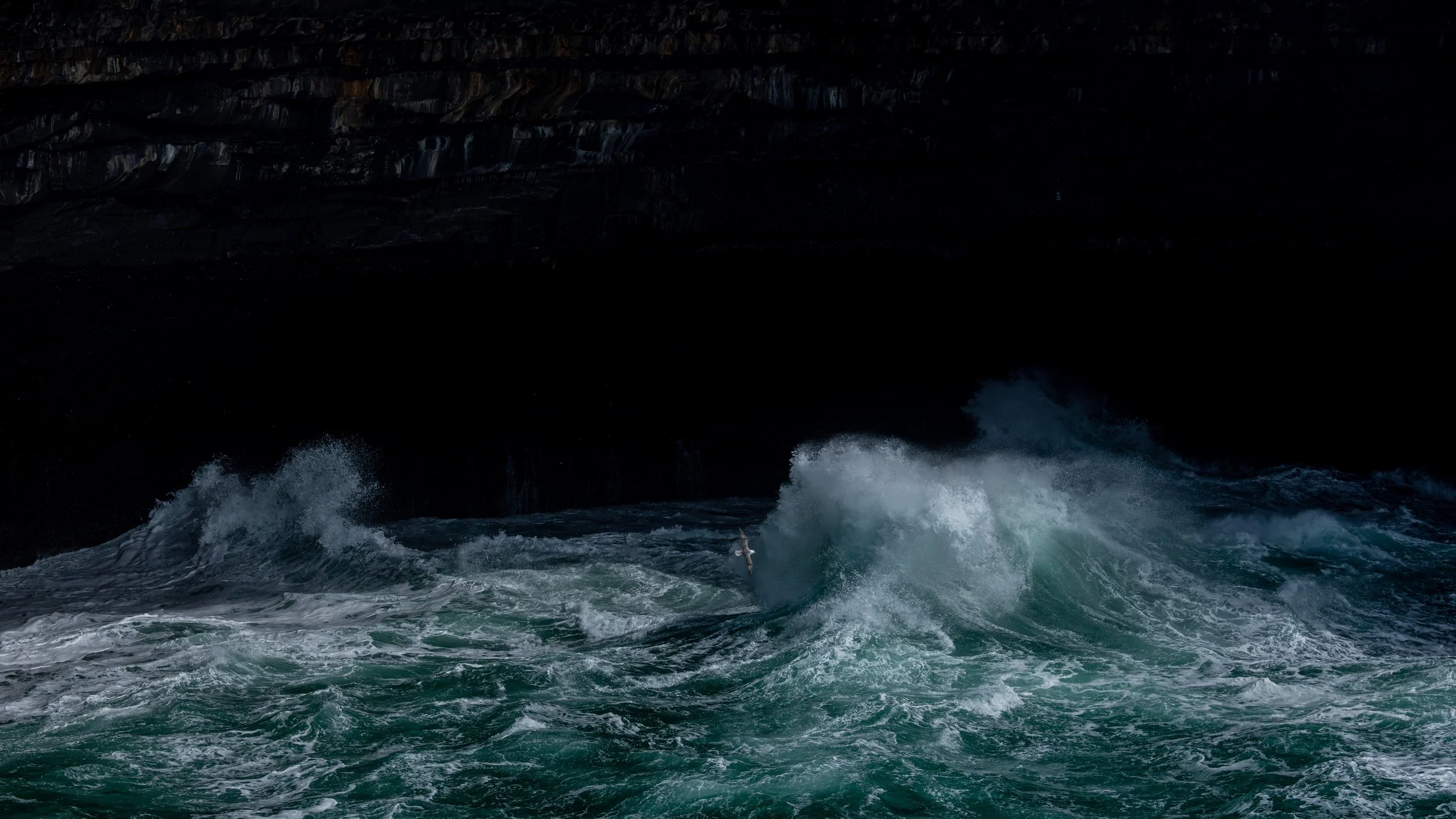
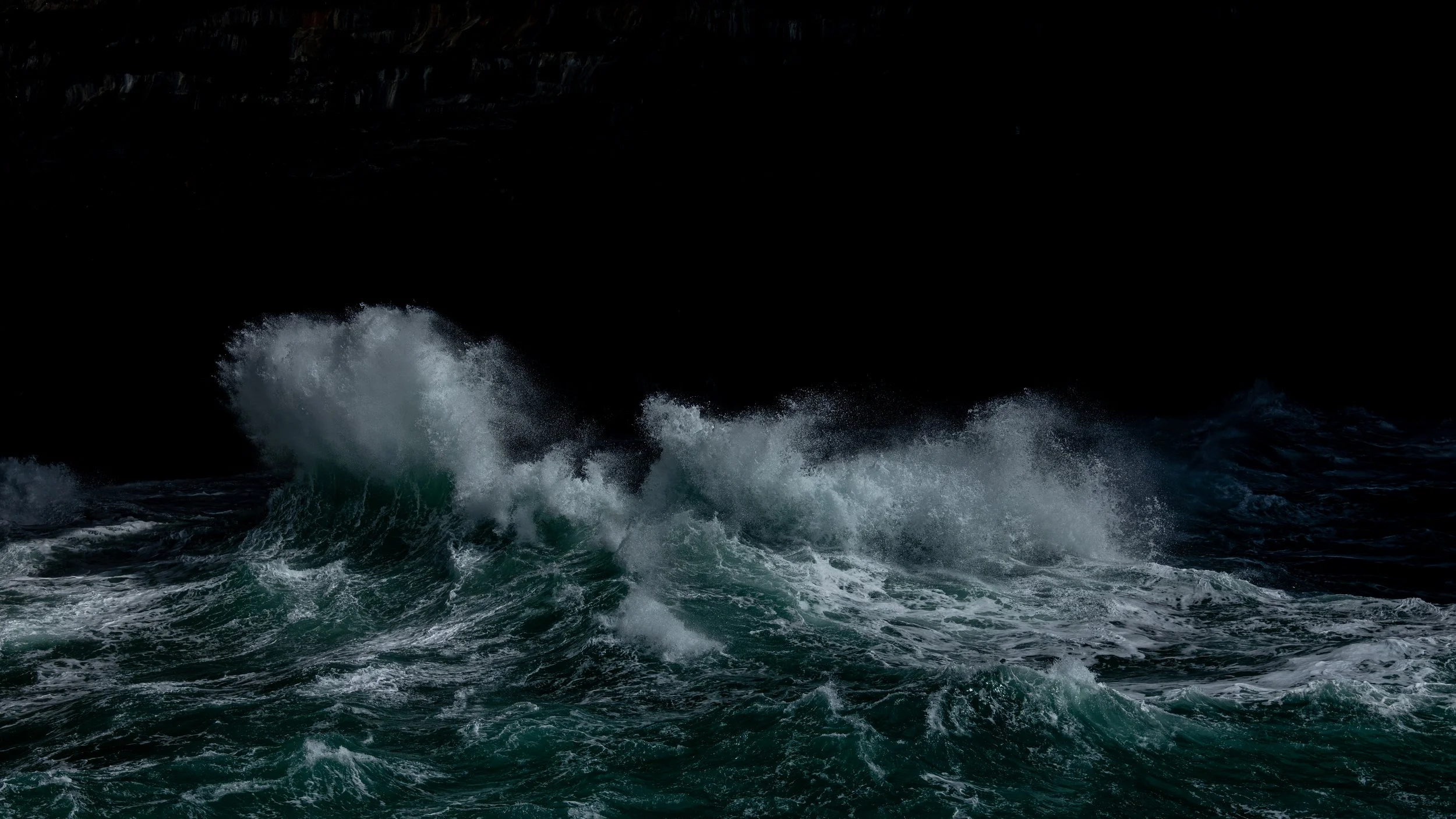
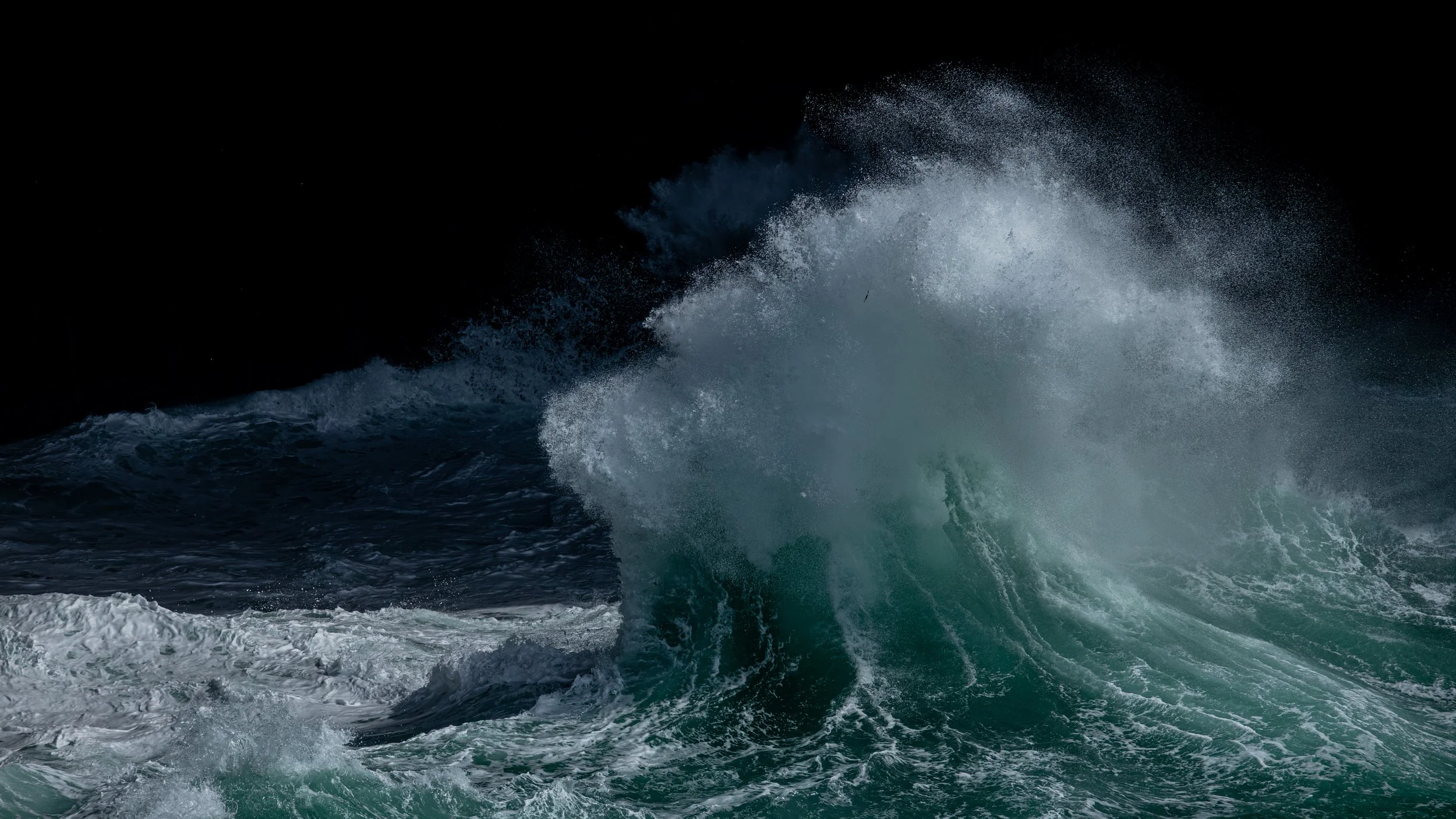
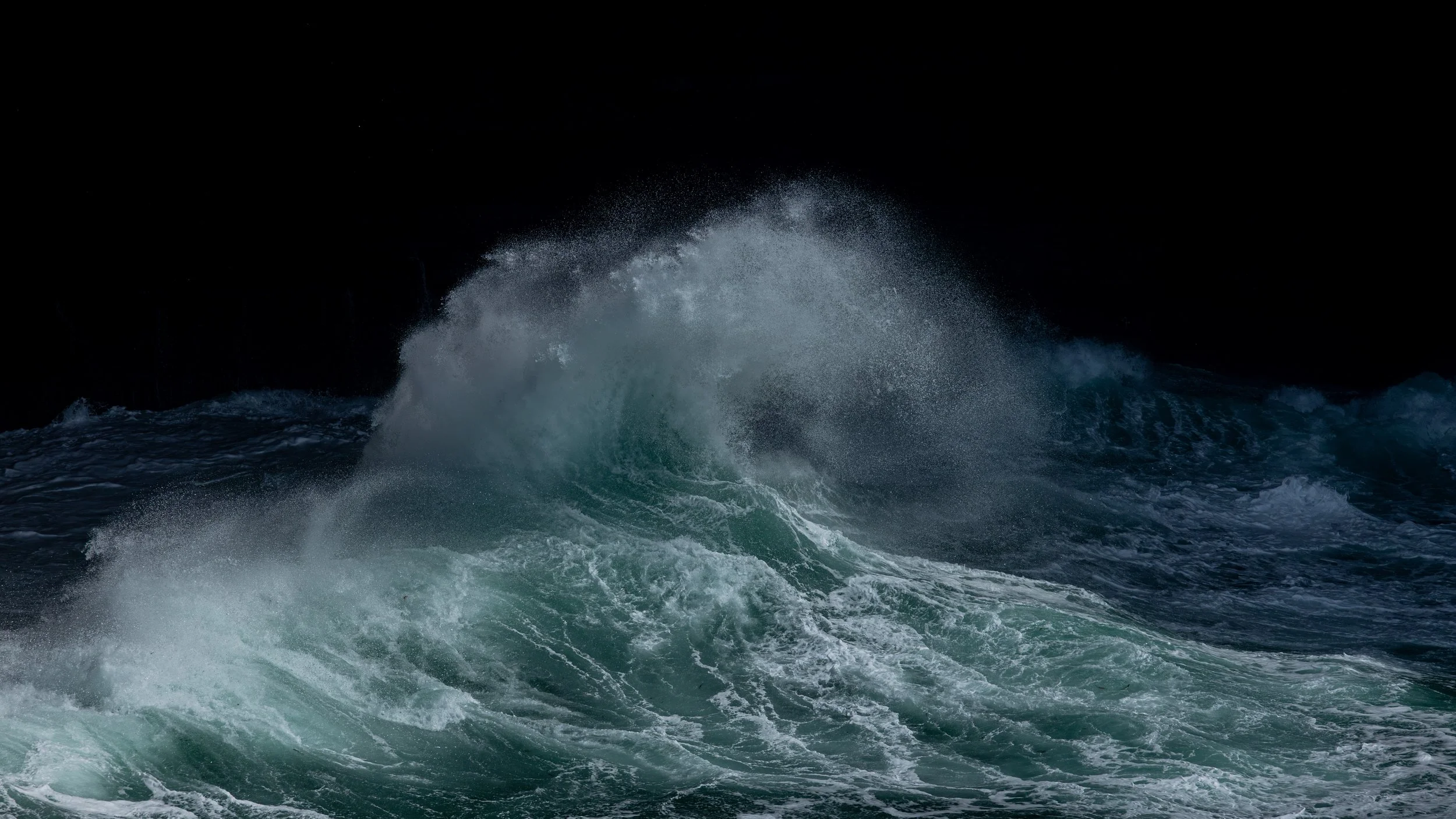
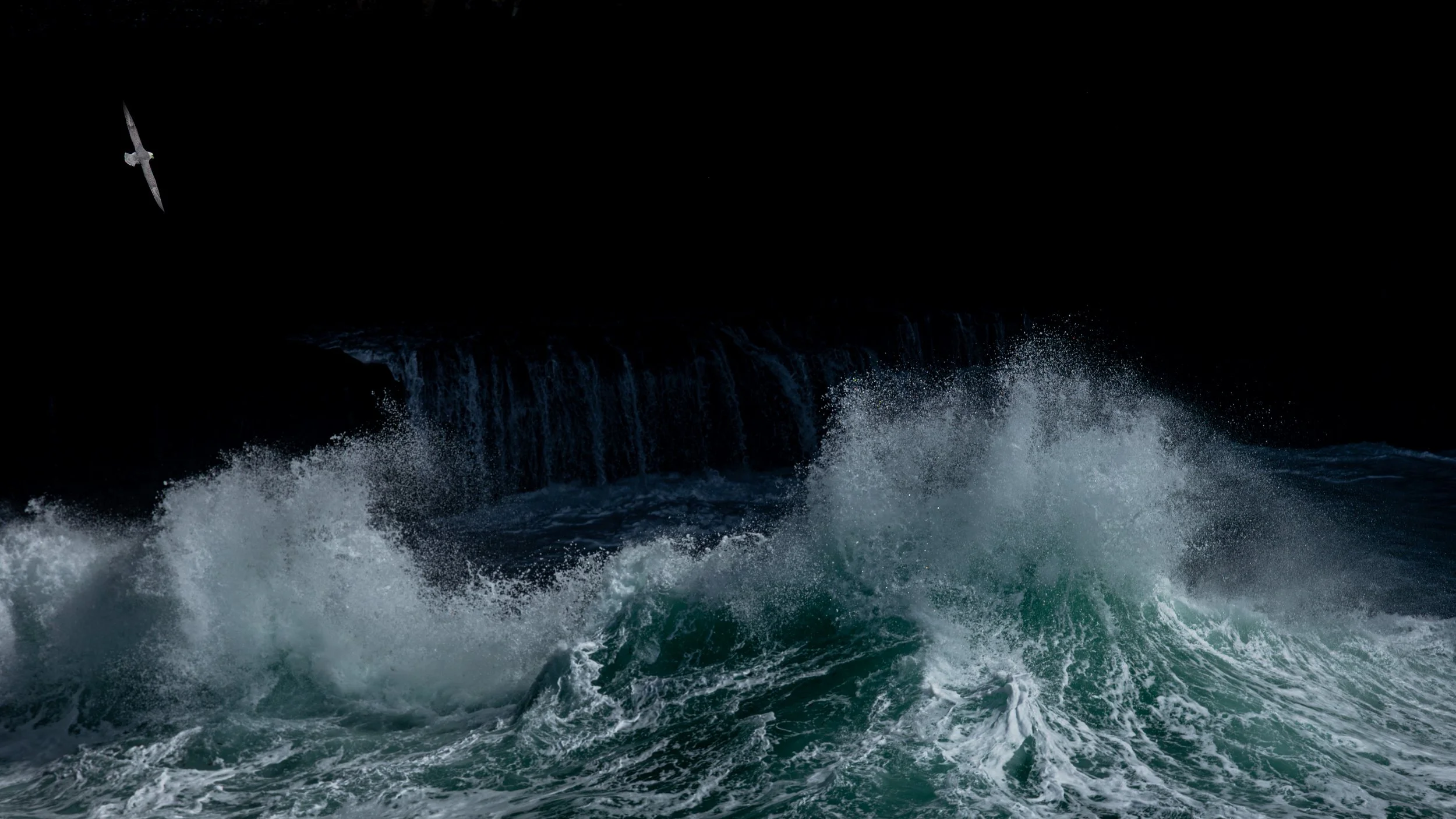
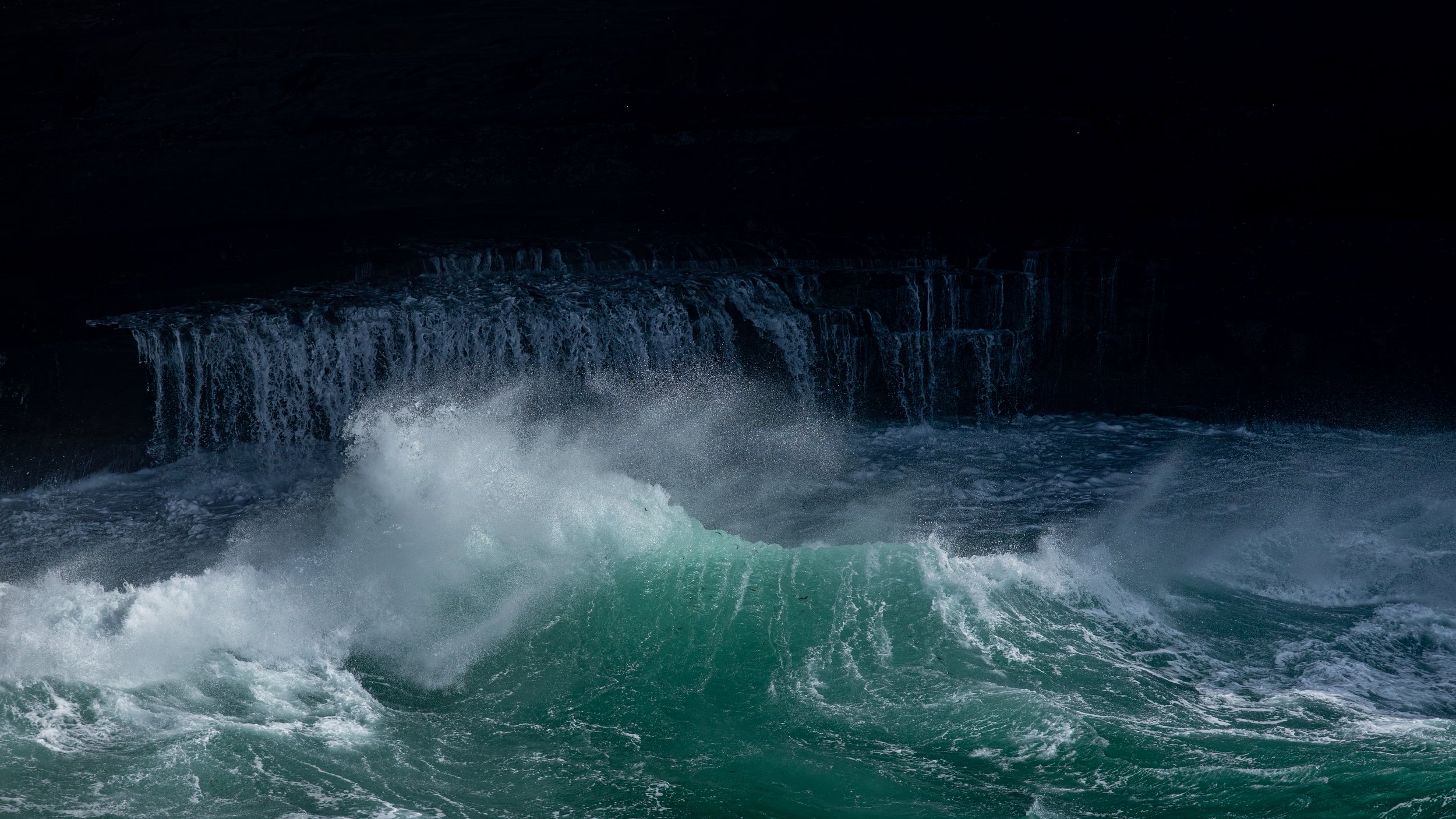
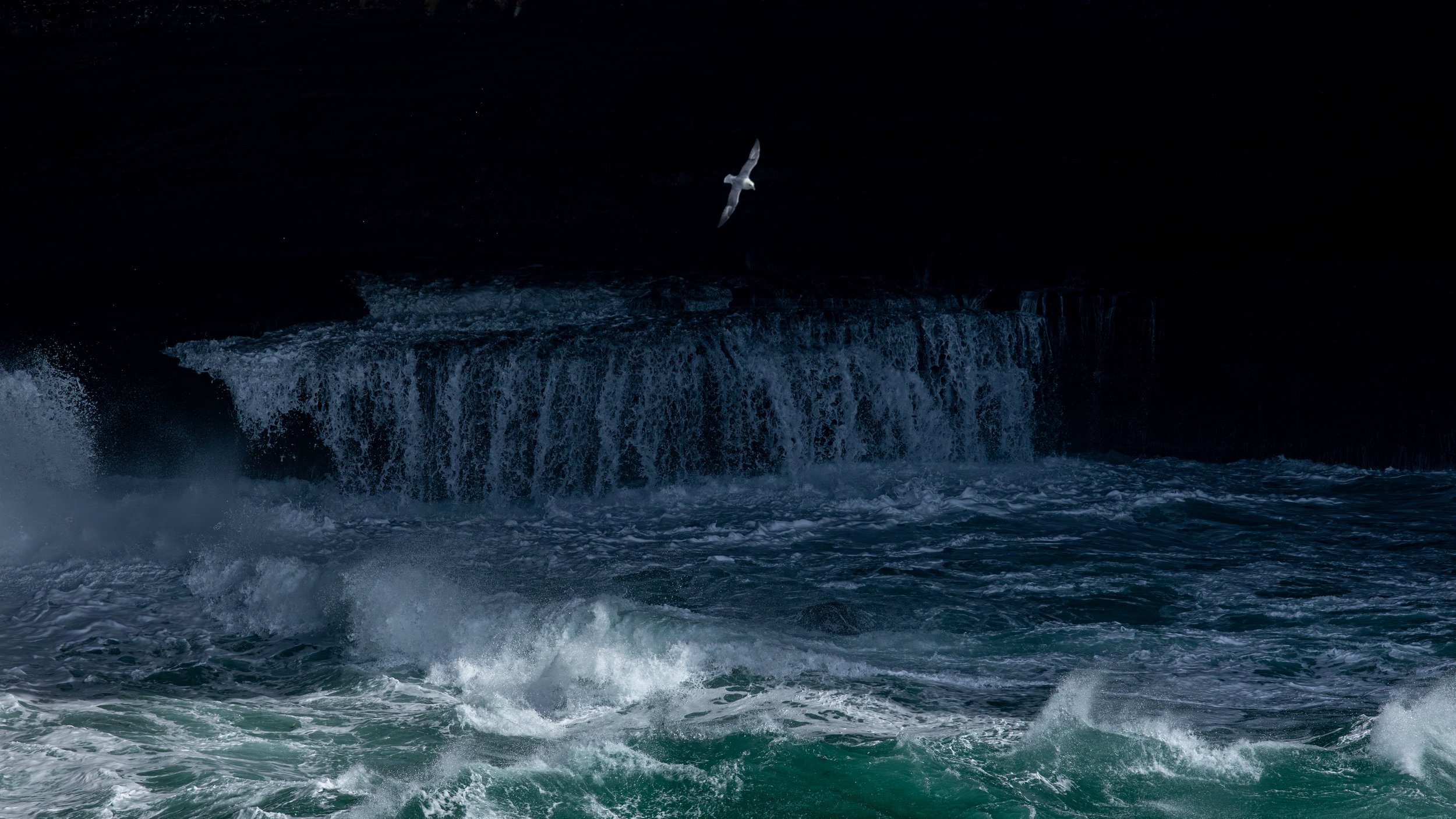
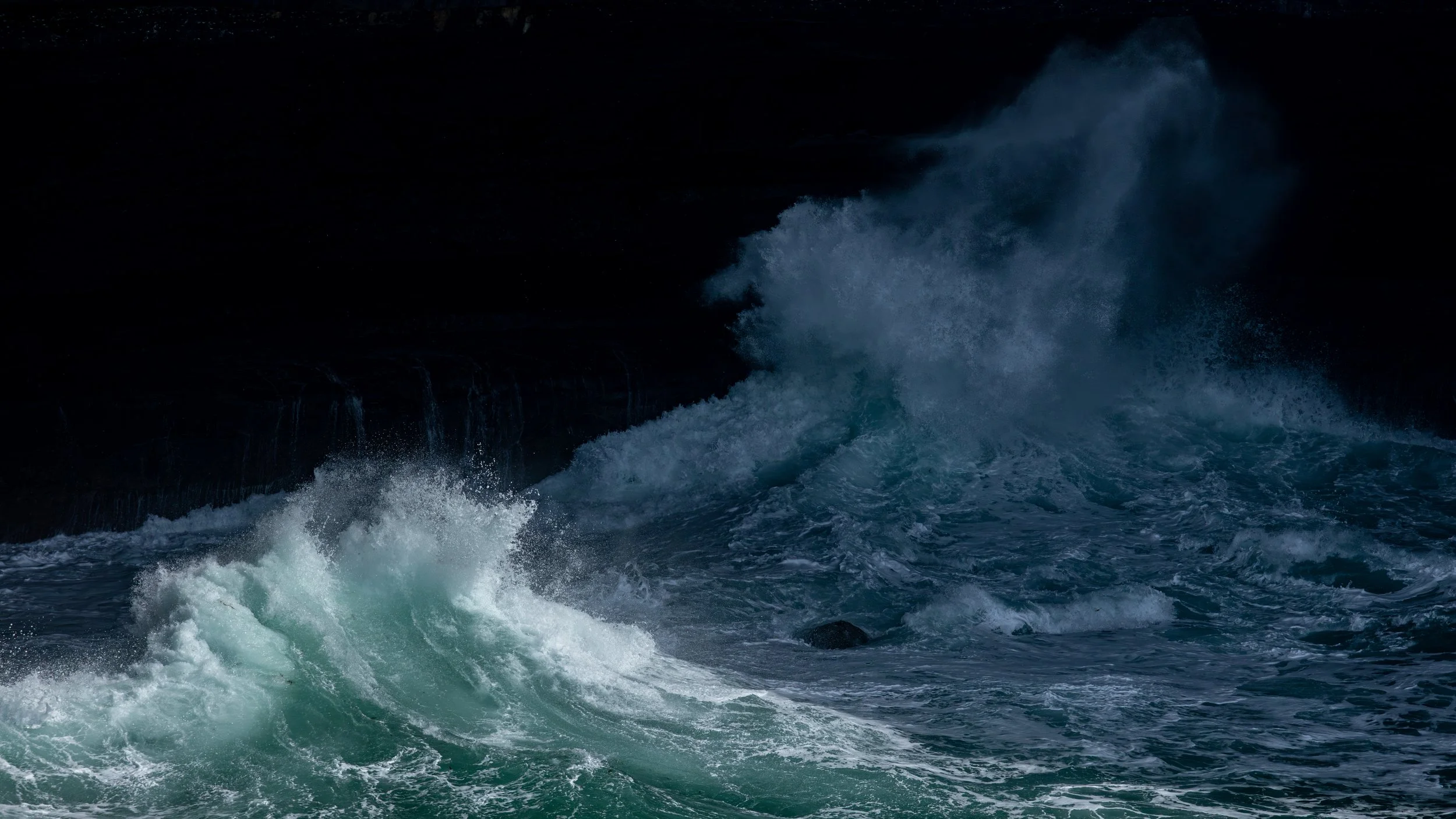
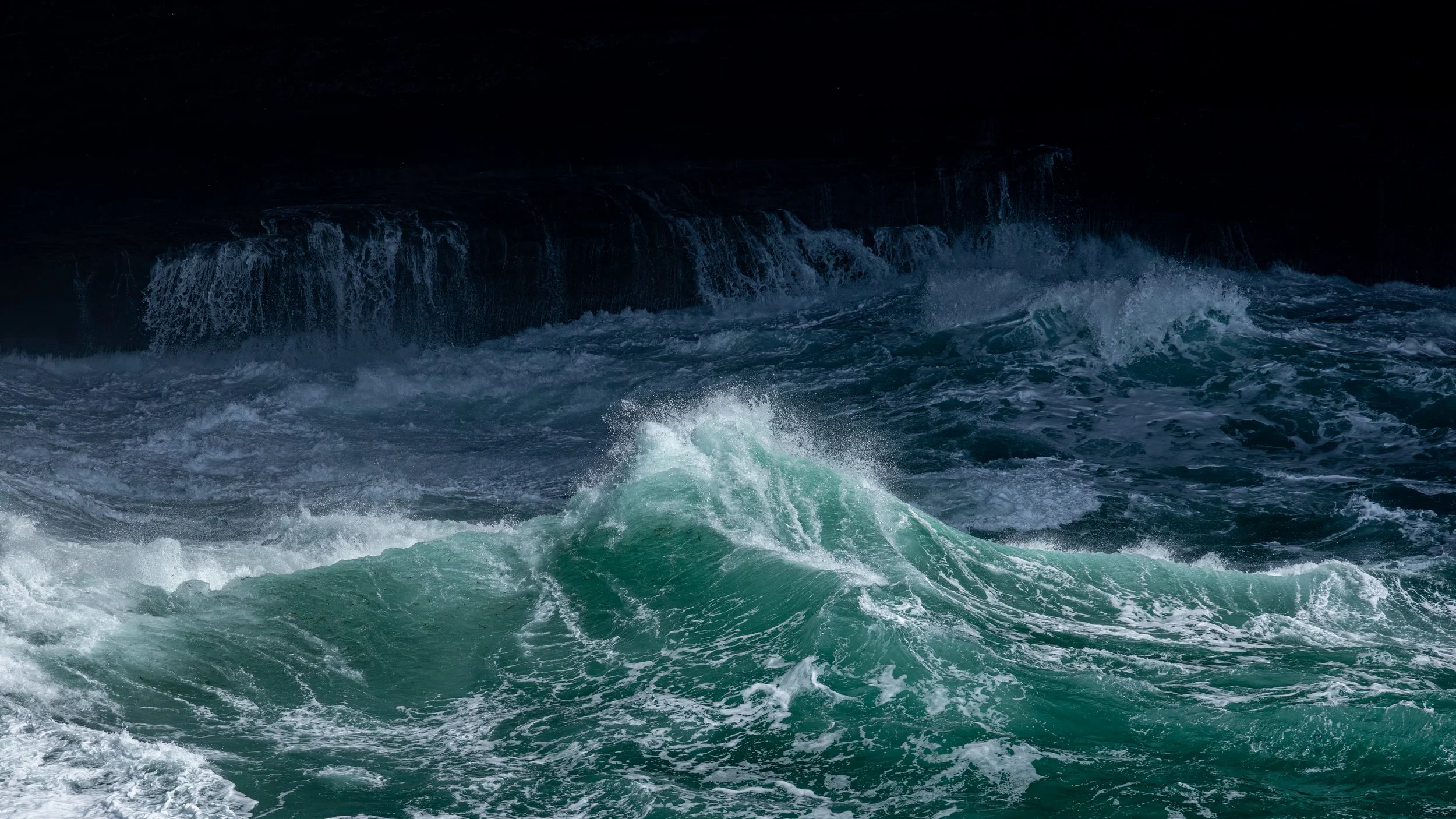
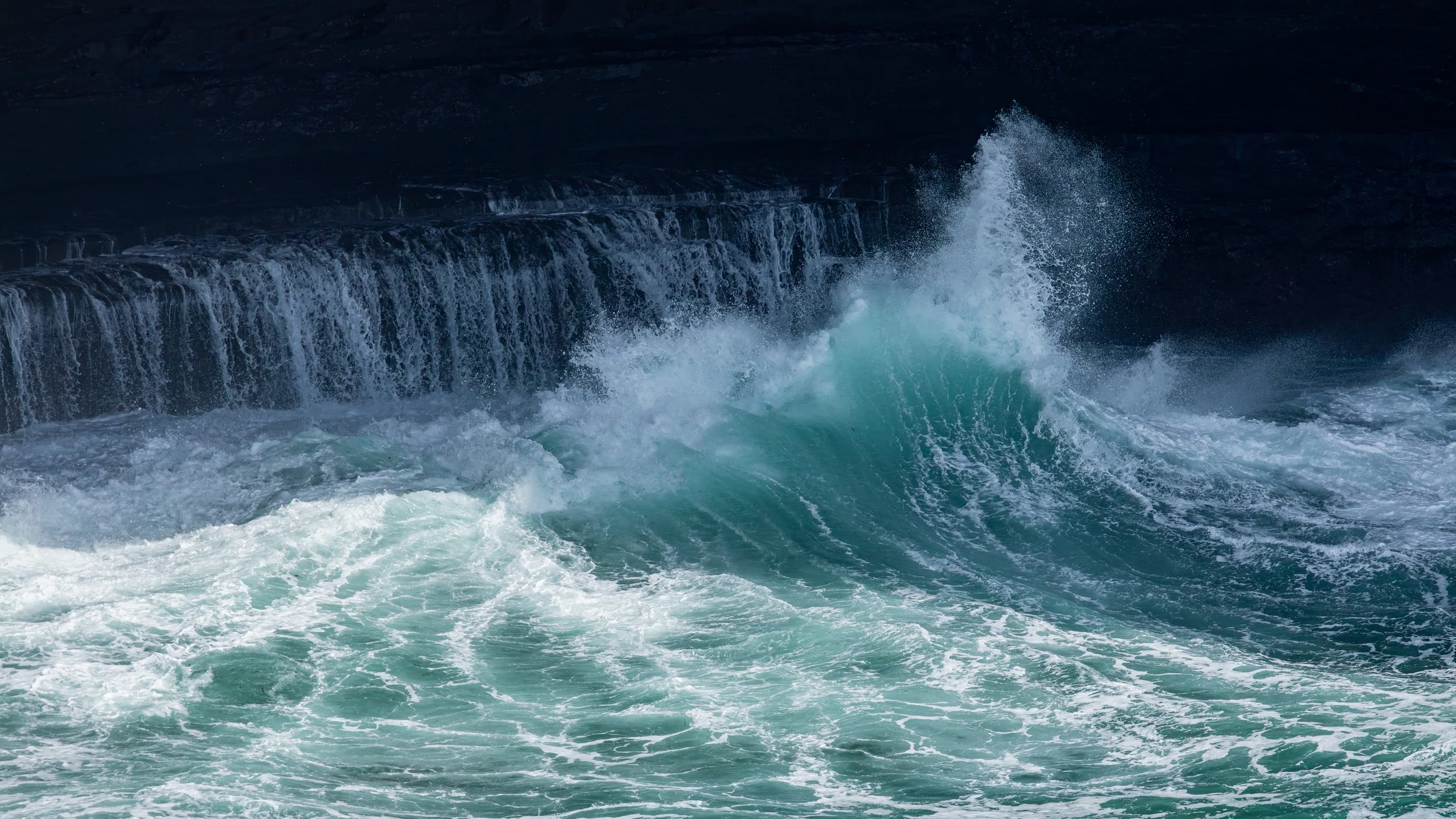
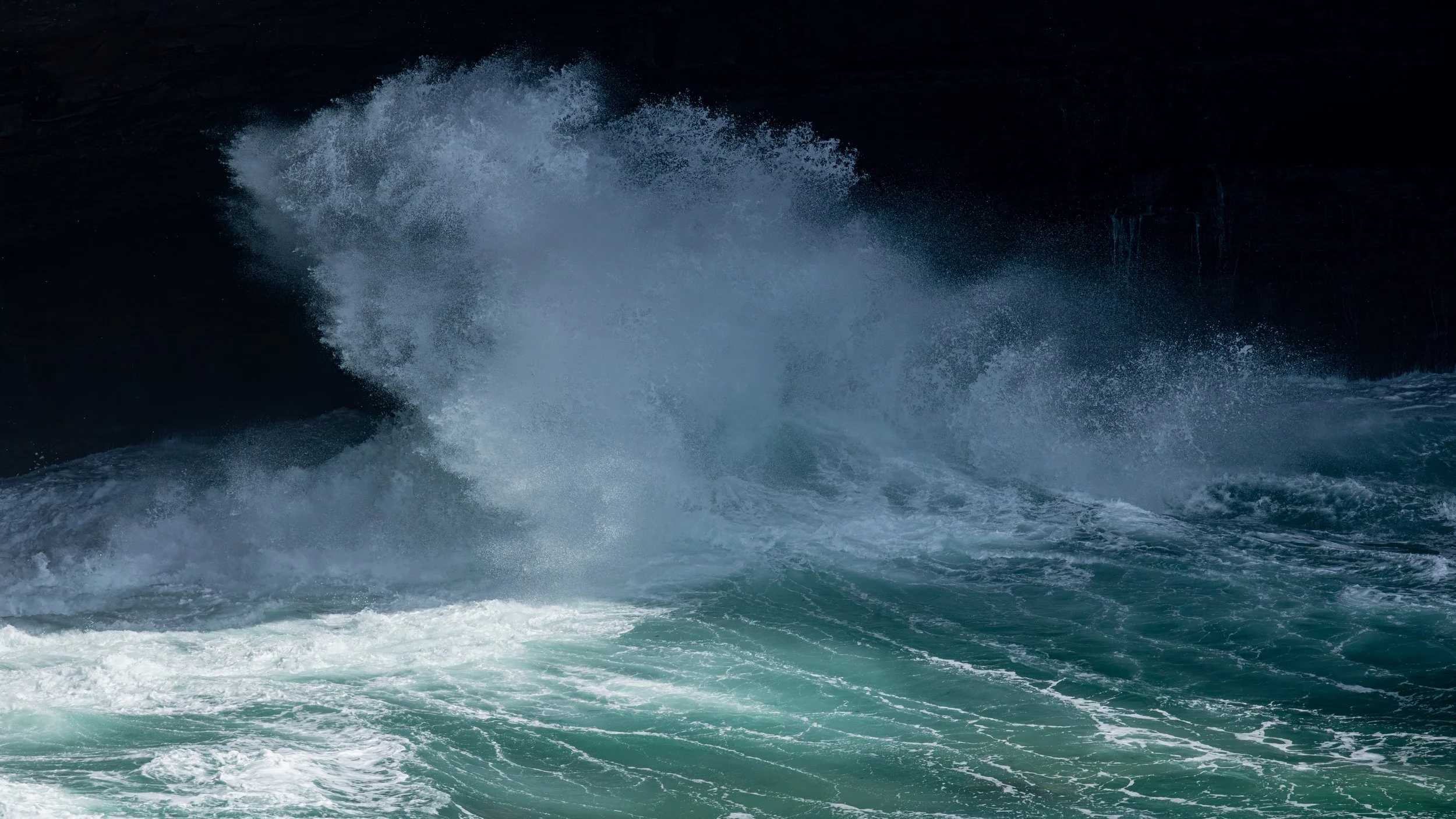
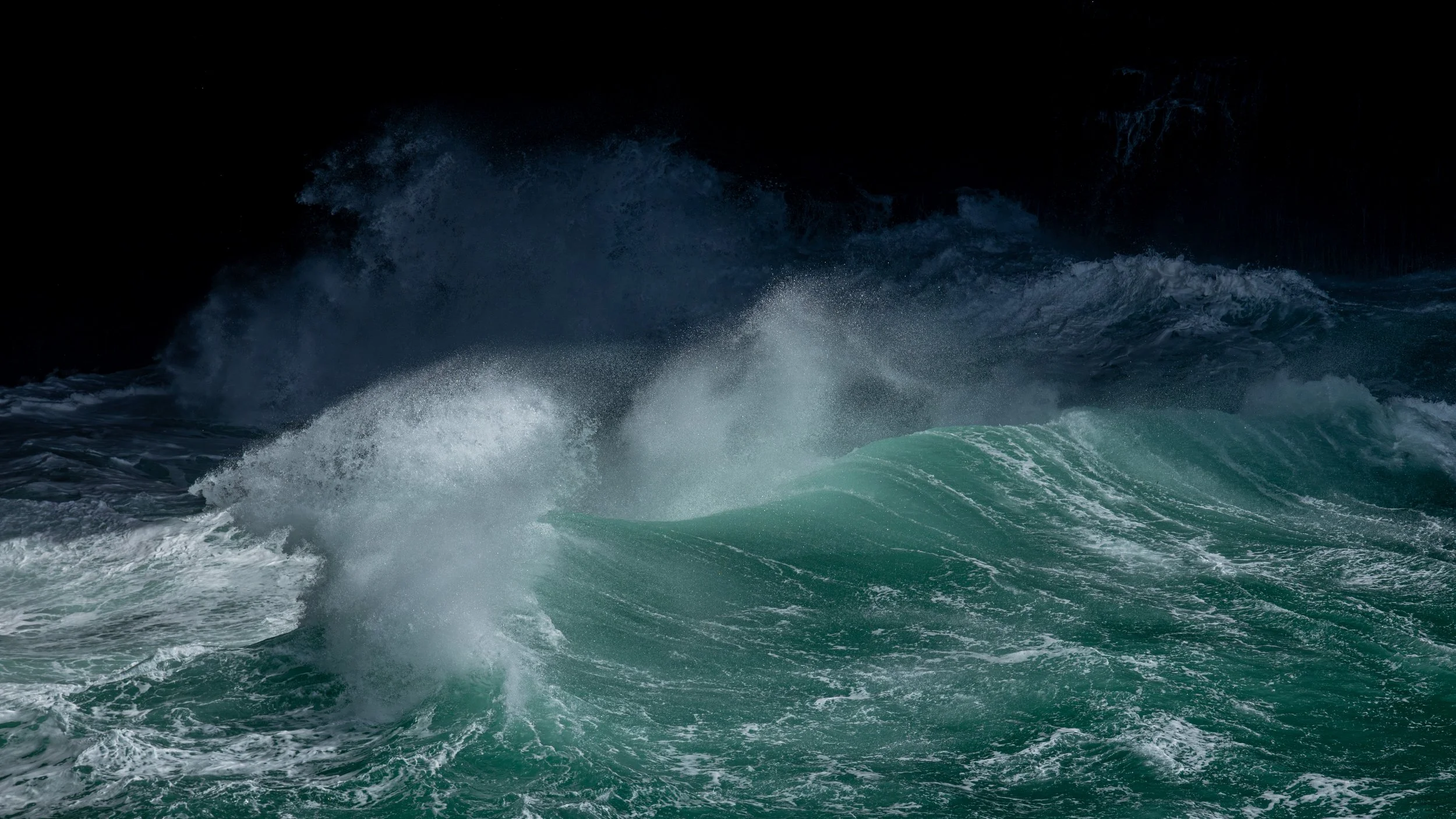
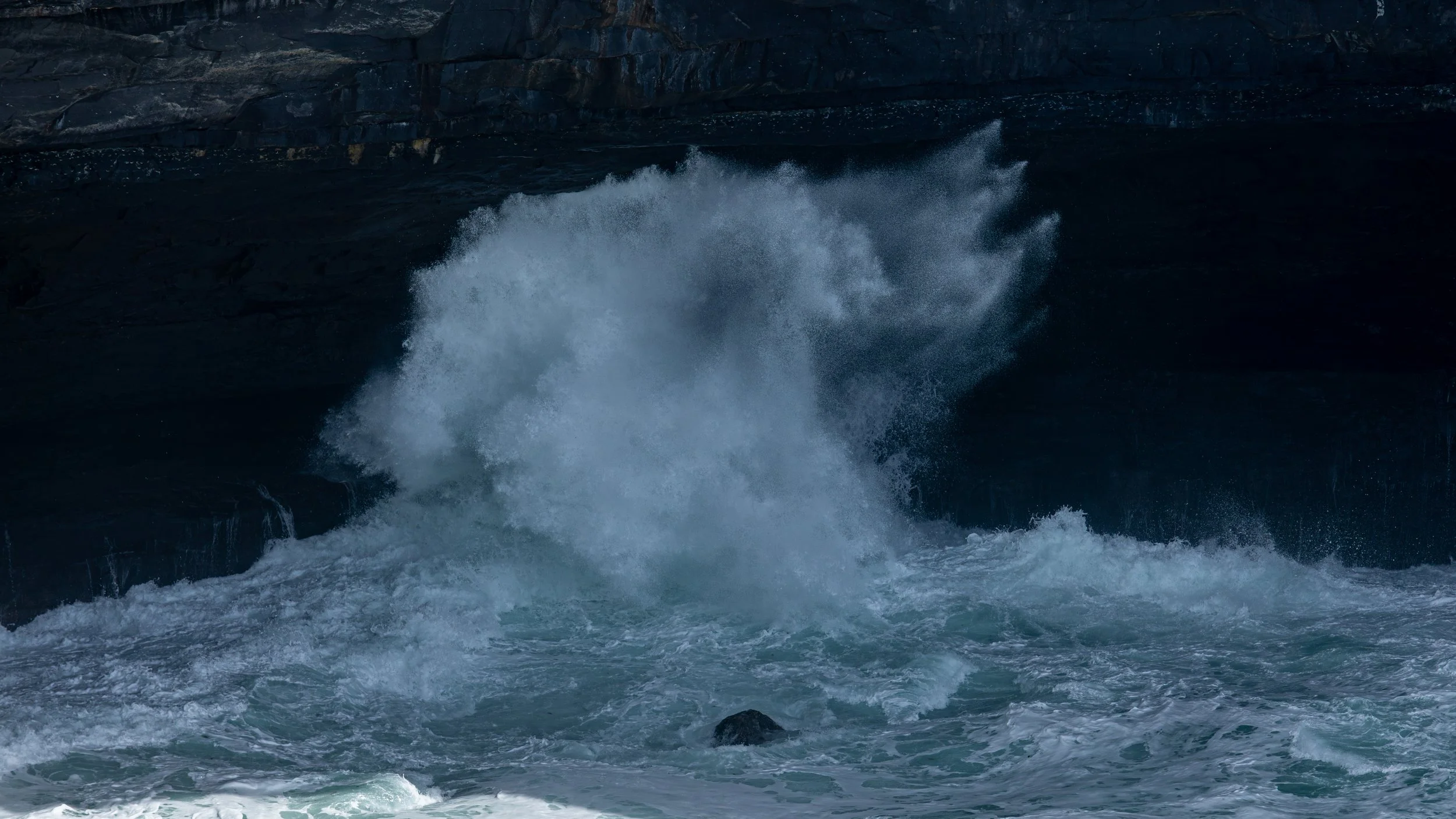
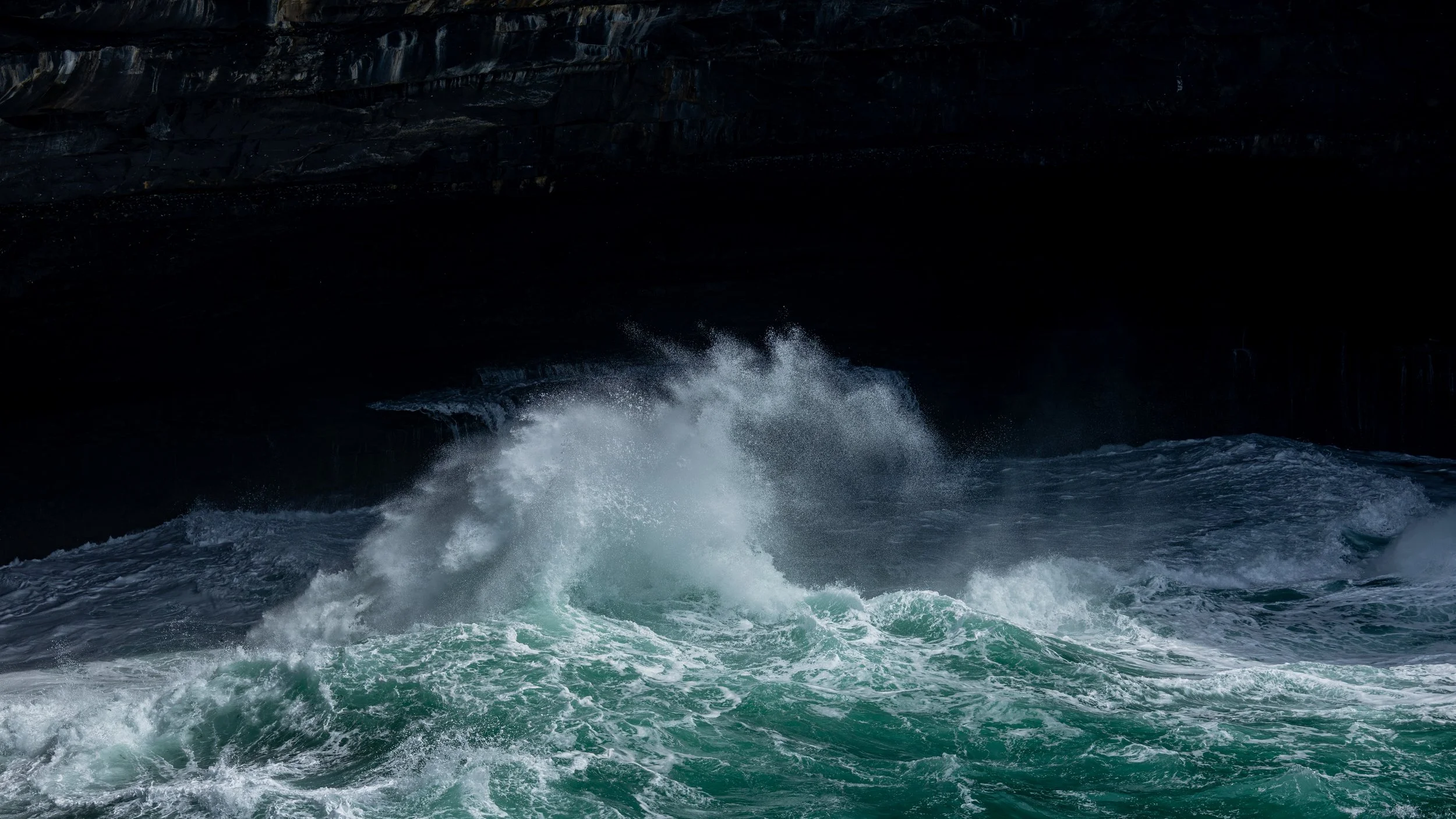
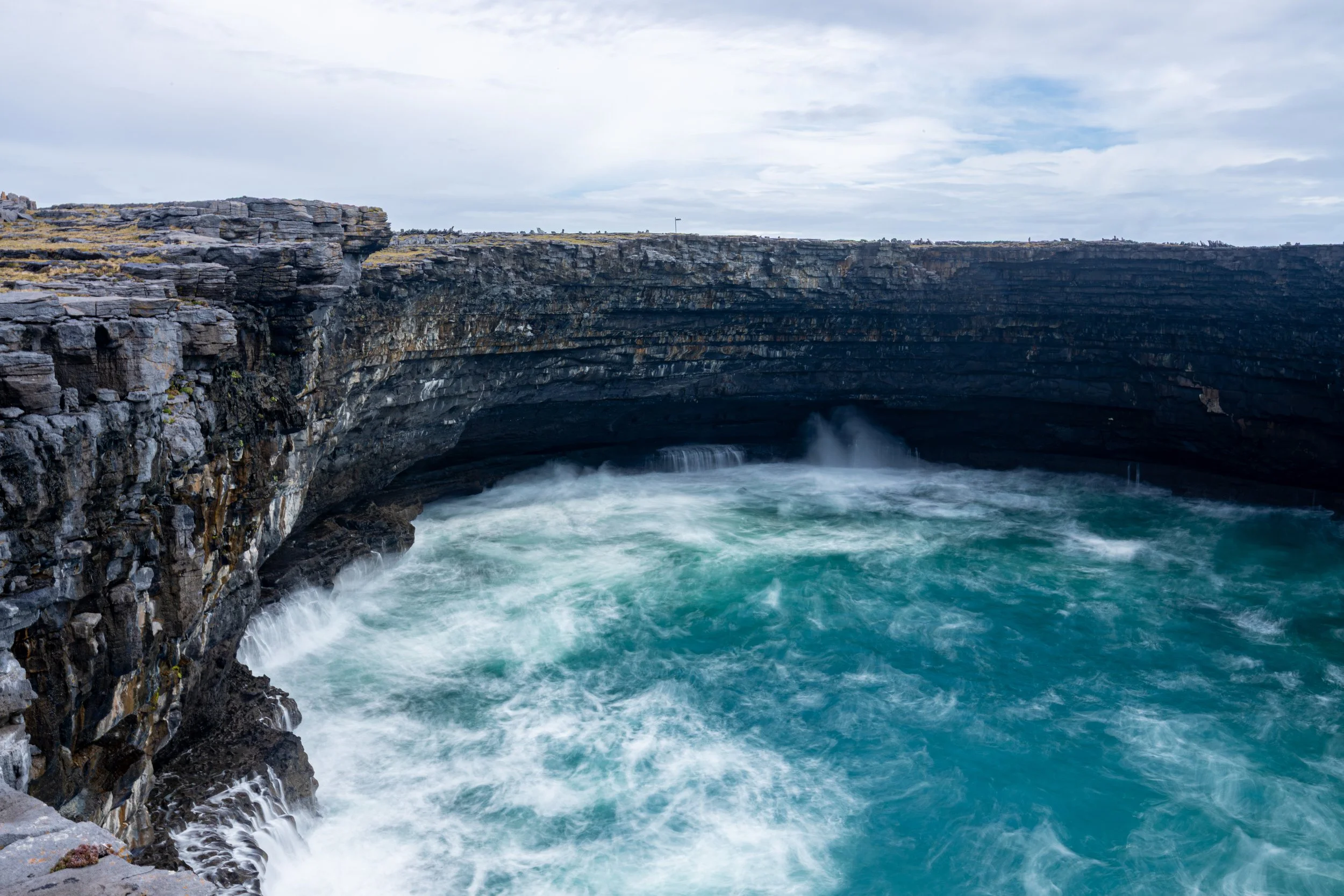
The cliff system opened into a large horseshoe-shaped formation where the Atlantic swell was being funnelled into a confined space before smashing into the back wall of the cliffs. The returning water then collided directly with the next incoming wave. The result was constant energy.
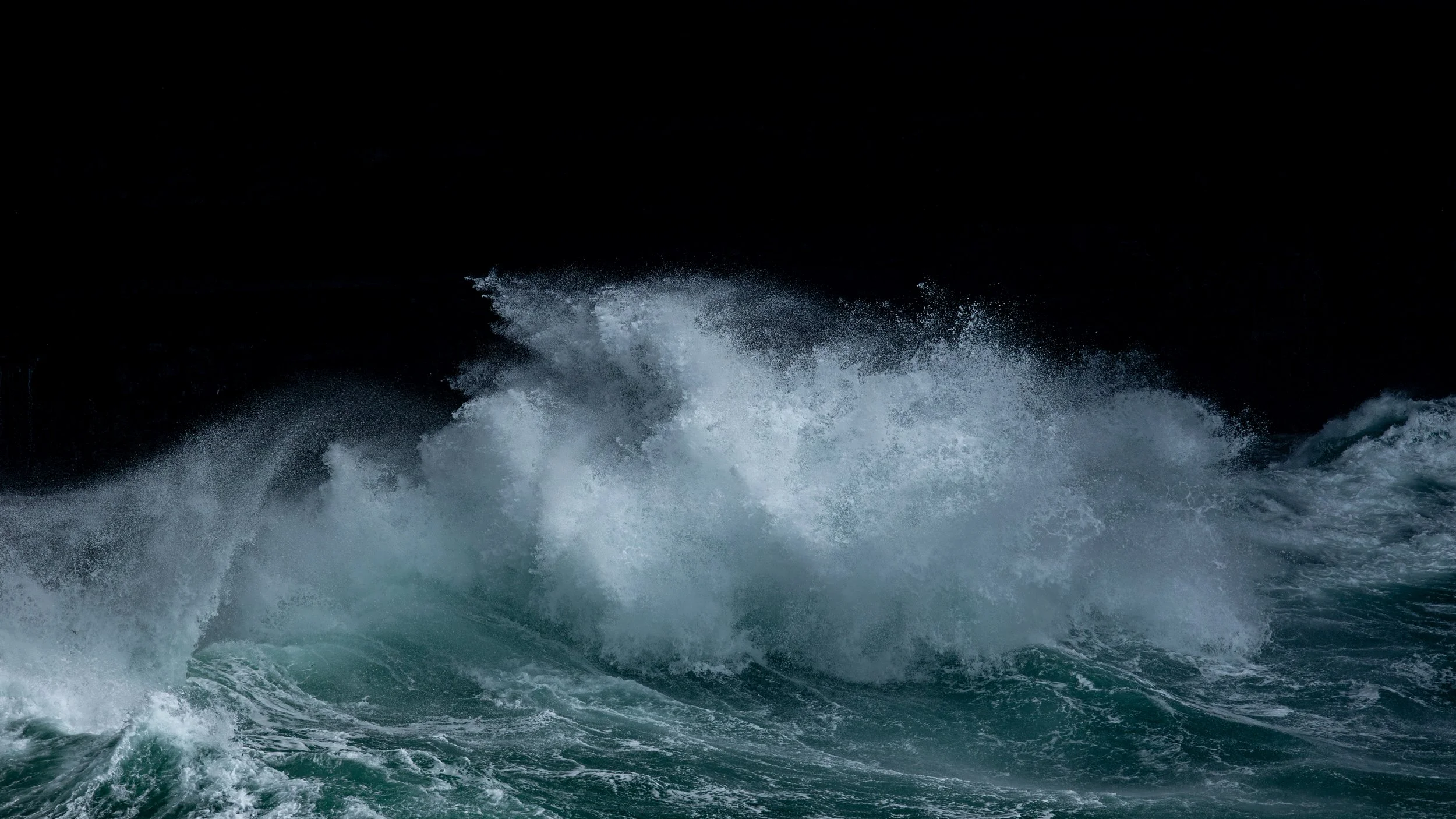
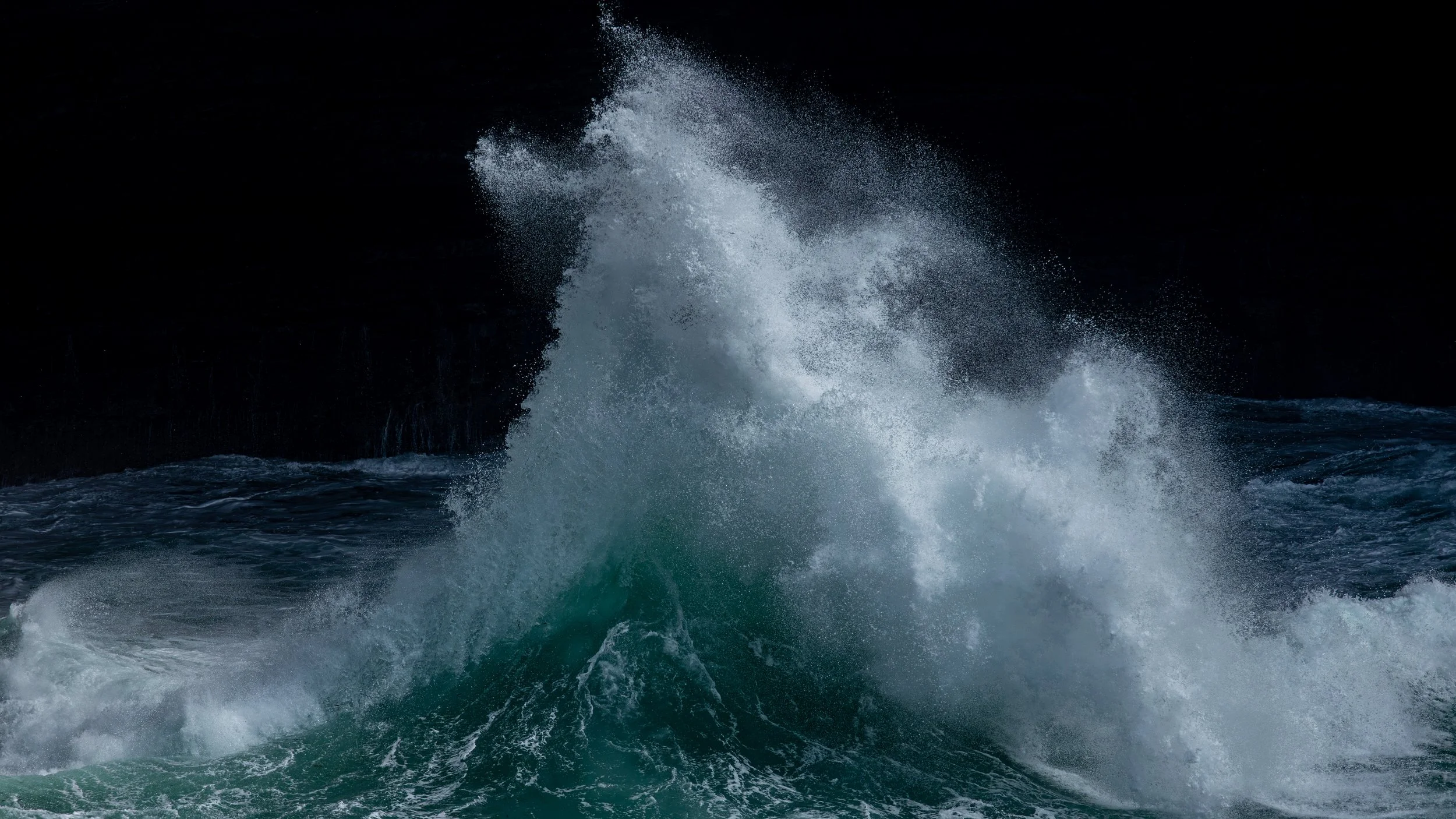
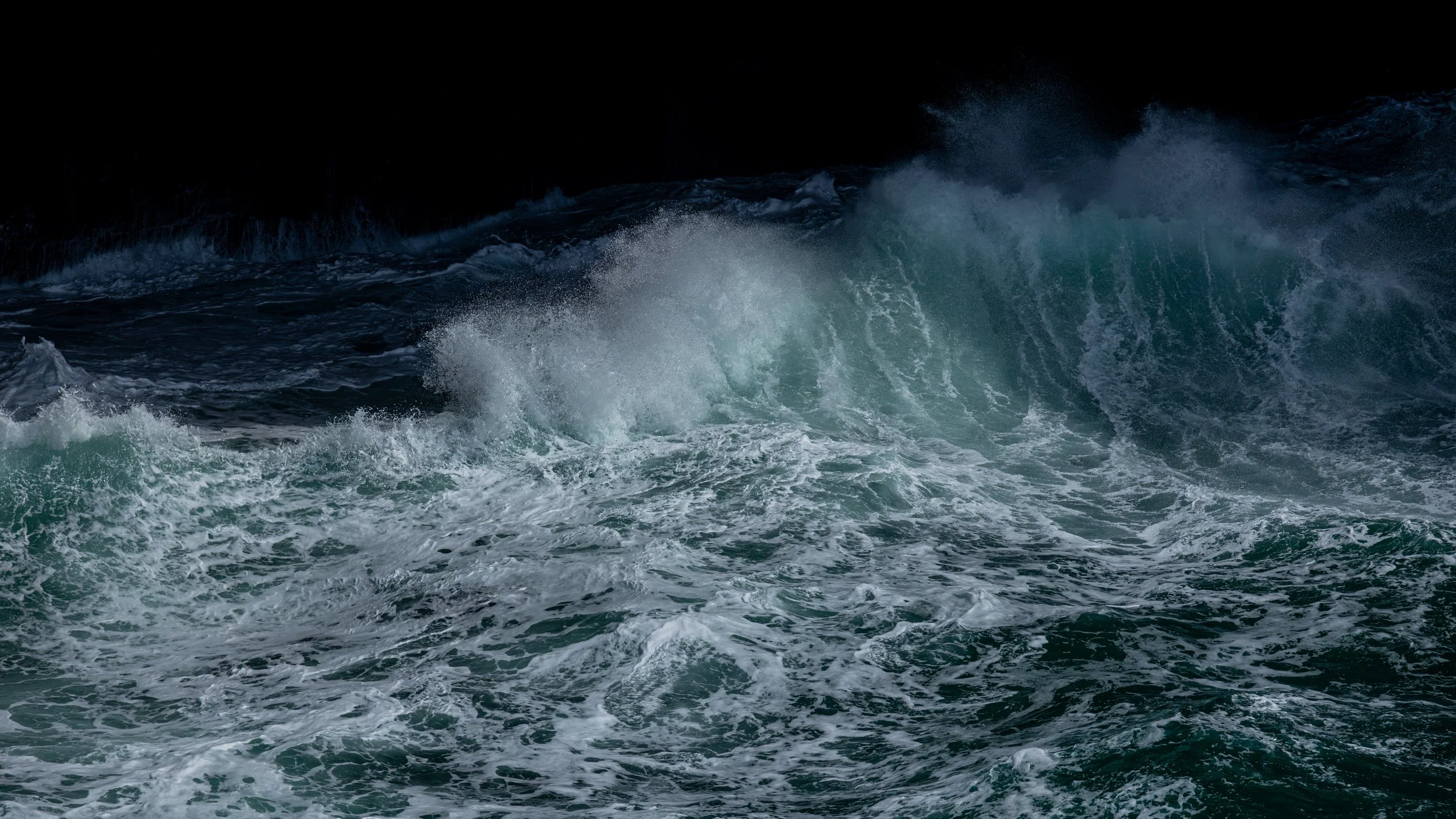
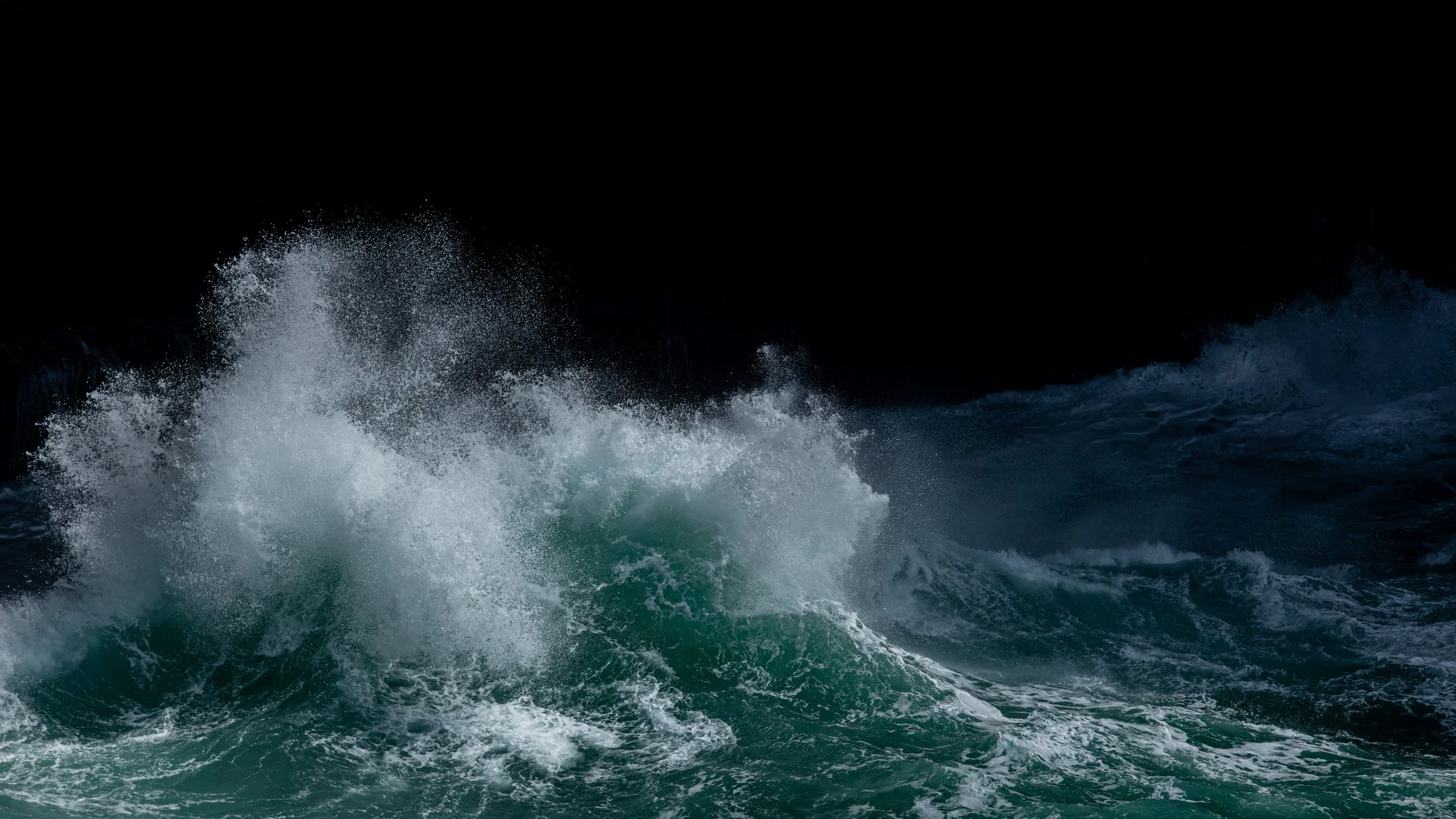
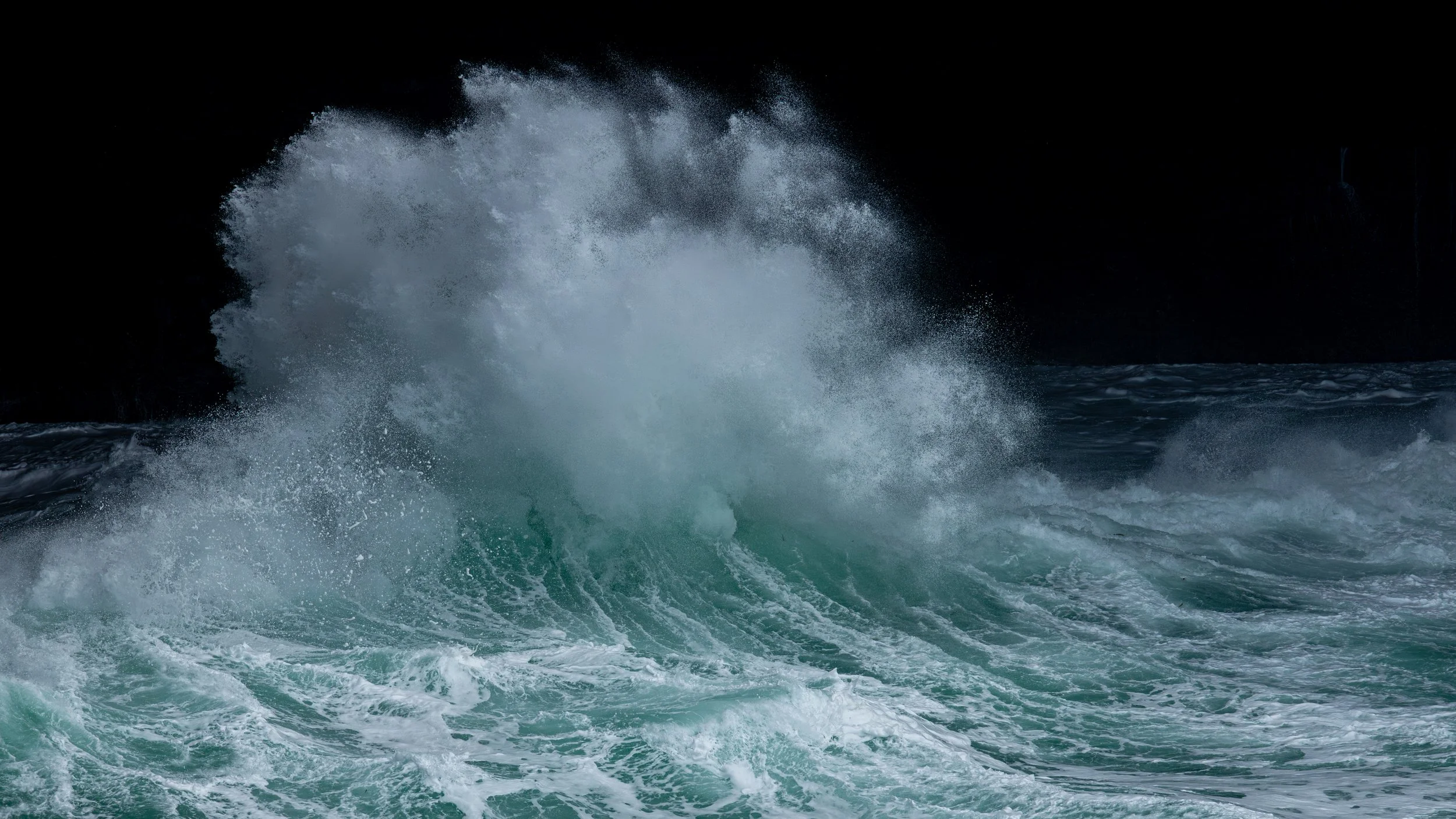
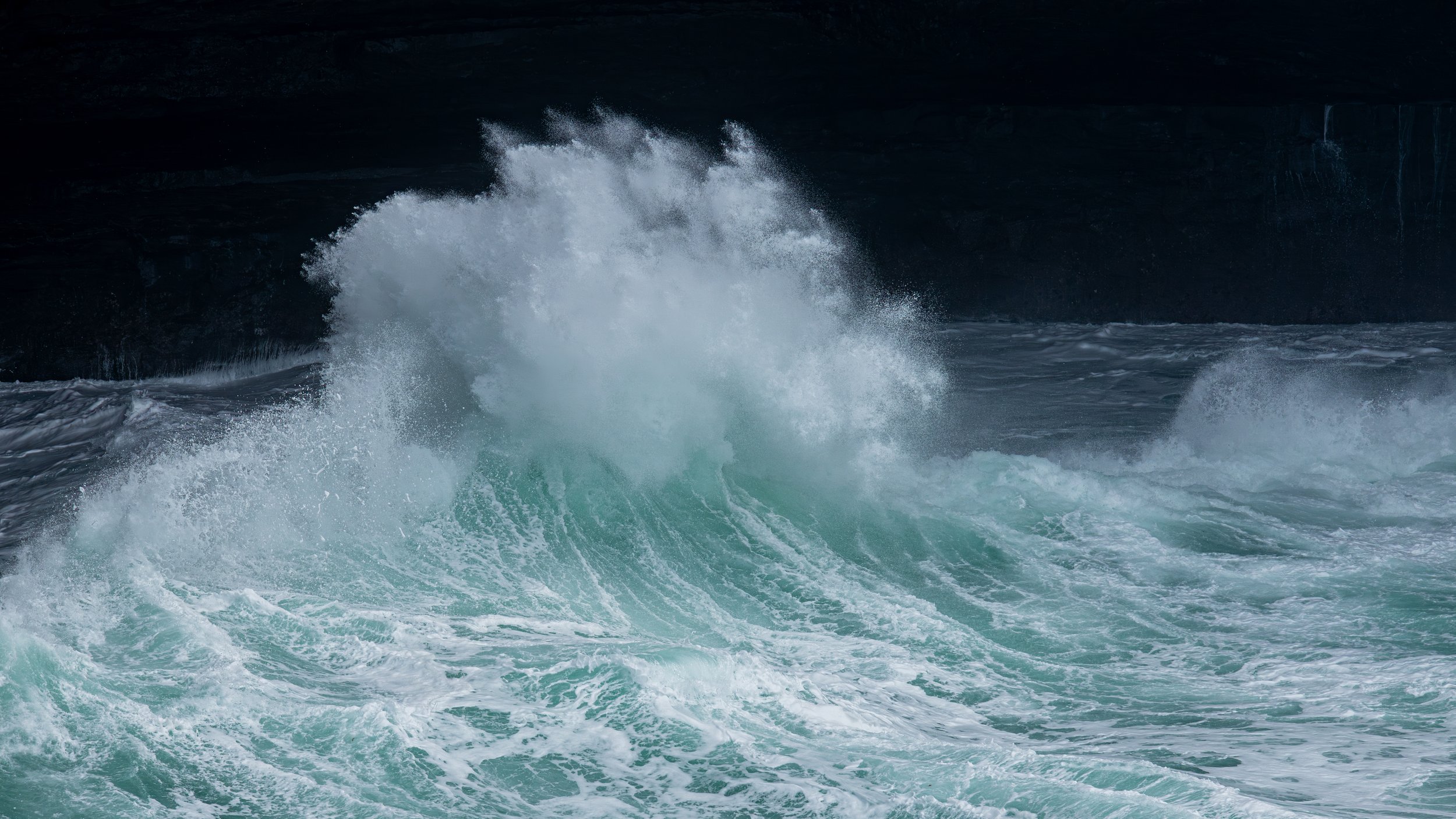
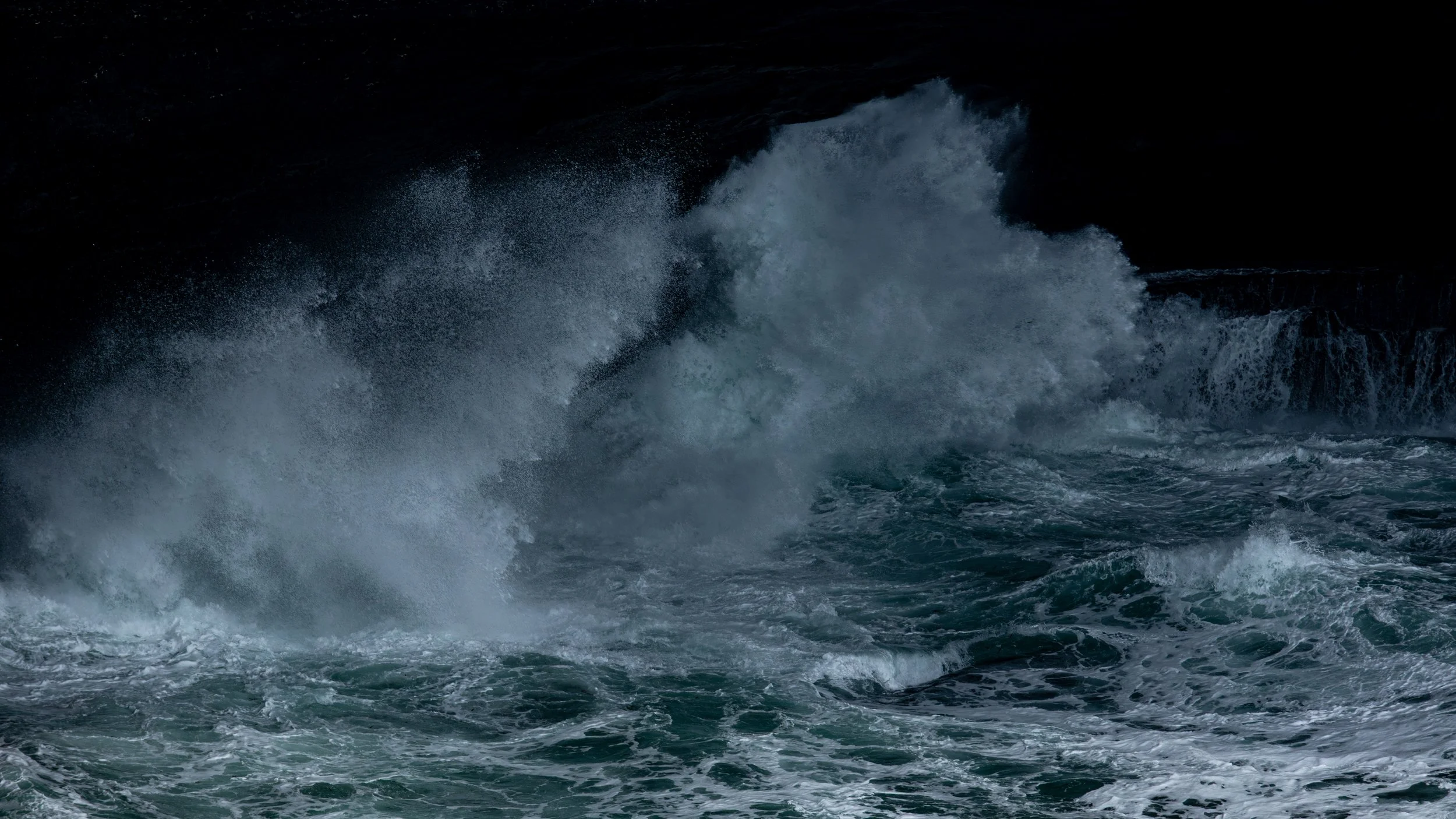
Rather than waves simply breaking and disappearing, they were meeting one another head-on. Water was being forced upwards into the air as the two opposing forces collided. Every impact created a different shape, a different texture and a different pattern.
My first instinct was to fit a wide-angle lens.
The wider composition worked well. It showed the scale of the cliffs and explained what was happening within the landscape. But after a few frames I realised that the wider scene wasn't where the strongest photographs were hiding.
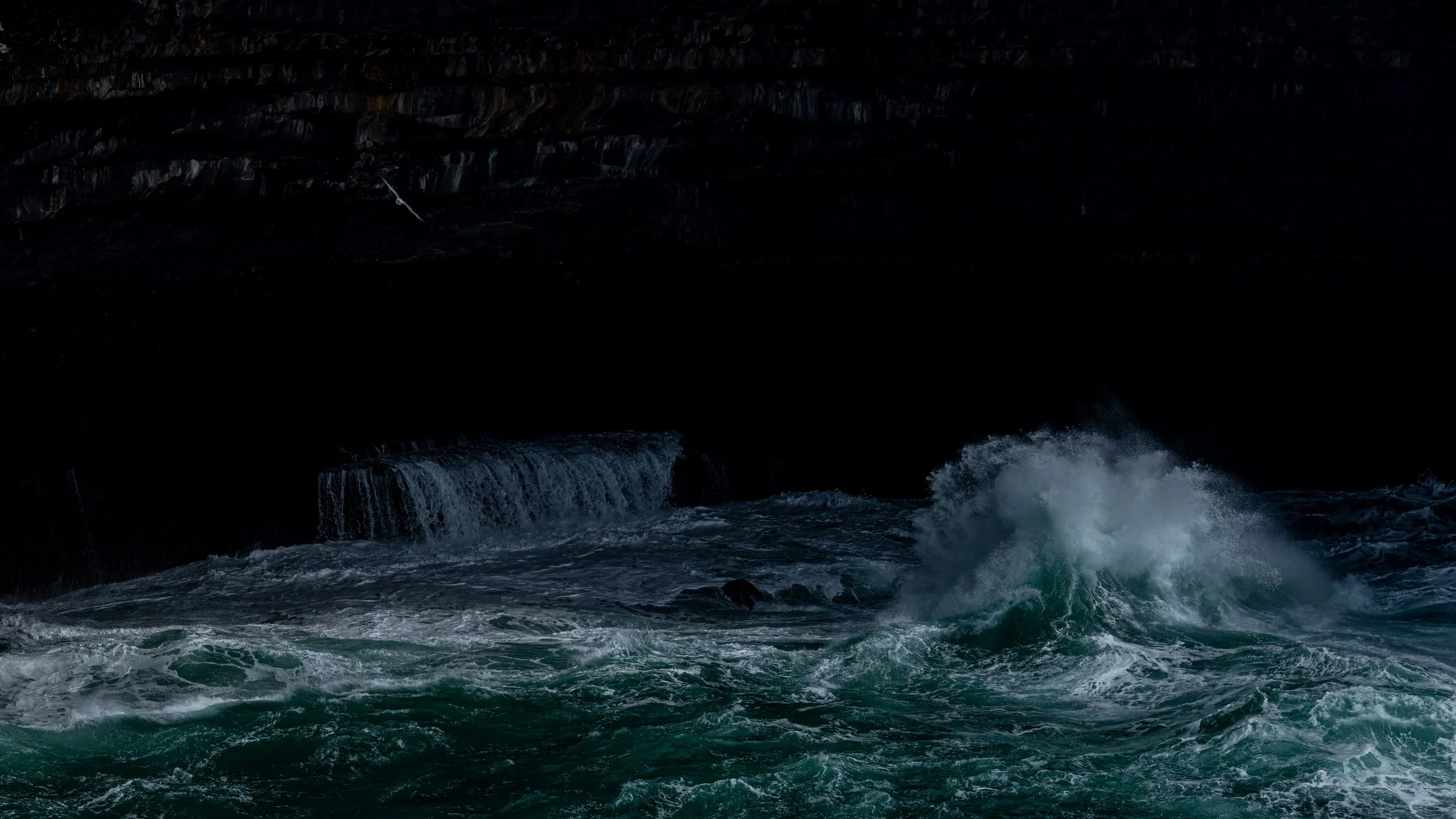
I switched to a long lens and immediately found myself far more interested in the collisions themselves. The compression of the longer focal length allowed me to isolate the exact moment where one wave met another.
As the sun began to break through, I gained enough light to push my shutter speeds higher. Suddenly I could freeze the action completely.
What had looked chaotic to the naked eye became organised through the camera.
Individual droplets separated from the spray. Patterns emerged within the water. Shapes appeared and disappeared in fractions of a second. Every collision was unique.
From time to time a gulls would enter the frame.
The birds weren't part of the plan for the day, yet they added something important to the images. They provided scale and context. Seeing a gull crossing in front of thousands of litres of moving Atlantic water instantly helped communicate the size and power of the scene.
The most surprising part was how quickly time disappeared.
This wasn't even the location we had come to photograph, yet I spent around fifty-five minutes working the waves. Every time I thought about moving on, another set would arrive and create something completely different.
As landscape photographers, we often become focused on reaching a planned destination. Sometimes that focus can cause us to overlook opportunities along the way. Eventually we forced ourselves to continue.
Only a short distance further along the cliffs I found myself stopped again.
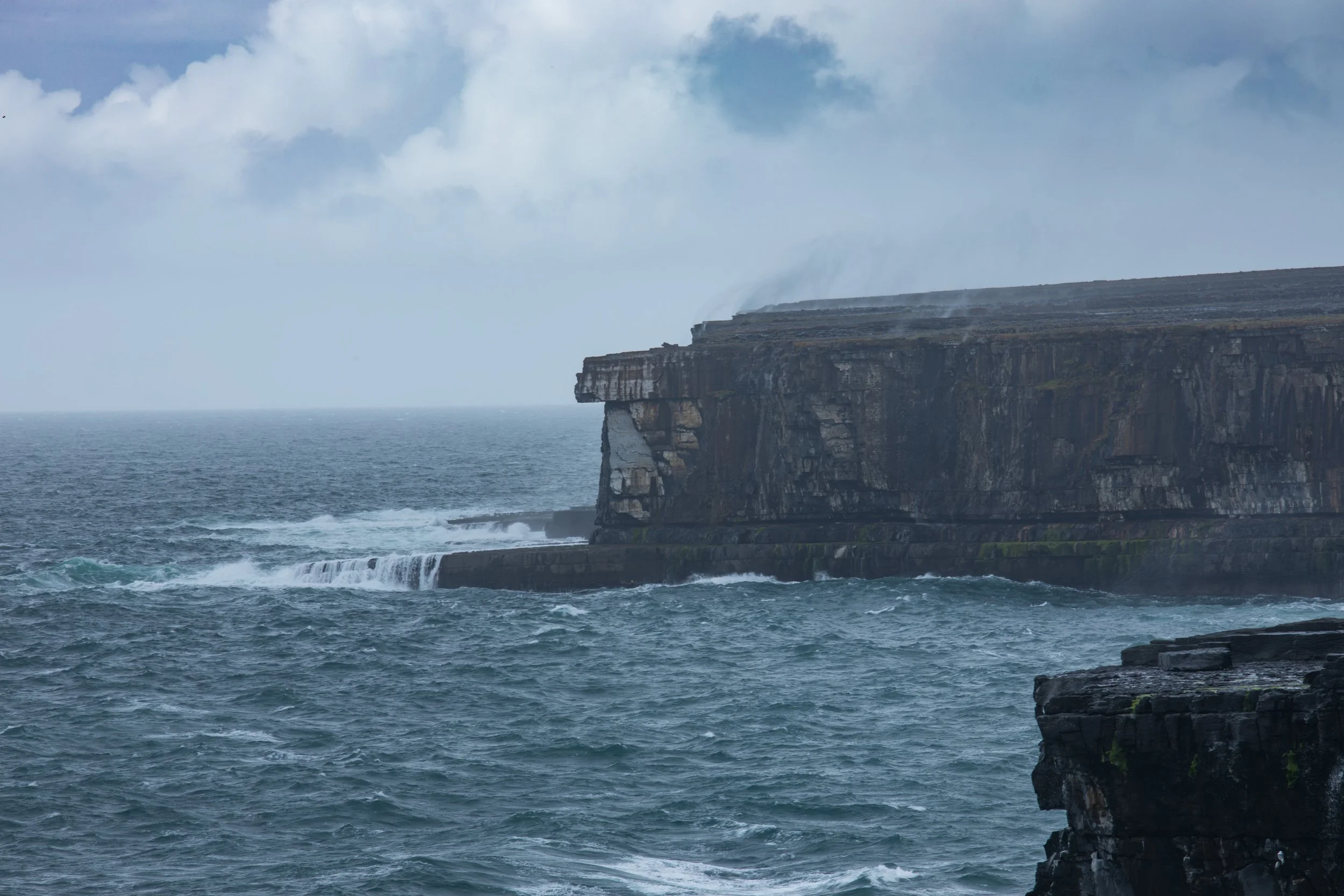
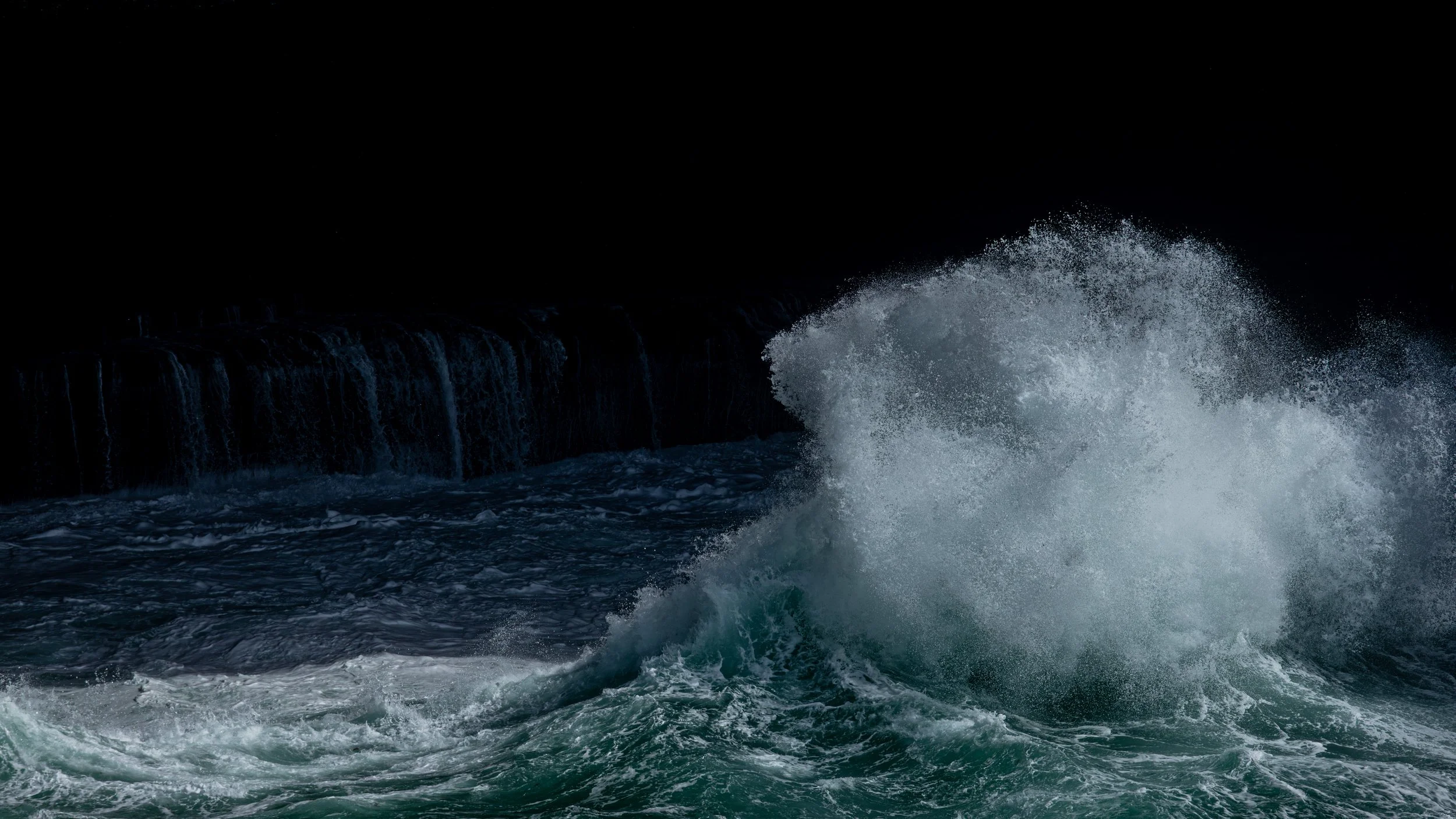
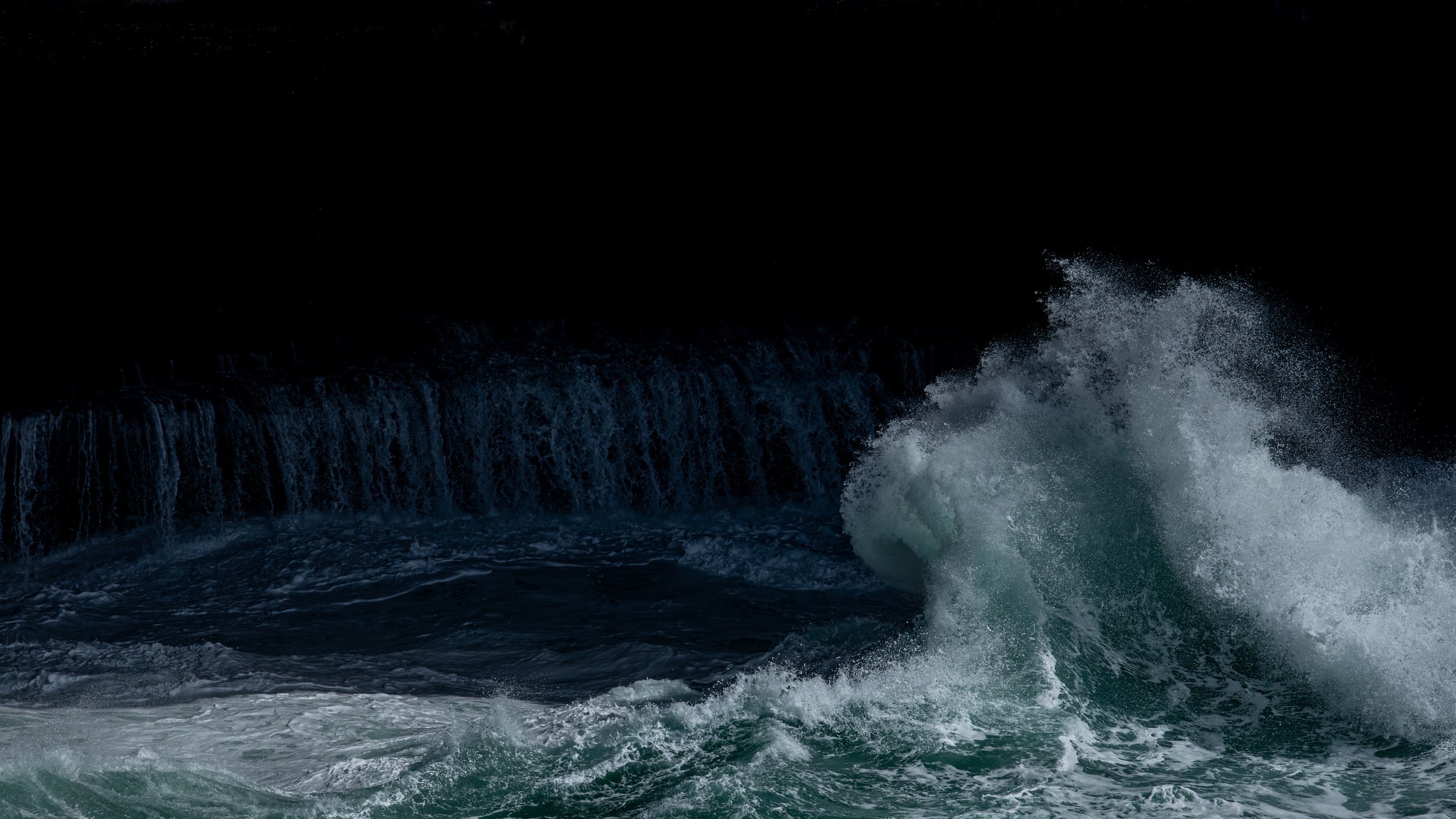
The rainfall from earlier in the day had created small waterfalls flowing towards the Atlantic. Normally they would have disappeared over the cliff edge and dropped into the ocean below.
The wind had other ideas.
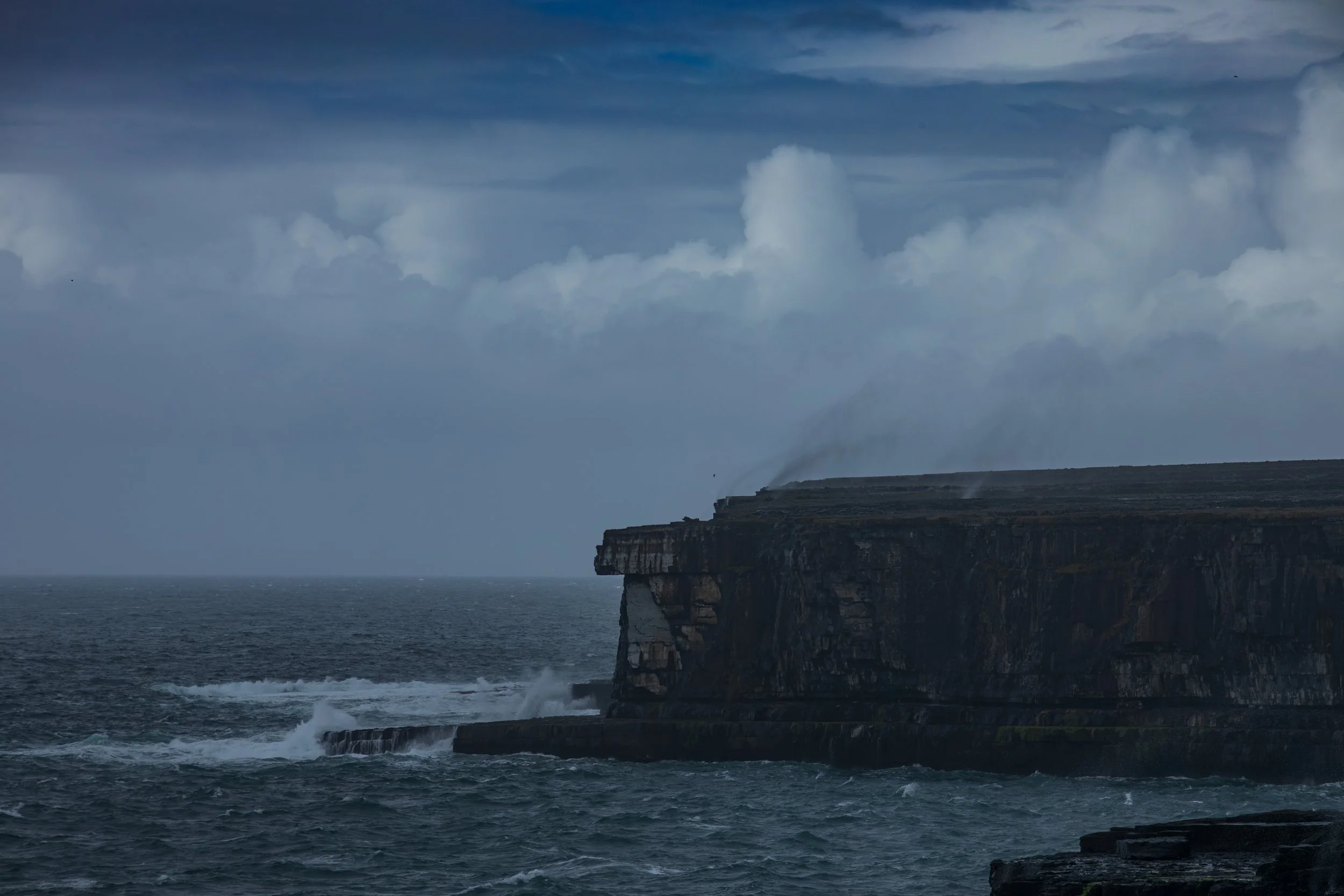
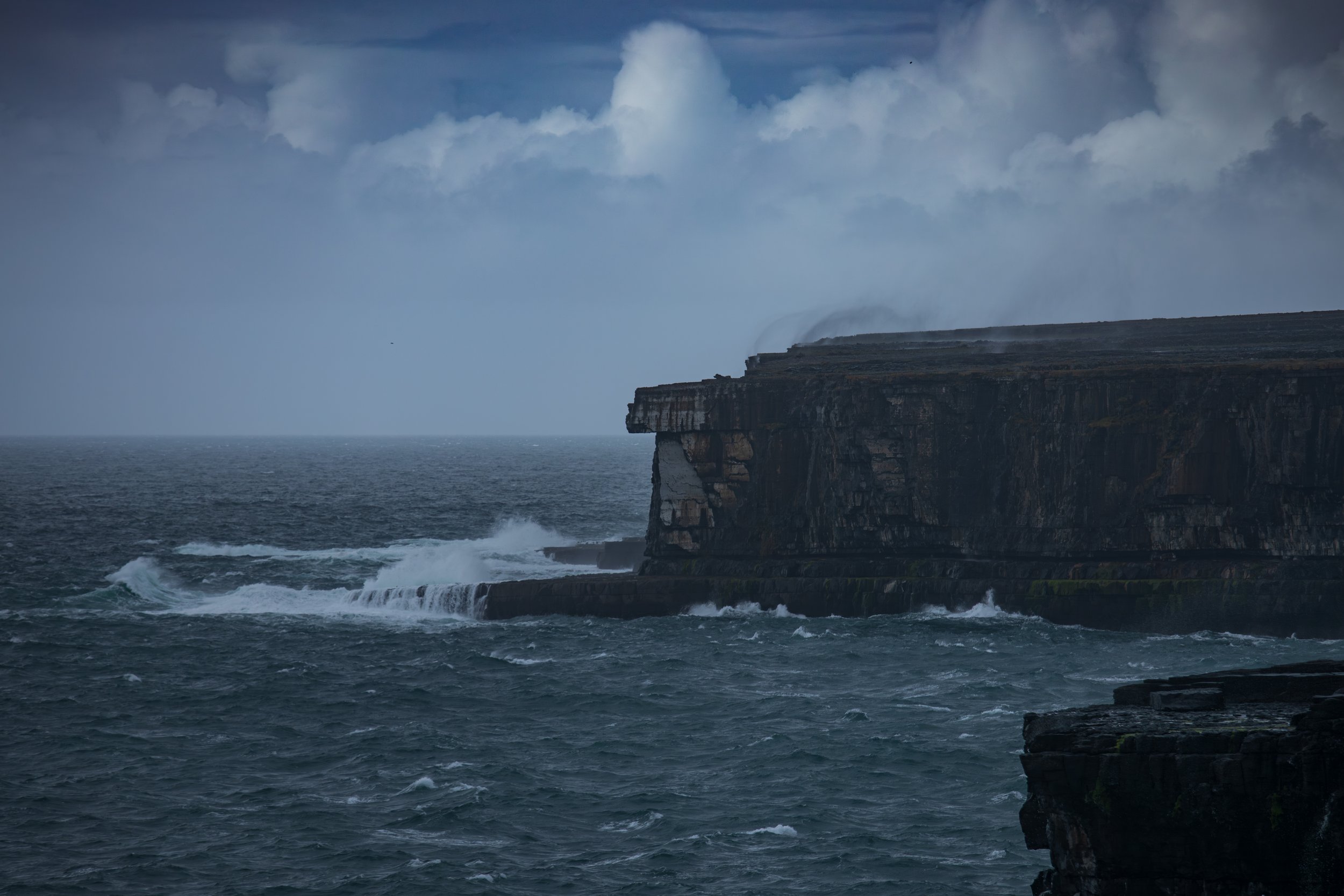
The gusts were so strong that the water wasn't falling at all. Instead, it was being blown back upwards before it had the chance to drop. The result looked completely unnatural.
Streams of water appeared to rise into the air rather than fall towards the sea.
Moving past them wasn't straightforward either. The spray was being carried back across the cliff tops, meaning that even walking around them resulted in an unavoidable soaking.
It was another example of the conditions creating photographs that simply wouldn't exist on a calm day.
Once beyond the waterfalls, I was stopped for a third time.
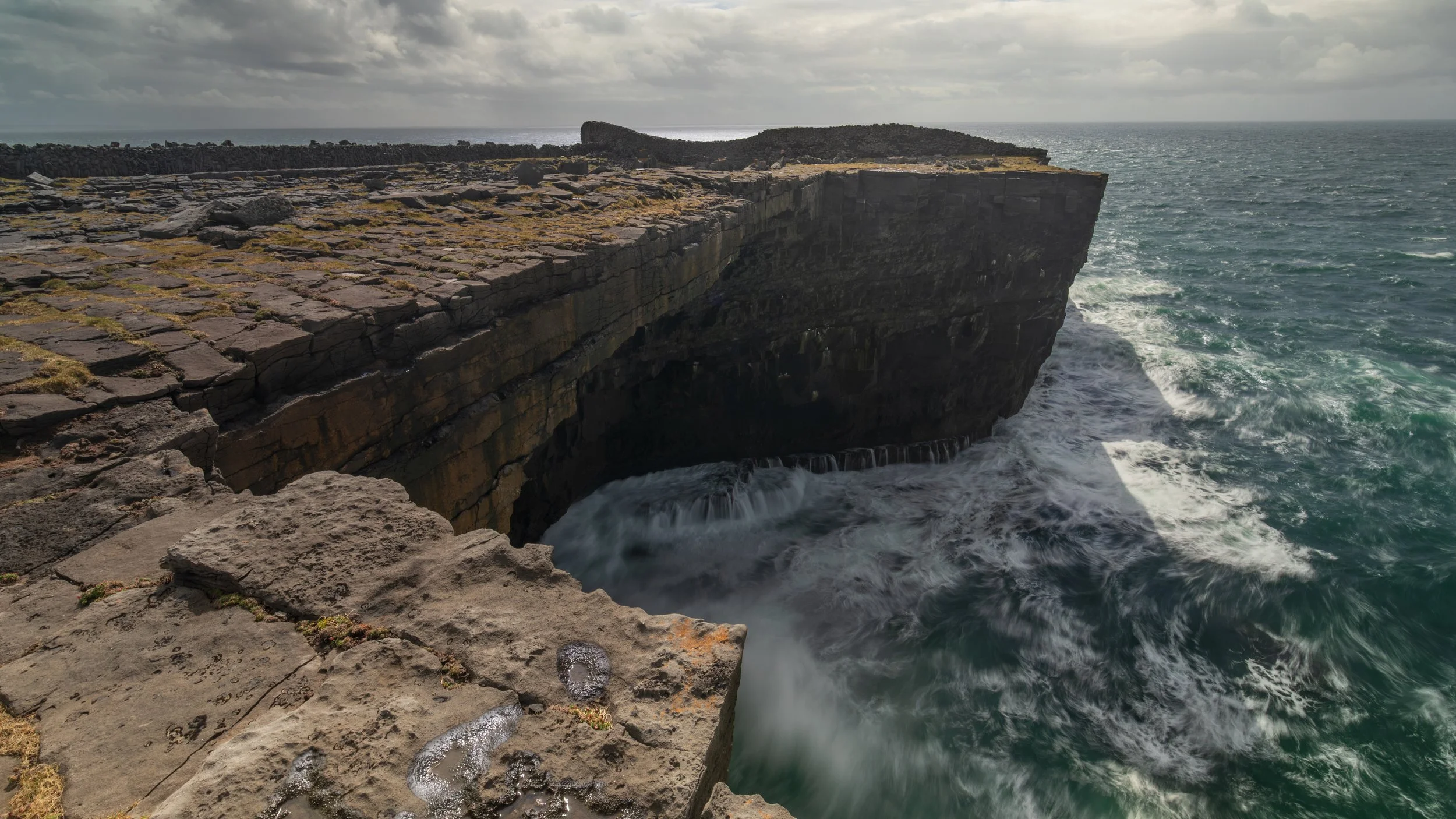
The perspective of the coastline had changed completely. Looking down towards the cliffs we had photographed earlier, the shape of the rock created an illusion unlike anything I had seen before.
The land beneath me appeared to disappear.
To my left, the same thing happened again.
It looked as though I was standing on a floating bridge suspended above the Atlantic. In reality the cliffs were solid, but from that angle the structure created the impression of empty space beneath the ground.
Naturally, the camera came straight back out.
I experimented with both longer exposures and faster shutter speeds. The longer exposures softened the movement of the sea while the shorter exposures retained detail within the waves. Both approaches produced very different interpretations of the same scene.
At this point we still hadn't reached the Black Fort. But, eventually the structure came into view.
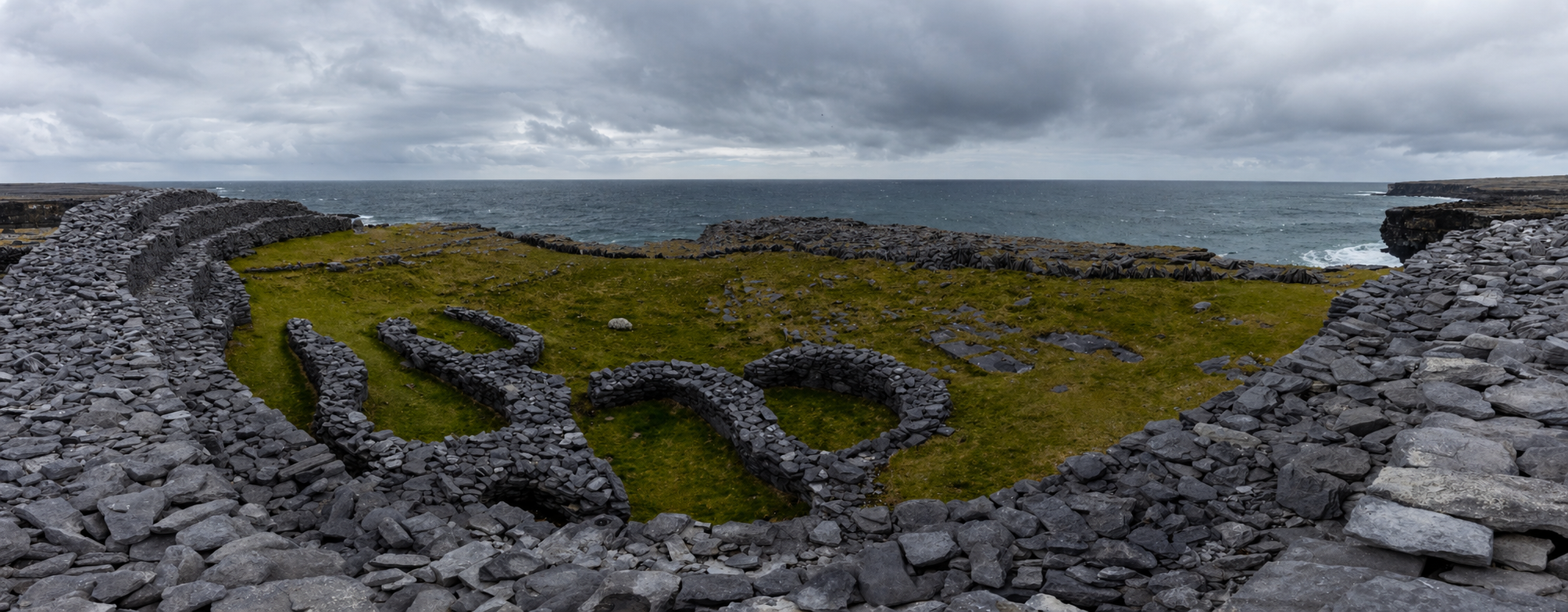
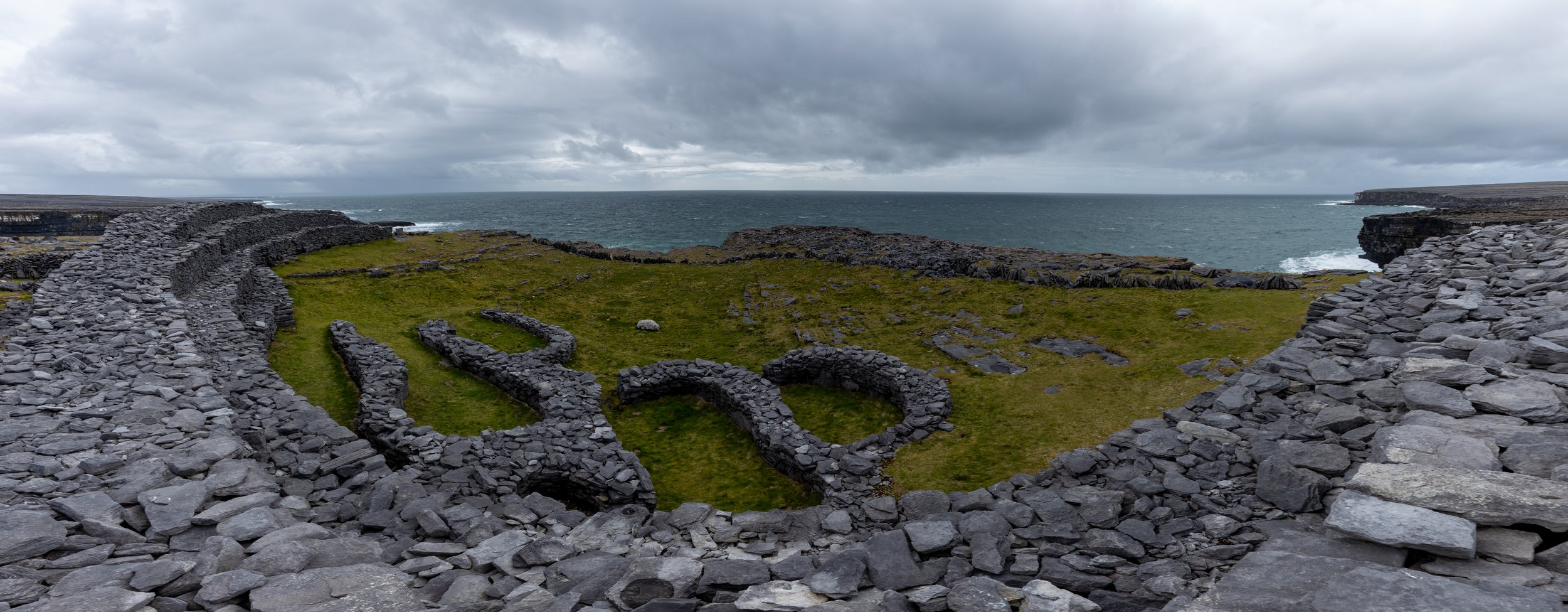
The amount of stonework across Inis Mór is remarkable. Dry stone walls stretch across the landscape in every direction, dividing fields and following the contours of the land. Seeing them is impressive enough, but they feel almost insignificant when compared to the scale of the Black Fort itself.
Built entirely from dry stone, the fort remains standing after centuries of Atlantic weather.
Not a trace of mortar.
Just stone upon stone upon stone.
As we approached, Patrick and Diarmuid had appointed themselves as the fort's resident trolls, questioning visitors before granting access. It added a bit of humour to the walk before we finally entered.
Photographically, the fort proved challenging.
Its scale was impressive, but there was no obvious focal point. If you've followed my photography for any length of time, you'll know I like an image to have a clear subject. The Black Fort felt more complex than that.
The solution was to gain elevation.
Looking down into the structure revealed patterns and shapes that couldn't be appreciated from ground level. Internal walls formed geometric designs throughout the fort and an ultra-wide panoramic approach eventually allowed the entire scene to come together.
The wind made that process far from easy, but after a few attempts I managed to make the image work.
Looking back towards the cliffs we had travelled along earlier, I could still see the effects of the conditions.
The waterfalls were still being blown upwards.
The Atlantic was still colliding with the coastline.
The entire landscape seemed to be in motion.
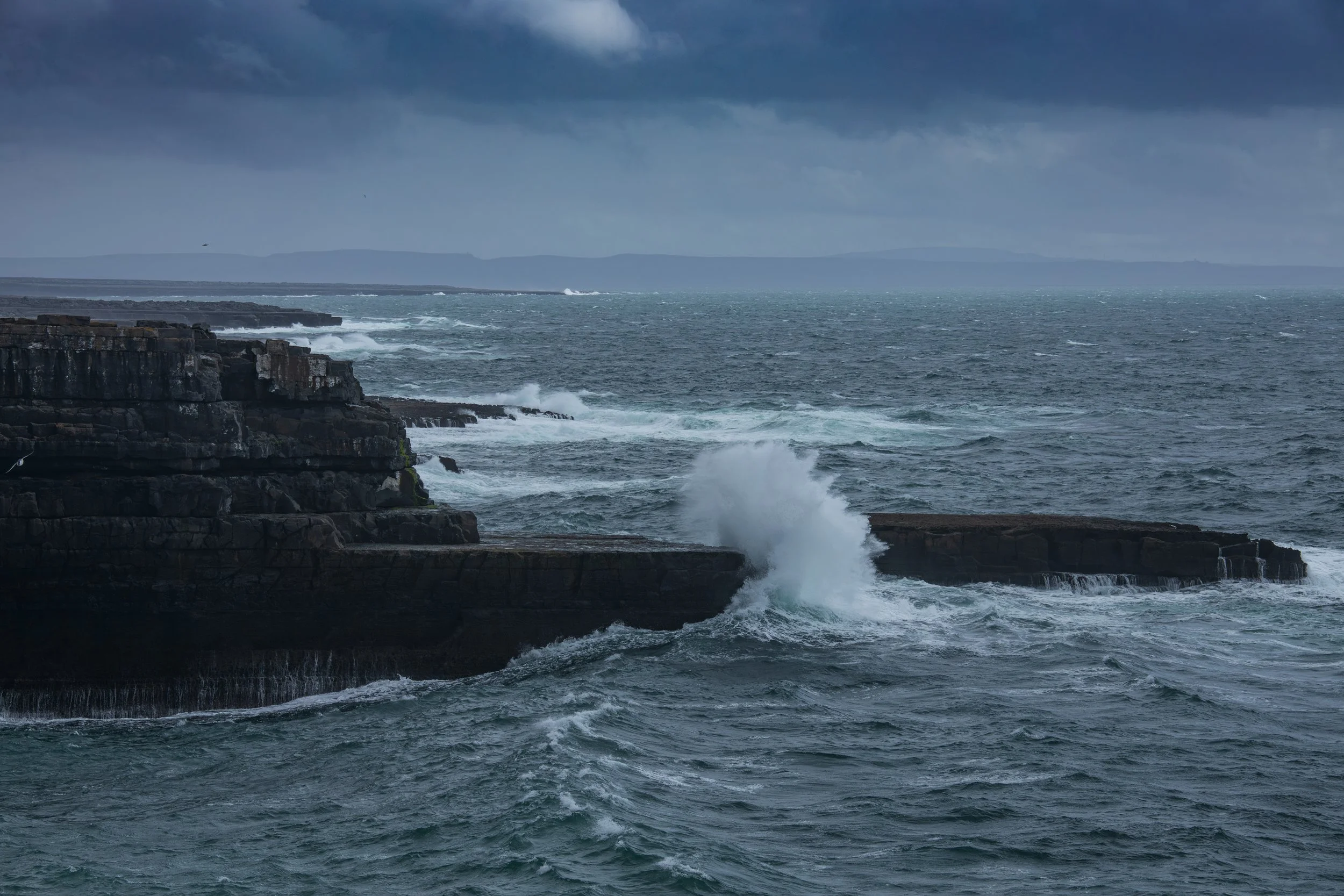
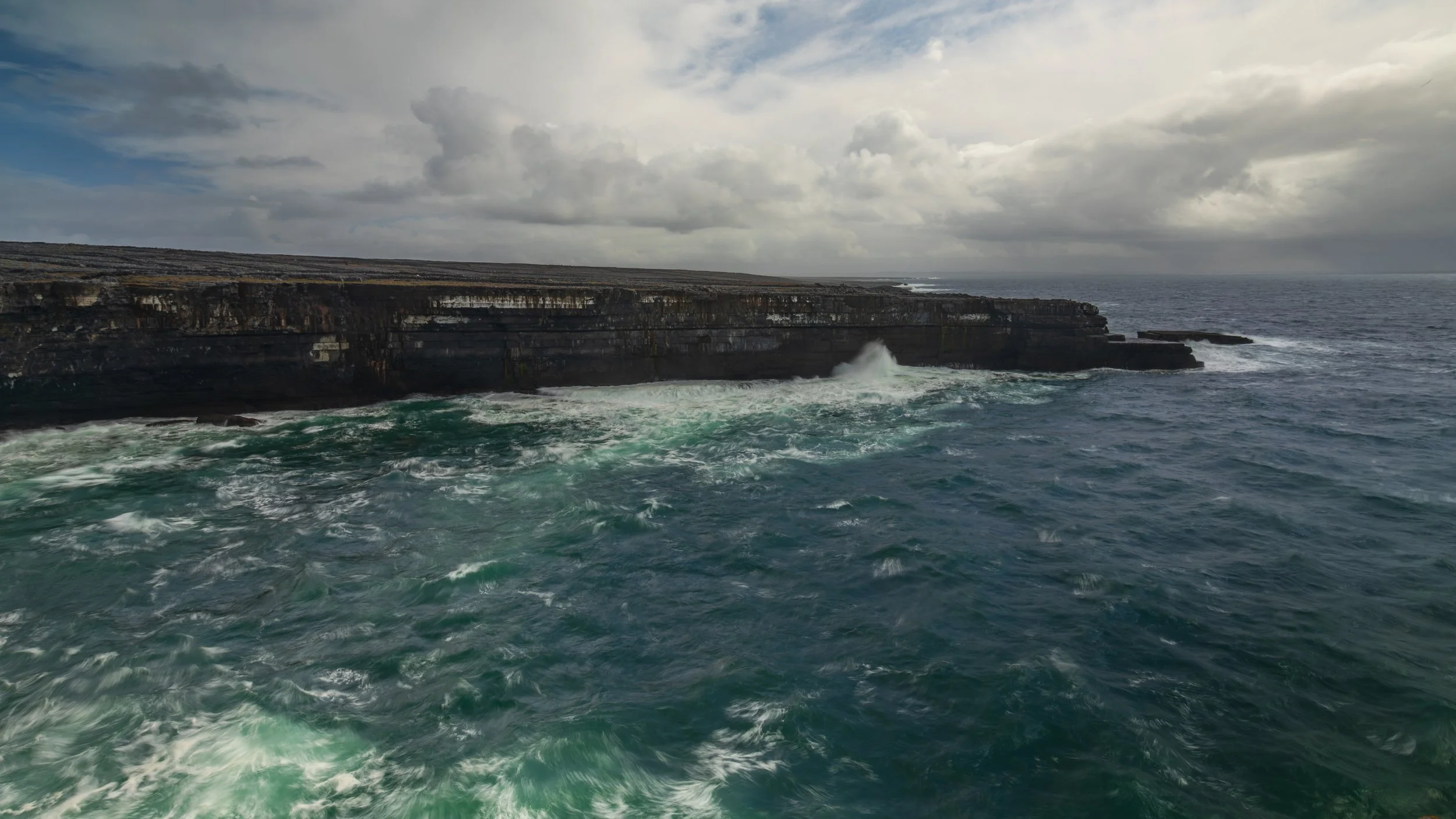
For my final photographs of the day, I moved to a viewpoint overlooking the cliffs stretching away in the opposite direction. The sun had finally established itself and was casting light across the coastline.
Using a long lens allowed me to compress the scene and capture the scale of the cliffs in a way that felt true to what I was seeing.
Standing there, camera in hand, I realised something.
The Black Fort had been the destination.
But the waves, the waterfalls, the illusion in the cliffs and the unexpected moments along the way had become the real story.
Sometimes the best photographs aren't waiting where you planned to find them.
Sometimes they're the reason you never quite make it to the destination on time.