The Toughest Part Of Landscape Photography
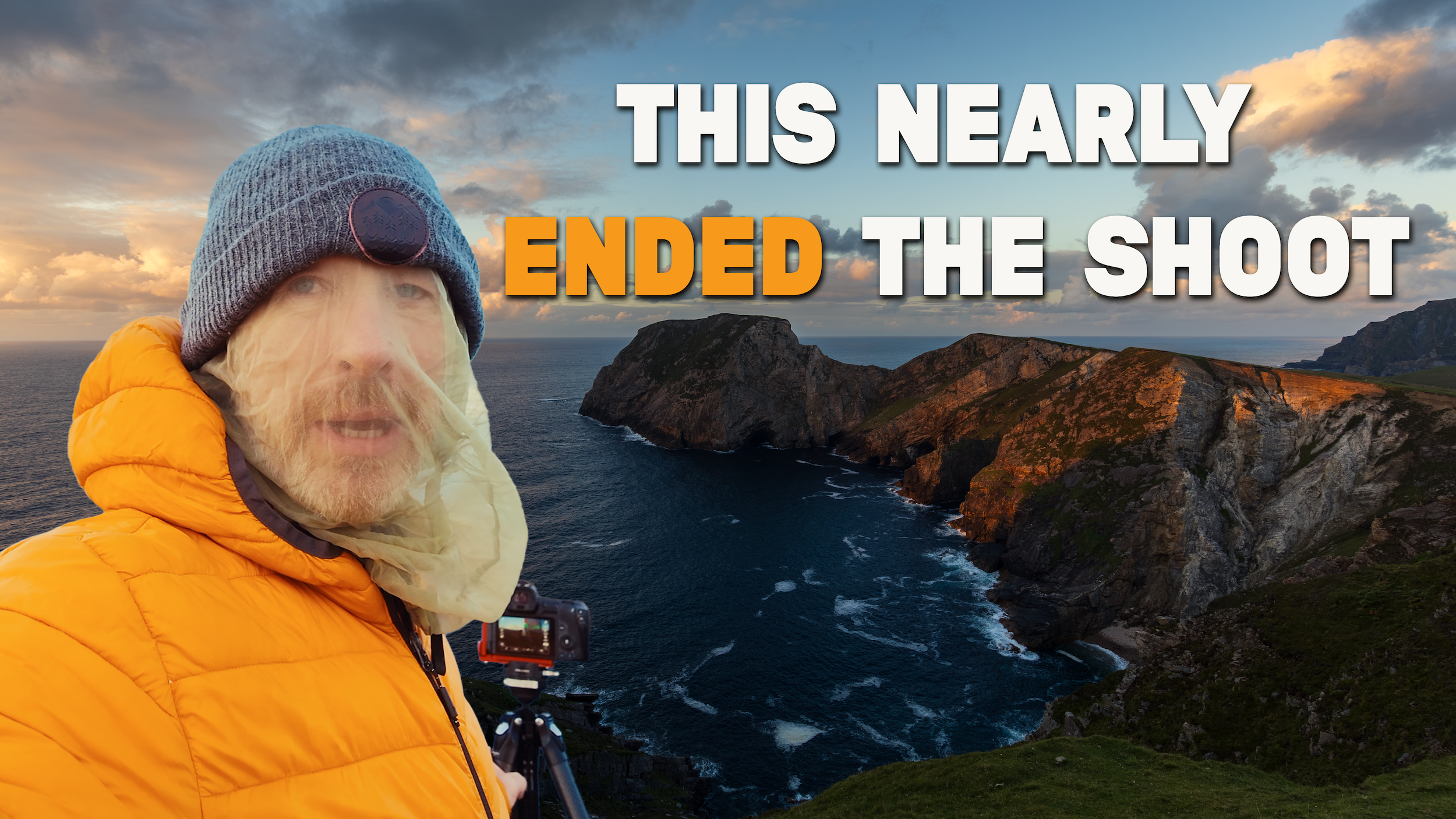
There is always a strange feeling on the final evening of a photography trip.
You know it is coming to an end, but at the same time you are still completely focused on making the most of every opportunity. You start thinking about the images you have captured, the locations you have visited and the moments that will stay with you long after the cameras are packed away.
For this trip around Mayo with Bernard and Milo, we had already experienced some fantastic conditions and explored some incredible parts of the coastline. Every location had offered something different, but as we headed out for our final shoot, we were still hoping that Mayo had one more surprise waiting for us.
After finishing the previous shoot, we decided to take things a little easier. Photography trips can become intense, especially when you are chasing sunrise and sunset every day, so having a few hours to slow down was welcomed.
We headed out for some food and then visited a local bar, where Mayo was still celebrating their All-Ireland football victory. Being there during those celebrations was something I really enjoyed. It was not something we had planned as part of the trip, but these unexpected moments often become some of the best memories.
After spending some time enjoying the atmosphere, it was time to get back out to the coast.
Our final location required a short hike of around twenty-five minutes. As we climbed towards the cliffs, we were all wondering what the conditions would give us. The weather had been constantly changing throughout the trip, which is exactly what you want when photographing the coast.
When we reached the top, we were greeted with another incredible view.
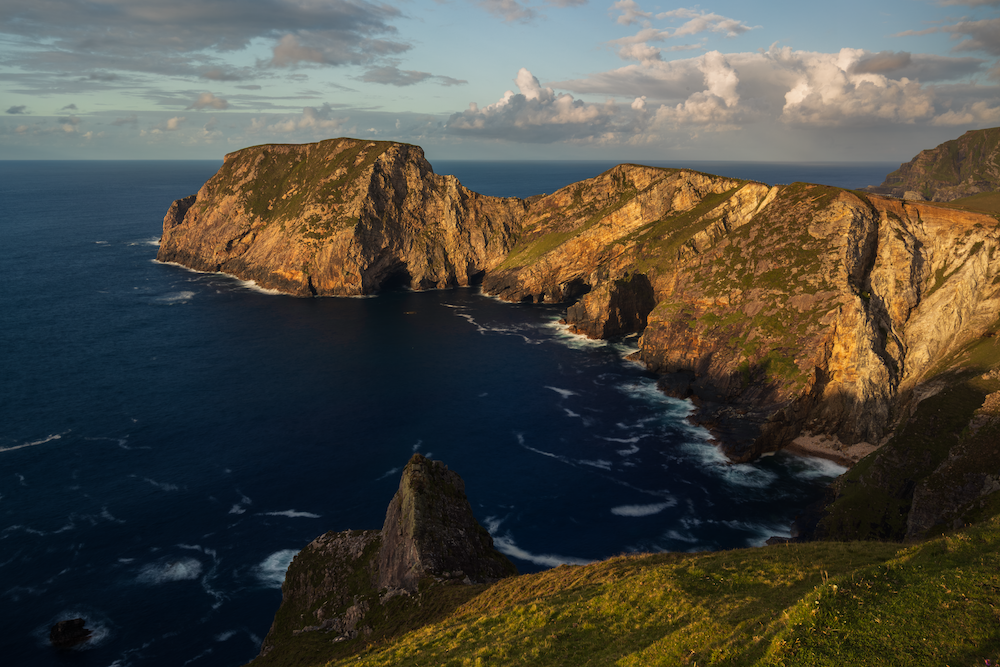
The cliffs stretched along the headland, and although we were still photographing the same general area as one of our previous shoots, this location felt completely different. The shape of the coastline, the viewpoints available and the changing light all gave us something new to work with.
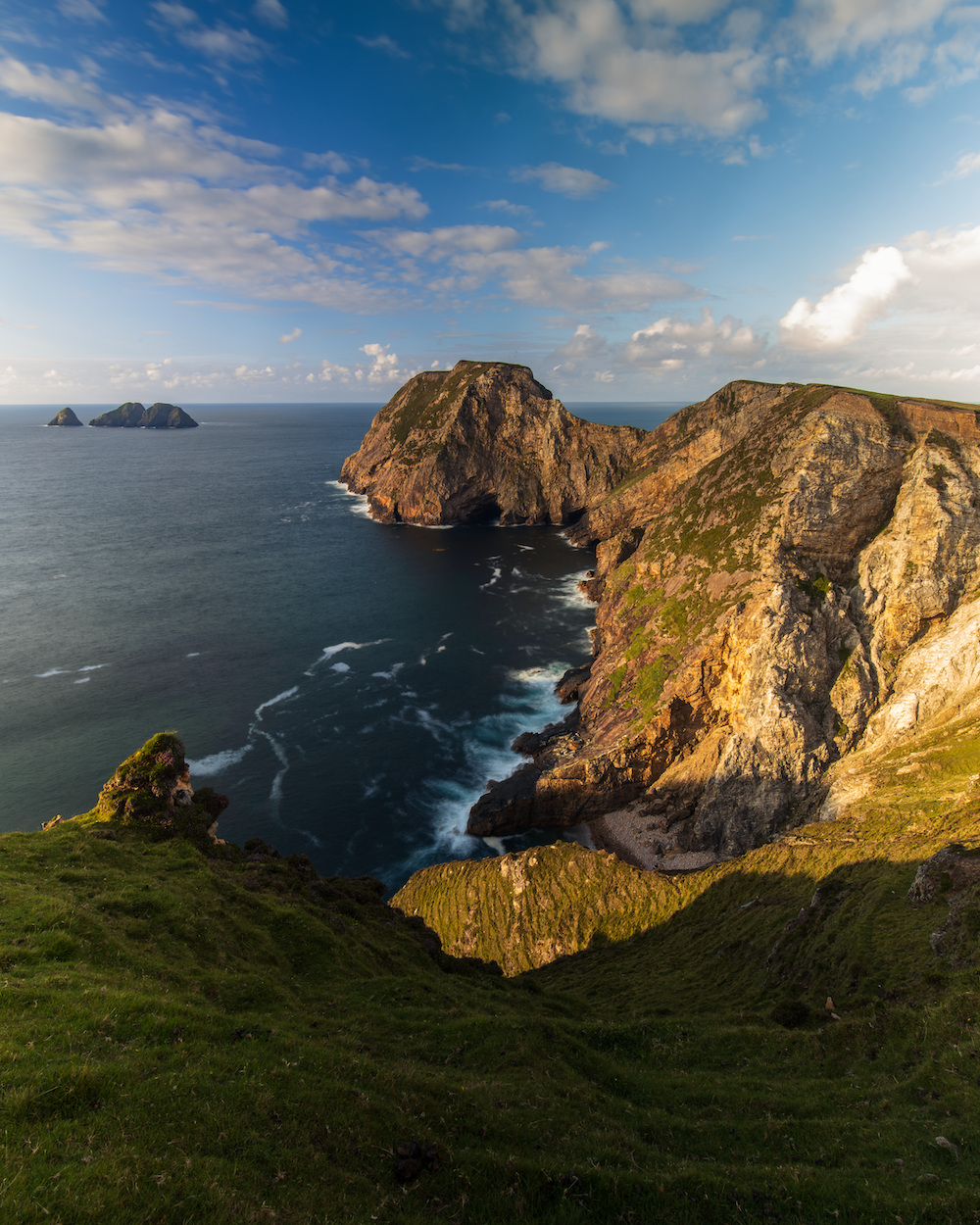
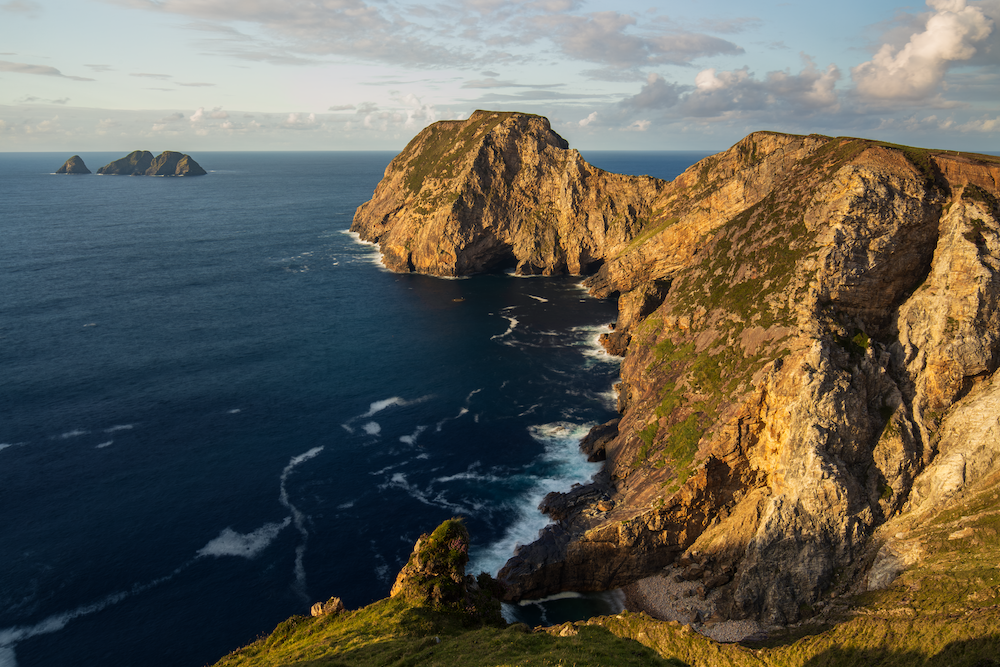
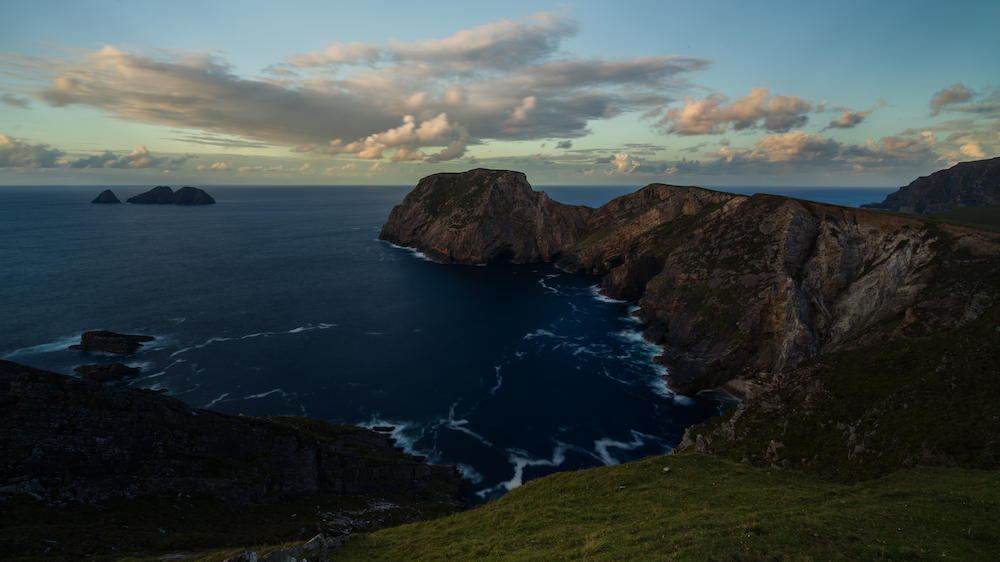
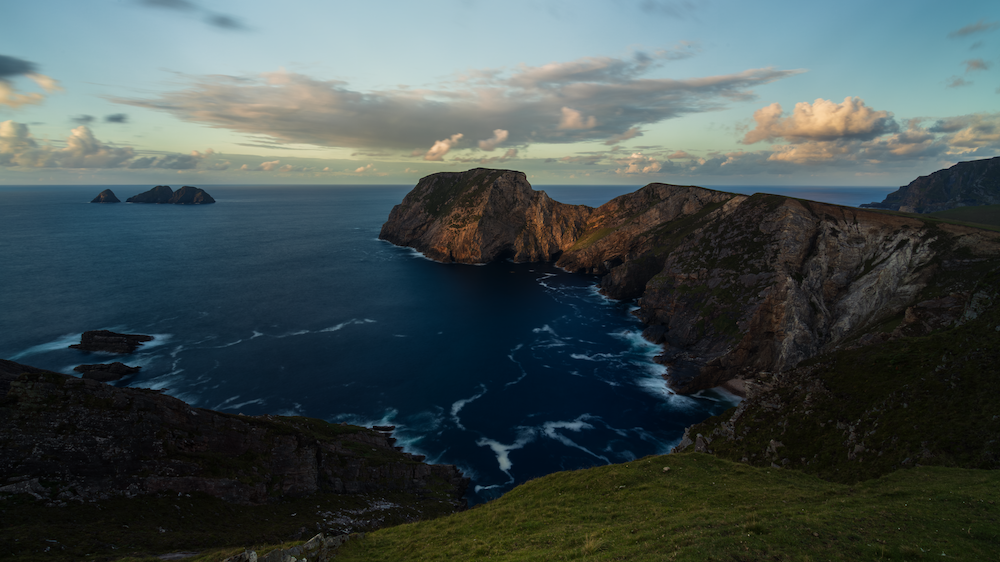
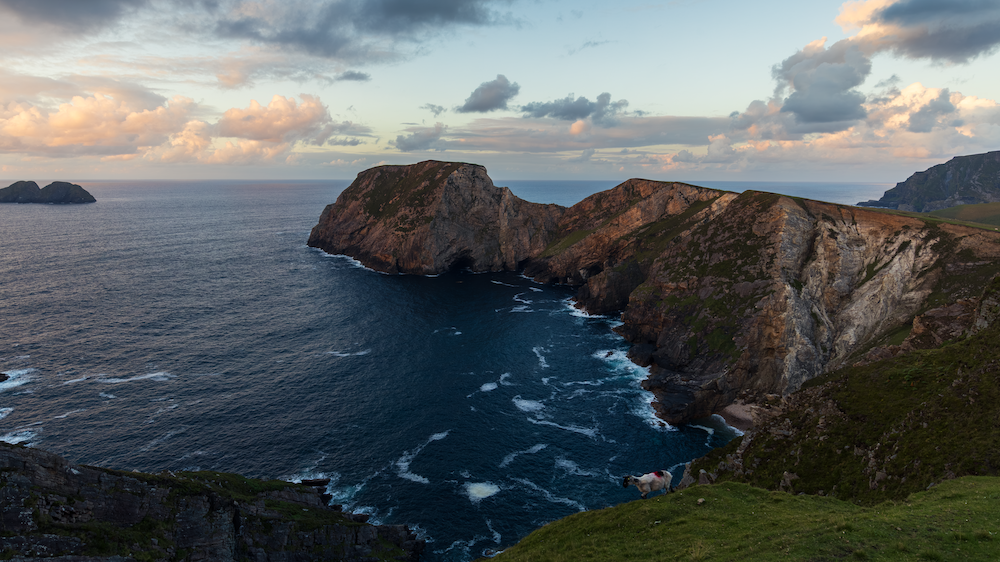
Looking back towards the sea, I could see the small stacks and islands that I had photographed earlier that afternoon. Using the long lens had allowed me to isolate those features from a distance, but now we had the opportunity to include them as part of a wider landscape.
The light was already starting to improve. A warm glow was spreading across parts of the cliffs, and I knew I needed to start working quickly.
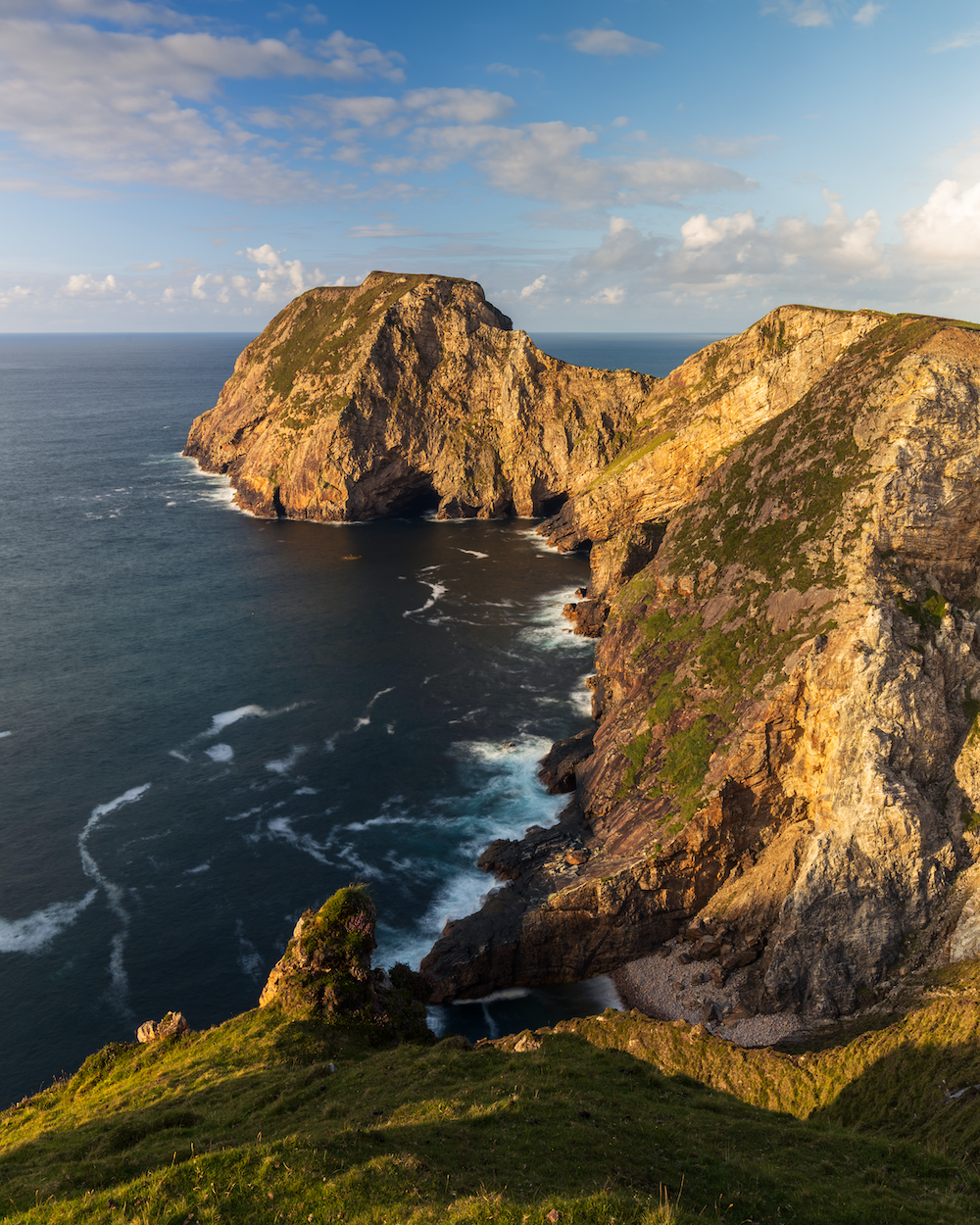
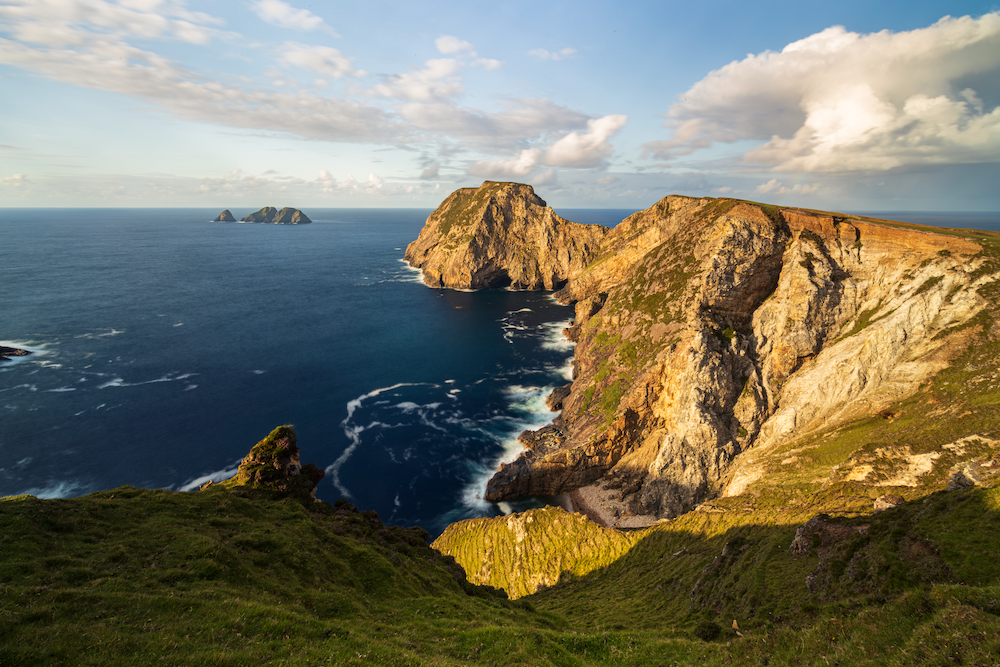
One of the first things I noticed was a small section of rock sticking out from the cliffs below. It was not an obvious feature, but these smaller details often make the difference when creating a composition.
I took my first image within minutes.
The small outcrop worked well as a foreground element, helping to create depth and drawing the viewer through the image towards the cliffs and the ocean beyond.
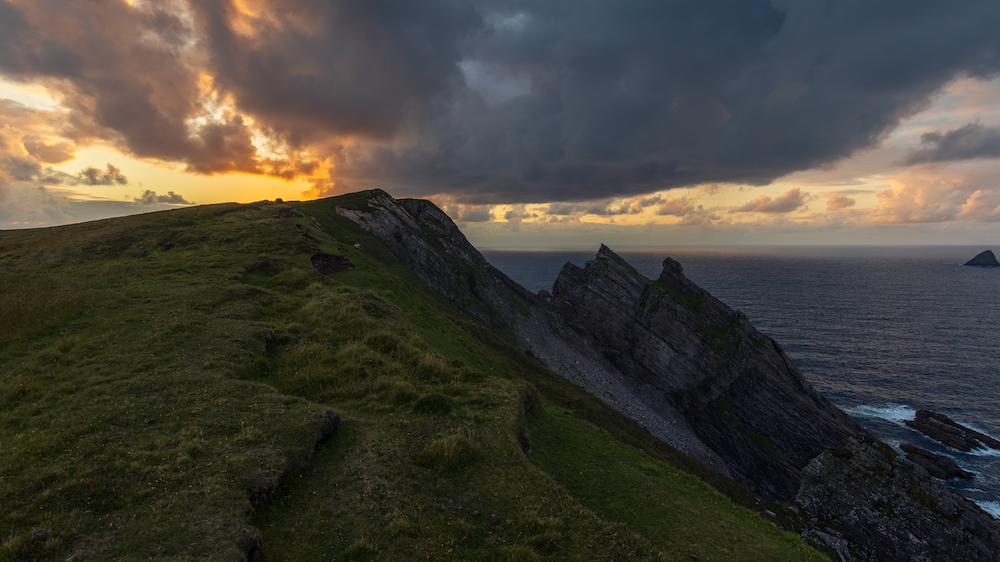
While exploring this area, something else caught my attention. The signs of erosion.
Along this stretch of coastline, you could clearly see where the land was changing. The ground here is a mixture of bog sitting on top of solid rock, and in places, sections had started to break away towards the sea.
It was a visual that landscapes like this are constantly moving. They may look permanent when we stand there photographing them, but the coastline is always changing.
Thankfully, where we were standing was safe, but it is something every photographer needs to think about when working near cliffs. Getting the image is important, but understanding your environment is more important.
After taking the first set of images, I moved only a few metres along the cliff.
Sometimes photographers, myself included, can be guilty of walking past a location too quickly looking for something completely different. But often the best option is to explore small changes around the same area.
That small movement changed the composition completely.
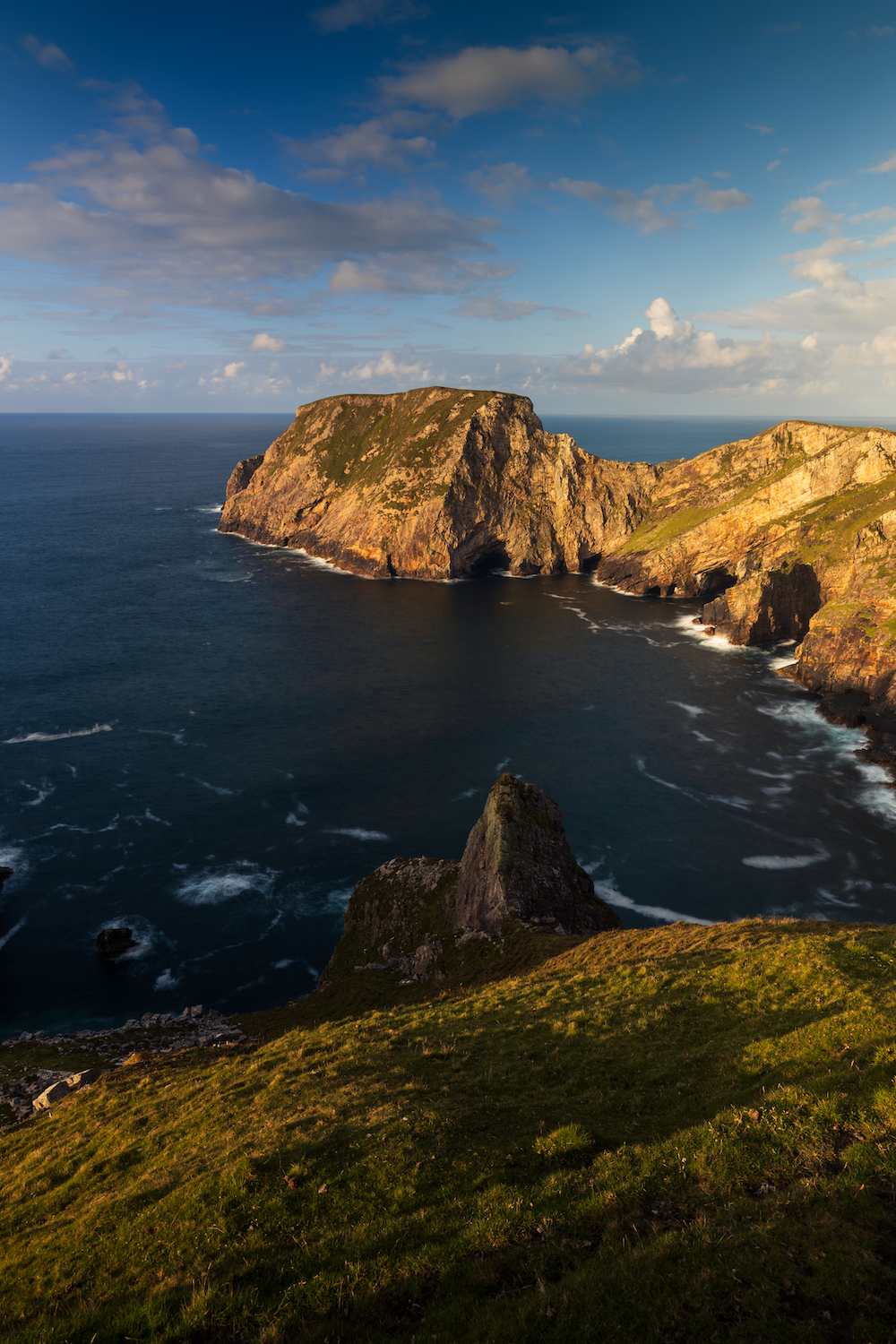
The same outcrop was now positioned differently, and I preferred how it worked within the frame. The first images worked in both landscape and portrait orientation, but this second viewpoint suited a vertical composition much better.
The foreground feature became more important, and the cliffs behind it helped create the scale of the location.
As I continued along the cliffs, more possibilities appeared. The background remained similar, but changing the foreground created completely different images.
The offshore stacks were also something I had to carefully consider. Depending on the composition, I either wanted them included fully or removed completely. Small distractions around the edge of an image can often make the difference between a strong composition and one that feels slightly unbalanced.
Then I decided to try something different.
I wanted to send the drone out towards the stacks.
From our viewpoint, they did not appear too far away, and I had a clear line of sight. It seemed like a straightforward flight, so I launched the drone and started moving towards them.
Very quickly, I realised the distance was greater than expected.
The numbers on the controller kept increasing.
One kilometre.
One and a half.
Two kilometres.
Eventually, it reached three kilometres.
I was almost at the stacks when everything changed.
The controller suddenly displayed a warning telling me the signal was weak.
Seconds later, the live view disappeared.
The screen switched to black and white, and a message appeared saying there was no communication with the aircraft.
I just sat there looking at the controller.
At that moment, I was trying to work out what had happened and what I needed to do next.
Then Bernard arrived and immediately added another problem to the situation.
Milo's drone was also out there.
It was around seven hundred metres away and had just seven percent battery remaining.
Suddenly, we were both dealing with drone problems at the same time.
My controller eventually announced that the drone was returning home, but without the live view or a connection, I had no idea what was happening. For a few moments, I honestly thought it was gone.
Then, just as quickly as it disappeared, everything returned.
The screen came back.
The connection was restored.
I had control again.
The relief was immediate.
I brought the drone back safely, but not before capturing some aerial footage of the coastline. Looking back, those few stressful minutes were worth it because the footage gave another perspective of just how impressive this coastline is.
Of course, the evening was not finished testing us.
As soon as the wind dropped, the midges appeared.
Thousands of them seemed to surround us instantly.
When the wind was blowing, they were not too bad, but whenever it stopped, they were everywhere.
The midge net came out.
It is one of those pieces of equipment you never think about until you desperately need it.
The problem is that photographing while wearing one is difficult. Trying to check your camera screen through the mesh is almost impossible, so every adjustment involved lifting it up, checking the composition and quickly covering my face again.
Then, just when we thought the evening was winding down, the light changed.
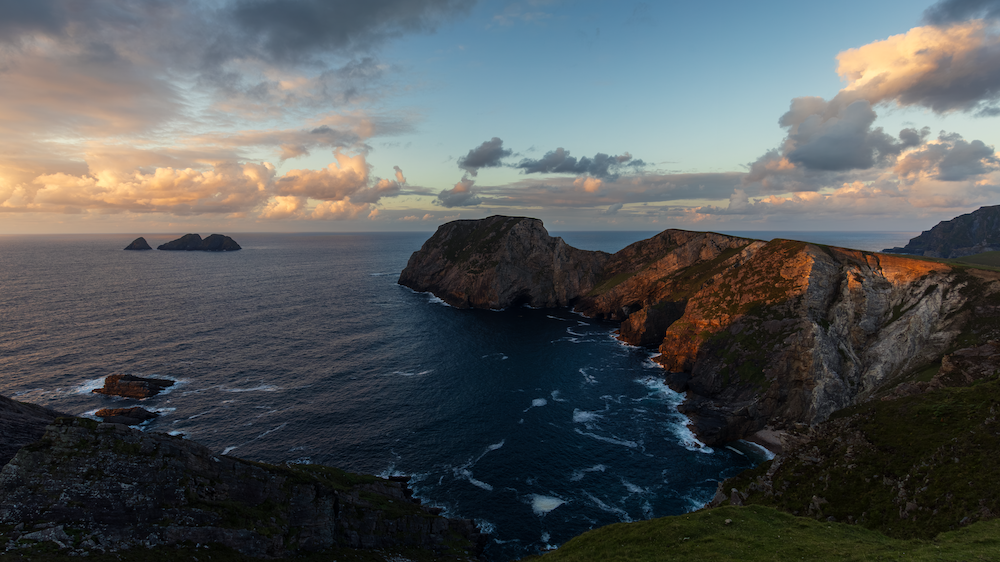
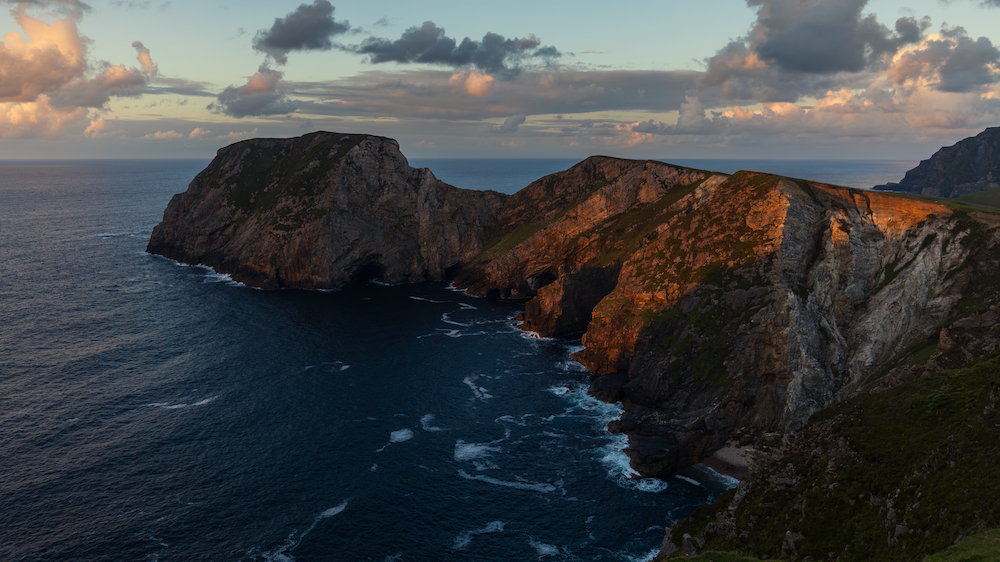
A gap appeared in the cloud, allowing the sun to briefly illuminate parts of the cliffs below.
It lasted only moments, but those moments are exactly why we stay out.
I captured the light before it disappeared, and then decided to set up a timelapse.
Earlier that day, I had experienced a similar moment where the sun broke through unexpectedly, so I thought there was a chance it could happen again.
It did.
The sun broke through once more, this time creating a deeper red glow across the cliffs.
The video camera was already set up, so I photographed the moment handheld. There was no need to complicate things. The scene was changing quickly, and sometimes the simplest approach is the best one.
Then, just like before, it disappeared.
The cloud moved back in, the light was gone and that was the end of our final shoot.
The following morning was supposed to be one final sunrise, but Mayo had other ideas. Before sunrise, heavy rain arrived and completely changed the plans.
Poor Milo, sleeping in his tent, found out just how heavy that rain was when it started making its way inside.
And that was it.
The trip was over.
Looking back, the photographs are only one part of what made this adventure memorable. The locations, the challenges, the conversations, the unexpected moments and sharing it all with good friends are what make these trips special.
Mayo had already impressed me before this journey, but spending several days exploring its coastline gave me an even greater appreciation for what is here.
There are still so many places left to explore, so many viewpoints waiting to be found and plenty of reasons to return.
I have no doubt I will be back.