Me vs the Rain: I Was Not Giving Up
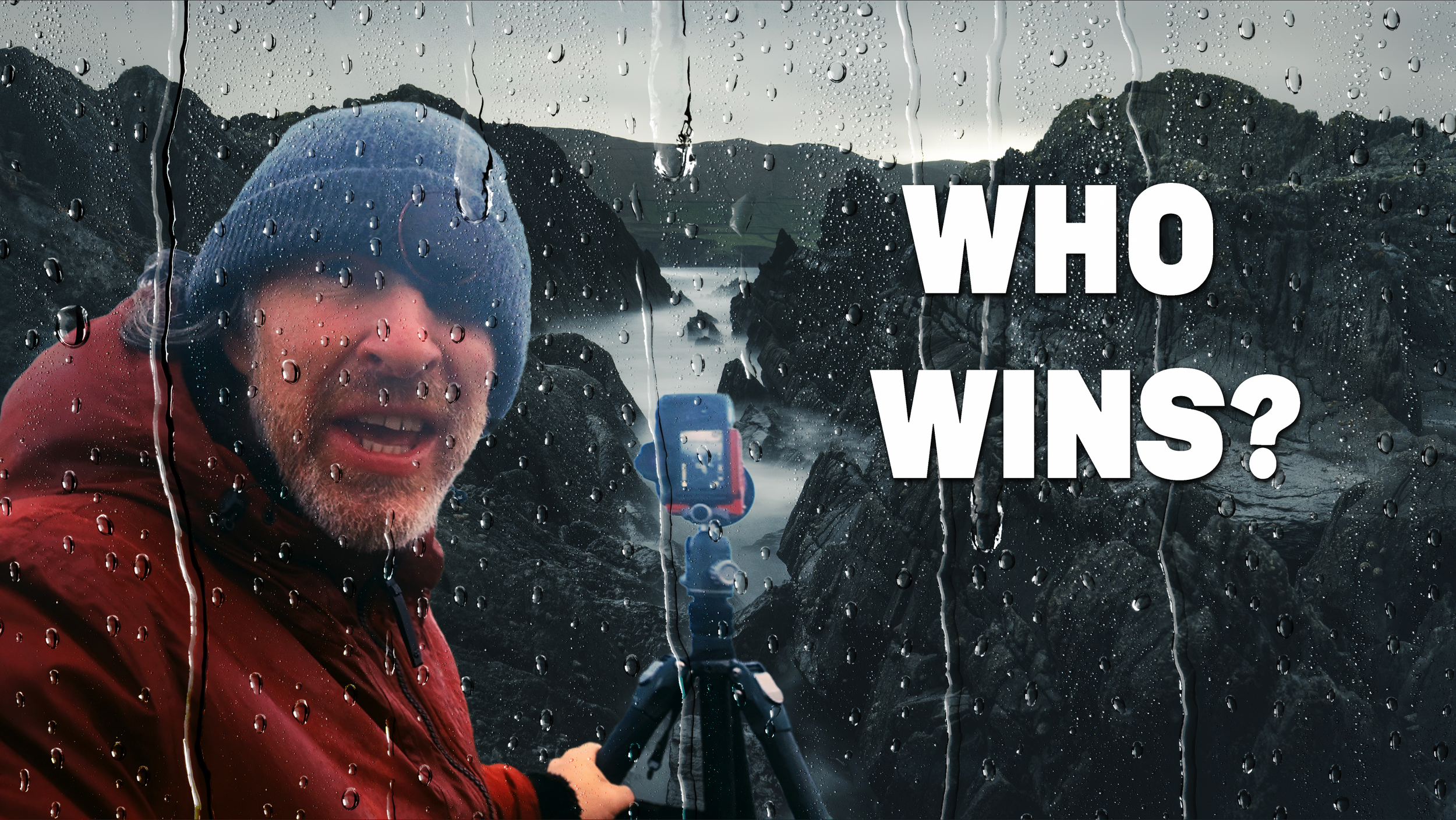
Day two of my photography trip to West Cork was always going to be a challenge. As I predicted in my previous video and blog, the rain was coming, and it was coming in strong. I knew the weather would make things difficult, but I had no intention of letting it decide whether I would get out with the camera. The question was simple: me versus the rain, who would win?
The morning began in the comfort of the campervan, where we took the opportunity to get the previous week's YouTube video edited. Looking at the forecast, there appeared to be a chance of breaks in the rain, so I kept an eye on the conditions while getting the work done. Unfortunately, the breaks never really arrived. The rain continued throughout the morning and into the afternoon, leaving us with a decision to make.
My usual motto kept coming back to me: bad conditions don’t exist in landscape photography; there's always a shot. I have proved that to myself on many occasions, but there is a difference between working in difficult conditions and spending an afternoon being battered by sideways rain. Determination is useful, but it does not make the weather any more pleasant.
Eventually, the rain eased, and we reached the point where we had to decide whether to go out or lose the opportunity altogether. We grabbed the equipment, put on our waterproof clothing and headed towards the cliffs. I was not going to let the rain win without putting up a fight.
The first setback
When we arrived, the views were good, and the rain was staying away. Things were looking promising, at least for the moment. As I made my way over the wet rocks towards the position where I thought I might find my first composition, I slipped and landed on my backside and elbow.
Thankfully, the only thing seriously bruised was my ego. It was a reminder that wet coastal rocks demand attention, particularly when you are carrying a camera, filters and a tripod. No photograph is worth a serious injury, and I was not going to take unnecessary risks just to get closer to the water.
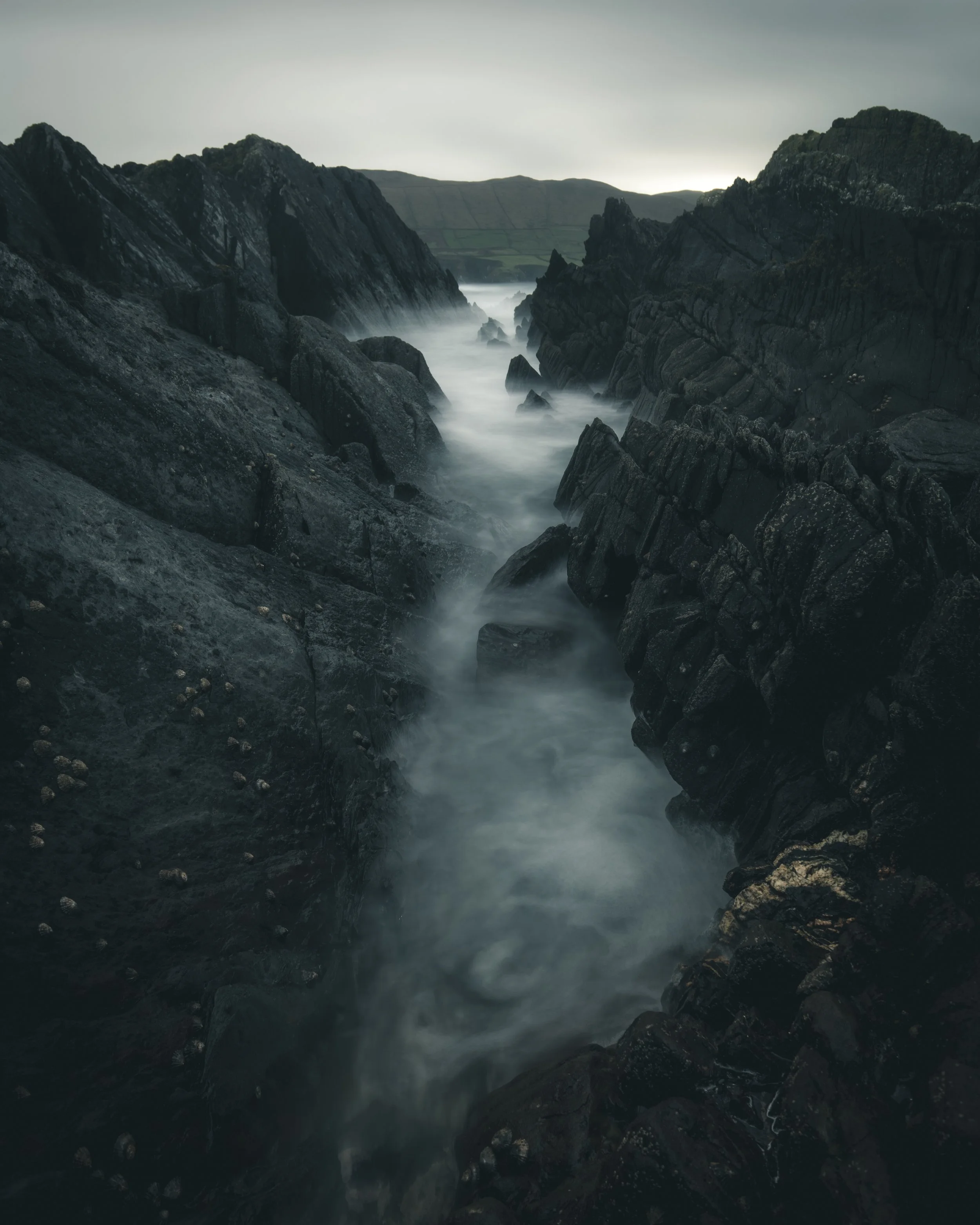
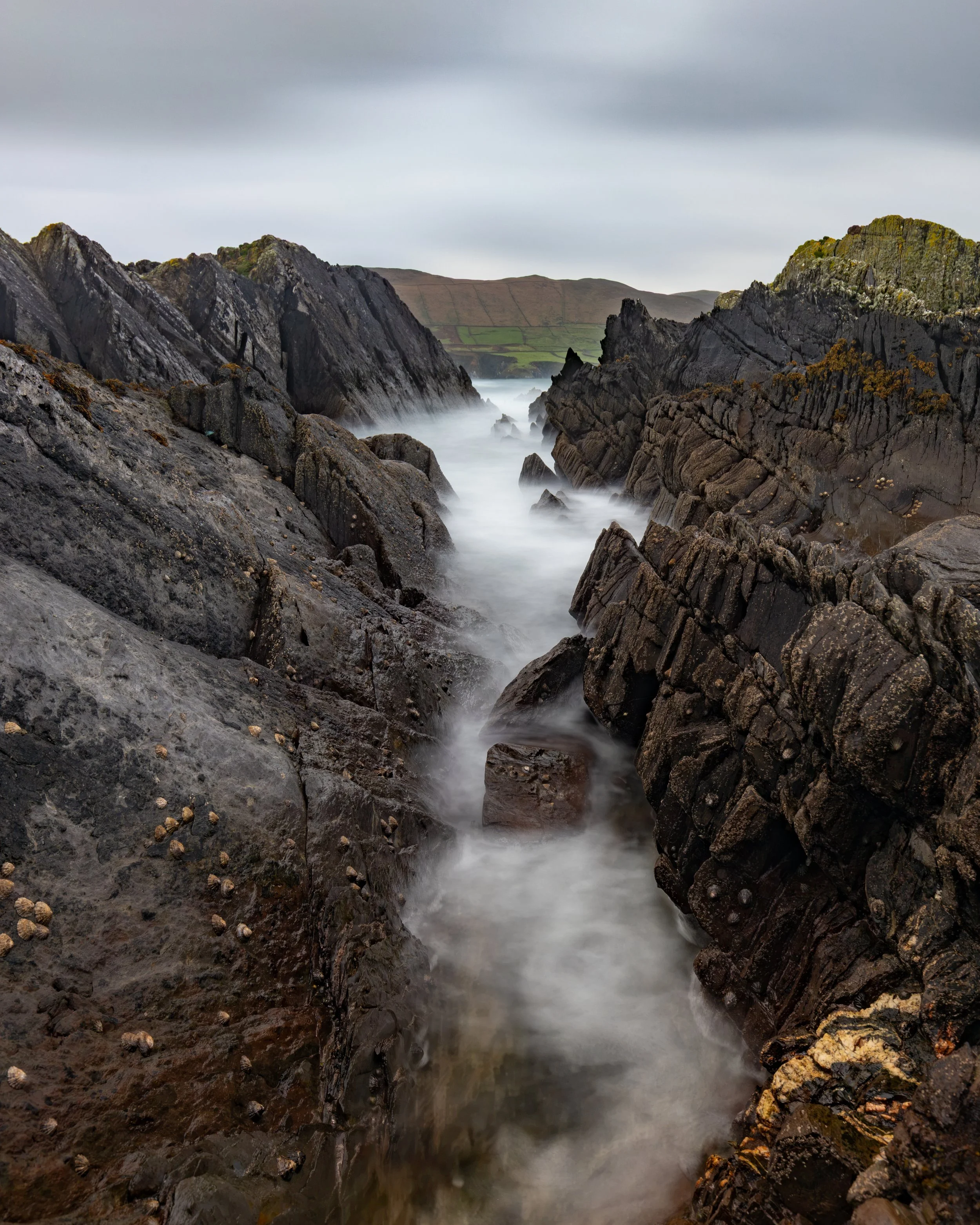
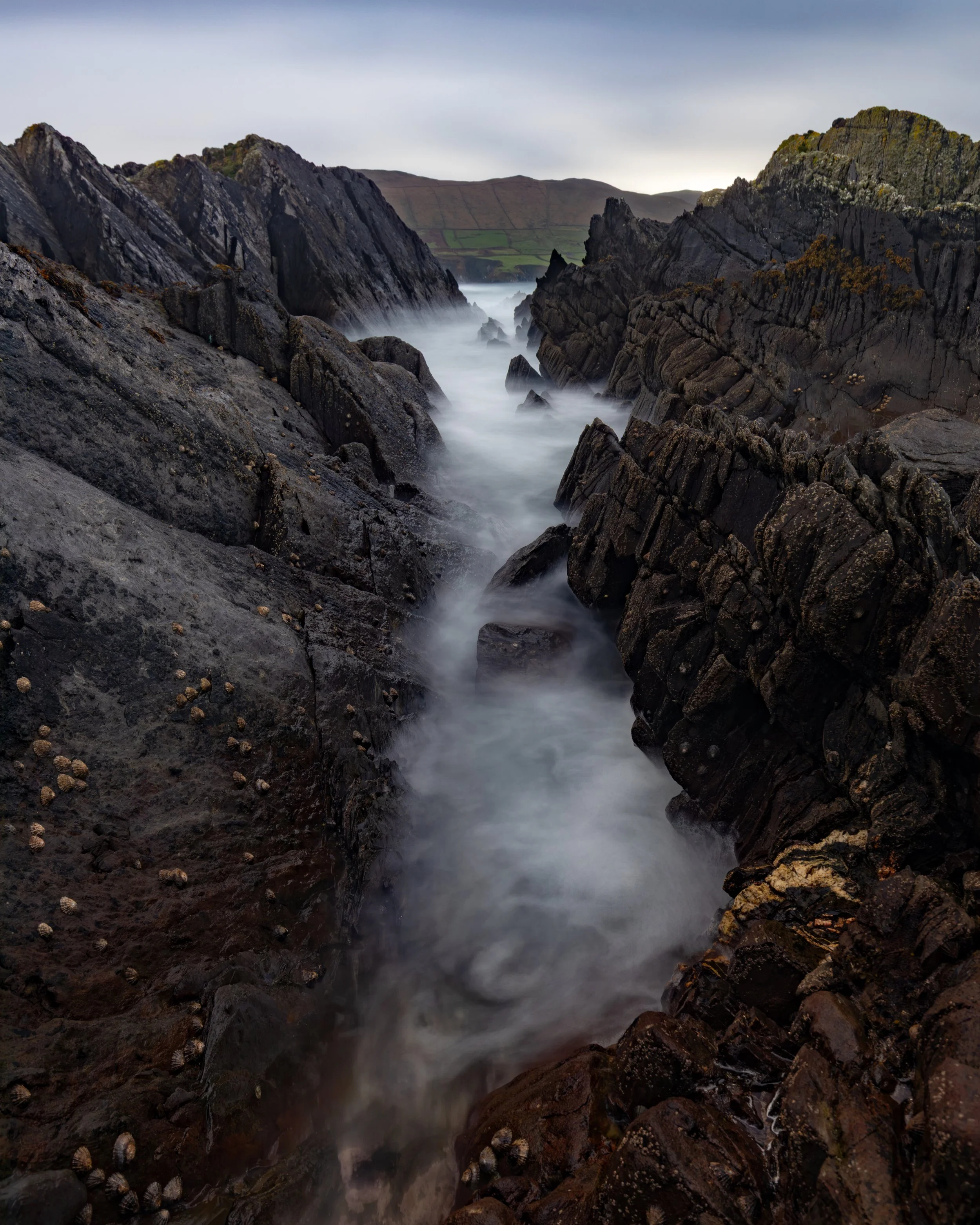
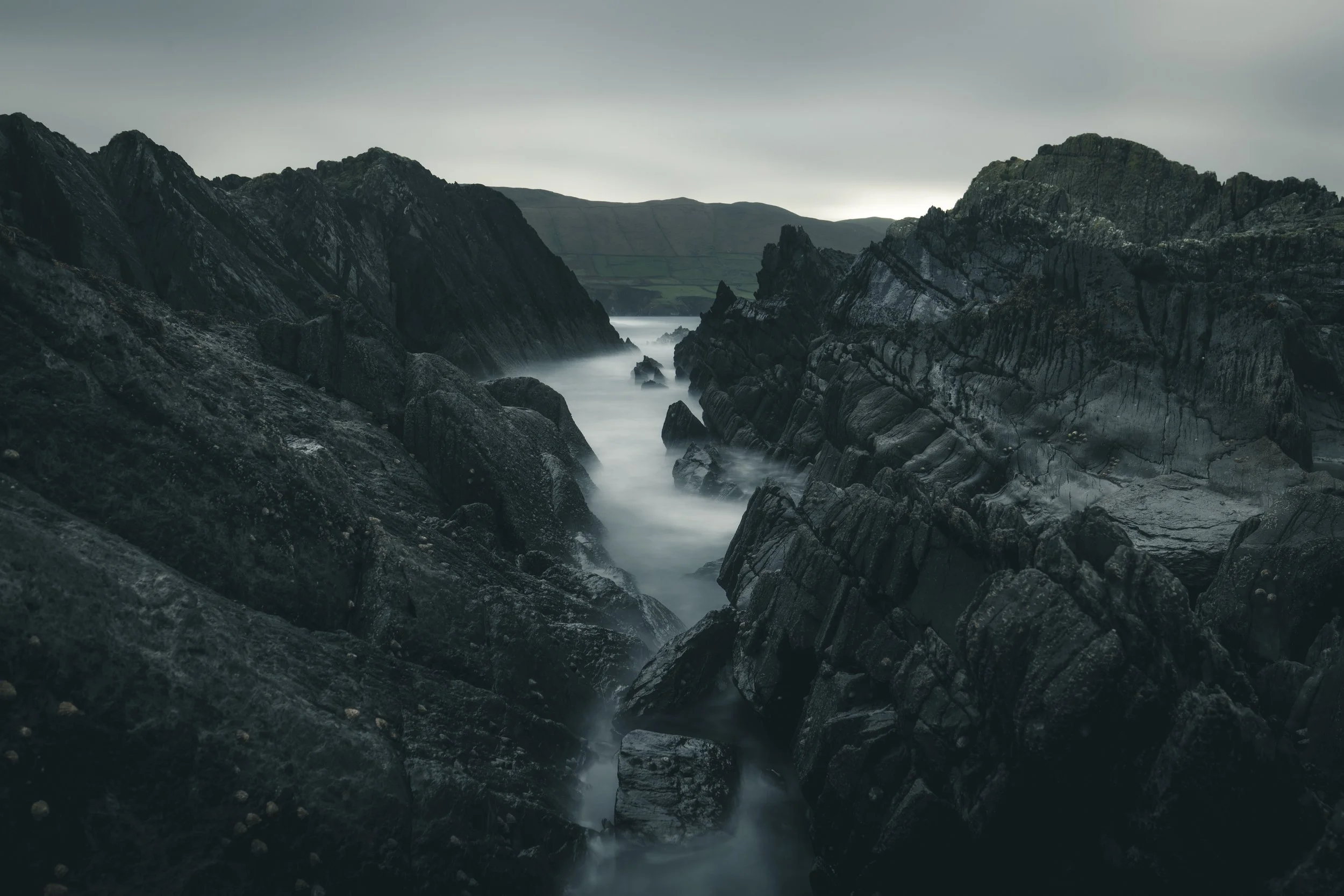
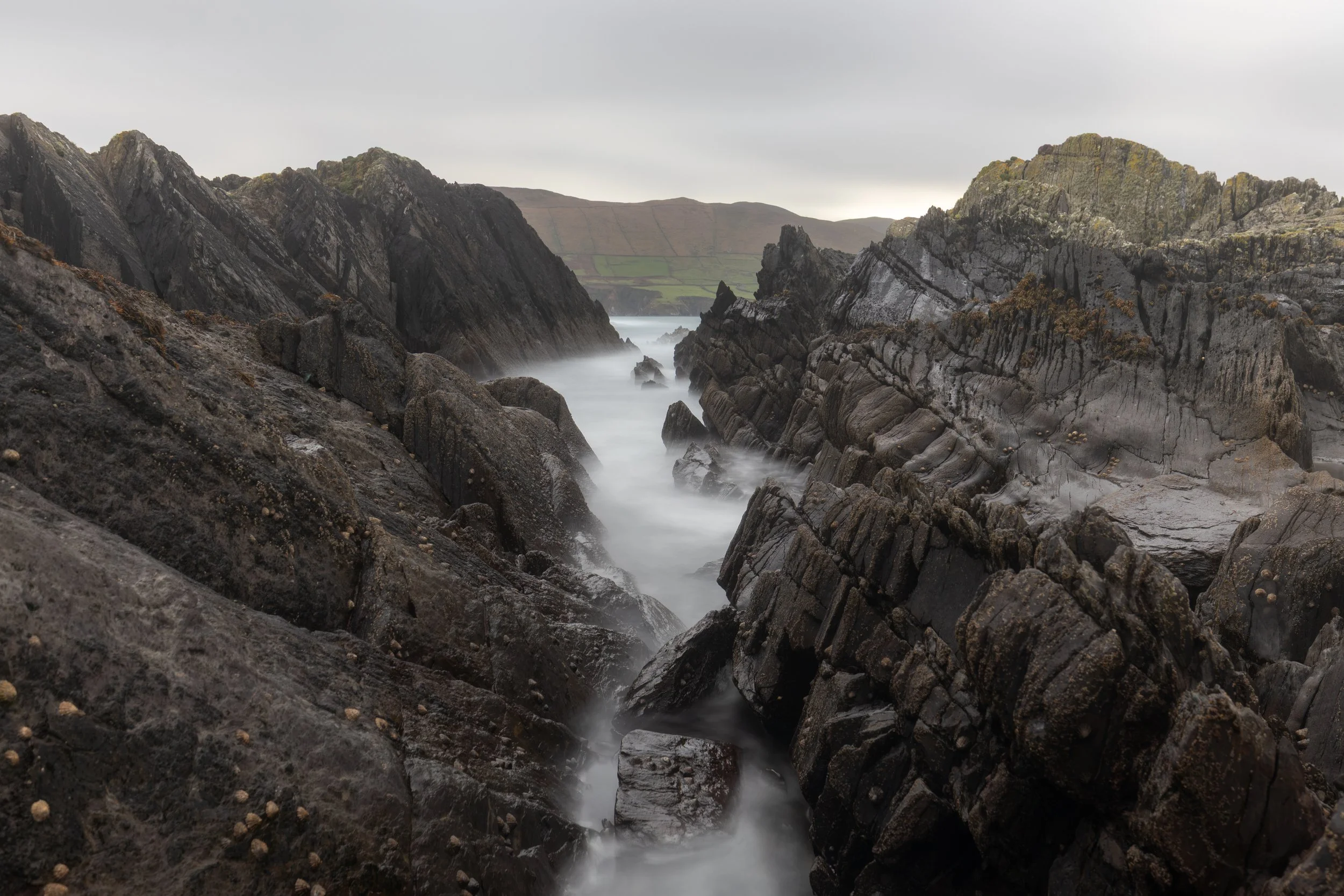
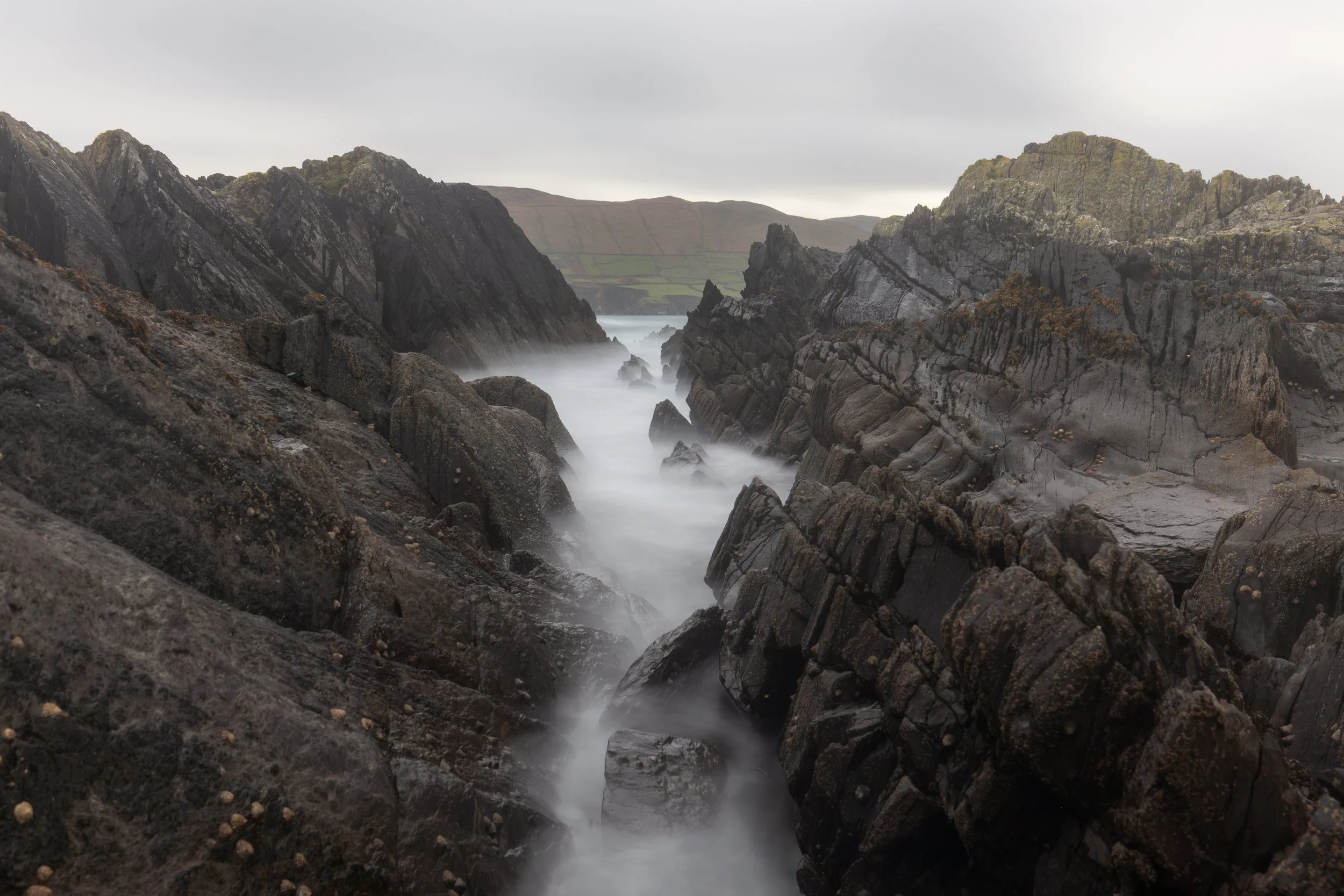
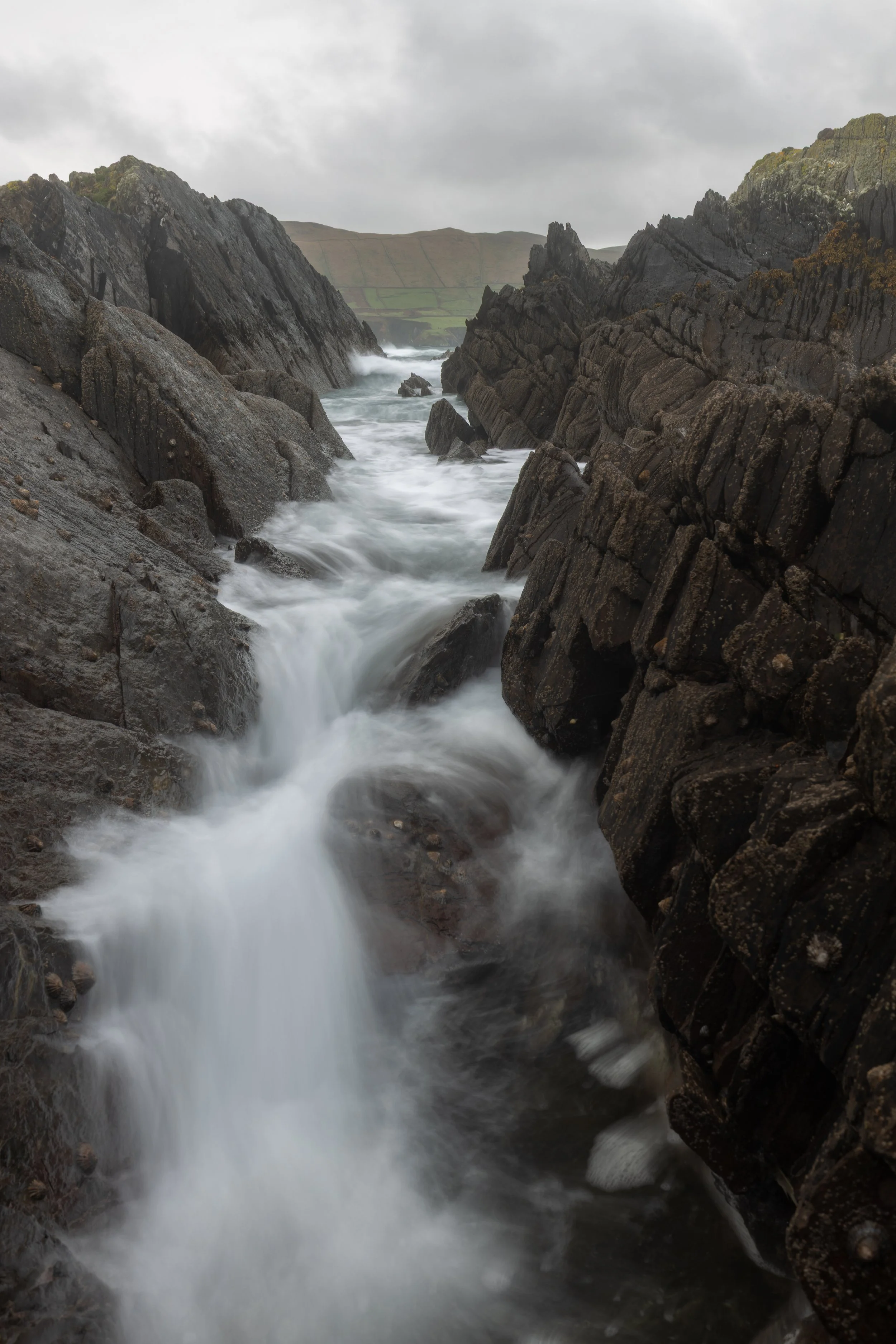
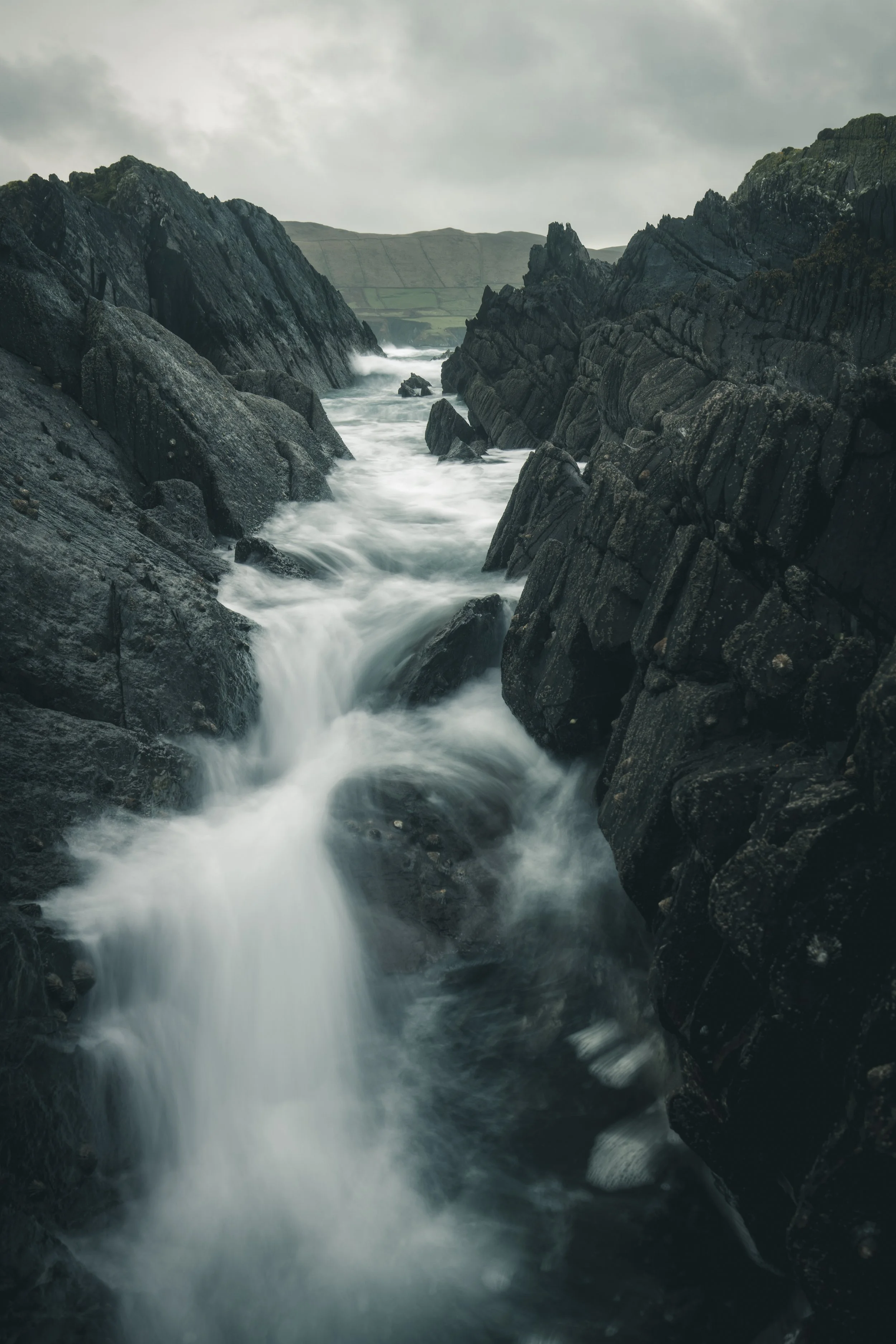
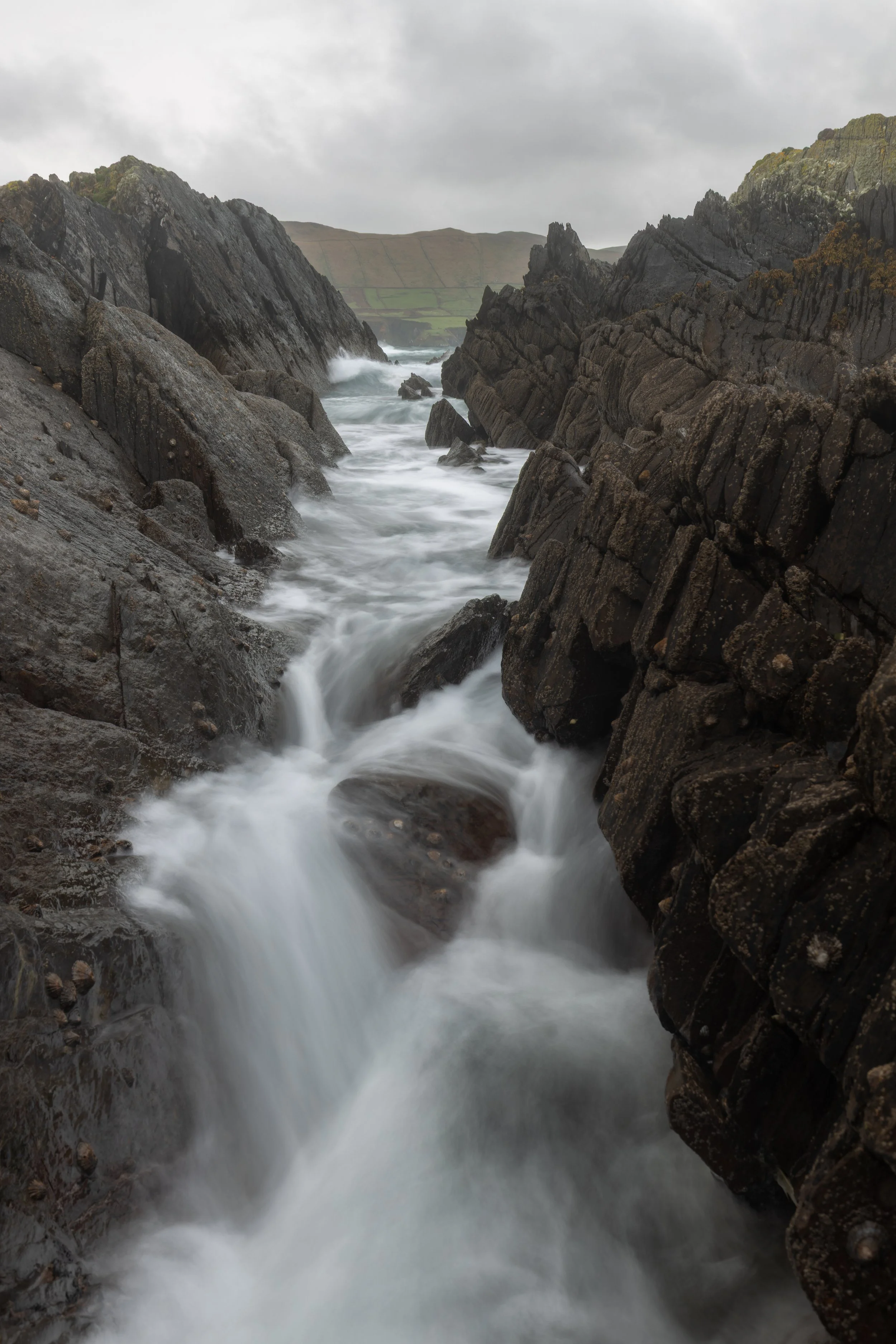
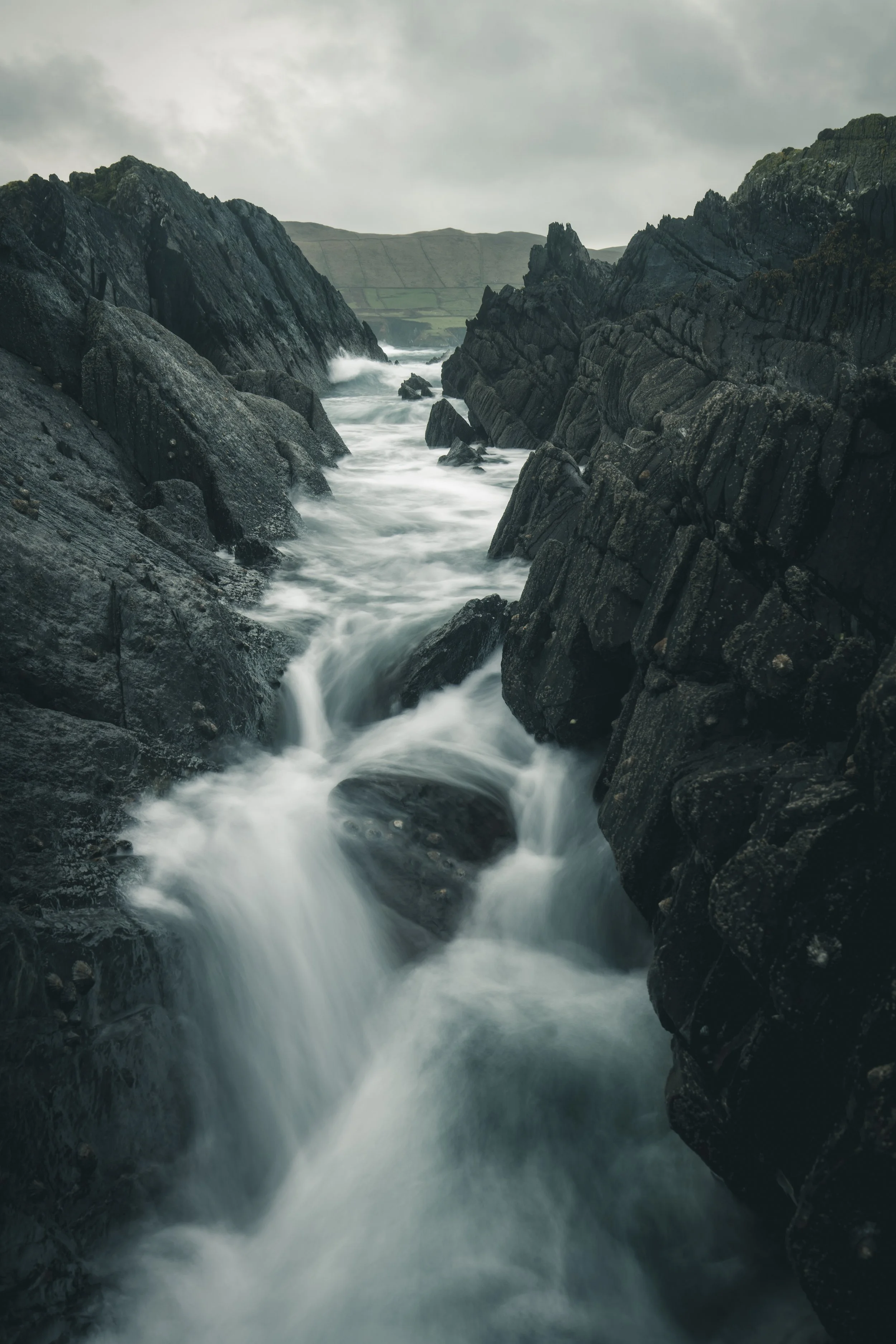
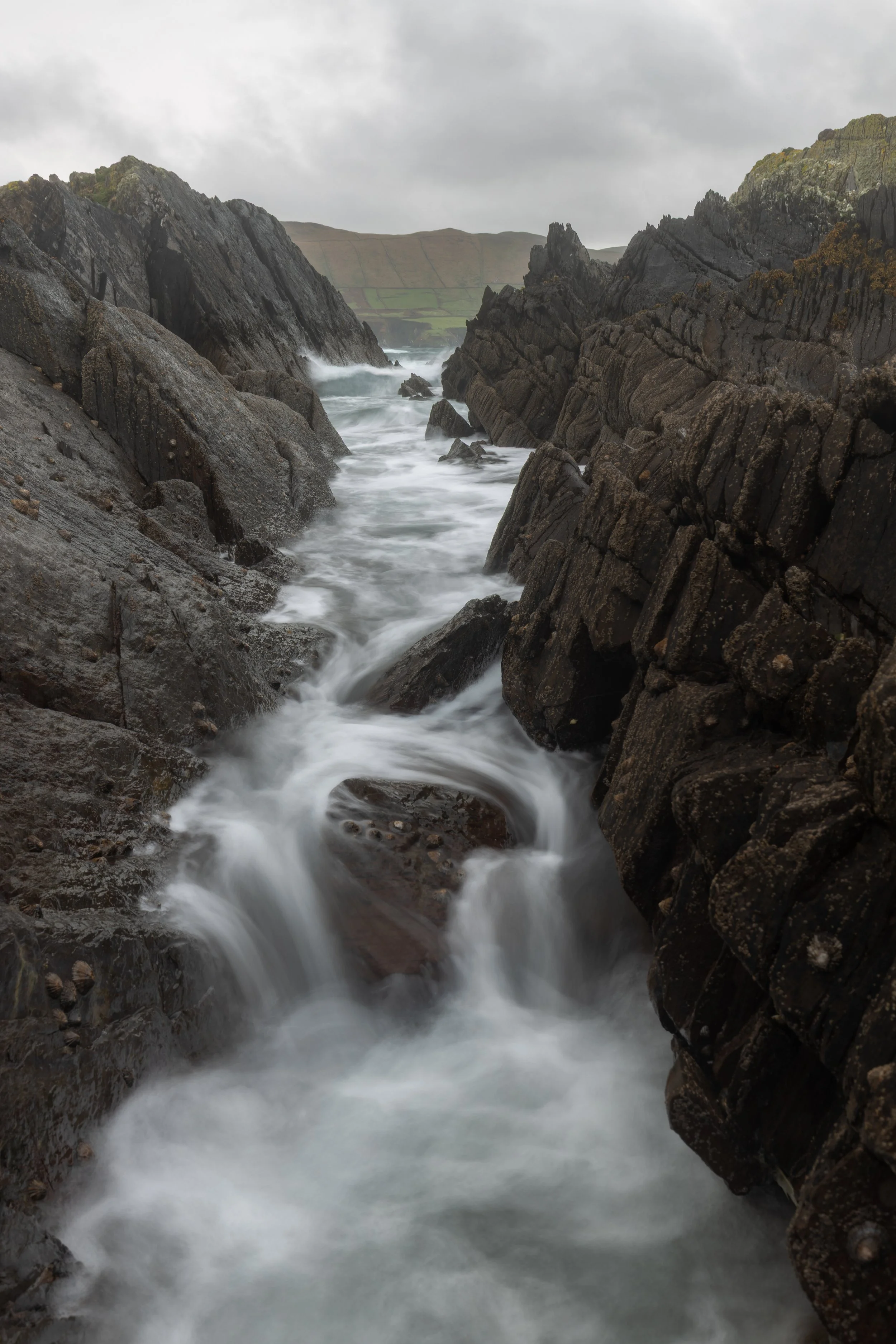
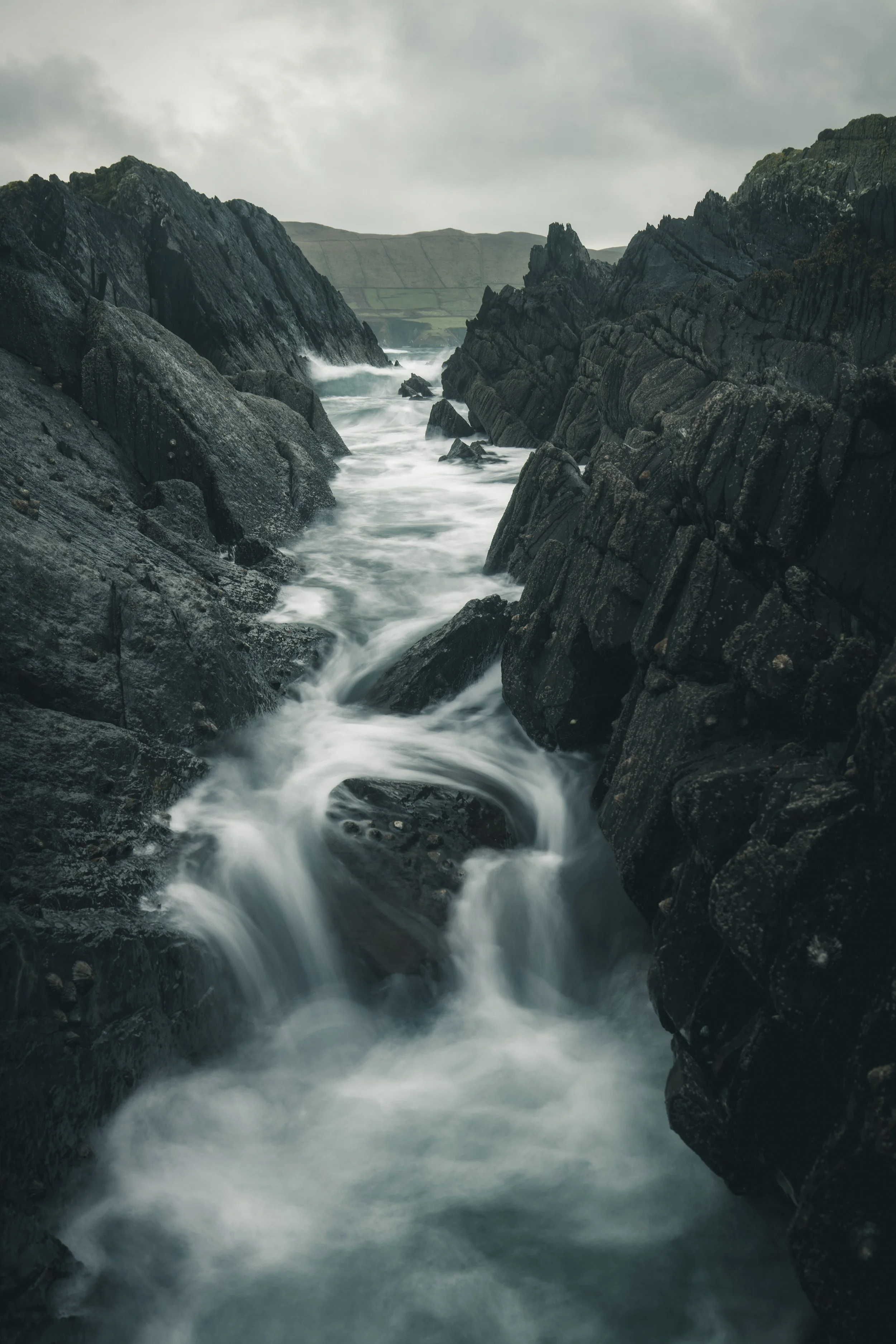
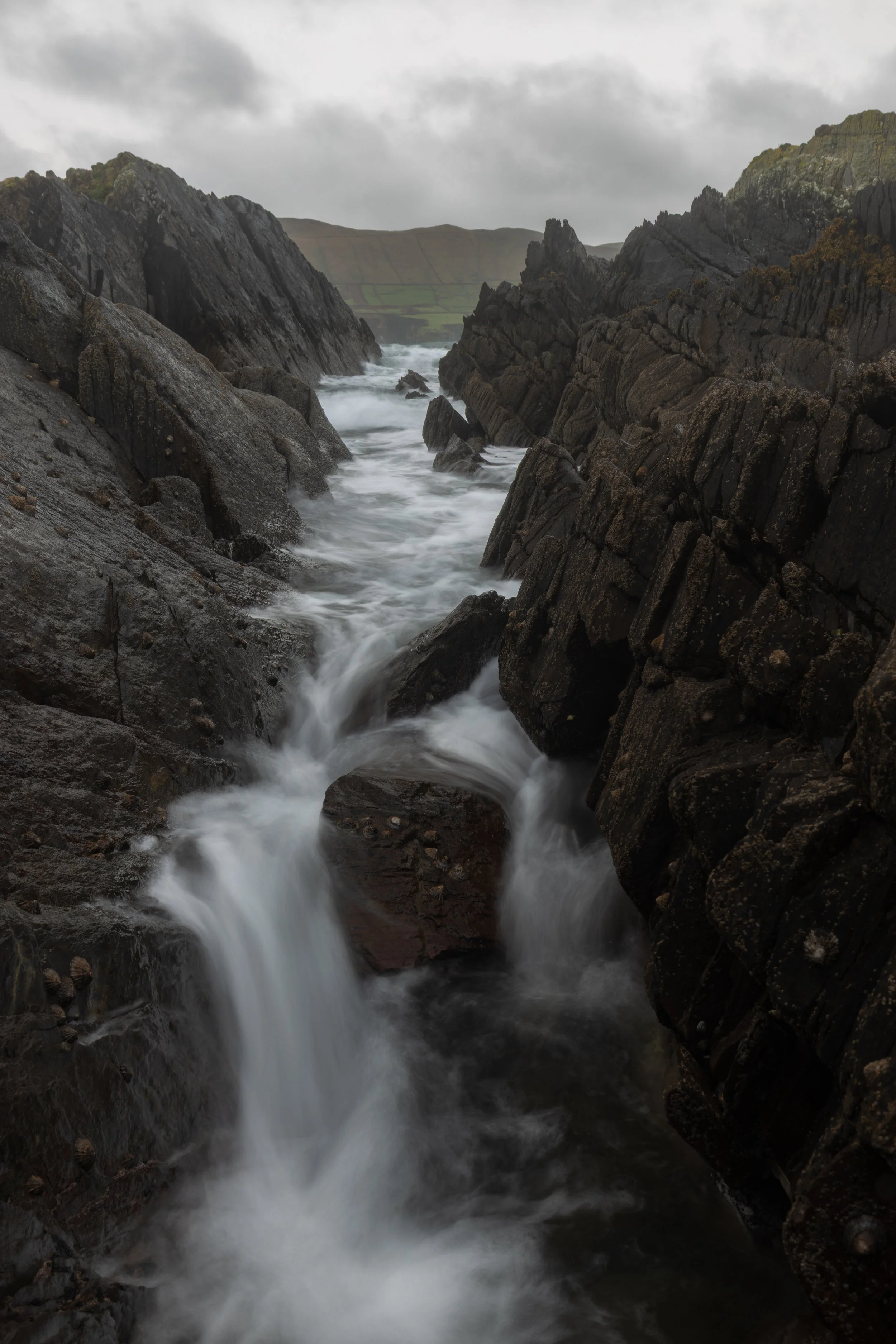
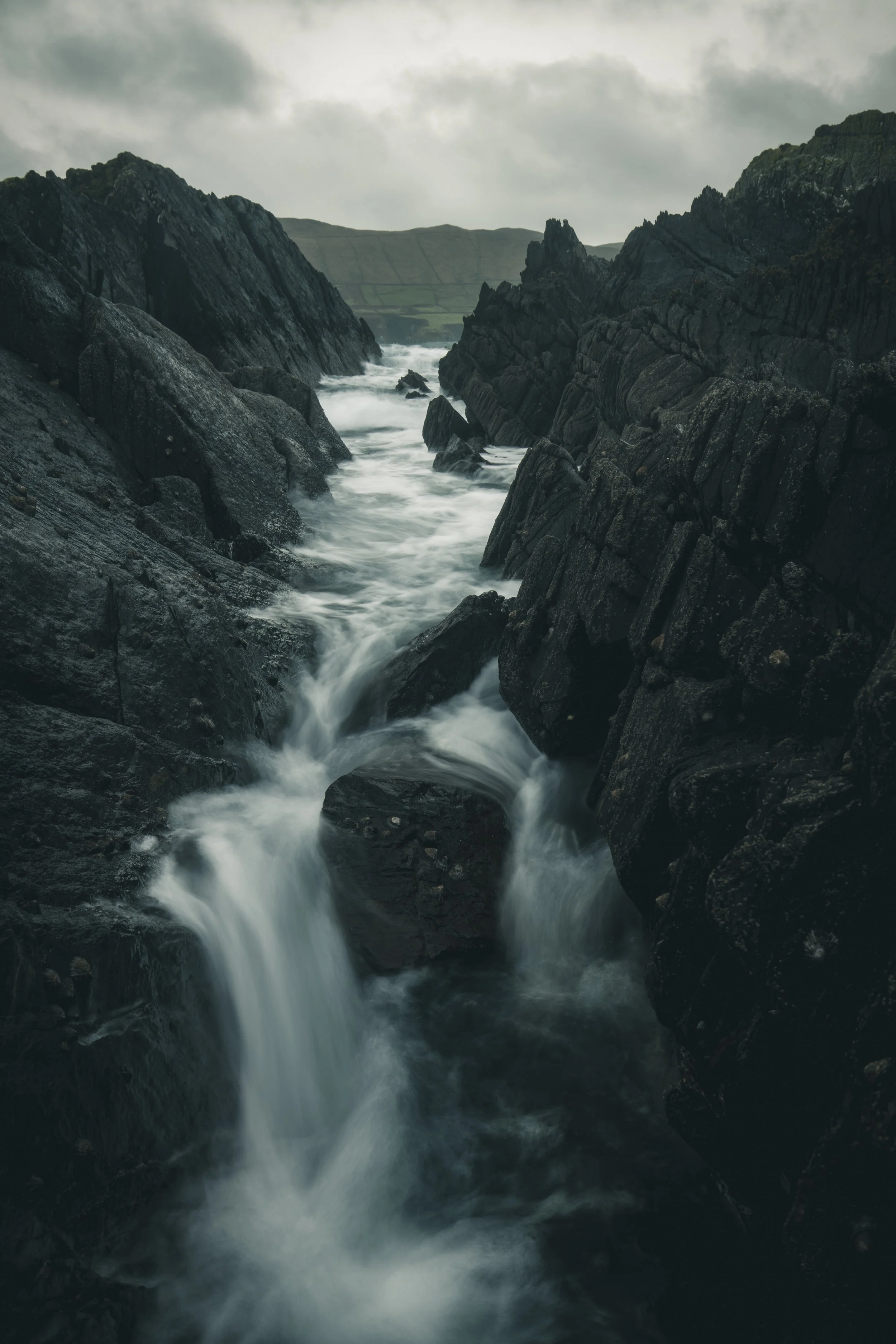
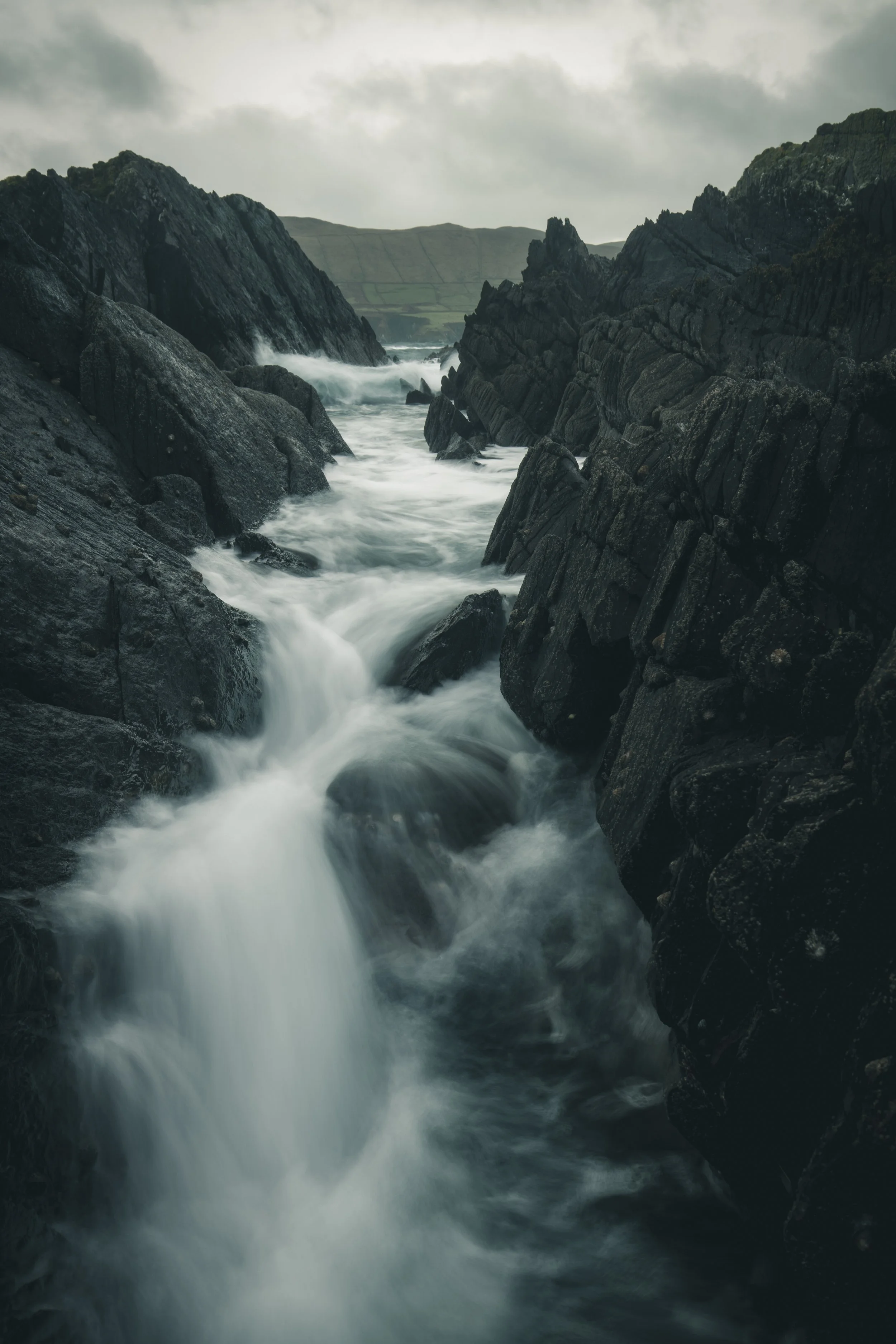
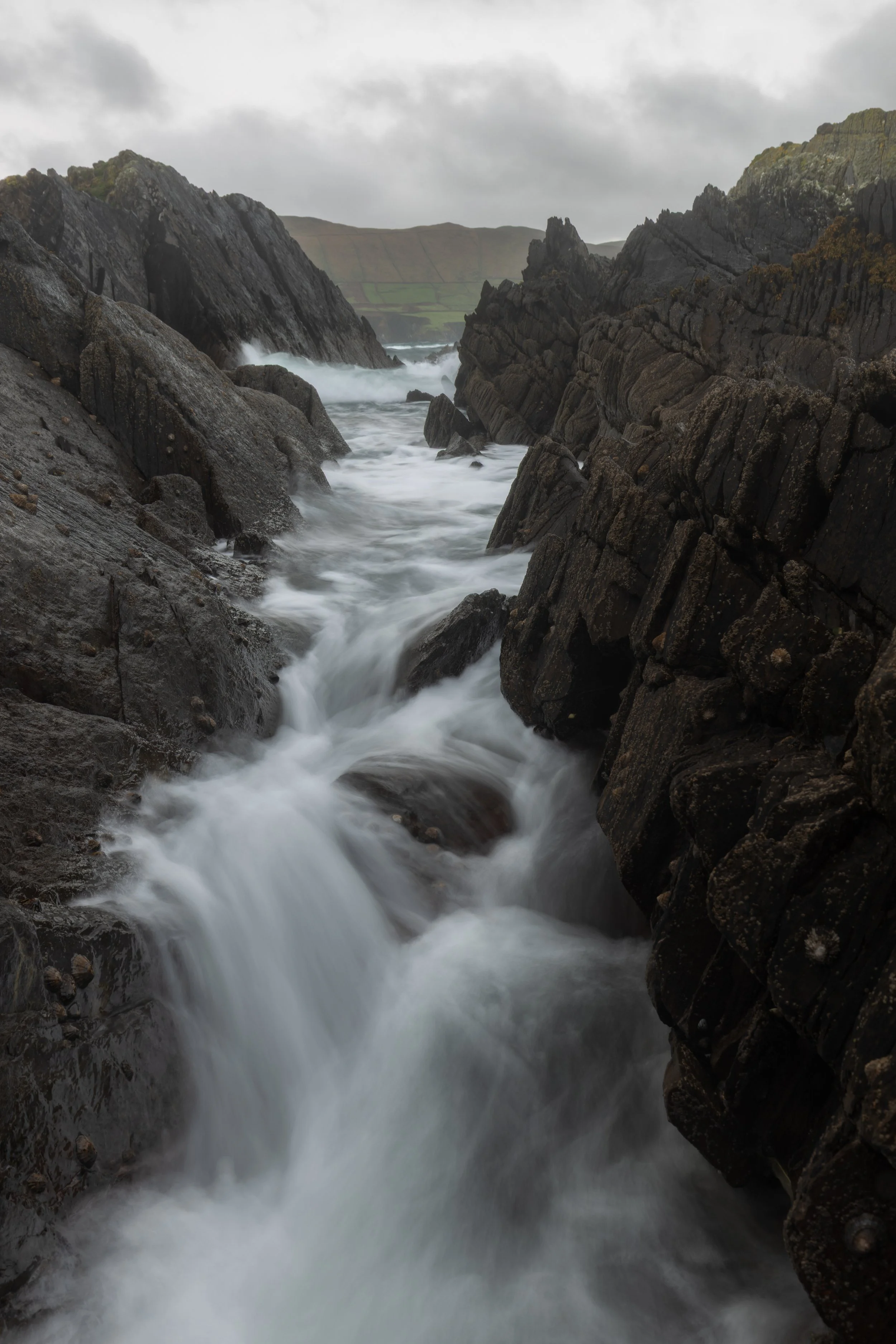
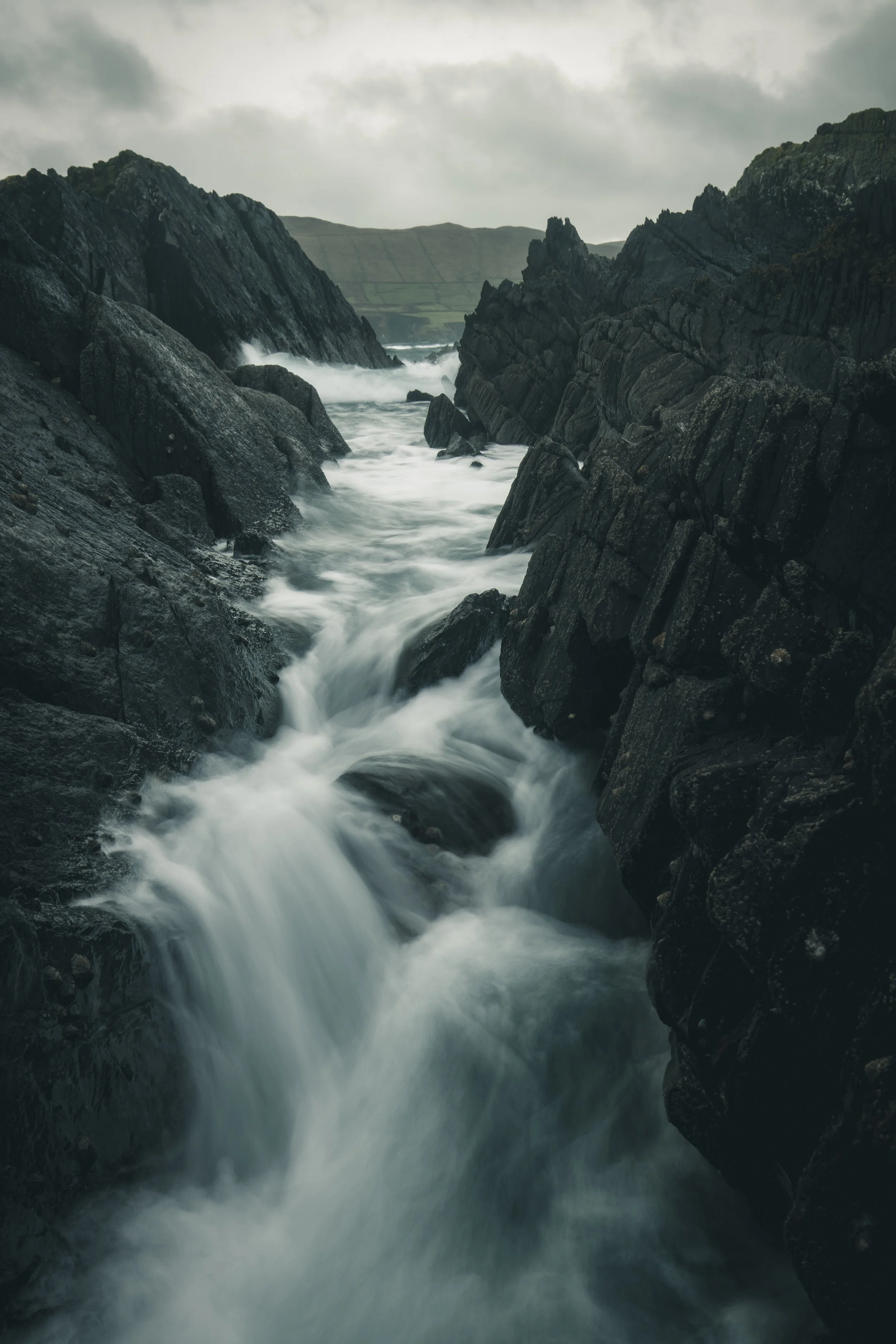
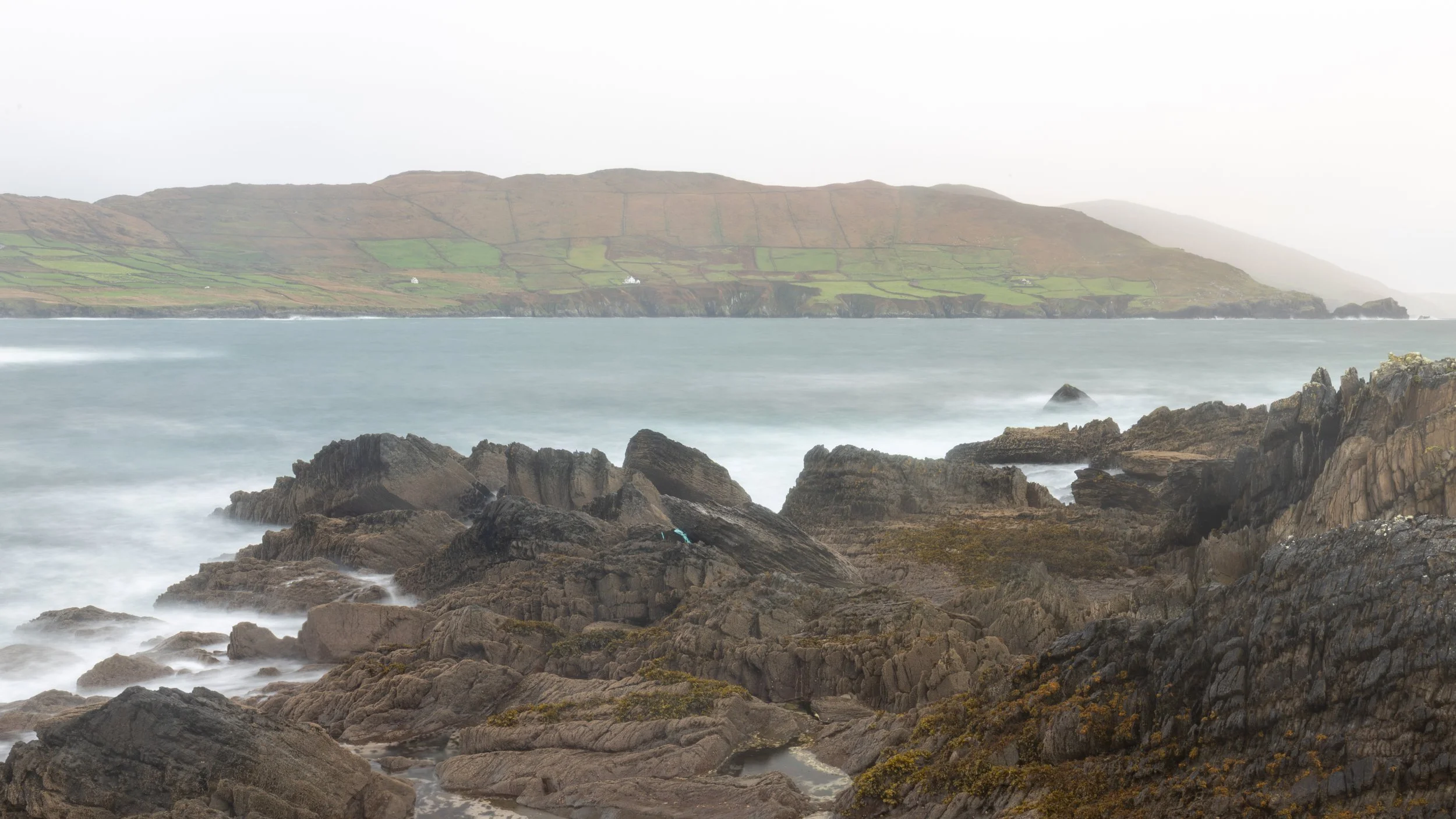
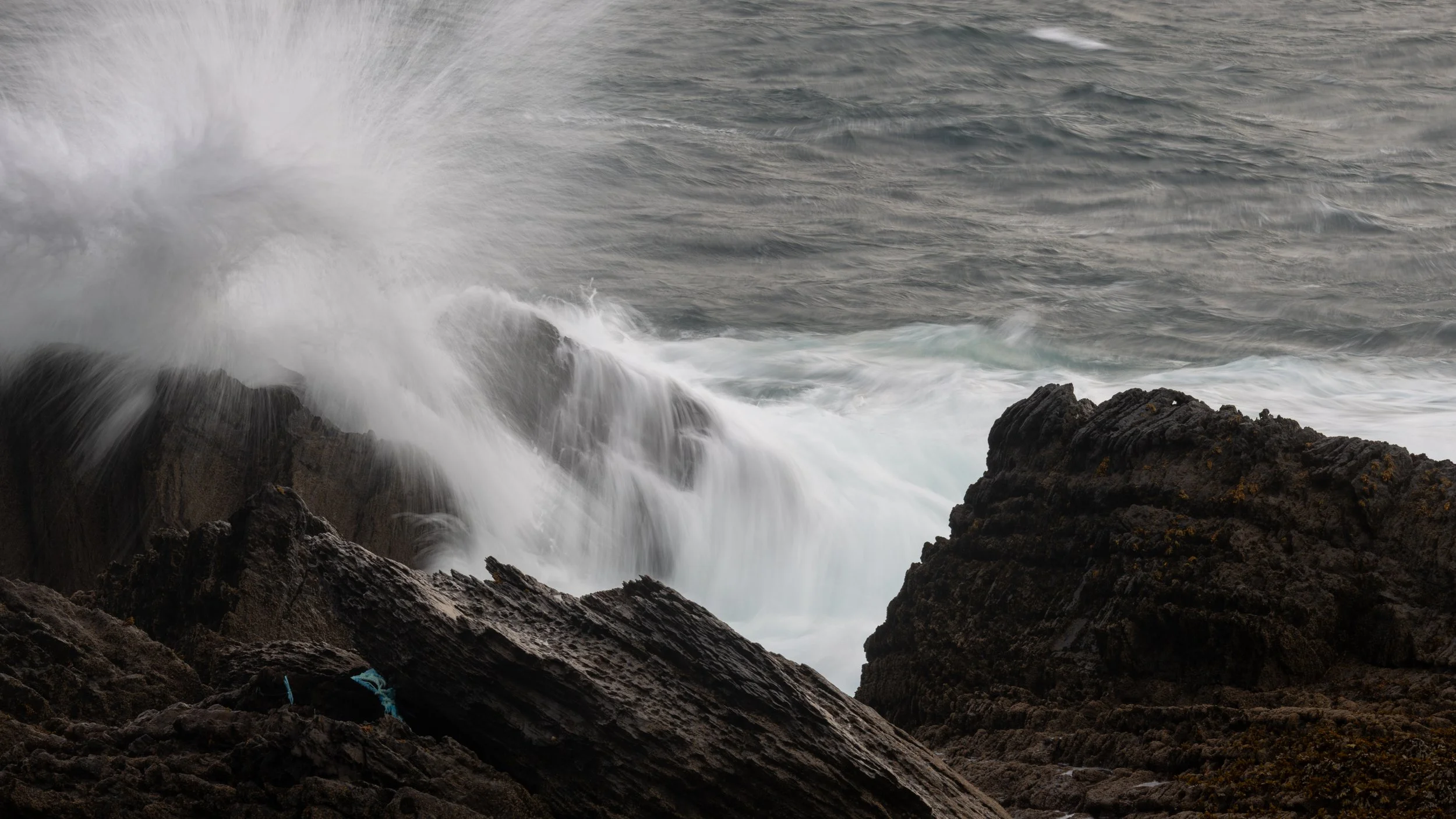
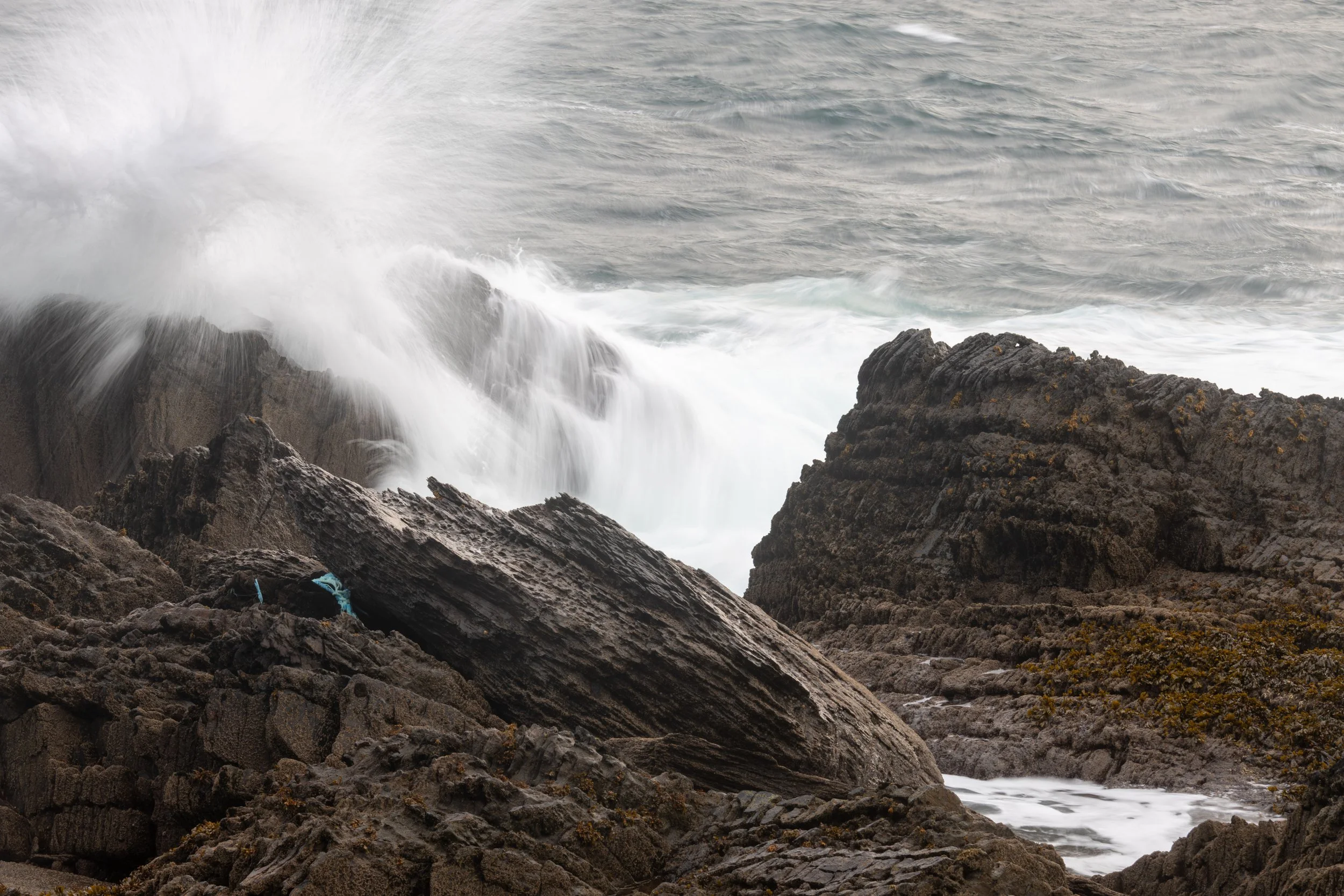
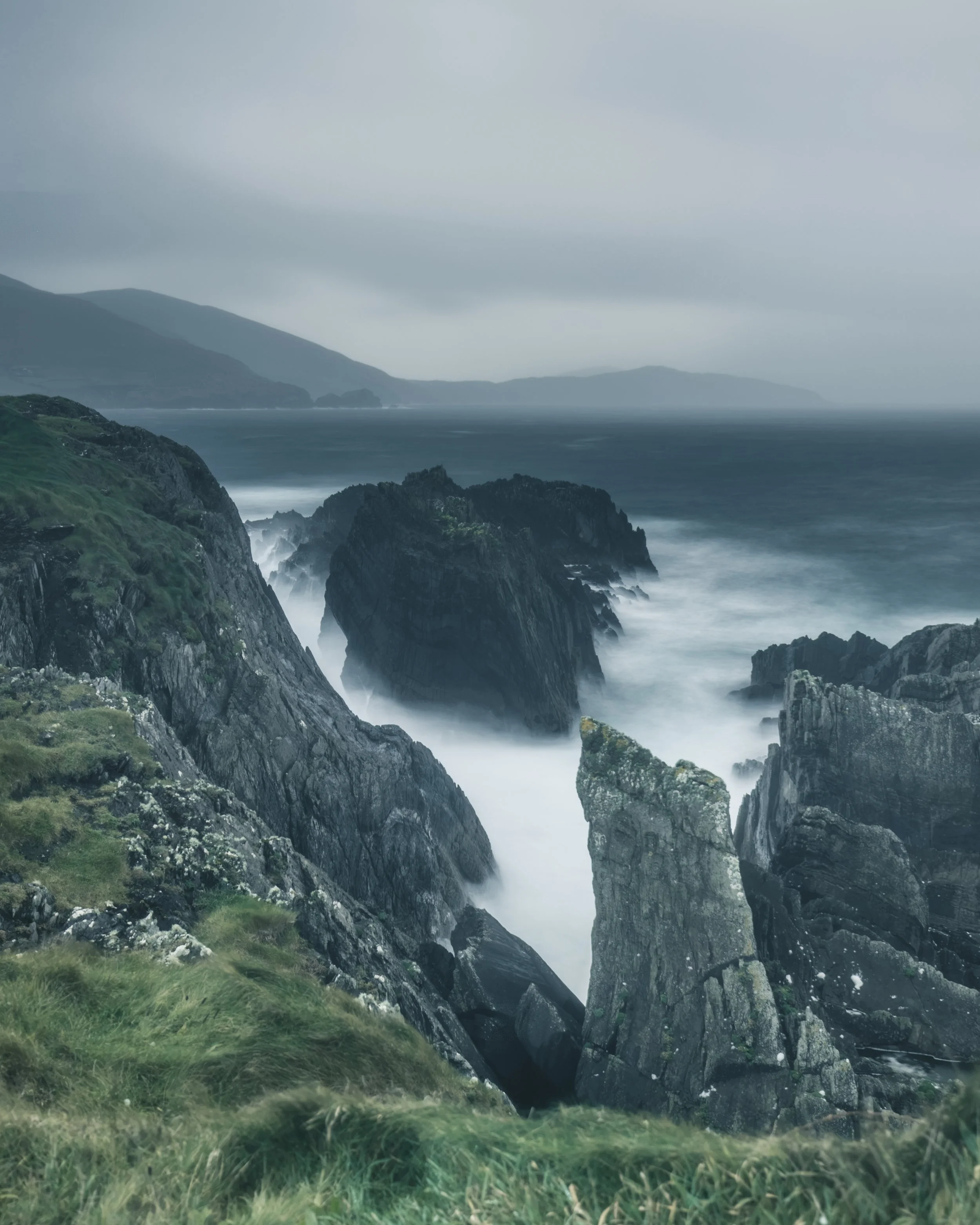
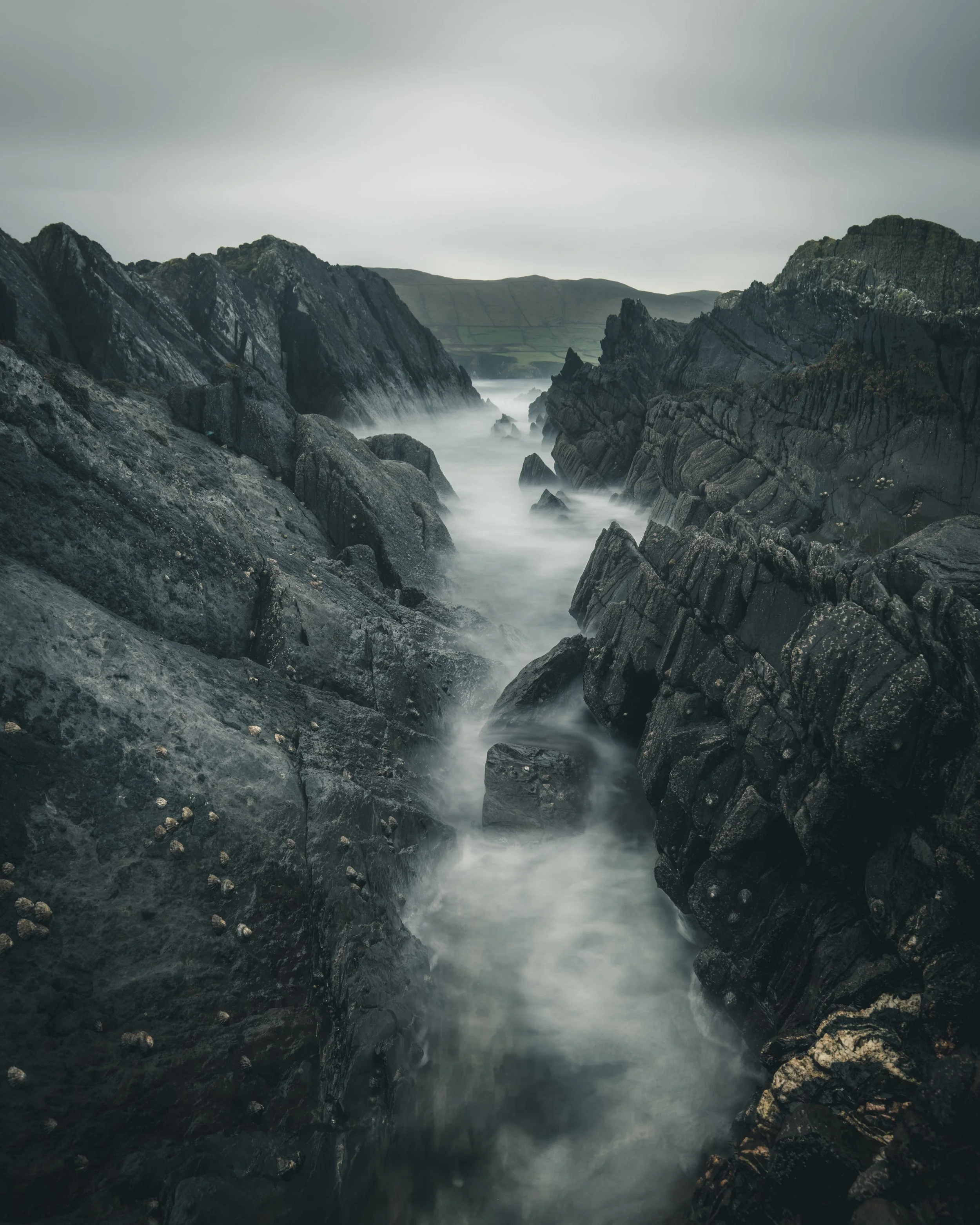
Once I had recovered, I turned my attention to the first composition. A natural gully ran through the rocks, providing a route for the incoming waves to travel towards my position. It was an interesting feature, and the movement of the water gave me something to work with.
I set up the camera and started with longer exposures, aiming to smooth the water and simplify its appearance. The idea was to use the movement of the waves to lead attention through the gully, while the surrounding rocks provided structure to the photograph.
Changing the composition
My first photographs were taken in portrait orientation. I then switched to landscape orientation from roughly the same position. This is something I try to do whenever a composition allows it, because changing orientation can alter the balance of a photograph without requiring you to find an entirely new viewpoint.
The portrait version placed more emphasis on the route through the gully and the movement towards the camera. The landscape version included more of the surrounding rocks and gave the scene a different sense of space. Both had potential, so I continued exploring the options rather than moving on too quickly.
Then the rain returned.
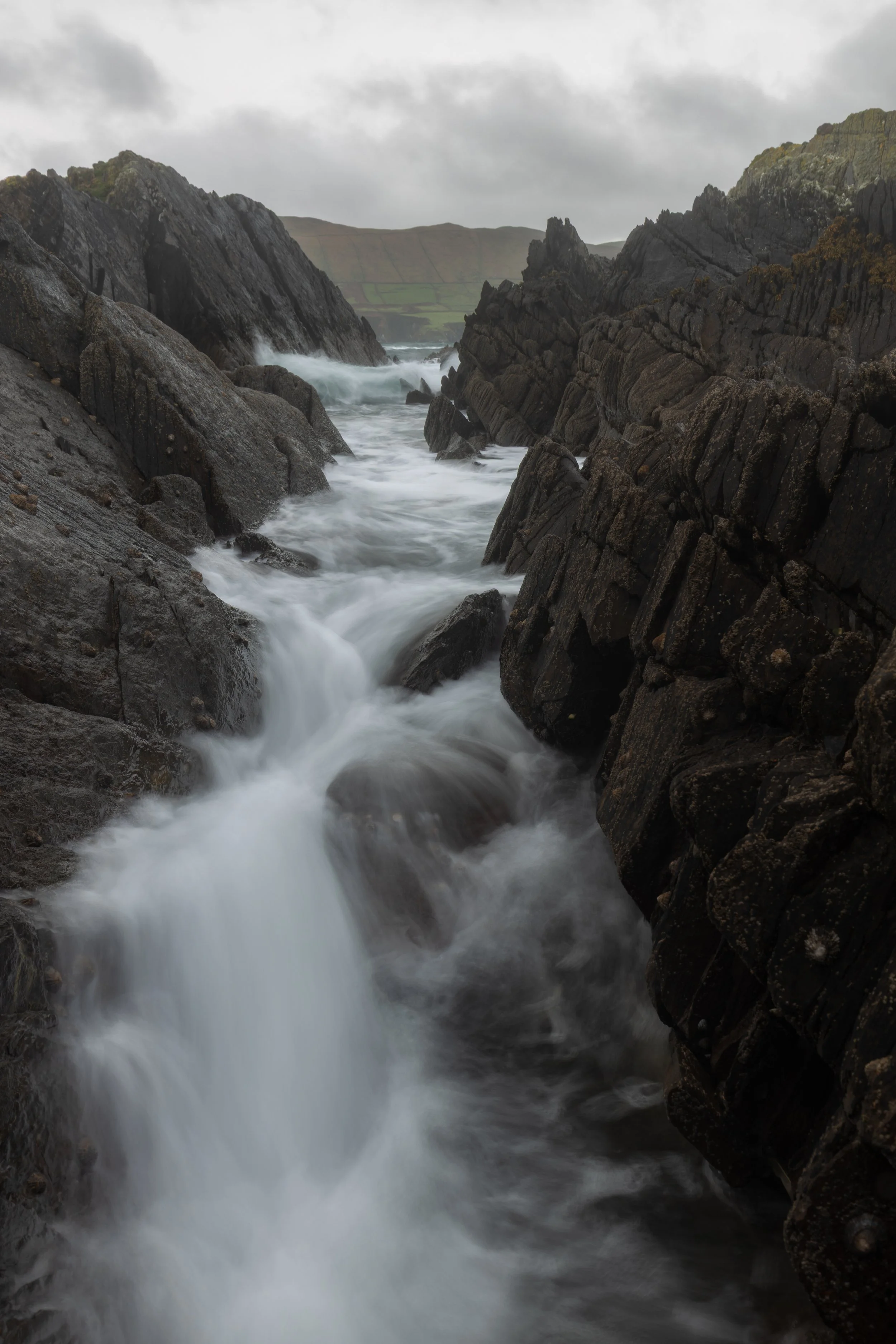
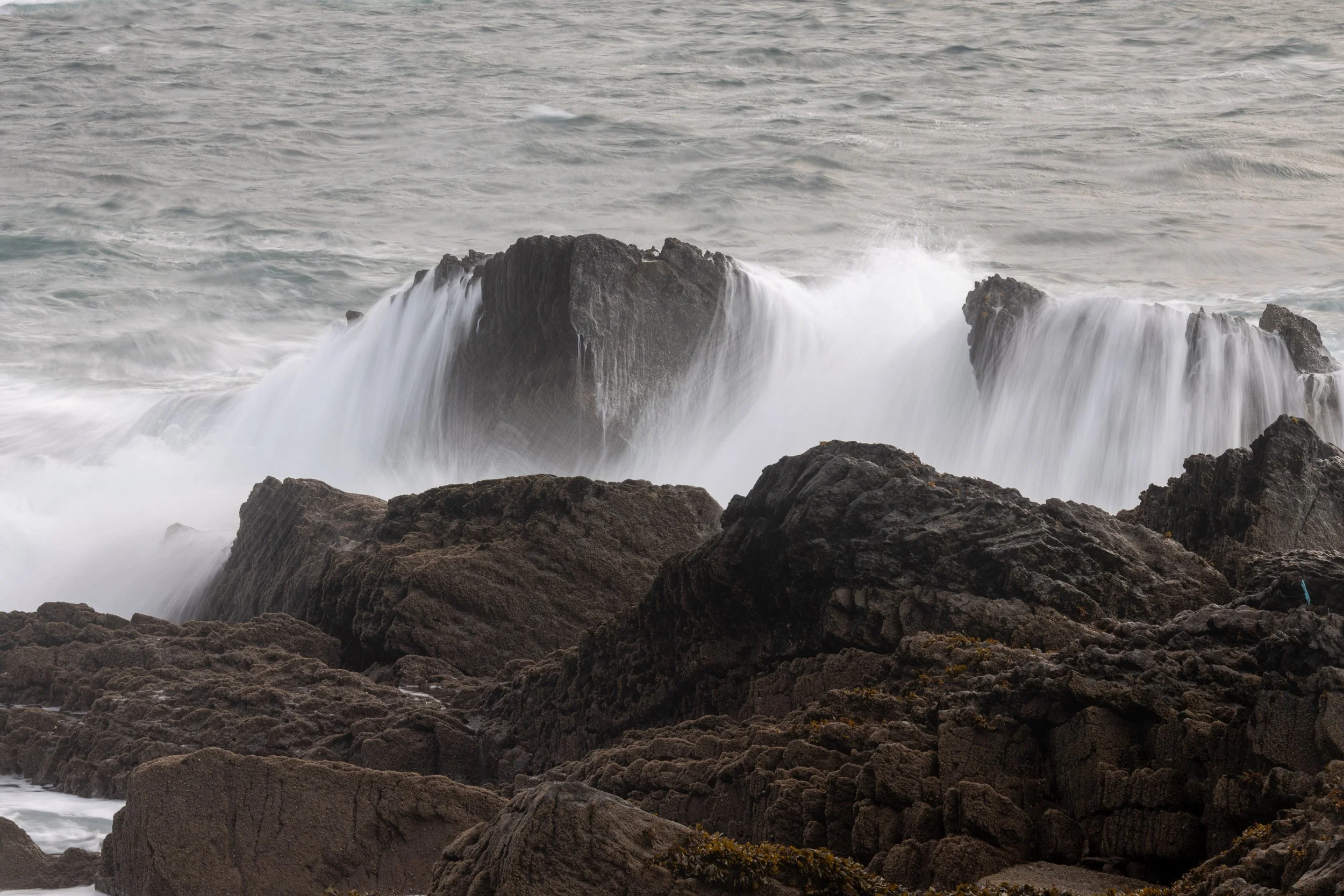
By this stage, I had already decided that I was not going to give up simply because the weather had become less cooperative. I lowered the camera closer to the gully, bringing the incoming waves further into the foreground. This also changed the way the rocks worked within the frame. Elements that had previously sat below my position now helped create a frame within the wider composition.
I changed my shutter speed to 0.5 seconds, which is a setting I often use when photographing moving water. It allows me to show the movement of the waves while retaining more texture than I would get with a much longer exposure.
There is no single shutter speed that works for every scene. A longer exposure can smooth the water and remove some of its detail, while a shorter exposure can retain texture and make the movement more obvious. The speed of the waves, the available light and the composition all influence the decision.
For me, the important thing was finding a balance that showed the water moving through the rocks without removing all the detail that made the scene interesting.
The rain starts to win
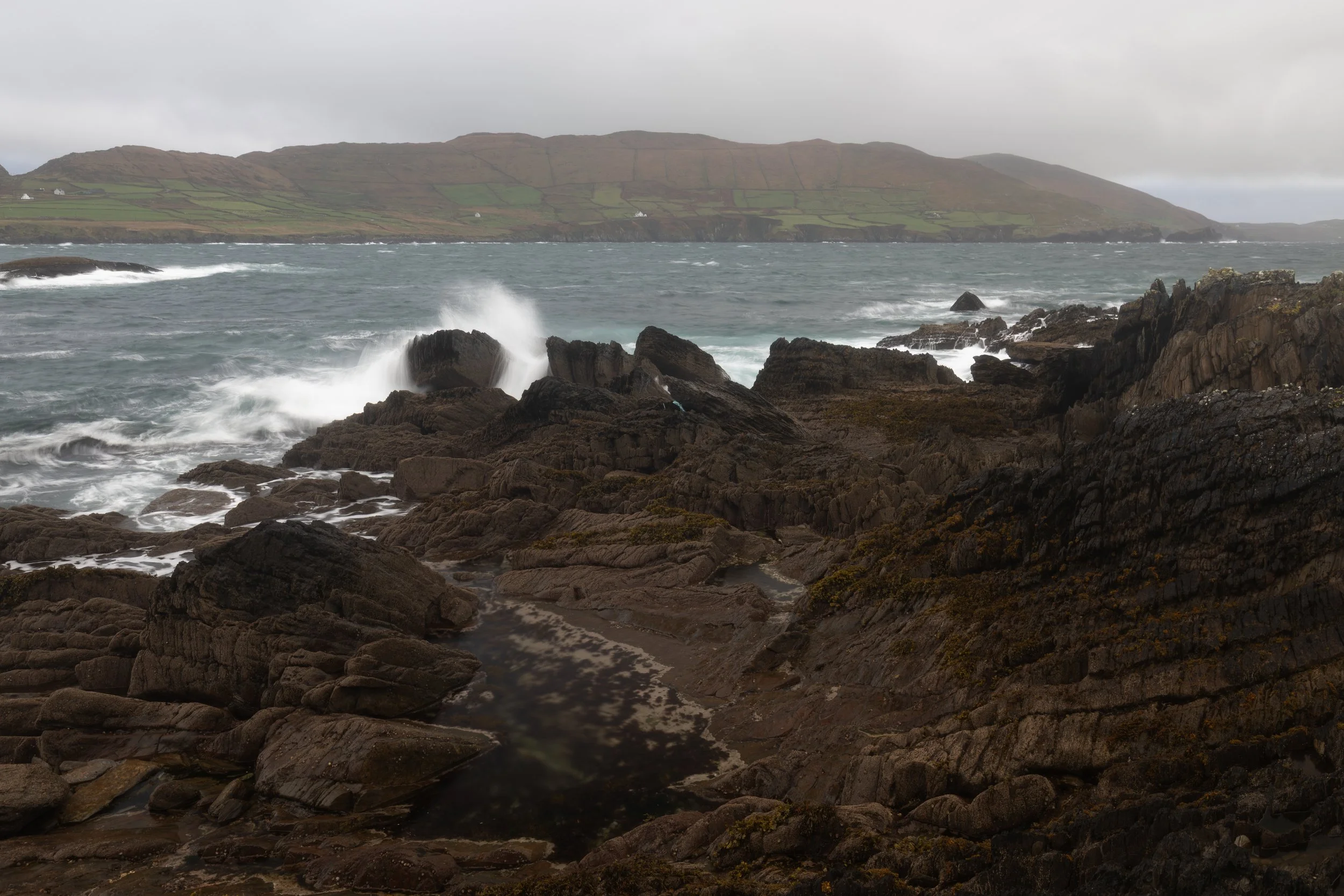
With the rain becoming heavier, we decided to walk further along the cliffs in search of other compositions. Looking down from my position, I could see rocks below where the waves were breaking. I would have liked to get closer, but the route down was not a safe option. The rocks were already slippery, and the rain was now making the situation worse.
This was where I had to adapt. Instead of trying to reach the position I originally wanted, I worked with the viewpoint available to me.
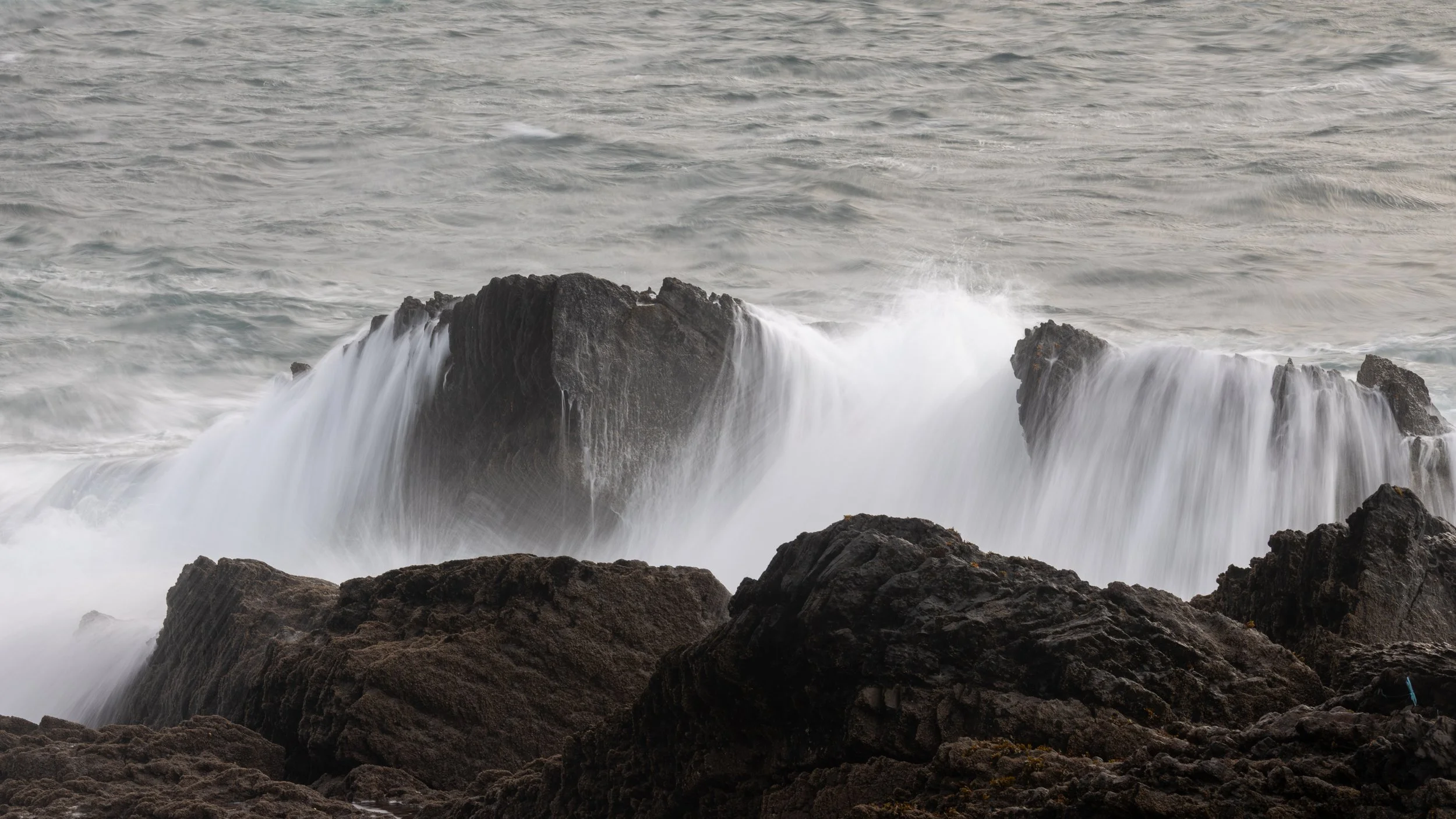
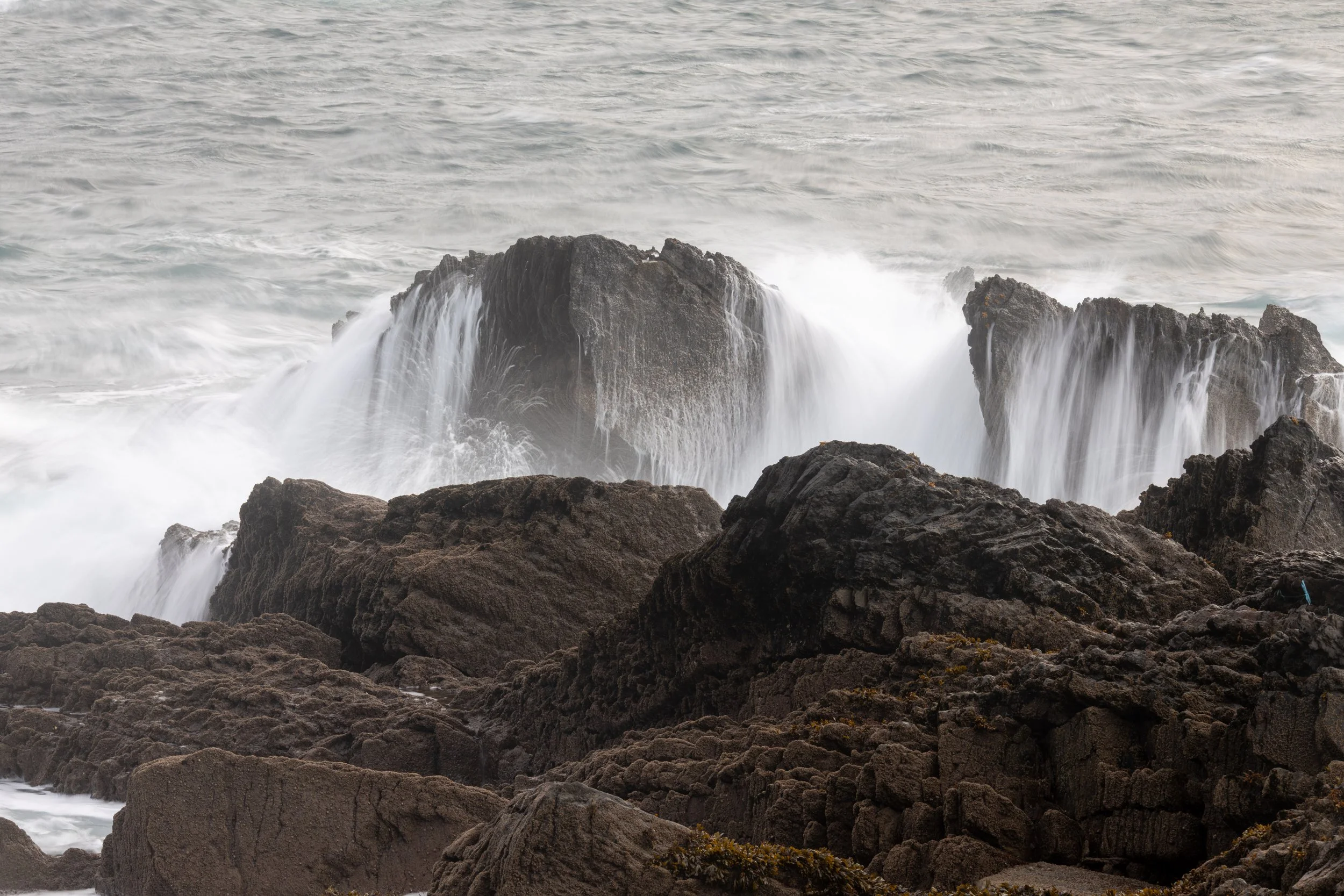
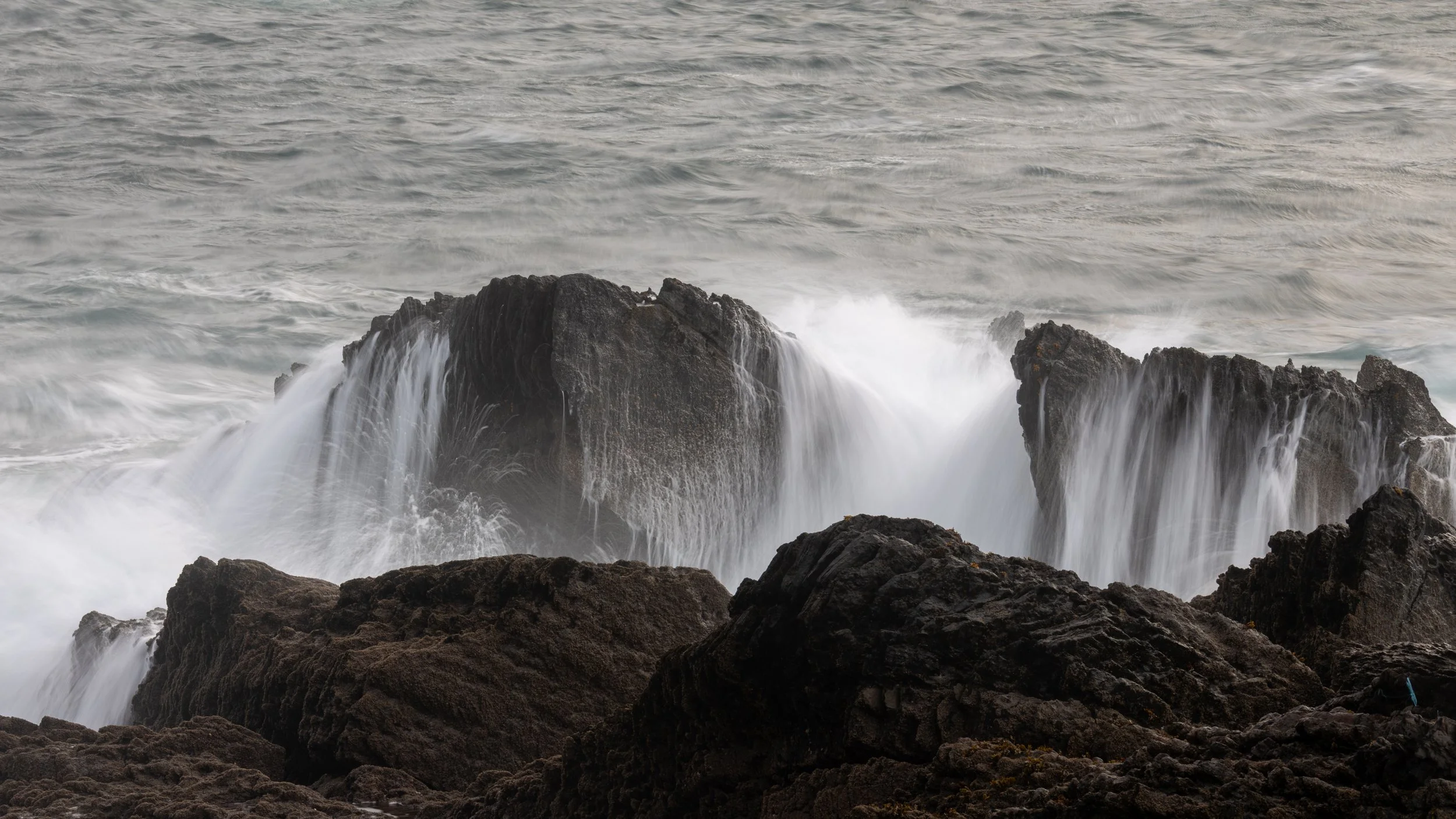
At 35mm, the rocks below did not fill the frame enough to become the main subject. However, the shapes of the rocks between my position and the waves offered another way to build the composition. I took several photographs, timing the exposures to capture the water as it broke over the rocks.
The results were not exactly what I had imagined, but that is part of landscape photography. You cannot always reach the position you want, and sometimes the conditions prevent you from doing so. The alternative is to look for a different way to use what is available.
I then switched to my 70-200mm lens and zoomed in on the breaking waves. This helped remove distractions lower in the frame and placed more emphasis on the water itself. The photographs were acceptable, but I felt they lacked depth. By removing too much of the surrounding scene, I had also removed some of the elements that helped connect the viewer to the location.
It was a useful reminder that a tighter composition is not automatically a better one. Simplifying a scene can help, but it can also remove the relationships between foreground, middle ground and background that give a photograph its depth.
A final attempt
As I looked towards the distant headlands, I noticed a patch of light hitting the landscape. It was a small change in the conditions, but enough to encourage me to keep going. Perhaps the weather was finally going to give me something to work with.
However, as I moved around the headland, I found myself directly in the path of the incoming weather. The light disappeared, and the rain and wind intensified. If the aim had been to find comfortable conditions, I had certainly failed.
But I also found another composition.
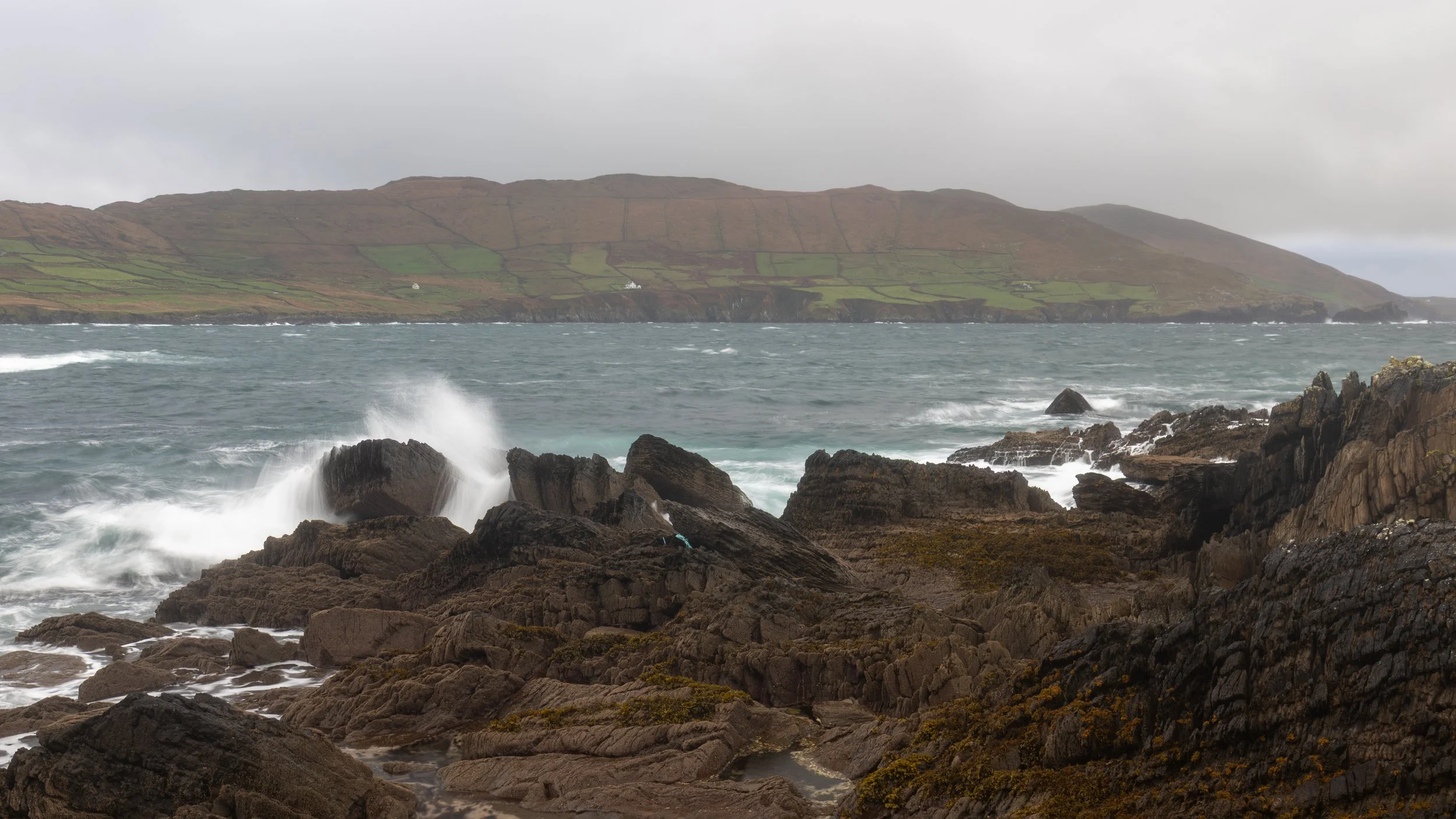
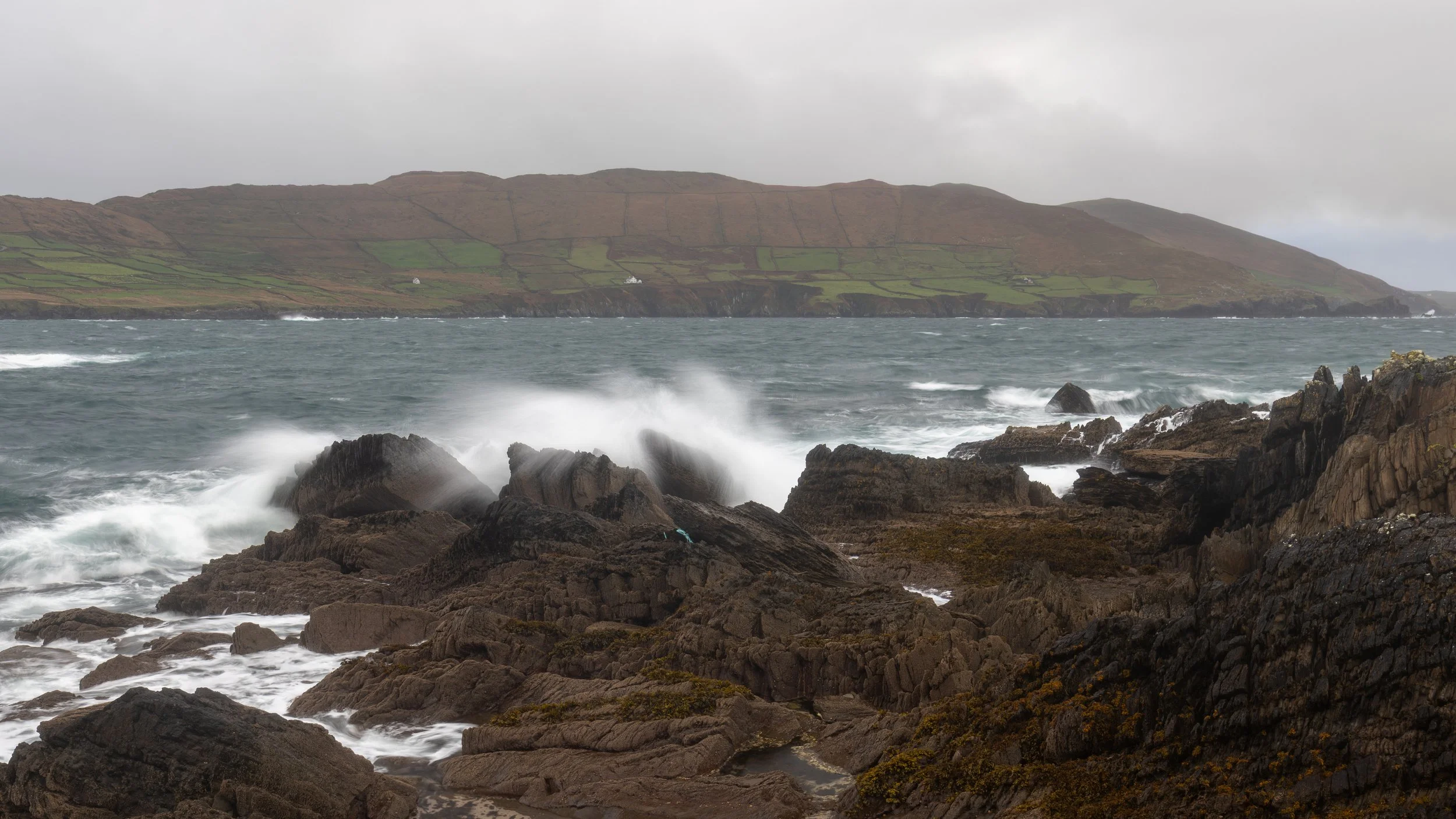
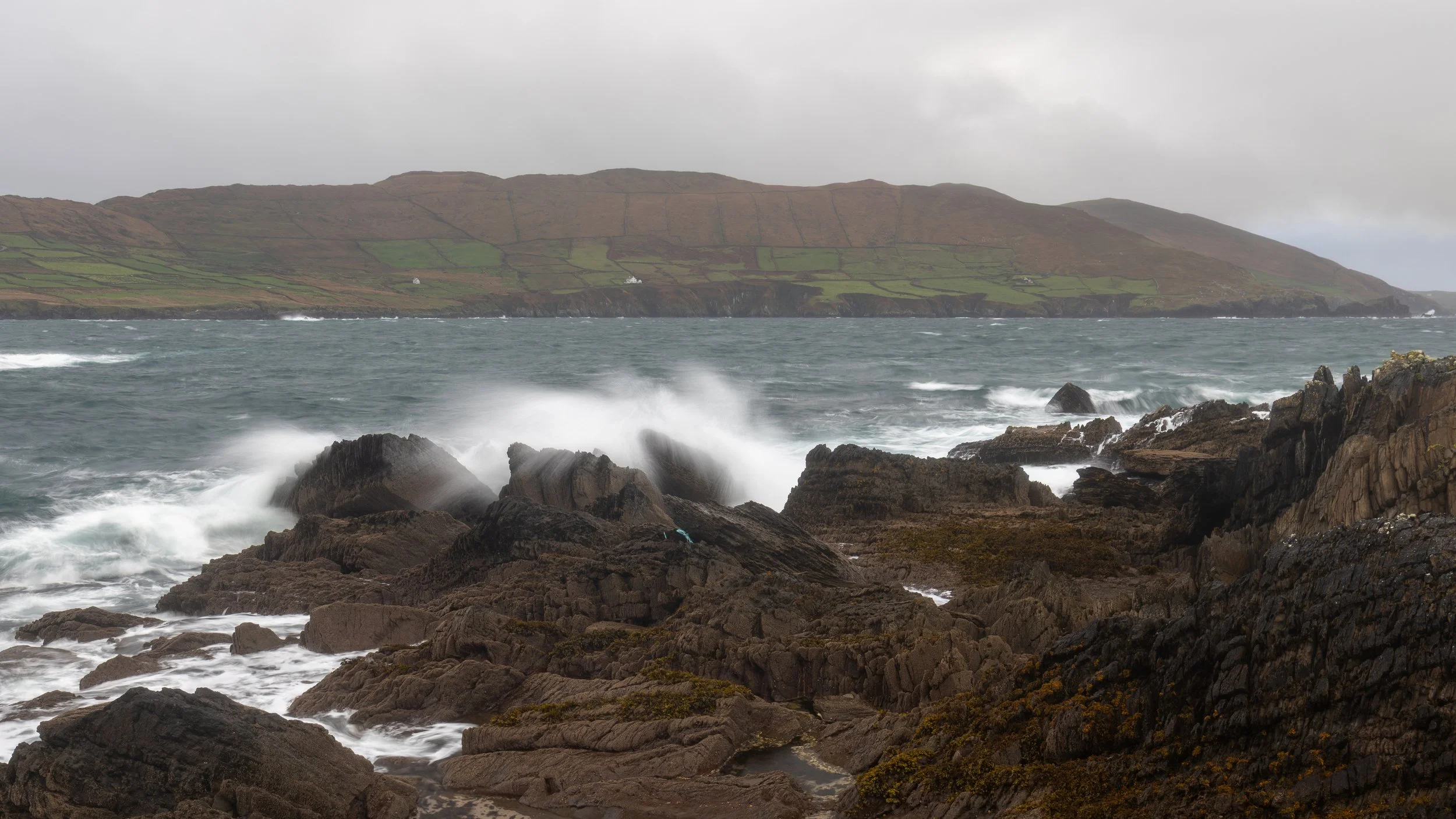
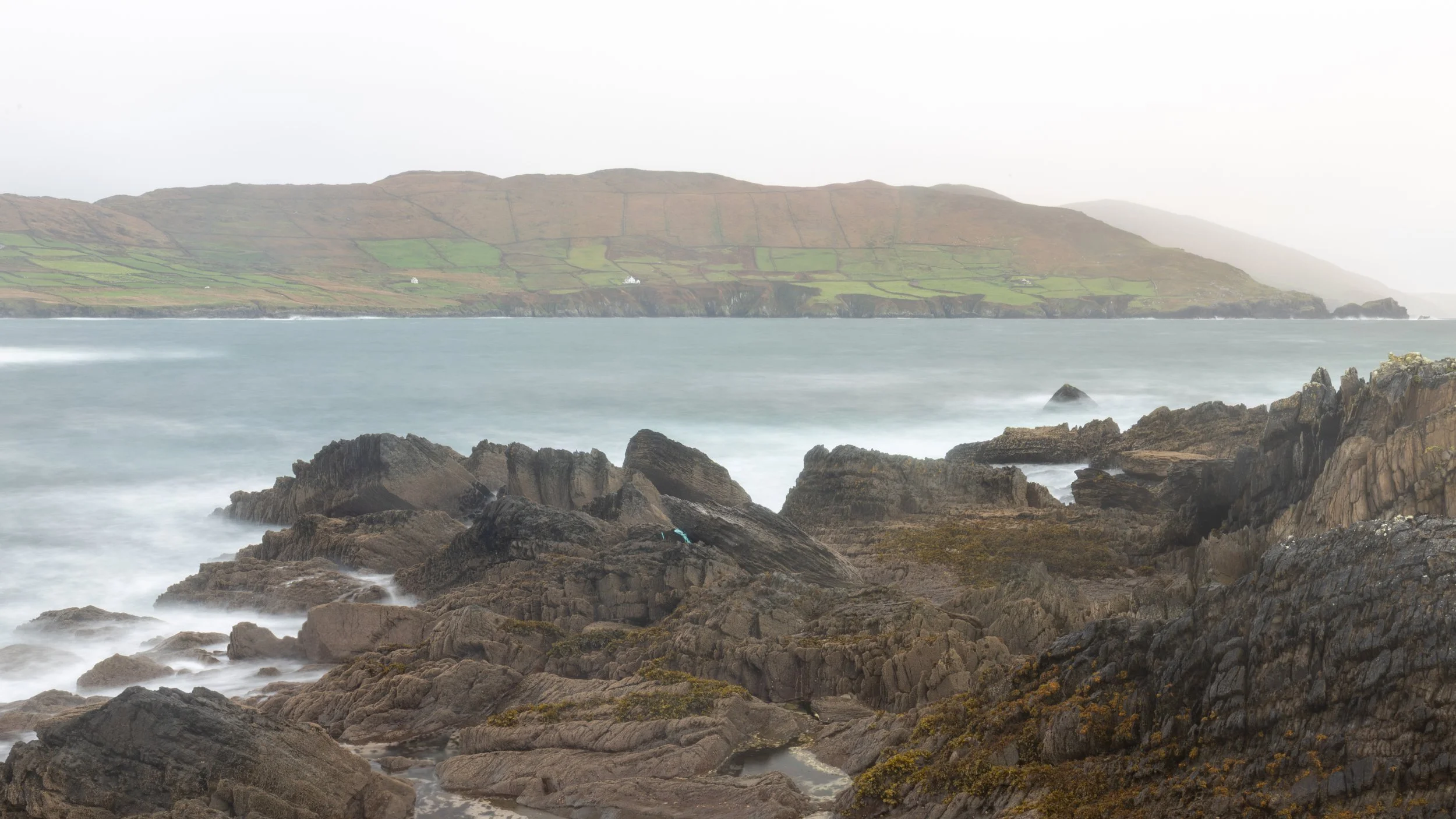
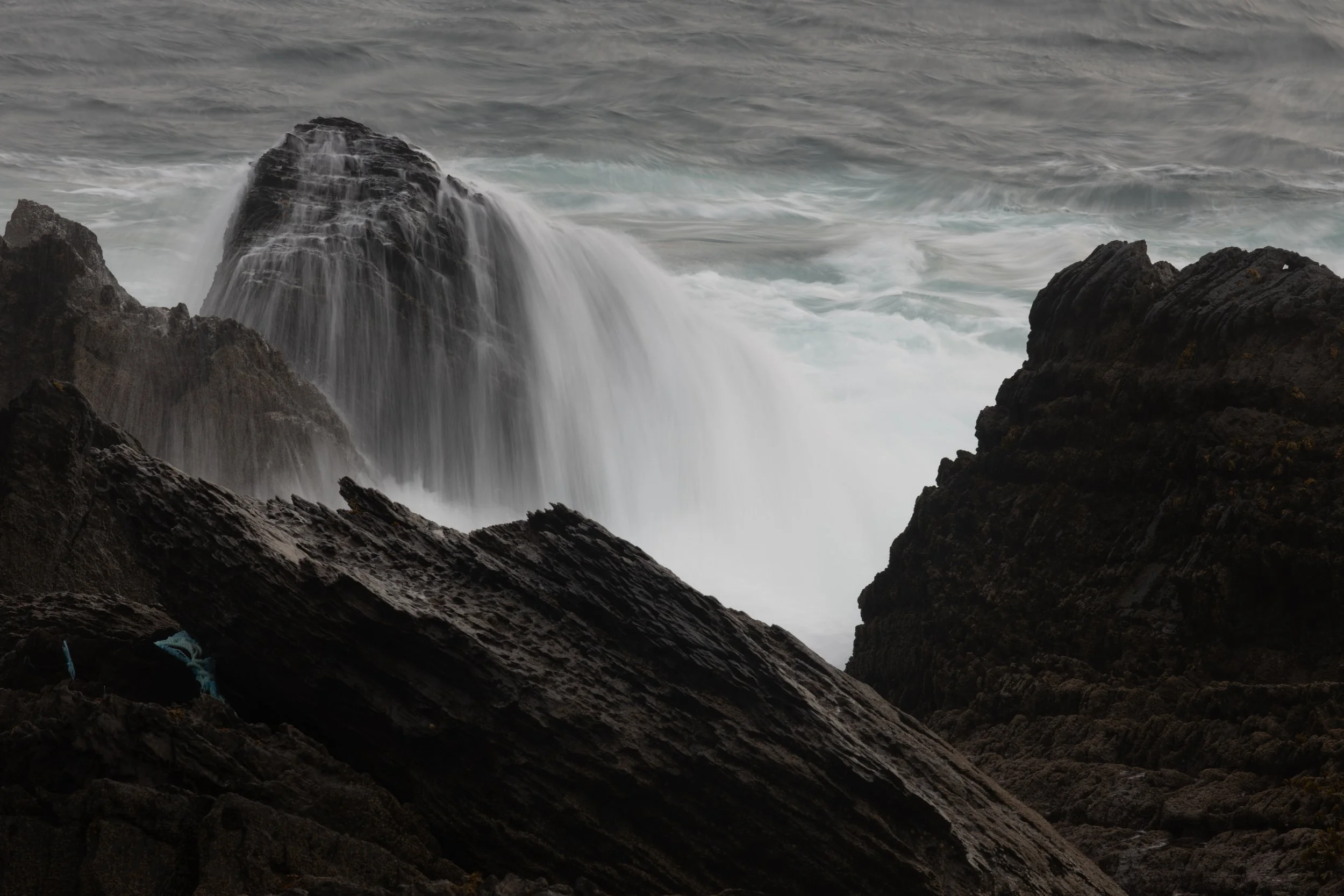
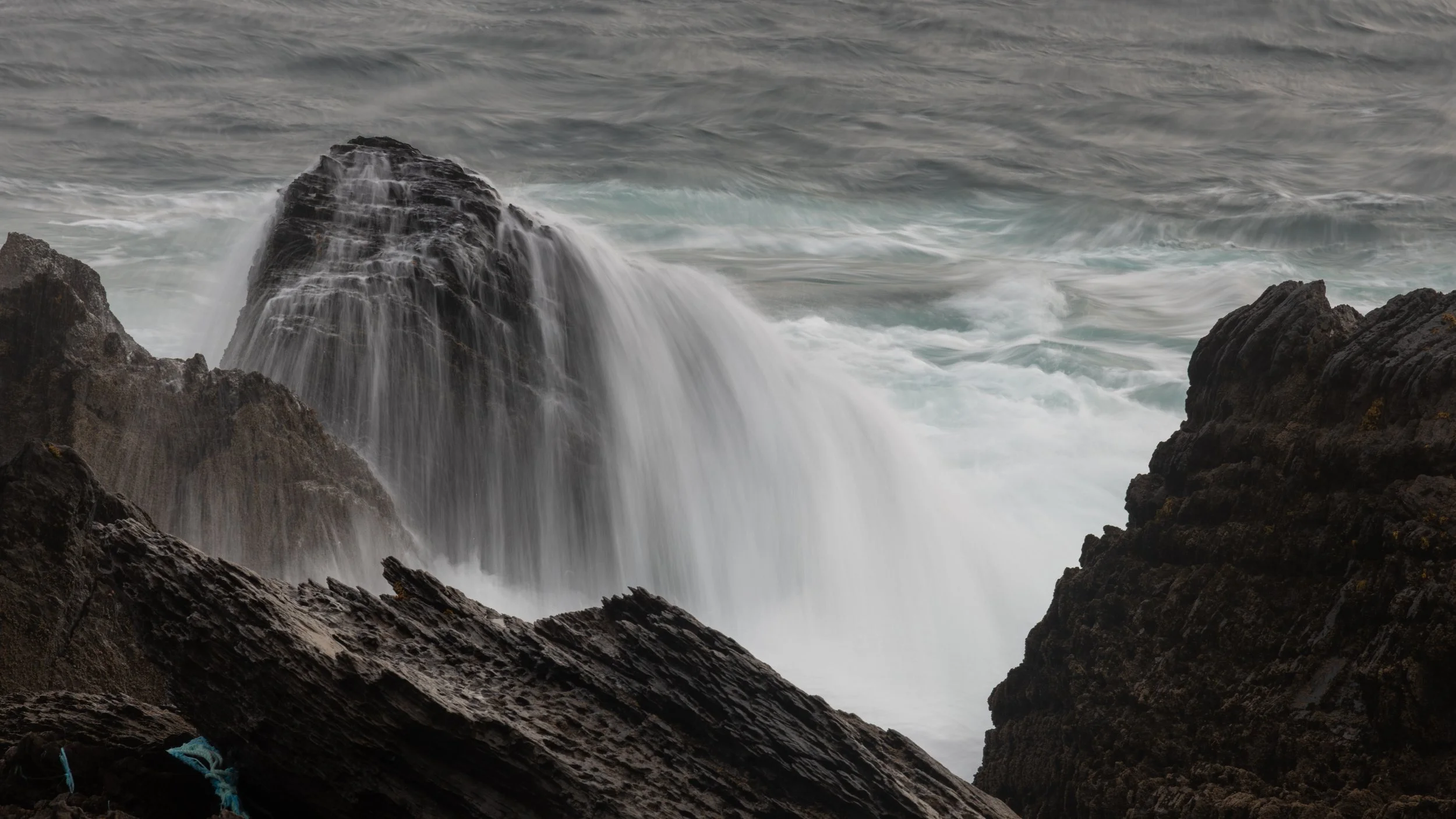
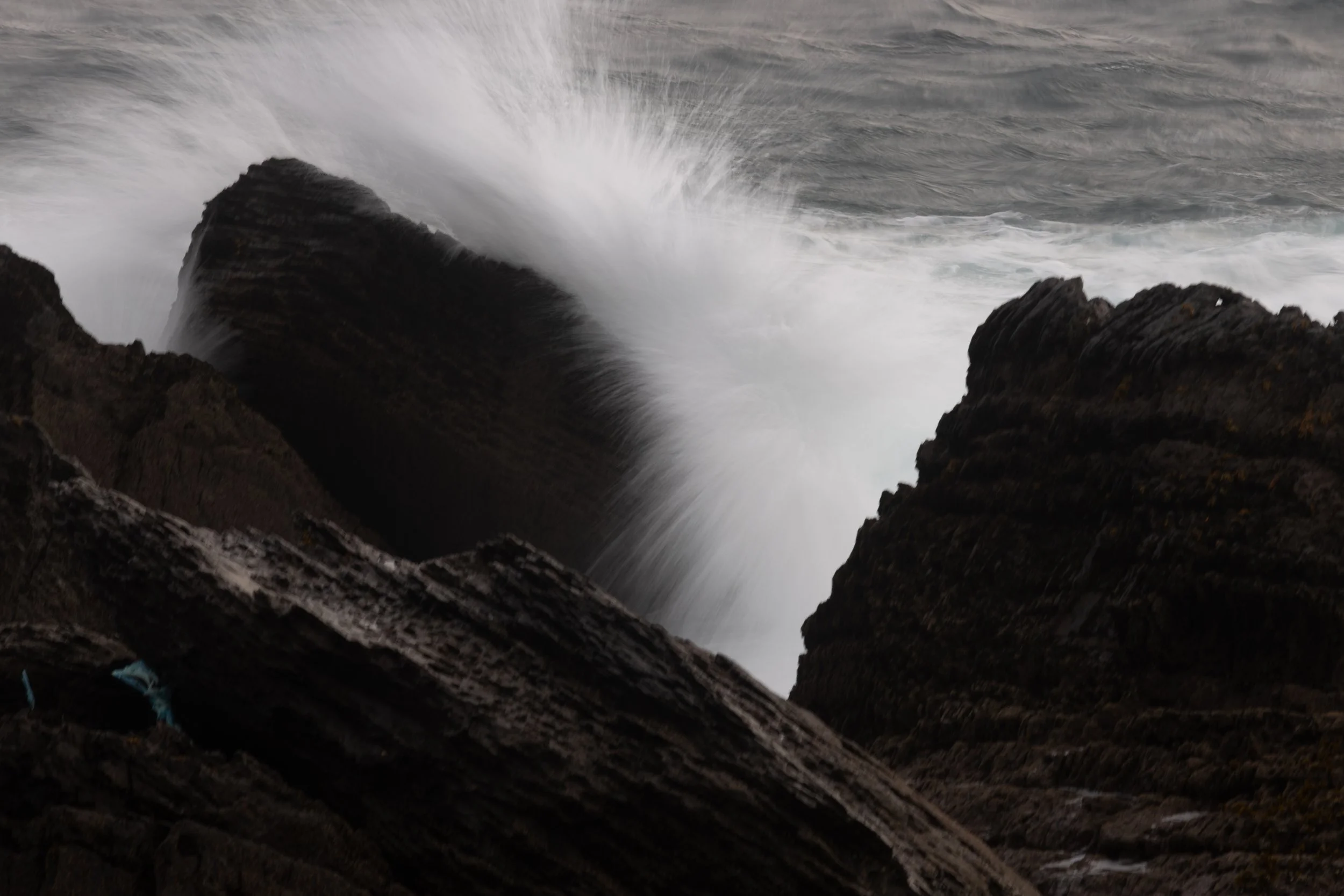
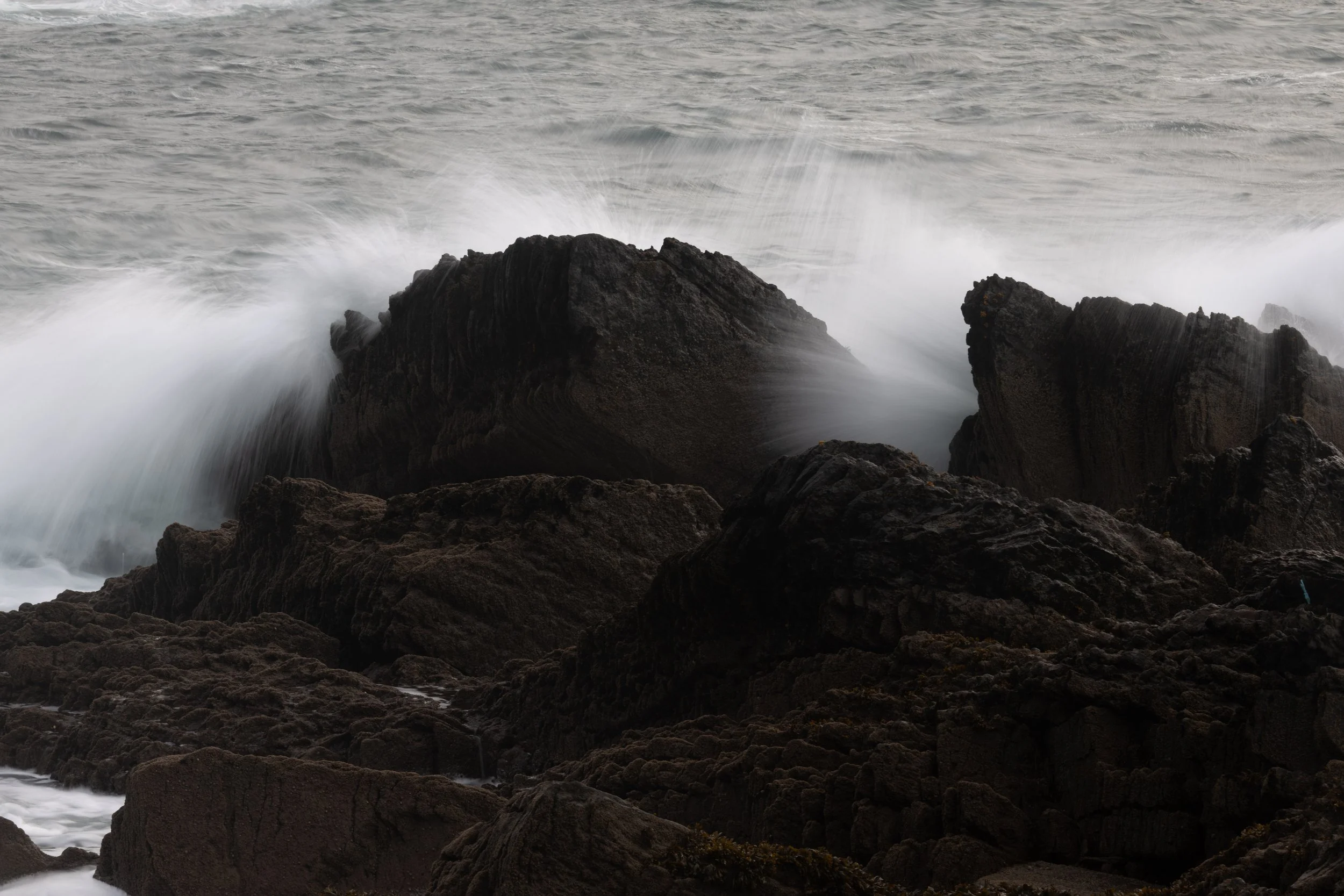
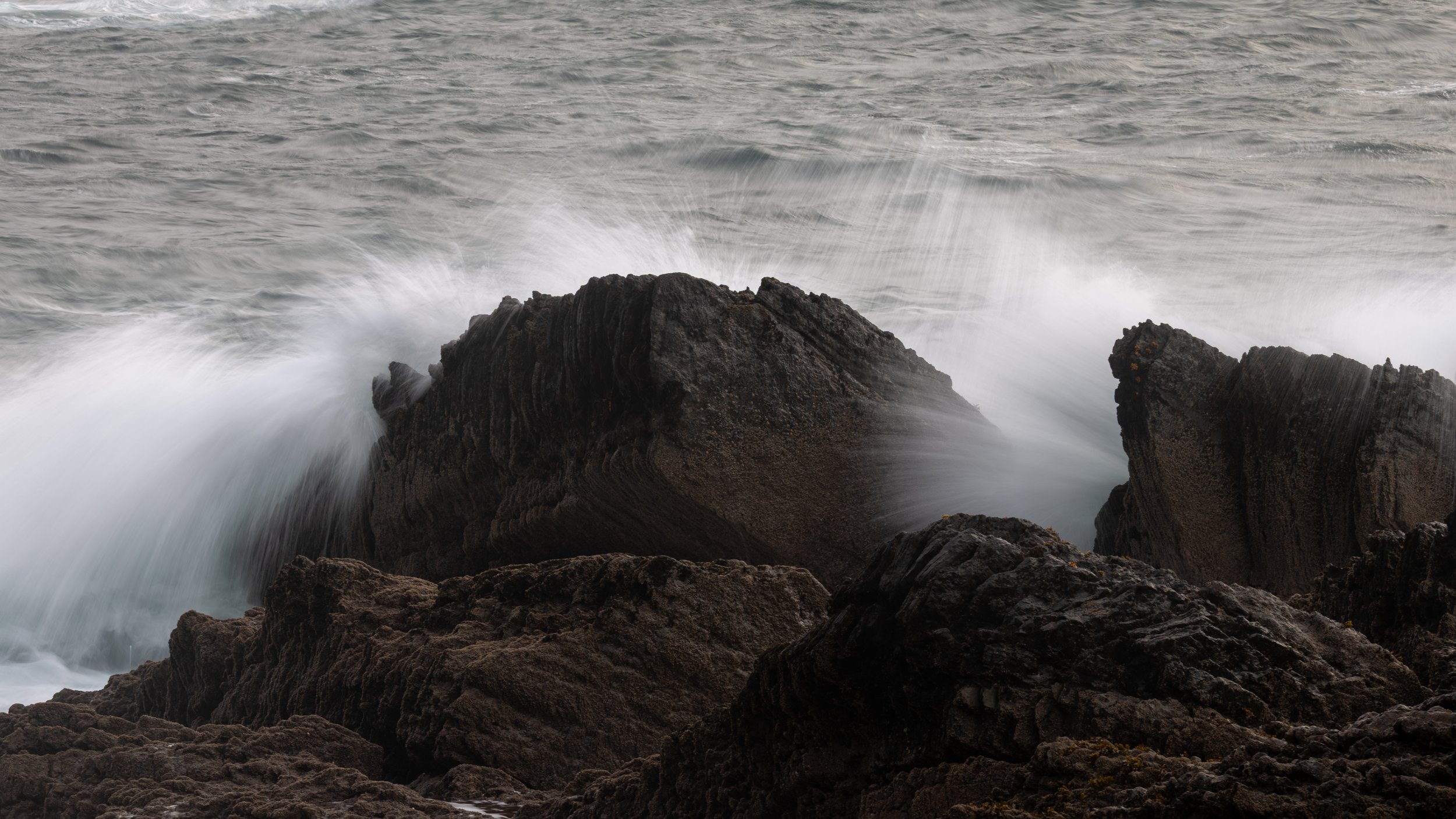
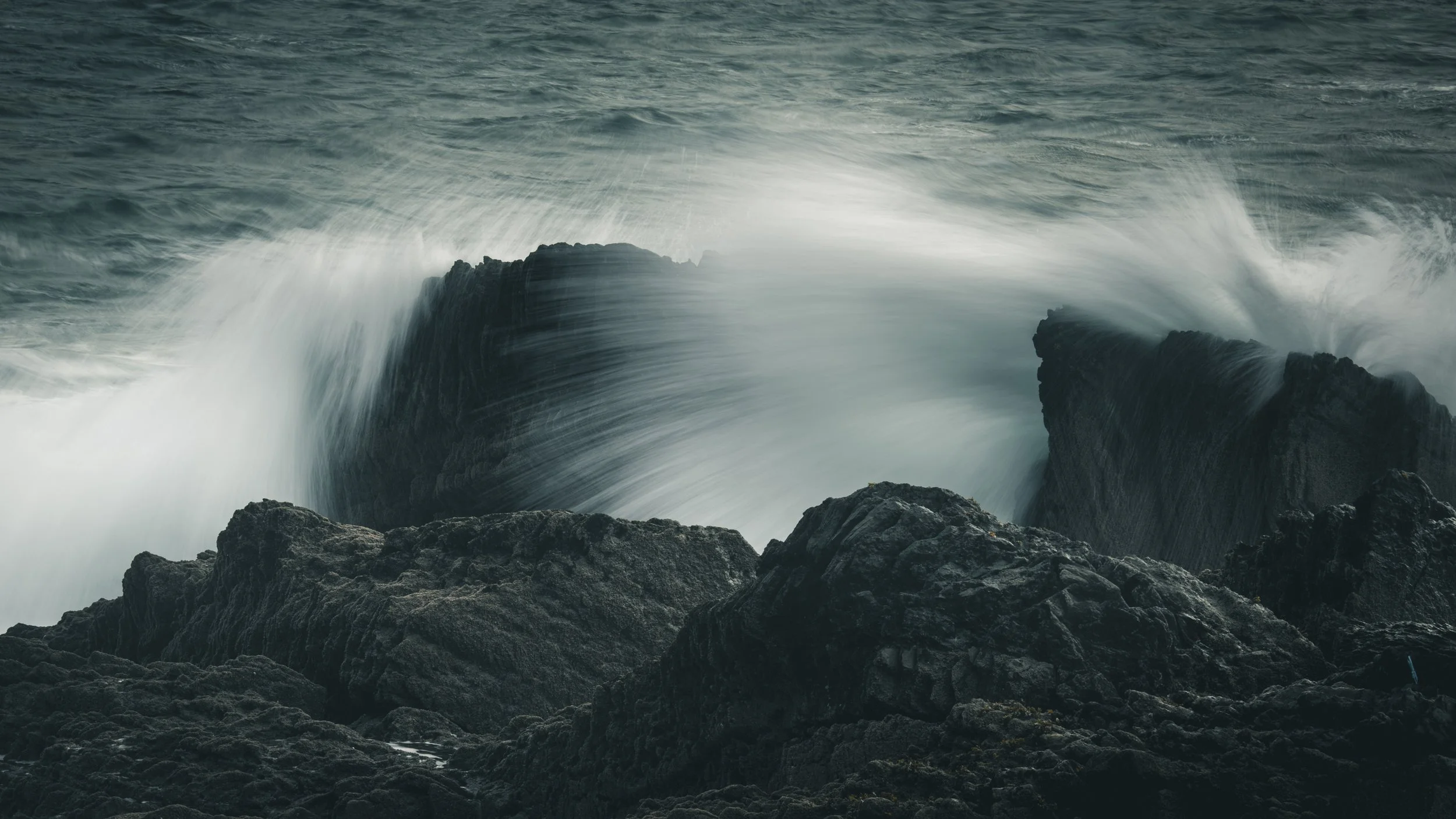
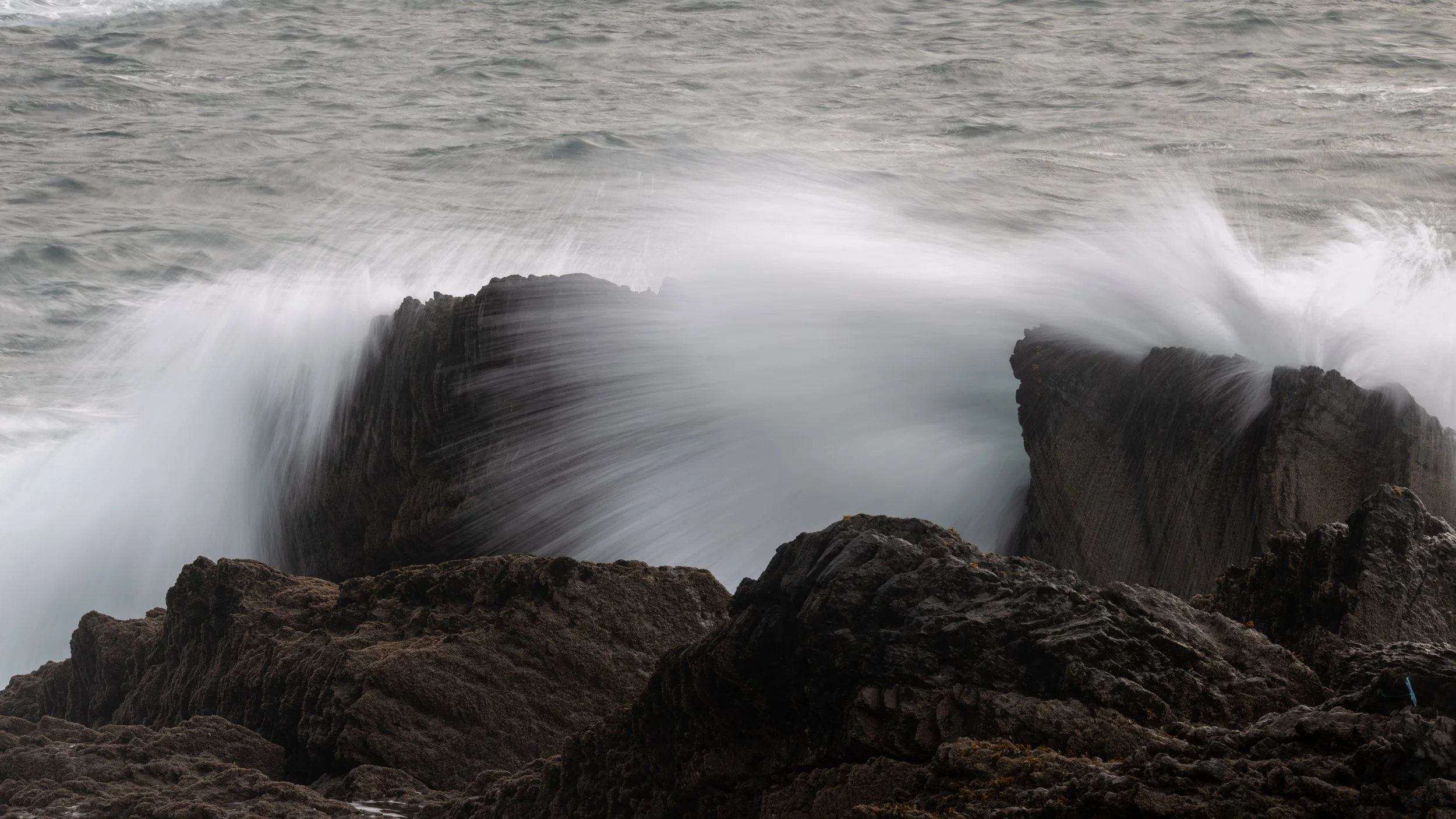
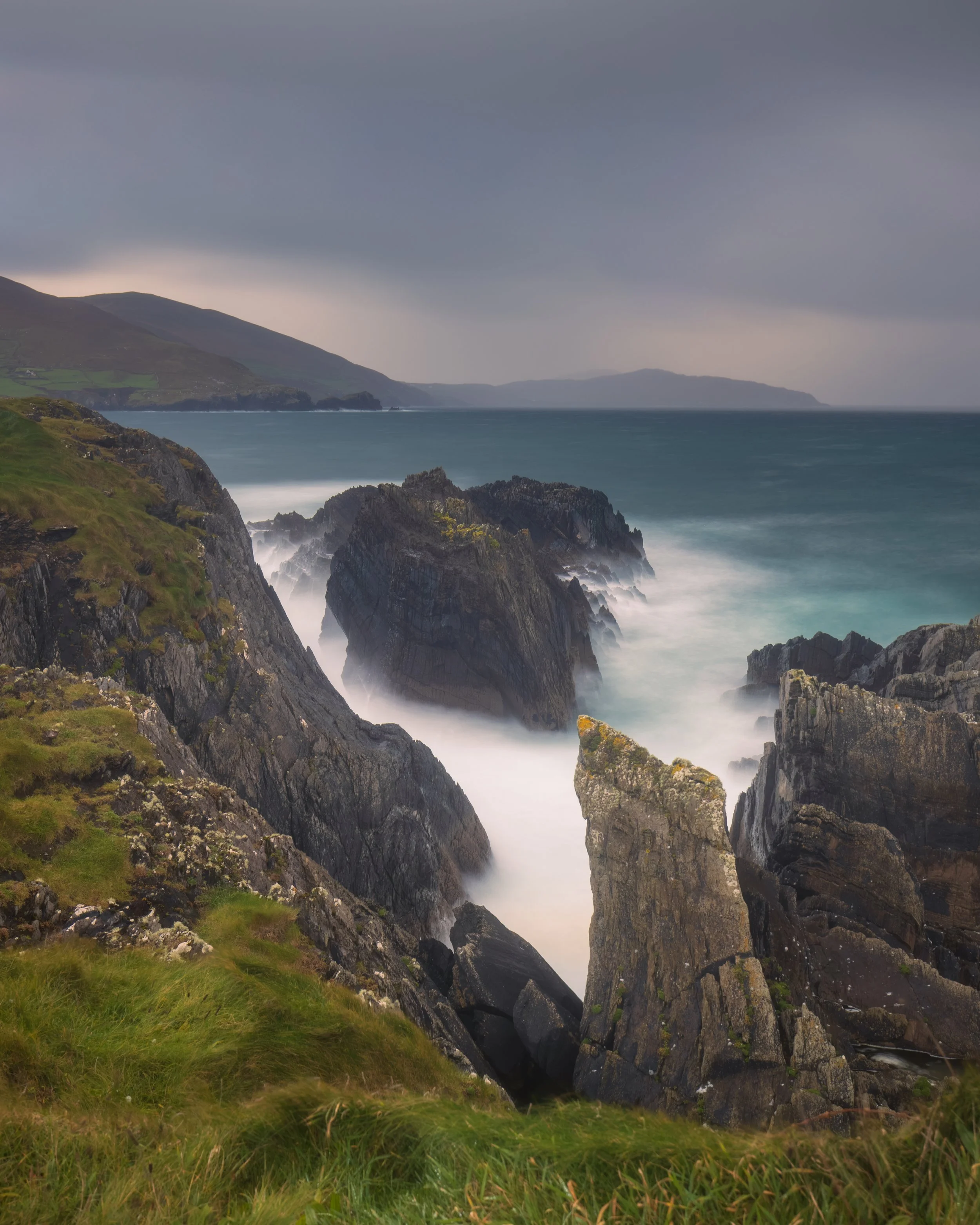
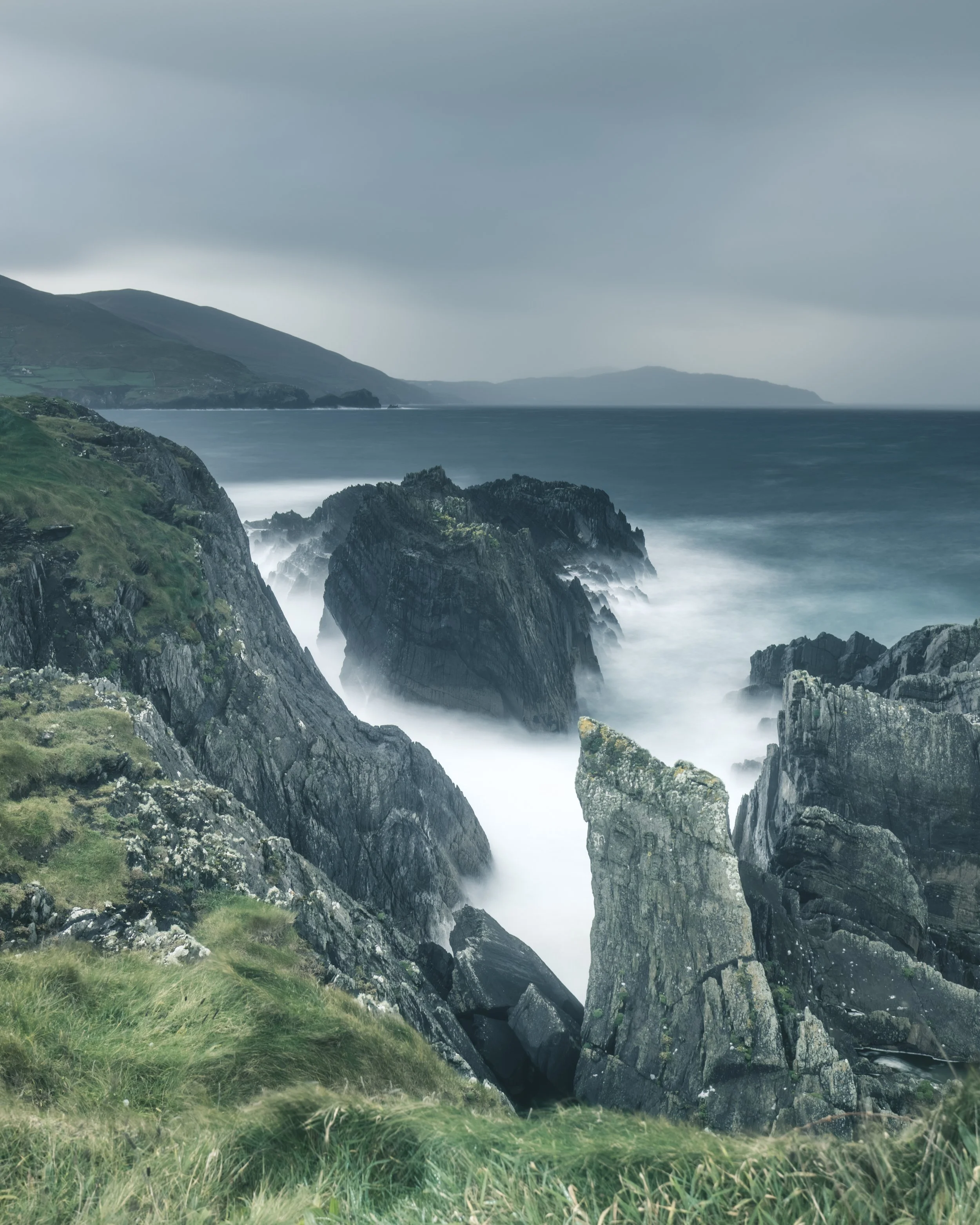
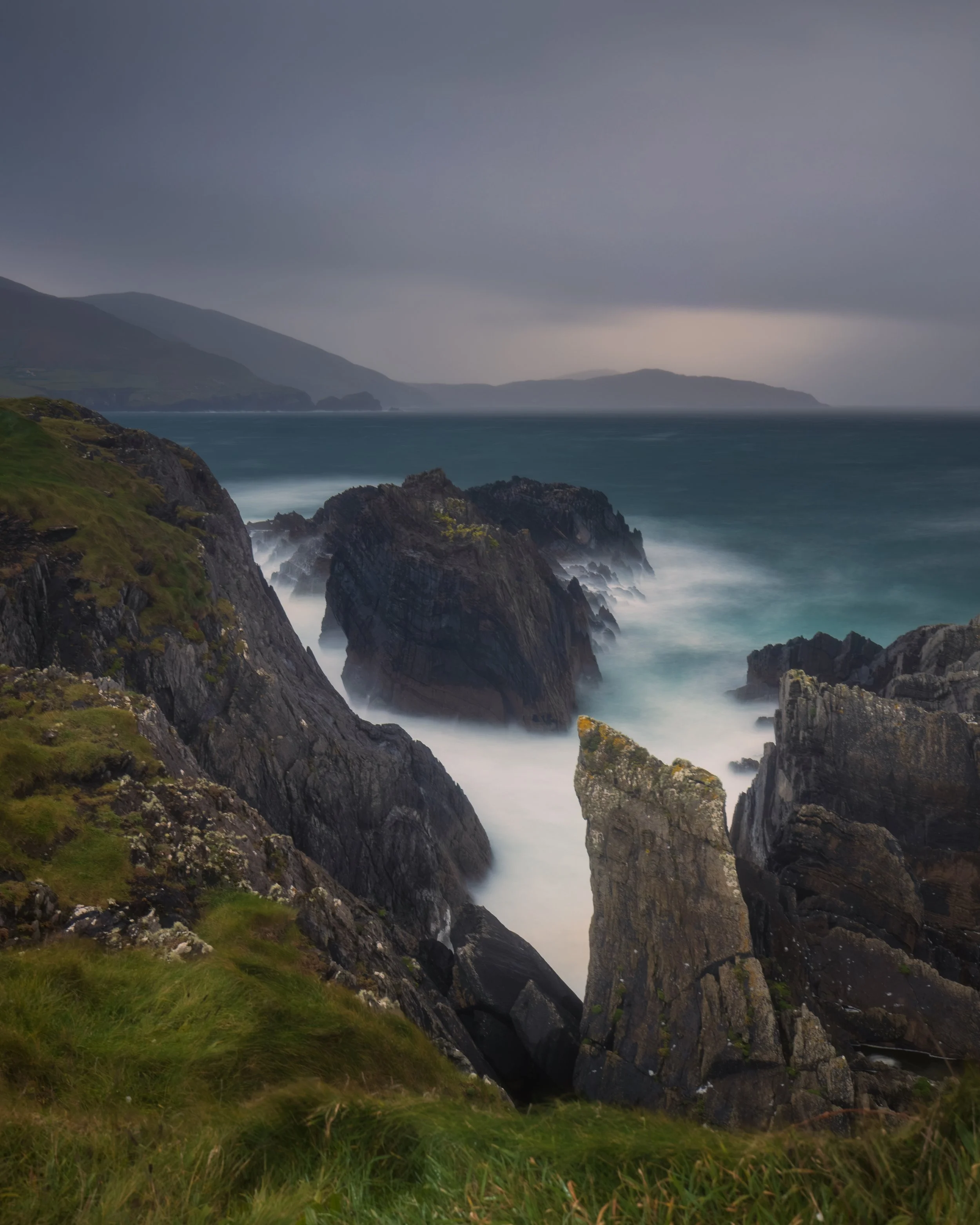
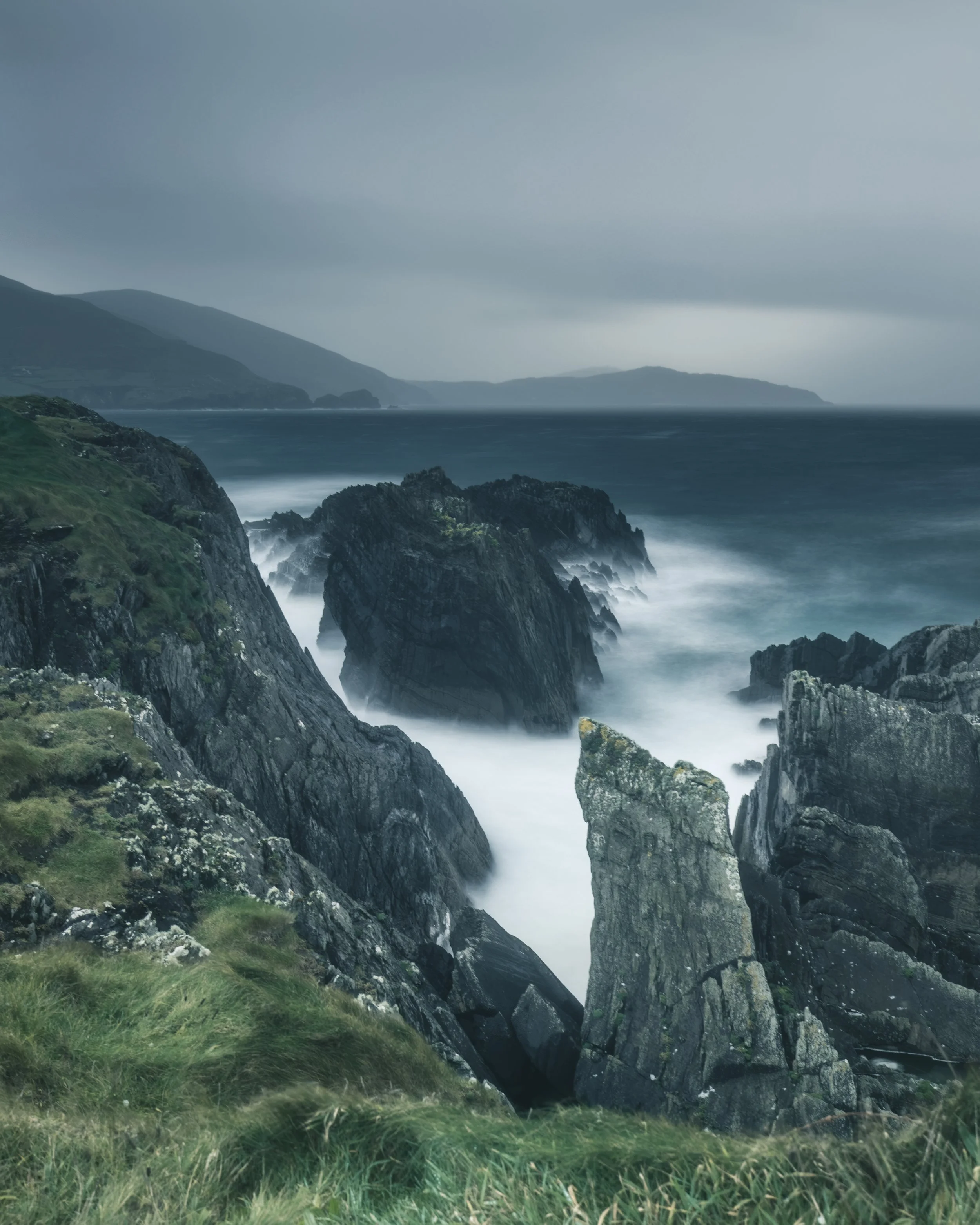
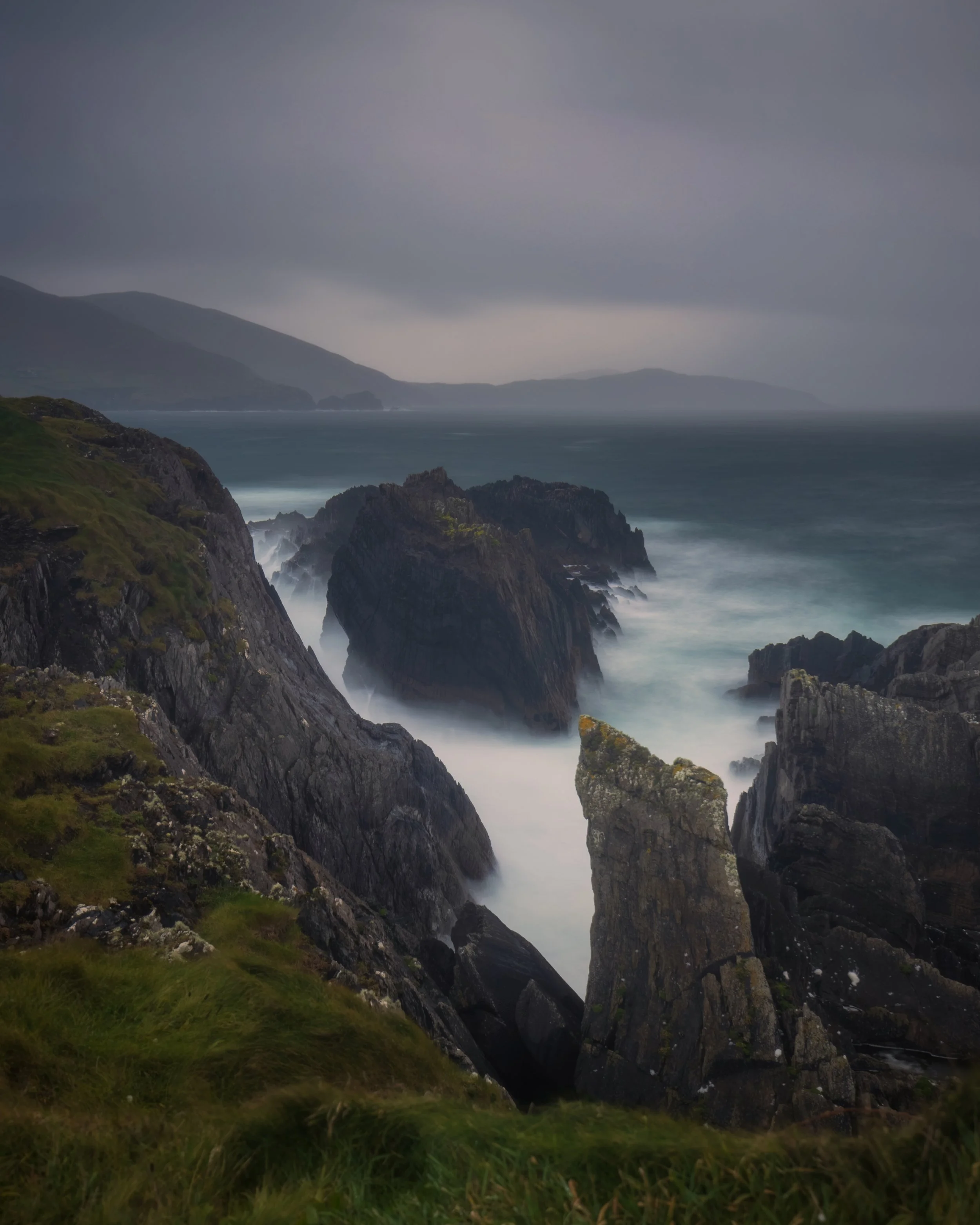
Large rocks created a channel through which the water was rushing, while another substantial rock projected out from the cliffs. By positioning that rock within the gap in the water, I could bring the two features together and make the movement of the sea part of the composition.
I fitted my filters and started making longer exposures. This was the most difficult part of the shoot because the rain was hitting the front of the lens and filters almost constantly. I had to clean the glass, make an exposure and check the result, often repeating the process to get a photograph without water droplets affecting the image.
At times, I even had to clean the filters while an exposure was underway. It was not an ideal way to work, but I persevered, and the resulting images were worth keeping.
Preparation makes a difference in these conditions. Having waterproof clothing, suitable equipment and a cloth available to clean the filters can help, but none of these things makes you immune to the weather. There comes a point when the conditions make photography impractical, and it is important to recognise that point.
Two edits, two interpretations
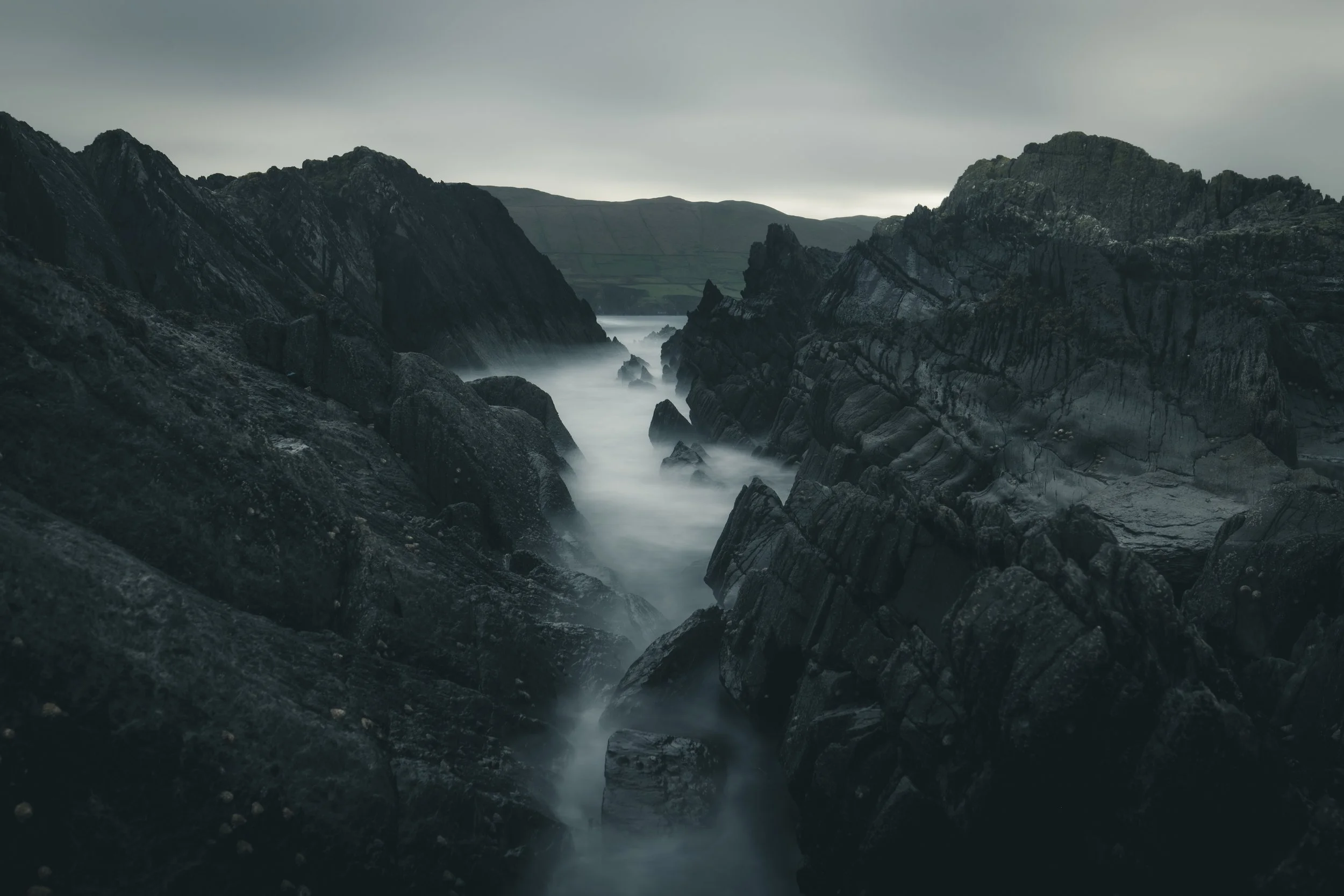
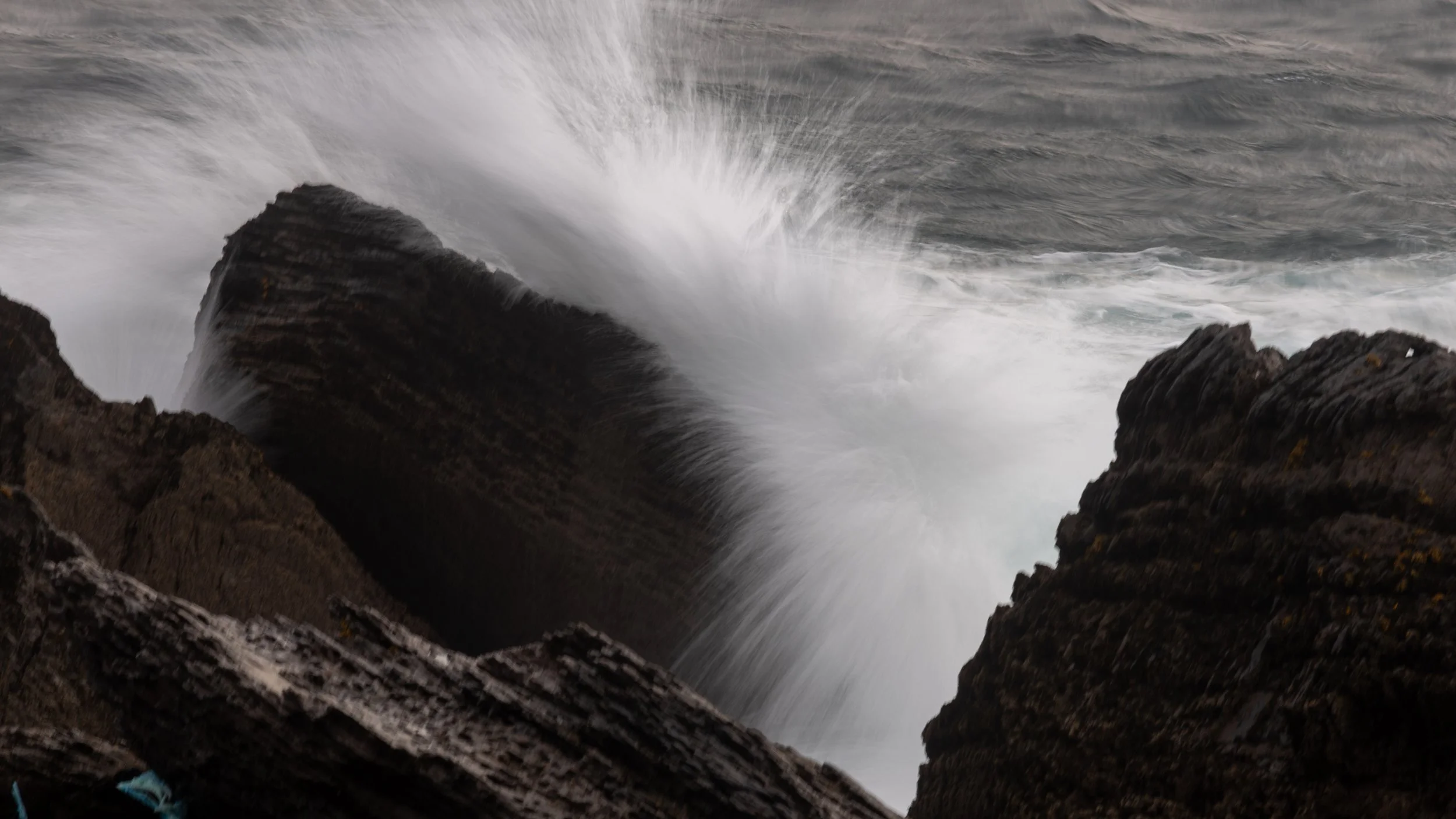
For this adventure, I decided to edit the photographs in two different ways. Alongside the colour versions, I created more subdued edits that placed greater emphasis on the shapes, tonal contrast and movement in the scene.
The colour versions retain more of the natural appearance of the landscape, while the muted edits reduce the emphasis on colour and draw attention towards the structure of the rocks and water. Neither approach is automatically better. The decision depends on the photograph and what I want to communicate.
I would like to know which versions you prefer. When you see the photographs in the video, let me know whether you favour the colour edits or the more subdued treatments, and explain which you think suits the conditions best.
So, who wins: me or the rain?
By the time the light began to fade, the rain was getting heavier, and a strong wind was making the conditions even more difficult. It was time to pack away the equipment, return to the campervan and get dry.
Looking back on the afternoon, I had managed to explore several compositions, work with different shutter speeds, change focal lengths and produce photographs despite the weather. Not every image worked as well as I had hoped, but the session was not wasted.
The rain had certainly made its presence felt. It had delayed our start, made the rocks slippery, complicated the use of filters and eventually forced us to call it a day. At the same time, it had provided the conditions in which I found several photographs worth keeping.
So, did I win the battle?
I came away with images, which was the objective, but I would not claim that determination means you should keep shooting regardless of the risks. Knowing when to continue and when to stop is part of being a landscape photographer.
The lesson from this day in West Cork is that poor weather does not automatically mean a wasted photography trip. It does, however, require preparation, patience and a willingness to change your plans. You may have to abandon a composition, work from a different viewpoint or accept that some photographs will not work.
For now, I will leave the final decision to you. Watch the video, look at the photographs and decide for yourself: me versus the rain, who wins?