Can You Trust the Weather Forecast for Landscape Photography?
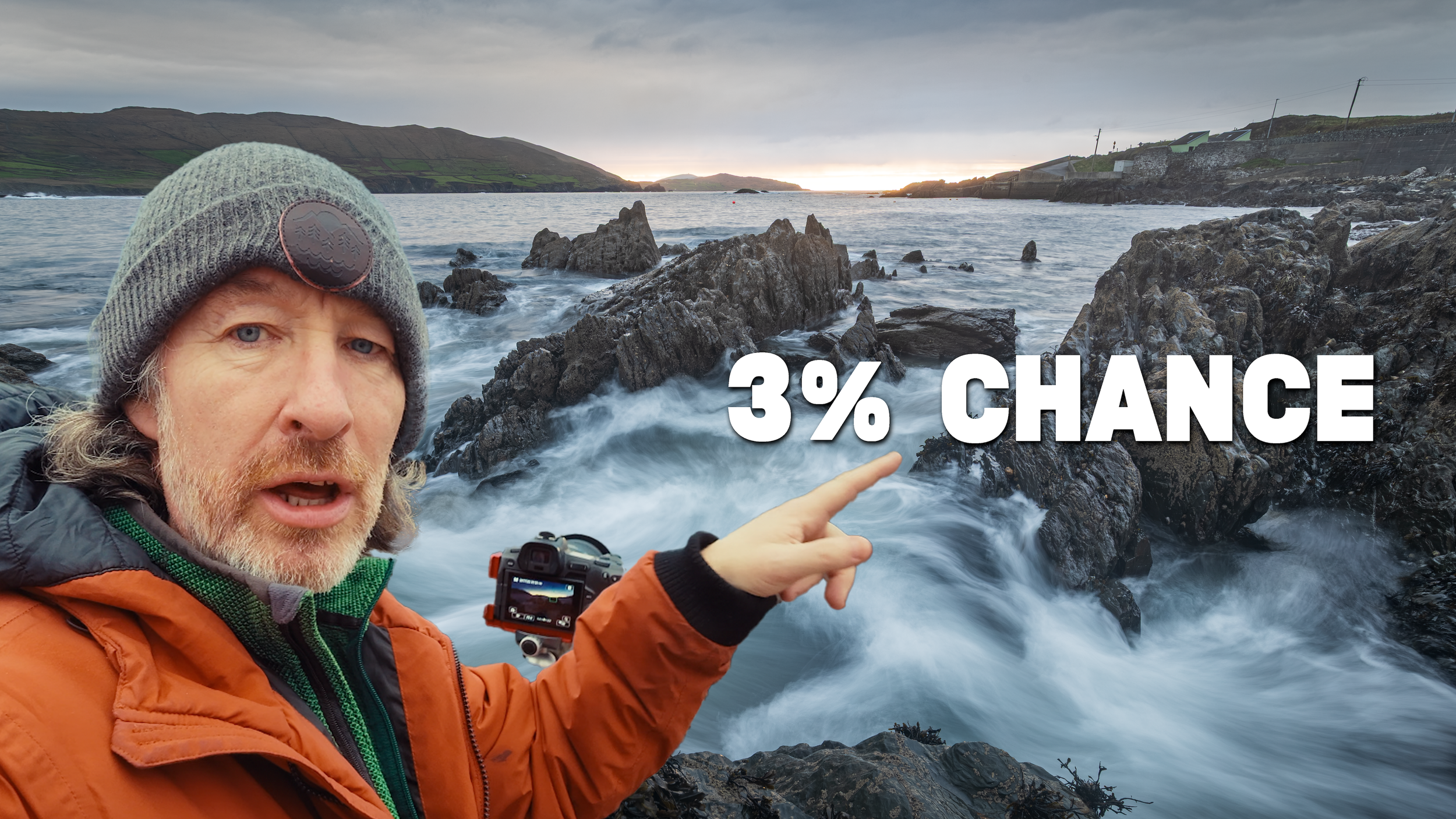
Planning a landscape photography trip is something I have to do regularly, and fortunately, it is a part of photography that I enjoy. Here in Ireland, the weather can be difficult to predict, particularly when you are looking for specific conditions rather than simply heading out for a walk with a camera. Even when checking several weather forecasting models and apps, there is always a chance that the forecast will be wrong. For us landscape photographers, however, the important thing is understanding what the forecast might offer and deciding whether it is worth taking the chance.
I am not looking for just any conditions. I want to know where the light might appear, how the clouds could develop and whether the tide will work with the compositions I have in mind. On this trip to West Cork, I was discussing those possibilities with my buddy Diarmuid as we prepared to explore several locations around the Beara Peninsula. Our first opportunity was a possible gap in the clouds at sunset. It was never guaranteed, but it was enough to get us moving.
Taking a chance on the forecast
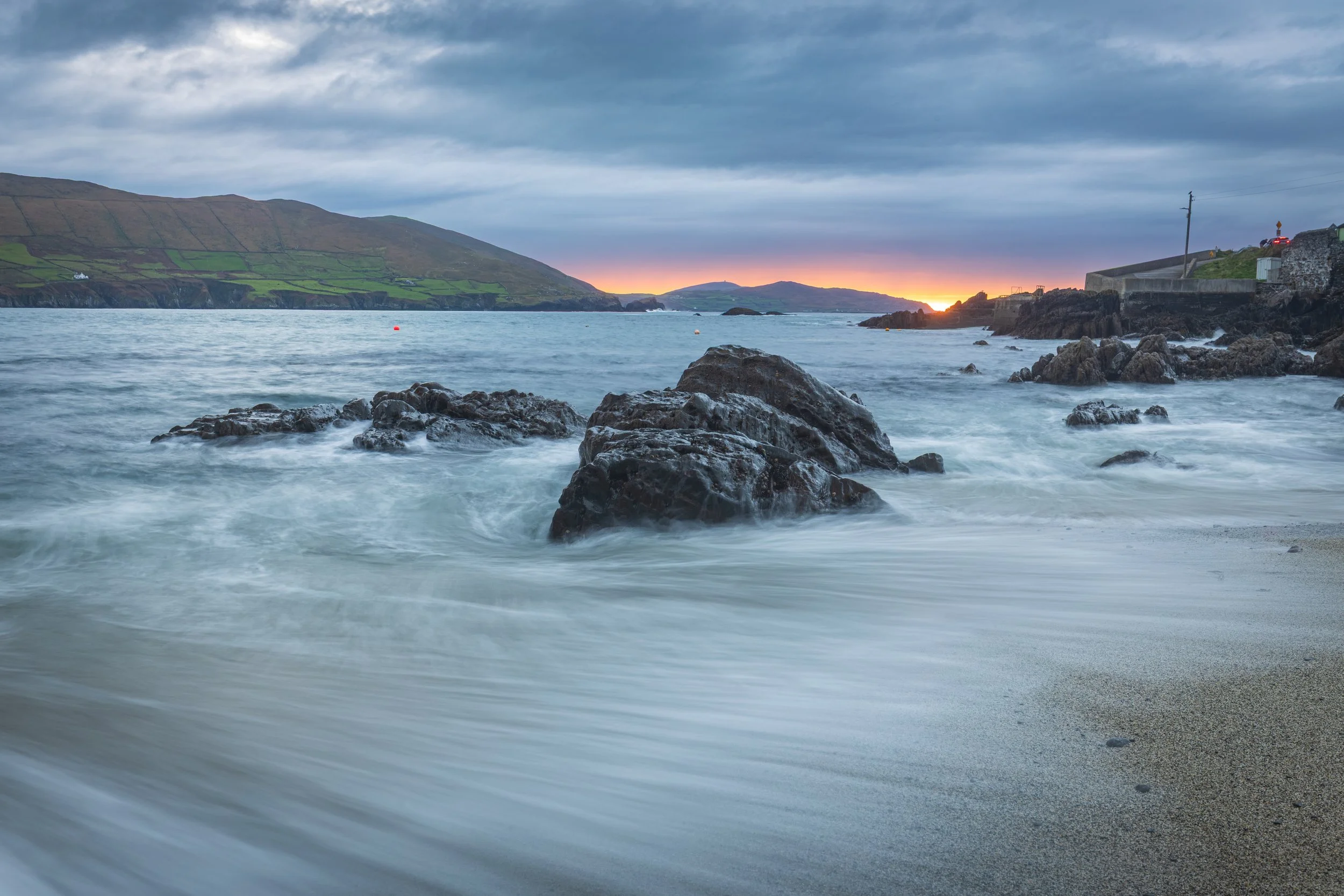
We parked at Ballydonegan Beach and made the short walk down to the shore. The beach has a collection of rocks around its centre, which offered several possible compositions, but the tide was going to play an important part in how well they worked.
Ideally, I would have liked the water to be a little higher, allowing me to work with more water movement around the rocks. However, there was enough to get started, and I was happy to work with what was in front of me rather than spend the evening wishing the conditions were different.
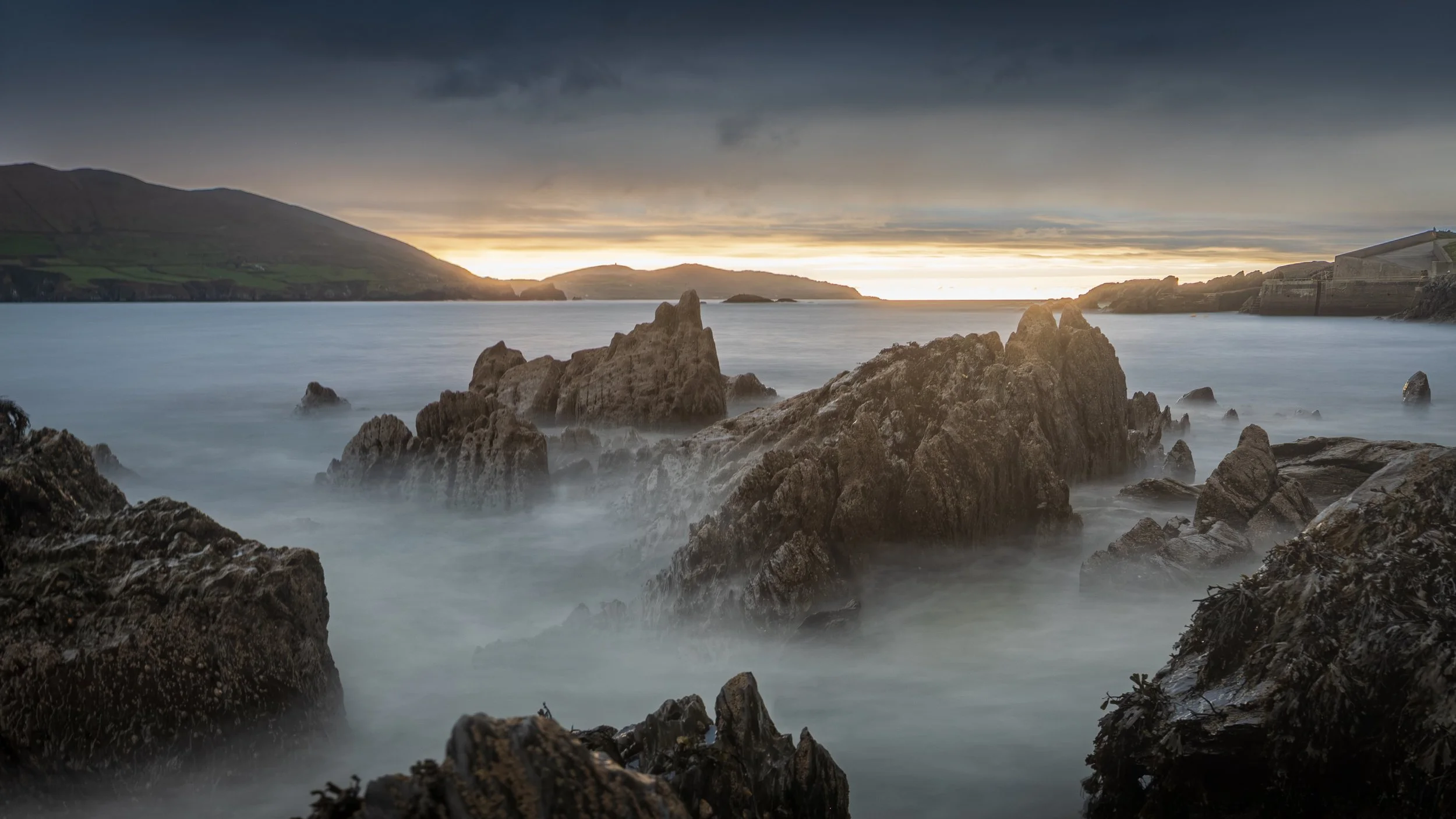
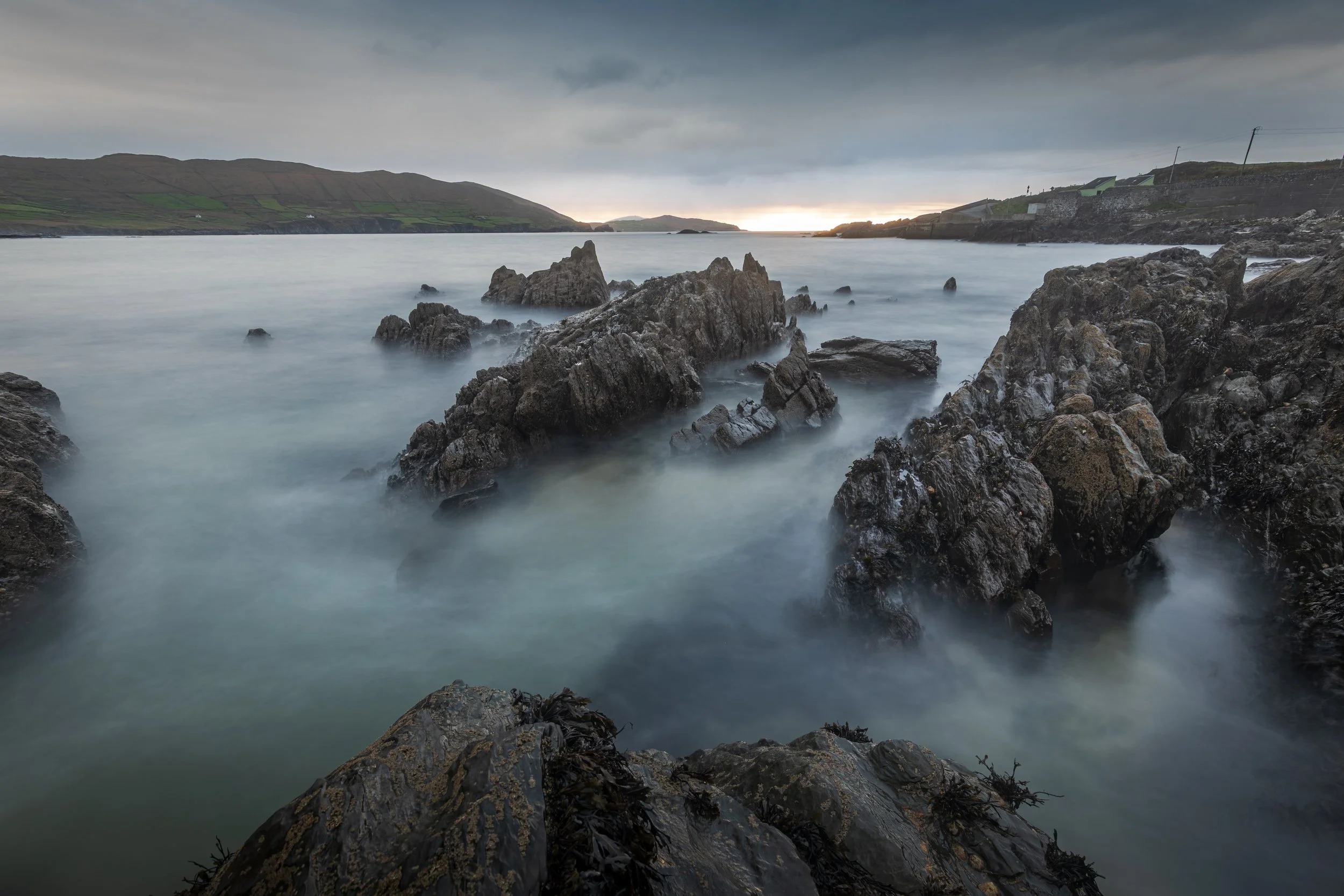
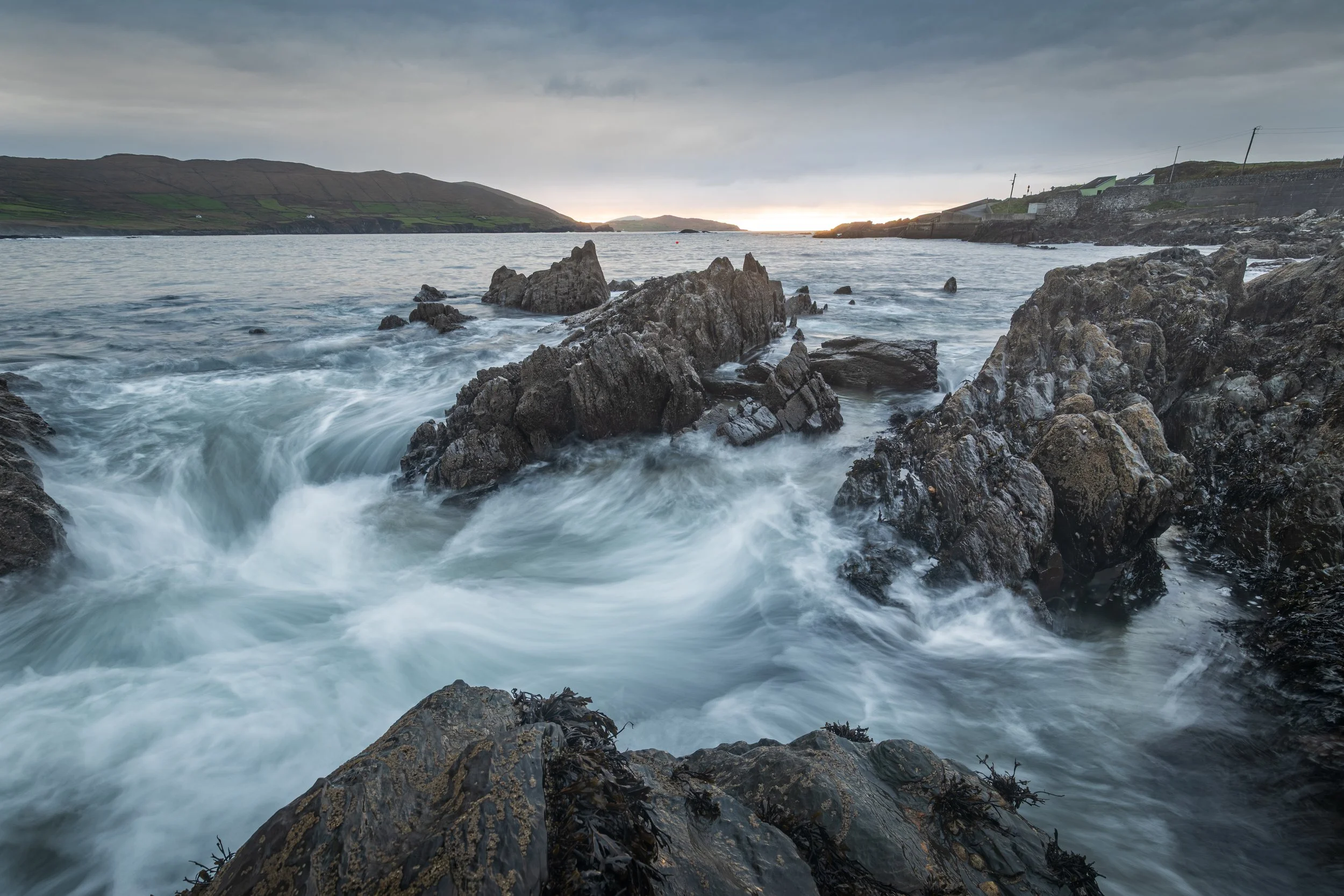
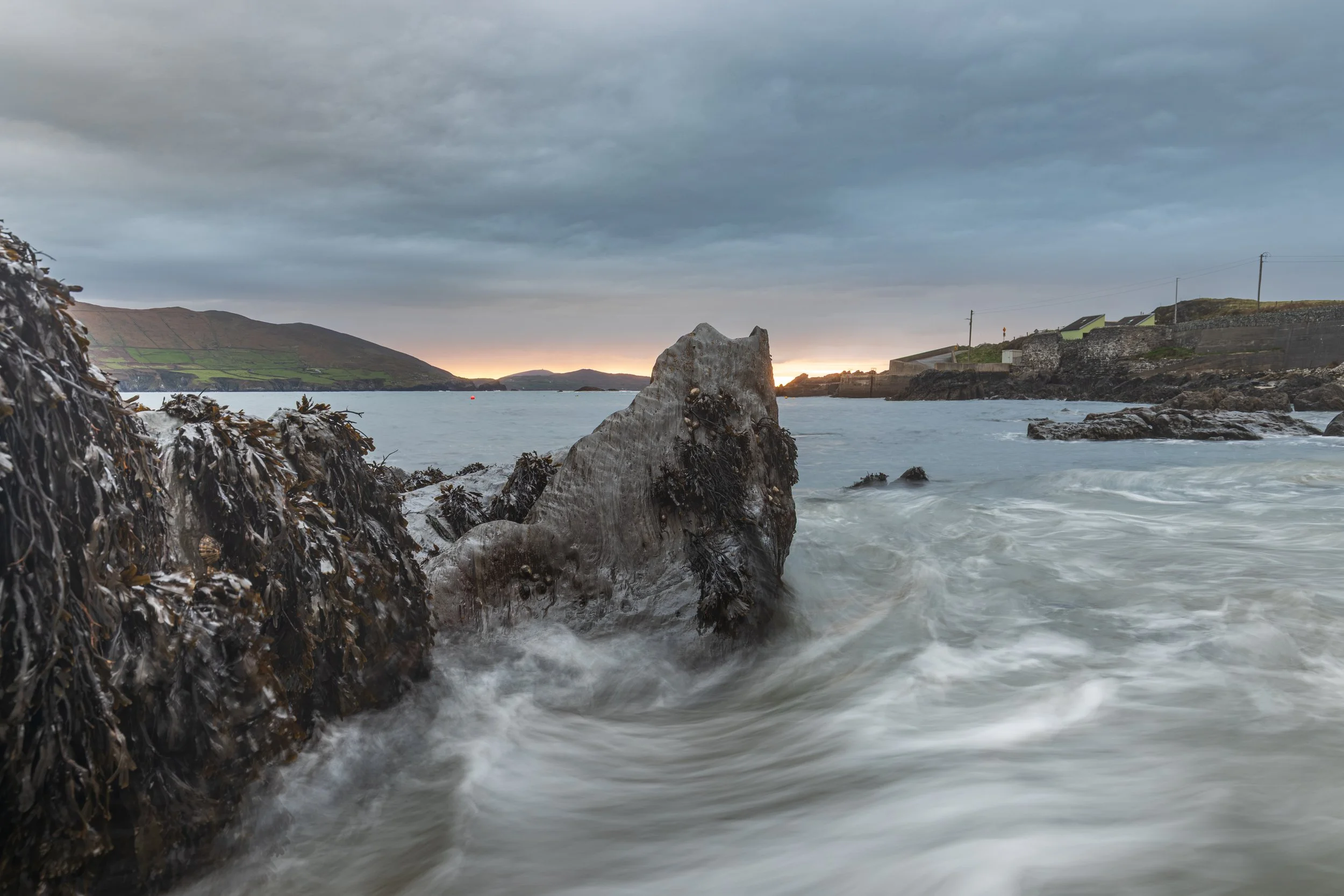
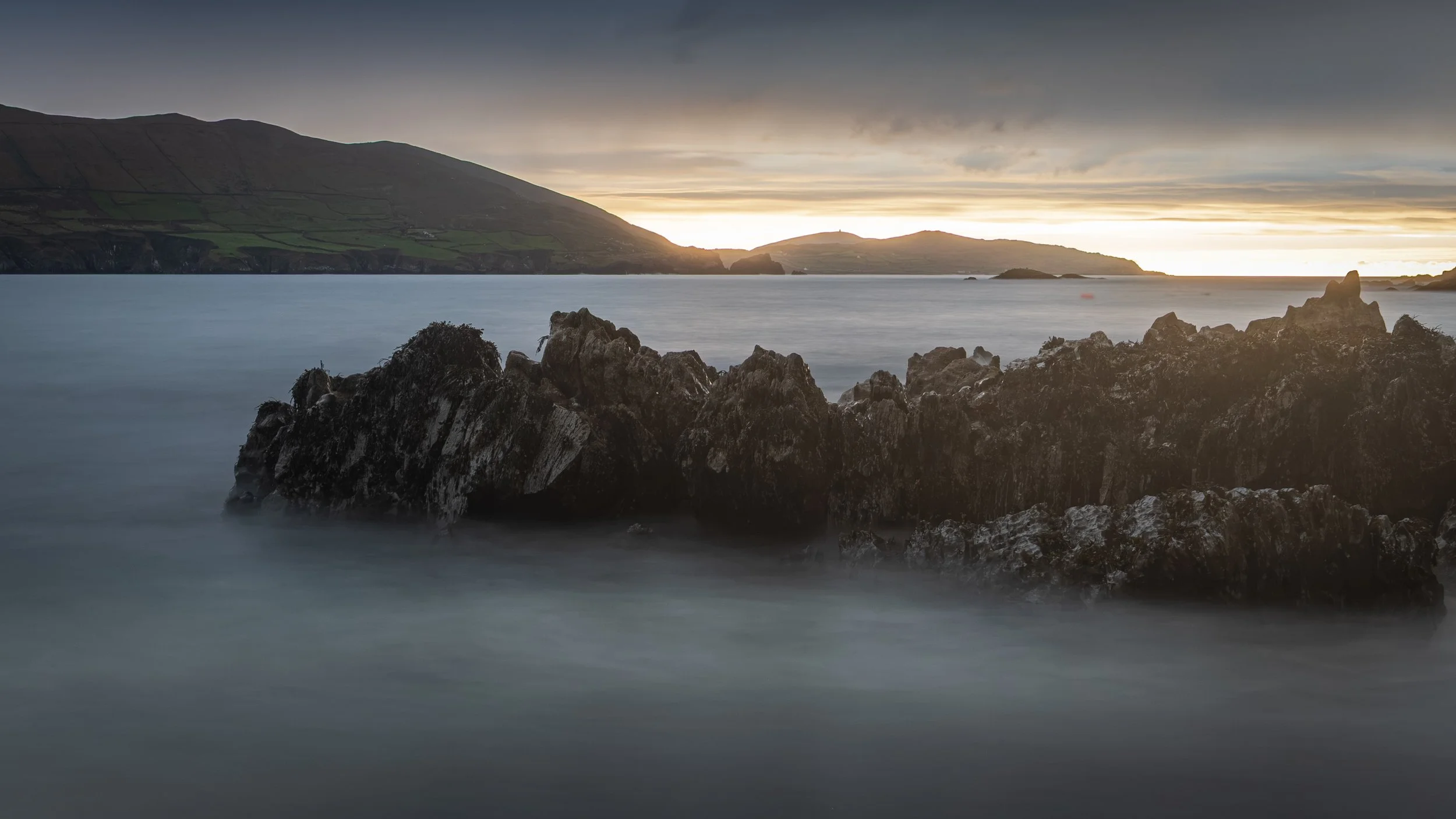
The first photograph was a straightforward test shot of a group of rocks. It was not a particularly strong composition, as there was no obvious leading line or clear visual route through the frame. Nevertheless, I was glad I took it. The detail in the rocks, the movement of the water, and the narrow glow appearing along the horizon confirmed that the planning had been worthwhile.
That small area of light was important because it gave the photograph somewhere for the eye to travel towards. Even when the foreground is interesting, I want to consider what will hold the viewer's attention beyond it. In this case, the glow offered a potential endpoint, while the rocks and water provided the elements I could use to build a stronger composition.
I also knew that a longer exposure could smooth the water and simplify the scene. The important thing was not to assume that one exposure would work for every photograph.
Finding compositions as the light developed
As I continued working along the shore, I noticed a group of rocks that formed an interesting arrangement. Their shapes, combined with the movement of the water between them, created something resembling a cross or an X. With the glow still visible on the horizon and darker clouds above it, I had enough elements to make the composition worth trying.
This is something I encourage photographers to practise. Rather than looking only for obvious subjects, pay attention to the relationships between the elements in front of you. A group of ordinary rocks can become more interesting when their shapes work together, particularly when moving water helps connect them.
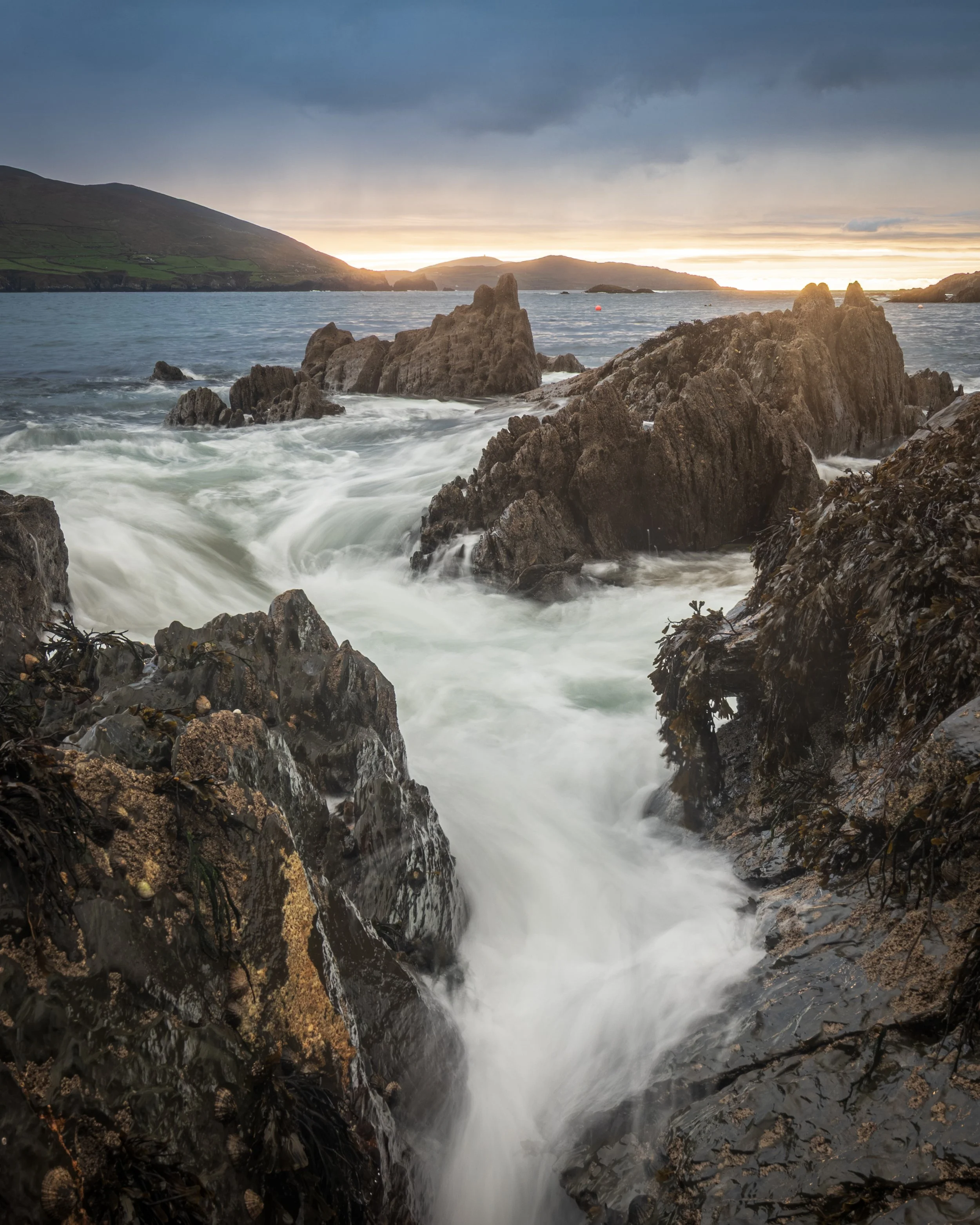
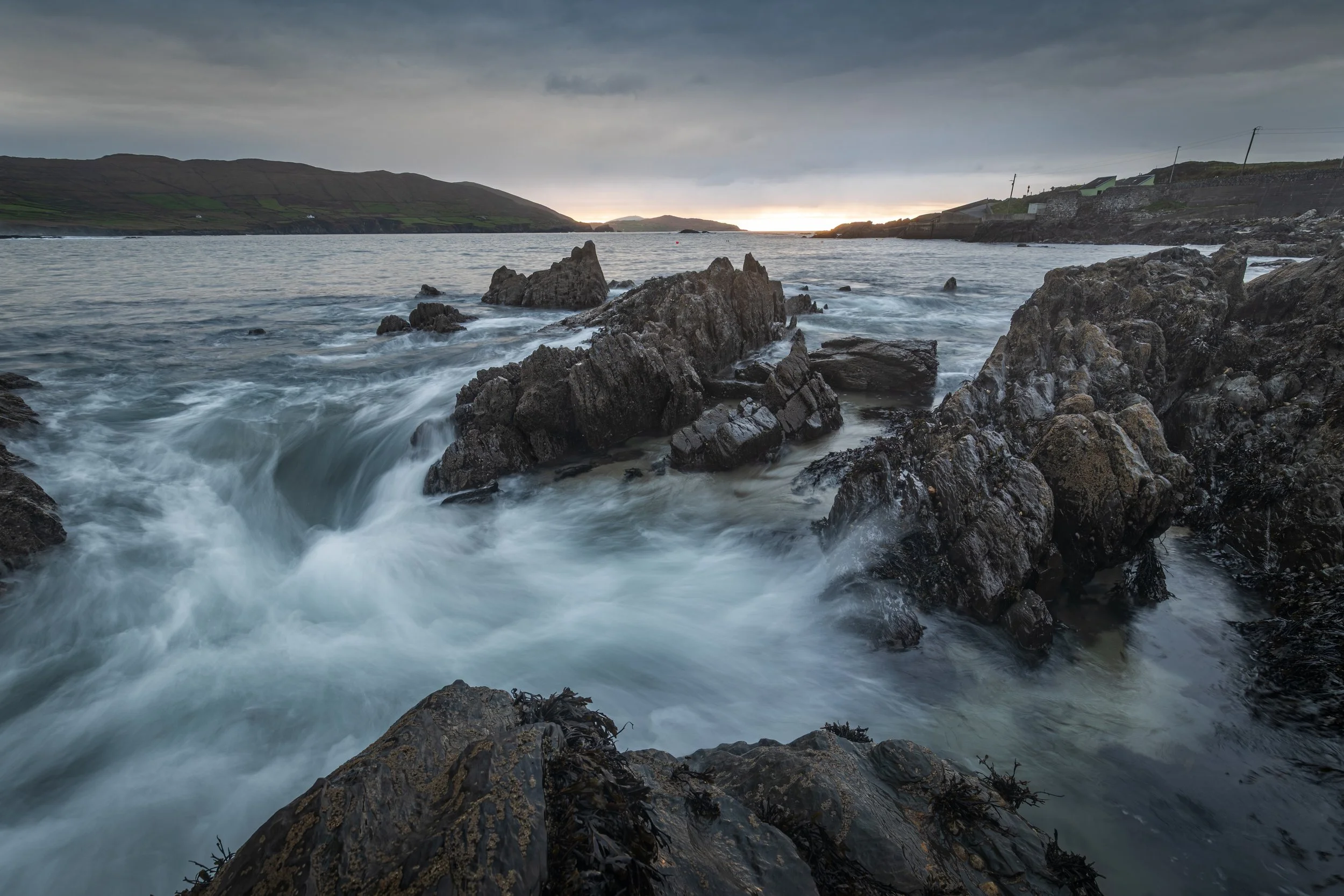
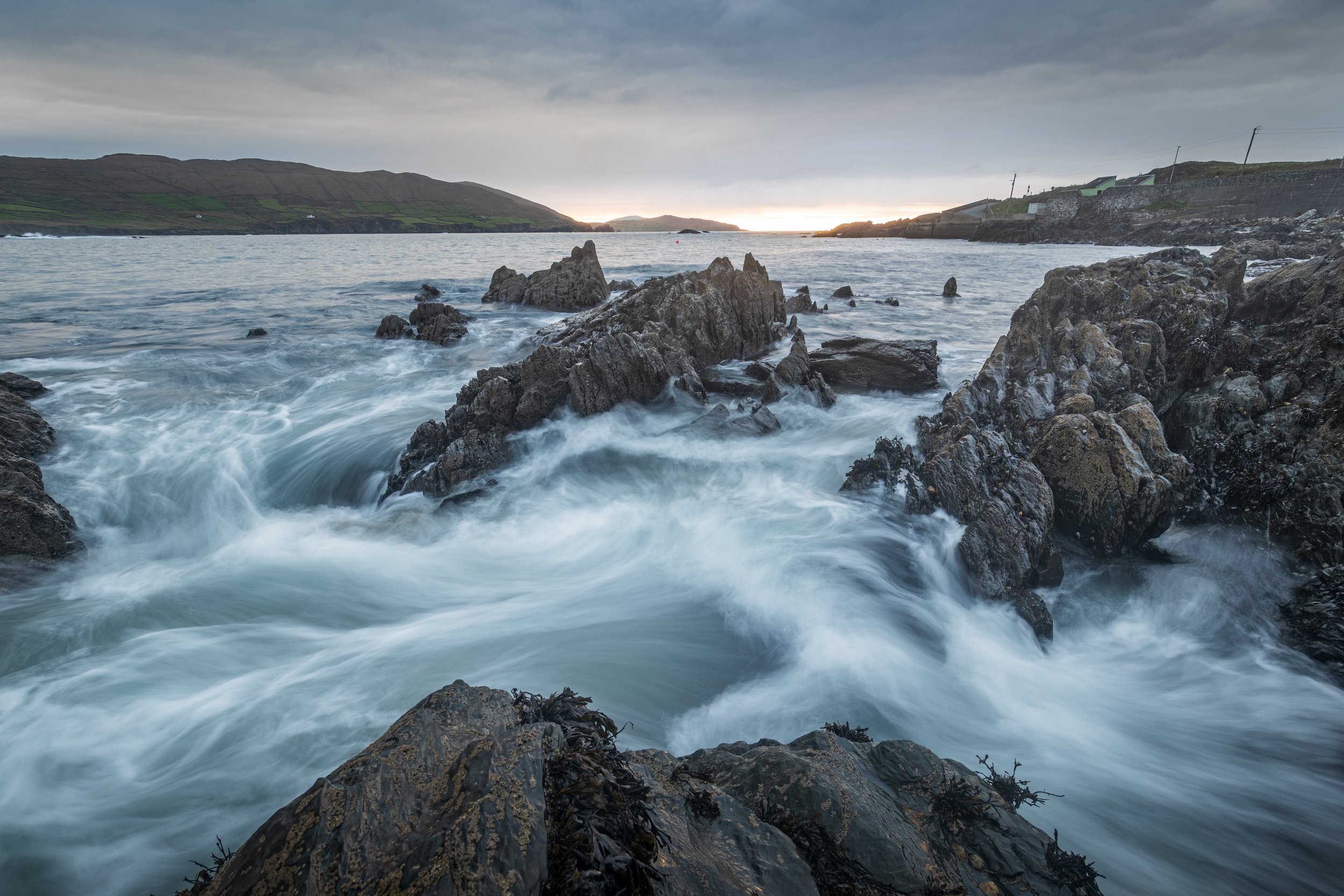
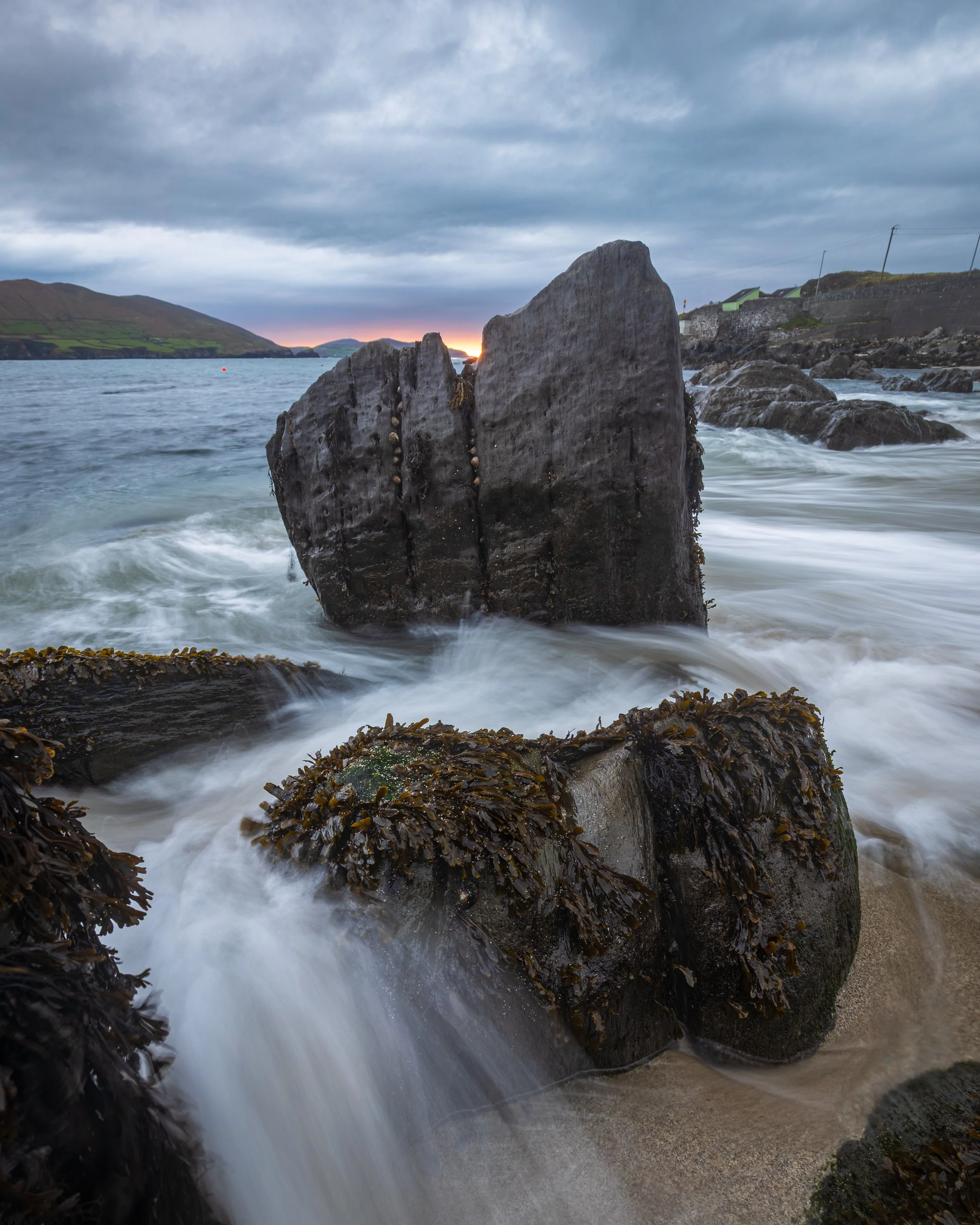
The sunset seemed to last far longer than I expected, giving me time to move between compositions. Stepping back from the rocks, I noticed waves forcing their way through a narrow gap between two larger formations. This was a different opportunity, and I wanted to preserve the texture and movement of the water rather than turn it into a smooth, indistinct area.
I started with a shutter speed of half a second before changing to 0.3 seconds. That shorter exposure gave me the balance I wanted between showing the water's movement and retaining its texture. The water travelling through the gap also created a natural leading line, directing attention through the frame towards the brighter horizon and the clouds above it.
This is why I rarely settle on one shutter speed for every coastal photograph. The right choice depends on what the water is doing and what I want the photograph to communicate. A longer exposure can simplify movement, while a shorter one can retain more detail and show the direction in which the water is travelling.
Changing my position to improve the photograph
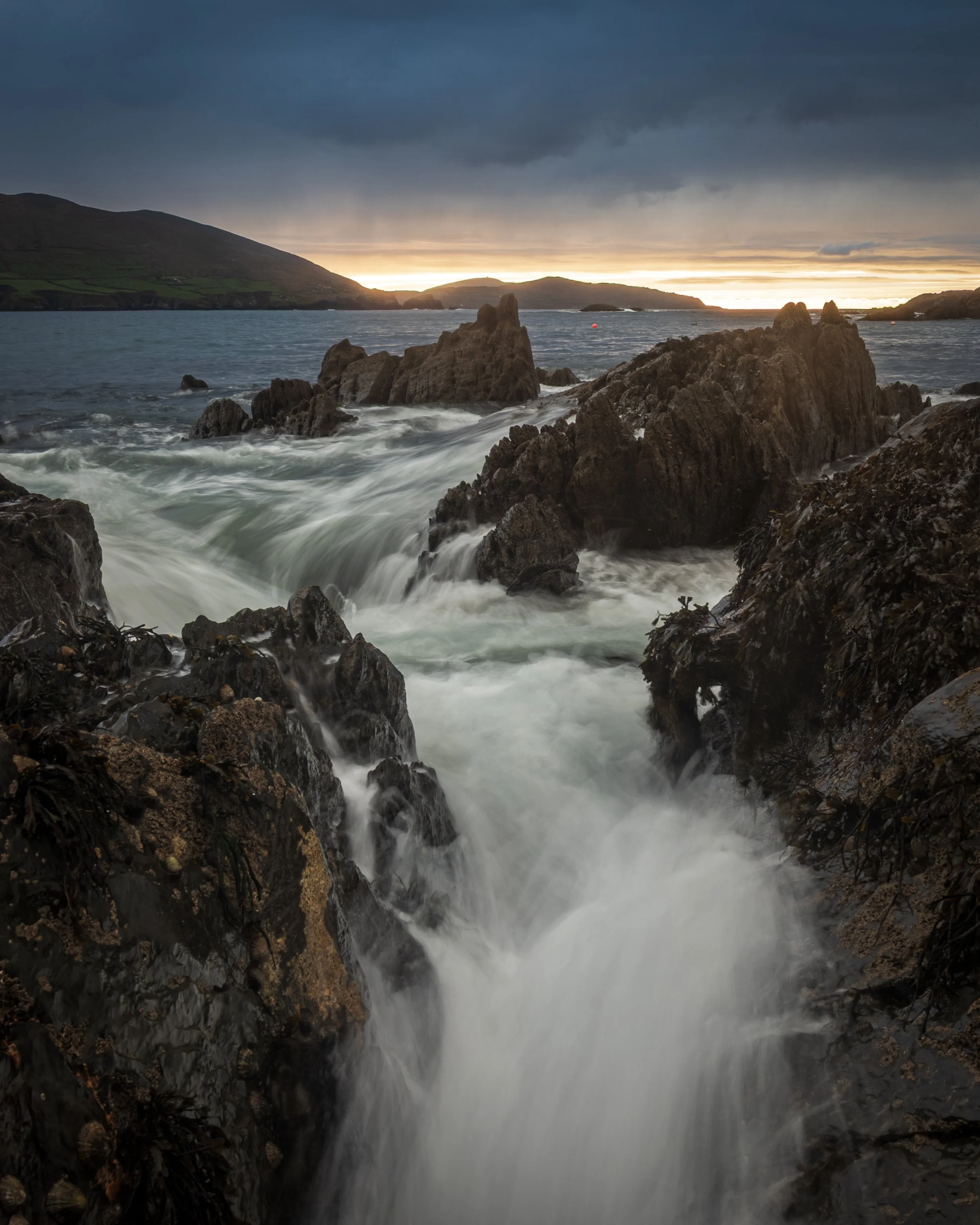
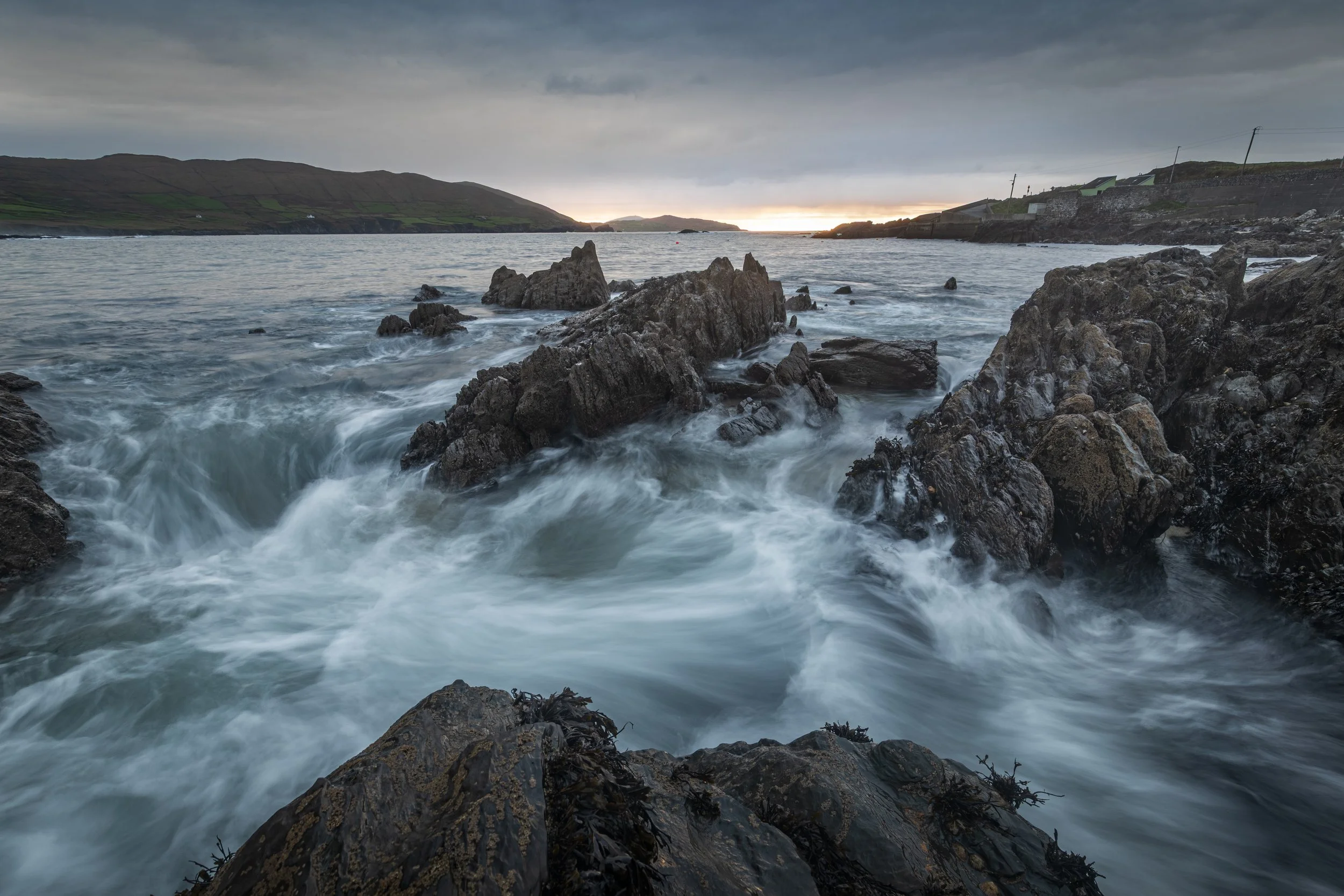
For the next composition, I climbed onto some rocks to gain a higher viewpoint and look down into the water. I initially tried a longer exposure, but I quickly realised that it was not showing the water in the way I wanted.
Returning to 0.3 seconds made a noticeable difference. From the higher position, I could see how the water moved around the rocks, ebbing and flowing through the gaps. The photograph became less about the rocks themselves and more about the relationship between their shapes and the movement surrounding them.
Changing your viewpoint is one of the simplest ways to improve a composition. Moving a little higher or lower can alter the apparent distance between objects, reveal details that were previously hidden and change how the foreground connects with the background. It is worth taking the time to explore these options before moving to another location.
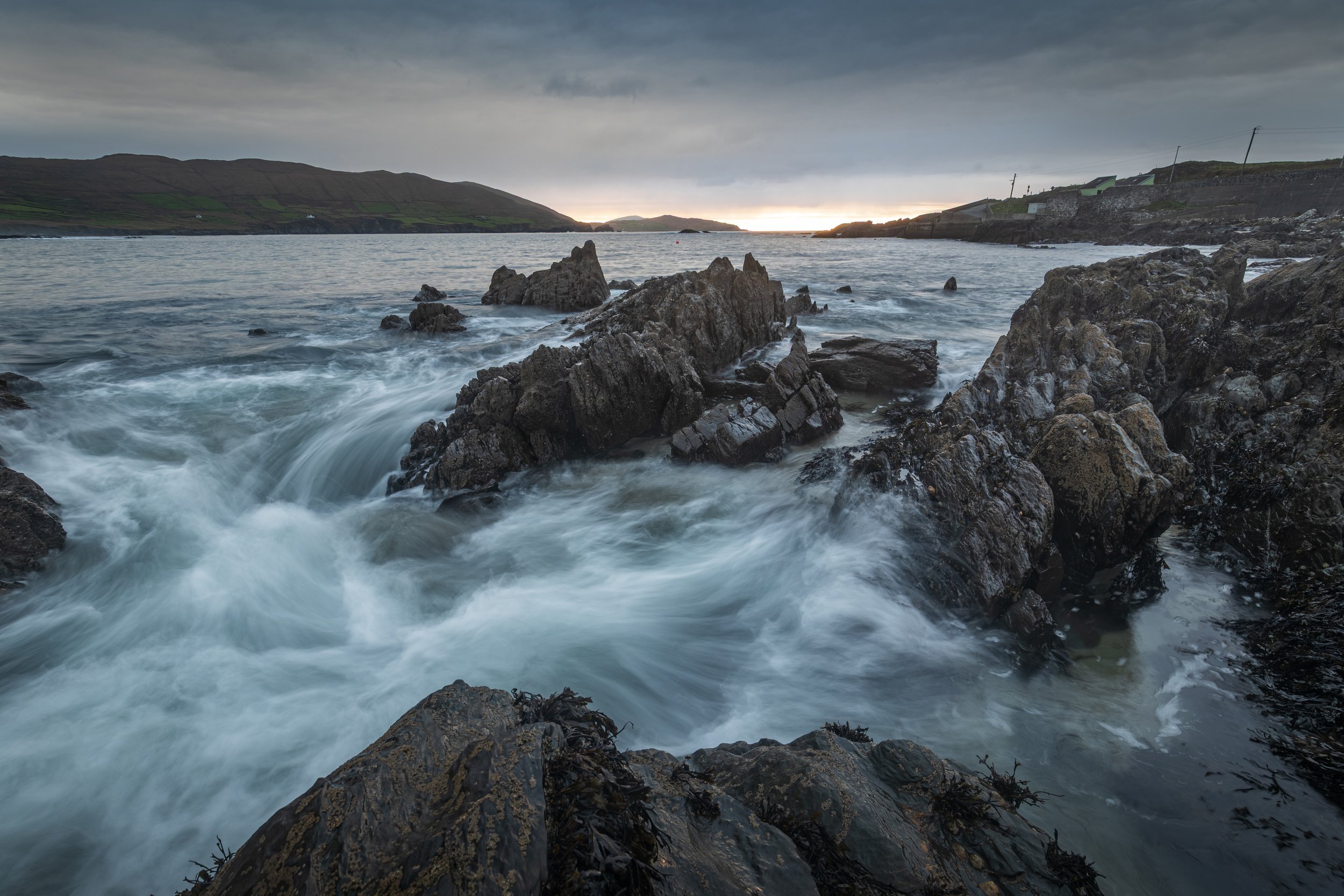
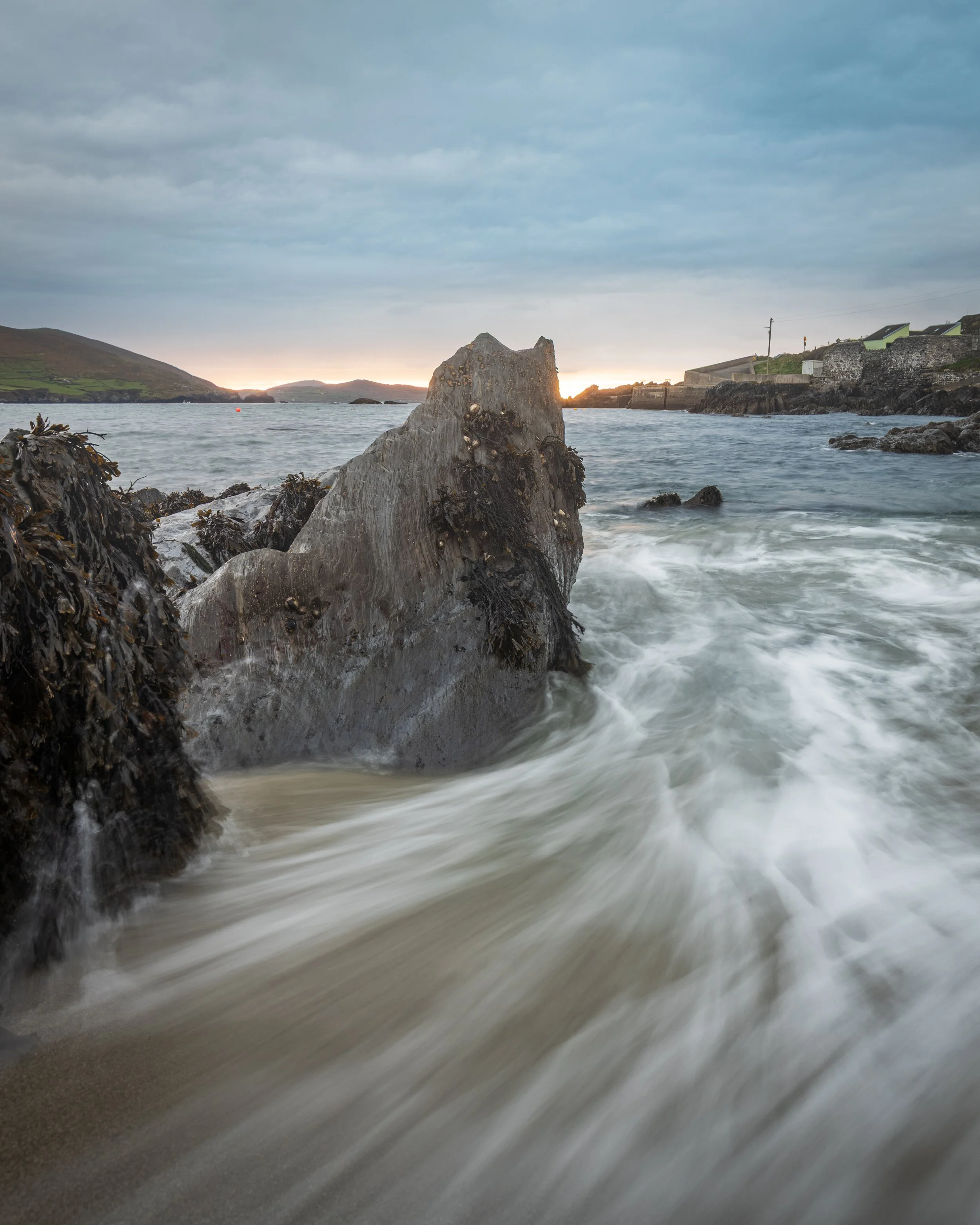
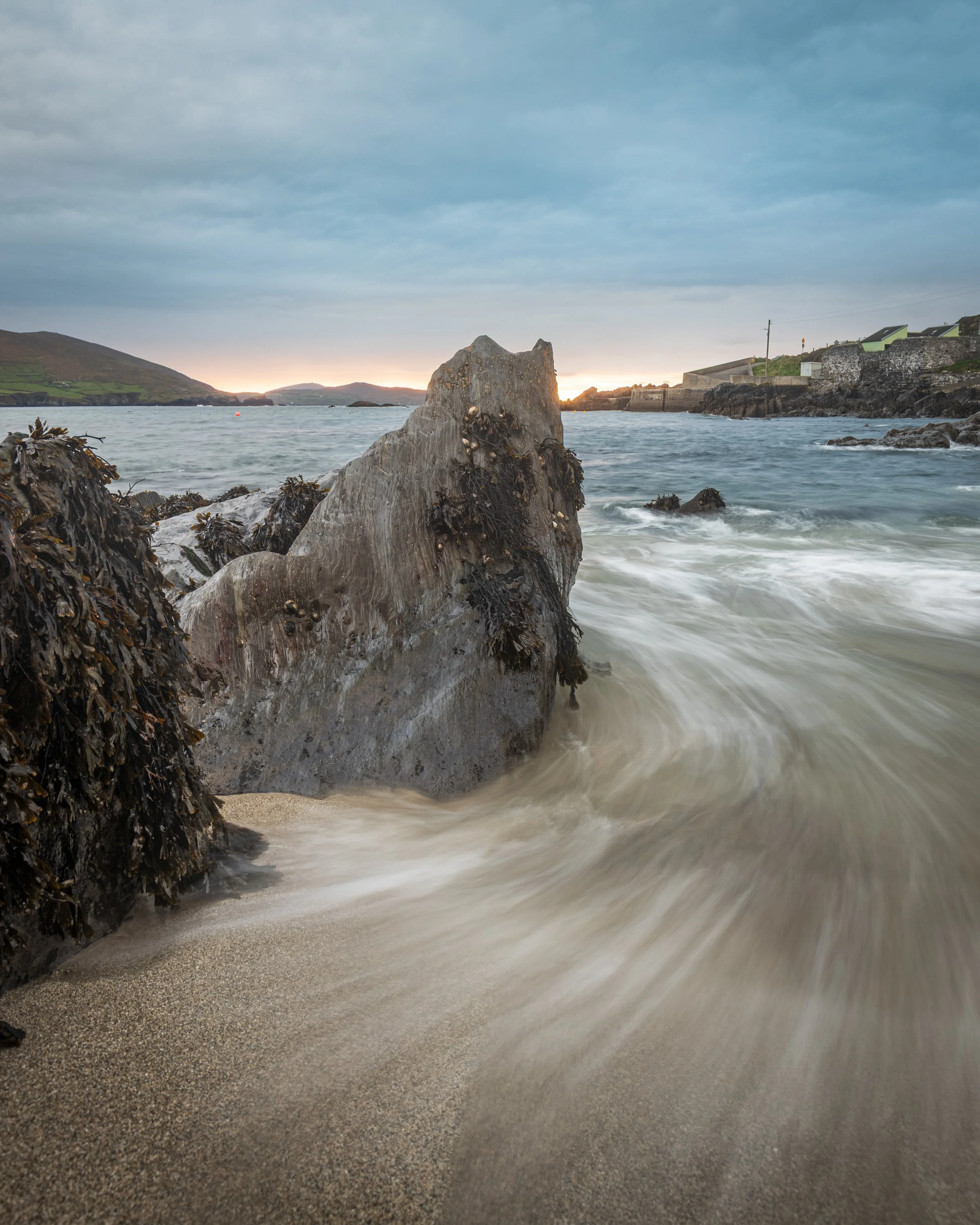
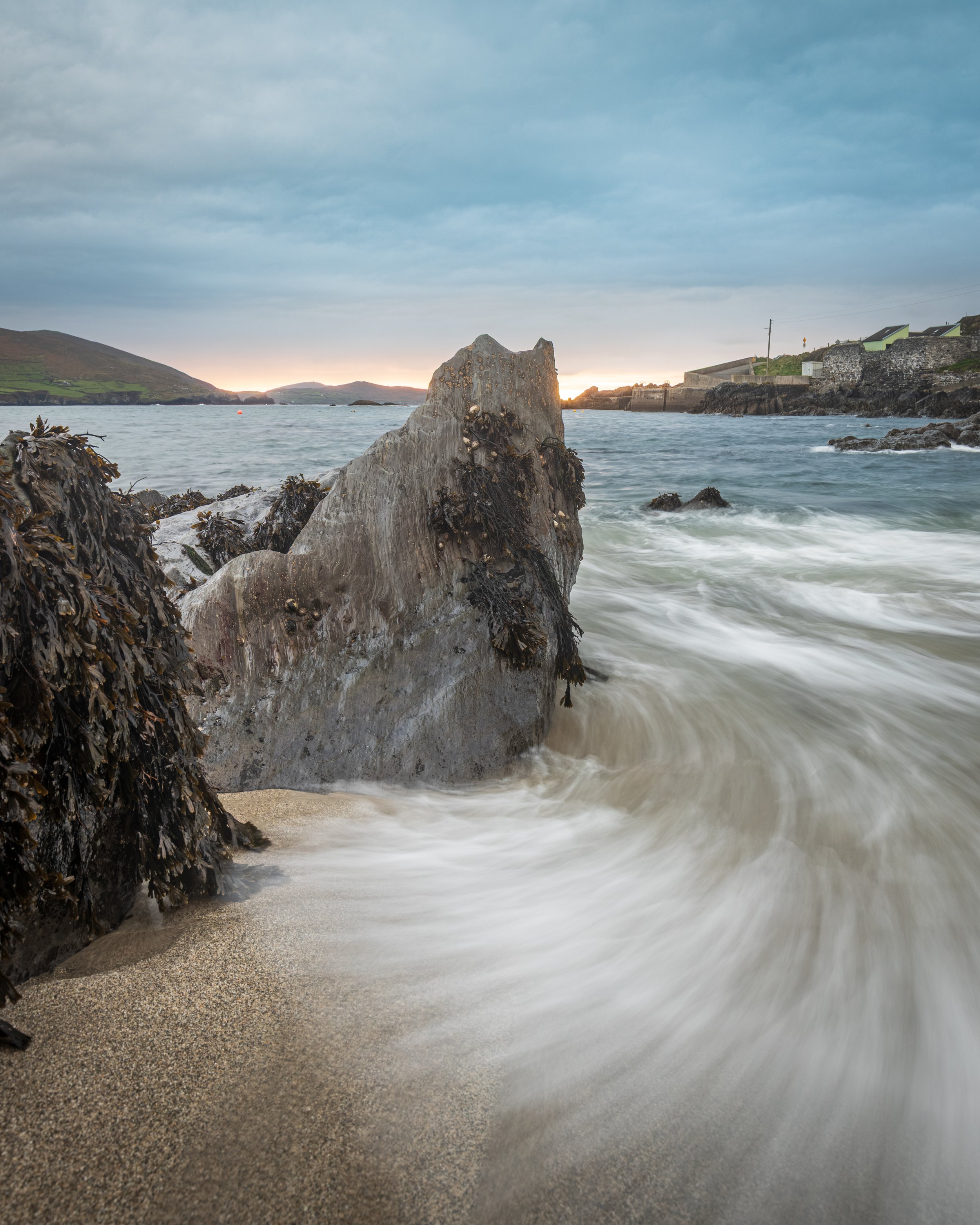
My next composition centred on a single pointed rock at the end of a larger formation. I positioned the camera low so that the tip of the rock would break the horizon, allowing its shape to stand out against the remaining glow. I then waited for the waves to move around it.
A shutter speed of half a second worked well for this photograph. It retained enough movement to show the water swirling around the rock without losing all of its structure. The light was still visible, and the pointed shape gave the frame a clear focal point.
When the plan finally comes together
While I was working on these compositions, Diarmuid had sent his drone up and was able to tell me that the sun was now sitting on the horizon. Our original forecast had suggested that a gap in the clouds might allow some light through, and the glow confirmed that we had made the right decision to visit.
We did not get direct sunlight breaking through and lighting the beach. A rainstorm between us and the sun prevented that, but the clouds still provided enough interest to make the scene worthwhile. This is an important distinction when planning landscape photography. The forecast gives you an indication of what might happen, not a promise of what you will see.
If I had decided against going because the forecast was uncertain, I would have missed the opportunity. Equally, if the light had failed to appear, I would have had to accept that the decision had not paid off that evening. You cannot control the weather, but you can put yourself in the right location when an opportunity presents itself.
One last photograph before the light disappeared
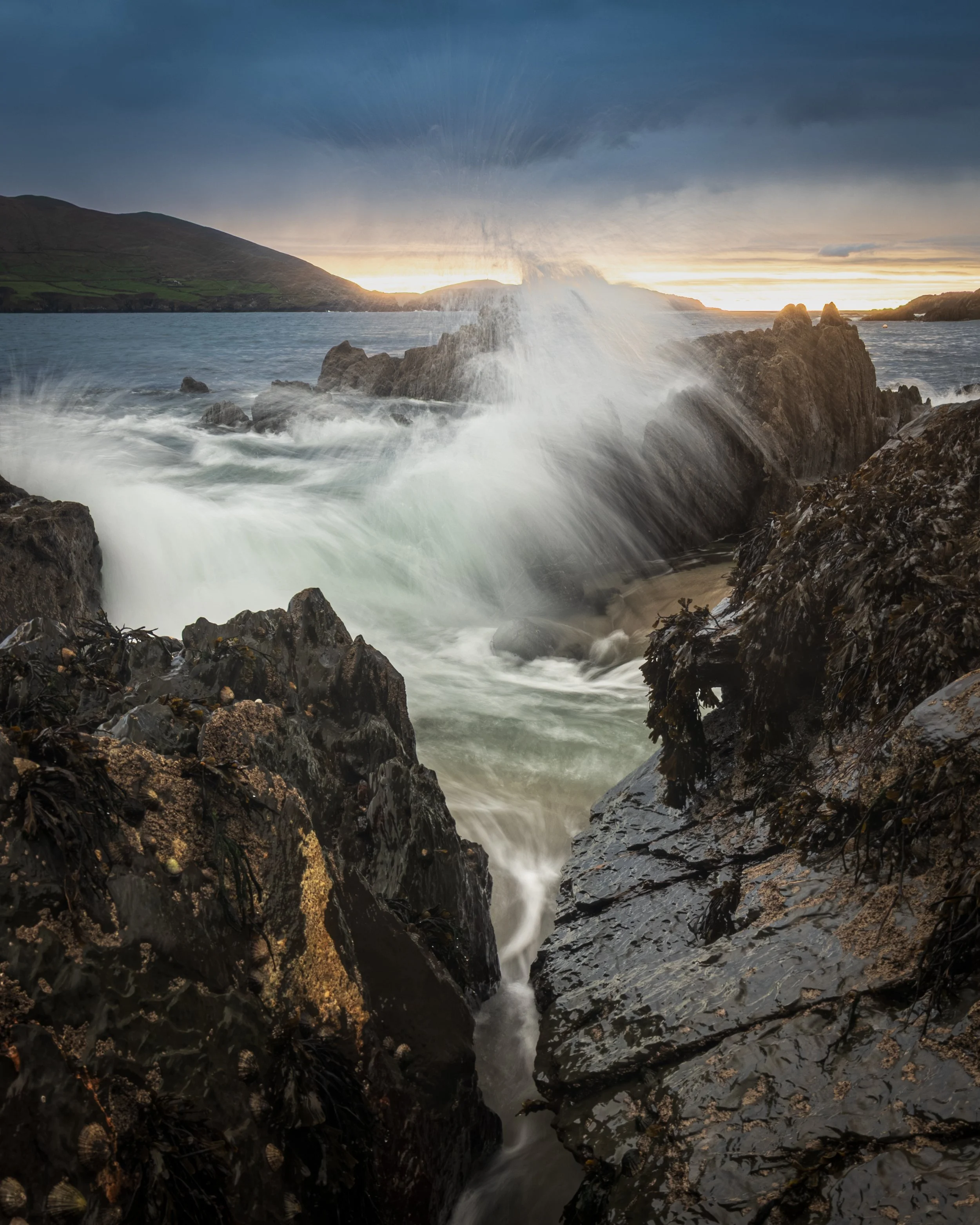
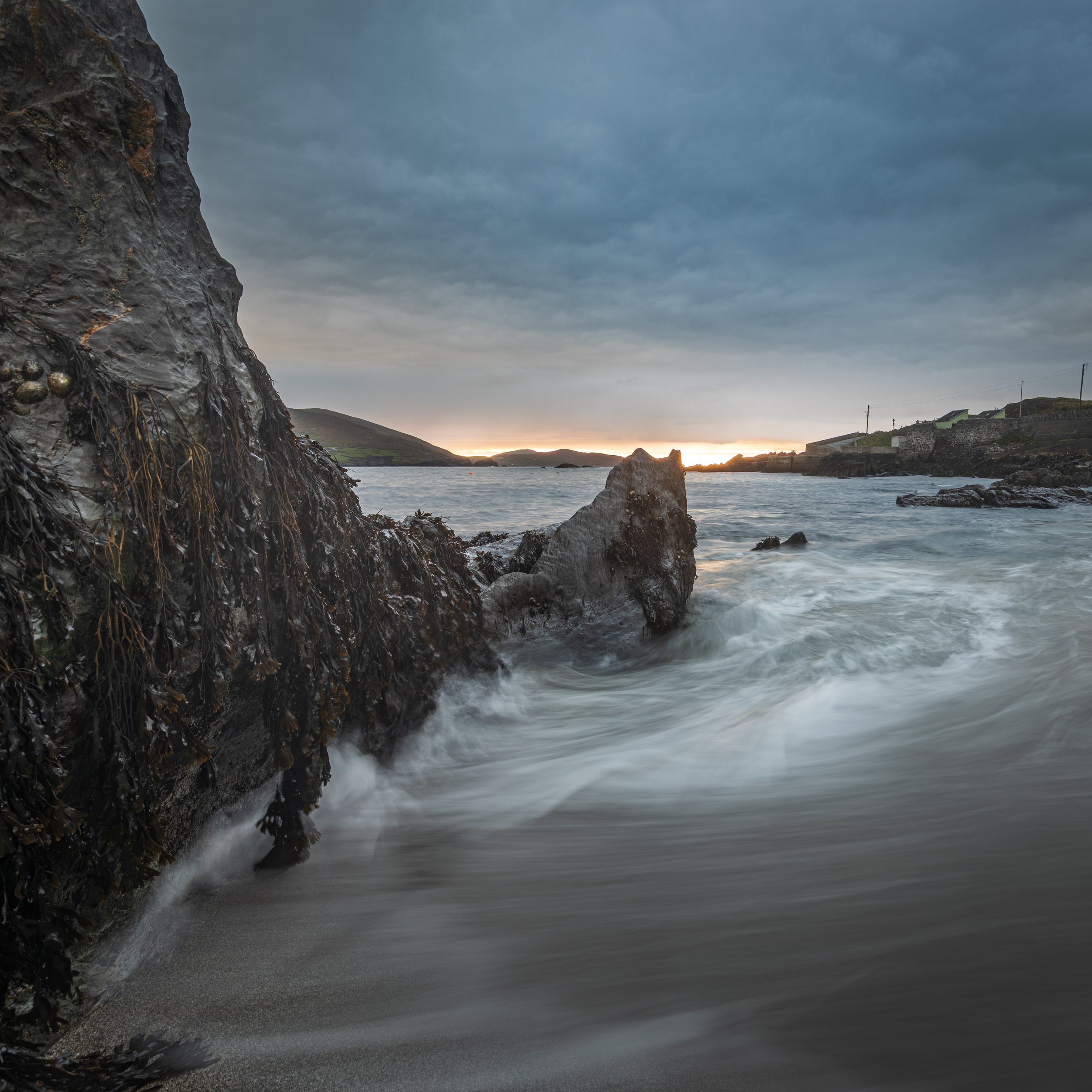
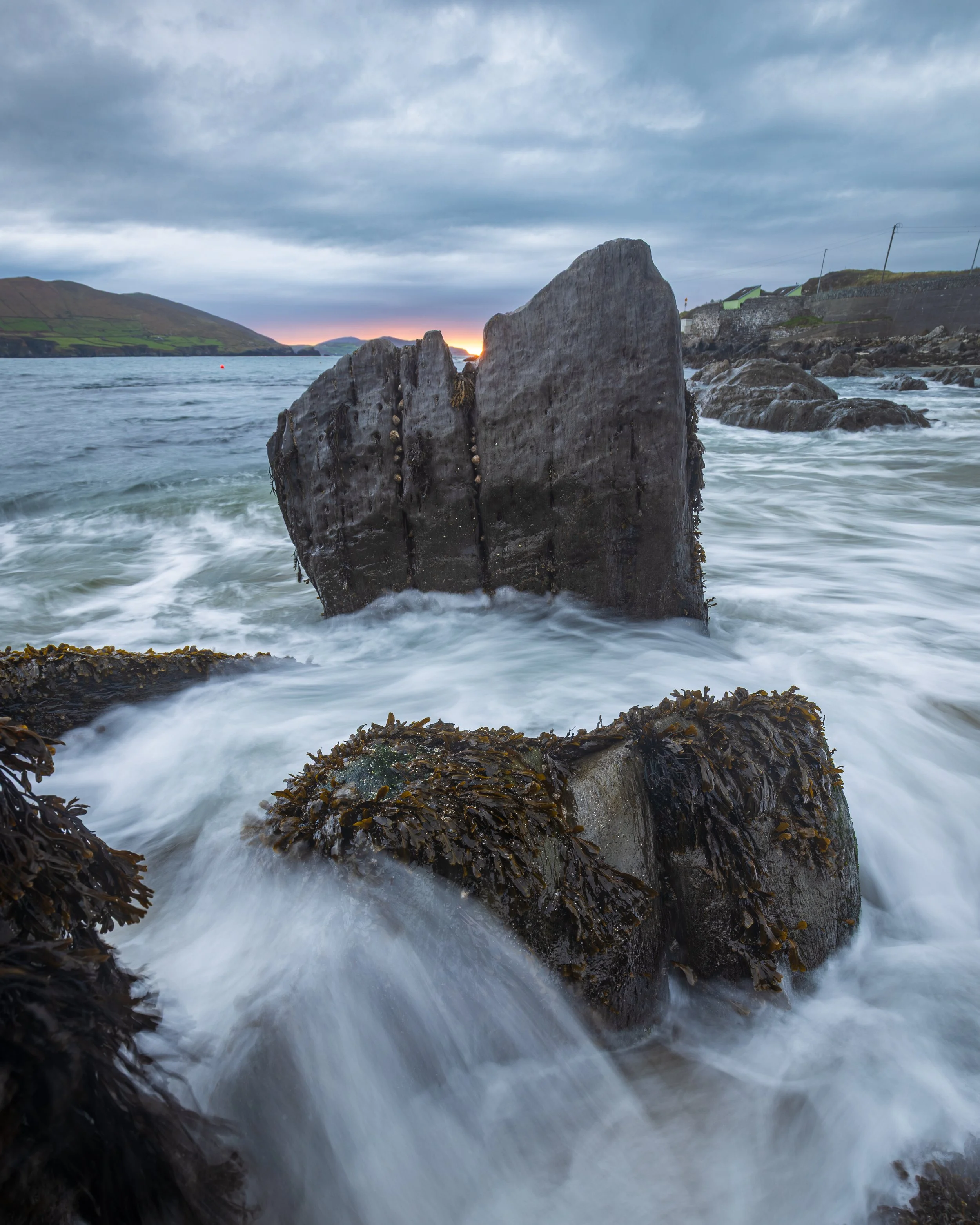
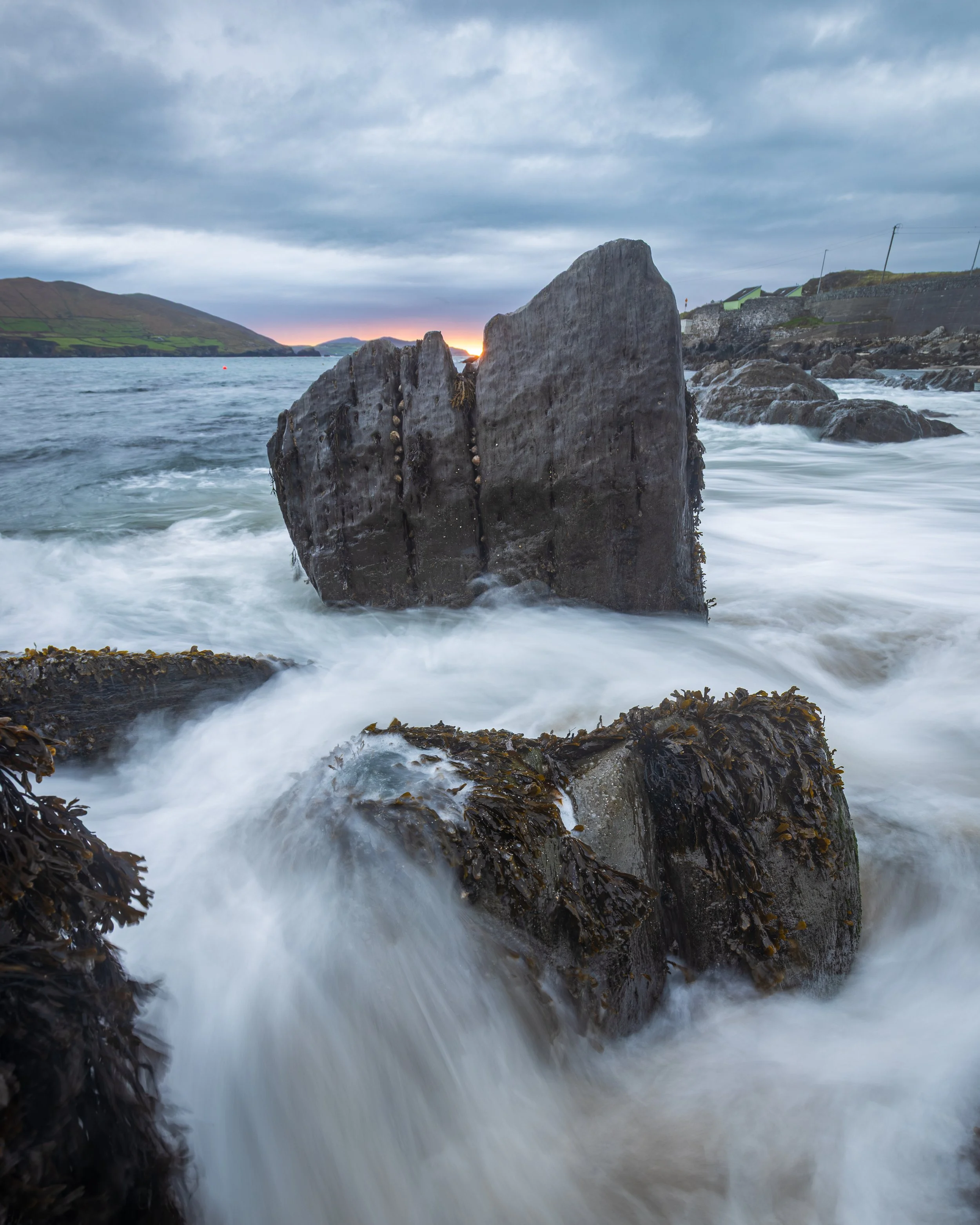
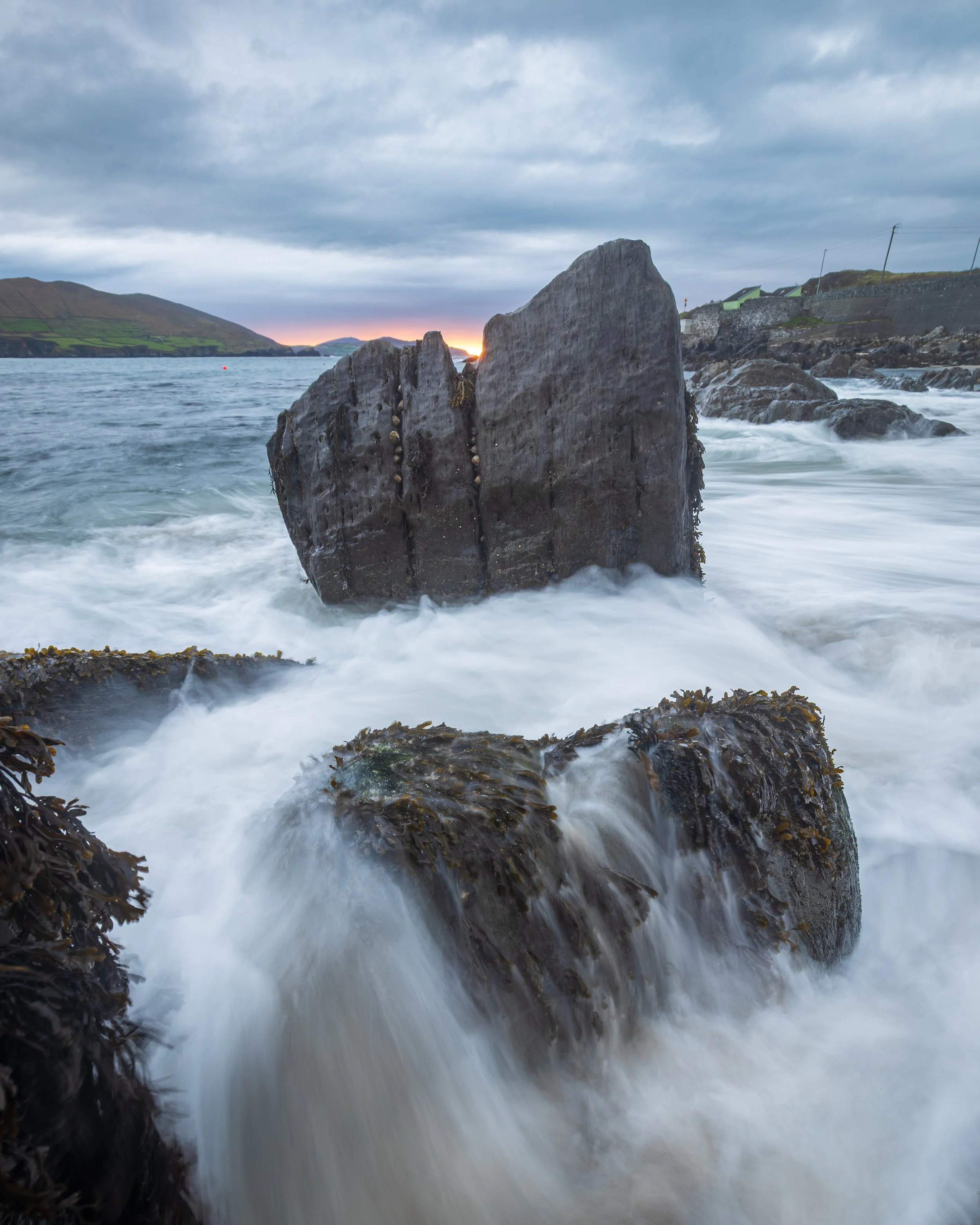
With the sunset finally beginning to fade, I decided to try one more composition. A large rock that resembled a tooth caught my attention, and I wanted to frame it against the last of the glow on the horizon.
There was a practical problem. To get the angle I wanted, I had to position myself with rocks behind me. When I teach landscape photography on my workshops, I always remind participants to consider their escape route when photographing the sea. Waves can arrive unexpectedly, and you should never place yourself somewhere that prevents you from moving away from danger.
In this instance, I judged that I could work from the position without putting myself in serious danger, although I knew I was likely to get wet. I wanted to photograph the water flowing over a rock at my feet, and the amount of water needed to make the composition work would send some of it in my direction.
I waited for the right wave, keeping in mind that my wellies would offer some protection. When the water arrived, I got a little wet, but the photograph was worth the inconvenience. It was the final frame of the evening, as the remaining light disappeared from the horizon.
The session was a useful reminder that successful landscape photography is rarely about finding one perfect composition and pressing the shutter. It involves planning, assessing the conditions, testing different settings and being prepared to change direction when something better presents itself.
We had arrived with only a small chance of favourable light, but that was enough to make the trip worthwhile. The tide was not quite what I wanted, the rain prevented direct sunlight from reaching the beach, and the light eventually disappeared. None of those things stopped me from making photographs.
For me, that is the value of planning a landscape photography trip. You do the preparation, understand what you are hoping to achieve, and then work with the conditions you actually get. Sometimes the forecast is wrong, but sometimes, as it was on this evening on the Beara Peninsula, taking the chance is exactly the right decision.
You can see the gallery of shots I captured on this shoot and watch the full adventure unfold in the video linked above.