My Tripod Decided It Was Time to Teach Me a Lesson!
The rain that featured in last week's video continued overnight and well into the morning. By the time we woke, it was still raining, everything around and inside the campervan was wet, and there was little reason to head out for sunrise. We had already spent enough time dealing with the weather, so rather than getting up simply because the alarm said we should, we decided to take an easier start to the day.
There is a point on a photography trip when you have to be realistic about the conditions. Not every sunrise is worth chasing, particularly when the rain is still falling and the gear is soaked from the previous evening. We stayed in the campervan, had a slower morning and enjoyed a substantial breakfast cooked by my wingman, Diarmuid. Eventually, the rain eased and the sun began to appear. It was an opportunity to get out with the cameras, so we took it.
Our destination was the Copper Mines Engine House above Allihies on the Beara Peninsula. I have photographed this location several times, but Diarmuid had never visited it, so it was a good opportunity to show him the site and see what we could make of the conditions.
The engine house is part of the Mountain Mine, one of the principal copper mines in the Allihies area. Commercial mining began here in the early nineteenth century, with the Mountain Mine opening in 1813. The large Man Engine House was built in 1862. It housed the machinery for a man engine, a system that helped transport miners up and down the mine shaft. The mine eventually reached a depth of 421 metres, with around 280 metres below sea level, before closing in 1882. The surviving structure is an important part of the area's mining history and is understood to be the only man engine house of its type in Ireland.
The road up towards the mine is narrow and rough in places. I didn't want to take my borrowed campervan along it, so we travelled in Diarmuid's van instead. As we drove through the village, the engine house came into view above us. Although I knew what to expect, I was looking forward to seeing it in different light. Every previous visit I could remember had involved cloud, rain or dull conditions. This time, we had sunshine.
We parked and walked towards the main shooting area. Diarmuid sent his drone up to capture some footage as we made our way along the path, although the wind was already making its presence felt. By the time we reached the viewpoint, it was very strong. Standing still and keeping equipment steady was going to take some effort, but the light was good. The colours in the landscape were vibrant, the clouds were moving quickly and the visibility was good enough for us to see Bull Rock in the distance.
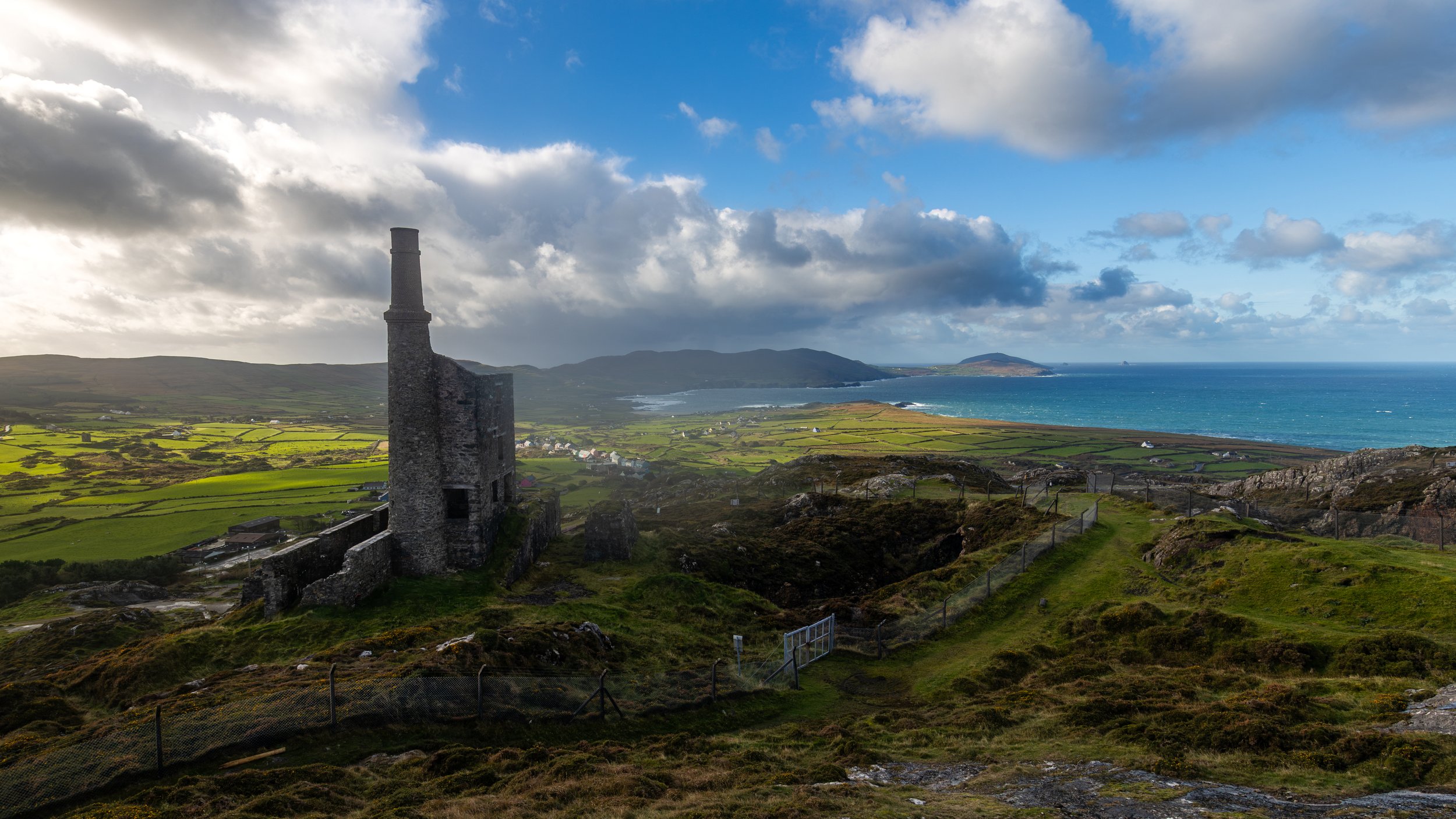
I started with the familiar view: the engine house above the village of Allihies, with the coastline stretching away to the right. It is the composition most people will recognise from this viewpoint, and it gives a good sense of how the building sits within the landscape. I was happy to have that photograph, but I didn't want to stop there. Having photographed a location before should give you a starting point, not a reason to repeat the same image every time.
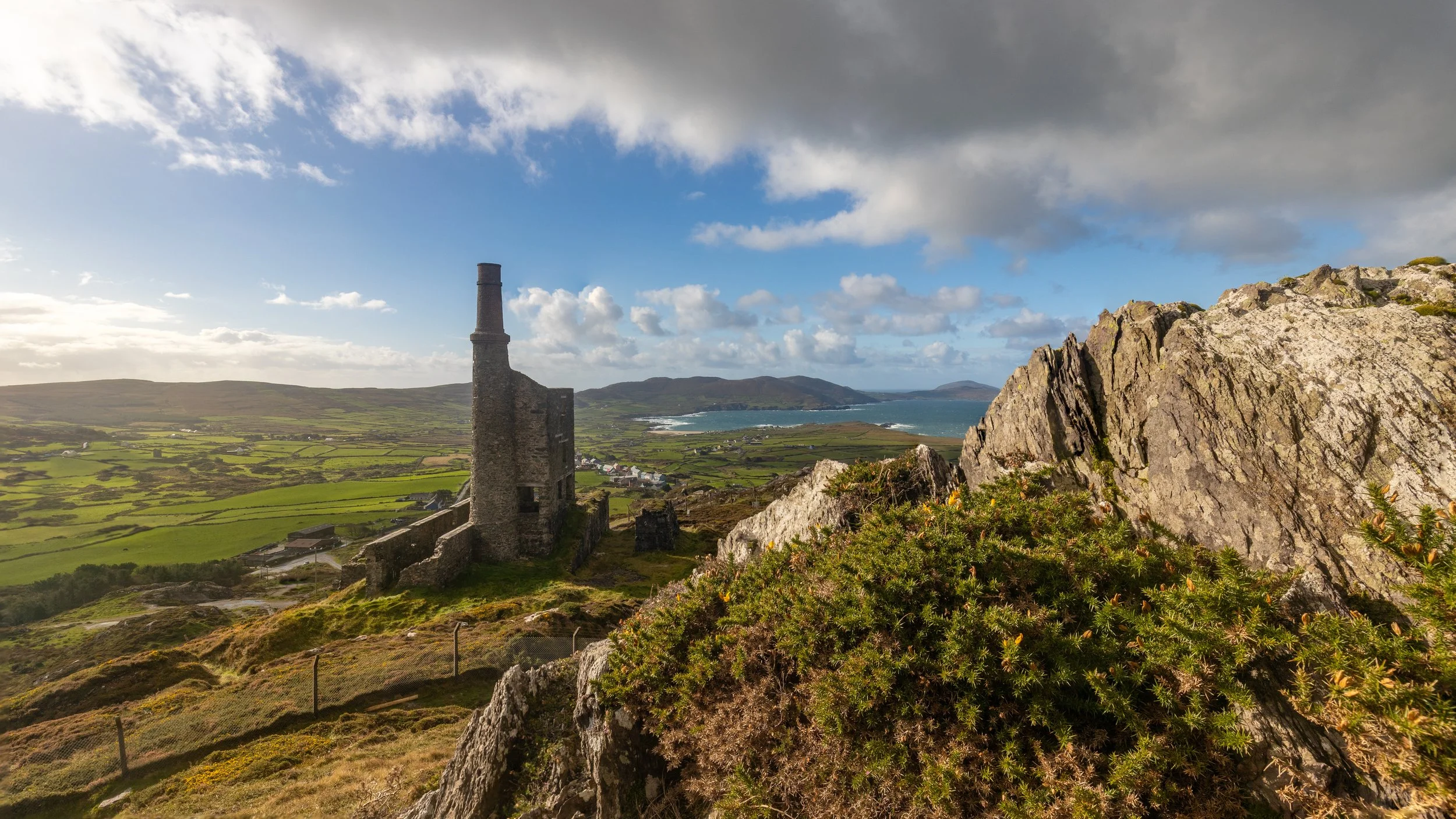
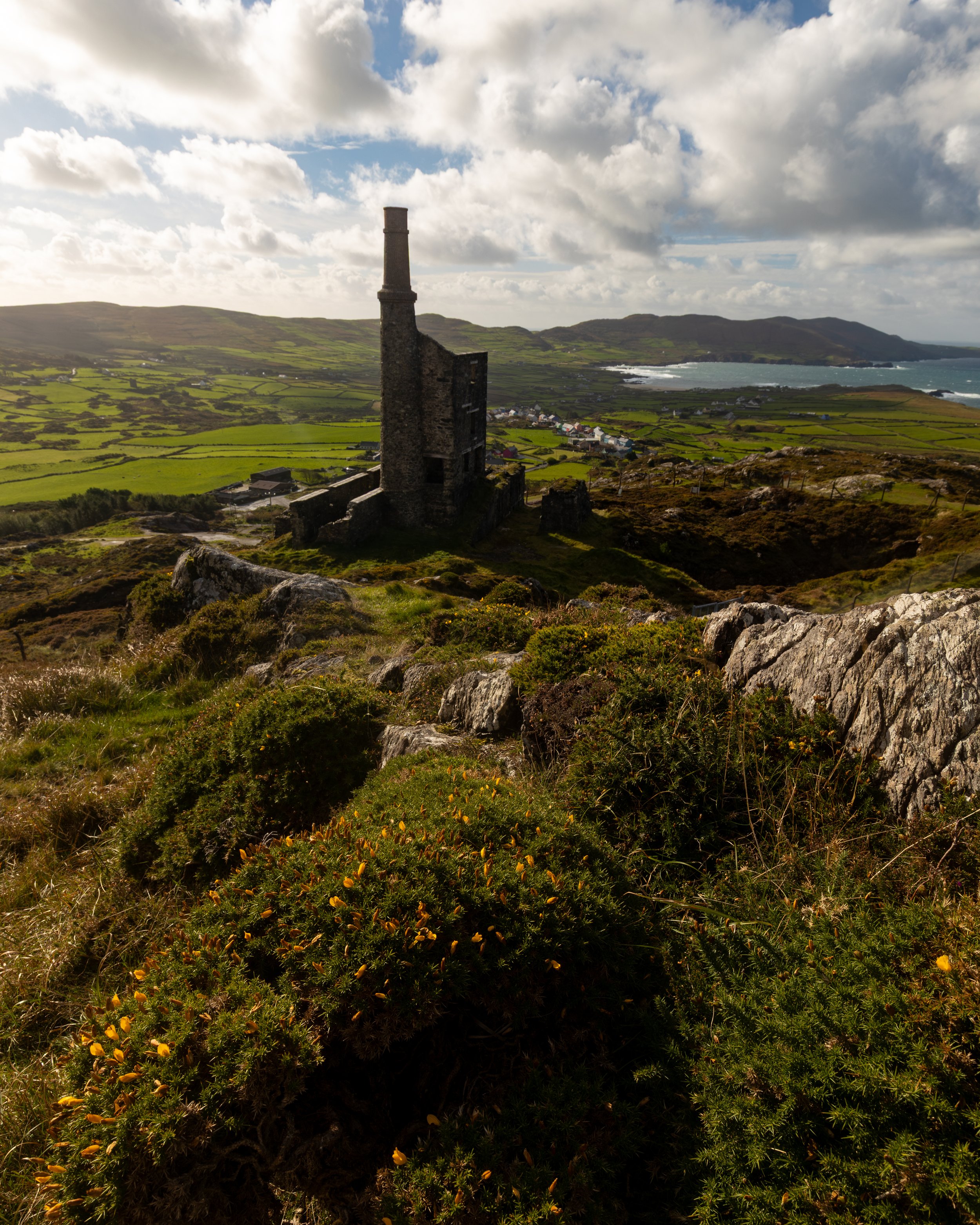
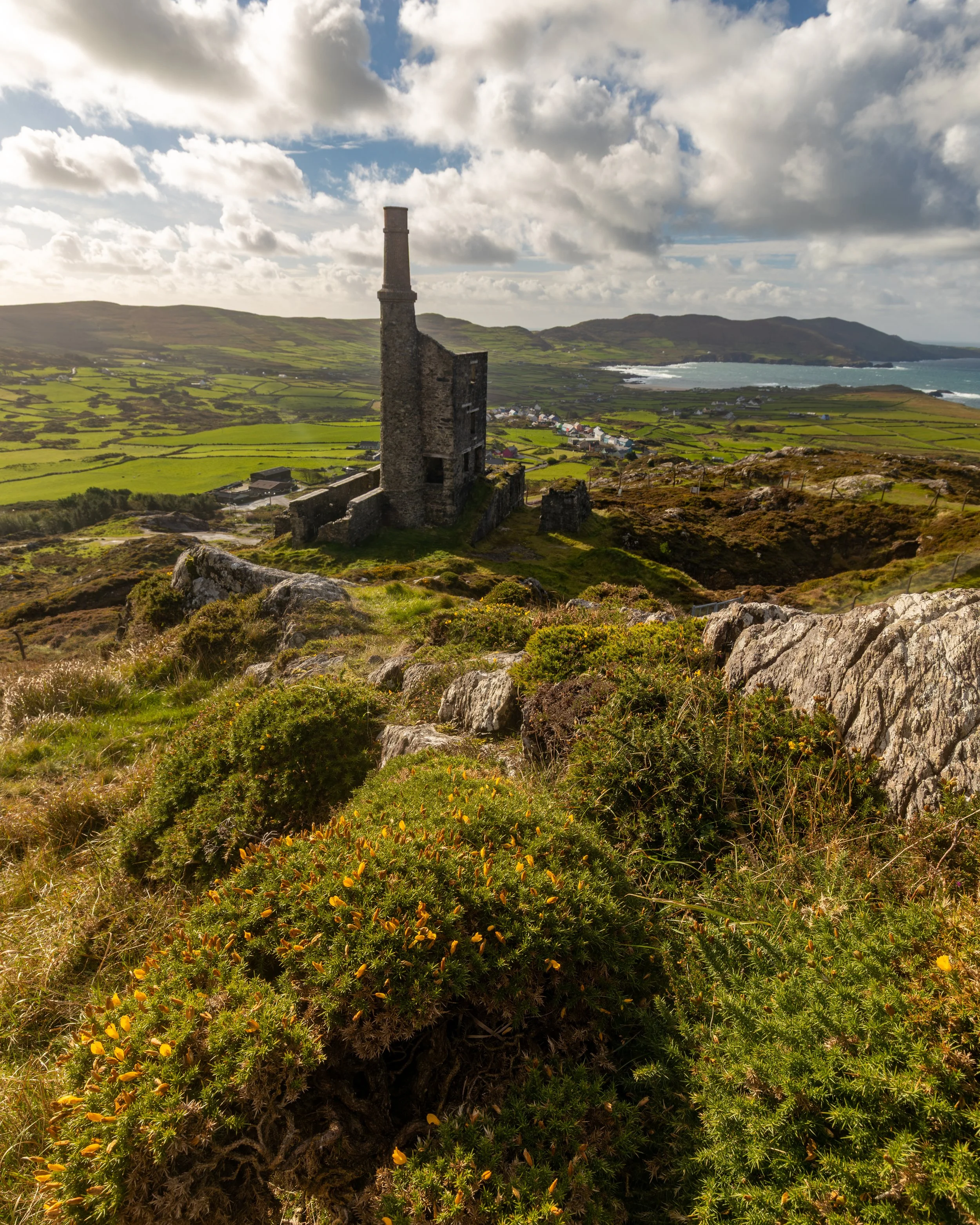
I began looking for a way to include more of the foreground. A rocky outcrop caught my attention, with thistles and small yellow flowers growing between the stones. I thought these details could give the photograph another point of interest and help create a connection between the foreground and the engine house beyond. I moved into position and started setting up the camera.
That was when my tripod decided it had had enough.
One of the legs refused to extend. It was entirely my own fault. I regularly take the tripod into the sea, work around sand and grit, and generally put it through conditions that are not particularly kind to it. I had not given it the cleaning and maintenance it needed, and now it was making its feelings known. At the worst possible moment, one leg simply would not cooperate.
I could have put the tripod away and taken the photograph handheld. That was an option, but I wanted to take my time with the composition and make small adjustments without having to fight the wind and my own balance at the same time. Instead, I extended the two legs that were working and tried to position the tripod securely. It was not an ideal solution, particularly with the strength of the wind, but after some adjustment I managed to get the camera into position.
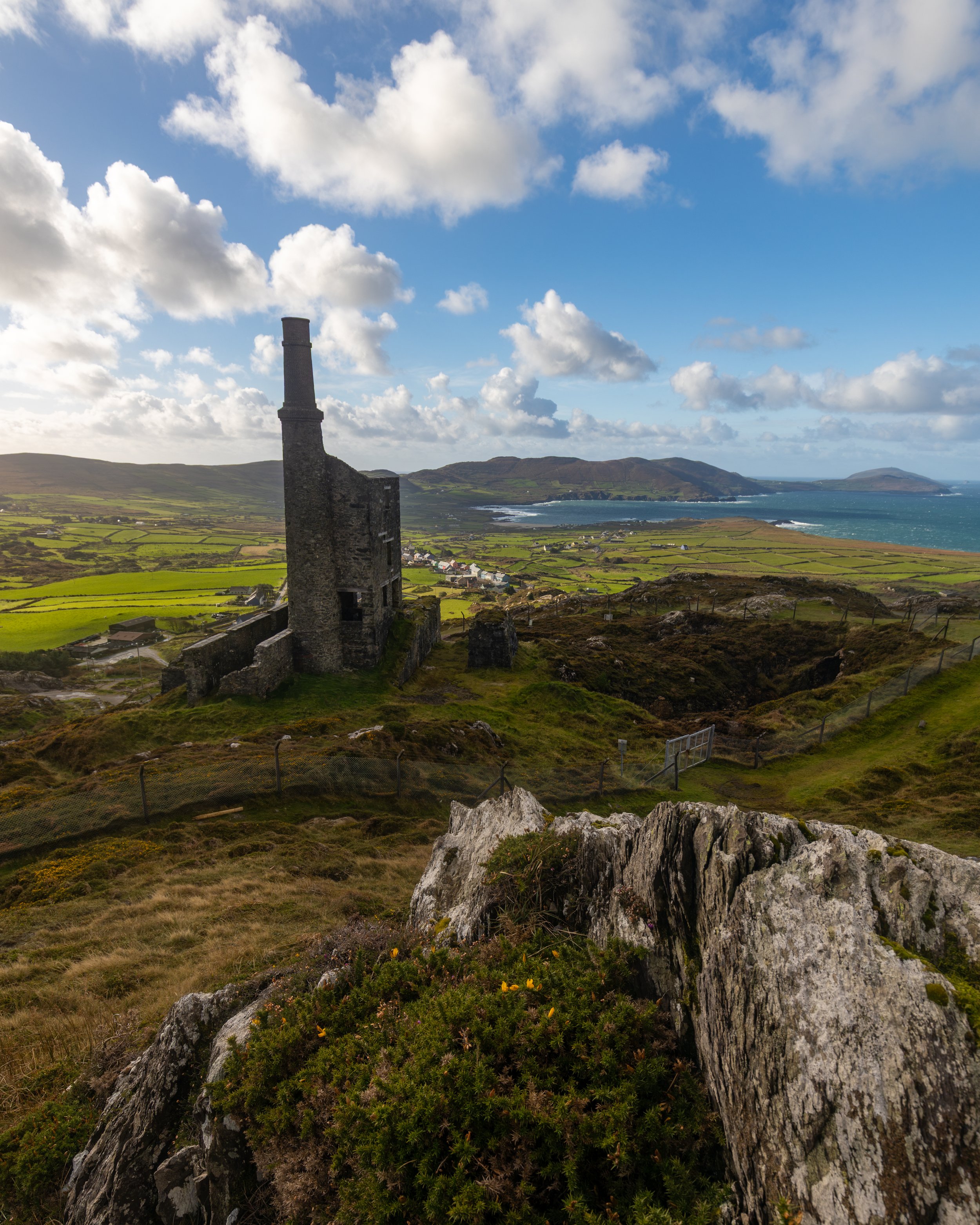
I also raised the centre column to get a higher viewpoint, looking down towards the rocks and flowers I had included in the previous composition. I would not normally recommend extending a tripod's centre column in strong wind. Raising the camera increases the leverage on the tripod and can make the whole setup less stable. In this case, I was improvising because one of the legs had failed to extend. I took care with the position and managed to make the photograph.
The result was a different interpretation of the scene, with more attention given to the foreground. It was a useful reminder that small changes in camera height and position can alter the relationship between elements in a landscape. A few inches can make a difference to how much of the foreground is visible, how the background sits behind it and whether the composition feels balanced.
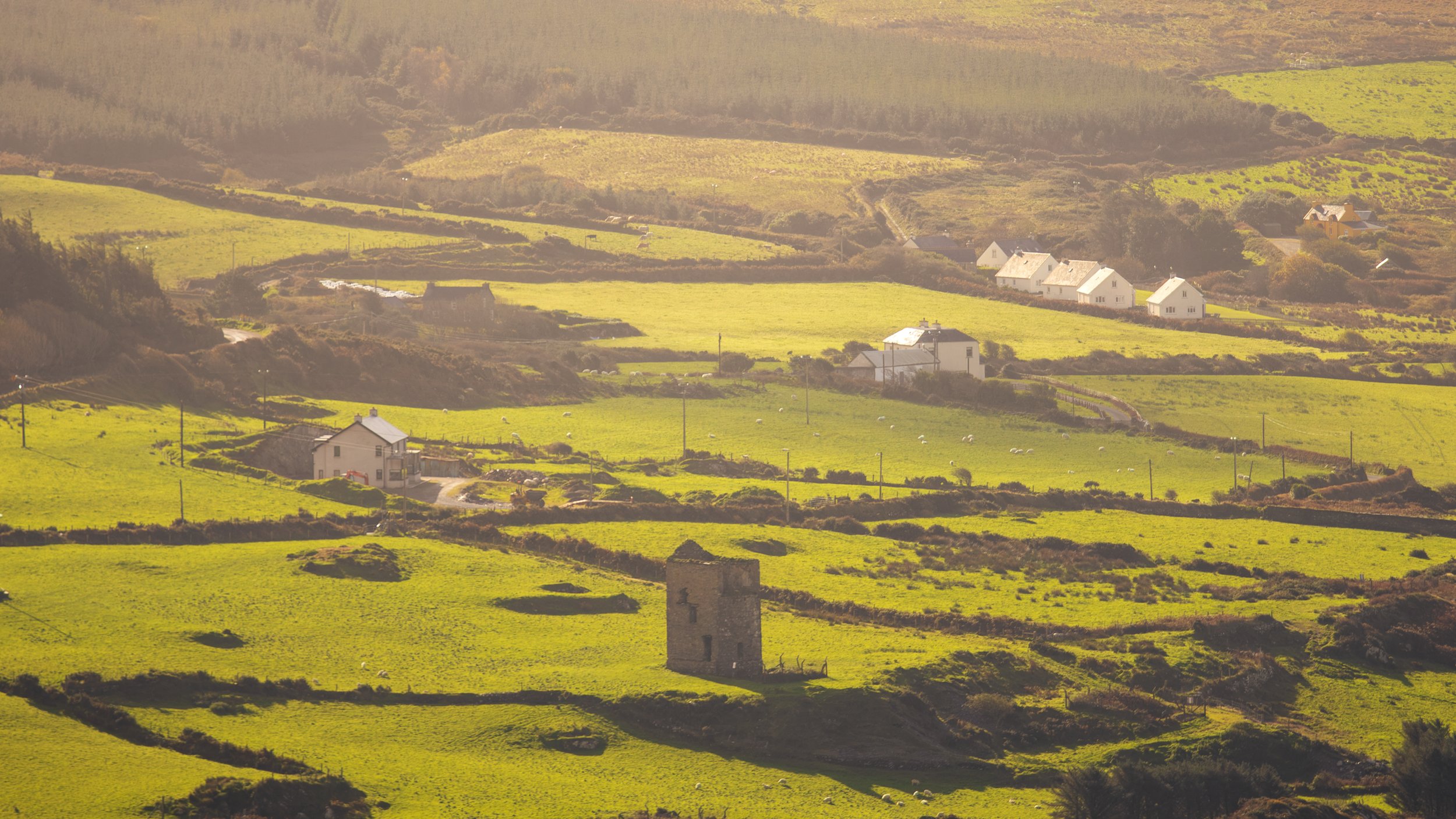
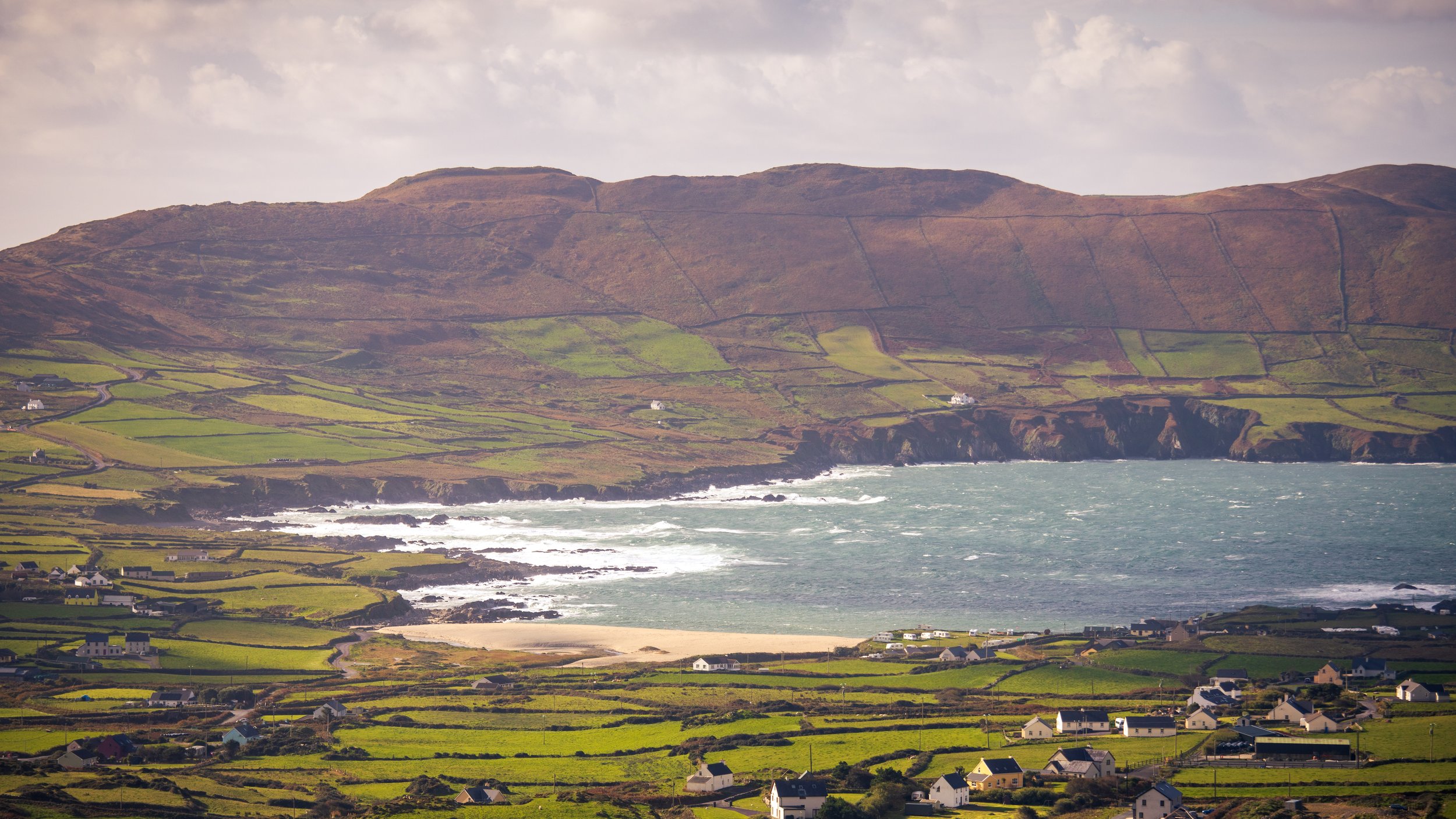
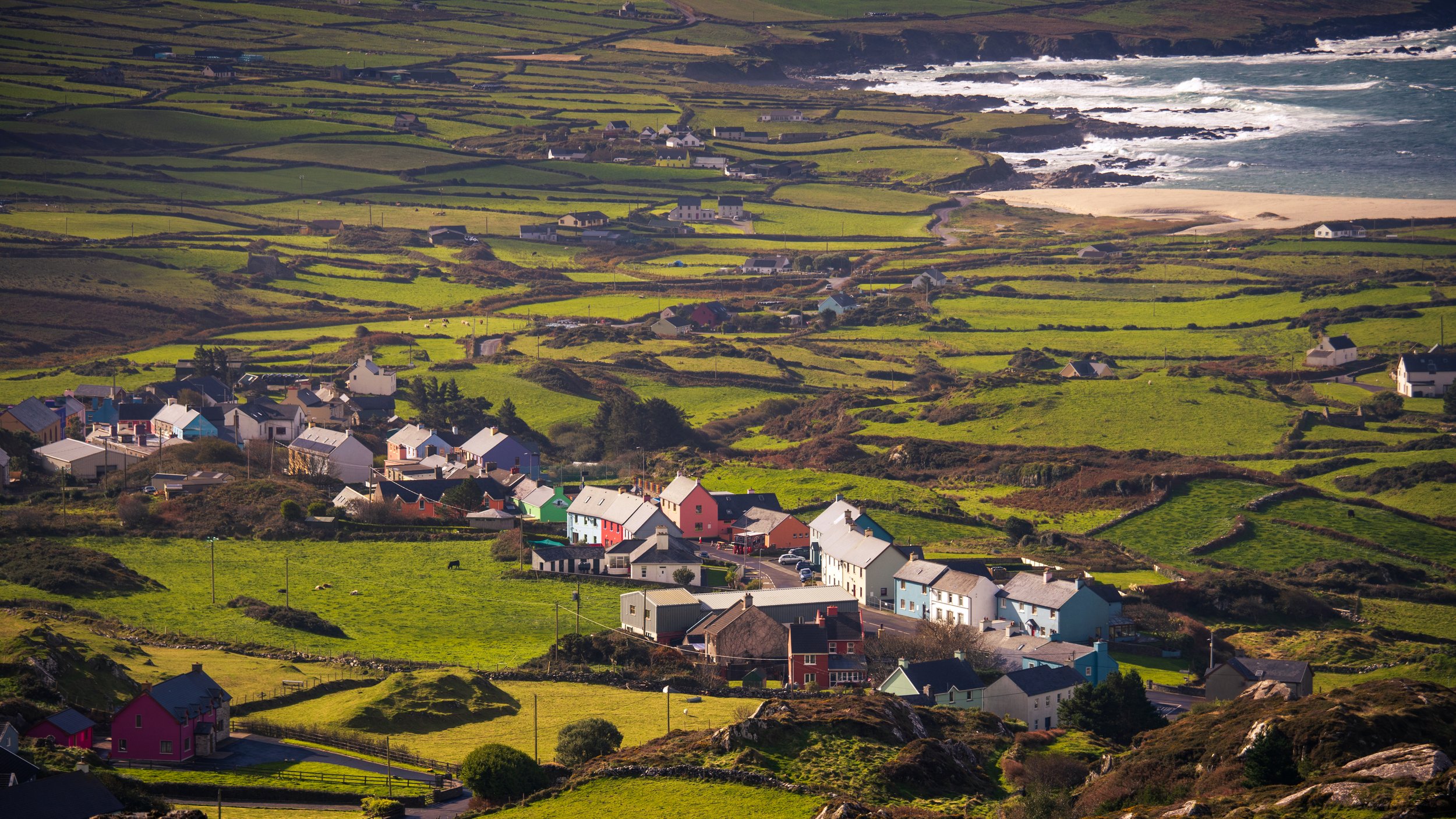
Next, I wanted to move away from the wide view and look for smaller scenes within the larger landscape. I changed to my 70–200mm lens and began isolating details. A telephoto lens can be useful in a location like this because it allows you to simplify a busy scene, concentrate on a particular part of the landscape and make use of shapes, textures and relationships that might be less obvious with a wide-angle lens.
At the same time, I needed somewhere to put my video camera so I could record myself talking through the compositions. The tripod was still not in a cooperative mood, so I put it in what I jokingly called the bold boy corner and used it to support the video camera while I explained what I was looking for with the 70–200mm.
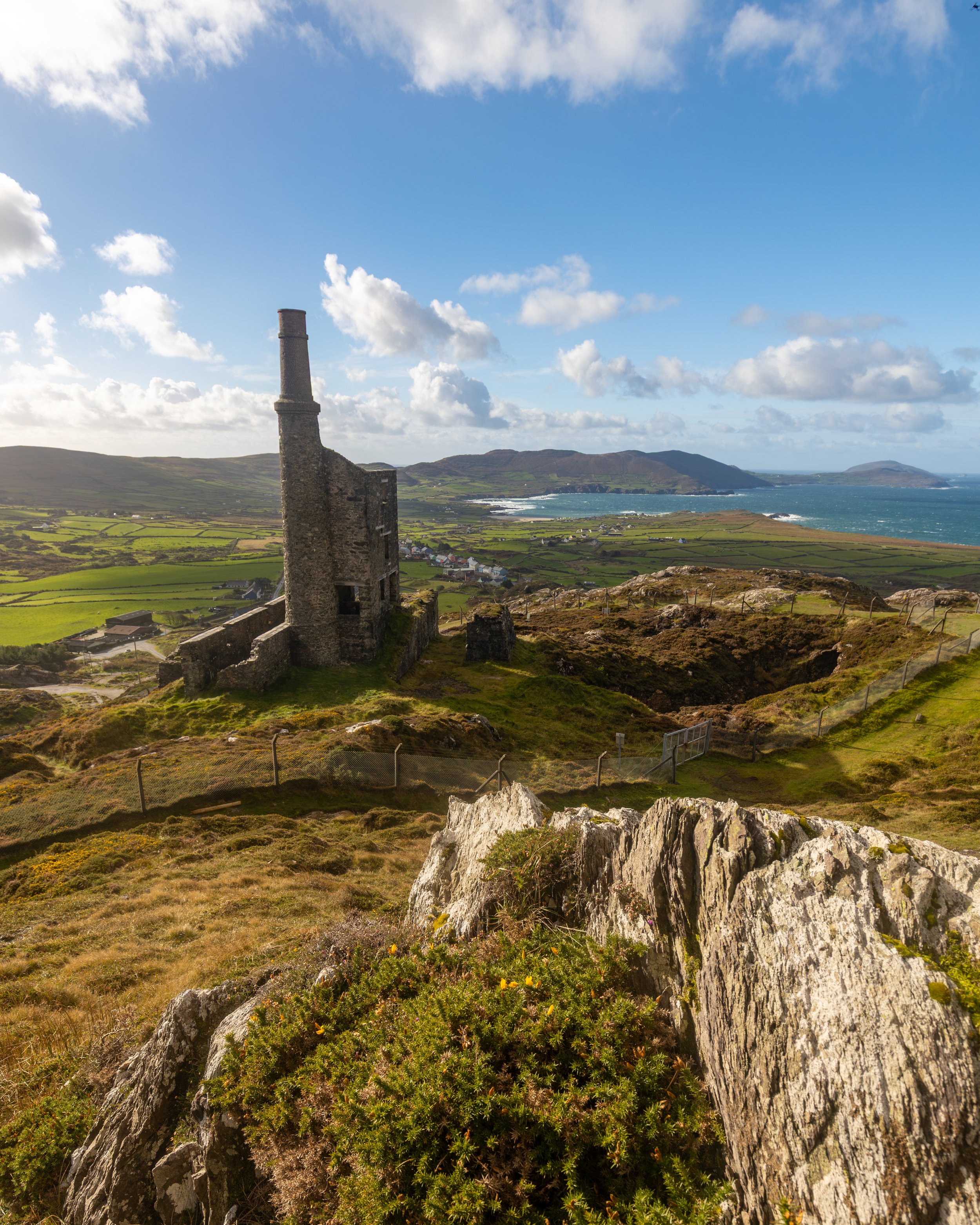
When I went back to retrieve it, I noticed something I had not seen earlier. From that position, there was another composition. A different rocky outcrop, more flowers in the foreground, the engine house below and the coastline stretching out beyond it. It was a view I had not planned, and one I might have walked past if I had not put the tripod in that particular spot.
Perhaps it had been trying to help me all along. After causing a problem, it had indirectly led me to another composition. I had gone from being frustrated with it to wondering whether it had done me a favour. It was not quite forgiven, but it was no longer entirely in the bad books.
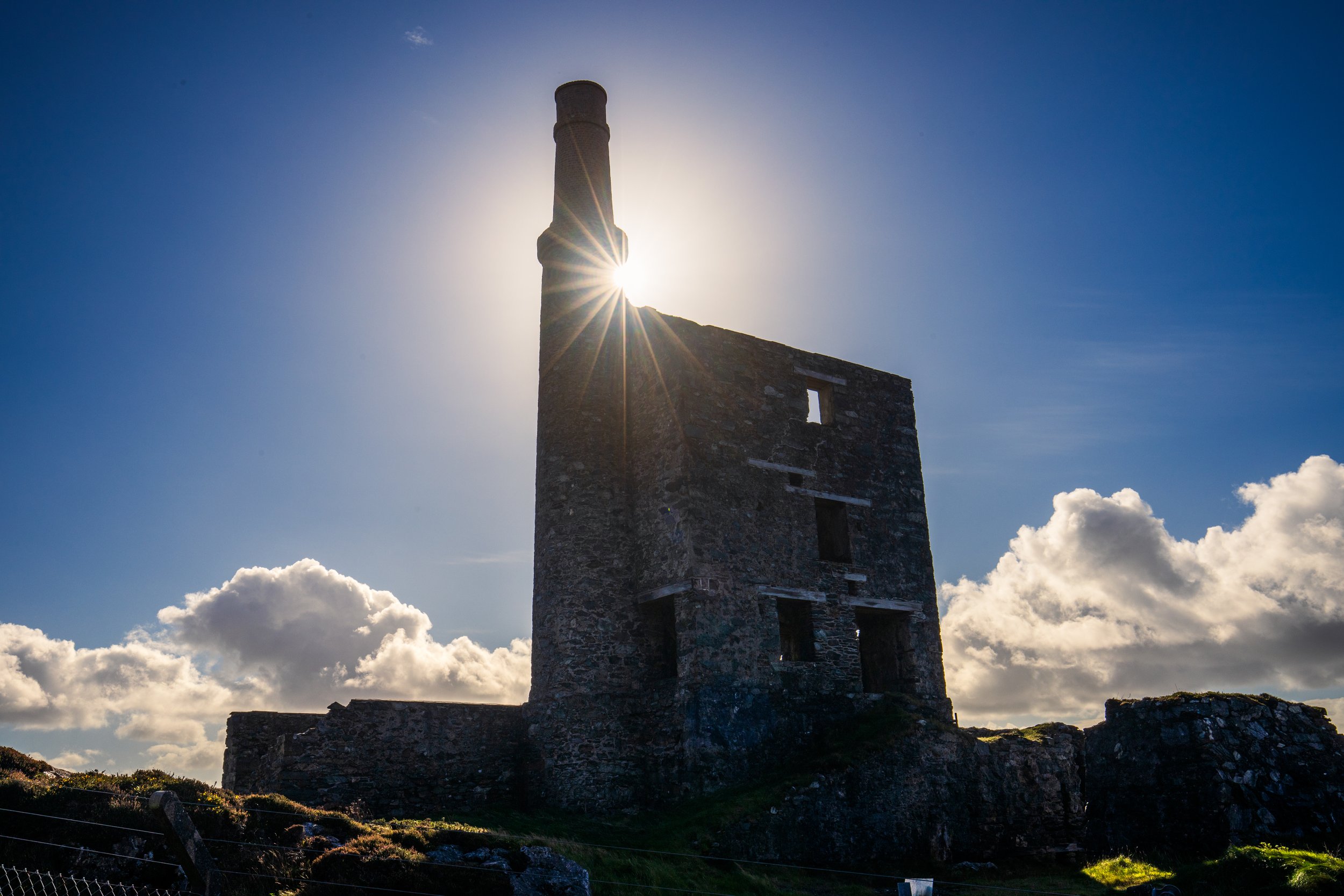
By this stage, the clouds had disappeared and we were dealing with strong midday sunshine. Rather than packing away straight away, I looked for one final photograph. I decided to use a small aperture of f/16 and position the sun behind the chimney and roofline of the engine house to create a sunstar. The edge of the building helped partly obscure the sun, allowing me to control how it appeared in the frame. It was a straightforward way to finish the session and make use of the light we had.
Diarmuid had also finished his photographs, so we began the walk back down. He had been able to experience the location for the first time, while I had photographed it in conditions I had not previously encountered there. I had also come away with several different compositions, including one that I probably would not have found without the tripod problem.
There were a few lessons from the session. The first is that returning to a familiar location can be worthwhile, even when you have photographed it several times. Light, weather and visibility change the scene, and those changes can give you a reason to approach it differently. If you arrive and immediately take the photograph you have made before, you may miss other opportunities. Once you have the obvious composition, take time to look around, change your height and position, and see whether there are foreground details or tighter views worth exploring.
The second lesson is to make use of different focal lengths. A wide-angle photograph can establish the setting, but a telephoto lens can help identify smaller compositions within it. Switching lenses encourages you to look at the landscape in another way and can prevent a shoot from becoming a series of similar wide views.
The third lesson is less about photography and more about looking after equipment. A tripod that is regularly exposed to salt water, sand and grit needs to be cleaned and checked. I know that, but I had not kept up with the maintenance. A tripod is something many landscape photographers rely on, particularly when making careful adjustments or working in low light. It is worth checking the legs, locks and moving parts before a trip rather than discovering a problem when you are already at the location.
Finally, a problem does not have to end a photography session. I would much rather have had a fully functioning tripod, especially in those winds, and I would not suggest neglecting equipment in the hope that it might lead to a new composition. But when something does go wrong, it is worth taking a moment to consider the alternatives. Change your approach, work within the limitations and keep looking for photographs.
My tripod and I still have a little making up to do. It had clearly decided that it was time to teach me a lesson, and perhaps I deserved it. Before the next outing, it will be getting the clean and service it should have had already. In return, I expect it to extend all four legs when I ask it to. That seems a fair arrangement.