We Nearly Gave Up… Then This Happened!
The Hail Mary Shoot That Saved Our West Cork Photography Trip
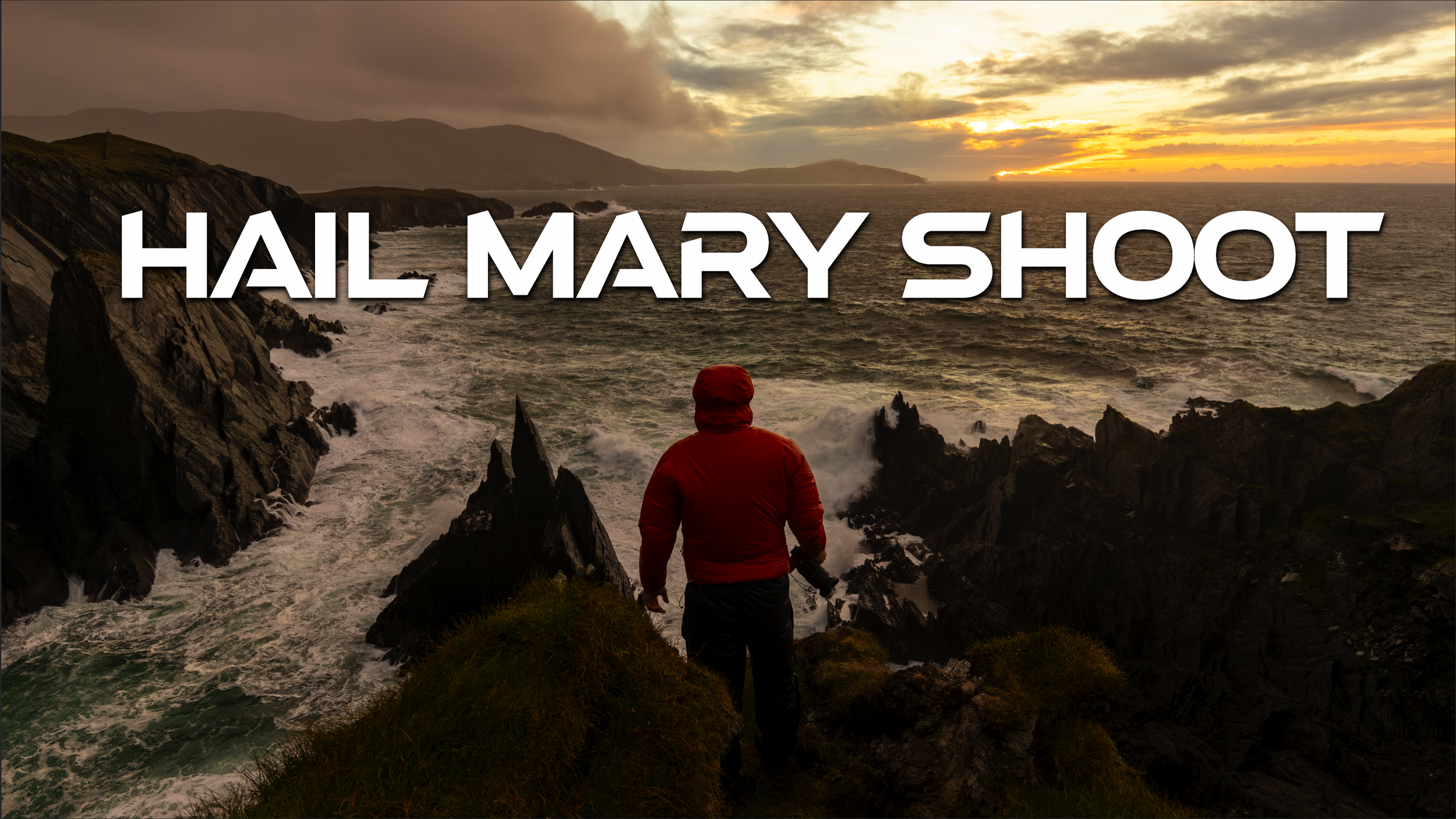
By the final day of our four-day trip to West Cork, Diarmuid and I were still based in Allihies, and the weather had shown little sign of improving. However, there was one location I had been talking about throughout our time together: a pointed sea stack along this stretch of coastline.
I had not photographed it before, but I knew where to find it and had a good idea of what we might see. I had been promising Diarmuid that we would track down this single stack, standing out from the surrounding coastline.
Before leaving the van, I had already accepted that this might be a scouting walk rather than a productive shoot. That is a useful distinction when planning around uncertain weather. The purpose of going was to check the location, not to force a photograph regardless of what we found. Once we could see the coastline, we could make a better decision about whether to continue. I would rather make that assessment on the ground than rule out a location simply because the forecast looks poor.
The afternoon continued with more rain. There was little indication that conditions would improve, but we decided to drive to the location and assess things when we arrived. It was a Hail Mary Attempt. As I stepped out of the van, I could make out the smallest break on the horizon. Still, we had come this far, so we set off.
I had not visited the location before, so I was relying on my research and understanding of the area. We initially walked in the wrong direction, then corrected our route and continued along the coast.
After about ten minutes, the rain returned. Within moments, we were both soaked. But we carried on.
The sea was rough, which gave me some hope that the conditions might work in our favour. At one point I thought we had found it, but the shape was wrong. We pressed on, and then, just ahead of us, the outline finally appeared.
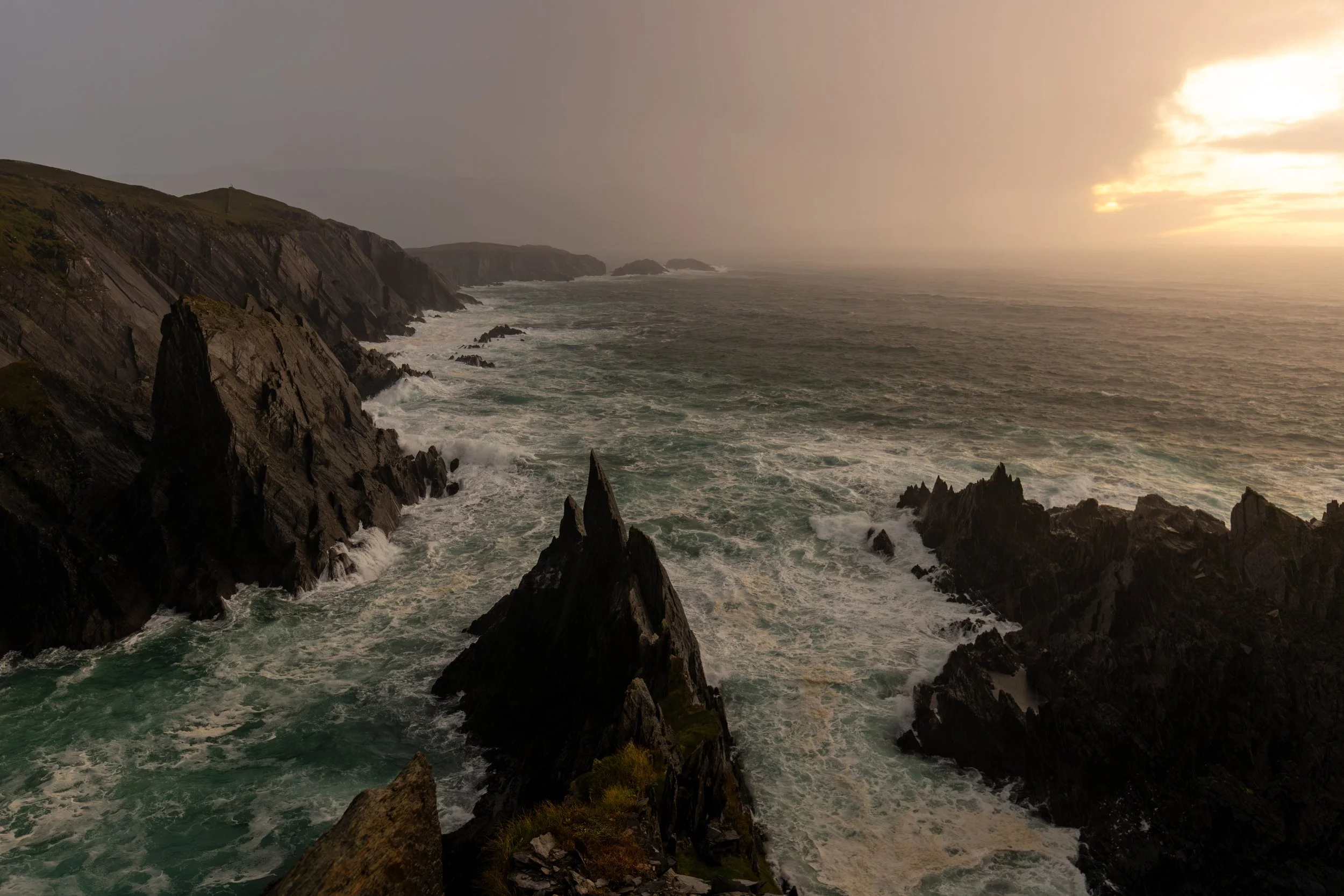
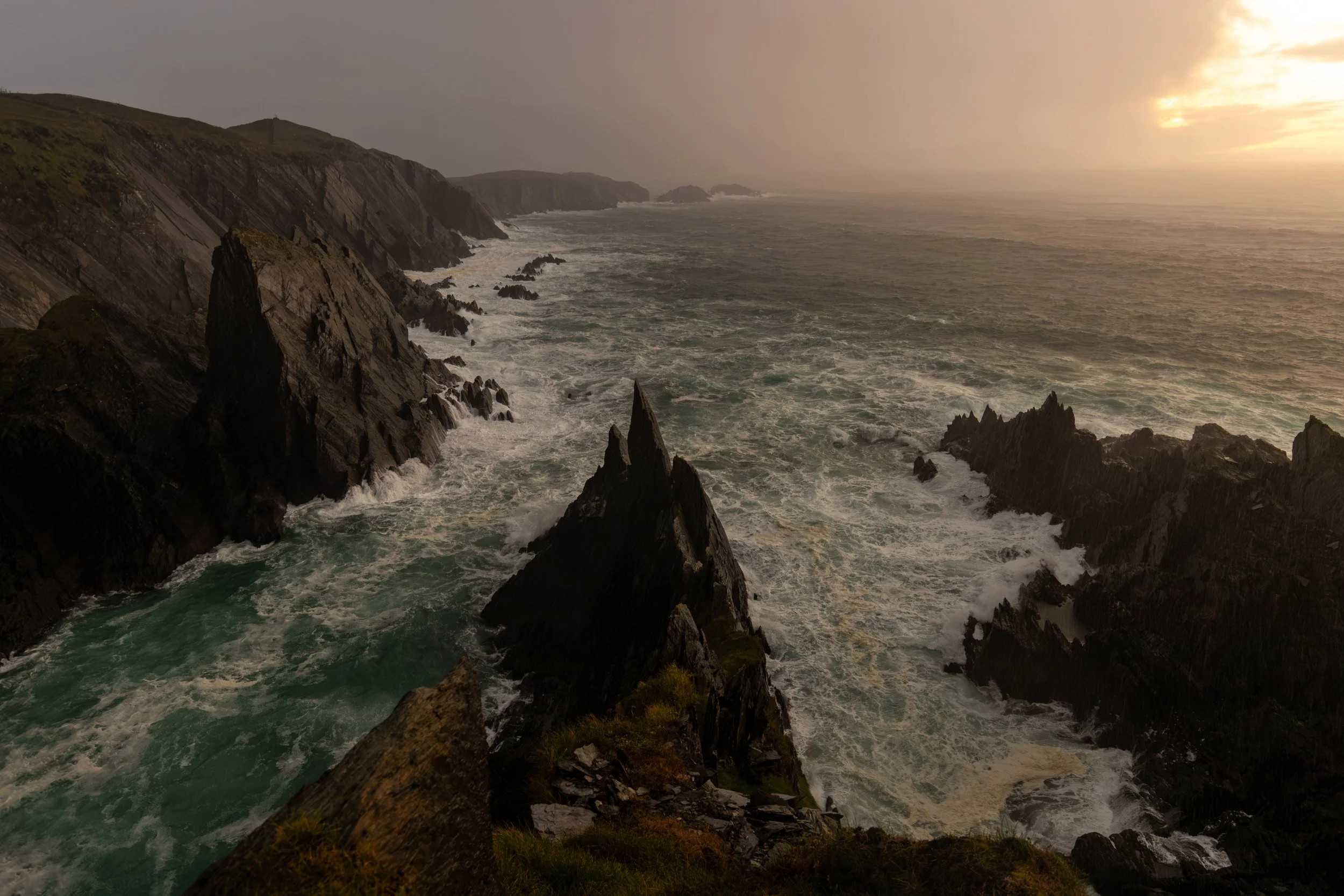
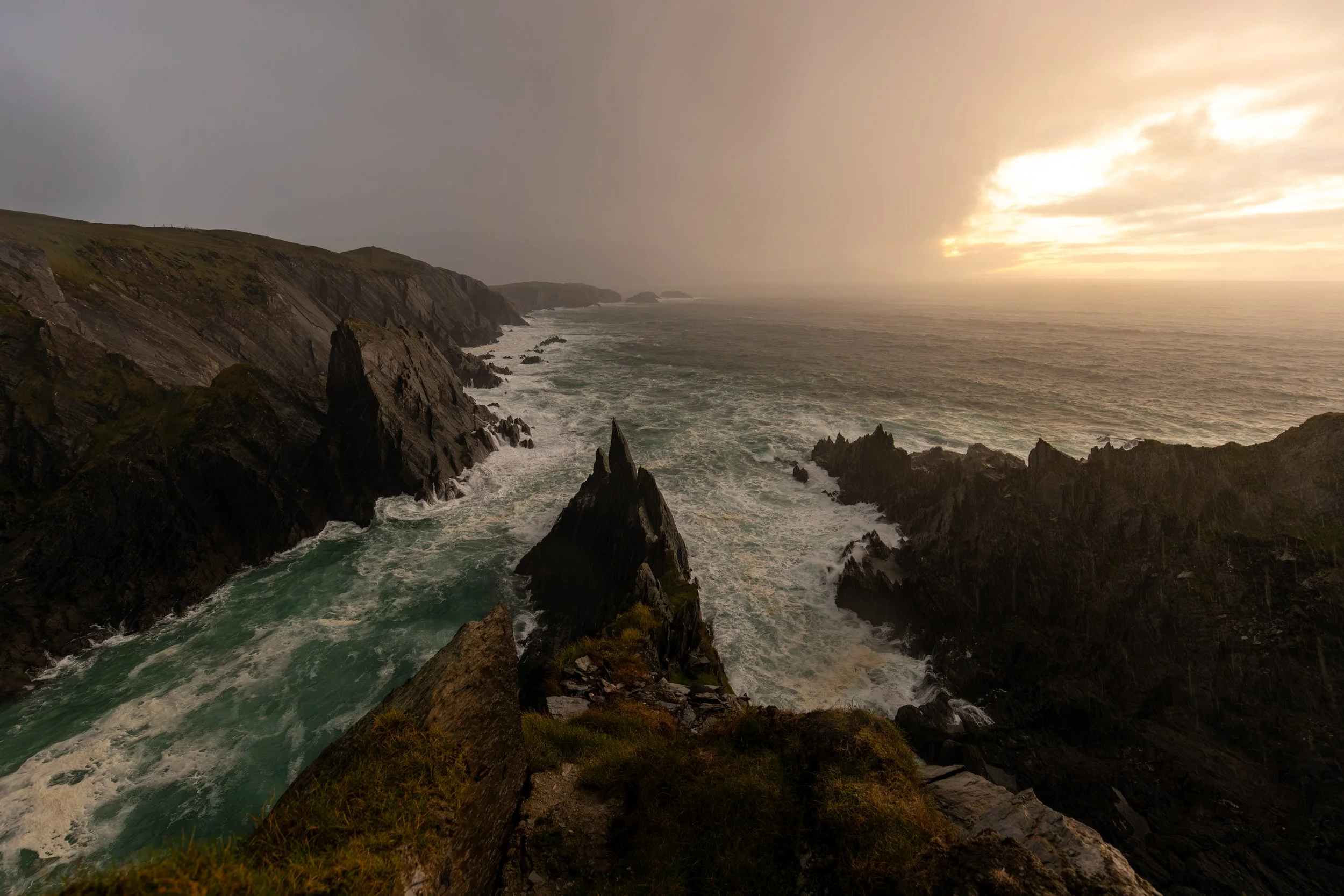
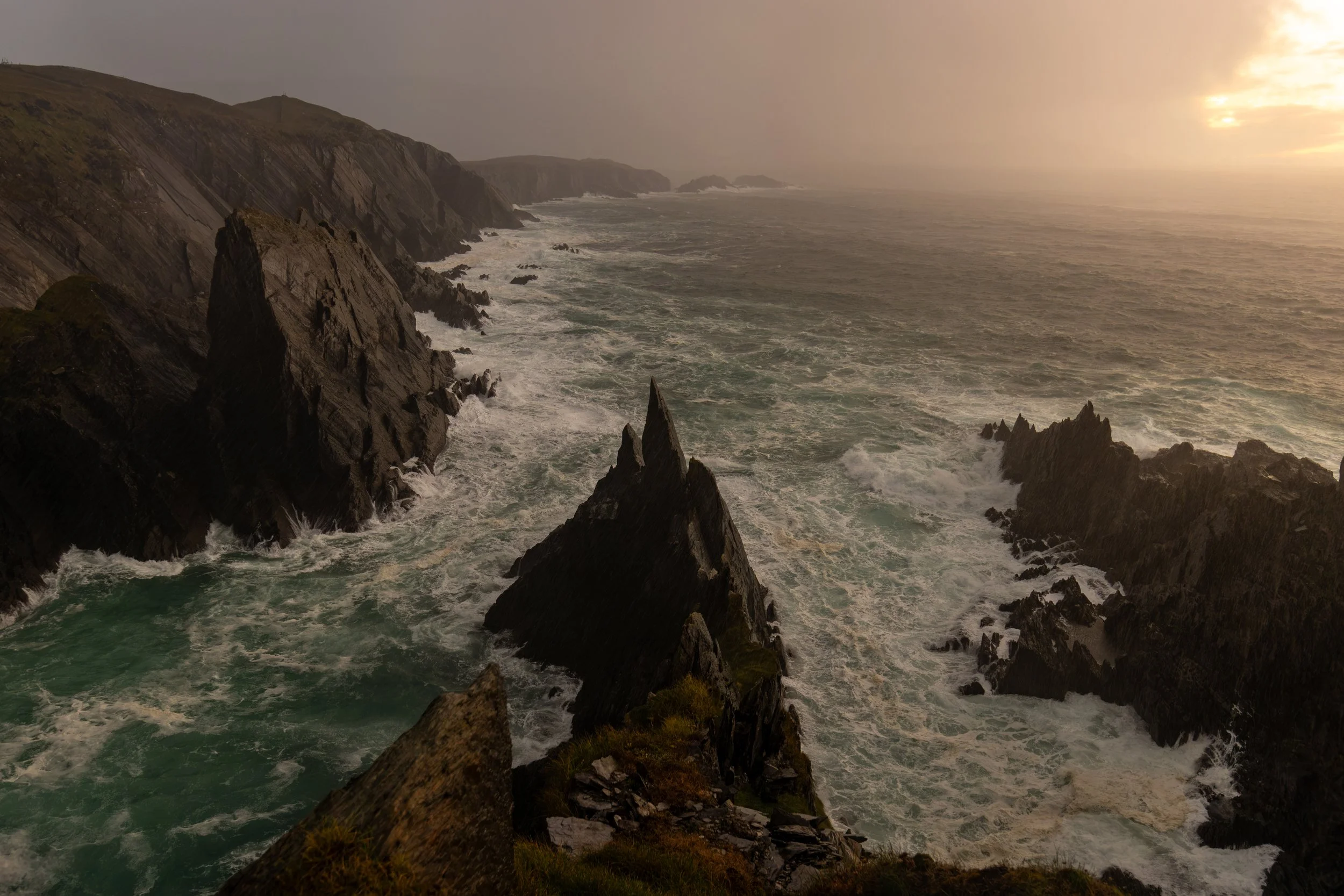
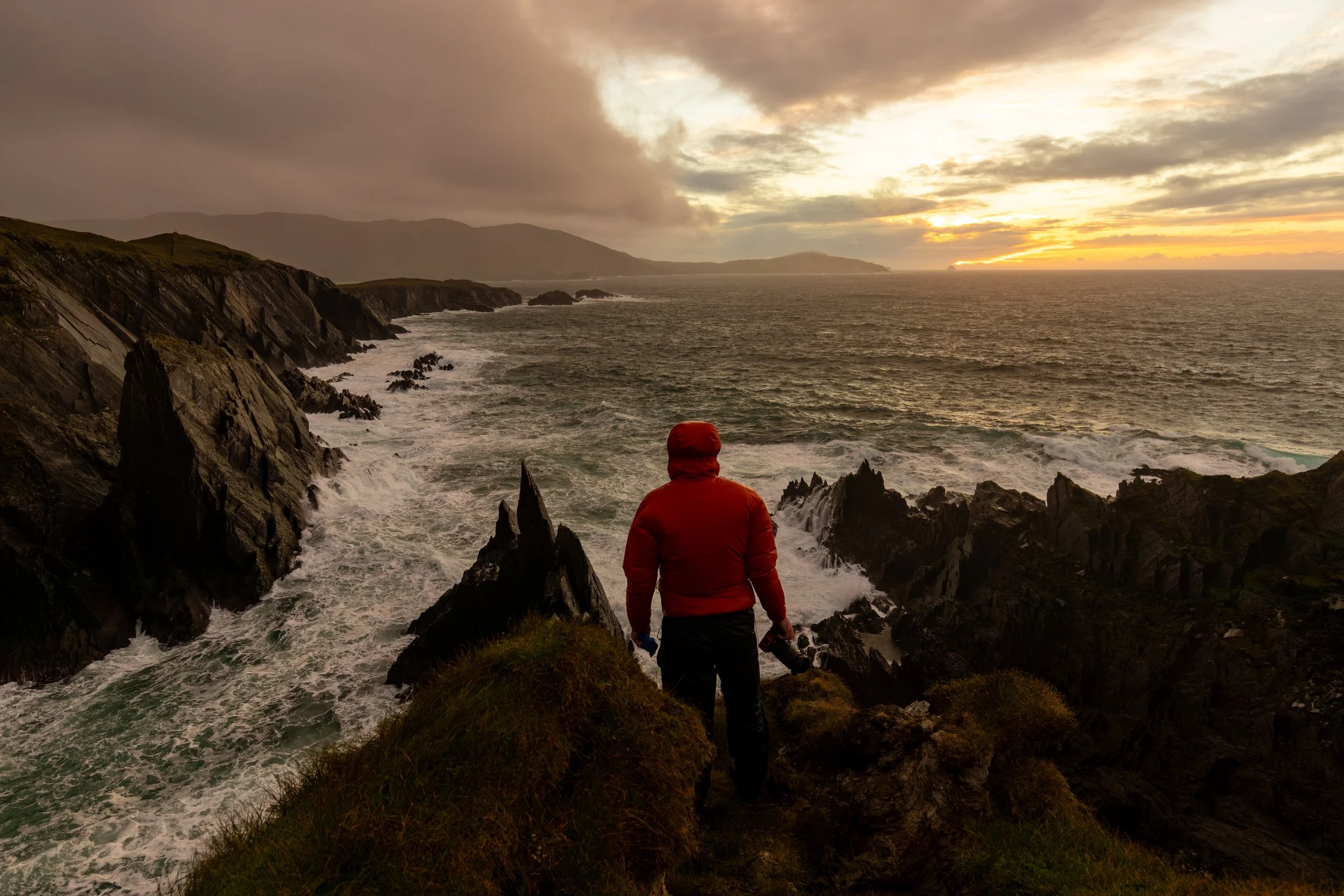
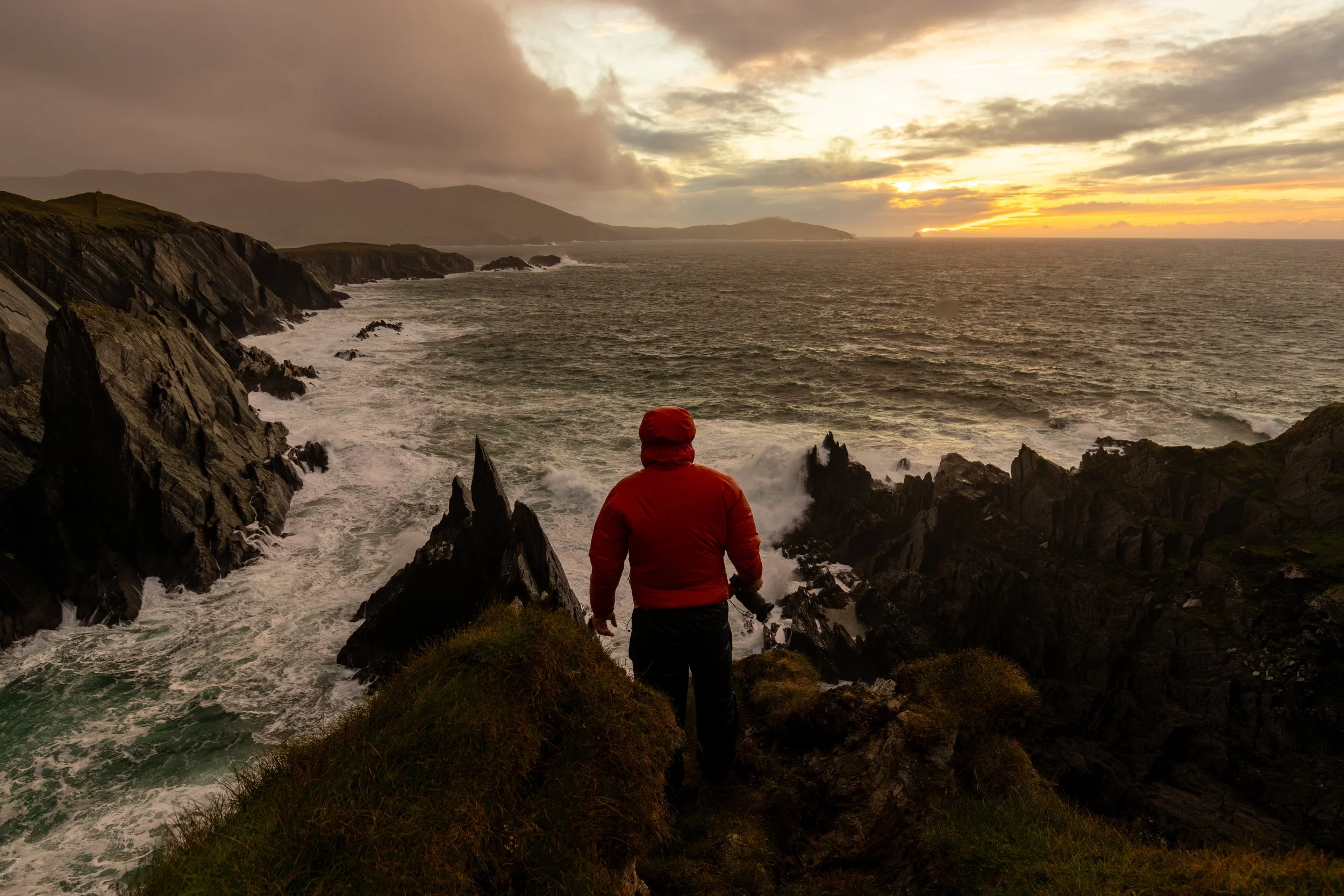
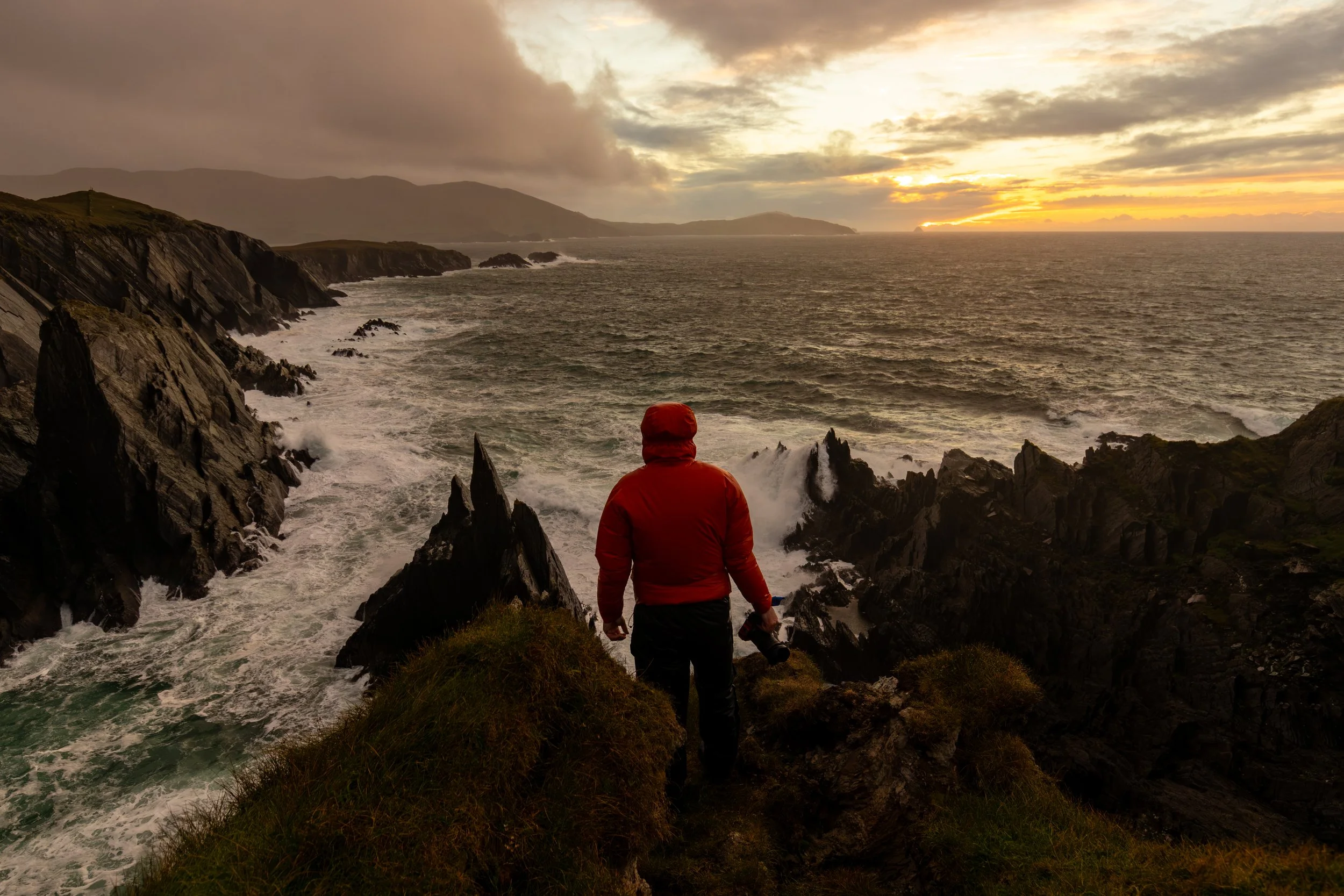
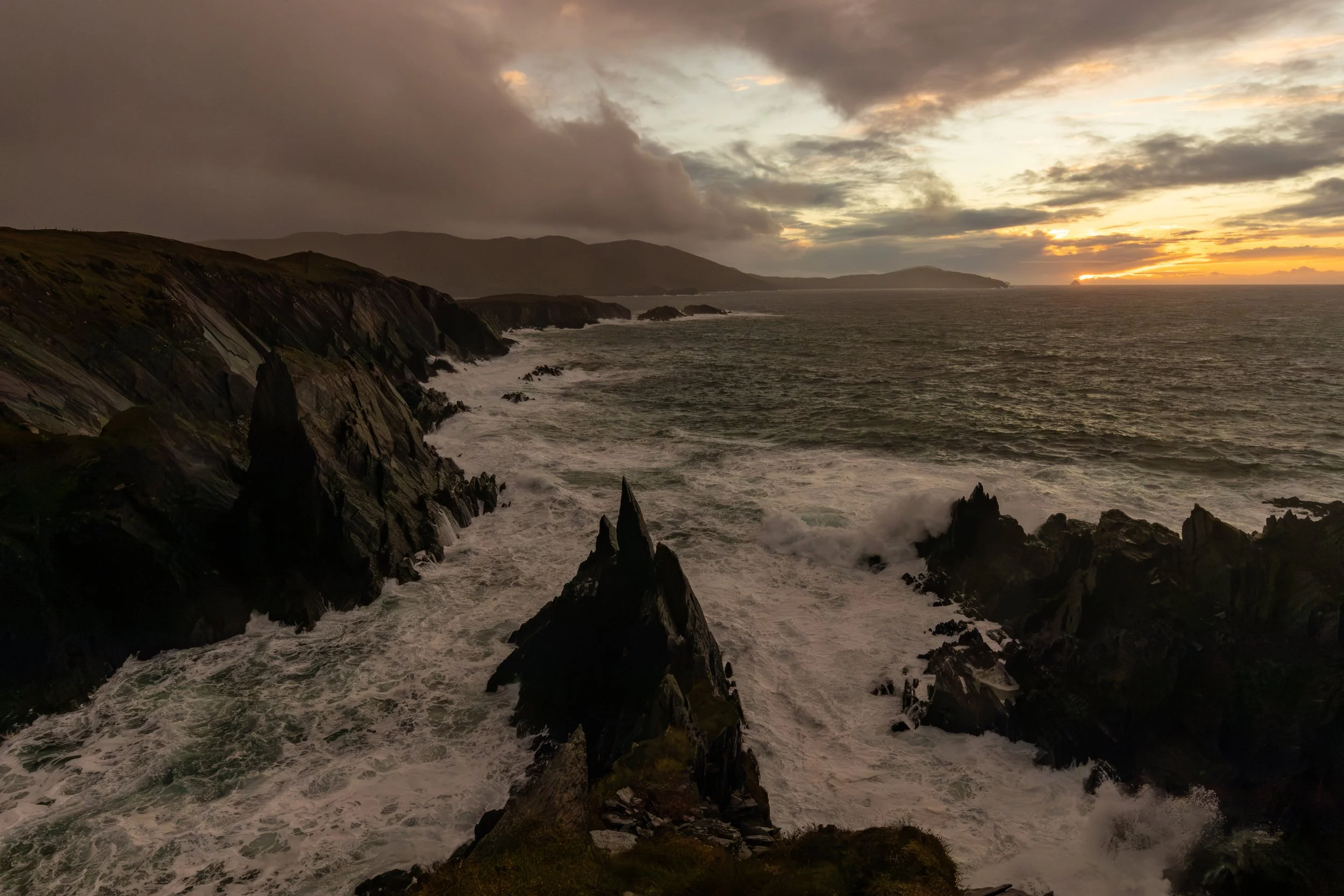
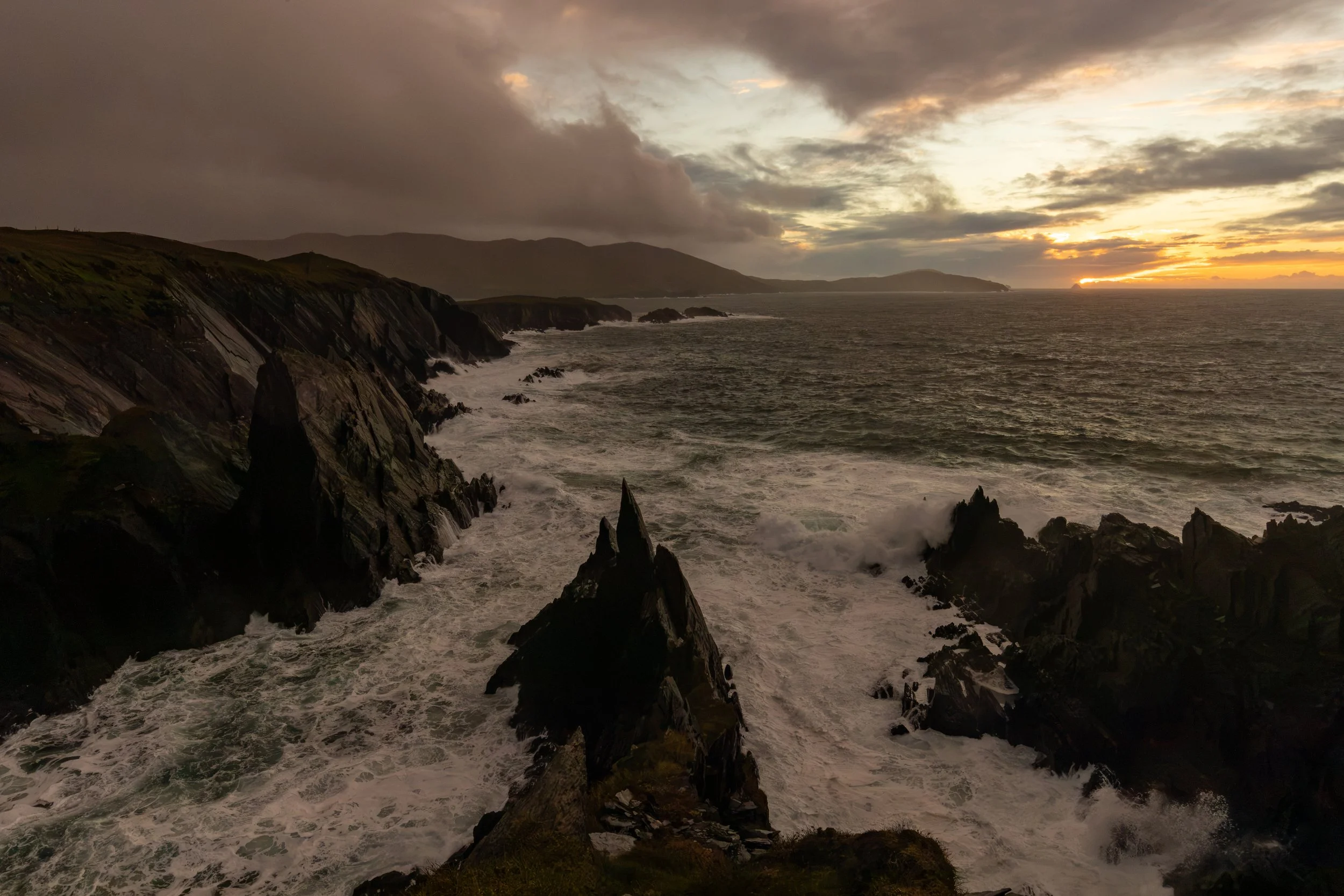
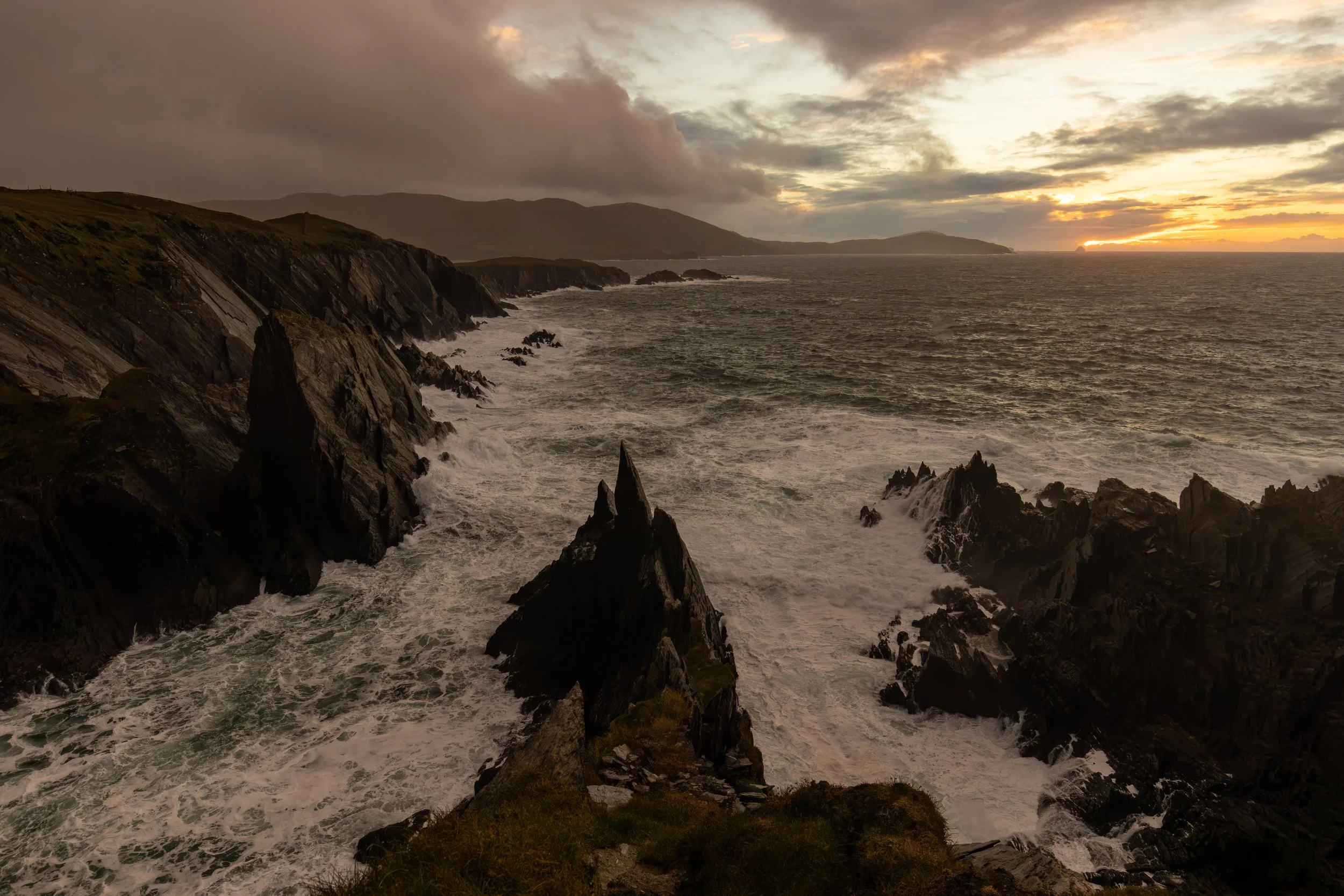
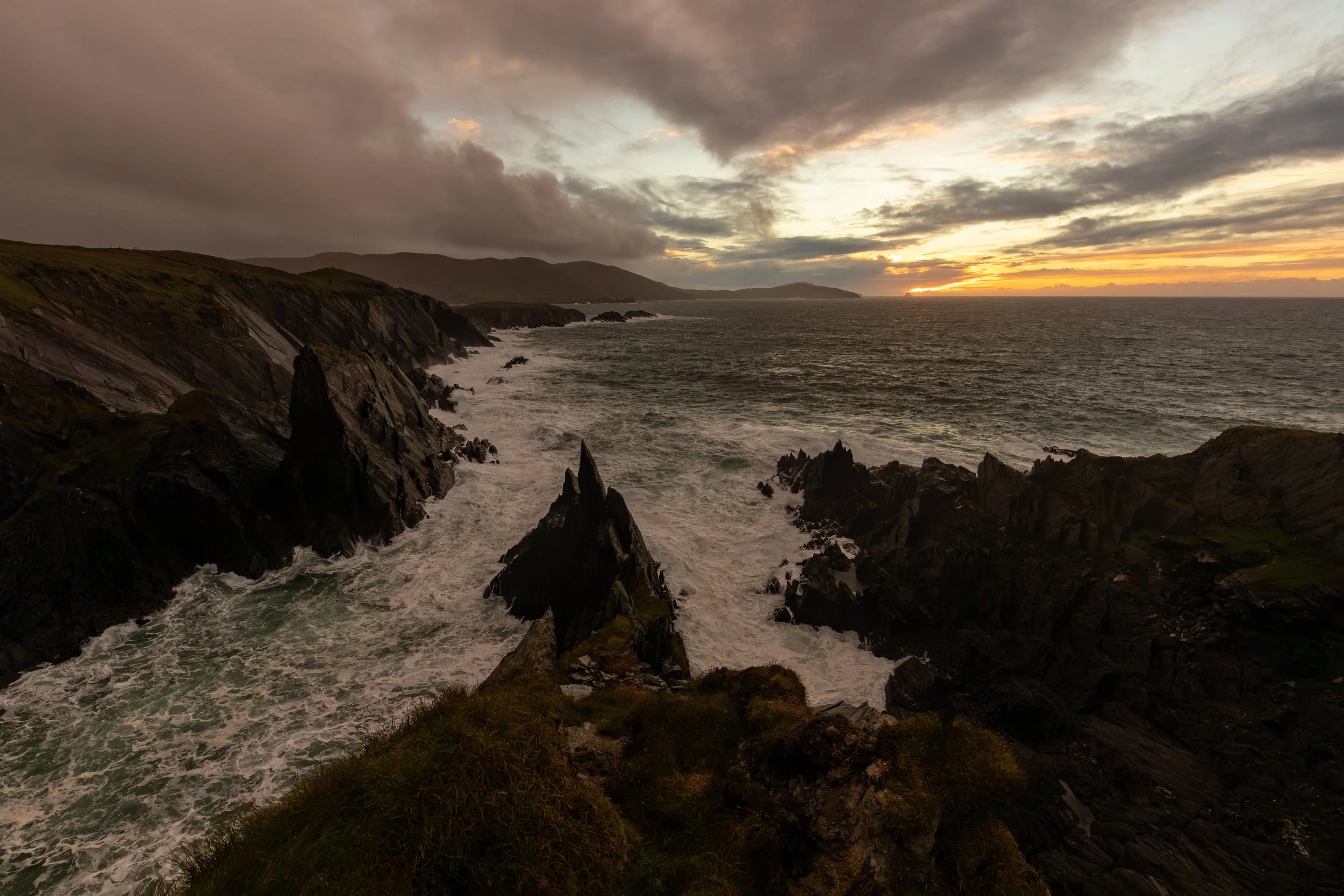
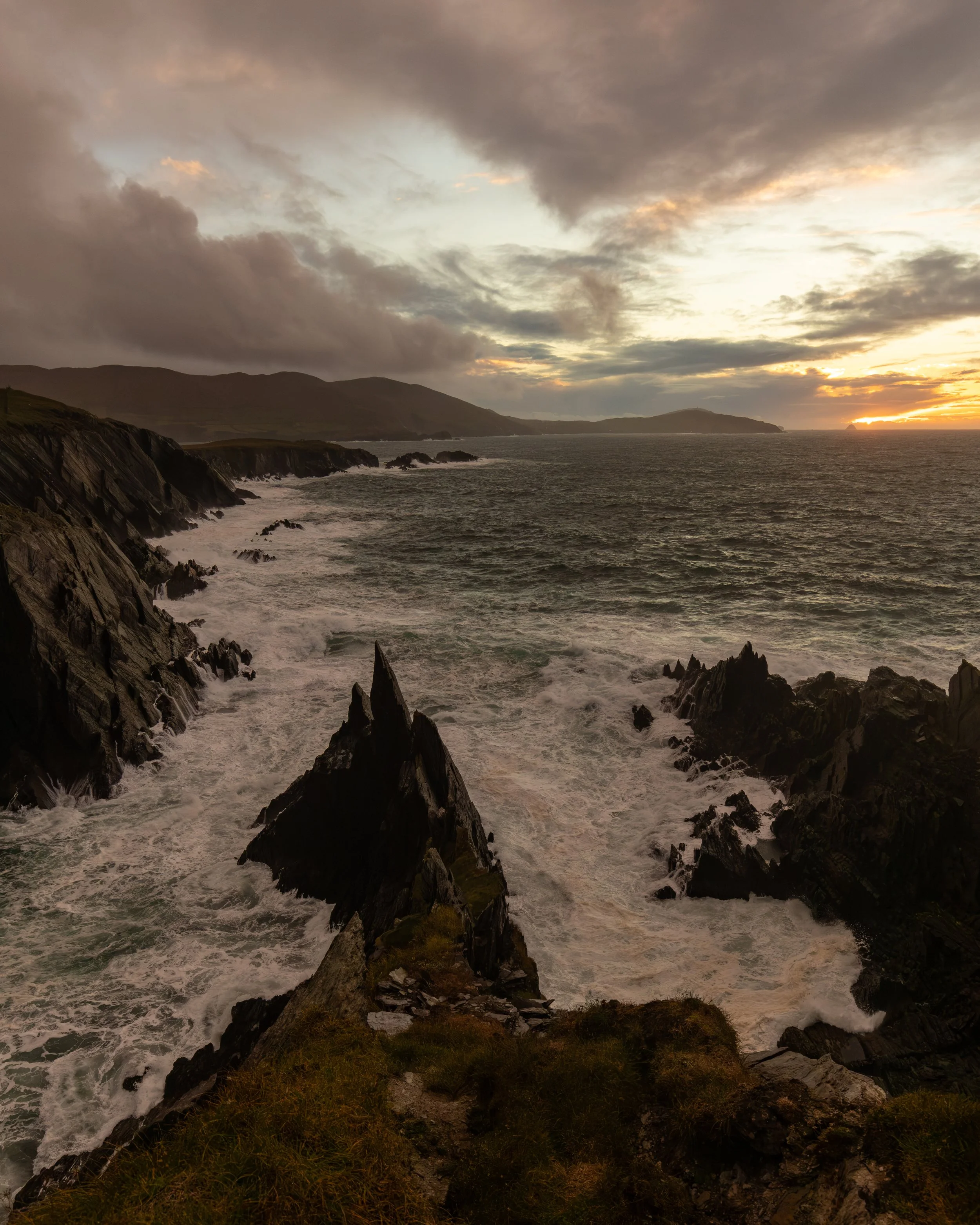
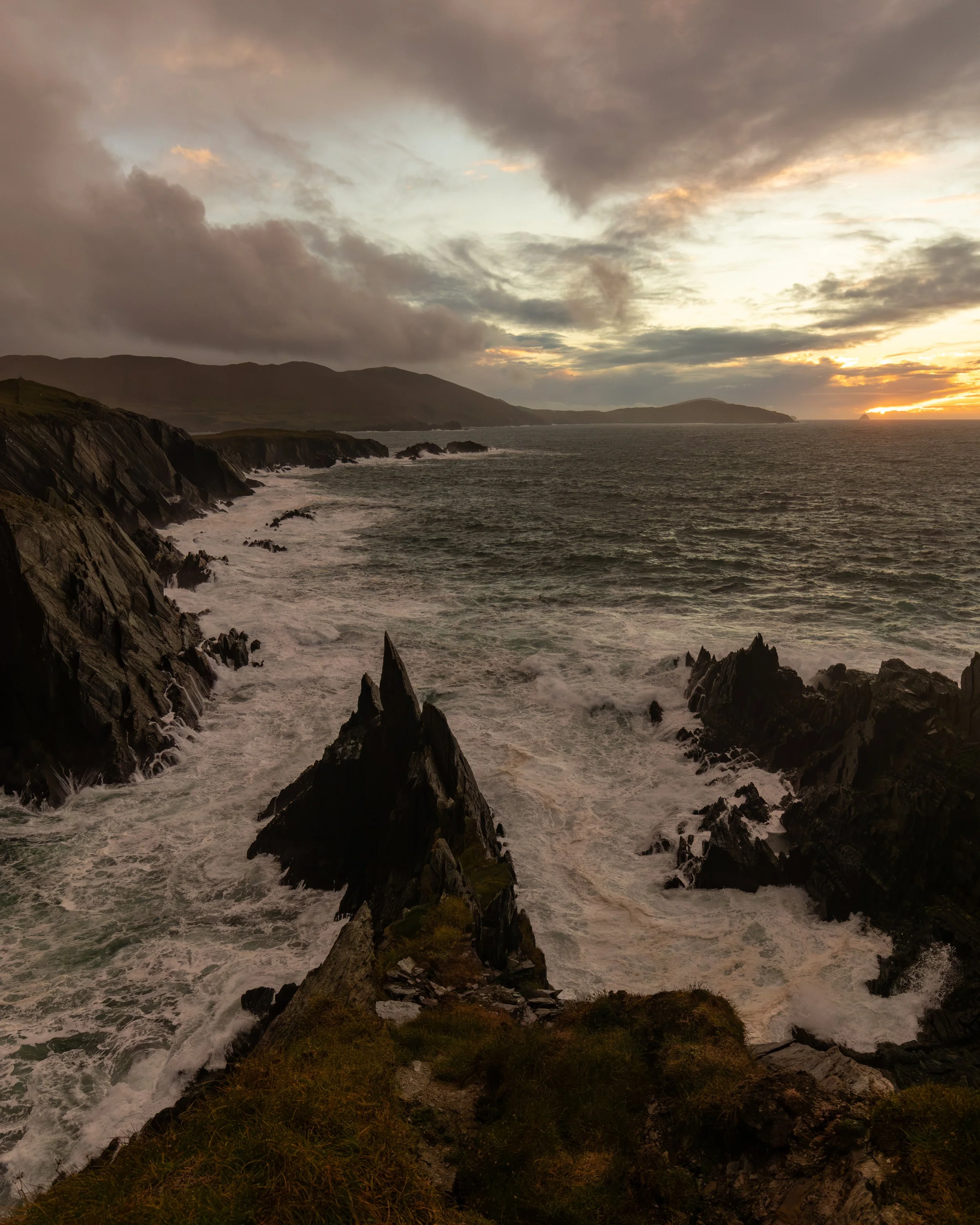
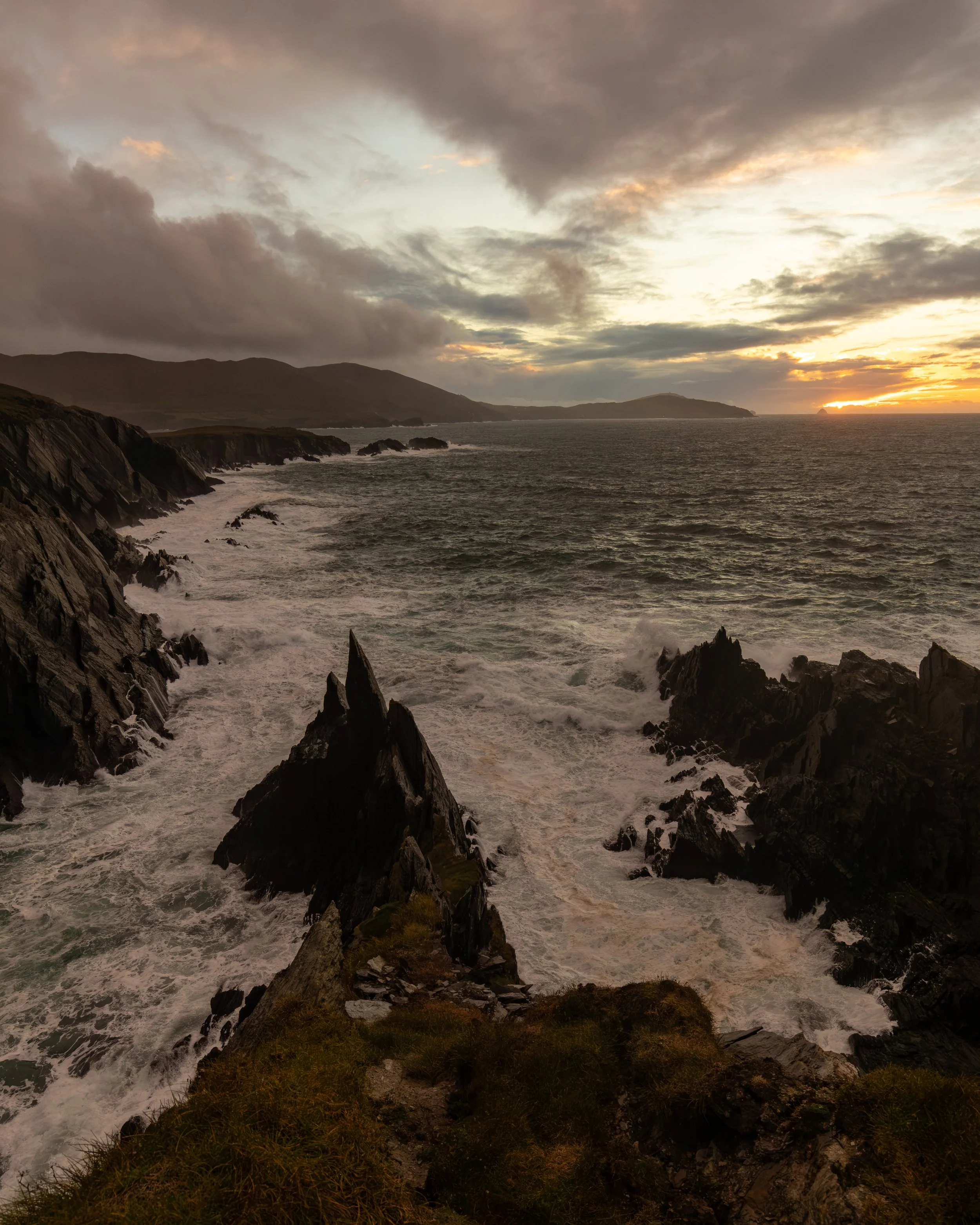
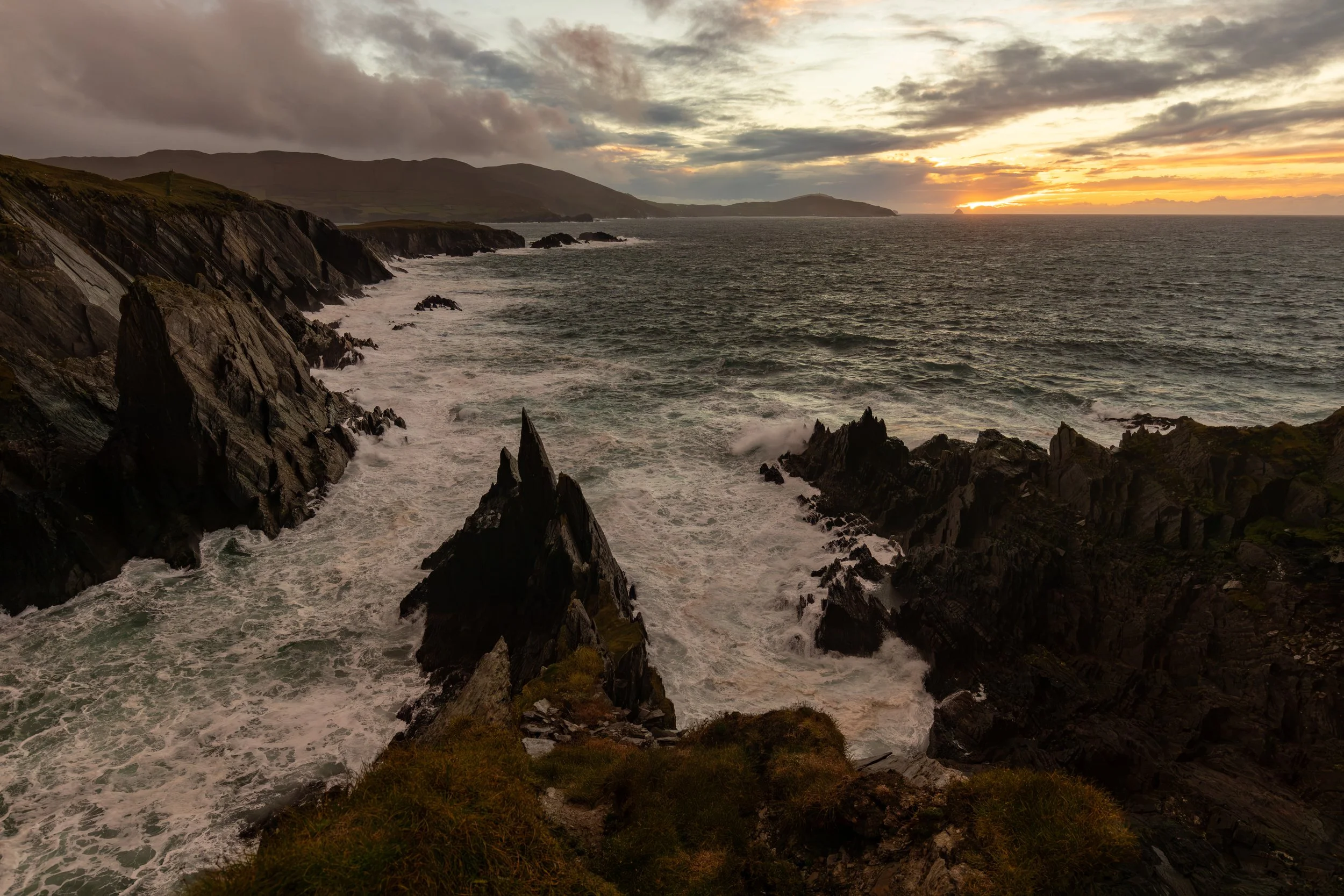
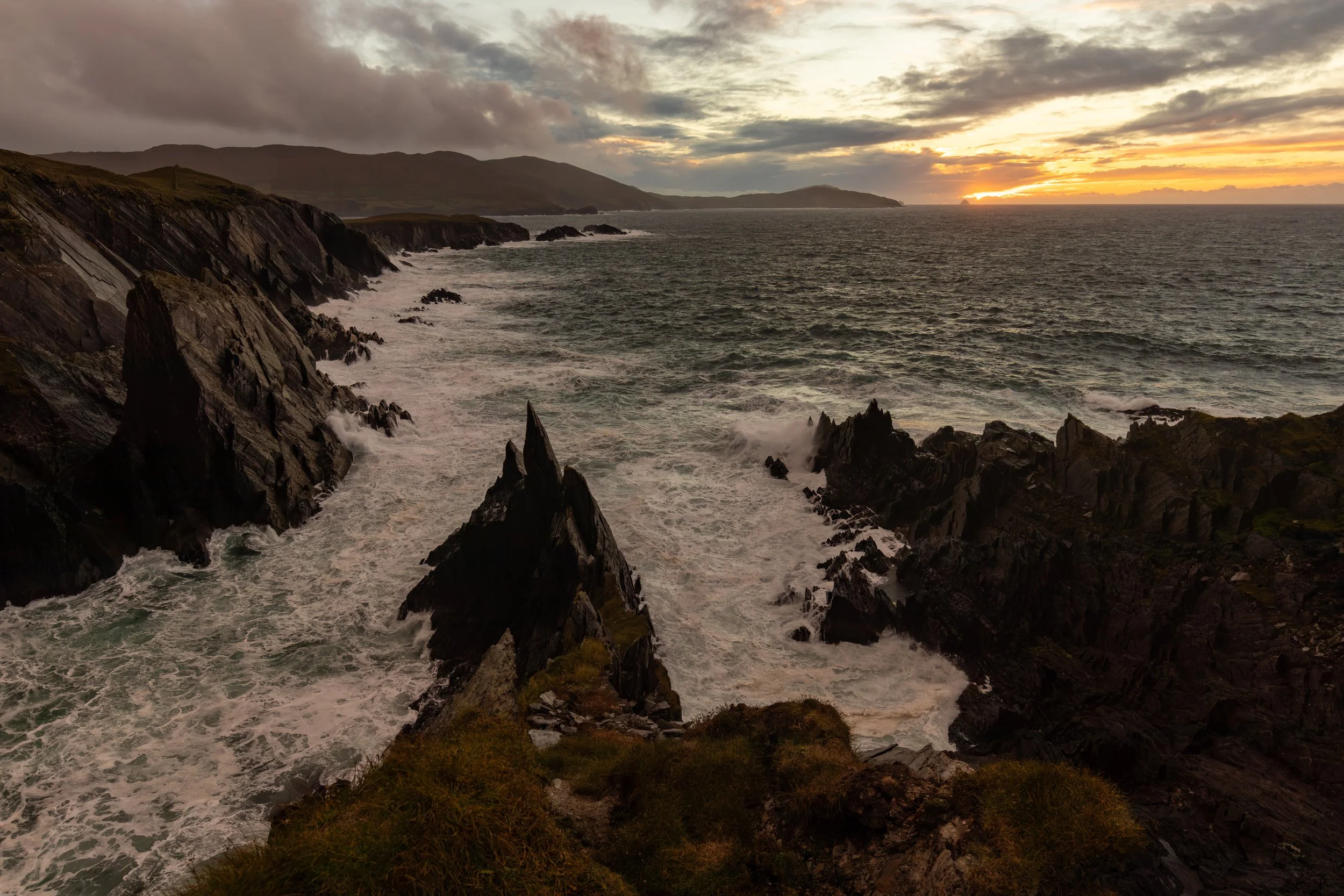
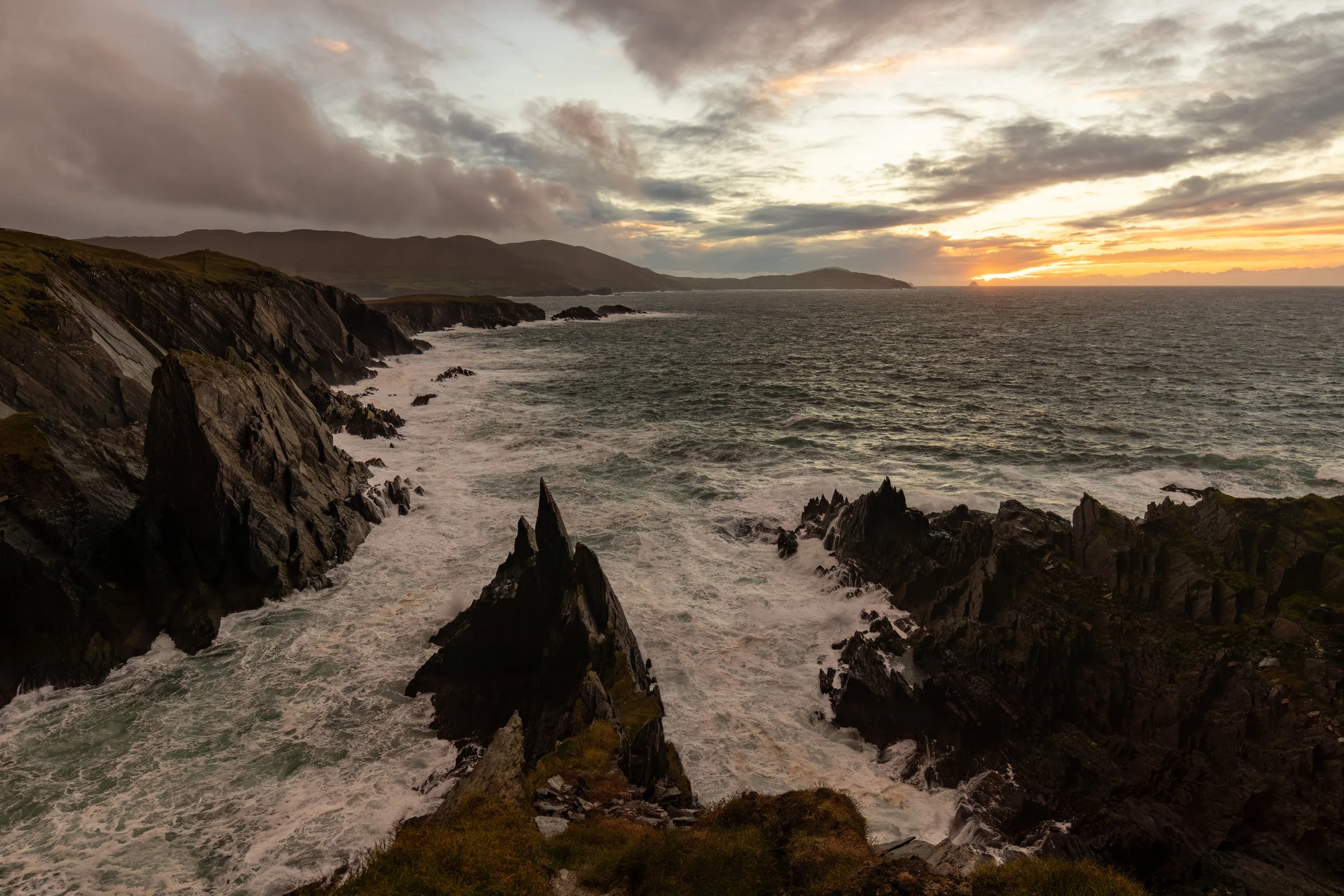
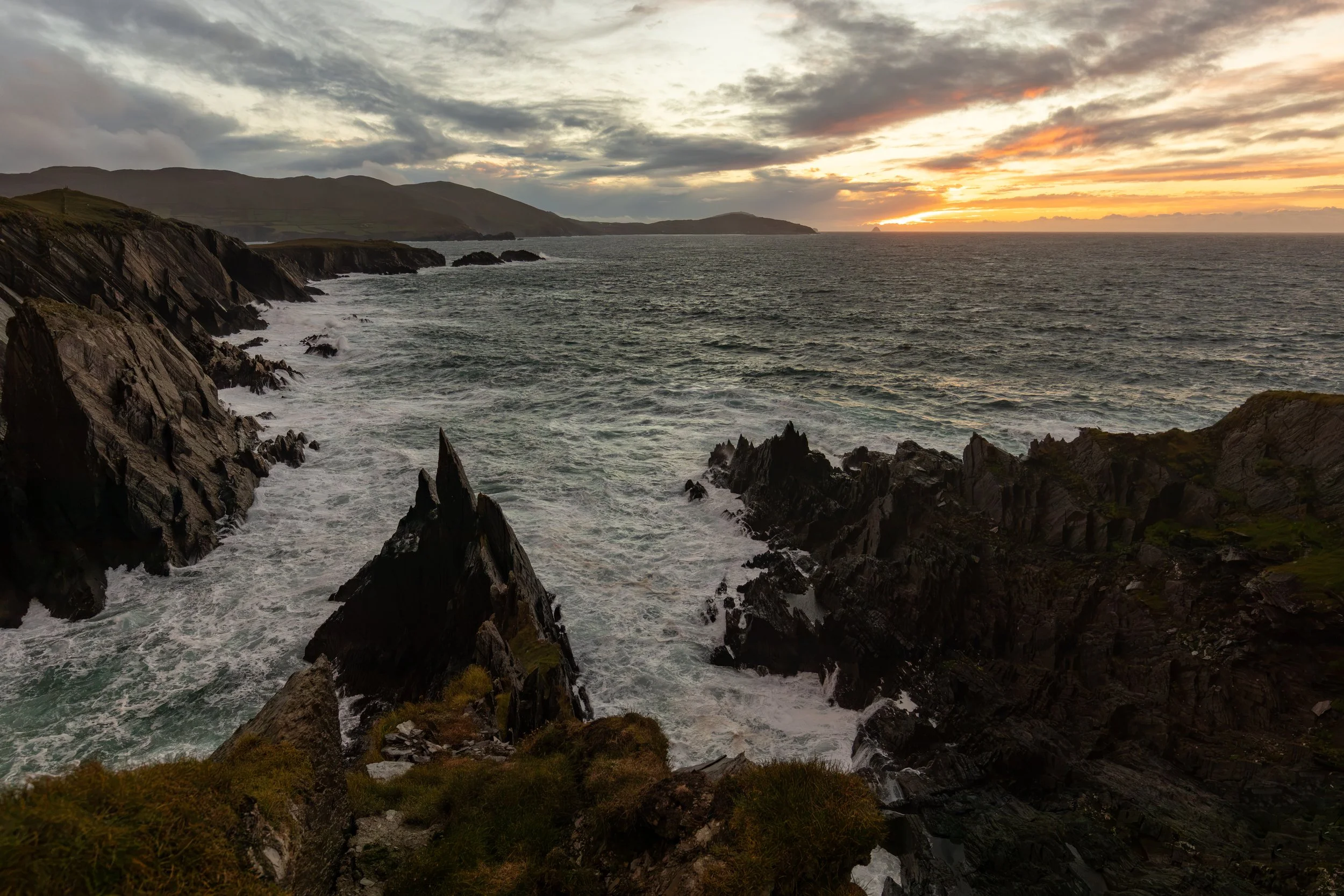
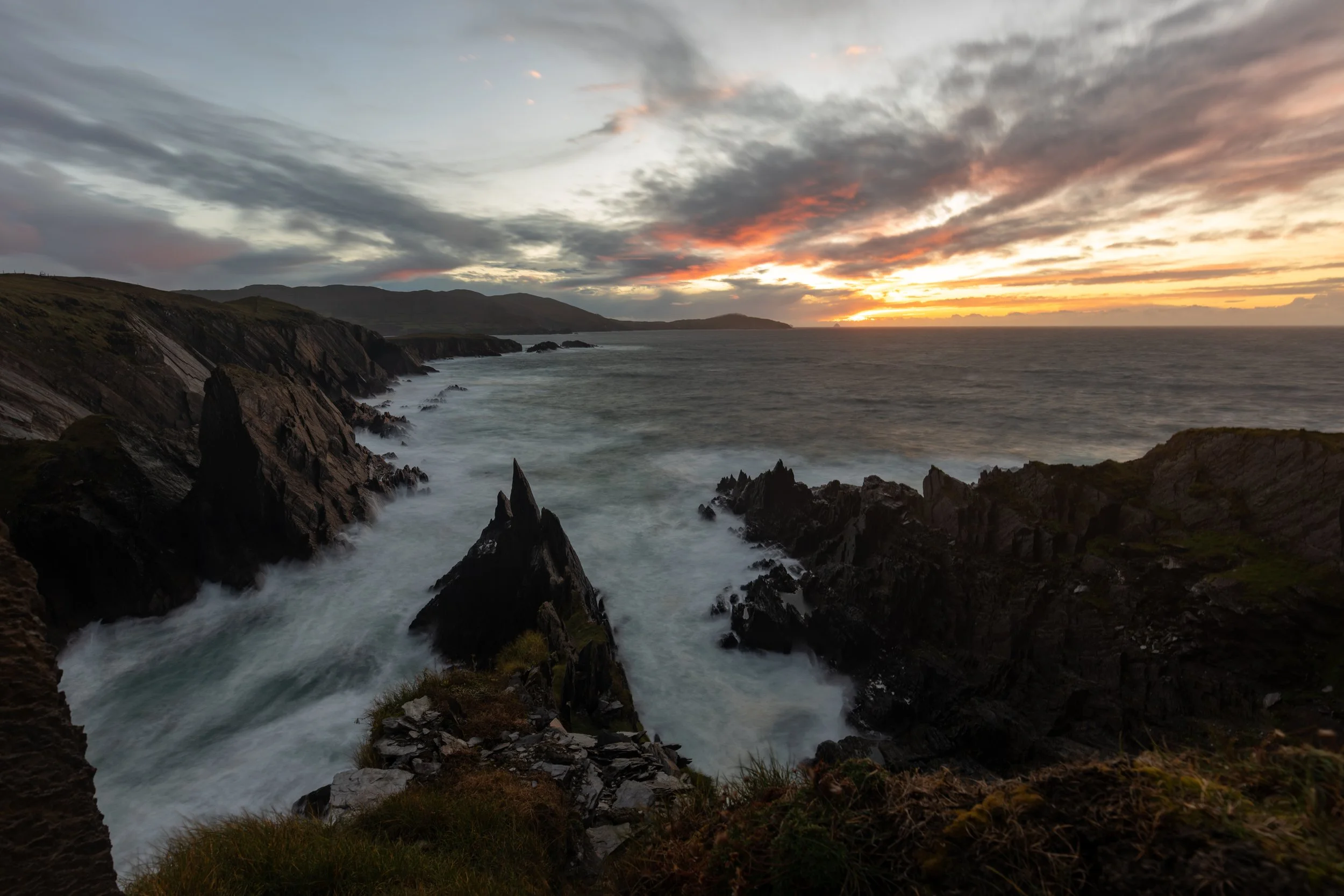
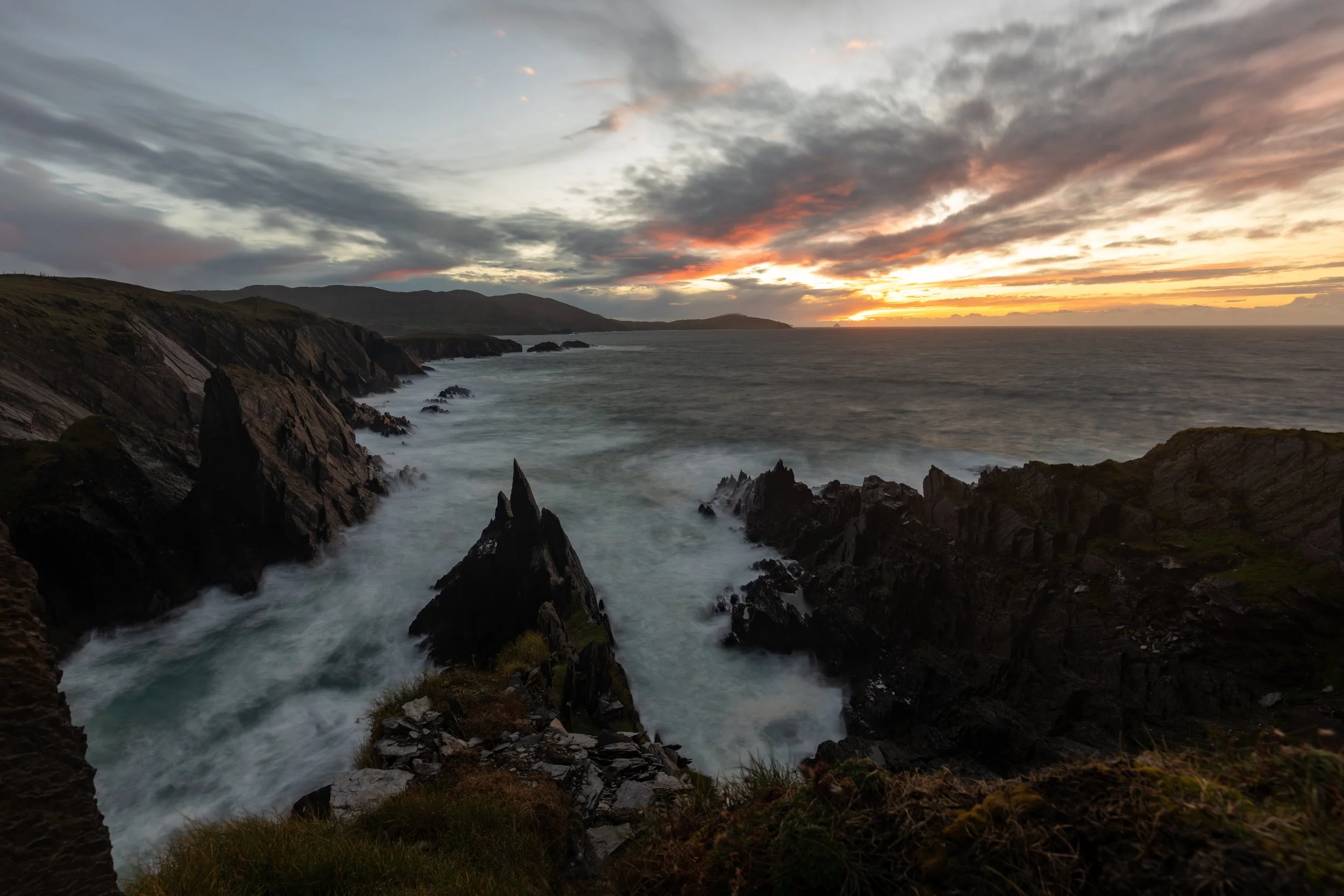
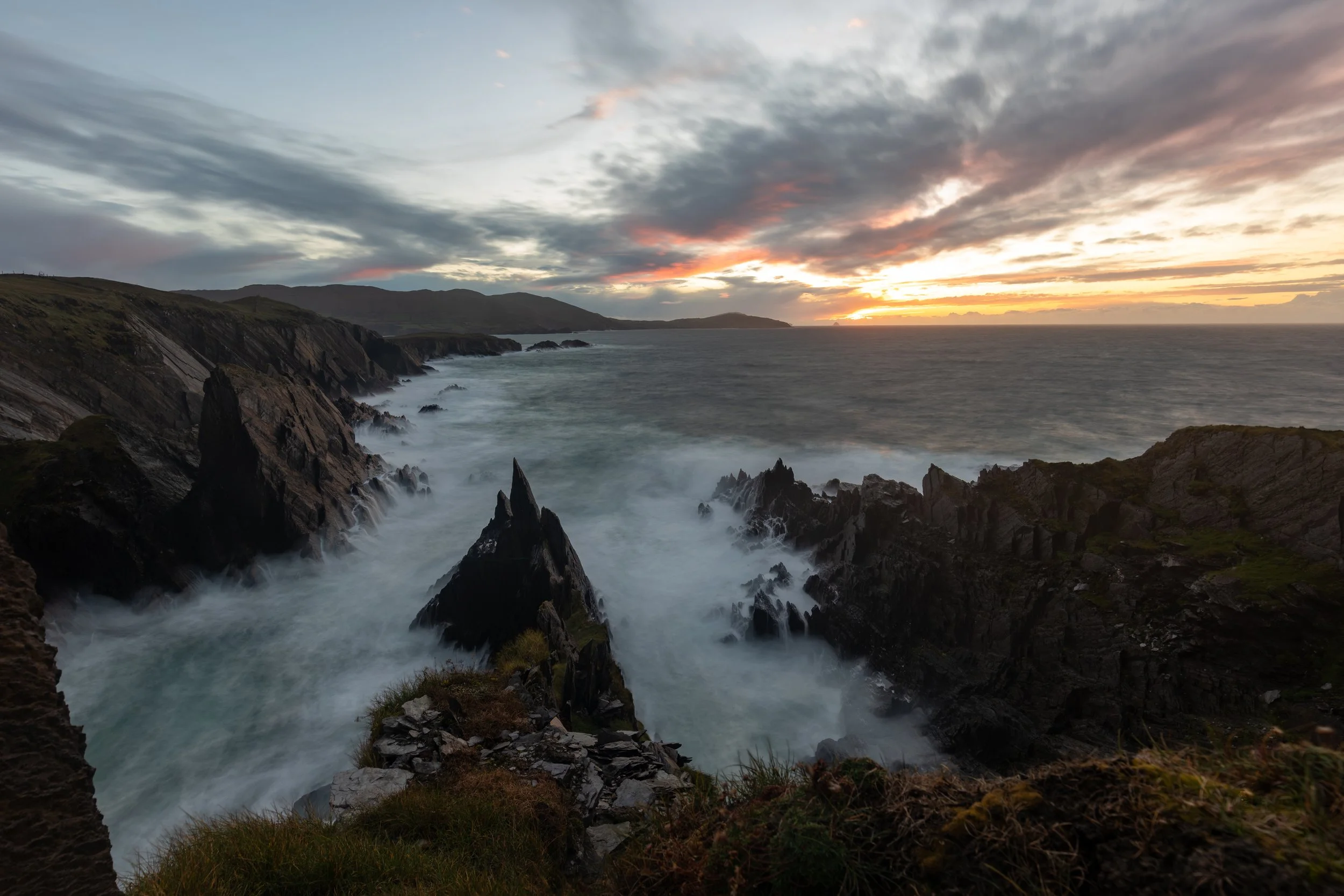
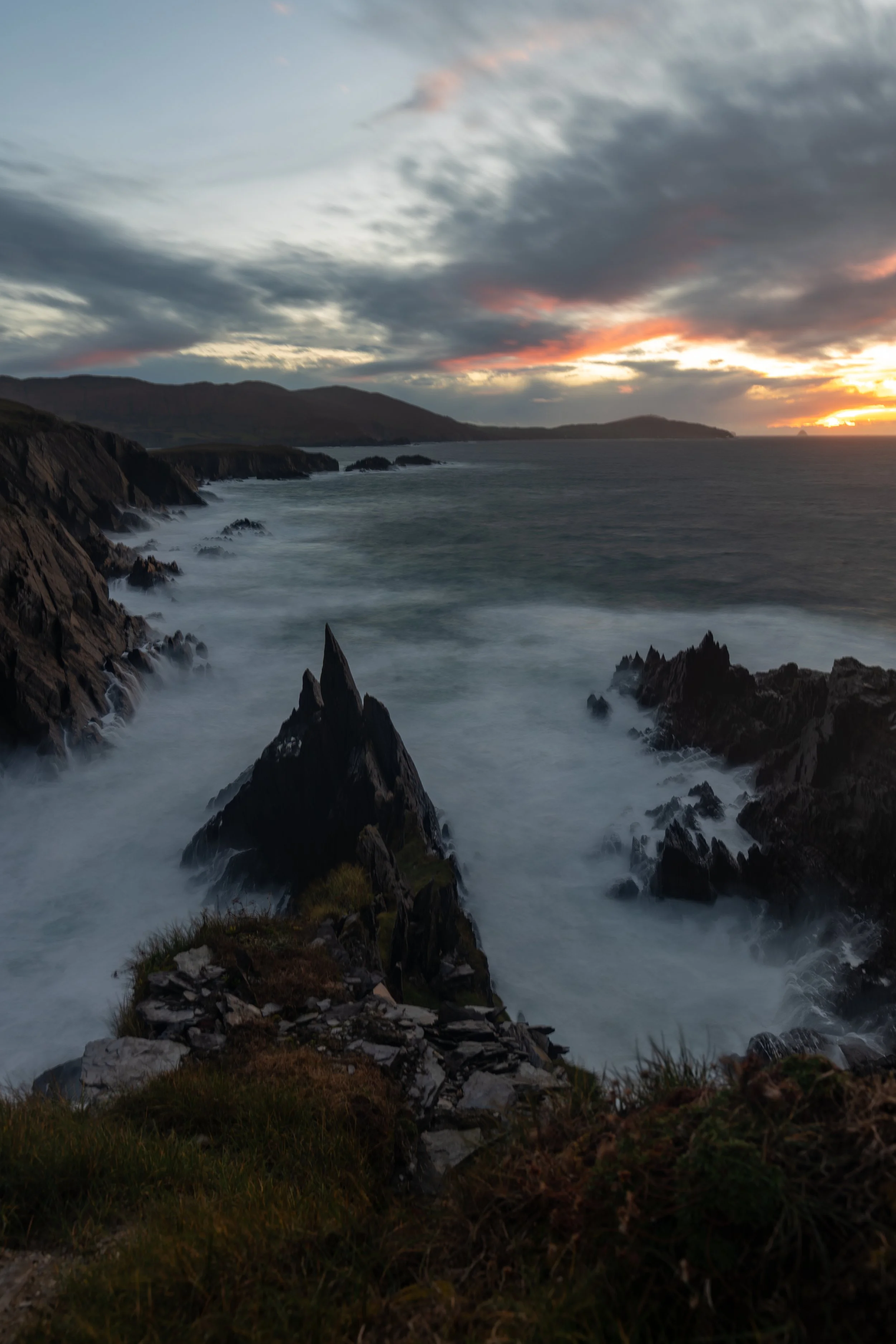
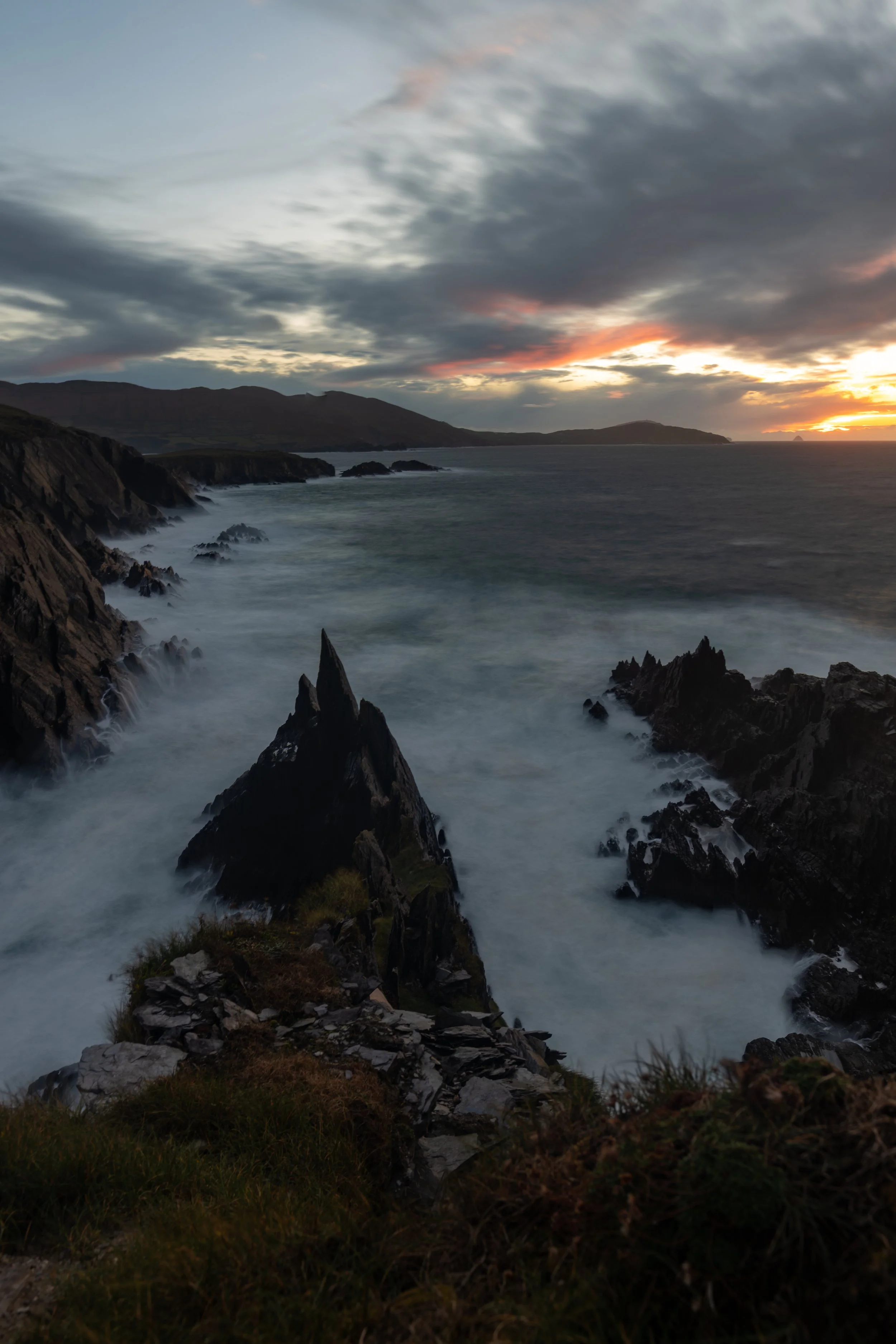
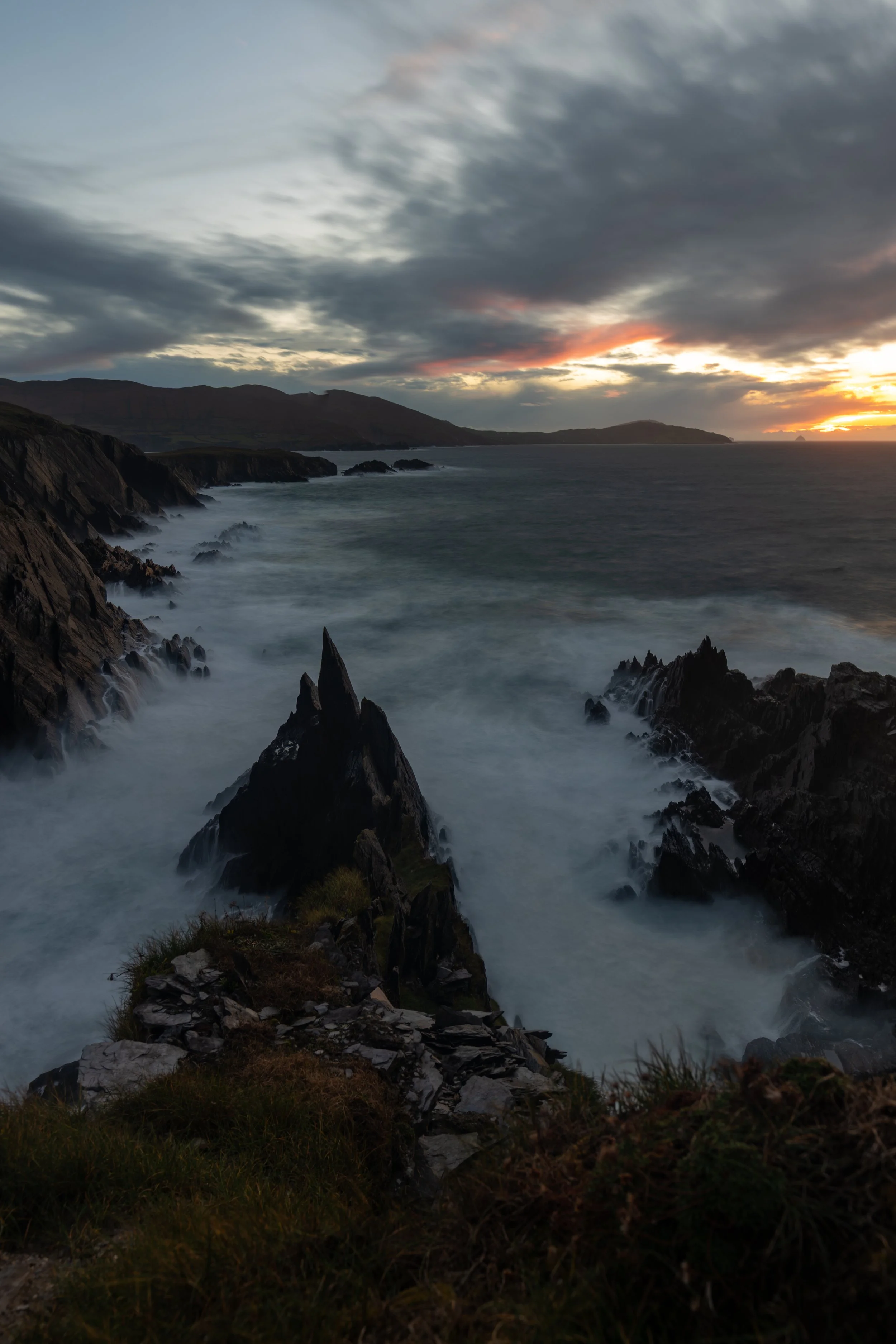
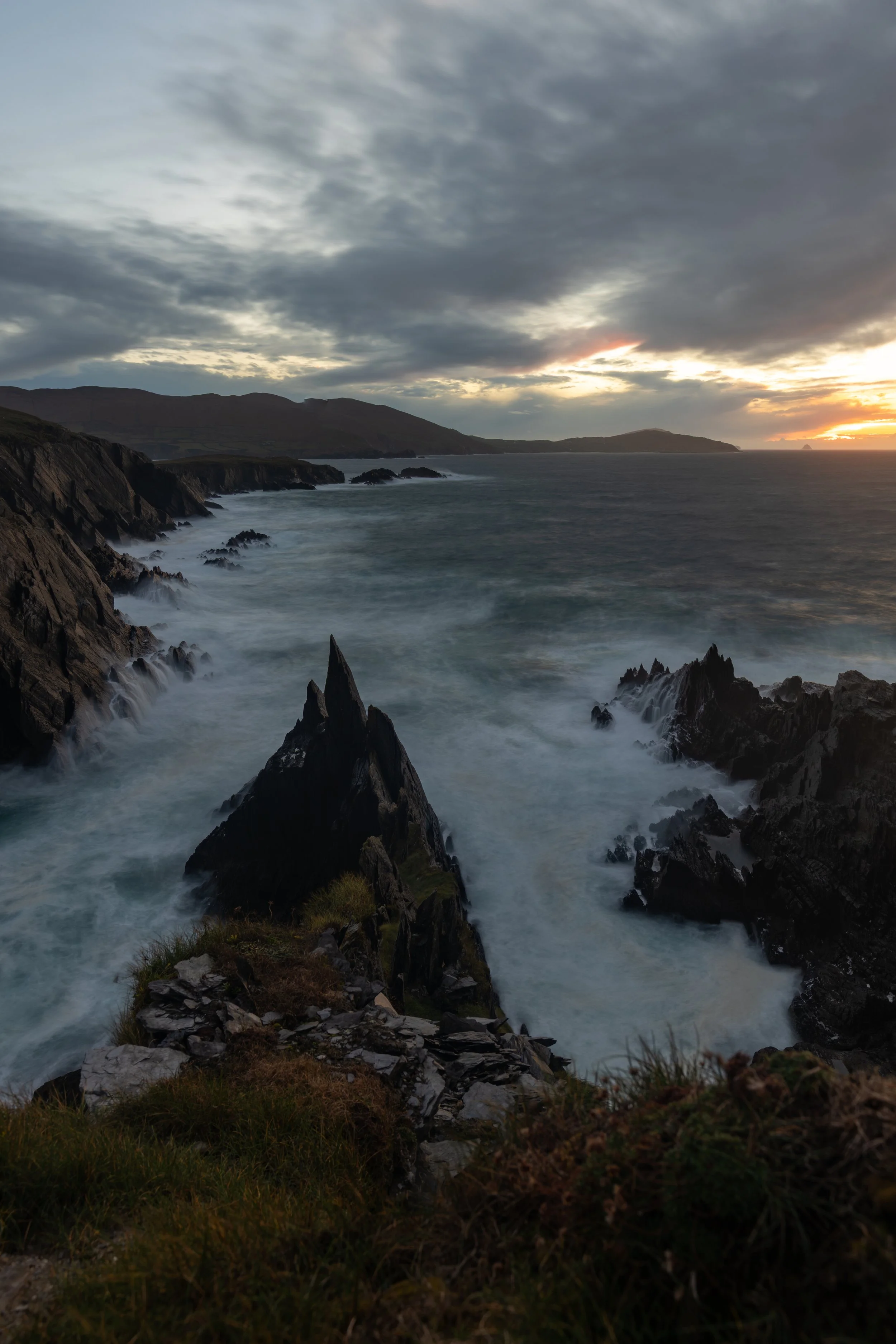
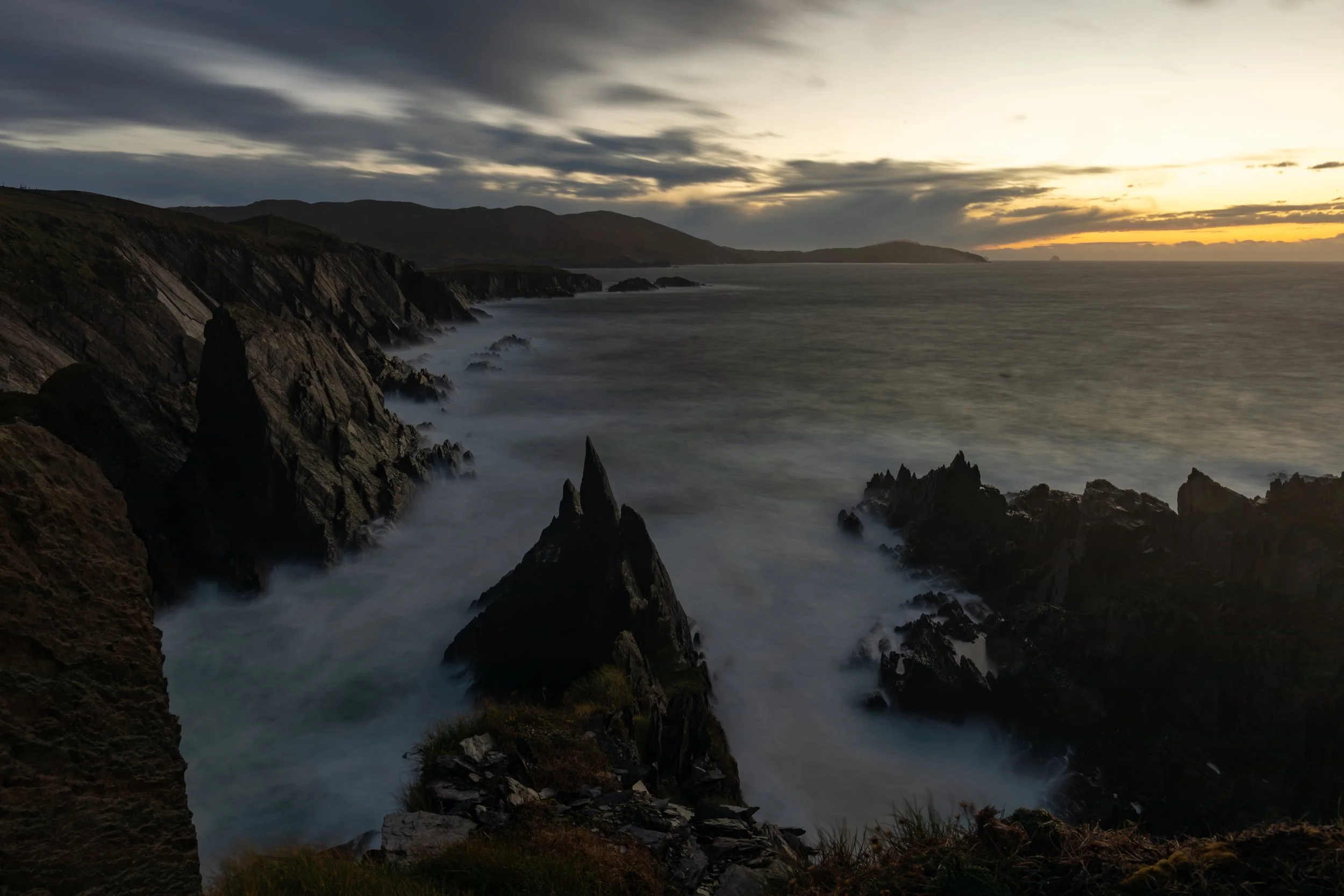
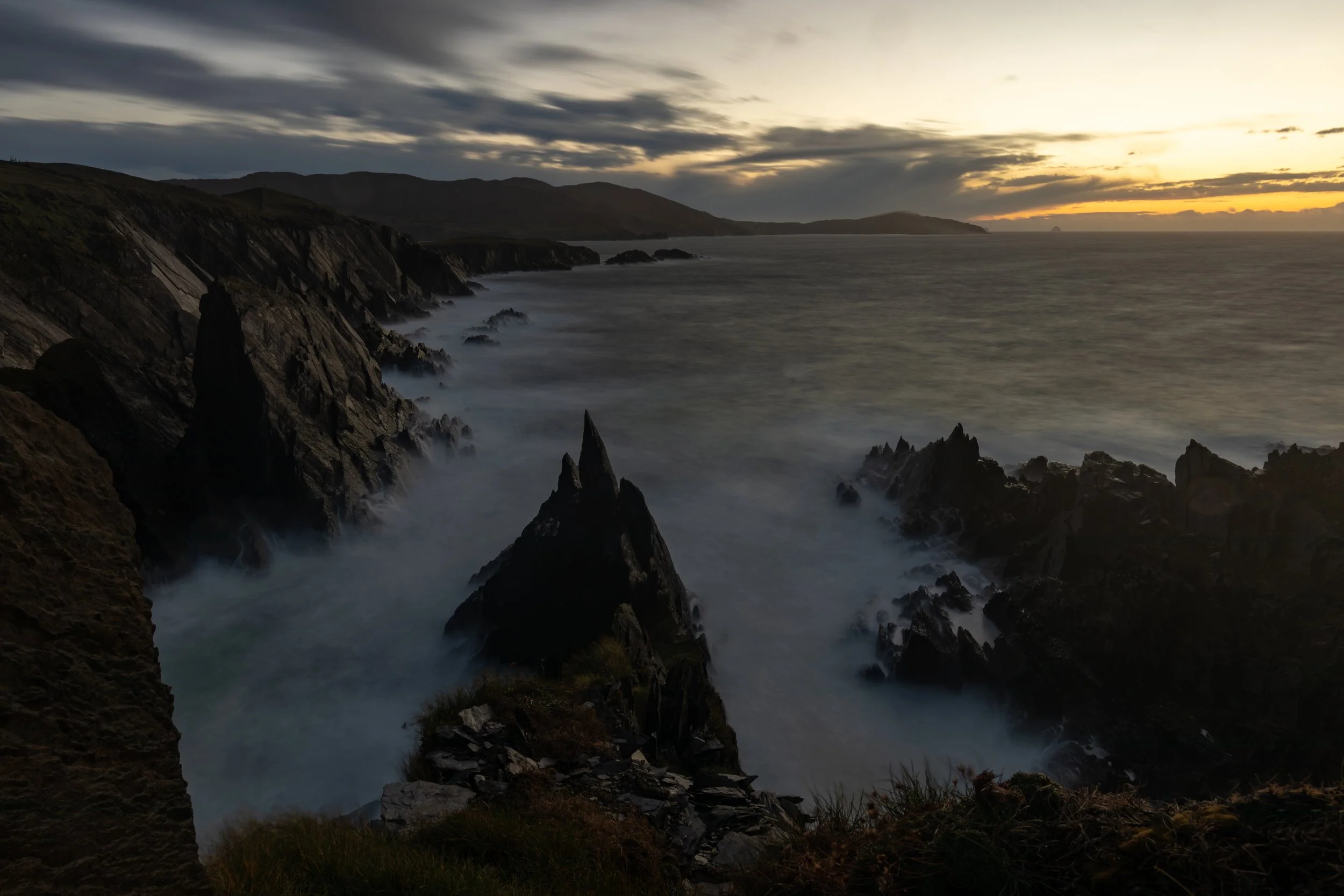
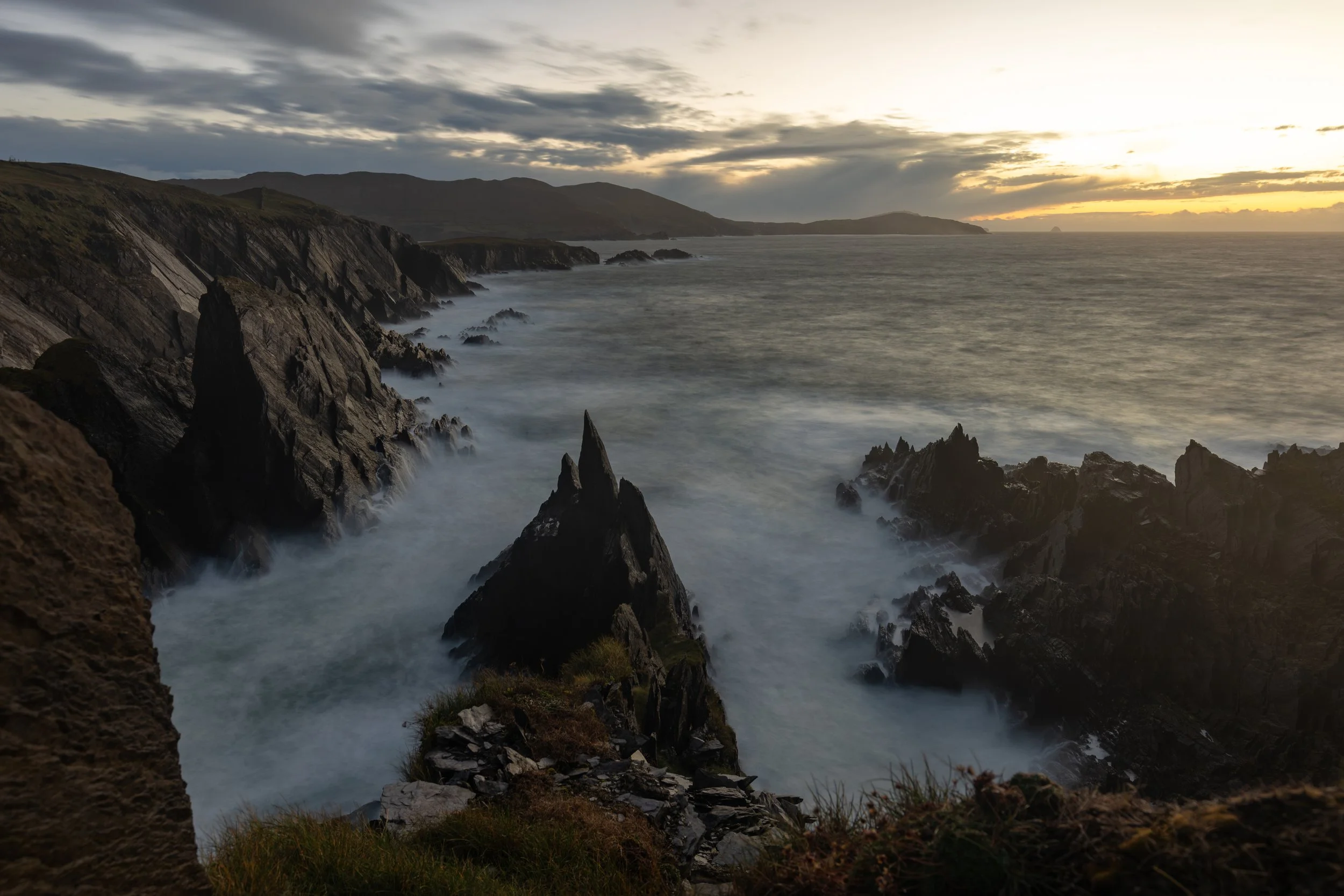
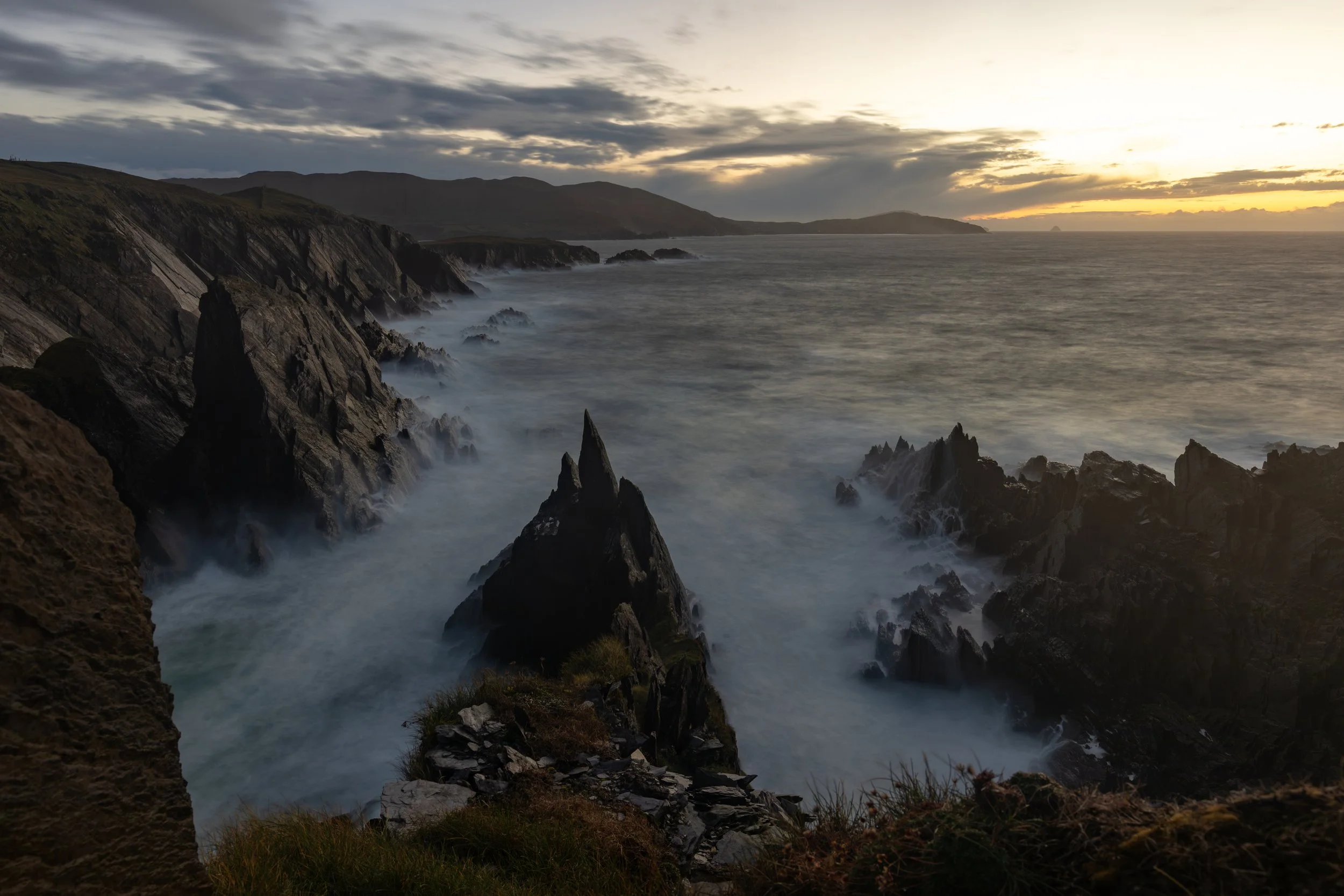
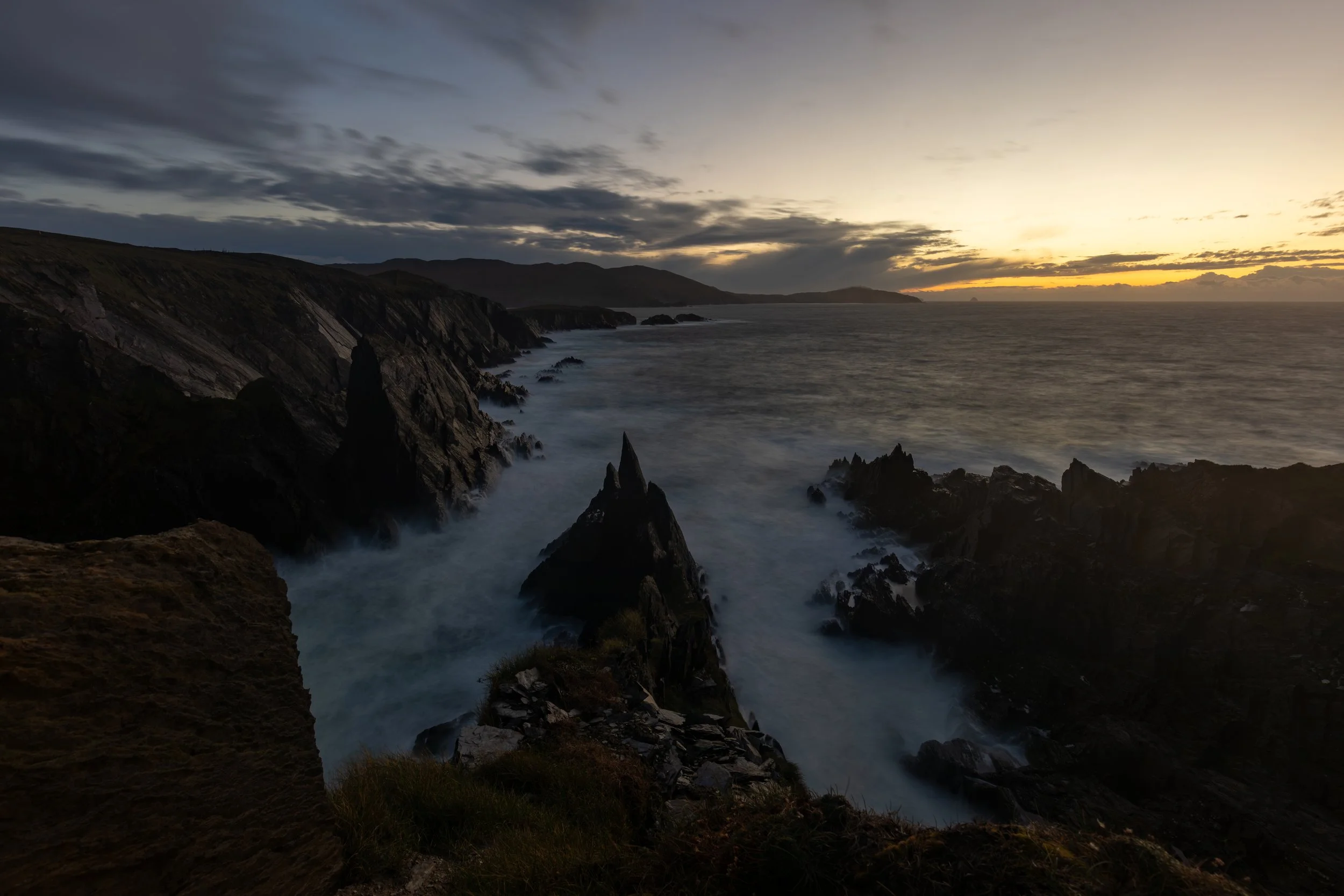
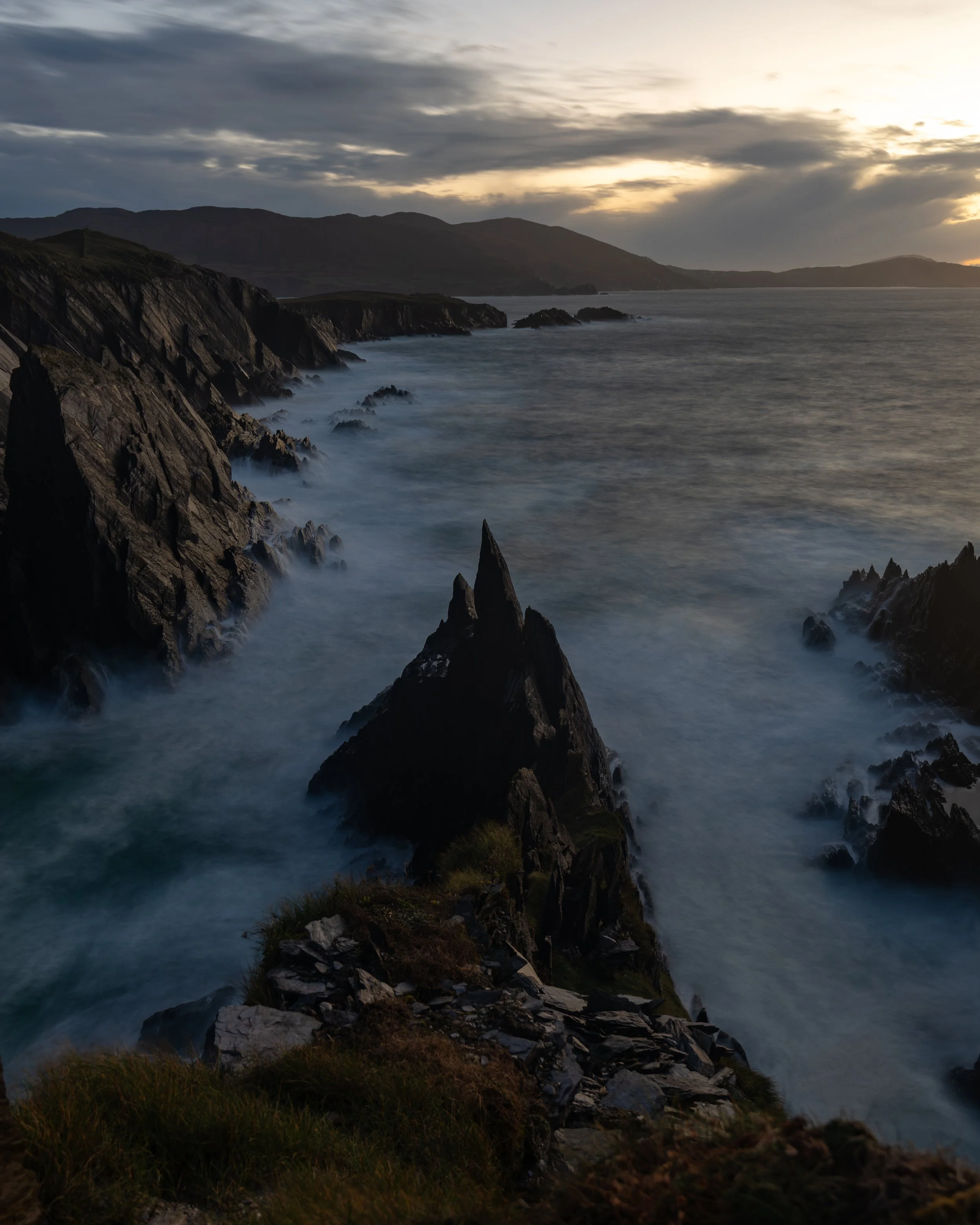
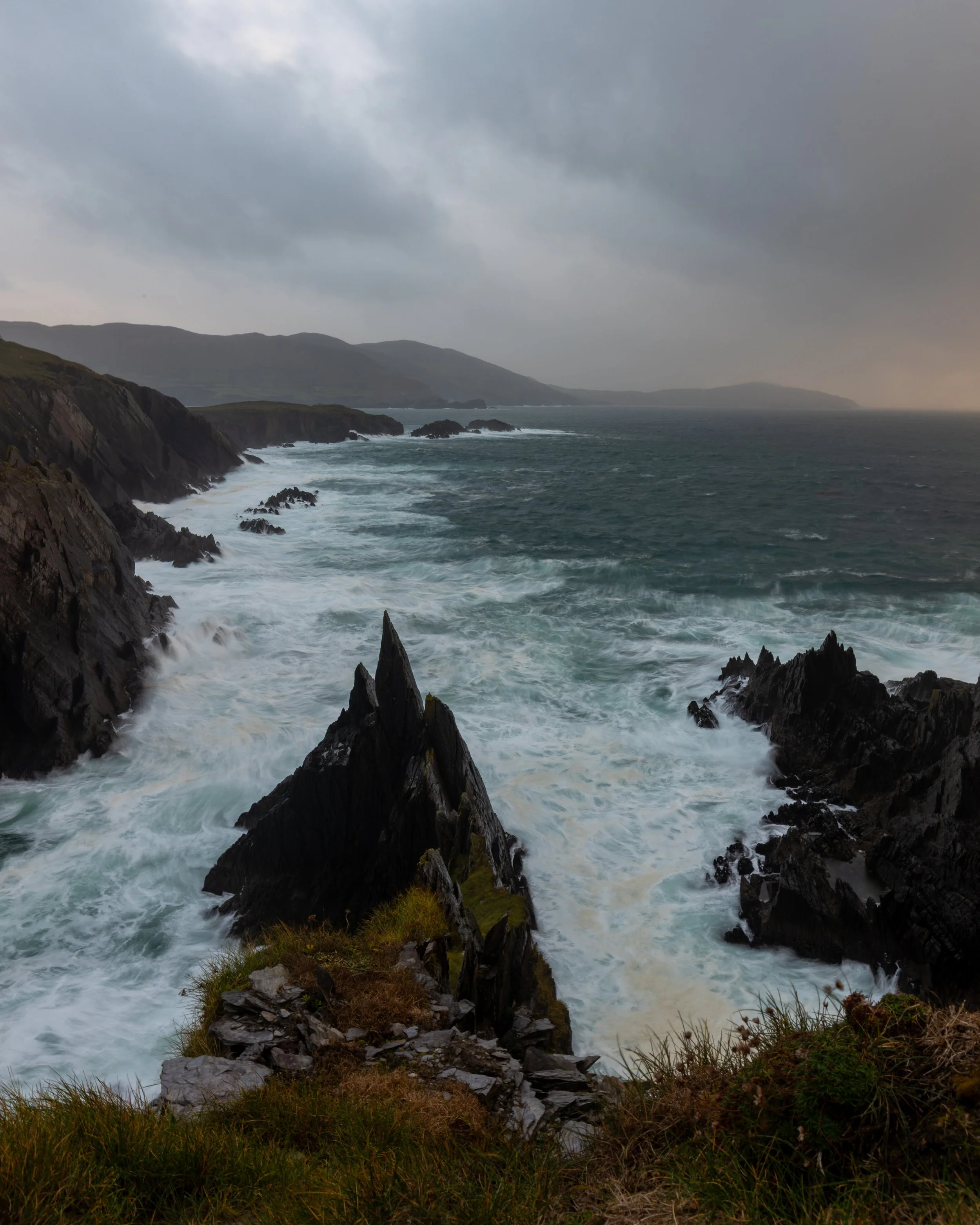
The sea stack was exactly what I had hoped to find. The cliff faces to the left were full of shapes and textures, while the headlands in the distance helped complete the wider composition. Even through the rain, I could see the potential.
When the light arrived, I also had to think about how much of the wider scene to include. The stack was the obvious subject, but isolating it completely would have ignored the cliffs and headlands that gave the location its context. I wanted the photograph to show the relationship between the stack and the coast around it. That meant taking time to look beyond the main subject and consider how the different shapes worked together within the frame.
The challenge was making the photographs. The rain intensified, and both my camera and video equipment were getting wet. The wind was driving the rain towards us and covering the front of my lens with water. My routine became wipe, shoot, check and repeat. In those conditions, checking each shot was important.
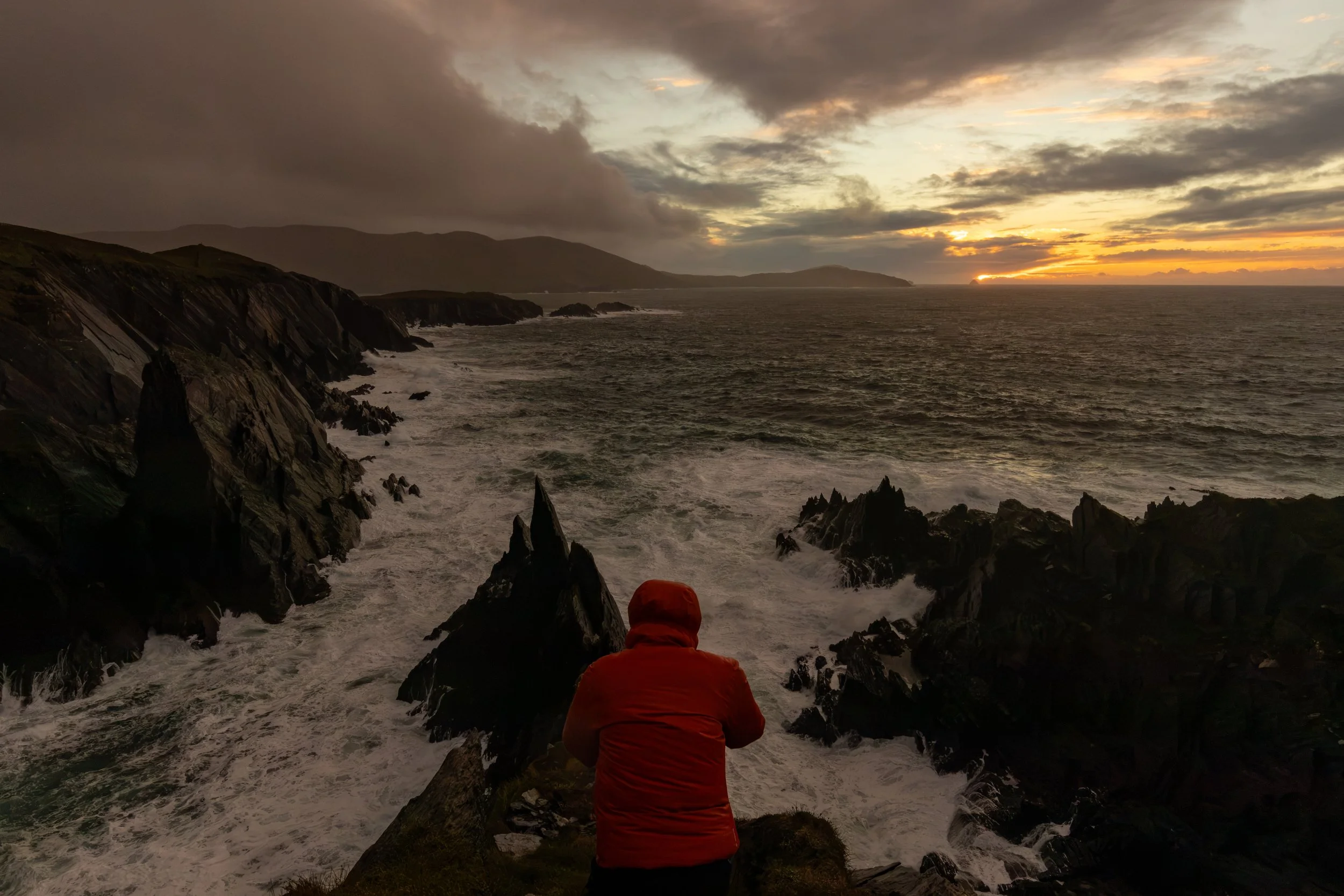
I estimate the wind was reaching around 70 kilometres per hour. There was only enough room for one person to get into position at a time. To frame the scene, we had to crouch or lower ourselves close to the ground, so Diarmuid and I took turns.
Difficult weather does not automatically mean there are no photographs to be made. Rain, wind and heavy cloud can all create opportunities, but they also introduce practical problems and risks. It is important to judge the conditions rather than simply push on regardless. We kept our movements controlled, paid attention to our footing and worked within the space available. Getting a photograph was never more important than staying safe.
I also believe that light can change quickly after rain. On this occasion, patience paid off. Just when I thought the shoot might amount to little more than a wet walk, the rain eased and the clouds began to part.
The change in light was immediate. It reached the sea stack, the cliffs and the distant headlands, giving the whole scene definition. We had gone from struggling to keep the rain off our equipment to having the light we had hoped for.
At first, I photographed handheld. There was very little room to set up a tripod, and the wind was still strong enough to make long exposures difficult. Working handheld allowed me to move quickly, adjust my position and make the most of the available light. I concentrated on framing the scene and using a shutter speed that would avoid camera shake.
Diarmuid then decided to send his drone up. The footage gave us a different view of the sea stack and showed how it sat within the surrounding coastline. Diarmuid kindly shared the footage with me, which meant I could include it in the final edit.
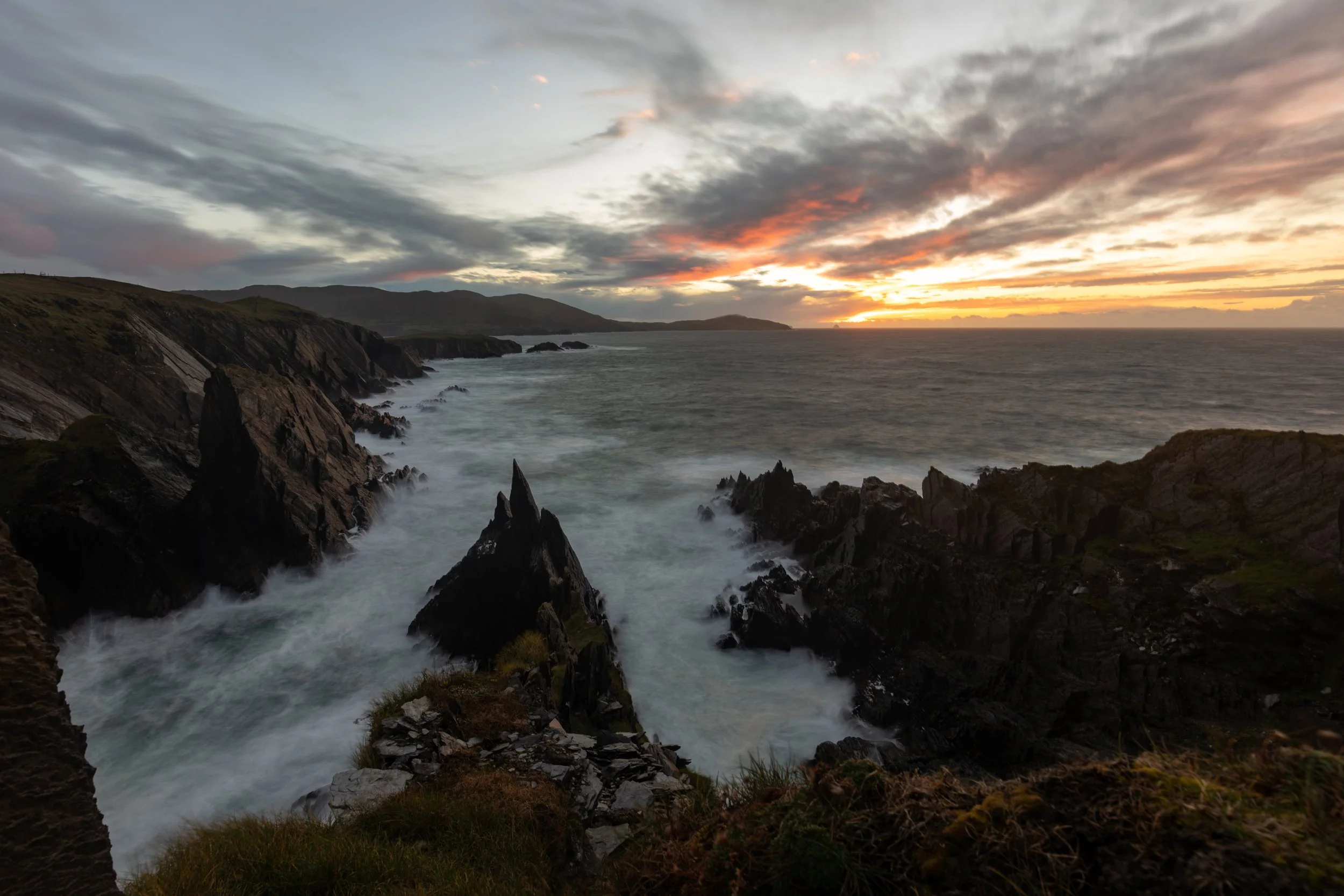
While the drone was in the air, the wind began to drop. That allowed me to bring out the tripod and filters and start making longer exposures. The timing worked in our favour, as the sun was beginning to break through near the horizon.
I continued photographing as the light developed. Even when the direct light began to fade, there was still colour and detail in the sky, so I stayed with the scene. I kept making photographs until the last of the light had disappeared completely. By then, there was little reason to stay, so we packed away.
It was a fitting end to four days in West Cork. Yet we had made the effort, found the location and adapted as the conditions changed. We were rewarded with the sea stack I had been promising Diarmuid and a period of light that transformed the scene.
There are practical lessons here for anyone photographing the coast. Research a location before visiting, but allow time to find your way once you arrive, especially if you have not been there before. Be prepared to change your approach. I started handheld because a tripod was impractical, then brought it out when the wind eased. Keep checking the front of your lens in driving rain, and review your images rather than assuming every frame is clear. Most importantly, assess the risks. Persistence can pay off, but it should never mean ignoring unsafe conditions.
This was a last-ditch attempt, and it could easily have produced nothing. Instead, the rain eased, the light arrived and we found the sea stack I had been talking about for days. It was a rewarding final shoot and a great way to finish the trip with my wingman, Diarmuid.