Day Two on Inis Mór – When the Weather Tested Everything
Day two on Inis Mór was always going to be different from the first day. The previous evening had mainly been about scouting locations and getting familiar with parts of the island we thought could work later in the trip. The weather had stayed mostly clear which, while nice for exploring, is not always ideal for landscape photography. We knew rain was forecast for the following day, but what actually arrived was far more persistent than any weather app had suggested.
When we woke up that morning, the island was covered in thick grey cloud. Rain moved constantly between mist and heavy downpours, and there was barely any separation in the sky at all. It was one of those mornings where you start questioning whether it is even worth bringing the camera gear out into the conditions.
Still, that is part of landscape photography.
As we drove around the island in the Pajero, the conversations bounced between random topics like they always do on trips like this. We talked about the island itself, the kinds of vehicles people drive there, how supplies arrive and what it would actually cost to live somewhere so isolated. But there was also the bigger question hanging over the whole drive: what exactly were we doing heading out with cameras in weather like this?
If you have followed my work for any length of time, you will know I repeat one phrase more than most: bad conditions do not exist in landscape photography; there is always a shot. It is something I genuinely believe, but there are definitely days when that belief gets tested more than others. This was one of those days.
We decided to head back to a location we had scouted the previous day, a place we jokingly renamed Paddy Murtagh Beach after Patrick Murtagh, who was travelling with us alongside Diarmuid. Timing there mattered because of the tide. Thankfully, we arrived around thirty minutes before high tide, which meant there was enough water movement without losing access to the rocks completely.
The weather though, was brutal.
The rain never really stopped. It just changed intensity every few minutes. One moment it was mist drifting across the coastline, and the next it was heavy driving rain being pushed sideways by the wind. The sky was completely flat too. There was no dramatic light, no colour and no obvious focal point being handed to us by the conditions.
But that is where photography changes.
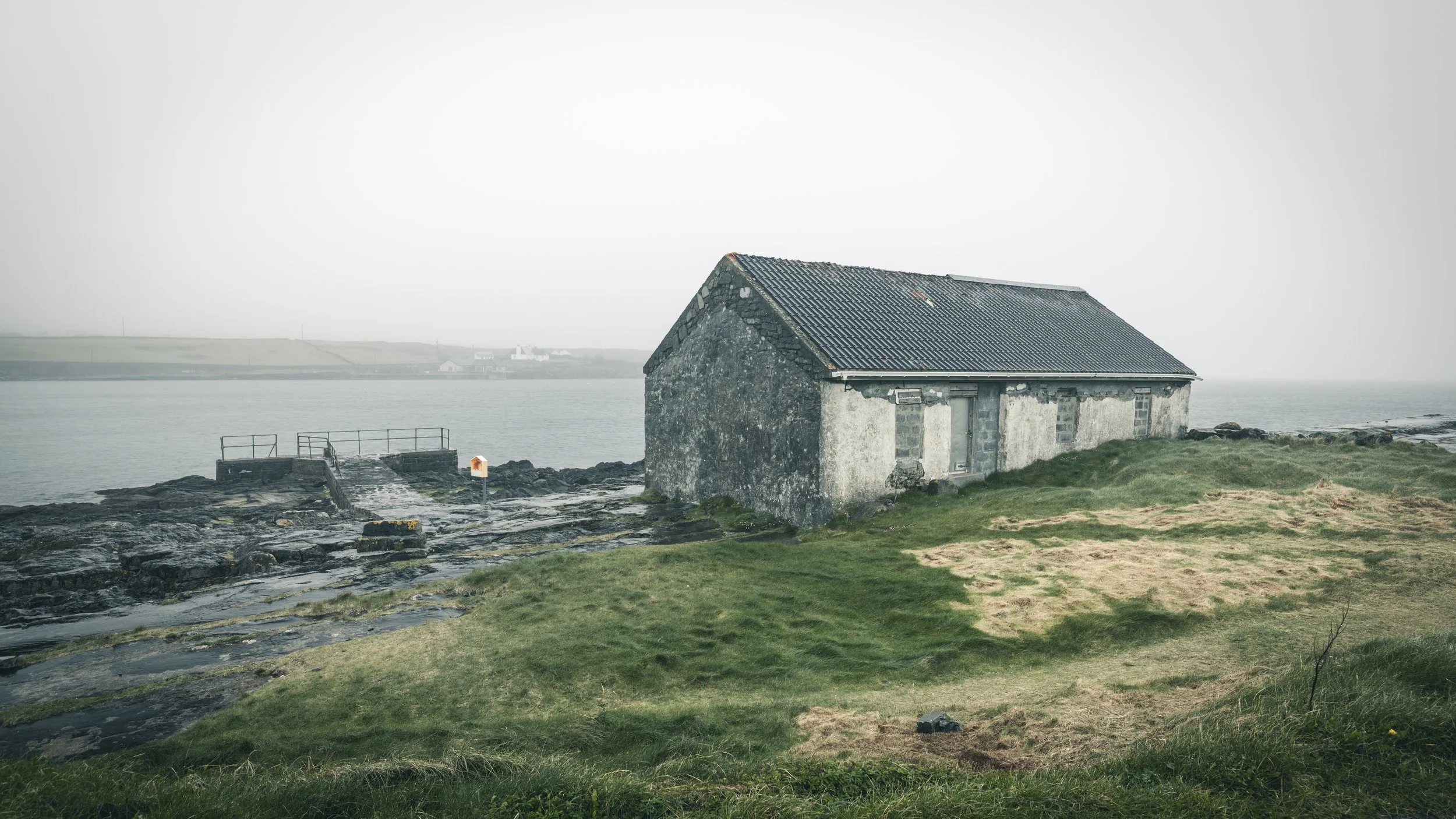
When you lose light and colour, you start looking harder at shape, structure and texture instead. I walked along the beach toward a building sitting near the rocks because I knew it would gradually become more prominent in the frame the closer I got. The rain was also coming from behind me, which made shooting possible without constantly fighting water on the lens.
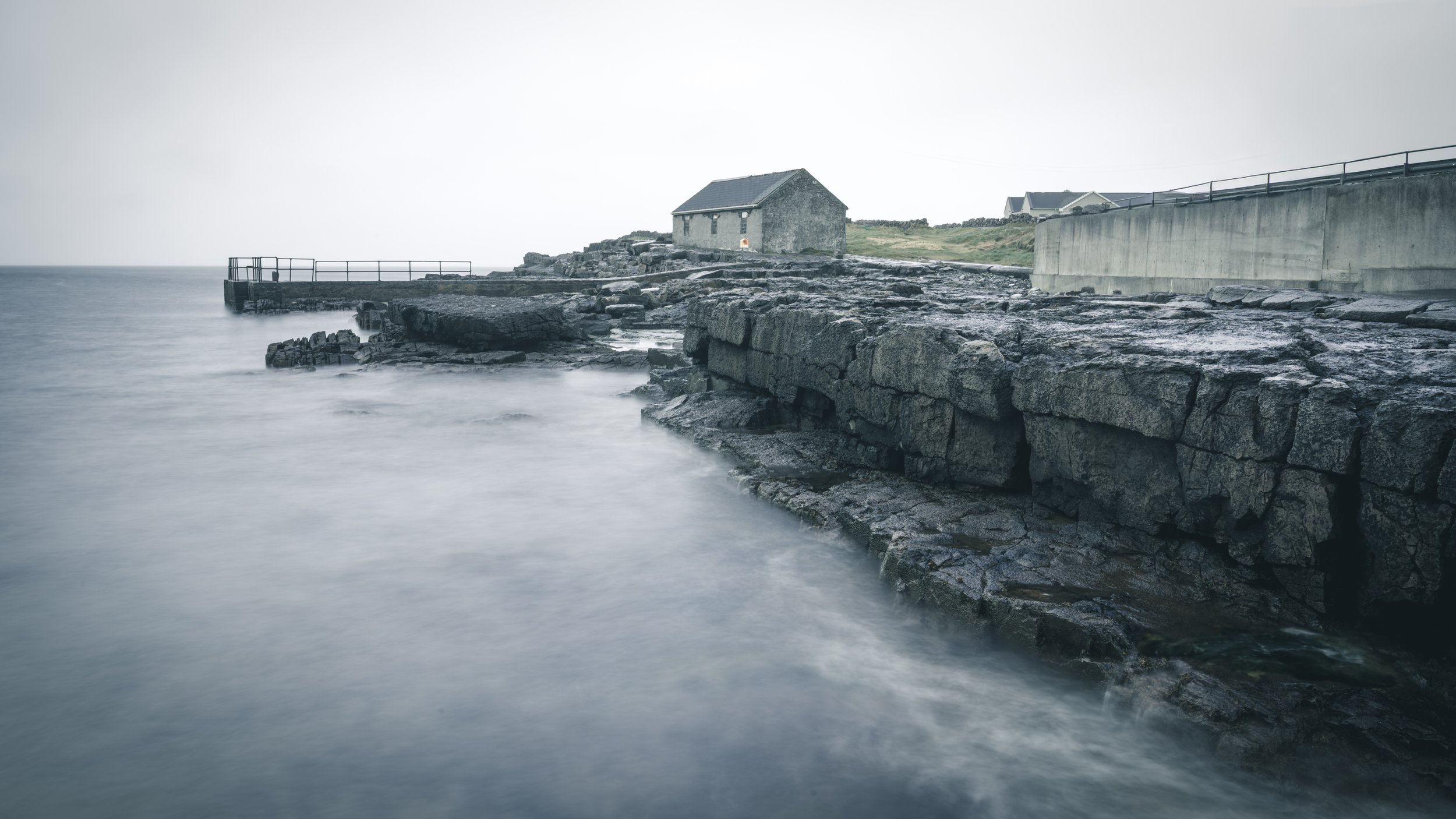
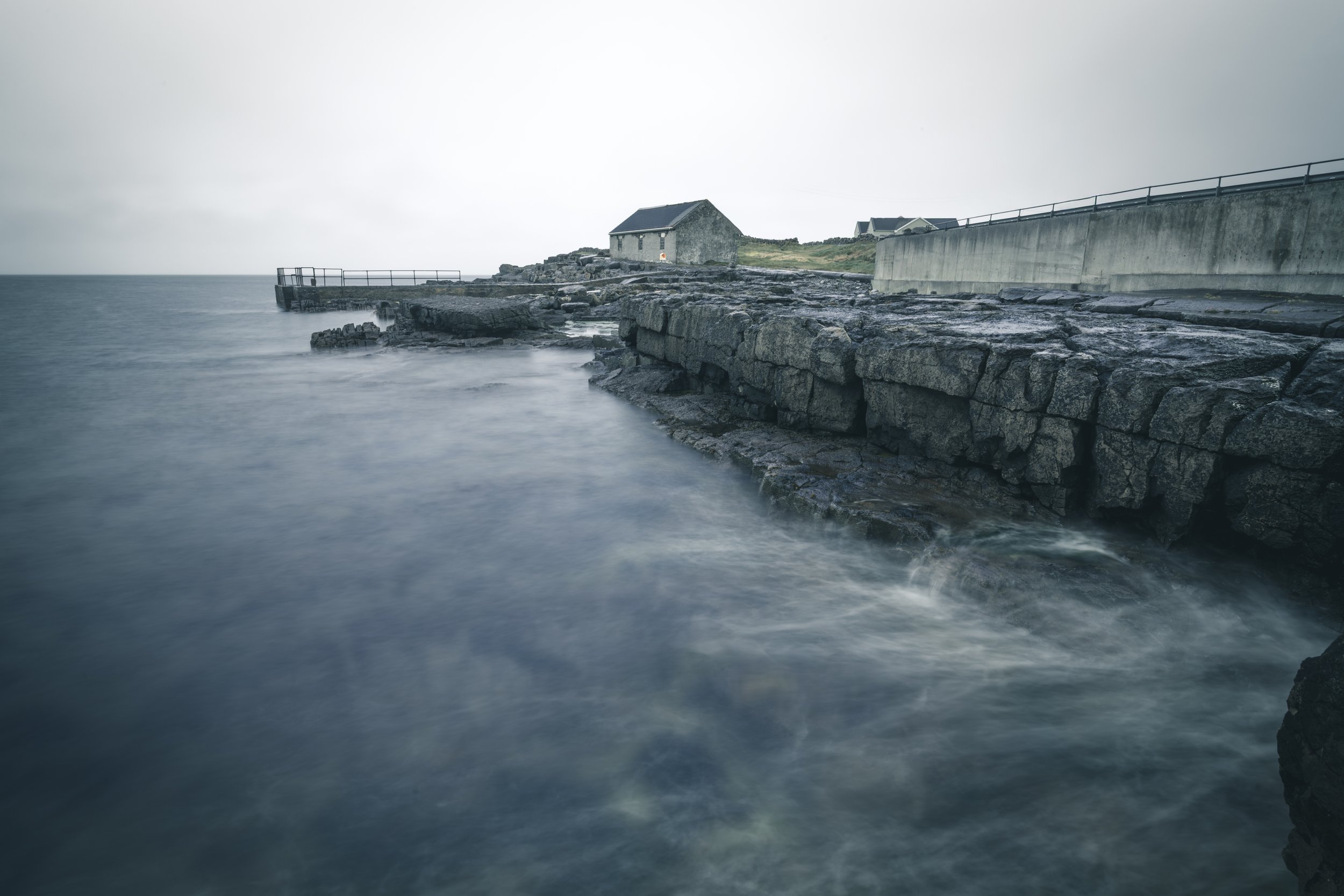
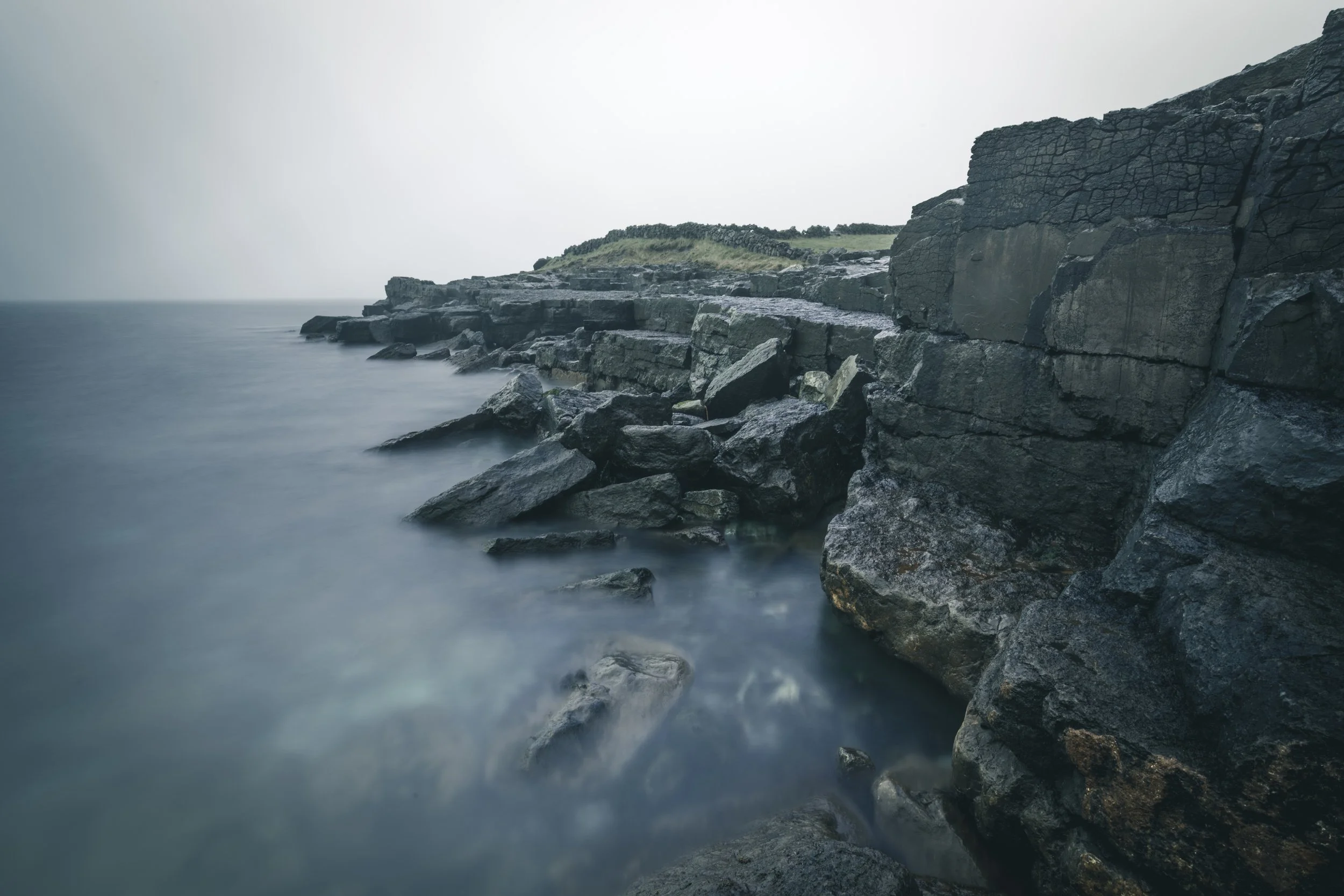
My first composition included the building, the pier behind it and the rocks leading through the foreground. The sea itself was relatively calm compared to Atlantic-facing locations, so I decided to use a long exposure to smooth out the smaller water movement rather than trying to freeze it.
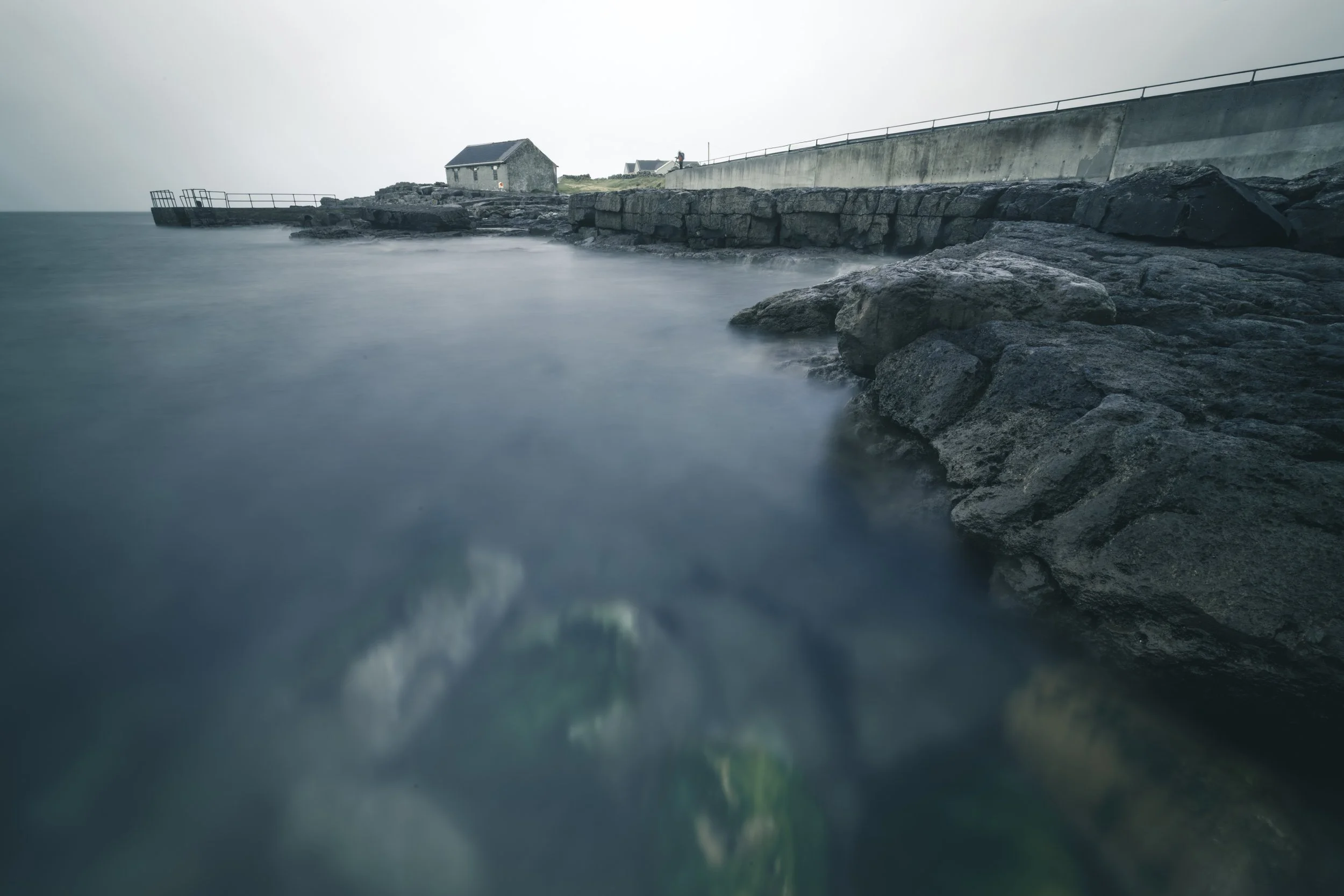
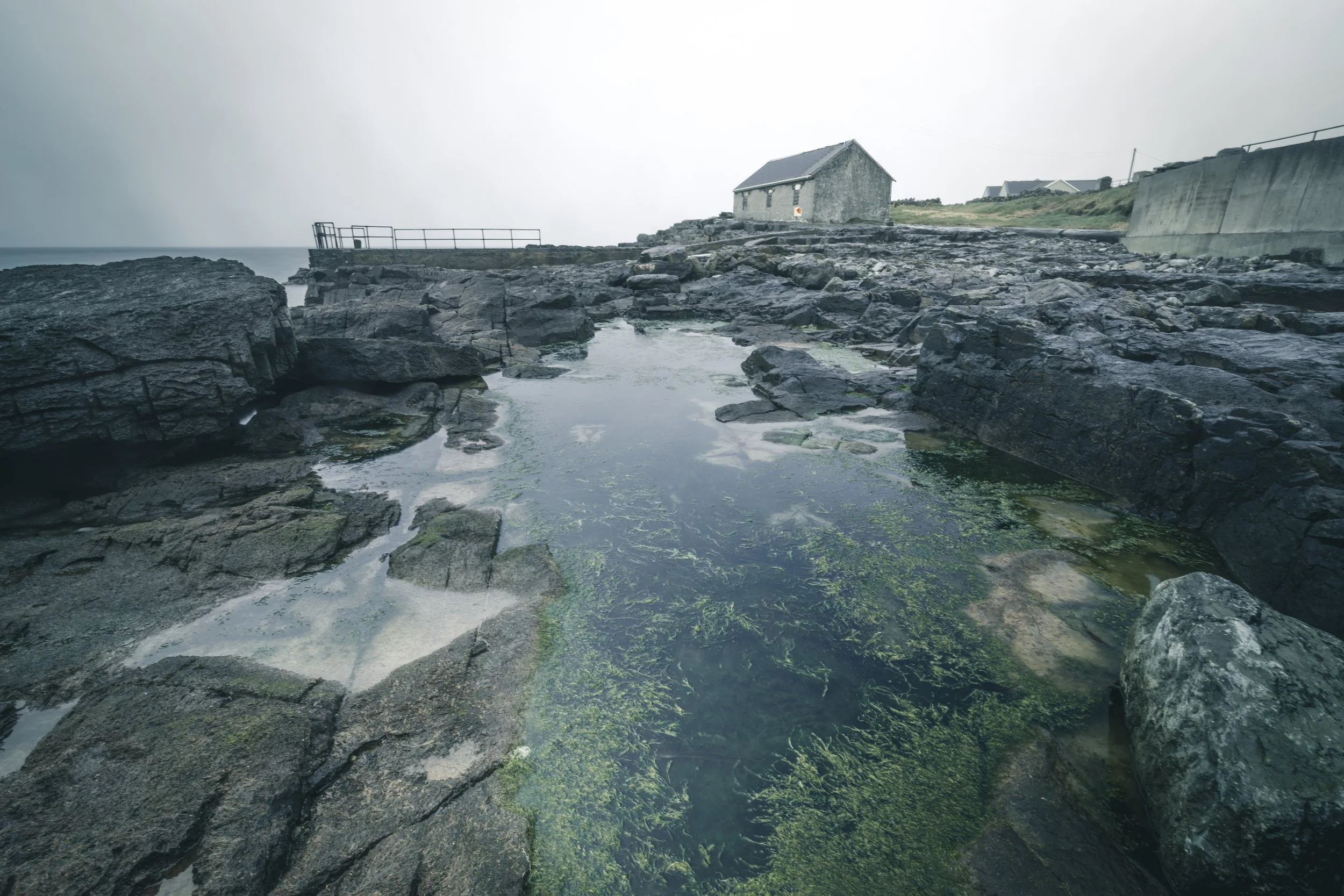
The shot worked reasonably well, but I felt it needed something more. A few feet away I spotted another rock position that revealed patches of green seaweed beneath the water. In conditions that were otherwise completely grey, that small amount of colour made a huge difference to the frame.
That second image immediately felt stronger.
By now, the rain had intensified again and everything was soaked. Waterproof jackets were doing their best but there is only so much they can handle after hours in conditions like that. Even so, I kept moving further along the shoreline and eventually found another composition using a rock pool filled with seaweed and textured rocks, again with the same building sitting deeper in the background.
One thing I remember clearly from filming the video was talking through the edit ideas while standing there in the rain. Part of me wanted to convert the images into black and white because the scene itself was almost monochrome already. Another part of me wanted to keep the subtle greens visible because they added contrast against the muted conditions. In the end I settled somewhere in the middle with a softer muted edit that matched how the morning actually felt.
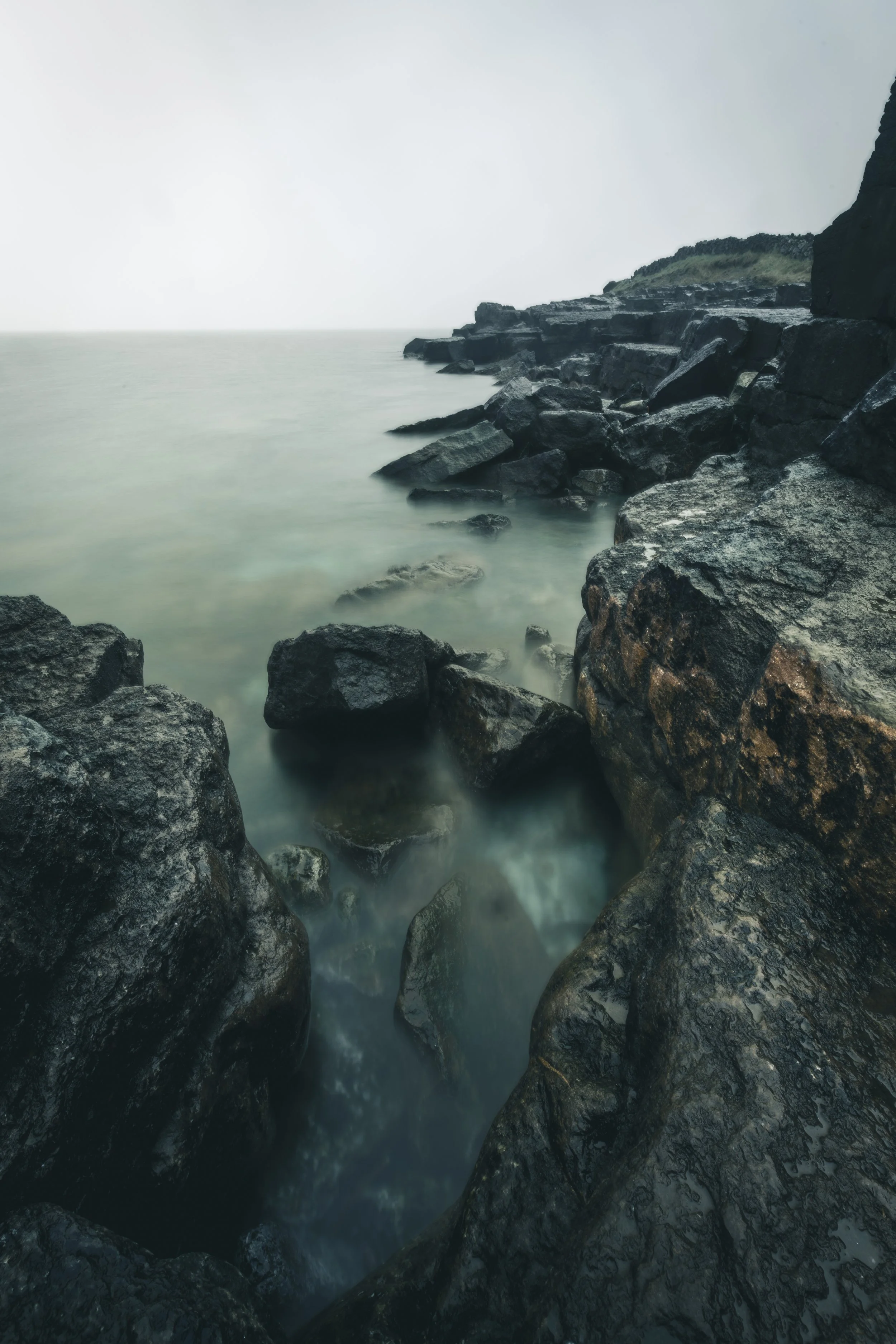
Meanwhile Diarmuid and Patrick had started considering retreat back to the warmth of the Pajero, which honestly was fair enough. The weather was difficult and there comes a point where you stop feeling dry no matter what you are wearing. But I wanted to keep pushing a little longer because I had spotted another composition from the previous day involving the rocks farther to the right-hand side of the location.
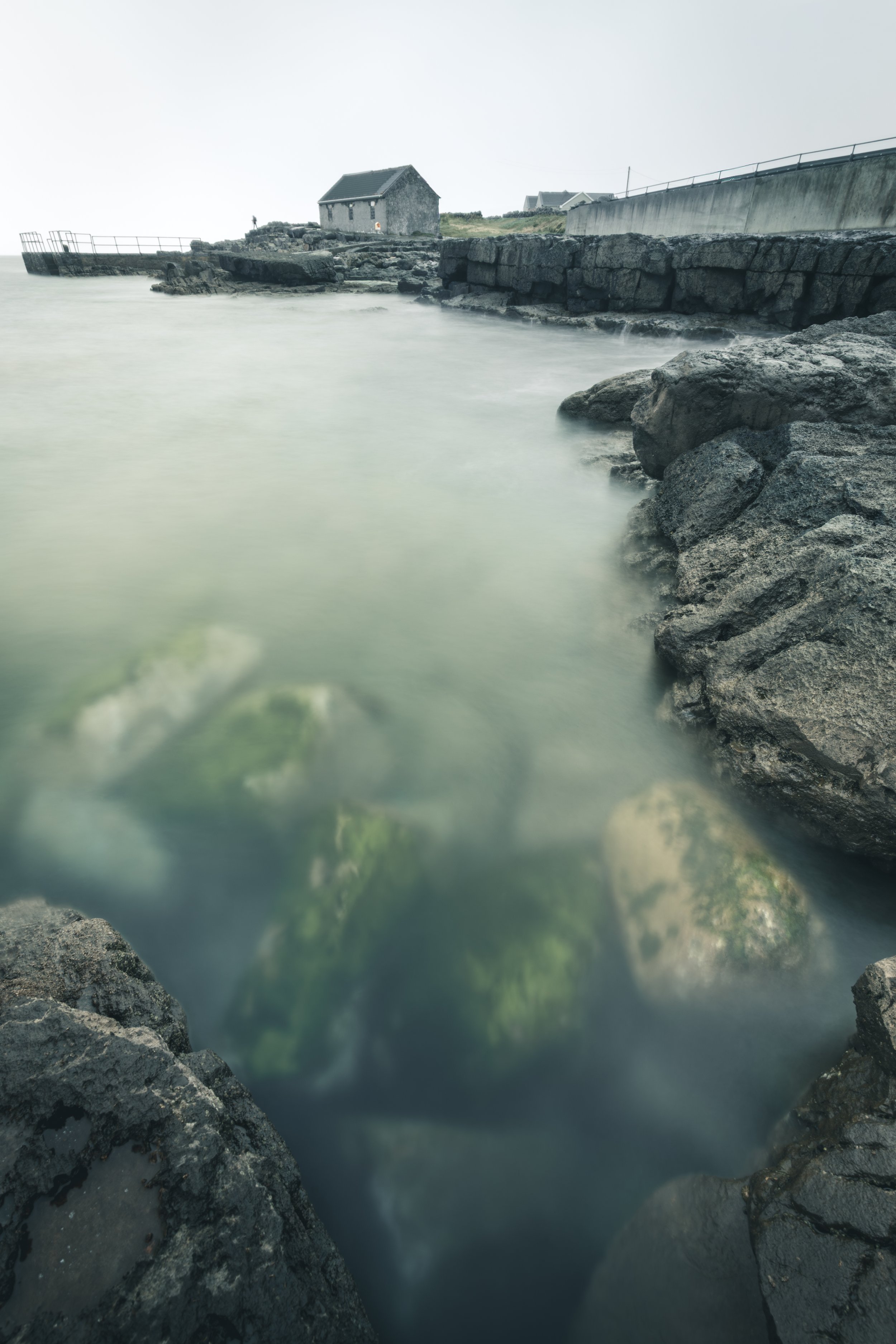
The house was no longer the subject there. Instead it became more about the shapes and textures within the rocks themselves. I switched to portrait orientation because the empty space on the left side of the frame was adding nothing, while the foreground detail below me deserved more space within the composition.
Eventually though, the weather kind of won.
Everything I owned was wet. Gloves, jackets, camera bags and probably half the gear inside them as well. When I got back to the Pajero, Diarmuid and Patrick were already inside drying gear and warming up.
But despite how uncomfortable the conditions were, I felt genuinely happy.
The photographs existed because we went out despite the forecast instead of waiting for easier conditions. Days like this remind me that landscape photography is not always about dramatic sunsets or perfect light. Sometimes the atmosphere itself becomes the subject. Sometimes rain, mist and difficult weather create far more mood than clear skies ever could.
And once again, the motto survived another test.
Bad conditions do not exist in landscape photography. There is always a shot.