I Didn’t Expect To Photograph This on the Aran Islands
There are days in landscape photography where everything goes to plan, and then there are days where the conditions force you to adapt constantly. My latest outing on Inis Mór was very much the second type, and in many ways, those are often the most productive days you can have with a camera.
Our previous day on the island had largely been a washout. Heavy rain limited what we could realistically photograph, and after eventually calling it a day, we spent the evening in the pub before returning to the hotel. By the following morning, the rain was still hanging around, so instead of rushing out before sunrise, we took the opportunity to slow things down slightly and wait for the weather to improve.
That decision alone was an important reminder that not every photography day needs to begin at an unreasonable hour. Sometimes the conditions simply are not there, and forcing a shoot can often lead to frustration rather than strong images. Landscape photography rewards patience far more often than urgency.
Once the rain finally eased late in the morning, we headed out after breakfast towards the Atlantic-facing side of the island. I had been looking forward to this part of the trip from the beginning. The western cliffs of Inis Mór are dramatic, exposed and shaped entirely by the Atlantic Ocean. Even before arriving, I knew there was potential there.
One advantage we had during the trip was access to a 4x4 vehicle, which allowed us to reach areas that would normally involve a much longer walk. On rough island tracks that made a significant difference, particularly when carrying camera gear in constantly changing weather conditions.
As we arrived near the cliffs, the rain returned almost immediately. Rather than rushing out and soaking both ourselves and the equipment again, we waited it out for a few minutes inside the vehicle. Five minutes later, the rain passed through, and we began the short hike towards the coastline.
The landscape itself immediately stood out to me. Much of Inis Mór resembles the limestone terrain found in The Burren, with exposed rock etched and fractured by thousands of years of weathering. The straight lines and geometric patterns visible across the cliffs are natural features caused by joints and fractures in the limestone, which gradually widen over time through erosion and rainwater action. The formations almost appear man-made from a distance, but they are entirely natural.
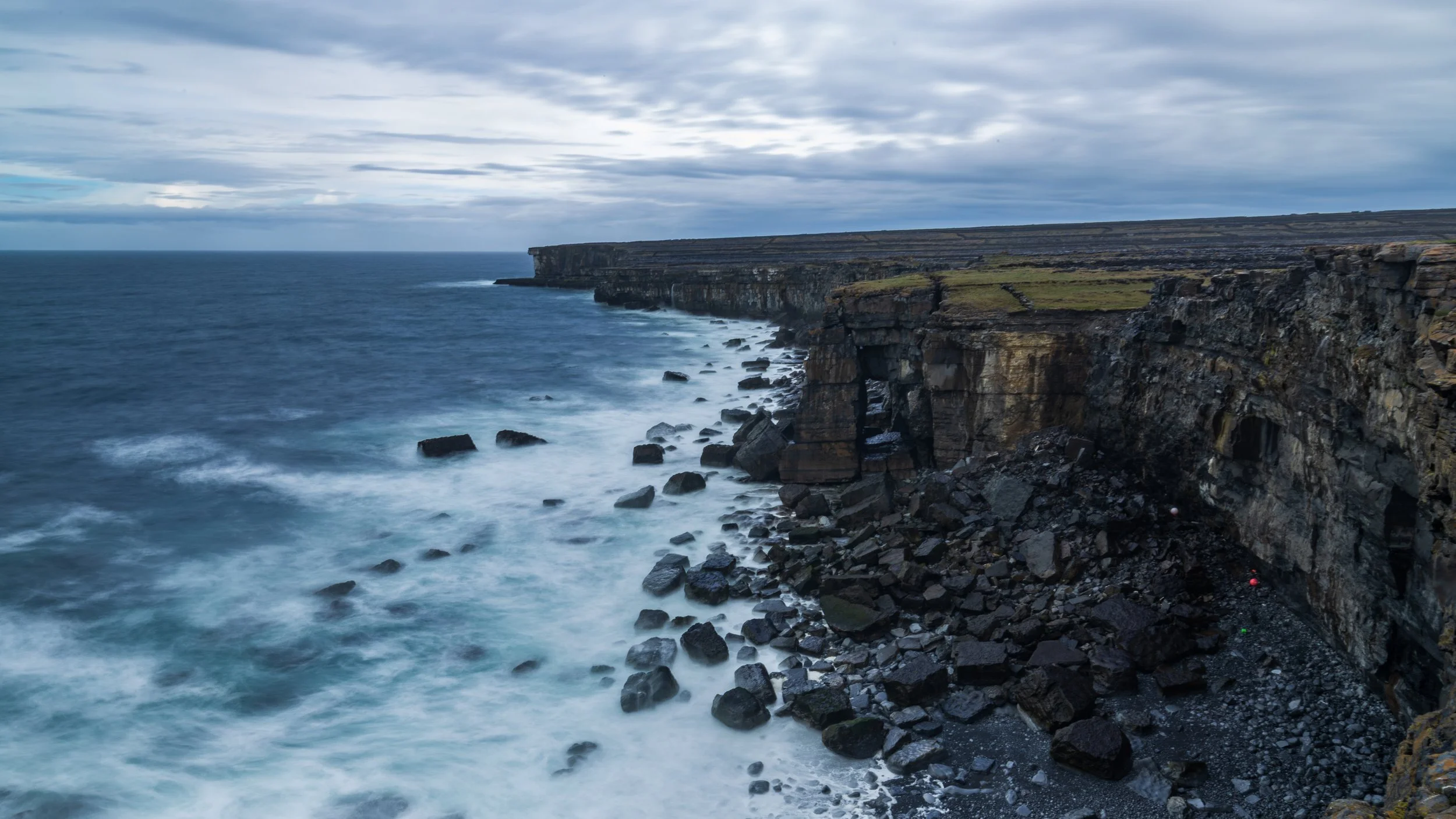
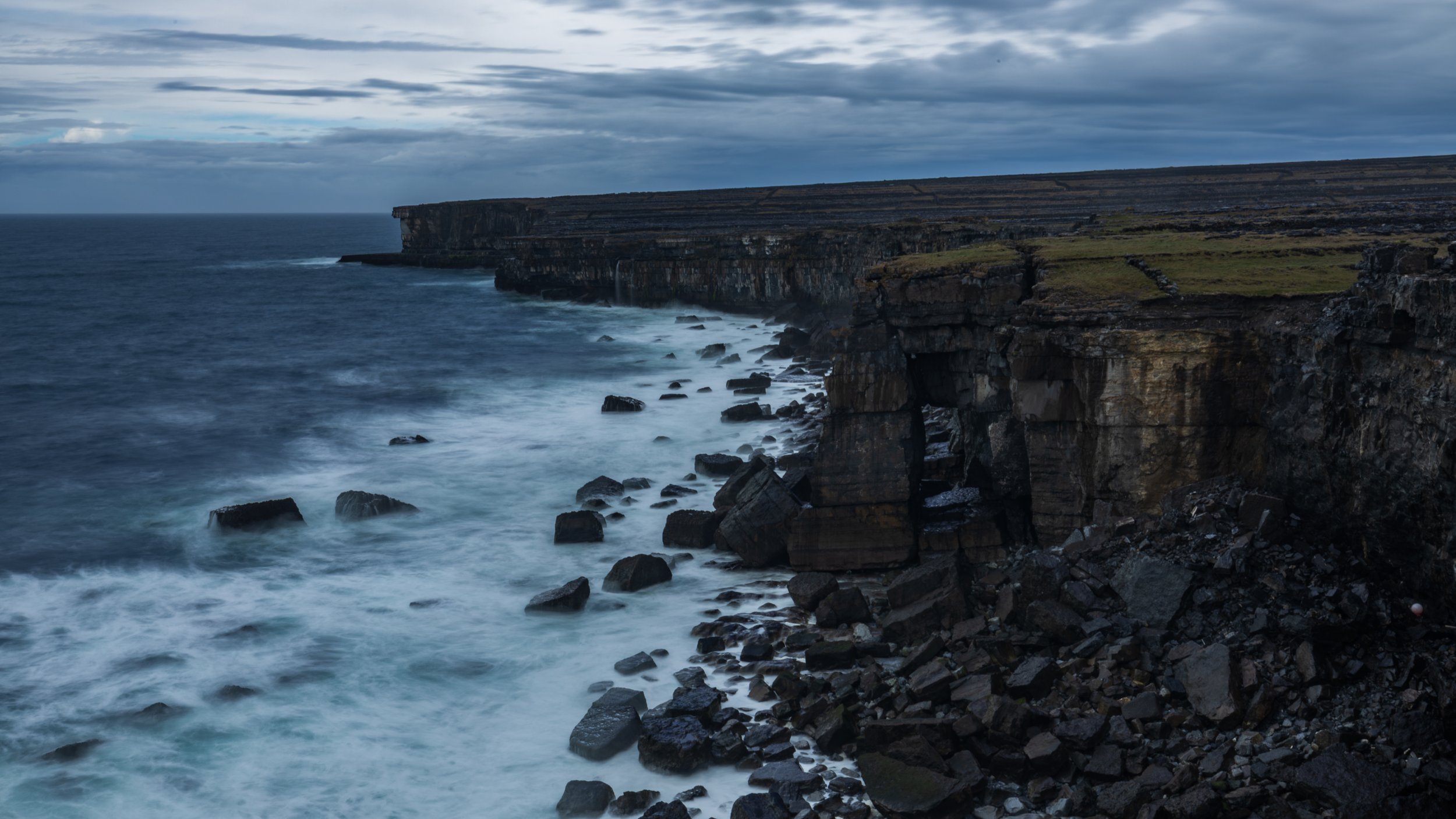
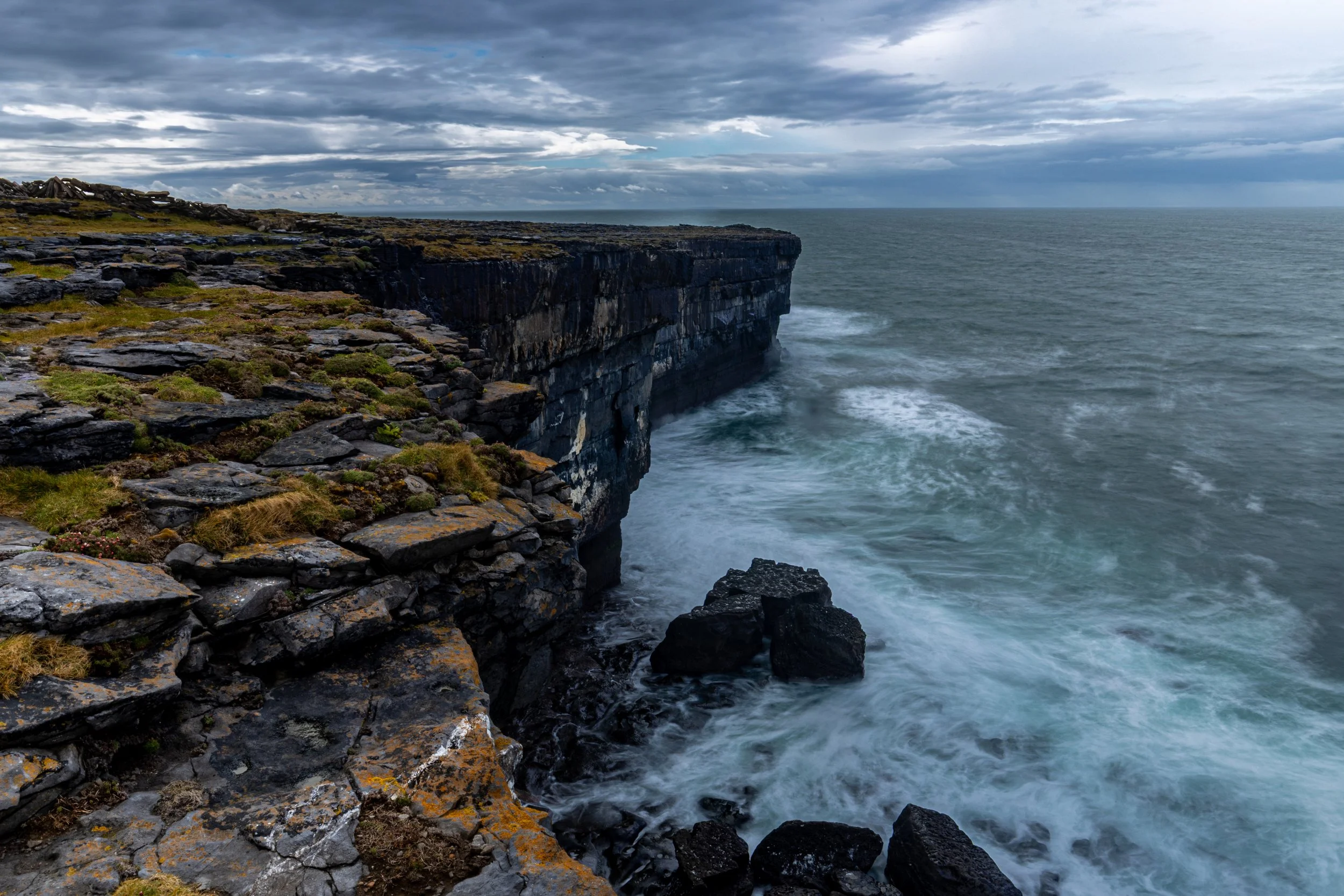
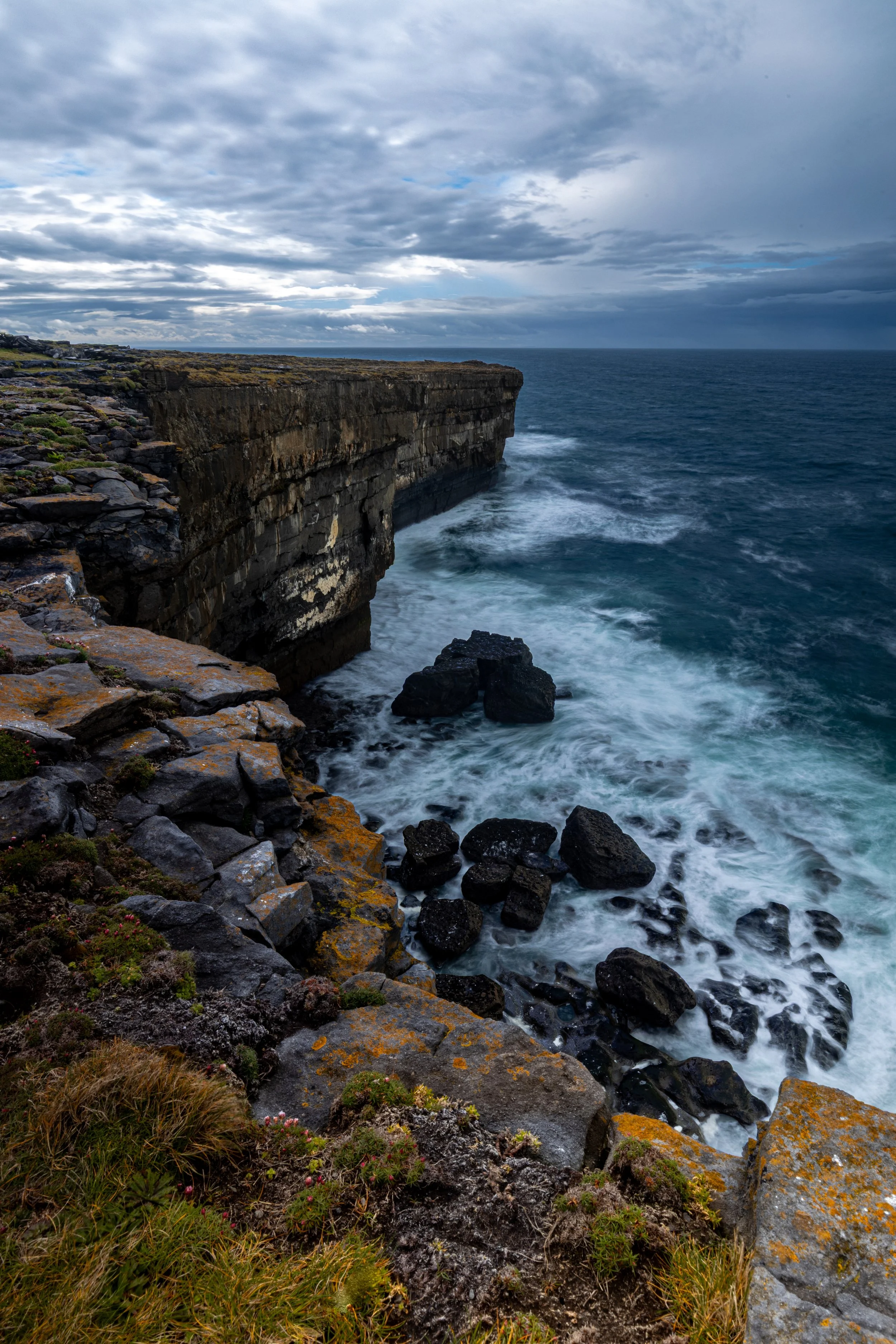
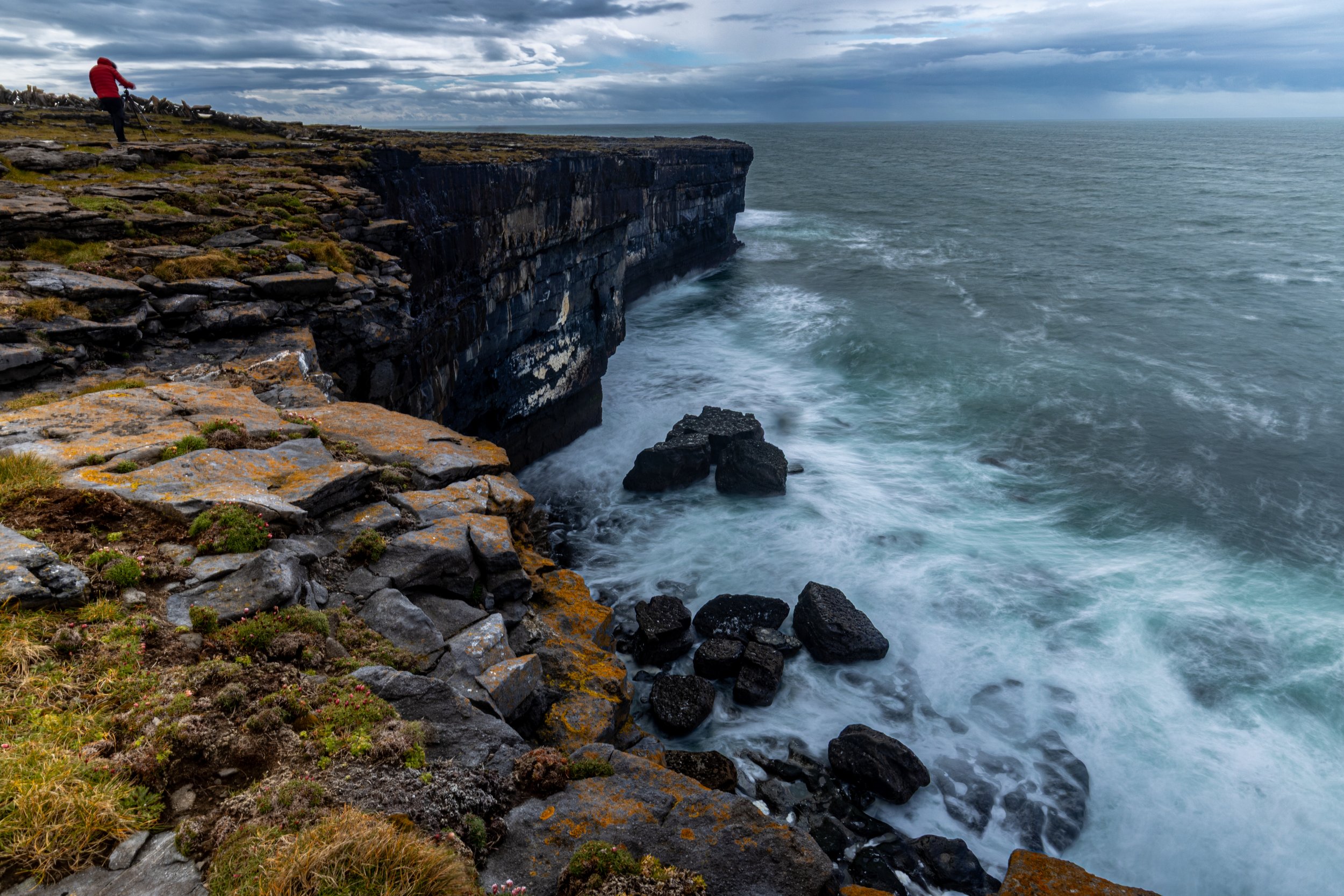
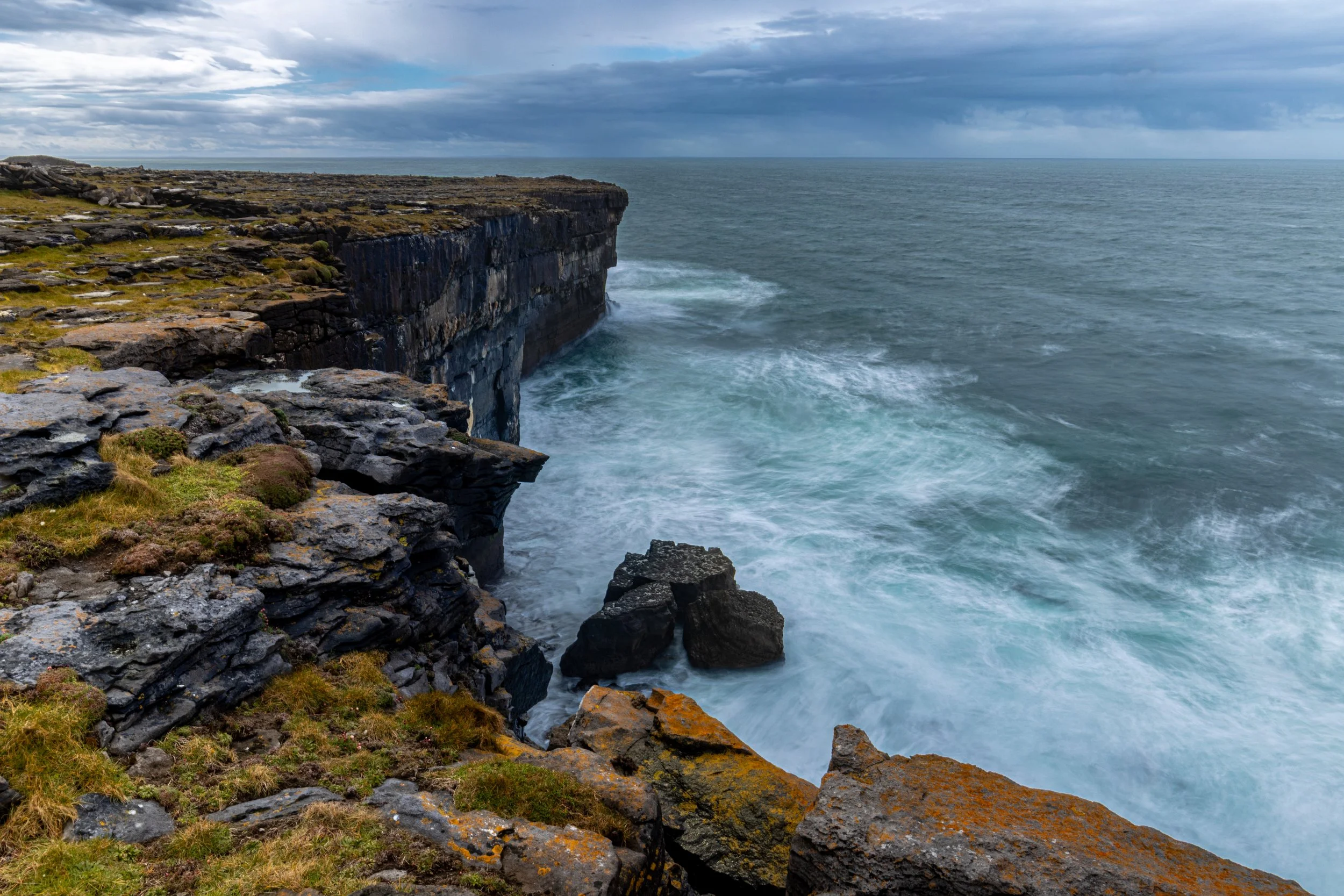
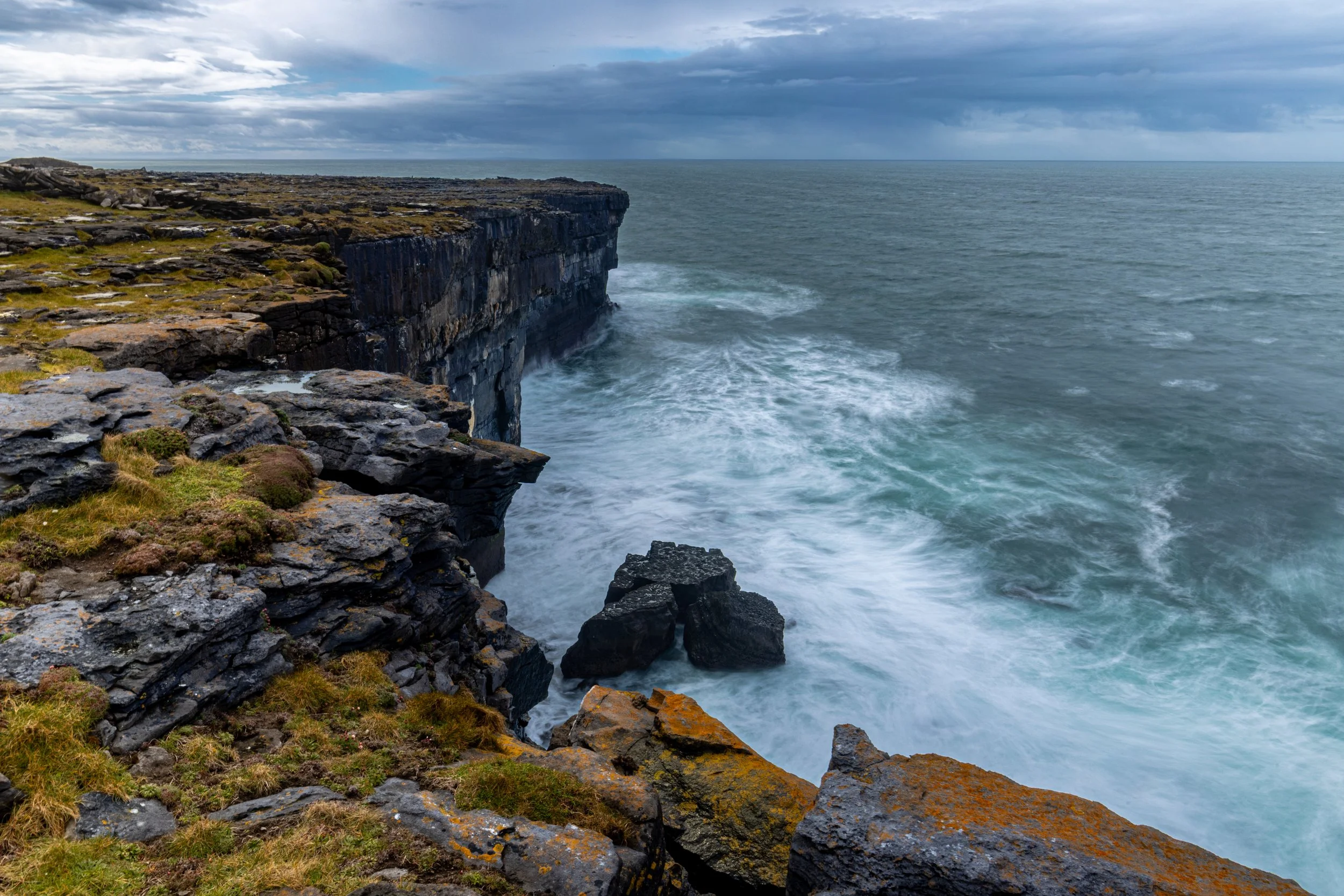
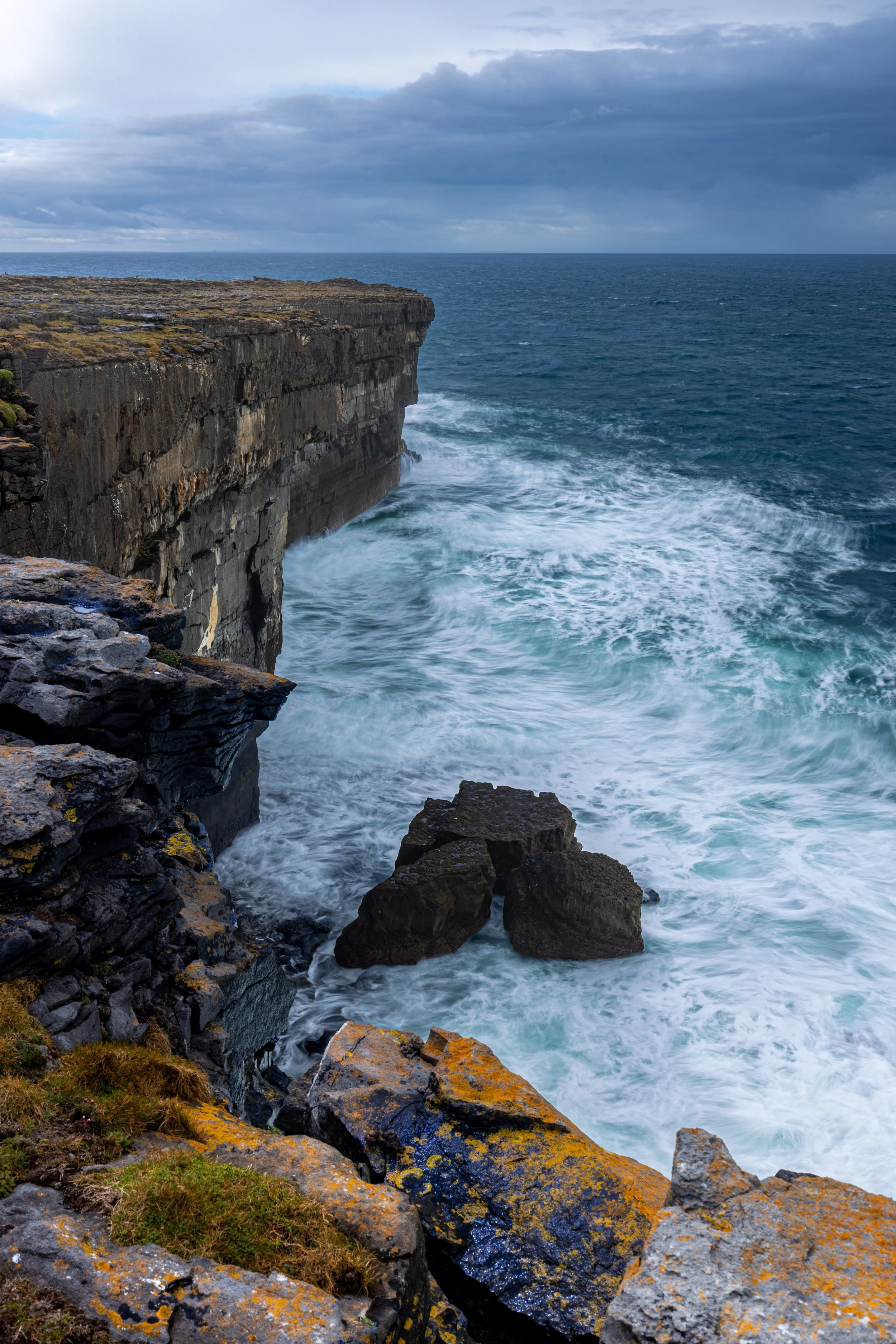
As we reached the cliff edge, the scale of the location became obvious. The cliffs dropped sharply into the Atlantic below, while heavy swell rolled in against the rock faces beneath us. Looking across the coastline, I could see more of the cliffs stretching into the distance, while directly below, there was a sea arch hidden within the rock itself.
My first instinct was to work wide. At focal lengths where waves appear relatively small within the frame, long exposures can help simplify the scene and place greater emphasis on the shape and structure of the landscape itself. By slowing the shutter speed and smoothing the water movement, the cliffs became the dominant subject within the composition.
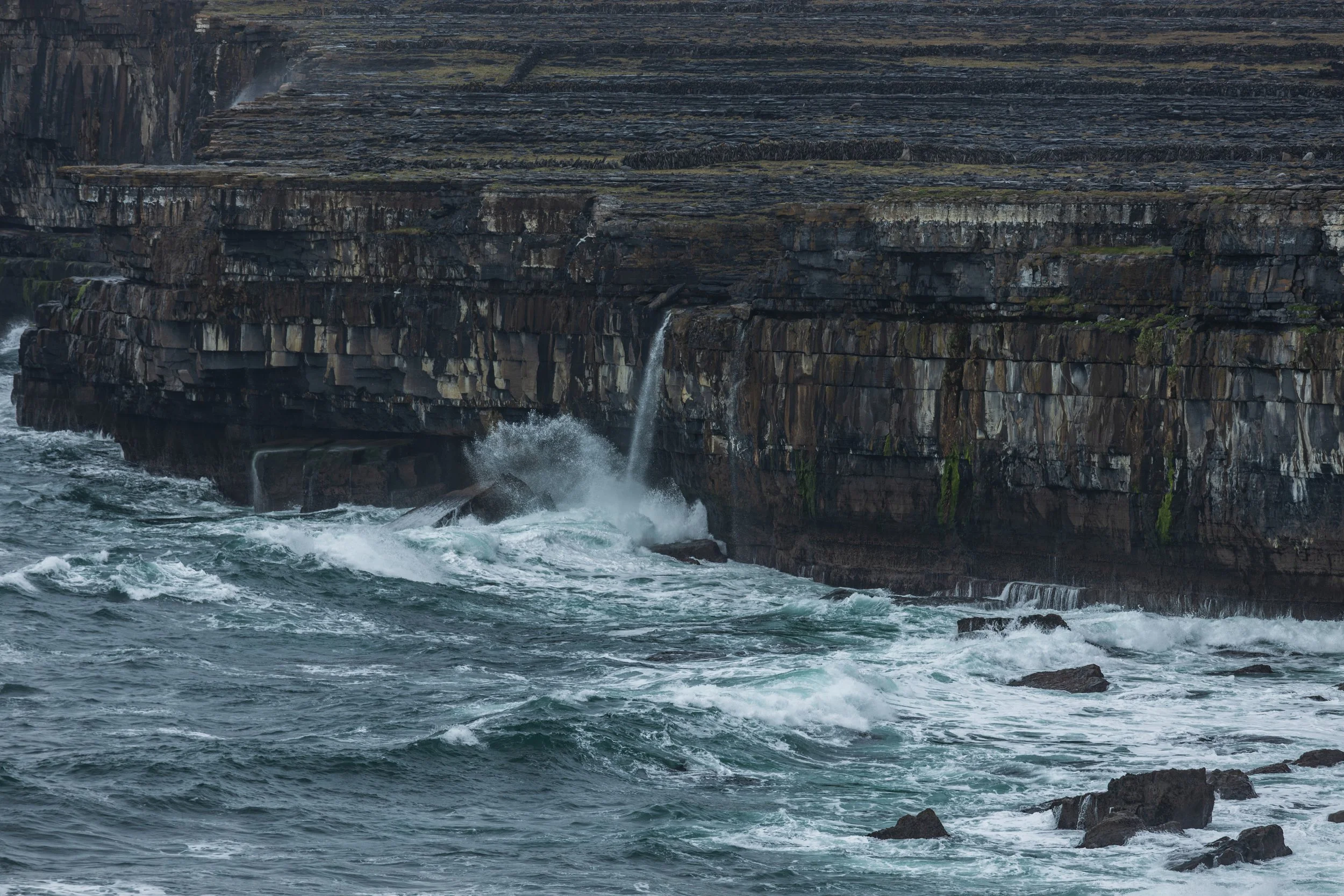
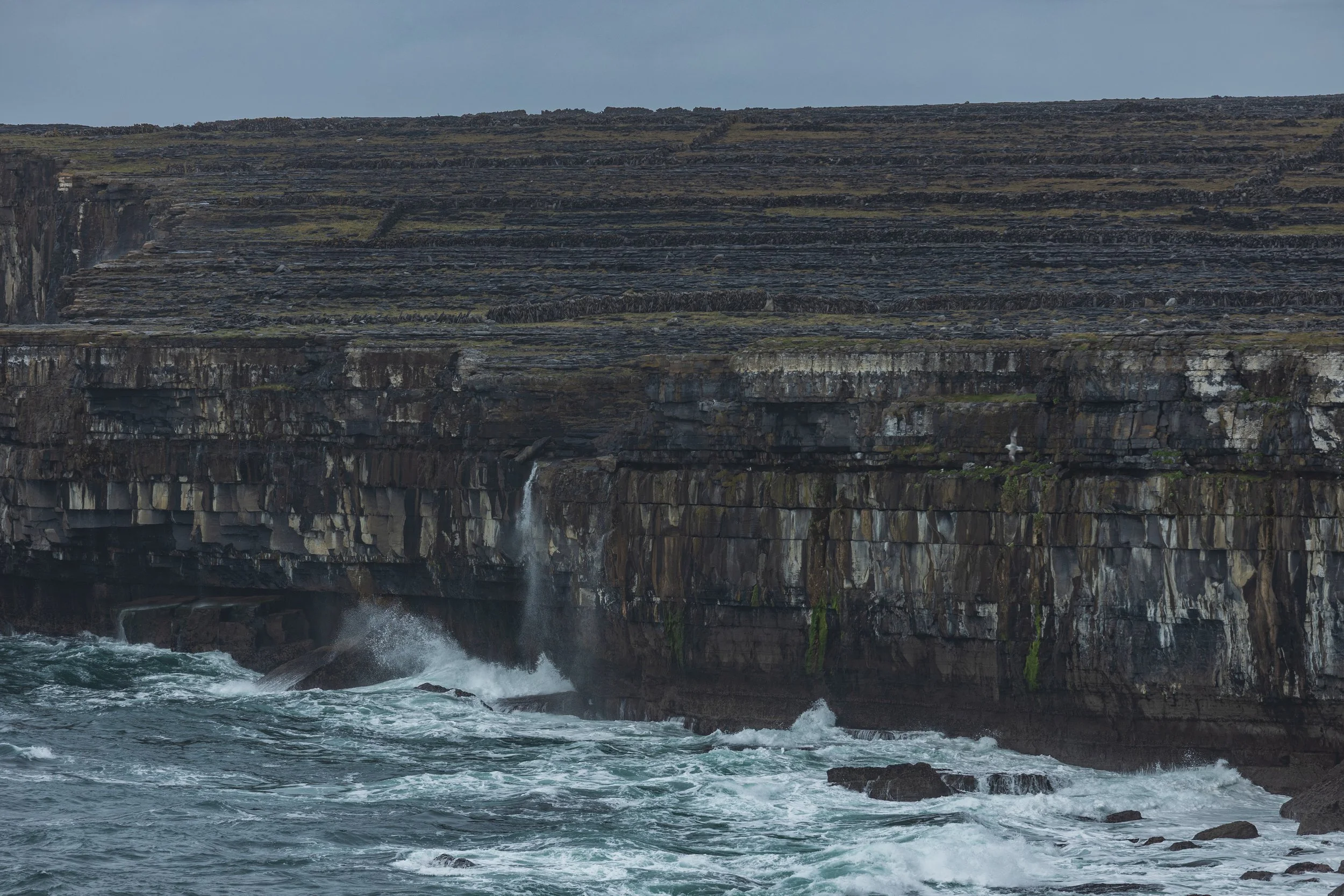
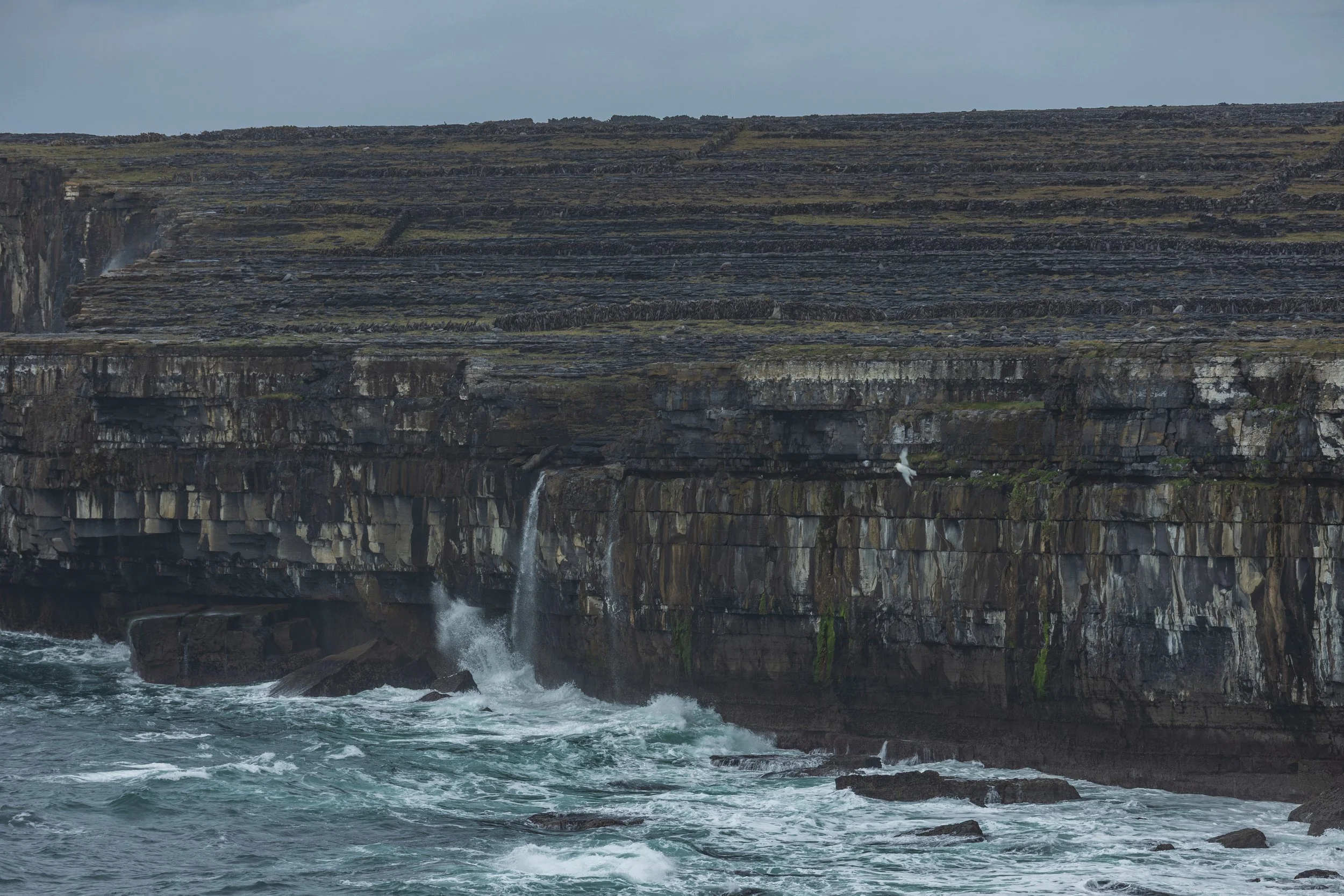
Further along the cliffs, I noticed a waterfall pouring over the edge towards the sea. Using a slightly longer focal length, I framed the waterfall against the cliff face and waited for a wave to break directly beneath it. Timing the image correctly created the impression that the waterfall itself was generating the water exploding below.
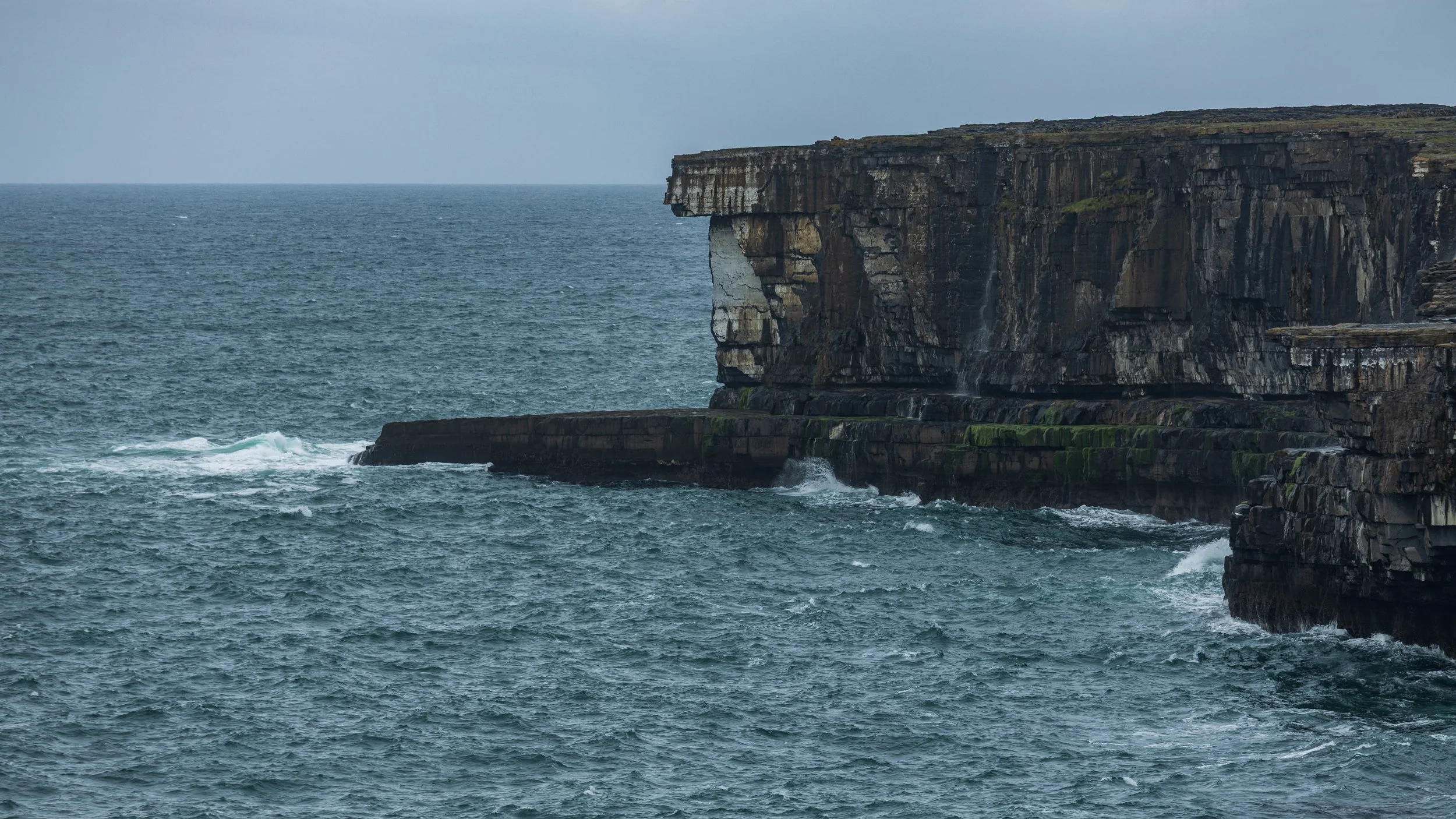
After working on that composition for a while, I then switched to isolate sections of the cliffs of Aran further along the coastline. Compressing the layers of limestone and focusing on the repeating shapes helped simplify the scene and highlight just how dramatic the scale of the location actually was.
What stood out most during the outing was how little physical movement was actually required to create multiple compositions. Within only a few feet of our original location, I was able to photograph entirely different scenes simply by changing focal lengths, adjusting shutter speeds and slightly repositioning the camera.
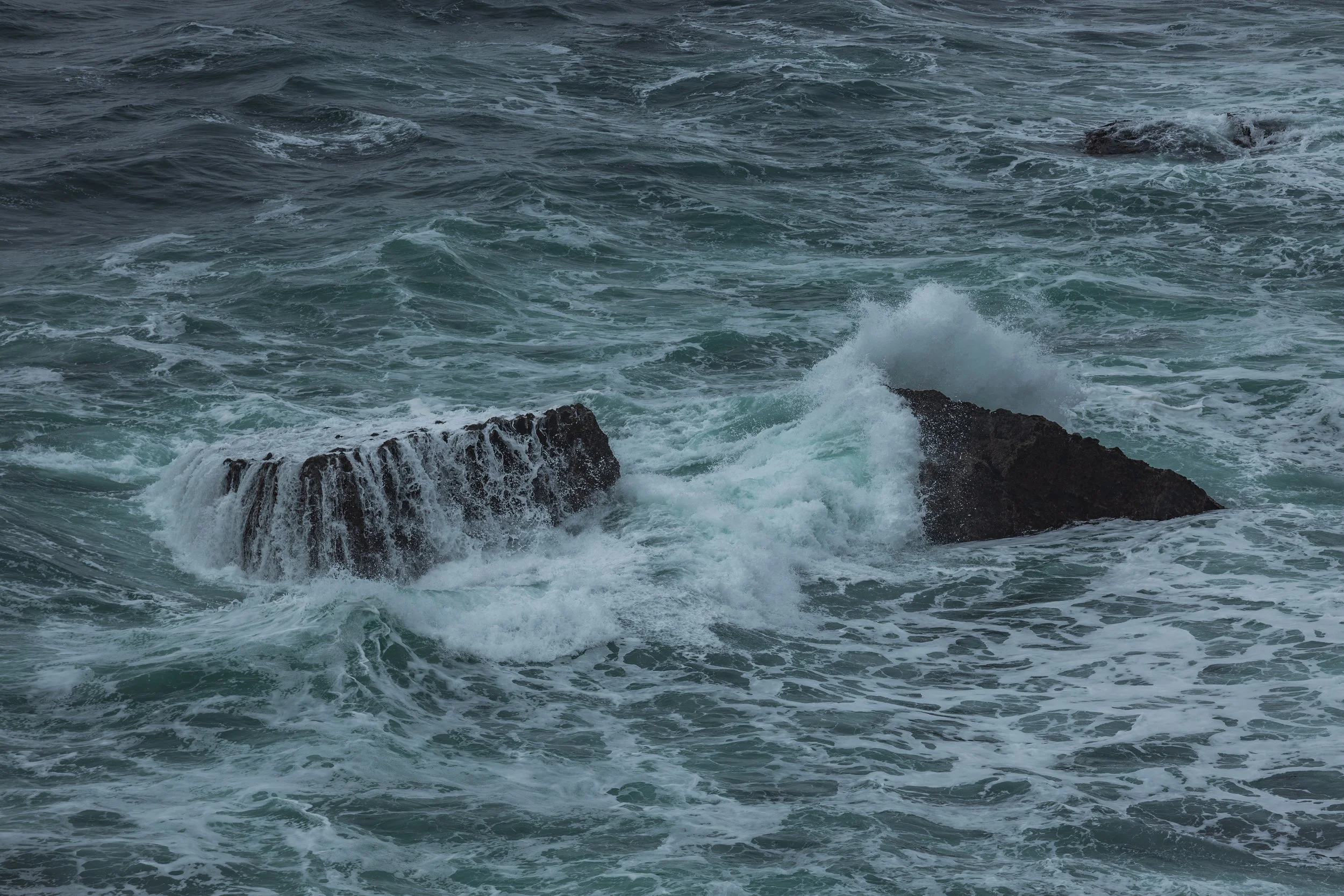
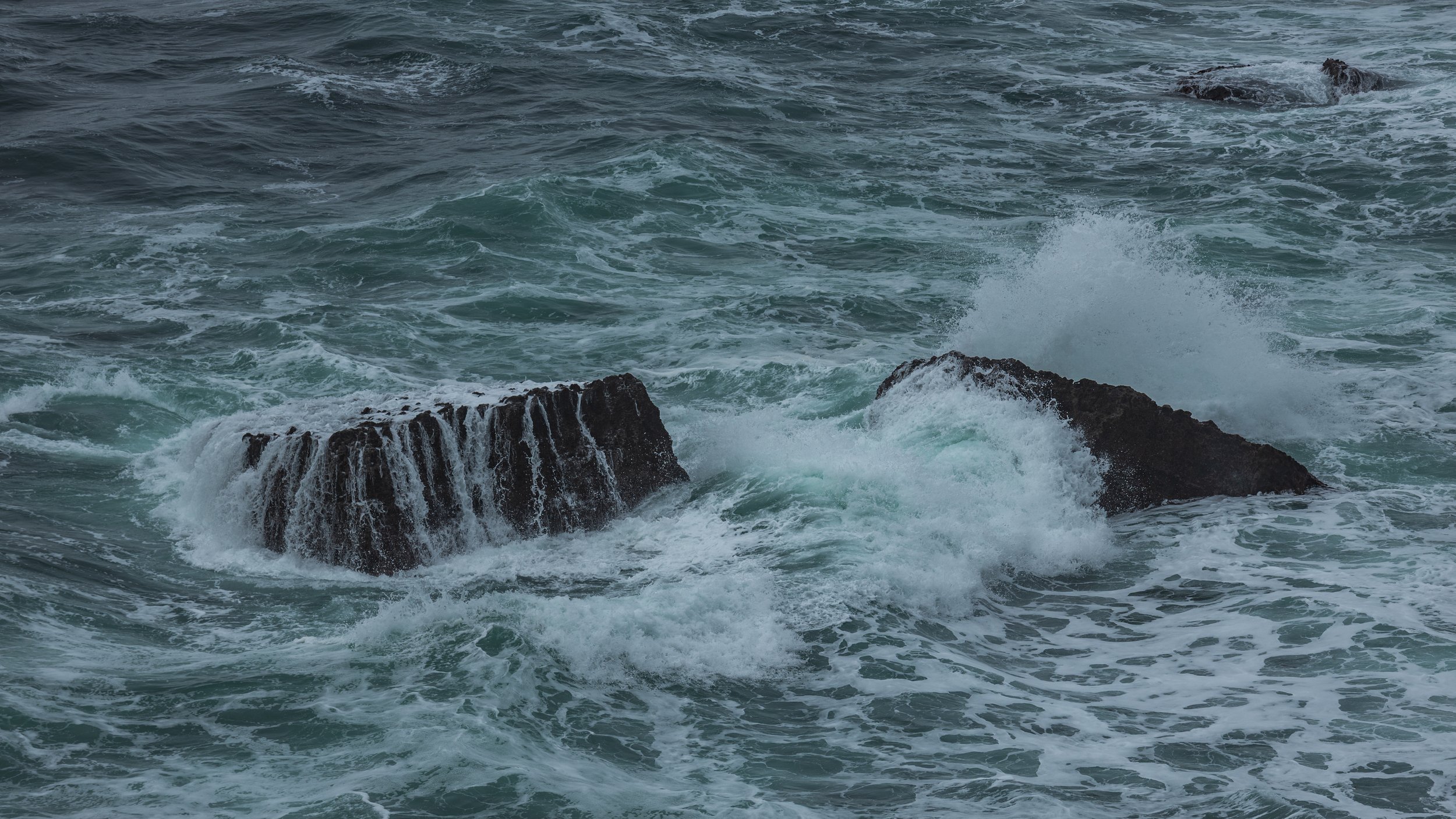
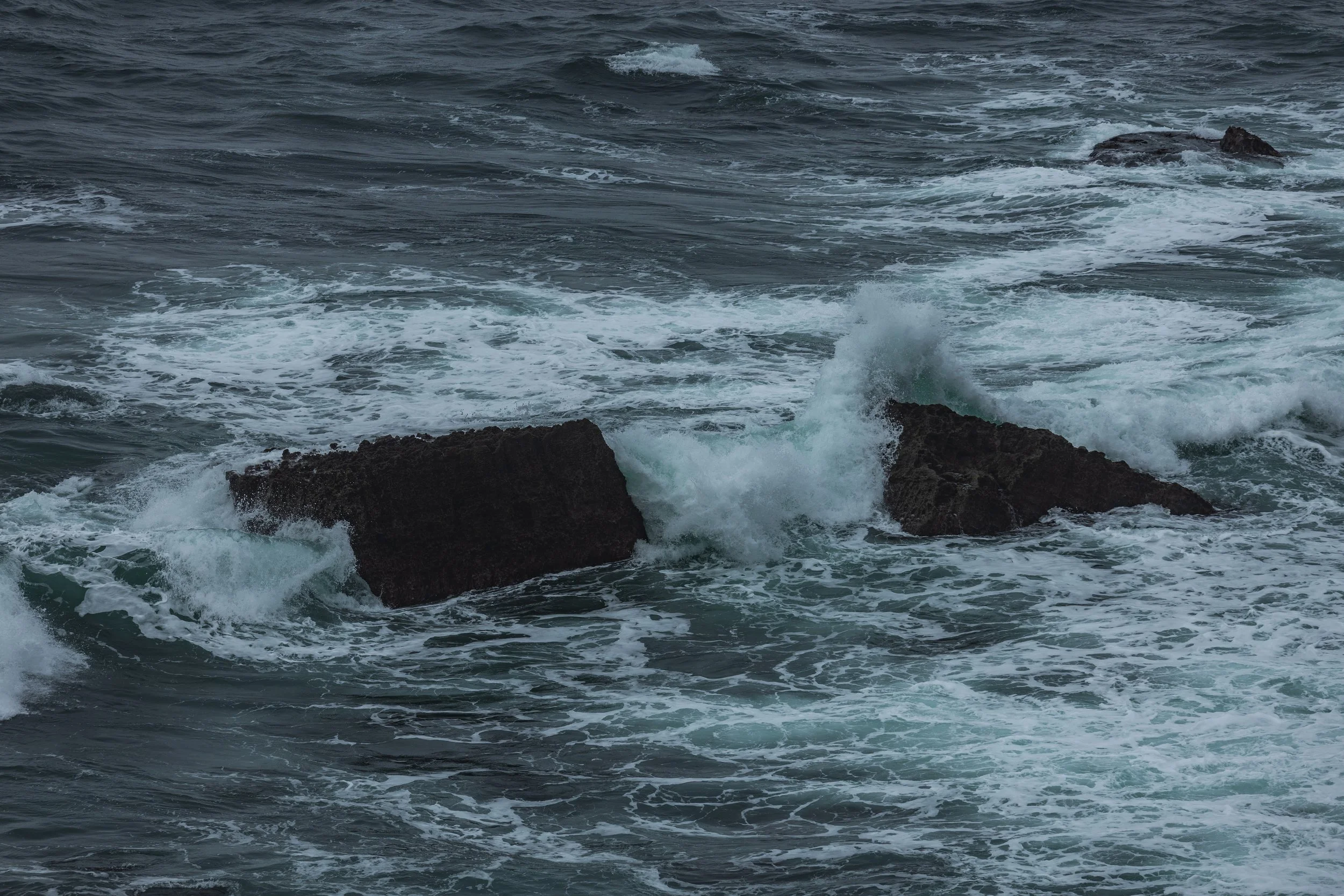
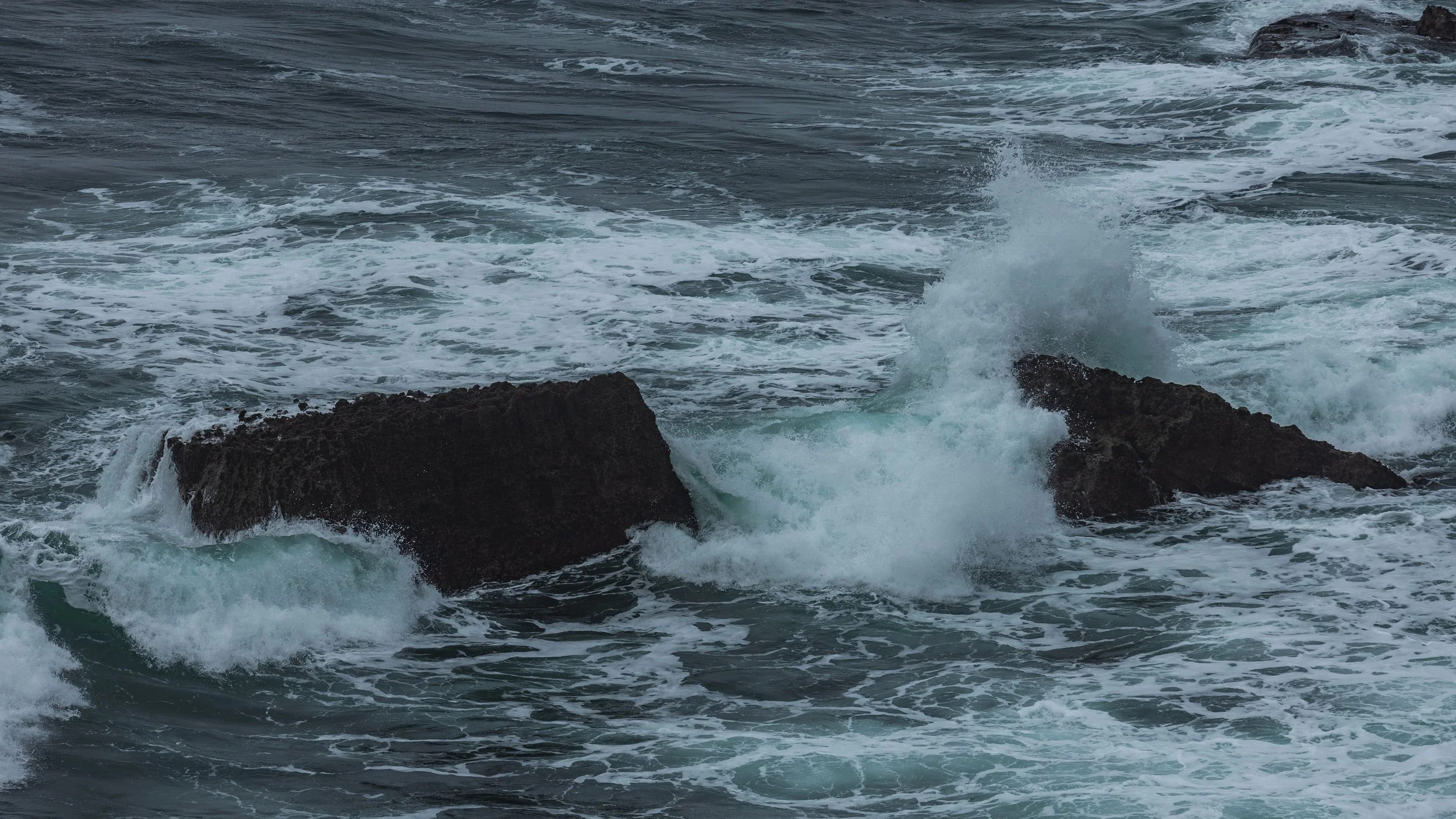
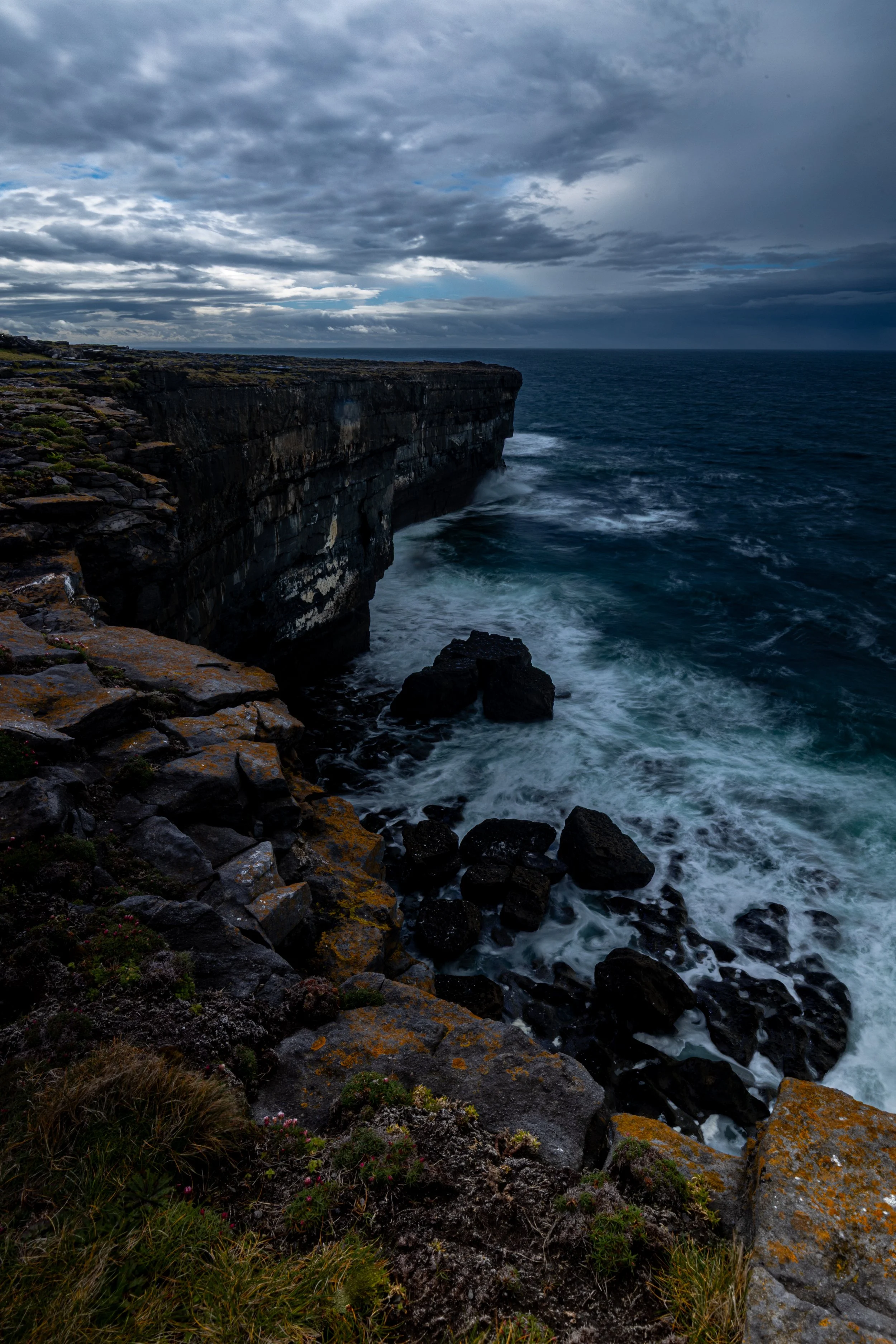
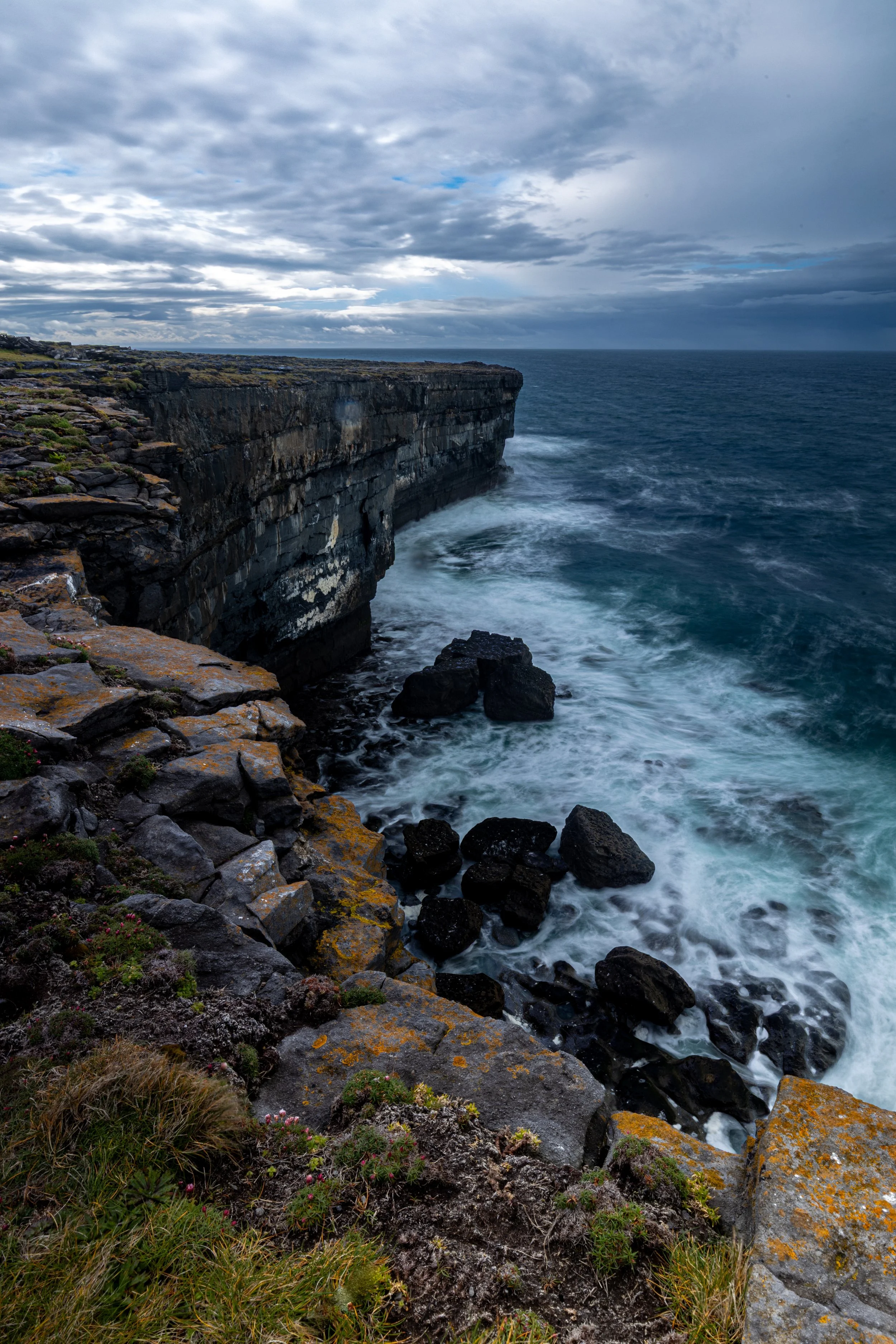
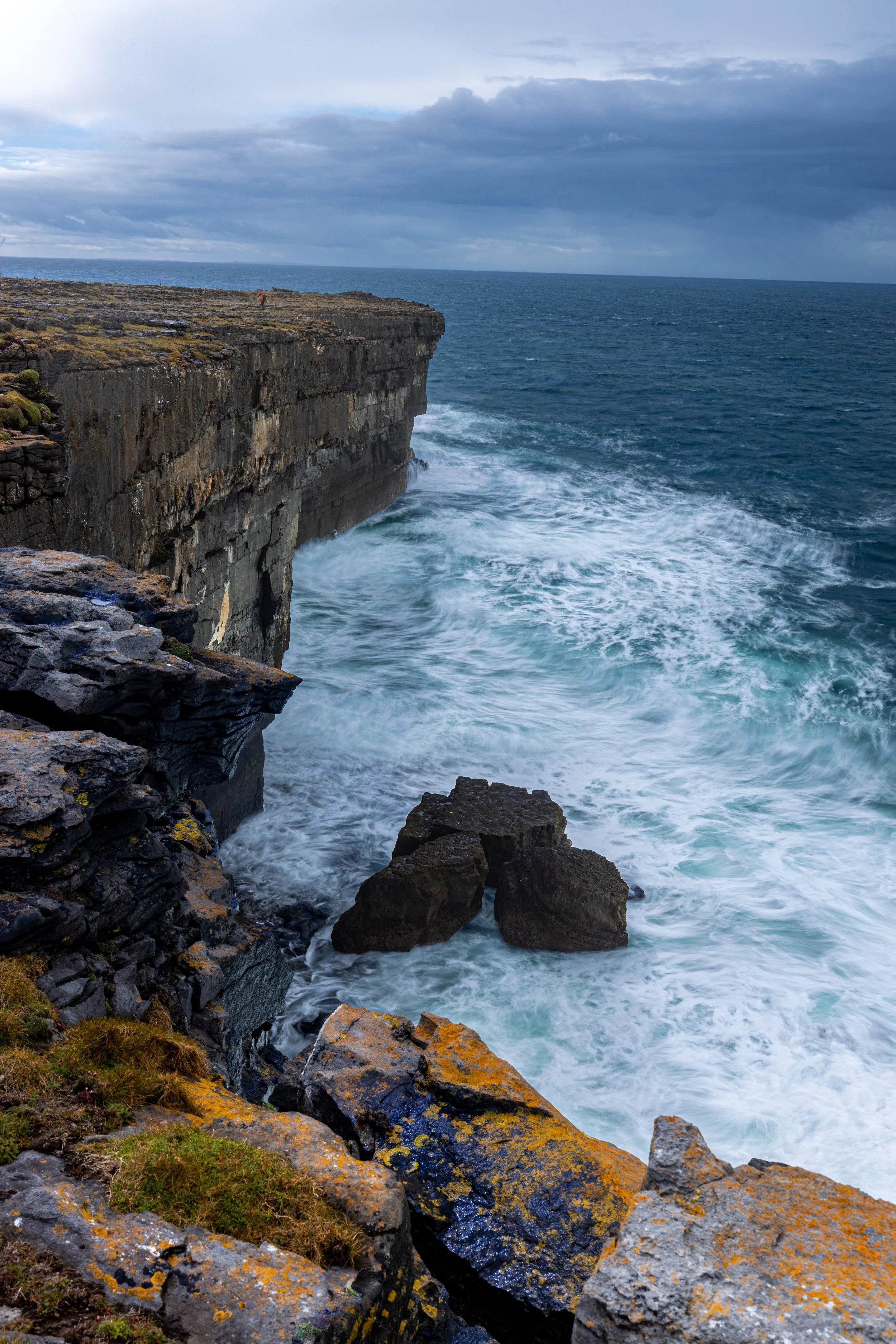
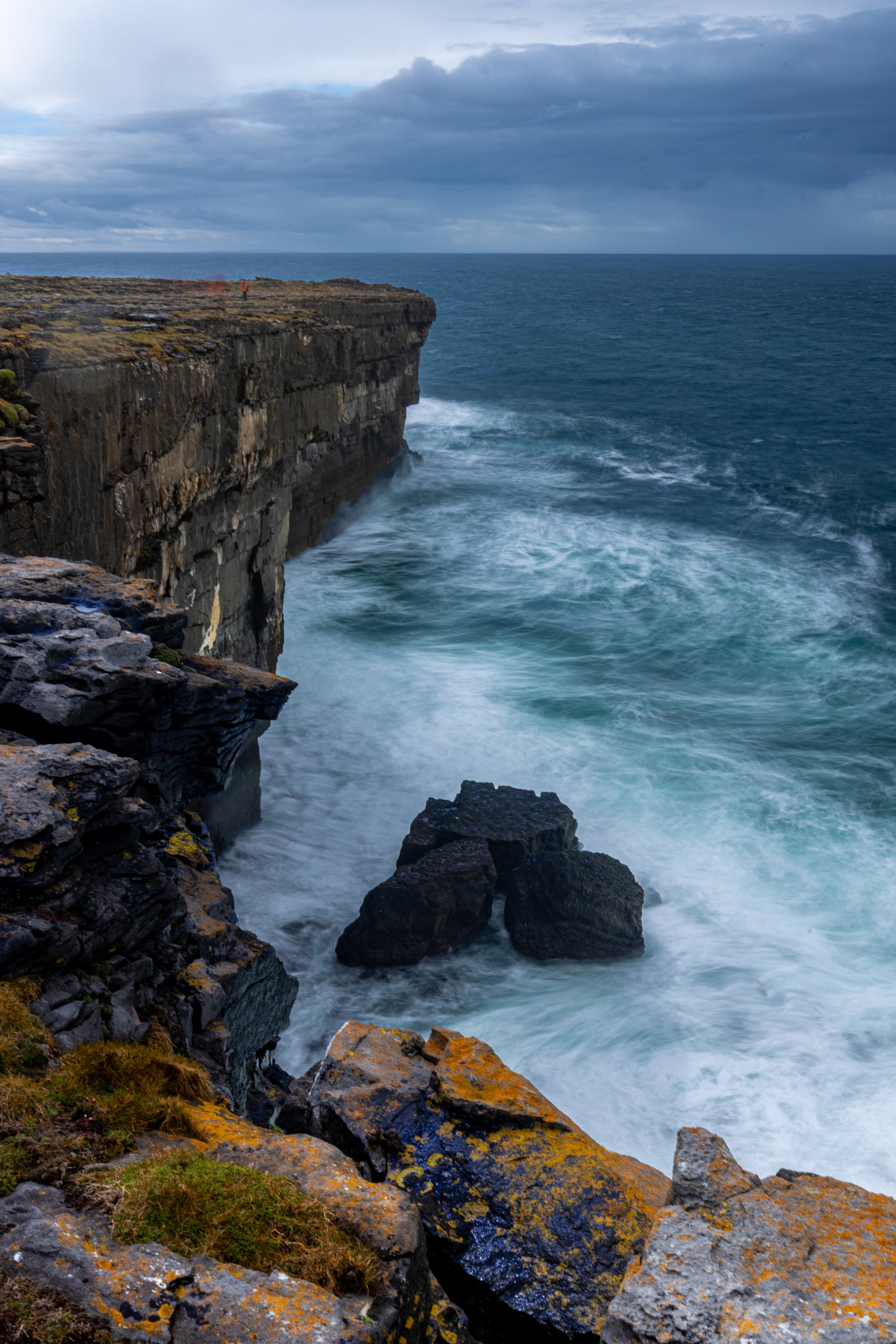
One composition involved three rocks sitting below on a lower shelf beneath the cliffs. I experimented with several approaches there, using both fast shutter speeds and longer exposures depending on how much movement I wanted within the water. Some frames included foreground detail beneath my feet, while others focused entirely on the rocks and the Atlantic behind them.
Eventually I noticed that the natural limestone patterns around me could be used to frame those rocks more effectively. The challenge was balancing negative space within the image. In landscape orientation there was too much empty ocean on one side of the frame, so I switched to portrait orientation to tighten the composition and reduce unused space.
That introduced another problem entirely. The Atlantic wind was extremely strong, and portrait orientation exposed more surface area of the camera body directly into the gusts. Even mounted on a sturdy tripod with stabilisation enabled, longer shutter speeds were becoming difficult to keep sharp. I had to reduce the exposure time and physically shield the camera from the wind to minimise movement.
These are the kinds of practical problems that landscape photographers deal with constantly, but are rarely discussed enough. Strong compositions are important, but technical adaptability matters equally as much in difficult conditions.
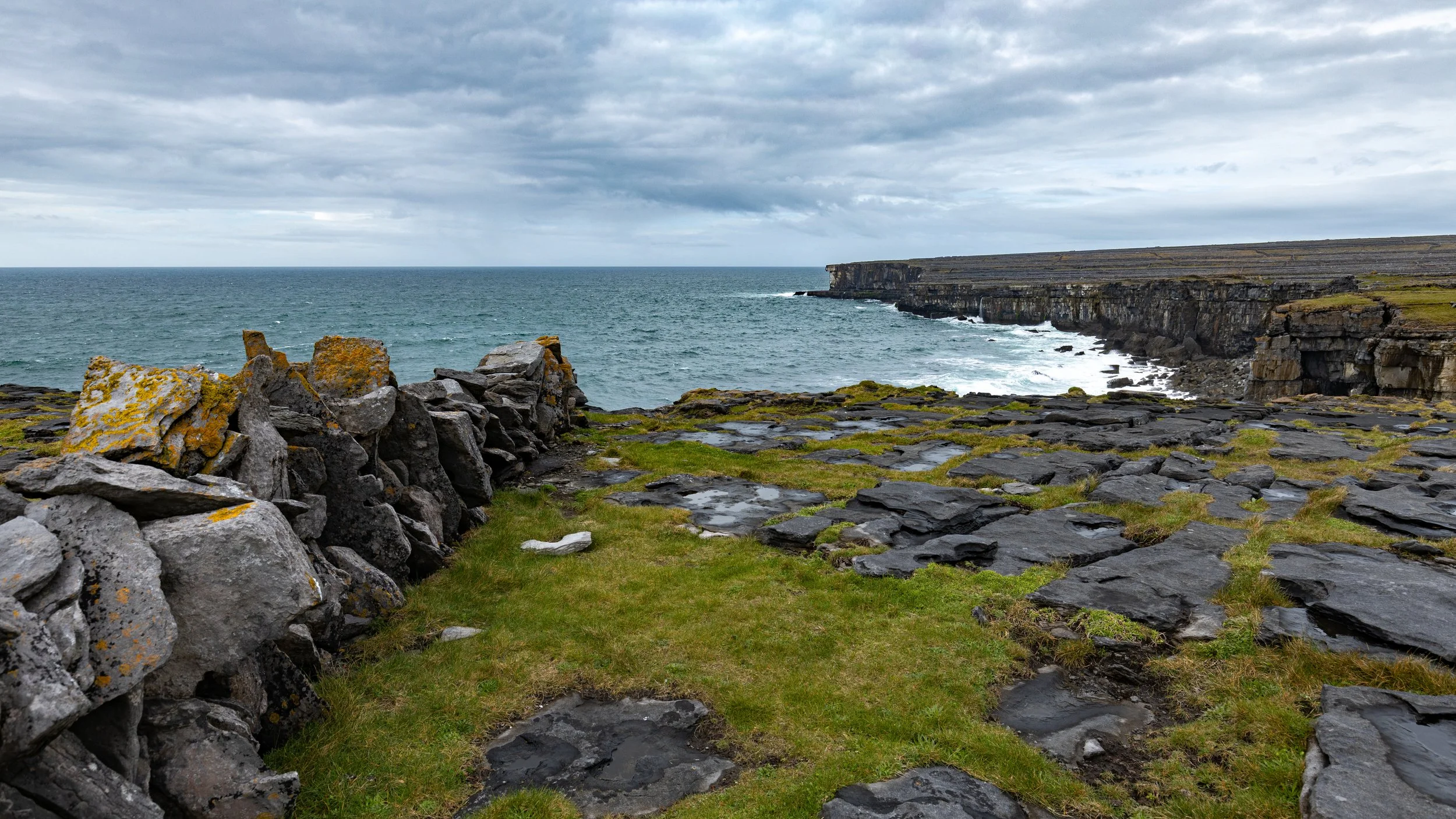
A short distance away, I spotted a limestone wall leading towards the cliff edge. Immediately, I could see compositional potential there. The wall solved the empty-space issue within the frame while naturally guiding the viewer's eye into the scene and eventually towards the distant cliffs beyond.
Unlike earlier compositions, this scene did not require long exposure work. The structure and shape within the landscape already carried enough visual interest on their own, so a faster shutter speed was the better choice.
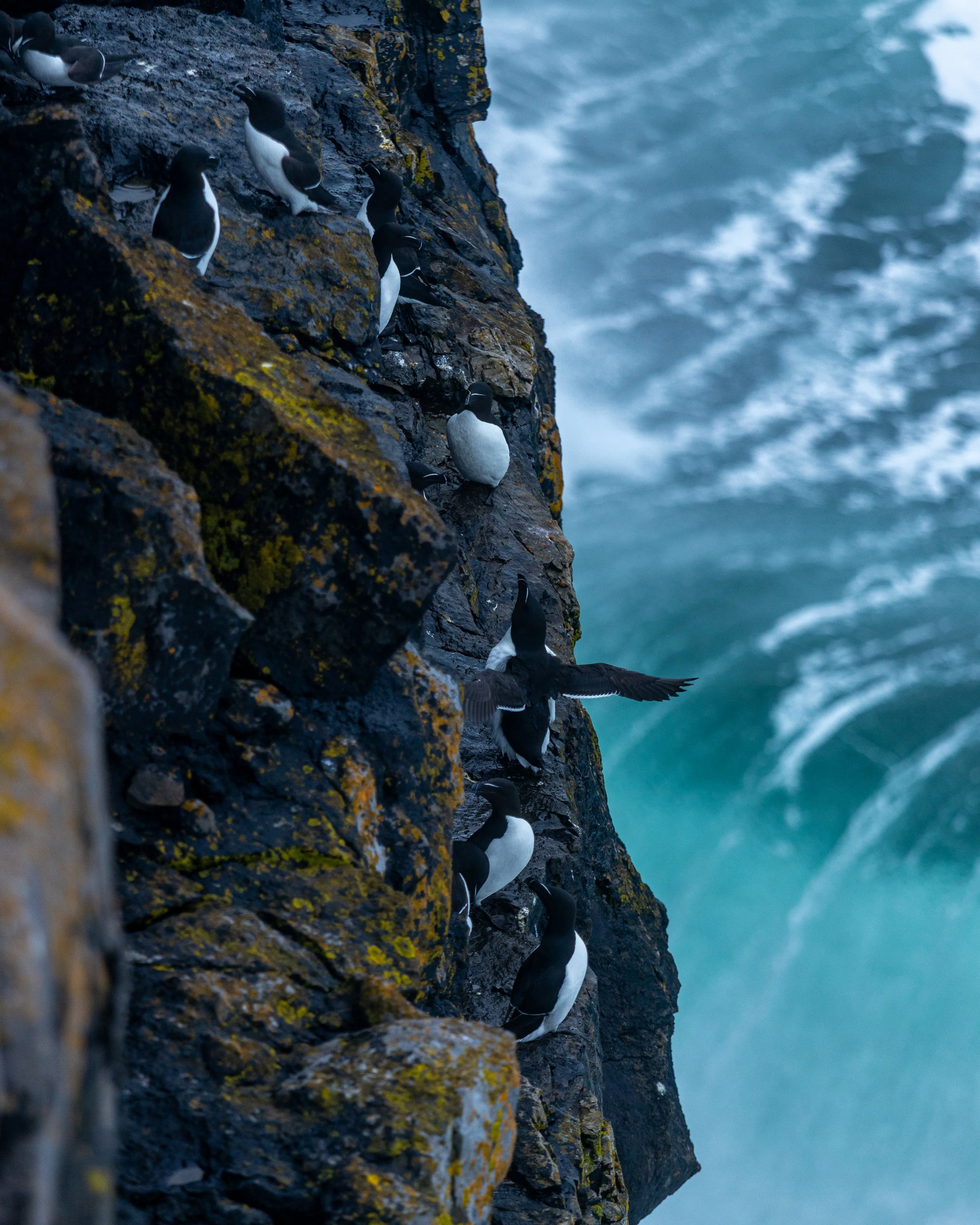
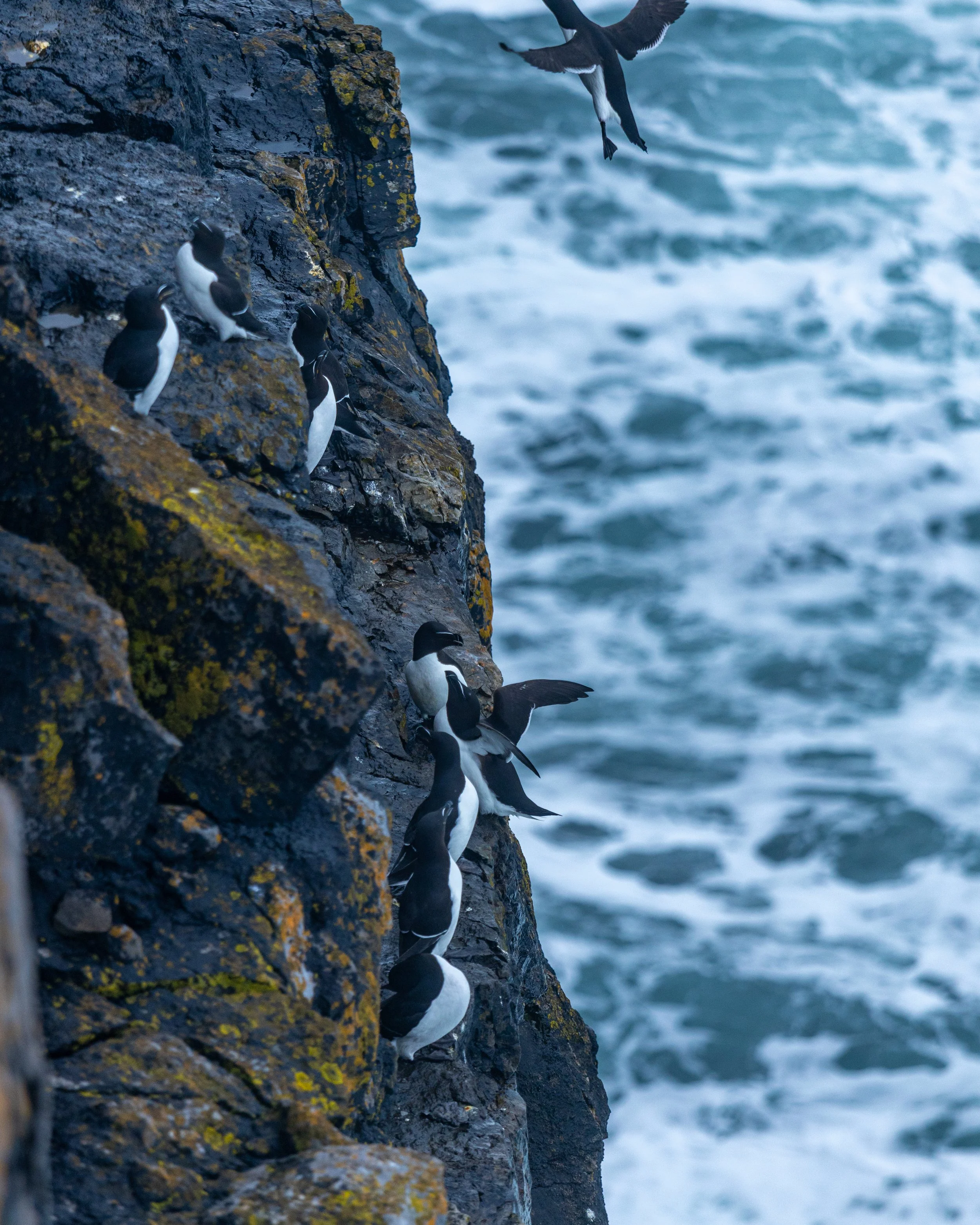
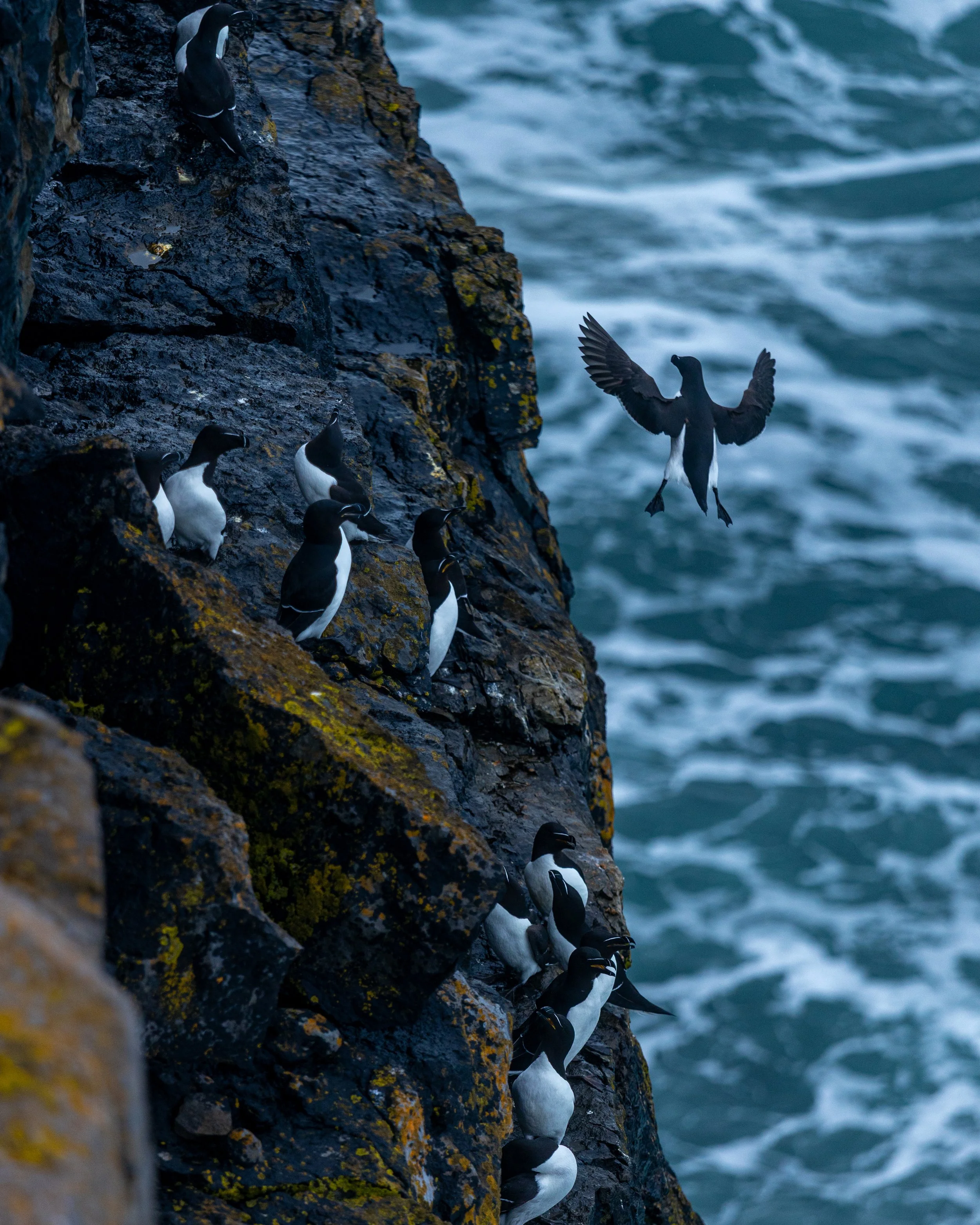
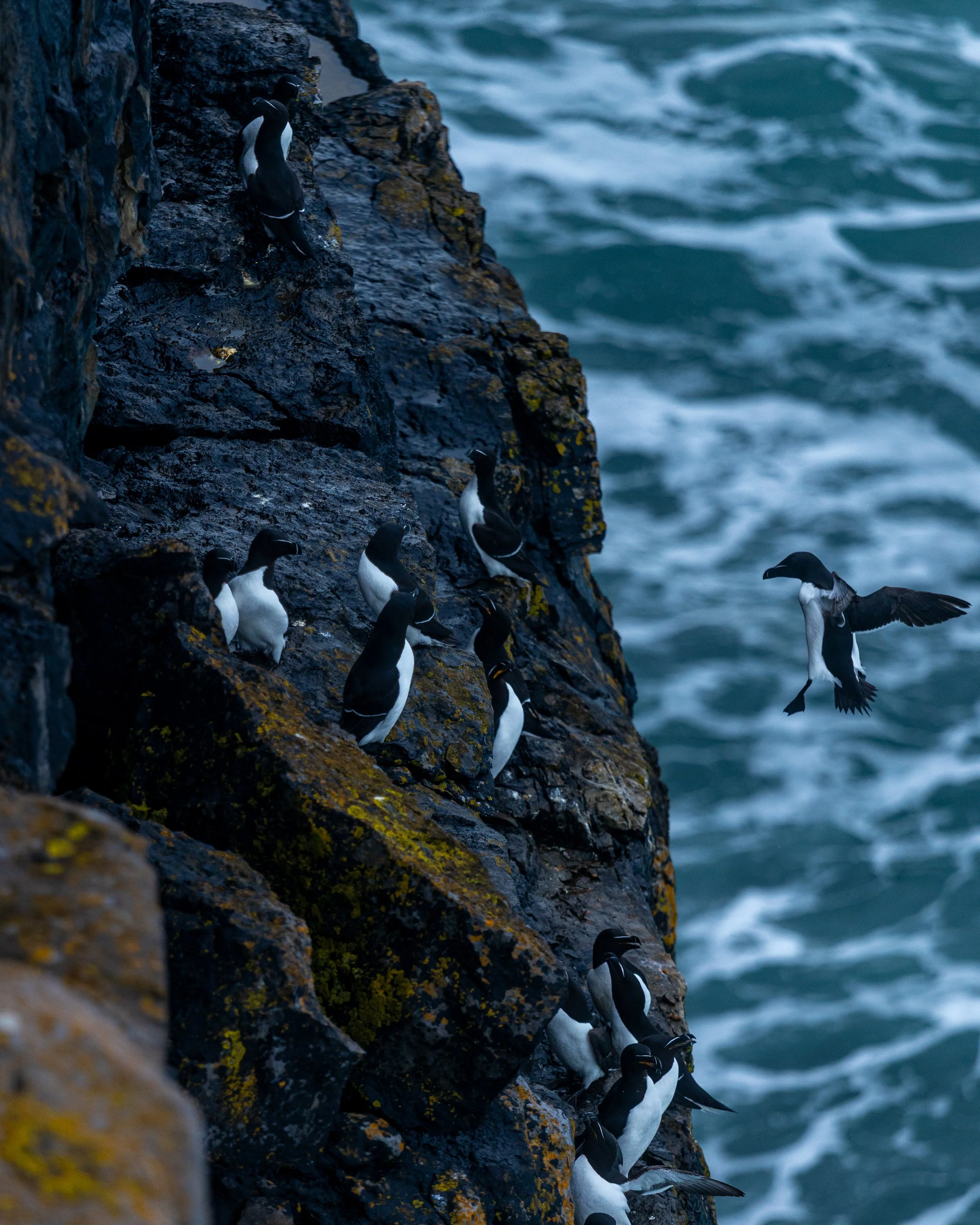
Just as I finished photographing the wall, I noticed Diarmuid and Patrick further along the cliffs pointing cameras down towards the sea below. Initially, I assumed they were photographing waves breaking against the cliffs, but when I reached them, I realised it was something completely different.
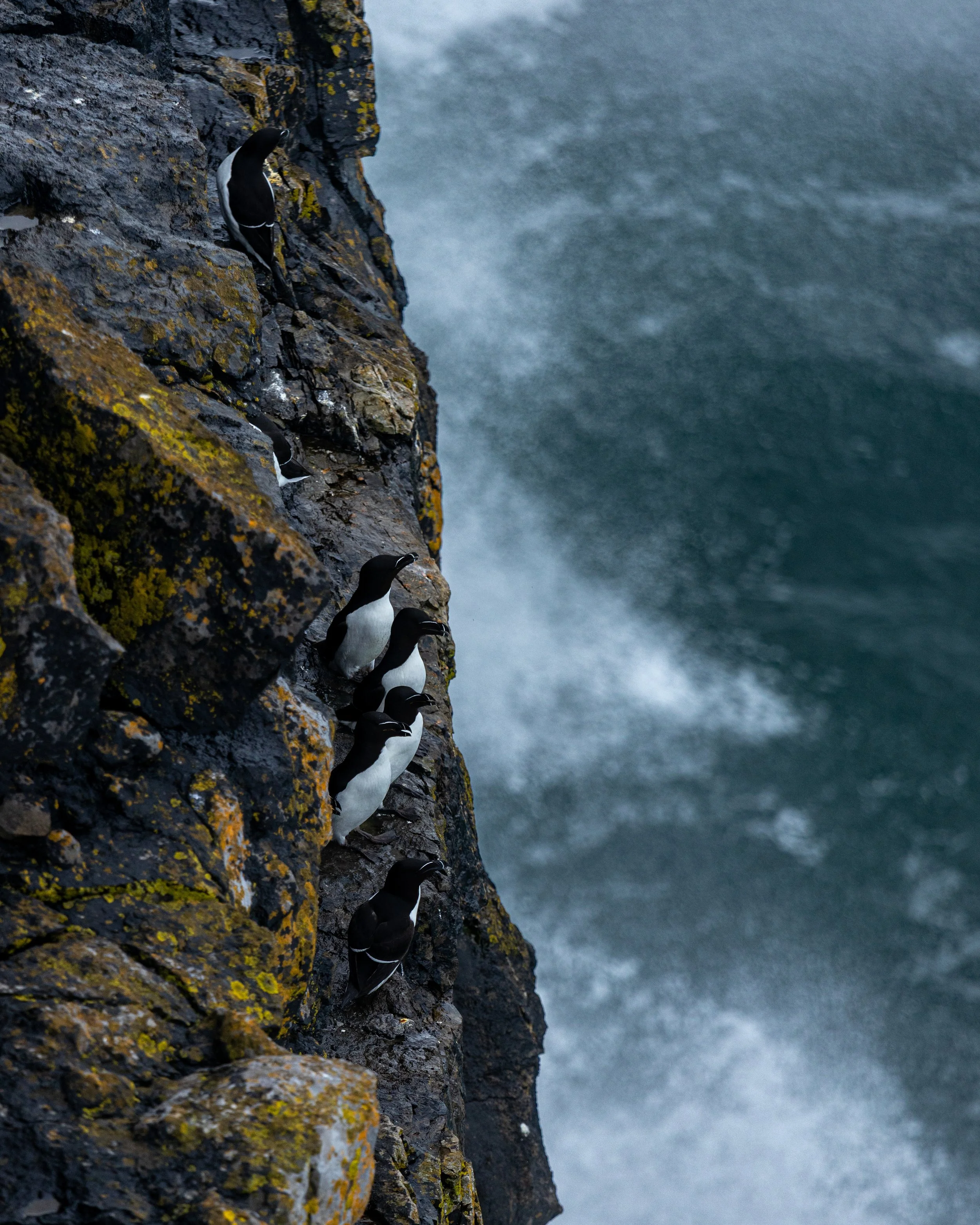
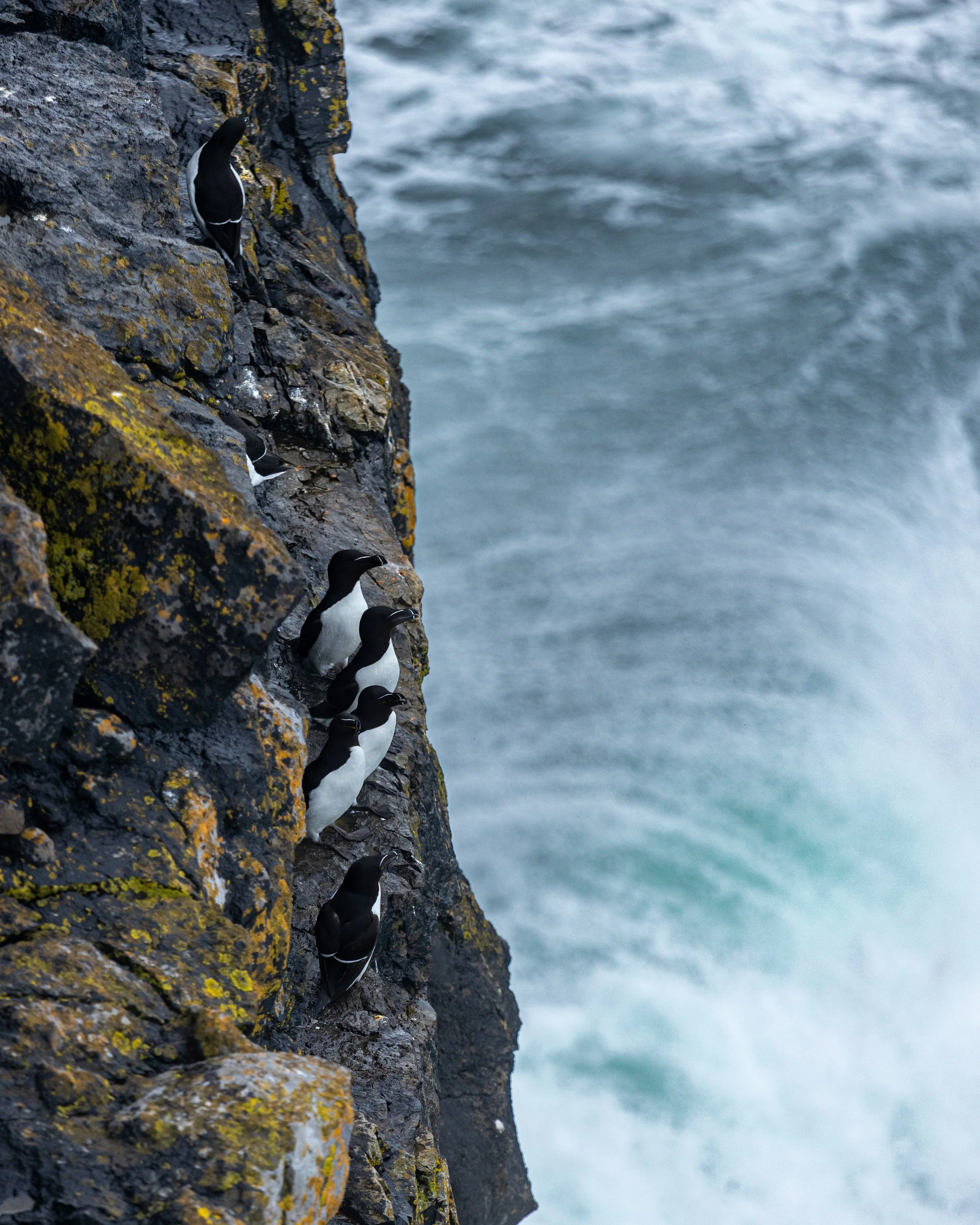
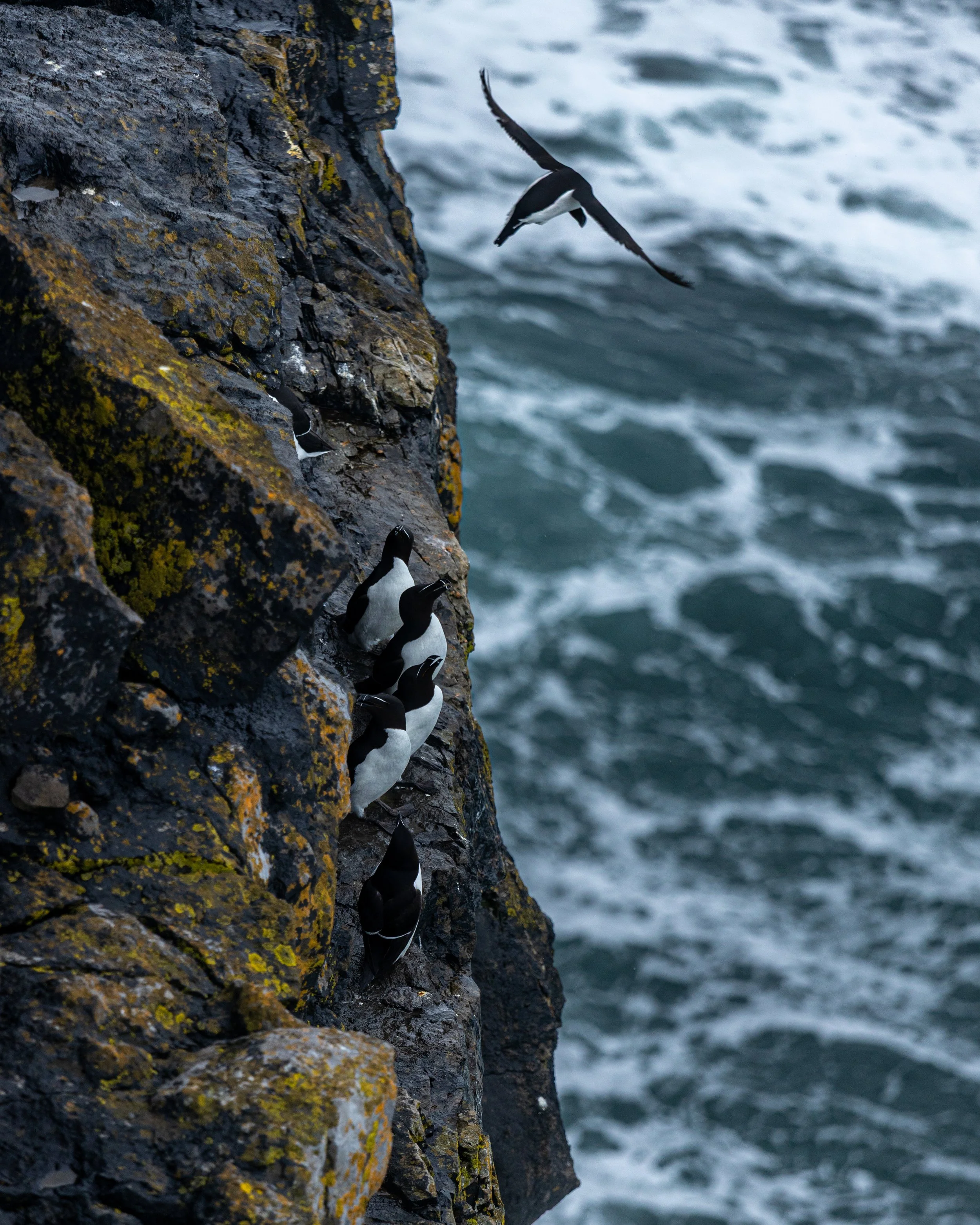
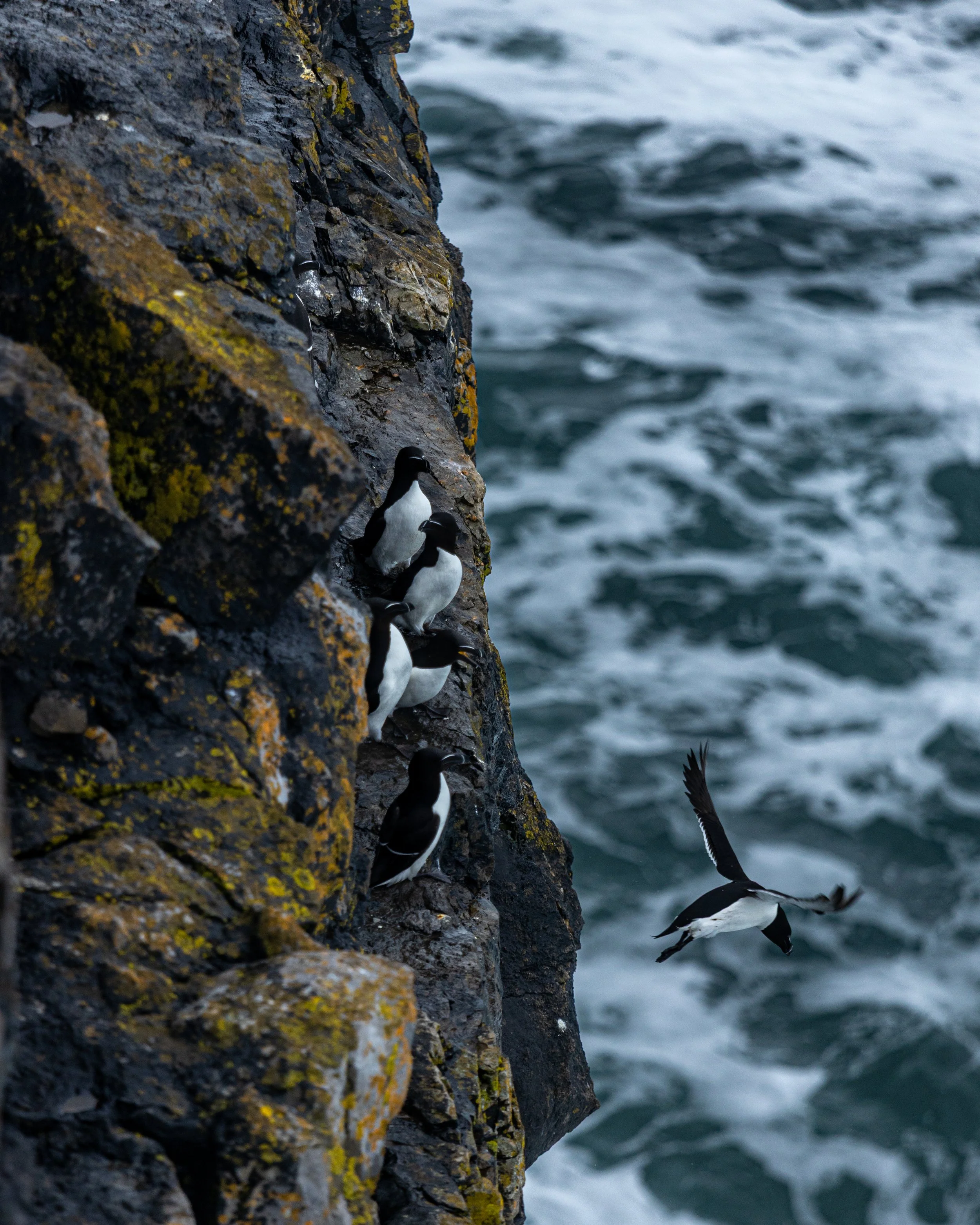
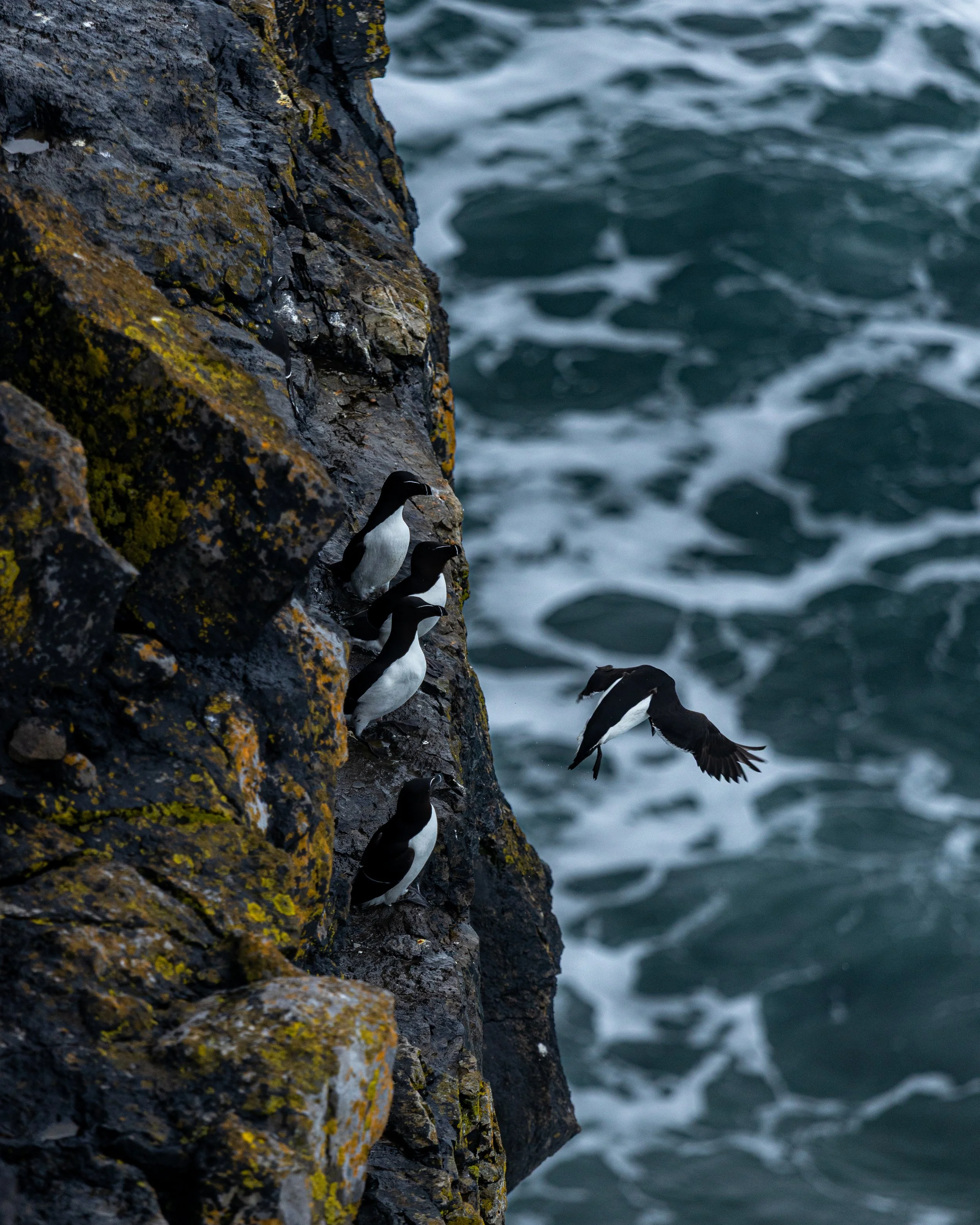
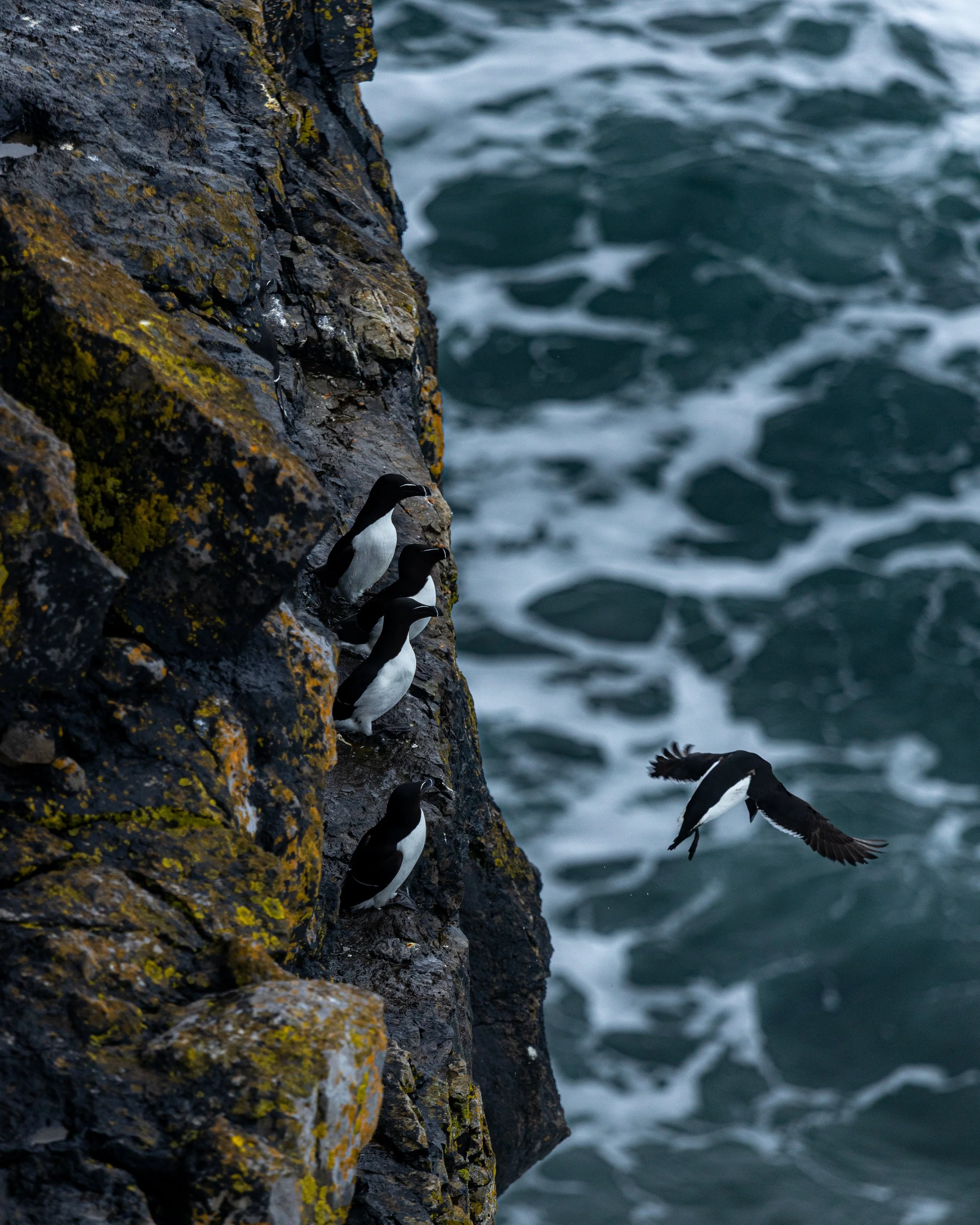
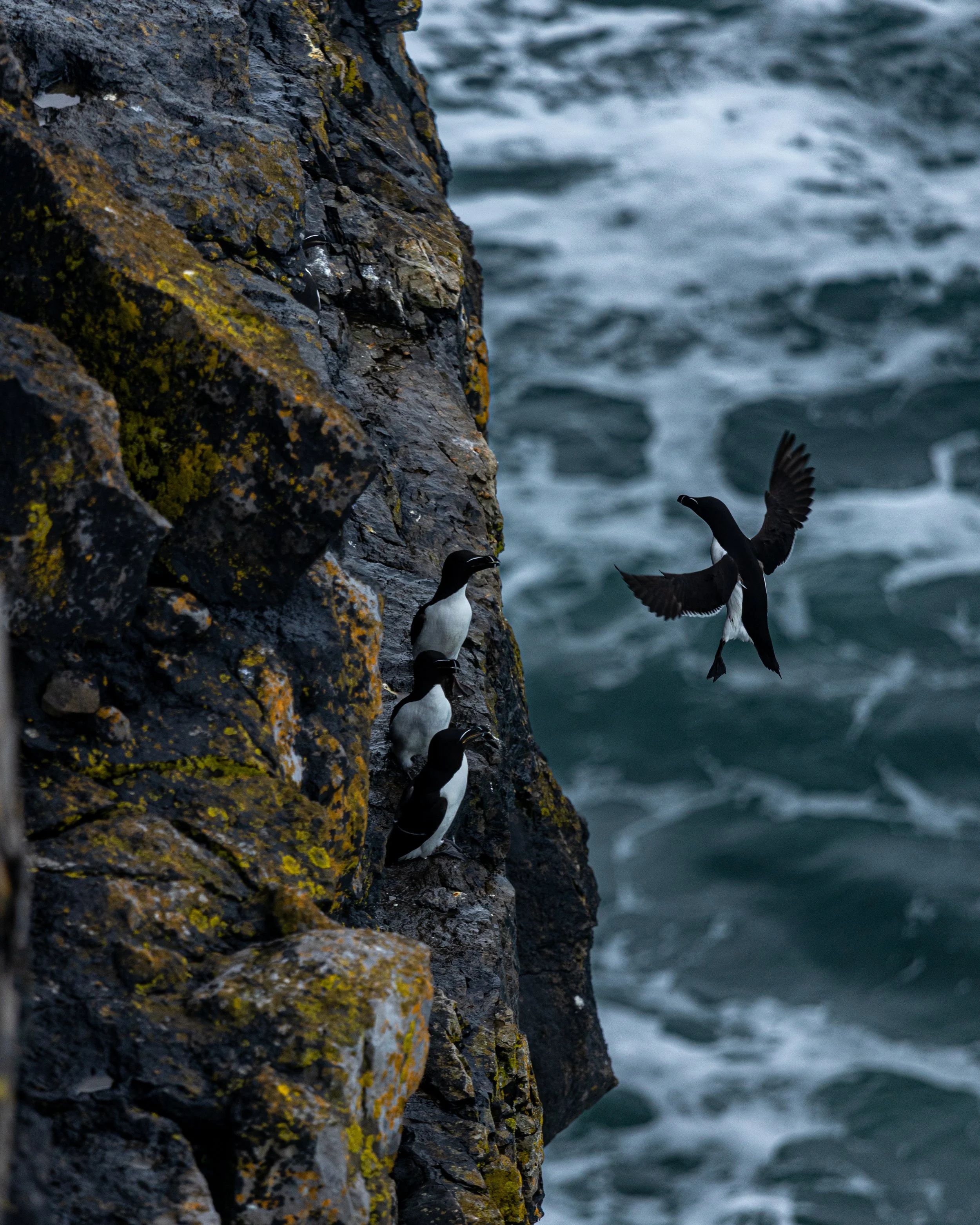
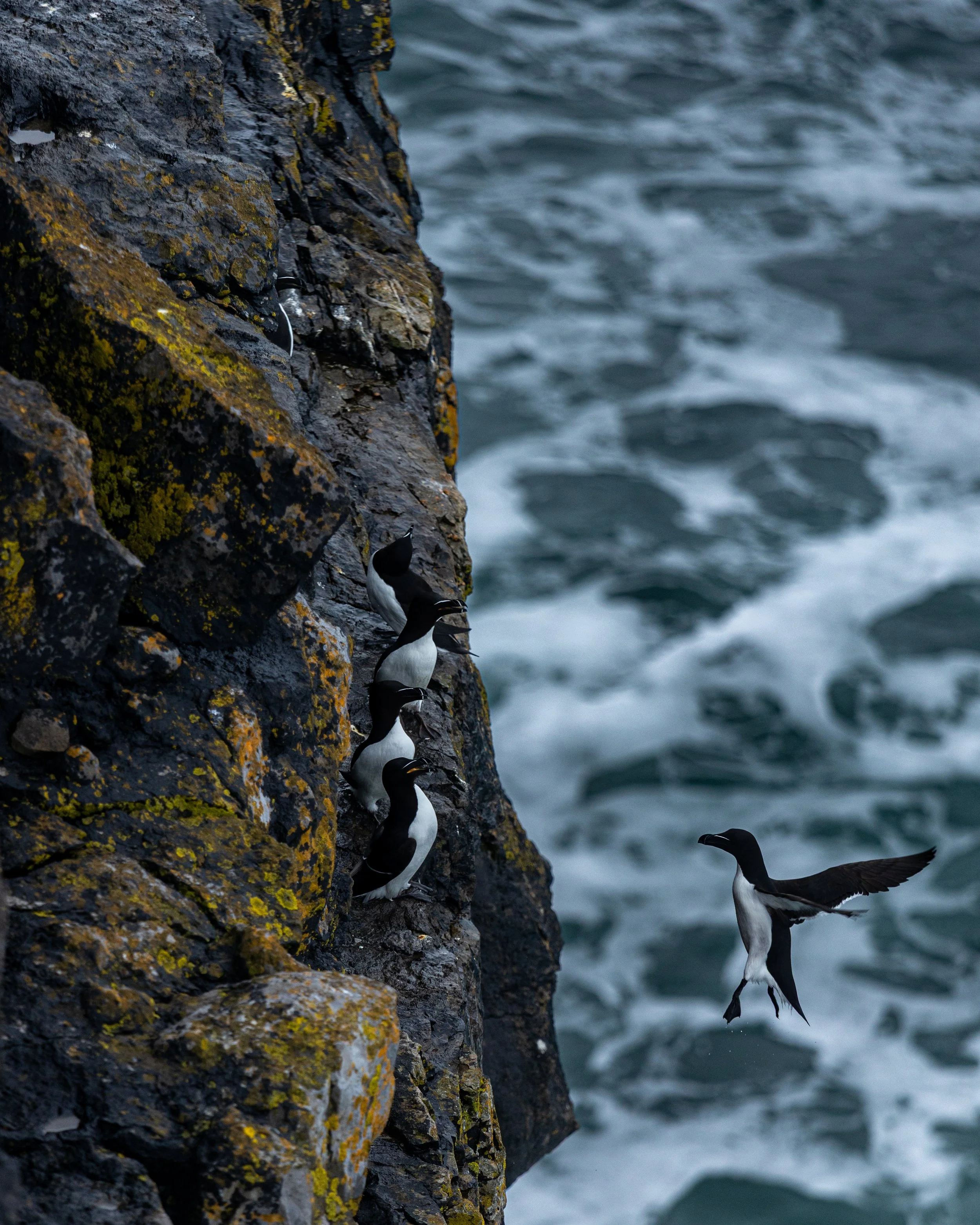
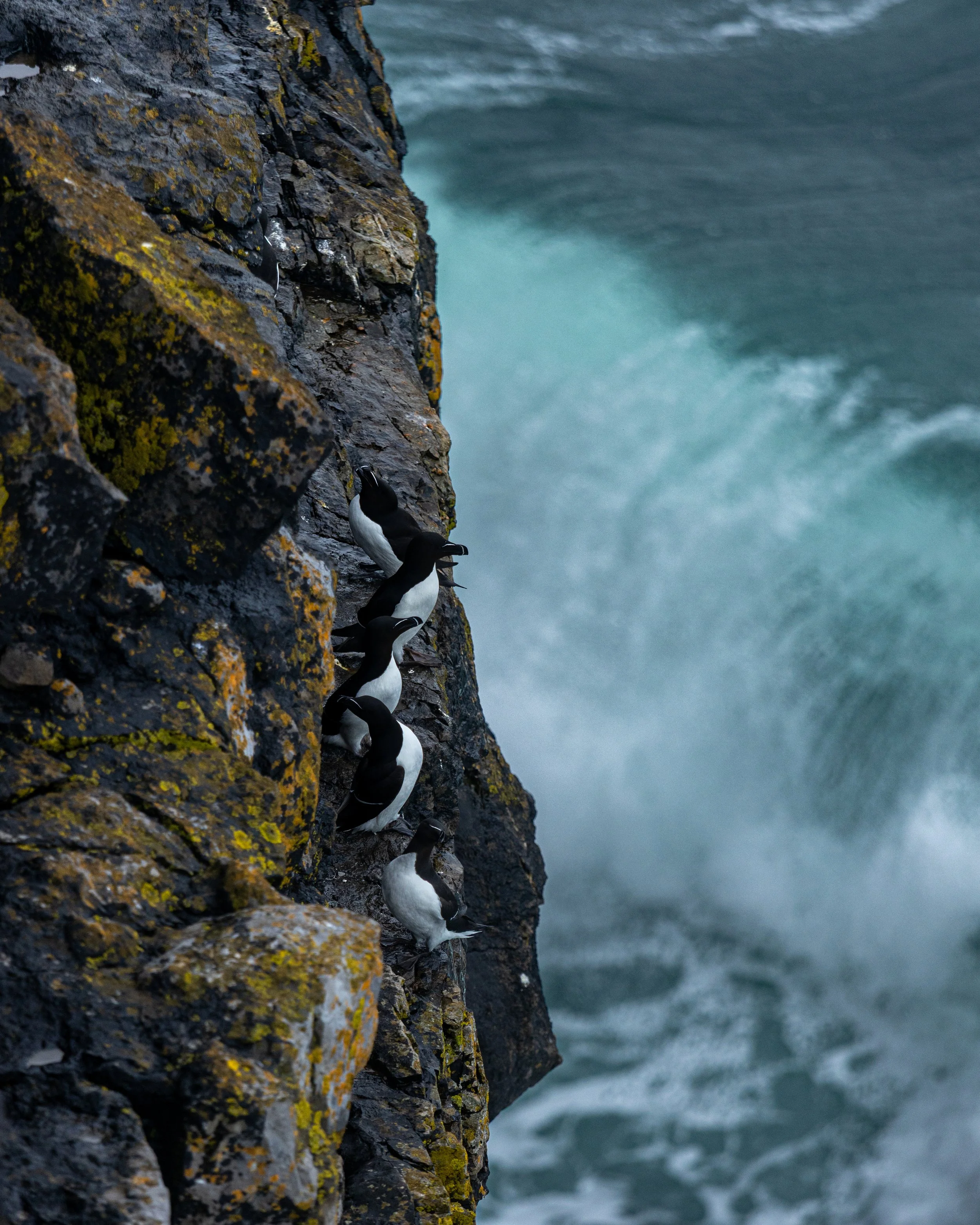
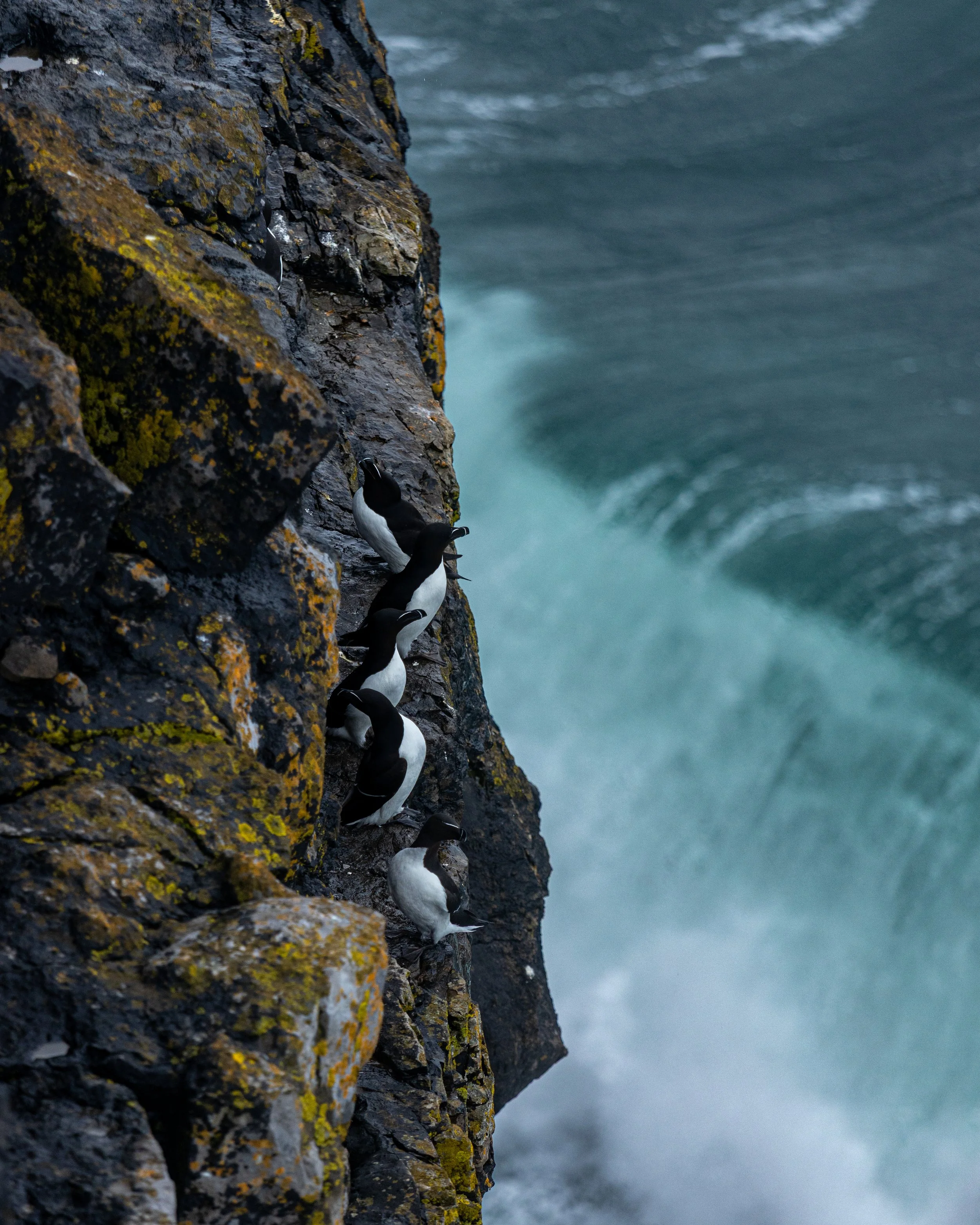
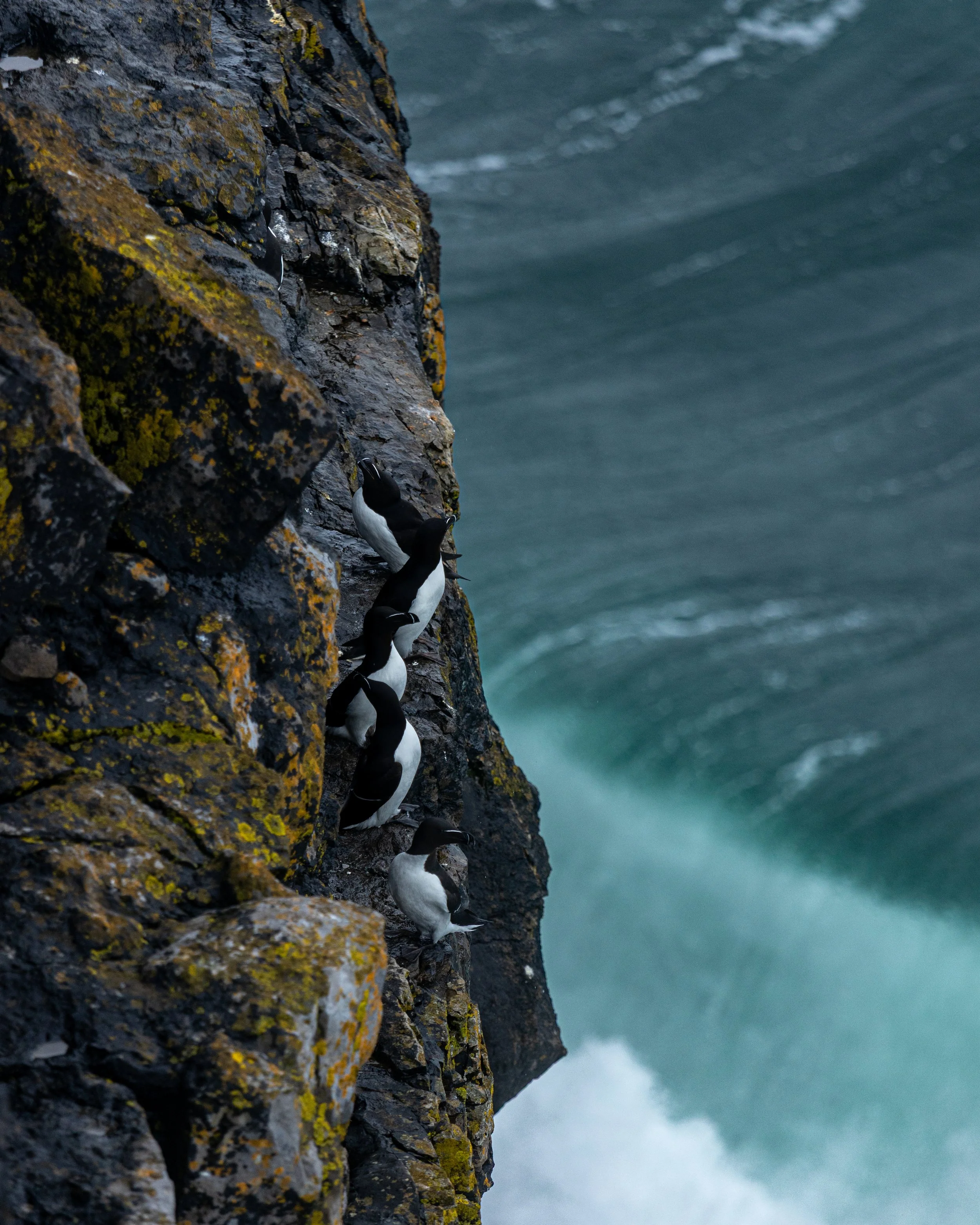
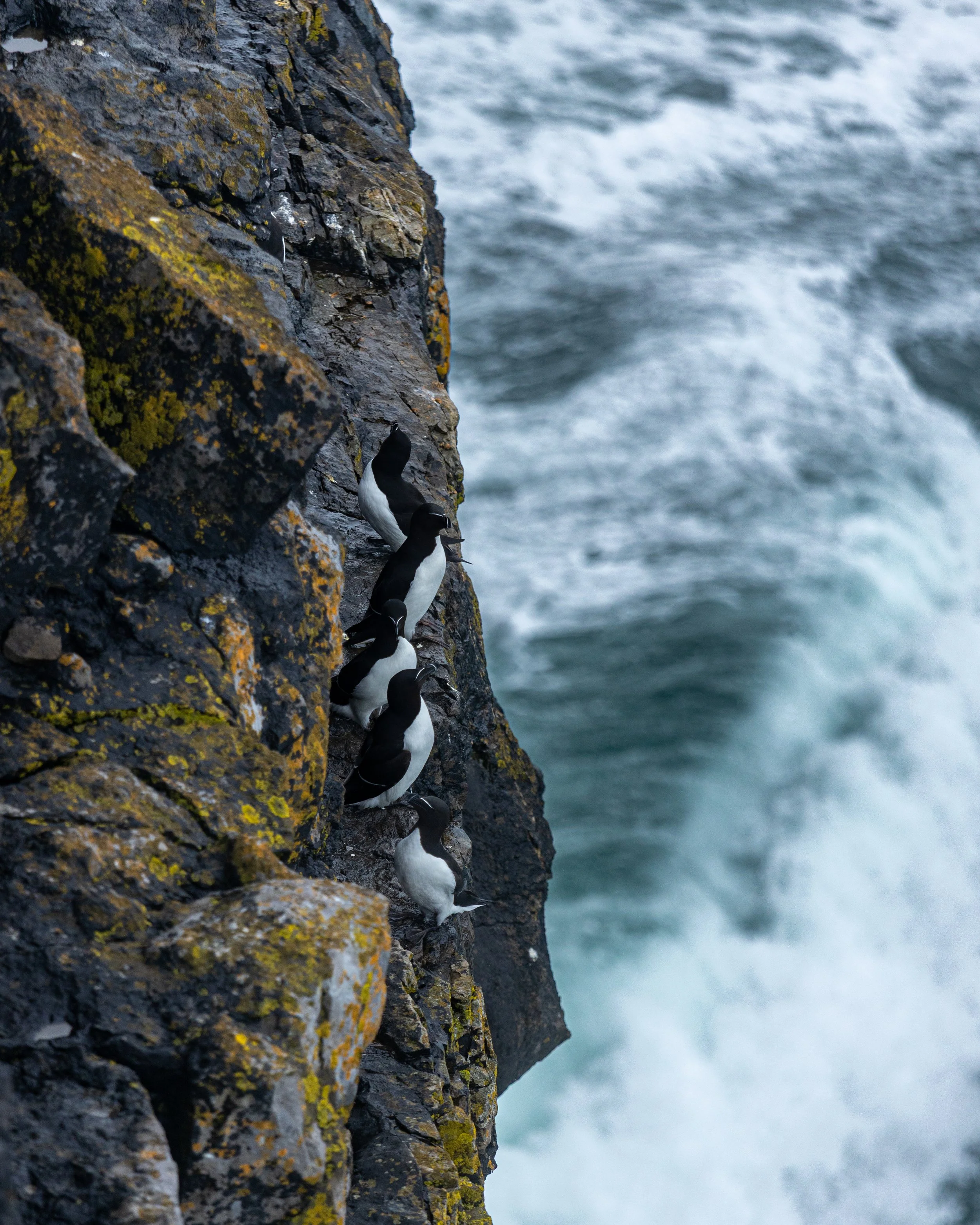
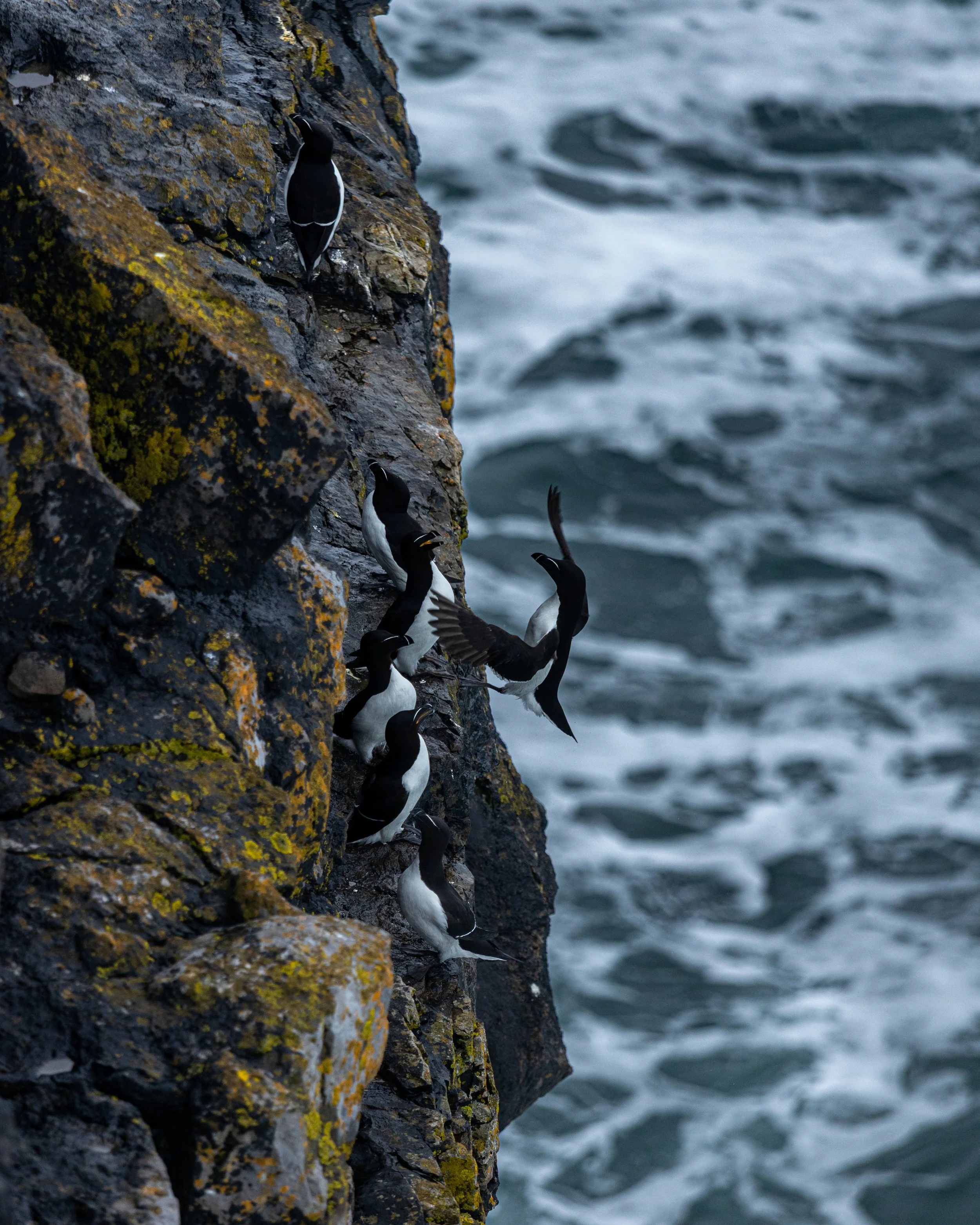
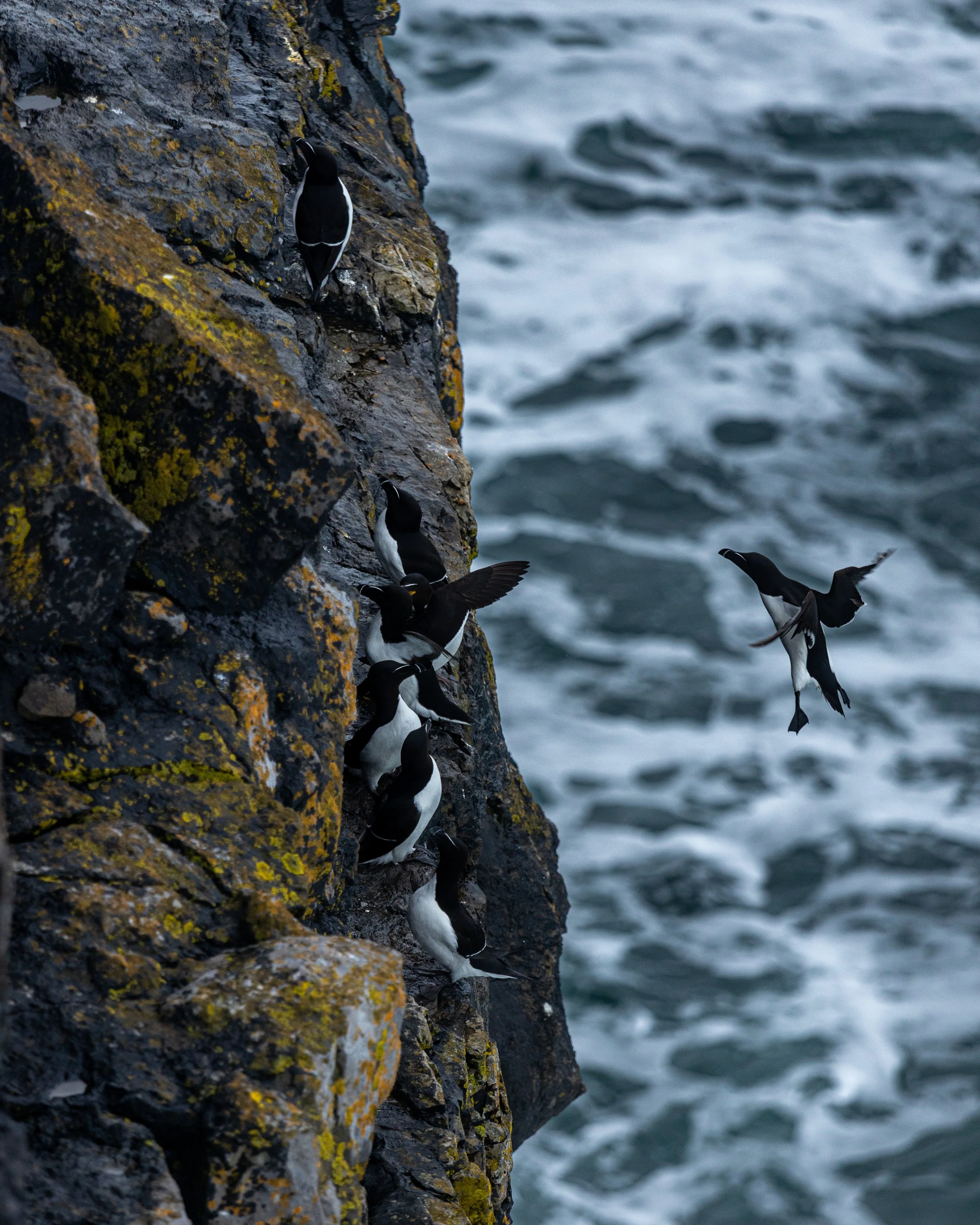
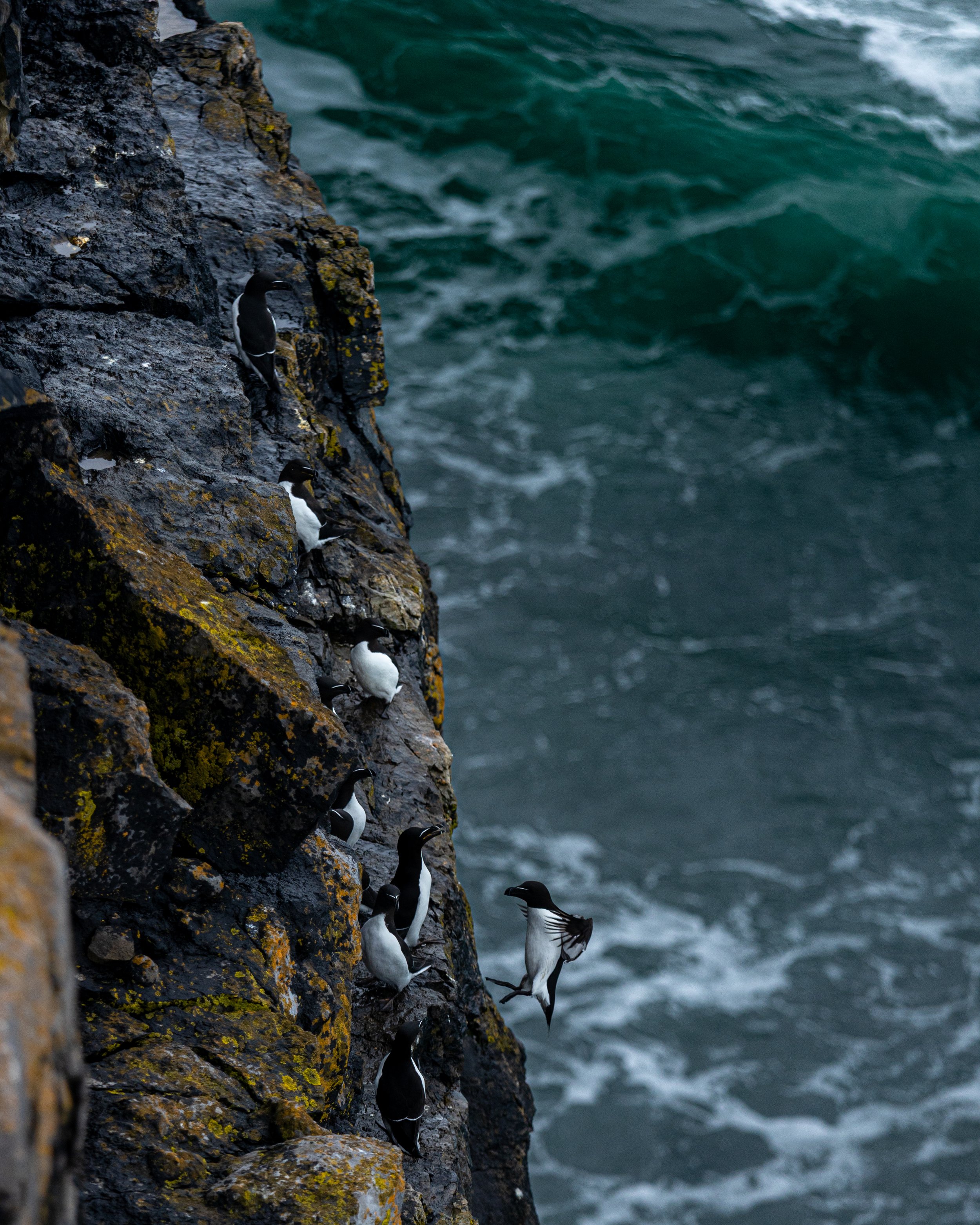
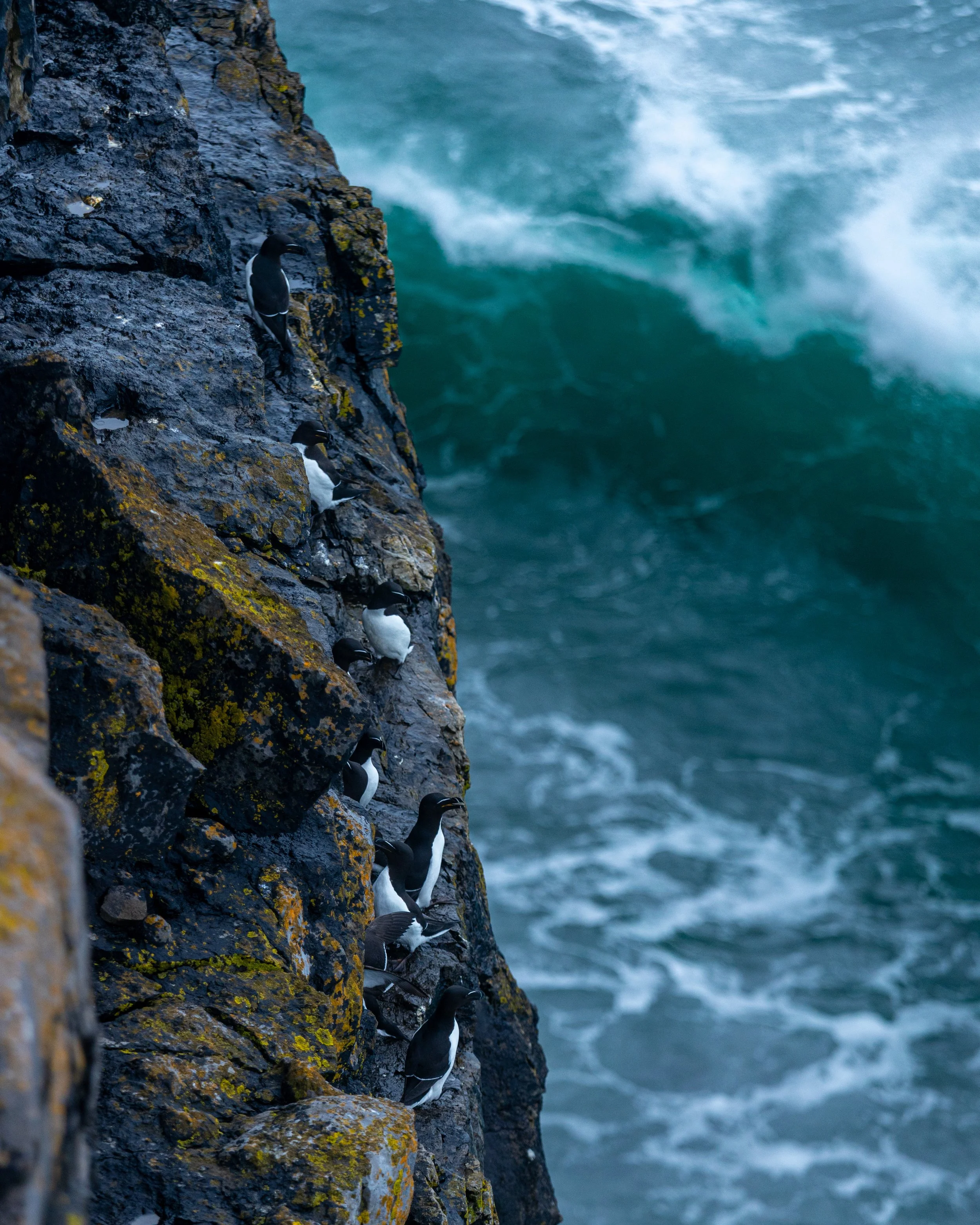
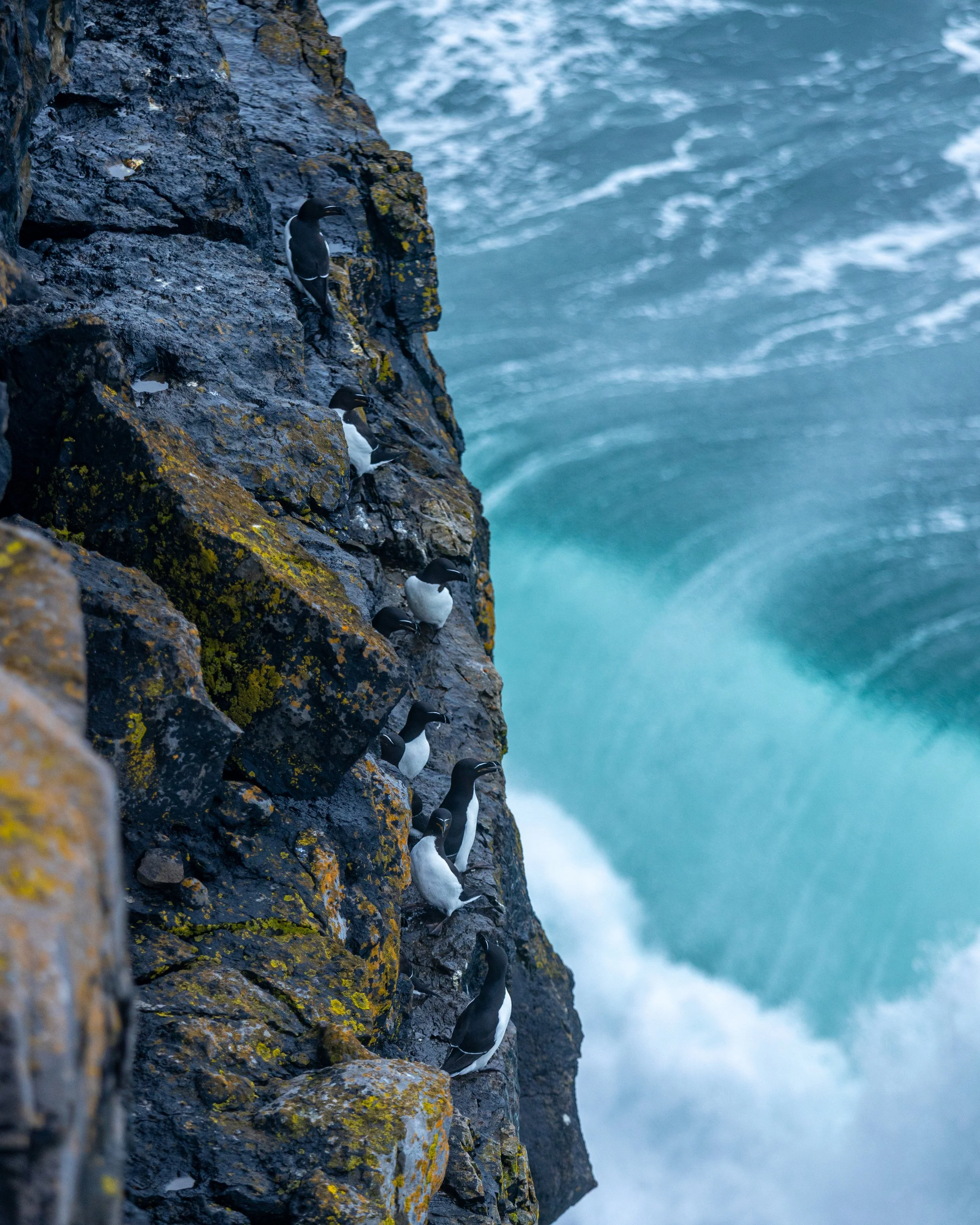
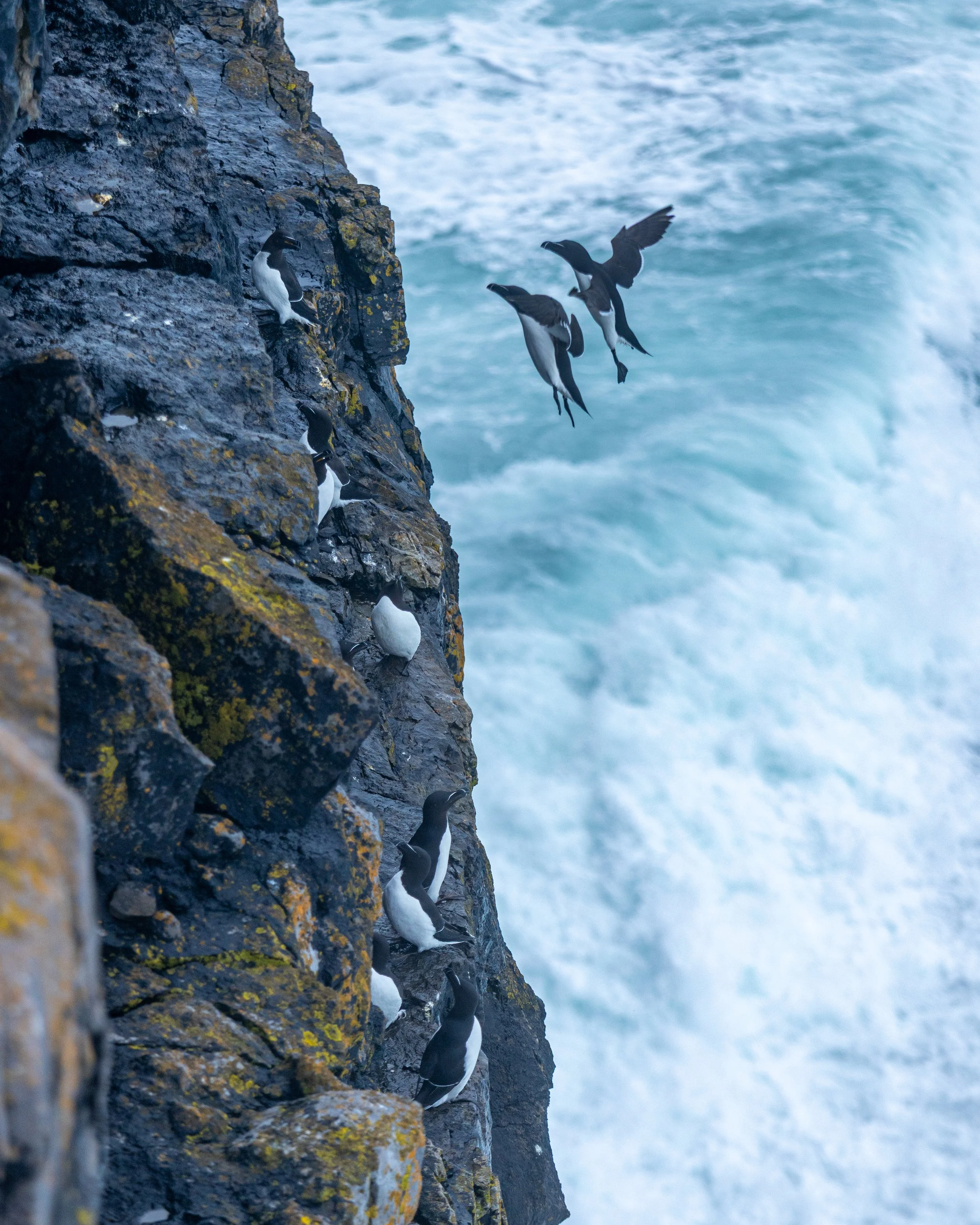
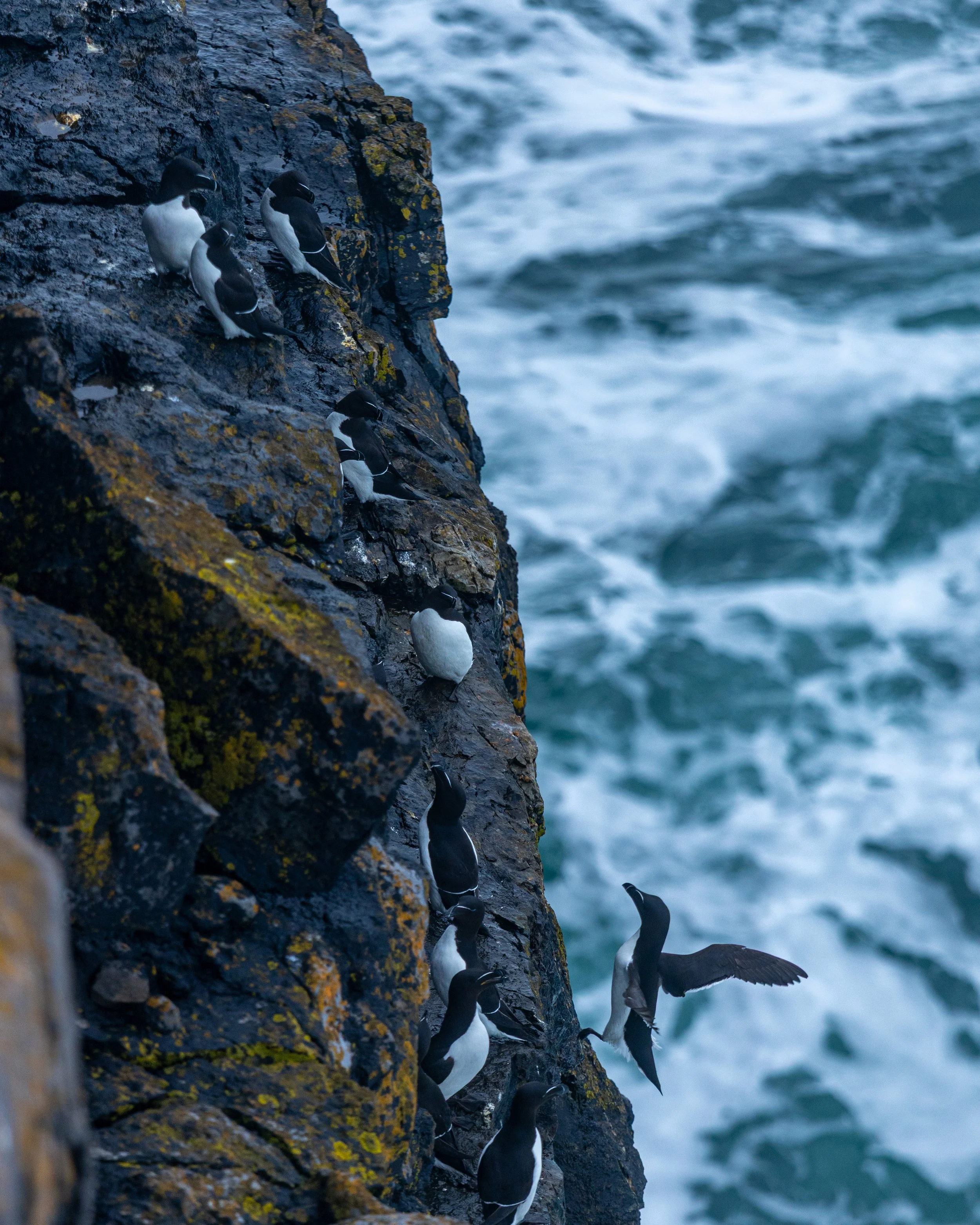
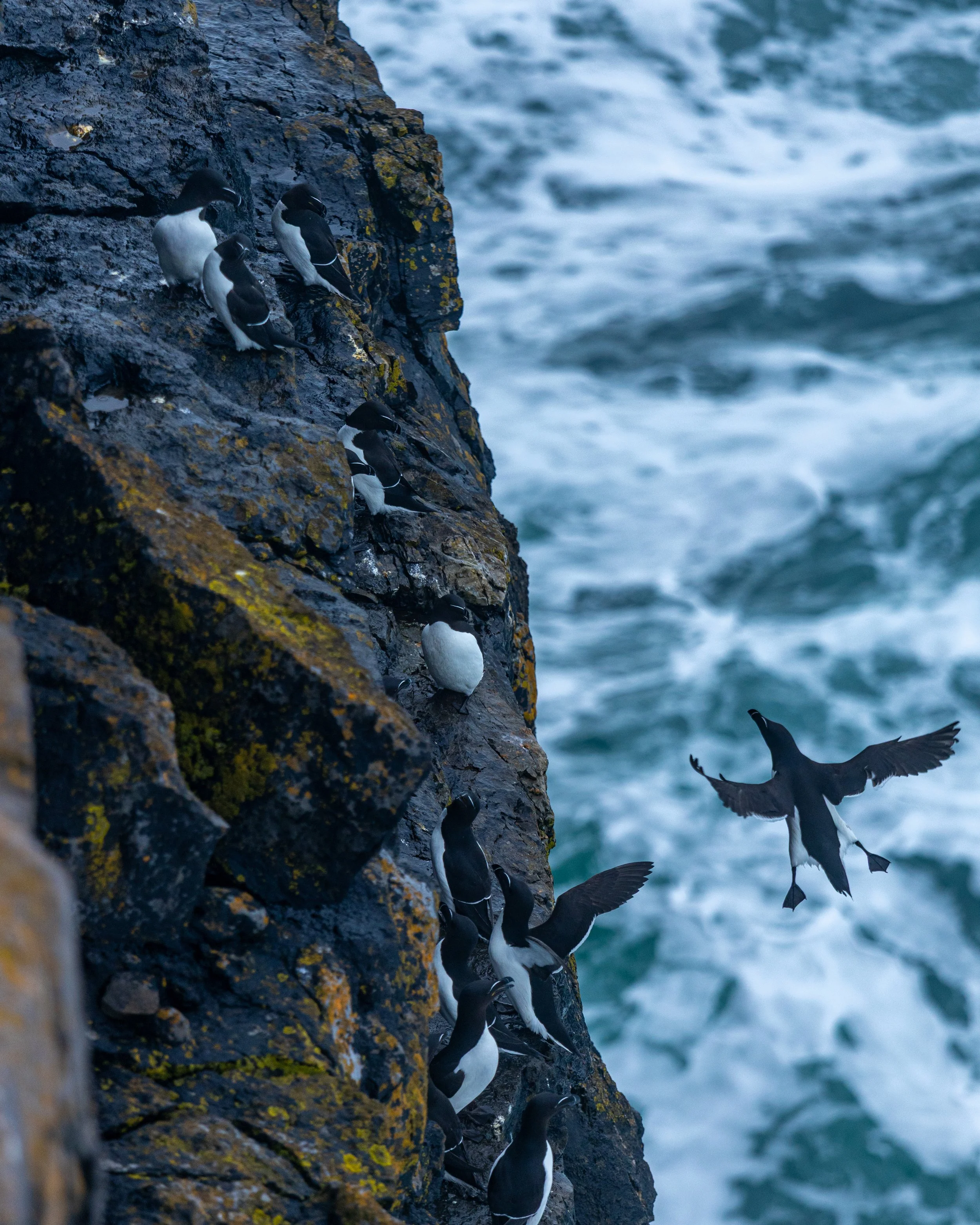
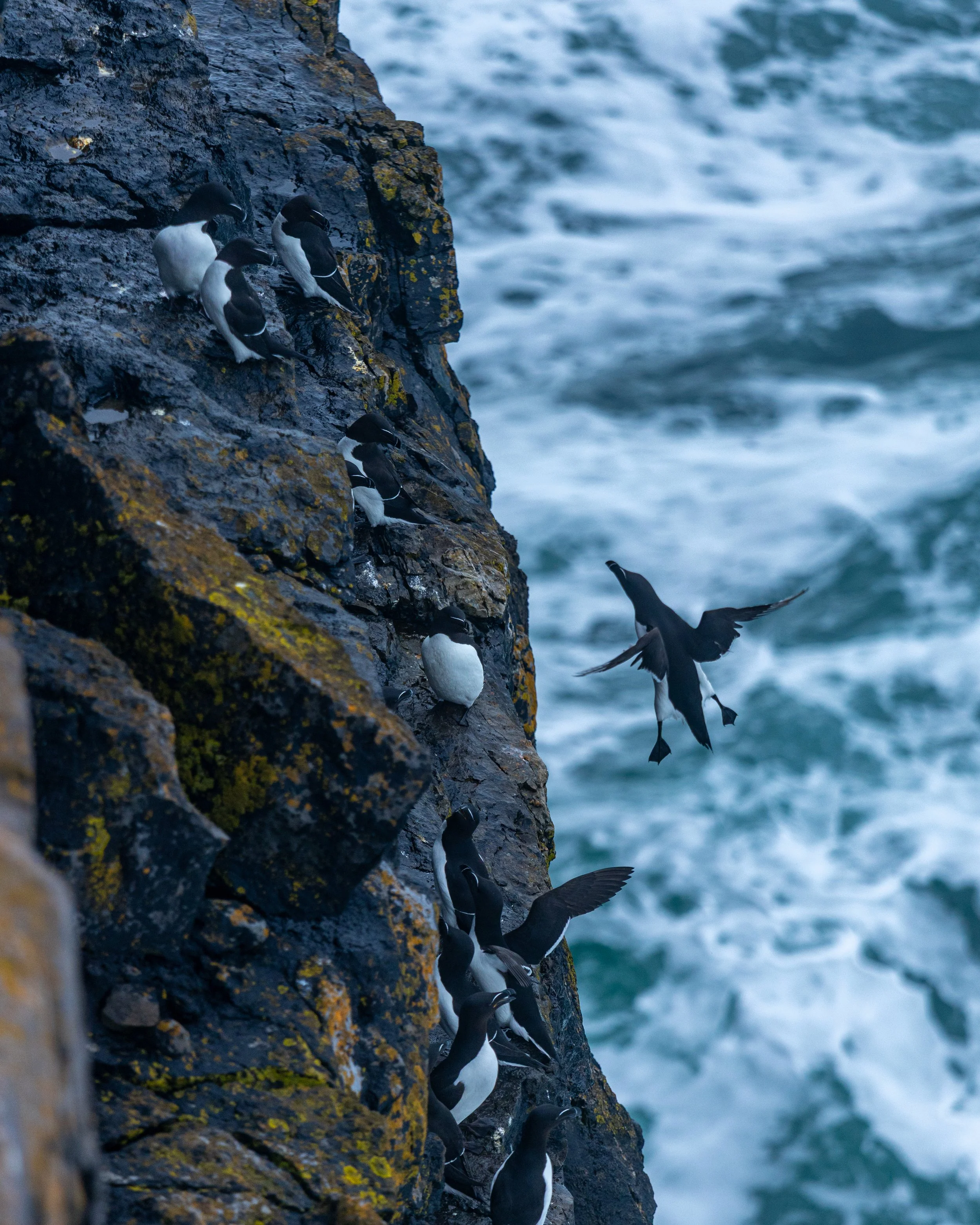
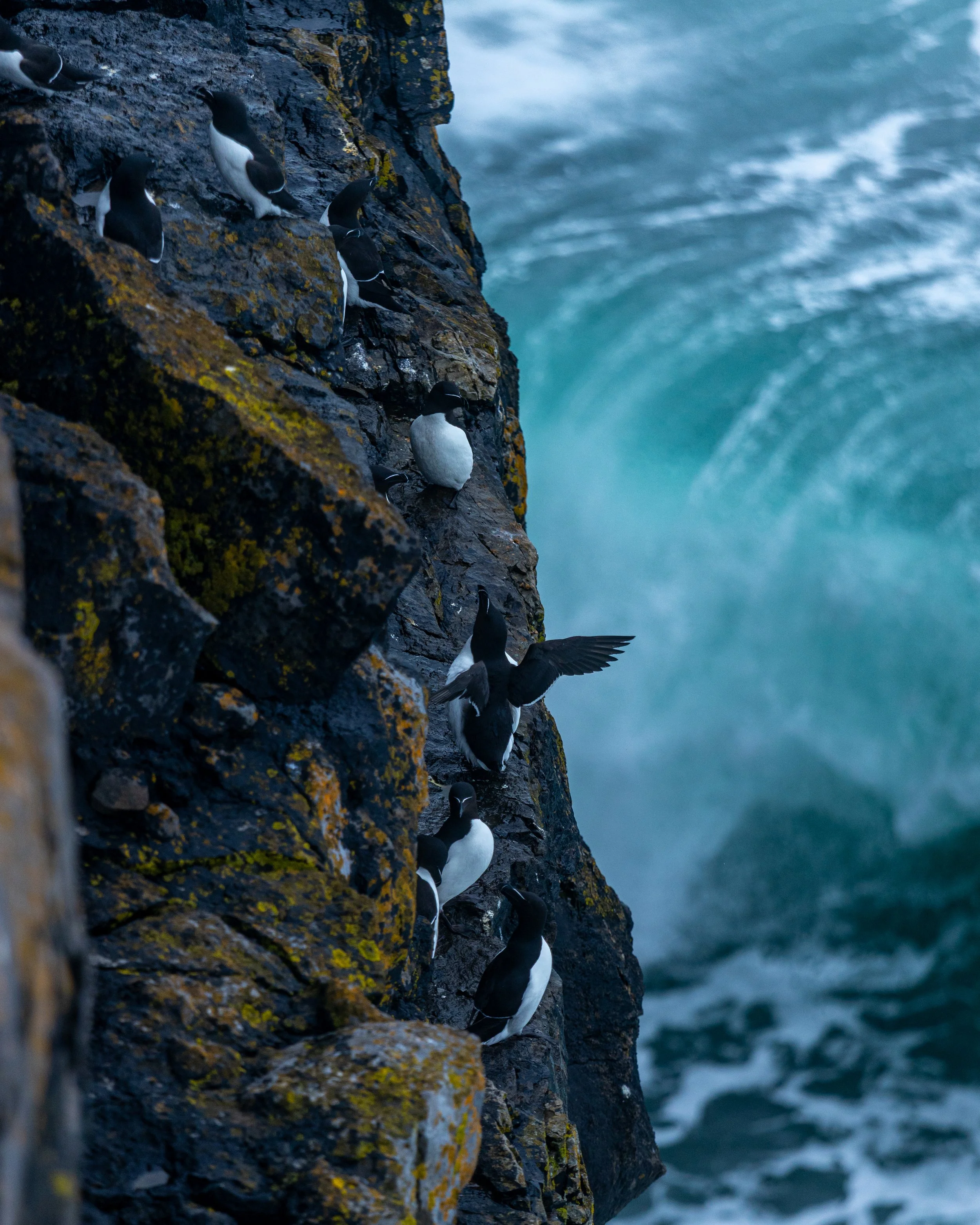
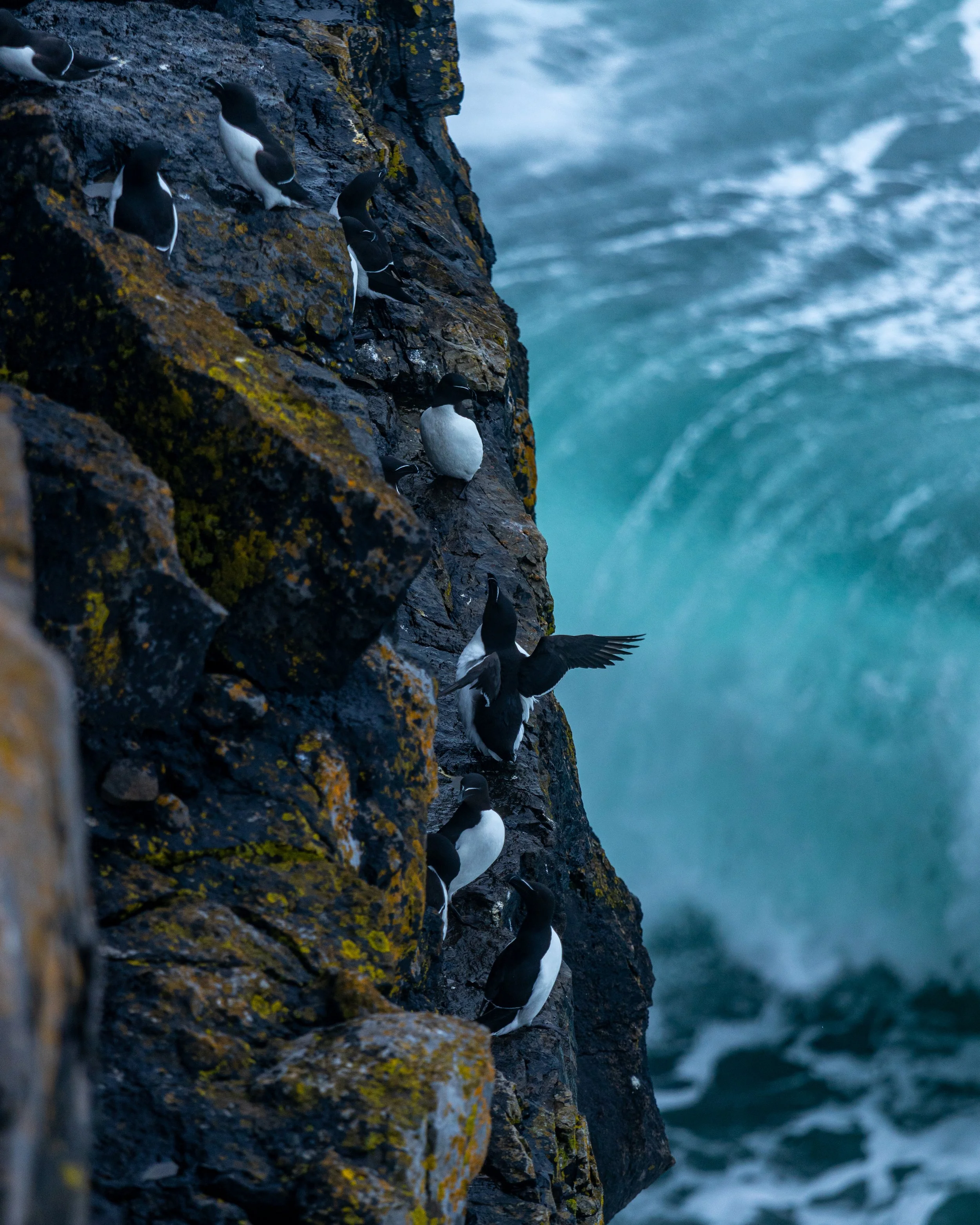
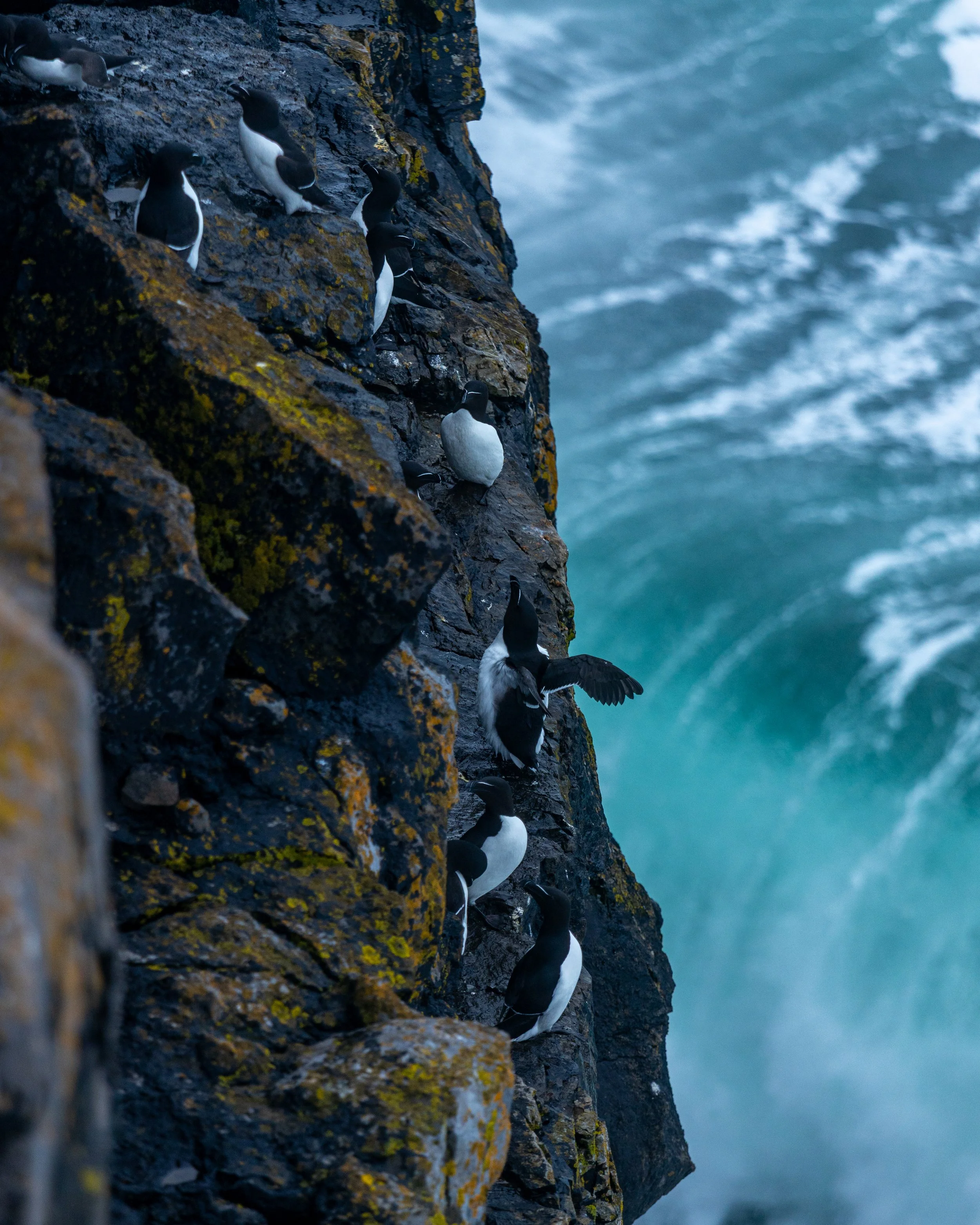
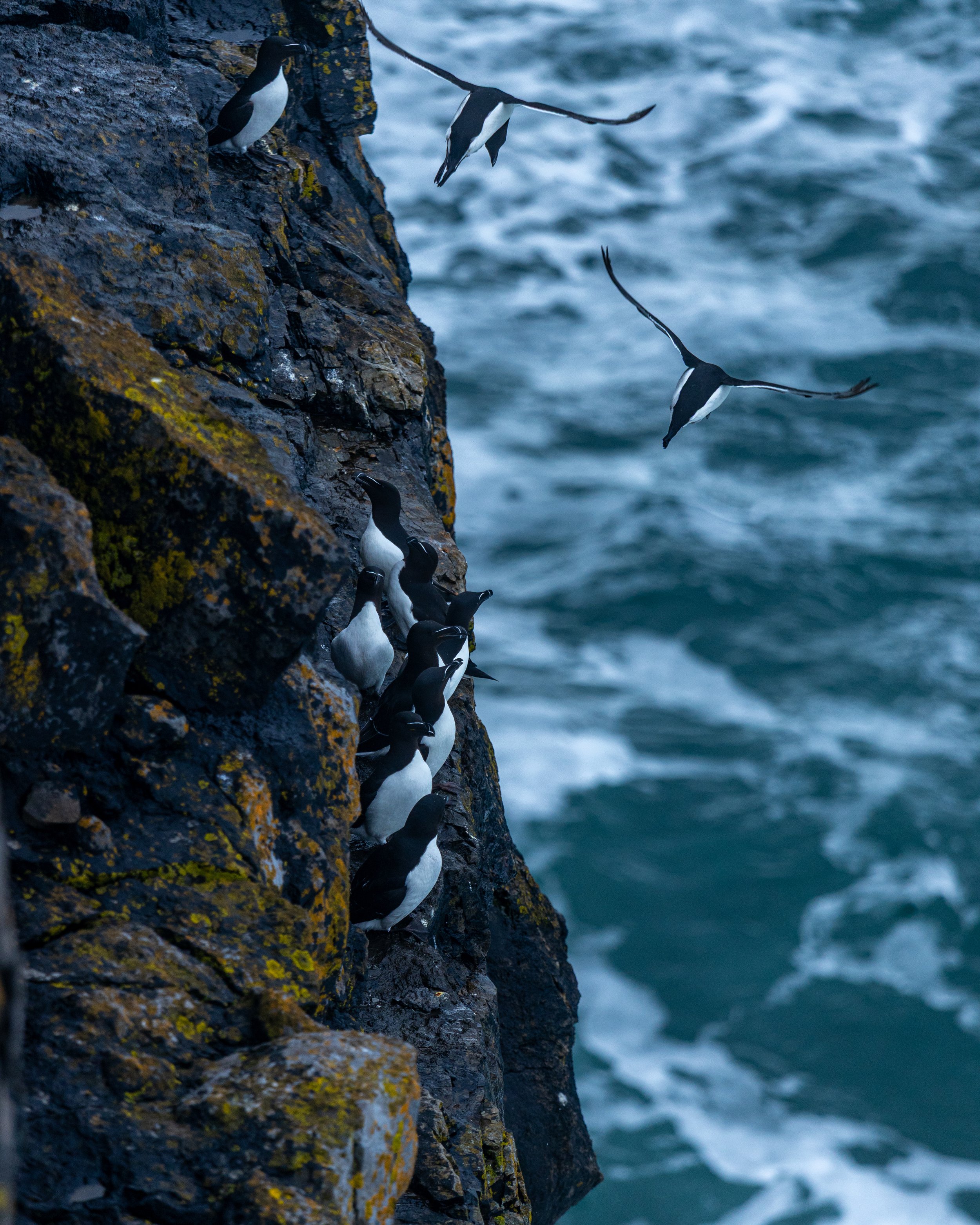
Razorbills were flying in and out from the cliff faces beneath us.
Suddenly, the outing had shifted from landscape photography into wildlife photography without warning. I swapped onto a longer lens, though not excessively long, because I still wanted to retain some environmental context within the frame. Around 110mm proved ideal.
Fast shutter speeds became essential here. I wanted to freeze the birds in flight while also capturing the movement and energy around them. From my angle, the waves were breaking behind the birds as they crossed the frame, so I began timing images to combine both elements together.
Ironically, some of my favourite images from the entire outing came from a subject I had not planned to photograph at all.
That is often the reality of landscape photography. You can arrive with a detailed plan, specific compositions in mind and exact conditions you hope for, only for the strongest images to come from something entirely unexpected. On this particular day on Inis Mór, flexibility mattered far more than preparation.